

Disclosure: This post contains affiliate links to Pickleball Central. If you purchase through our links, FORWRD earns a small commission at no extra cost to you. We only link to products we'd recommend regardless.
Last Updated: June 2026
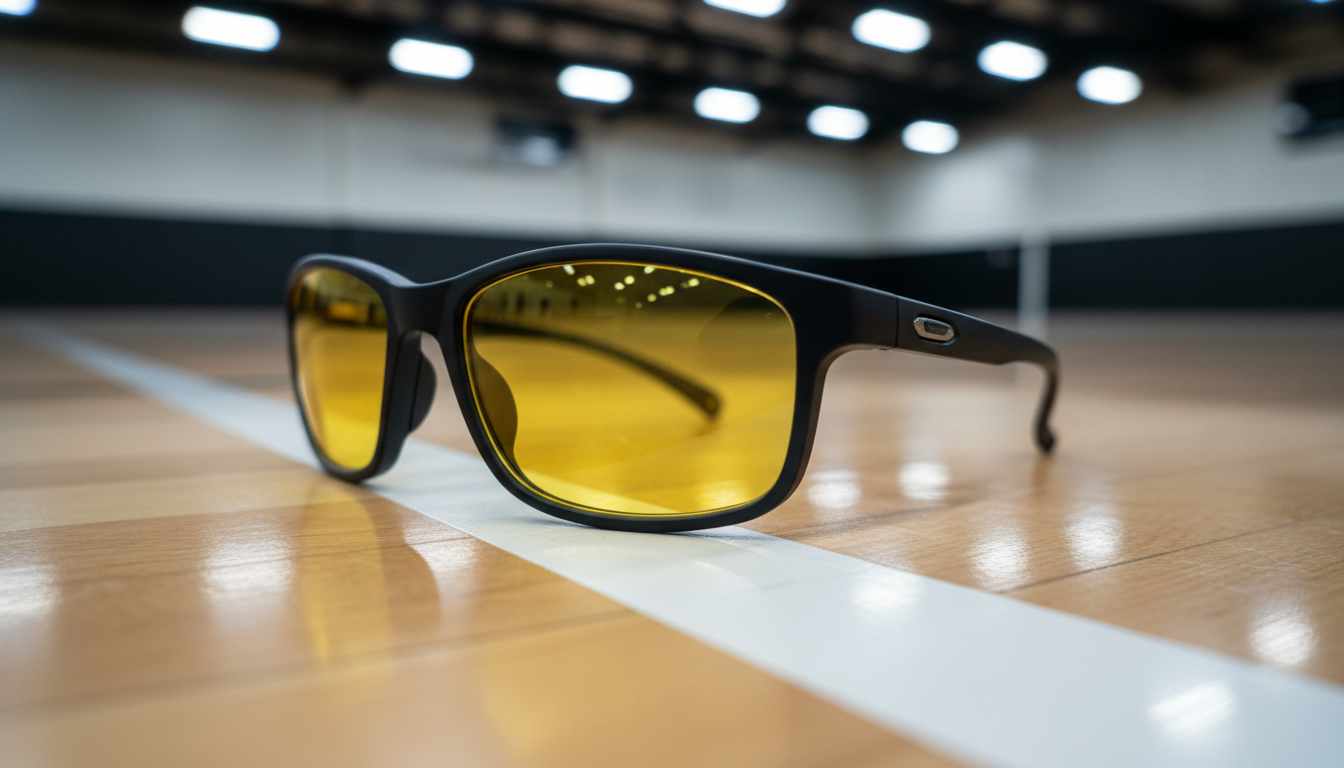
Outdoor sunglasses on an indoor court are a liability. You're in a gym under fluorescent or LED lighting — dim in the seams, bright in the pockets — and dark-tinted lenses drop your contrast perception just enough that a yellow ball against a white wall becomes genuinely hard to track. There's a reason rec centers post "no polarized lenses indoors" signs.
Indoor pickleball glasses are a specific product category. Not sunglasses. Not safety goggles. Pickleball-specific eyewear built for ball contrast, impact resistance, anti-fog performance, and — critically — the right lens tint for artificial lighting. This guide covers five that actually qualify.
The best indoor pickleball glasses are the JOOLA RJX Enhance Indoor ($129.95) for dedicated indoor play, the CRBN Pivot ($95) for photochromic versatility, and the Gearbox Vision ($44.99) for budget-conscious players. All three meet ANSI Z87.1 impact standards and feature lens tints optimized for gym lighting. Anti-fog coating is the most underrated factor for indoor play.
Key Facts
- Pickleball ball speed indoors can exceed 40 mph at rec level — fast enough that unprotected eyes are a genuine injury risk. ANSI Z87.1 is the minimum impact standard you want.
- Clear or light-yellow lenses are best for indoor play. They let in the most light (80–95% visible light transmission, VLT) while adding contrast against yellow balls without reducing overall visibility.
- Amber and yellow lenses (VLT 60–80%) are better for mixed indoor-outdoor lighting. Pure amber is too dark for most gym environments under fluorescent or LED panels.
- Anti-fog is not optional indoors. You move from a cool hallway into a warm gym and your lenses fog. Once fogged, they don't clear mid-rally. Coated lenses don't fog at all.
- The JOOLA RJX line has an indoor-specific version (RJX Enhance Indoor) with a higher VLT lens than the standard outdoor RJX — a meaningful product distinction most reviews ignore.
- CRBN Pivot uses photochromic lenses that auto-adjust from clear (indoor) to tinted (outdoor), making it the only pick on this list that handles both court types without a lens swap.
- Wrap-around frames reduce ball-from-the-side eye strikes — a real risk in pickleball, especially at the kitchen line during cross-court dinking exchanges.
- Pickleball Central has 17 glasses models in stock as of May 2026 — this guide focuses on 5 that specifically address indoor play requirements.
Why Indoor Play Needs Different Glasses
The short version: light transmission.
Outdoor sunglasses are designed to block a significant portion of incoming light — typically 15–30% VLT, meaning they let through only 15–30% of visible light. That's what you want in direct sun. Indoors under fluorescent or LED panels, ambient light is already limited. Block too much of it and you're squinting at the ball. Your contrast drops, your depth perception suffers on lobs, and you're more likely to misjudge a fast drive from the baseline.
Indoor glasses should sit in the 80–95% VLT range for clear or light-yellow lenses, or the 60–80% range for yellow/amber if your gym has particularly bright lighting. Below 60% VLT is outdoor territory — don't bring it inside.
There's also the anti-fog issue. You come in from a parking lot at 58°F into a gym running 72°F with 15 people exercising. Your lenses fog immediately and take 60–90 seconds to clear. Meanwhile, a ball is coming at you. Anti-fog coating prevents this entirely — it's a chemical treatment on the inner lens surface that disrupts the condensation layer before it forms.
Finally, wrap frames. Indoor pickleball is often on crowded courts with multiple games happening side by side. A ball from an adjacent court can come from the side at eye level. Wrap-style frames add peripheral coverage that straight-lens sport glasses don't.
Lens Tint for Indoor Pickleball: Clear vs. Yellow vs. Amber
Here's the breakdown, based on visible light transmission and how each interacts with gym lighting:
Clear (90–95% VLT): Maximum light transmission. Best for dimly lit rec center gyms, evening sessions, or any court where the overhead lighting isn't great. Downside: no contrast enhancement — the ball reads as plain yellow without any additional pop. Best for: safety only, not ball-tracking optimization.
Light Yellow (75–90% VLT): The indoor sweet spot for most players. Yellow lenses filter out some blue light (which causes visual scatter under fluorescent panels) while letting through most visible light. The result: the yellow pickleball appears slightly higher-contrast against white walls and painted court lines. This is why shooting glasses for indoor ranges use yellow — same principle. The JOOLA RJX Enhance Indoor uses this range.
Amber (55–75% VLT): Better for gyms with unusually bright lighting or skylights. The orange-amber tint enhances contrast further but starts to darken the overall field of view. In a standard gym, this can actually hurt tracking on fast balls at low angles because the ceiling-to-floor light gradient becomes harder to process. Use amber for mixed indoor-outdoor courts or gyms with stadium-level lighting.
Rose/Red (~60% VLT): Best for outdoor courts but occasionally recommended for indoor-outdoor mixed settings. Too dark for most indoor gyms. Not recommended for pure indoor play.
Photochromic: Changes VLT based on UV light exposure. Clears up almost completely indoors (UV is minimal under artificial light). This is the only "one lens for everything" solution that actually works — but it costs more and requires a few seconds to adjust when you go from outdoor warm-up to indoor play.
The 5 Best Indoor Pickleball Glasses
1. JOOLA RJX Enhance Indoor — $129.95 (Best Dedicated Indoor Lens)
View JOOLA RJX Enhance Indoor at Pickleball Central →
JOOLA specifically made an indoor variant of its RJX Enhance, with a higher VLT lens than the standard outdoor model. This is the distinction most eyewear review sites miss: the RJX Enhance Indoor exists as a separate SKU for a reason. The lens is tuned for gym lighting, not direct sun.
The JOOLA RJX frame is the best-engineered pickleball-specific frame on the market right now. Lightweight at ~28g, adjustable nose pads, full wrap coverage, and an anti-fog coating that actually holds up through two-hour open play sessions in humid gyms. The frame has a slight tint to the lens that reads as clear until you compare it to a truly clear lens — that's the indoor yellow tint working subtly.
Pros: Best-in-class anti-fog; court-specific lens tint; ANSI Z87.1 rated; adjustable fit; JOOLA brand credibility at pro level.
Cons: $129.95 is the highest-priced model on this list; dedicated indoor lens means you'd want a separate pair for outdoor play.
Best for: Players who primarily play indoors and want the best indoor-specific lens available.
2. CRBN Pivot — $95 (Best for Indoor + Outdoor Versatility)
View CRBN Pivot at Pickleball Central →
The CRBN Pivot is the only pair on this list with photochromic lenses built in. Photochromic means the lens reacts to UV exposure — clear when there's no UV (indoors, overcast), tinted when UV is present (outdoors, sunny day). The result: one pair that handles both environments without a lens swap.
Indoors, the CRBN Pivot runs at approximately 85–90% VLT — close to clear. Under direct outdoor sun, it darkens to around 30–40% VLT. The transition takes about 15–30 seconds, which is fast enough that it won't disrupt your game as you walk from the parking lot to the court.
CRBN meets ANSI Z87.1 impact standards. The frame is polycarbonate — lightweight but sturdy. Wrap coverage is good for peripheral protection.
Pros: One pair handles indoor + outdoor; photochromic saves you from buying two pairs; ANSI Z87.1; solid wrap frame.
Cons: Photochromic transitions don't work well indoors under UV-filtered lighting (some modern LEDs emit minimal UV) — in those gyms, the lens may stay near-clear and offer less contrast enhancement than a dedicated yellow lens.
Best for: Players who split time between indoor and outdoor courts and want one pair for everything.
3. Gearbox Vision Eyewear — $44.99 (Best Budget Pick)
View Gearbox Vision Eyewear at Pickleball Central →
For $44.99, Gearbox Vision delivers a competent indoor pickleball glasses option. The lens has a light amber tint that works reasonably well under most gym lighting. Anti-fog is present but noticeably less effective than the JOOLA RJX coating — after 60+ minutes of high-intensity play in a warm gym, light fogging can occur at the edges.
The frame design is straightforward — no adjustable nose pads, slightly less wrap coverage than the JOOLA RJX. But at this price, it's hard to complain. If you're new to glasses in pickleball and want to try them without a $95–$130 commitment, Gearbox Vision is the right entry point.
Pros: Affordable entry point; available in stock; decent lens tint for indoor play; ANSI impact rated.
Cons: Anti-fog less effective than premium options; limited frame adjustability.
Best for: New players trying glasses for the first time, or a backup pair to keep in the bag.
4. Kitchen Blockers — $79.95 (Best for Pure Safety Focus)
View Kitchen Blockers at Pickleball Central →
The name tells you everything: Kitchen Blockers are designed specifically around the injury scenario at the non-volley zone, where a fast shot at face level during a dinking exchange is the most common eyewear emergency in pickleball. The lens coverage and frame wrap on the Kitchen Blockers is more aggressive than sport-style glasses — closer to safety glasses than eyewear.
For indoor play, that's actually a plus. The wider lens blocks more peripheral light scatter from adjacent courts. The lens tint is near-clear with a slight protective tint that doesn't interfere with vision.
Pros: Maximum eye coverage; best peripheral protection; good for players who've had a close call with a ball.
Cons: Less stylish than sport-frame competitors; slightly heavier; limited brand recognition.
Best for: Players who've been hit near the eye before, or anyone who plays in packed open play sessions where cross-court balls are a regular occurrence.
5. JOOLA RJX Lite — $97.46 (Best All-Around at Mid-Price)
View JOOLA RJX Lite at Pickleball Central →
The RJX Lite is JOOLA's entry to the RJX line — the same frame engineering as the Enhance Indoor but with a standard lens (not the indoor-specific tuning). For players who predominantly play indoors but occasionally go outside, the Lite's lens sits in a middle VLT range that handles both environments acceptably rather than excelling at one.
At $97.46, it sits between the Gearbox budget pick and the RJX Enhance Indoor premium. If cost is a factor but you want JOOLA's frame quality (the anti-fog coating is the same as the Enhance), the RJX Lite is a solid compromise.
Pros: JOOLA frame quality; same anti-fog as Enhance; flexible all-around lens; lower price than RJX Enhance Indoor.
Cons: Standard lens — not optimized for indoor like the Enhance Indoor variant; if you only play indoors, the Enhance Indoor is worth the extra $32.
Best for: Players who split time 60/40 or 50/50 indoor-outdoor and want one pair rather than two.
Side-by-Side Comparison
| Glasses | Price | Lens Type | Anti-Fog | ANSI Z87.1 | Best For |
|---|---|---|---|---|---|
| JOOLA RJX Enhance Indoor | $129.95 | Indoor-tuned light yellow | Excellent | Yes | Pure indoor players |
| CRBN Pivot | $95.00 | Photochromic (clear indoors) | Good | Yes | Indoor + outdoor versatility |
| Gearbox Vision | $44.99 | Light amber | Basic | Yes | Budget / first pair |
| Kitchen Blockers | $79.95 | Near-clear | Good | Yes | Maximum safety / open play |
| JOOLA RJX Lite | $97.46 | Standard (mid-VLT) | Excellent | Yes | Mixed indoor/outdoor |
"We designed bags — so we've watched thousands of players at all skill levels. The gear neglect pattern is almost always the same: players spend $250 on a paddle and play with $15 sunglasses indoors. A ball to the eye at 45 mph doesn't care how good your paddle is. ANSI-rated glasses are a $45–$130 decision that matters more than any grip or overgrip ever will."
— Grub Grubstein, FORWRD Co-founder
FAQ
What glasses are best for indoor pickleball?
The JOOLA RJX Enhance Indoor ($129.95) is the best dedicated indoor pickleball glasses option with an indoor-tuned light-yellow lens and excellent anti-fog coating. For versatility across indoor and outdoor courts, the CRBN Pivot ($95) with photochromic lenses is the better choice. Budget players should consider the Gearbox Vision at $44.99.
What lens color is best for indoor pickleball?
Clear or light-yellow lenses with 75–95% visible light transmission (VLT) are best for indoor pickleball. Light yellow enhances ball contrast under fluorescent and LED gym lighting without darkening your overall field of view. Avoid polarized or heavily tinted lenses indoors — they drop too much light in already-dim gym environments.
Do I need anti-fog glasses for indoor pickleball?
Yes. When you go from a cold exterior into a warm gym, standard lenses fog within seconds and can take 60–90 seconds to clear — long enough to affect a rally. Anti-fog coating on the inner lens surface prevents condensation from forming in the first place. The JOOLA RJX line and CRBN Pivot both have effective anti-fog coatings; the Gearbox Vision's coating is basic.
Are regular sunglasses OK for indoor pickleball?
No. Standard sunglasses have 15–30% VLT (visible light transmission) — designed to block sun, not optimize vision in dim gym lighting. Indoors, they make it harder to track a yellow ball against a white wall. They also typically don't meet ANSI Z87.1 impact resistance standards for sports. Use sport-specific eyewear with 75%+ VLT for indoor play.
What is ANSI Z87.1 and do pickleball glasses need it?
ANSI Z87.1 is an American National Standards Institute standard for impact-resistant eyewear. Lenses meeting this standard can withstand a 1-inch steel ball dropped from 50 inches and a high-velocity projectile test. For pickleball — where balls travel at 40+ mph — ANSI Z87.1 compliance means the lens won't shatter into your eye on a direct hit. All five glasses on this list are ANSI Z87.1 rated.
Final Verdict
For pure indoor play: JOOLA RJX Enhance Indoor. The dedicated indoor lens, excellent anti-fog, and JOOLA build quality justify the $129.95. For players who split time between courts: CRBN Pivot for the photochromic flexibility. For budget-conscious players: Gearbox Vision at $44.99 — it's a real pair of sport glasses, not a gimmick.
Skip regular sunglasses indoors. The contrast drop is real and the safety gap is not worth the $0 savings on a proper pair.
- JOOLA RJX Enhance Indoor — $129.95 →
- CRBN Pivot — $95.00 →
- Gearbox Vision — $44.99 →
- Kitchen Blockers — $79.95 →
- JOOLA RJX Lite — $97.46 →
For the broader glasses category covering outdoor options and polarized picks, see our complete pickleball glasses guide. For bag options that keep your eyewear organized and protected at the court, the FORWRD Court Caddy has a dedicated accessories pocket sized exactly for glasses cases.
Complete Your Setup
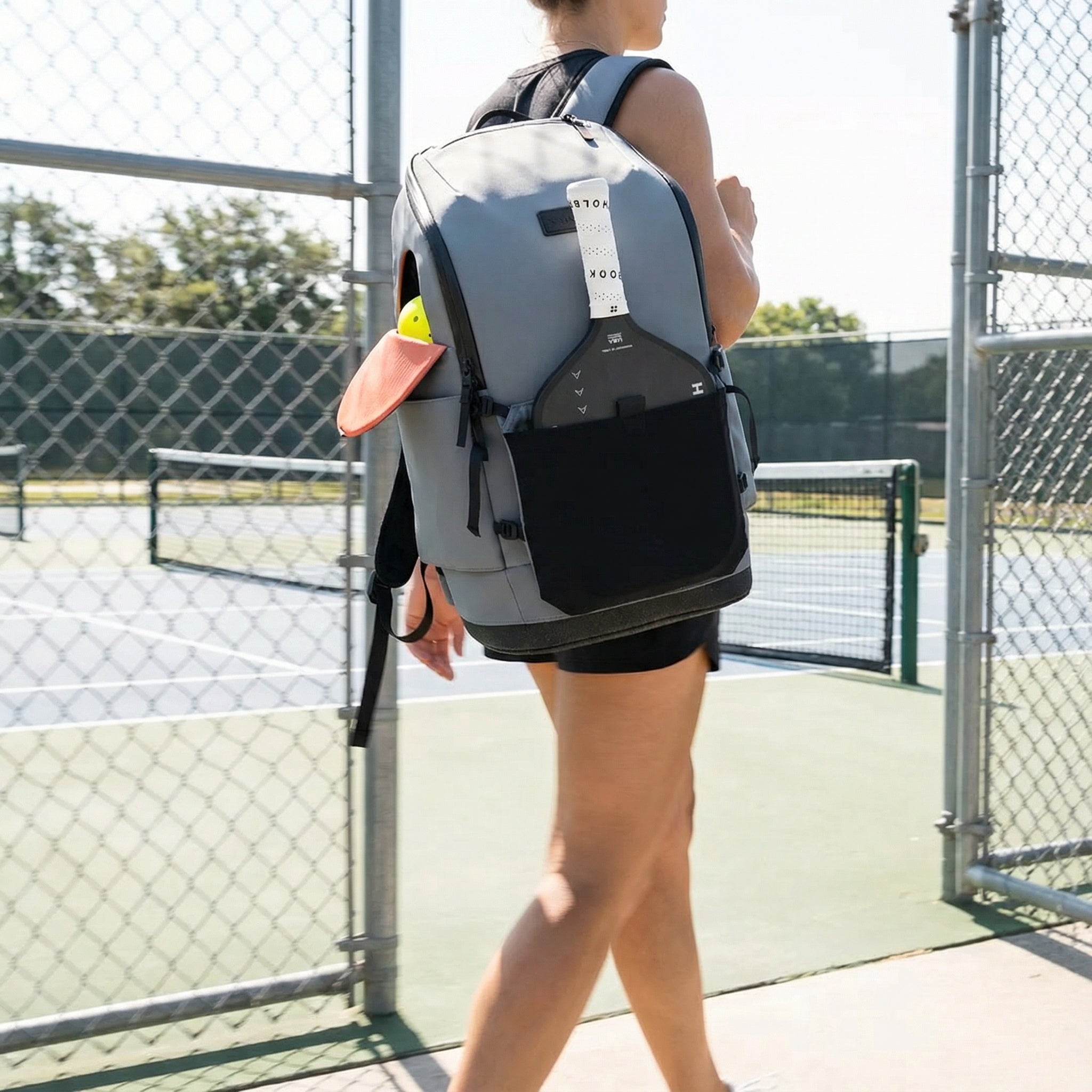
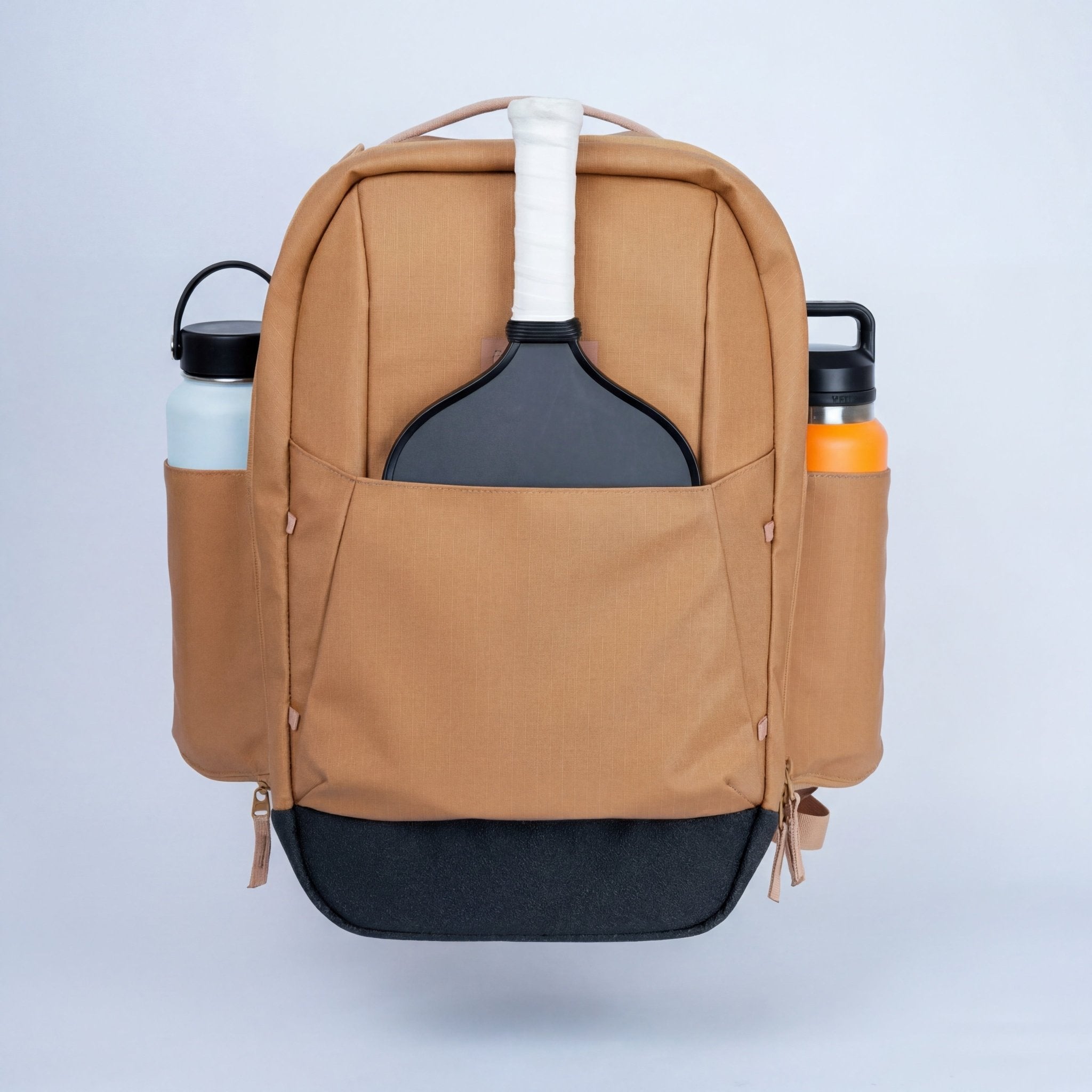
You've got the eye protection sorted. The other half of showing up court-ready is having your gear actually organized when you get there. FORWRD's Court Ranger V2 ($195) has a dedicated accessories pocket that fits glasses cases, ball holders, and grip supplies — everything in one place when you're suiting up between games. No more digging through a bag that's held together by wishful thinking.
Our Pick: FORWRD Court Ranger V2
16" padded laptop sleeve, modular paddle sleeve, YKK AquaGuard zippers, dedicated accessories pocket — designed with 500+ real players for exactly this kind of organized court kit.


Leave a comment
This site is protected by hCaptcha and the hCaptcha Privacy Policy and Terms of Service apply.