

Last Updated: June 2026

There are roughly 80 pickleball bags on the market right now. Most of them use identical marketing language: "paddle compartment, ventilated shoe pocket, water bottle holder." The specs are the same. The photos look the same. The prices range from $8.99 to $325 for reasons that aren't obvious until you've owned a few bags and understood exactly what makes the cheap ones frustrating after six weeks. We designed the Court Caddy and Court Ranger V2 after interviewing 500+ real players about what their bags got wrong — so we've heard these complaints from every angle.
This guide cuts through it. Eight features that actually matter, in order of how much they affect your experience — with specific numbers instead of vague adjectives.
The most important things to look for in a pickleball bag are: how many paddles you carry (determines compartment size), whether you need a laptop sleeve and what size, water resistance of the material, ventilated shoe compartment separation, and total bag weight. Most buying mistakes come from not knowing your actual use case before buying.
Key Facts
- Most pickleball players carry 1–2 paddles to open play; 3–4 paddles is typical for league or tournament play. If you carry more than 2 paddles, a backpack is better than a sling.
- Laptop sleeves vary significantly: many bags labeled "laptop compatible" only fit a 13" laptop. The FORWRD Court Caddy fits a 15" laptop; the Court Ranger V2 fits a 16" laptop. Check the exact size, not just "has laptop sleeve."
- YKK zippers vs generic zippers is a meaningful durability difference. YKK zippers are used on premium outdoor gear because they don't jam with sand, grit, or moisture. Check the zipper brand before buying.
- Weight of the empty bag matters. A bag that weighs 3.5 lbs empty with 3 lbs of gear in it is 6.5 lbs on your back. Court bags range from 0.8 lbs (sling) to 4+ lbs (large tour duffels).
- Ventilated shoe compartments serve two purposes: they isolate dirty/wet shoes from your paddles, and they let moisture out so shoes dry between sessions. A non-ventilated bag traps moisture and breeds odor.
- Water resistance ≠ waterproof. Most bags are water-resistant (repel light rain and splashes) but not waterproof. If you play outdoor courts in heavy rain regularly, look for YKK AquaGuard zippers and a coated interior.
- Padded laptop sleeves protect against bag drops — not just from the laptop shifting inside. The padding matters for players who commute court-to-office.
- The difference between a $80 bag and a $195–$325 bag is typically: zipper quality, material durability, laptop sleeve size, and warranty. Budget bags work; they just don't last as long and lack the sleeve size for larger laptops.
The 4-Question Framework: What Do You Actually Need?
Before looking at any specific bag, answer these four questions. They're drawn from the most common buying mistakes we heard from the 500+ players we spoke with during product design — players who bought the wrong bag and figured out why too late.
1. How many paddles do you carry? 1–2: a sling bag works. 3–4: you need a backpack with a dedicated paddle sleeve. 5+: you need a tour bag or duffel.
2. Do you go court-to-work or court-to-anything-else? If you carry a laptop, work shoes, or a change of clothes to the court: you need a backpack with a laptop sleeve. Check the sleeve size — most standard-laptop-sleeve bags fit 13". For a 15" MacBook Pro or similar, you need a bag that specifies 15" or 16".
3. Do you primarily play indoors or outdoors? Indoors: material durability is less critical (no UV exposure, no rain). Outdoors: look for coated fabric, YKK AquaGuard or equivalent weather-sealed zippers, and UV-resistant material.
4. Do you commute by foot, bike, or transit? Backpacks distribute weight on both shoulders — much more comfortable for walks over 5 minutes. Sling bags are fine for parking-lot-to-court. Duffels work for car-based commuters with trunk space.
The 8 Features That Actually Matter
1. Paddle Compartment Size and Design
The paddle compartment needs to hold your paddle plus a cover. A standard pickleball paddle is approximately 16.5" long and 7.5–8" wide. Most bags accommodate this — the issue is number of paddles and whether the compartment has a rigid sleeve or just a soft pocket.
Rigid/padded sleeves protect the paddle face from impact with other gear. Soft pockets just separate them spatially. If you have a $200+ paddle, the sleeve matters. Some bags — including the FORWRD Court Caddy — use a modular paddle sleeve that can hold one or two paddles with the face protected on both sides.
2. Laptop Sleeve Size (Not Just "Has Laptop Sleeve")
This is the most overlooked spec in bag marketing. "Laptop sleeve included" means almost nothing without the size. Here's the reality:
- 13" sleeve: fits a 13" MacBook Air or small ultrabooks only
- 15" sleeve: fits most 15" laptops including older MacBook Pros, Dell XPS 15, Lenovo ThinkPad 15
- 16" sleeve: fits the MacBook Pro 16", most 15.6" Windows laptops (they're wider than 15" MacBooks), and larger ultrabooks
The FORWRD Court Caddy has a padded 15" sleeve. The Court Ranger V2 has a 16" sleeve — large enough for the MacBook Pro 16" and nearly any 15.6" Windows laptop. Both have padding specifically for the drop-protection scenario (bag falls off a bench — laptop doesn't take the edge impact).
3. Material and Weather Resistance
Most pickleball bags use one of three material types:
- 600D polyester: Standard, affordable, fine for indoor play and casual use. Can pill and snag with heavy outdoor use. Budget to mid-range bags.
- Nylon (210D to 900D): More abrasion-resistant than polyester at equivalent weight. Better for outdoor concrete courts where the bag hits the ground regularly.
- Coated/ripstop: Highest durability, usually found in premium bags. Ripstop weave prevents tears from propagating; coating adds water repellency.
The FORWRD Court Caddy and Court Ranger V2 both use YKK AquaGuard zippers — the same spec you'll find on technical outdoor gear. Most bags in the $60–$130 range use generic zippers that work but jam with grit and can fail at the slider after 18–24 months of outdoor use.
4. Ventilation and Shoe Compartment
A separated shoe compartment is standard on most bags in this category. The quality difference is in the ventilation:
- No vent: shoes dry very slowly. After a 90-minute outdoor session in 85°F, sweaty shoes sitting in a sealed compartment develop odor within 24 hours.
- Mesh vent panel: allows airflow. Shoes lose 30–40% of moisture in transit vs. a sealed bag. The mesh also visually signals the compartment, which matters when you're digging through a bag courtside.
Both FORWRD bags have vented shoe compartments with mesh panels. At the sub-$80 budget level, most bags have either no vent or a very small one — that's an acceptable tradeoff at that price, but know what you're getting.
5. Carry System: Backpack vs. Sling vs. Duffel
Backpacks distribute weight across both shoulders — better for anything over a 5-minute walk, for heavier loads (3+ pounds of gear), and for players with shoulder or back issues. They're the best carry option for most regular players.
Sling bags carry on one shoulder. They're lighter, faster to access (one clip off, bag opens at your side), and better for "grab and go" players who play once a week with one paddle. The downside: uneven weight distribution becomes uncomfortable on longer walks or with heavier loads.
Duffels are easiest to pack but worst to carry long distances. They're primarily car-based. If you drive to the court, open the trunk, walk 50 feet to the door, and drop the bag on a bench — duffels are great. If you're on foot or transit, they're a struggle.
6. Bag Weight (Empty)
Often the most-overlooked spec. A bag that weighs 3 lbs empty means you're carrying 3 lbs before you've put anything inside. Premium bags use materials that balance durability with low weight — the FORWRD Court Ranger V2, for example, is designed to feel lighter than its specs while carrying more than most competing bags in its volume class.
For reference: a typical 2-paddle carry with water bottle, balls, and a change of shoes will add roughly 5–7 lbs to the bag. Start with a heavy bag and you're carrying 8–10 lbs. Start with a light bag and you're carrying 6–8 lbs. Over an hour of commuting, that matters.
7. Water Bottle and Accessory Organization
Two specific things to look for:
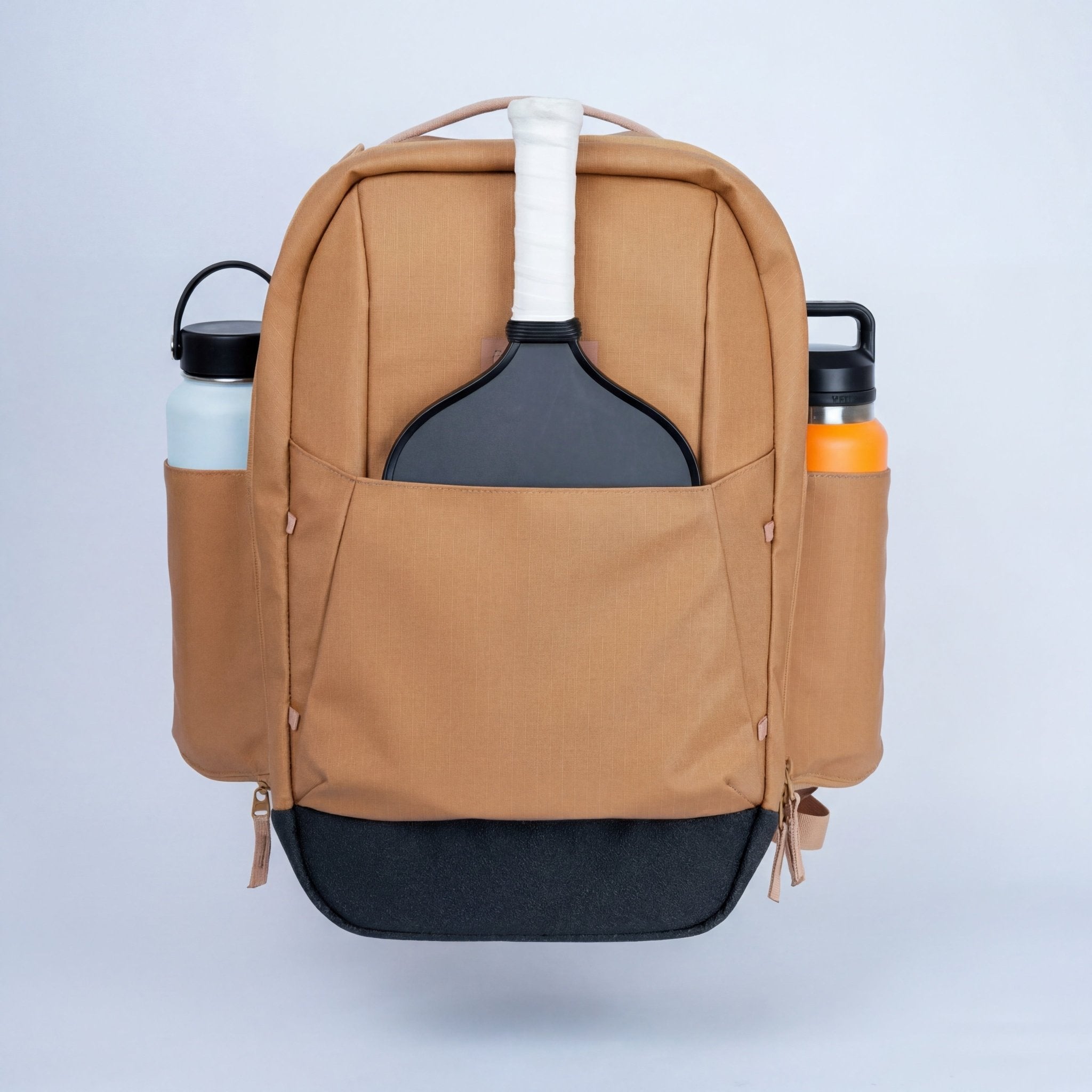
- External water bottle pocket: side-access is better than top-access. You can pull a water bottle out while the bag is on your shoulder with side access; top access requires setting the bag down.
- Quick-access pocket: a front or top small pocket for your phone, keys, and wallet that you access every few minutes at the court. If you have to open the main compartment for these items, you'll find it annoying within a week.
8. Warranty
Budget bags: typically 30–90 day warranties, if any. Mid-range: 1 year. Premium: 1–2 years. FORWRD offers a lifetime warranty on the Court Caddy — we stand behind the craftsmanship because we can, and because warranty replacement is how premium brands retain customers long-term.
If your use case is "I play twice a week at the same gym, never outdoors" — you probably don't need to pay for a lifetime warranty. If you travel for tournaments, play on outdoor courts year-round, or treat your bag hard: the warranty tier directly correlates to how long you're not paying to replace the bag.
FORWRD Recommendations by Use Case

Court-to-Work Commuters: Court Caddy ($325)
FORWRD Court Caddy — $325 at forwrd.co
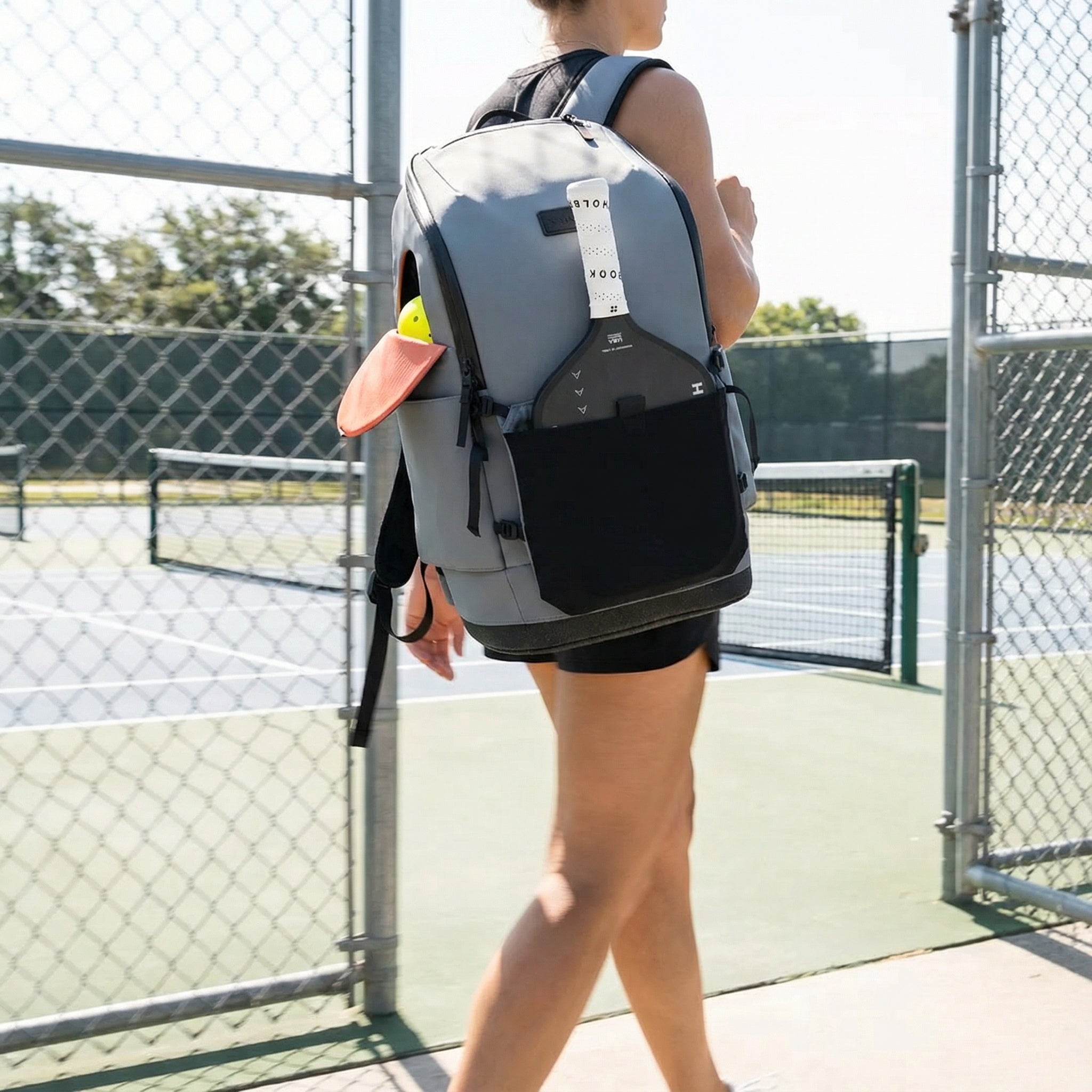
Padded 15" laptop sleeve, modular 2-paddle sleeve, YKK AquaGuard zippers, lifetime warranty. Built for the player who needs the bag to function as a work bag in the morning and a court bag in the afternoon without looking like either. External water bottle pocket, front quick-access pocket, ventilated shoe compartment. Carries 4 paddles when both slots are used.
Everyday Court Bag: Court Ranger V2 ($195)
FORWRD Court Ranger V2 — $195 at forwrd.co
Same YKK AquaGuard zippers and weatherproof build as the Court Caddy. A 16" laptop sleeve — larger than the Caddy, which matters for MacBook Pro 16" and 15.6" Windows laptop users. Slightly lower profile than the Caddy, which works better for players who want a bag that doesn't look like a hiking pack. The Ranger V2 is also the right call if you're cost-conscious about the premium tier — it gives you the quality of a FORWRD bag at the $195 price point.
Budget Alternatives at Pickleball Central
If $195–$325 is outside your current budget, here are Tier 2 alternatives with verified product pages:
Selkirk Core Series Team Pickleball Backpack — $79.99
View at Pickleball Central →
Solid mid-range option. Two paddle sleeves, ventilated shoe compartment, water bottle pocket. No laptop sleeve — best for players who don't need to go court-to-work. Selkirk's quality control is consistent.
JOOLA Everyday Backpack — $79.95
View at Pickleball Central →
Casual-style bag that doubles as a regular backpack. Has a racquet/paddle storage sleeve and basic organization. Works well for players who want something that doesn't look sport-specific. Less dedicated court organization than the Selkirk.
CRBN Pro Team Pickleball Backpack — $109.99
View at Pickleball Central →
Best in the $100–$110 range. Dedicated paddle compartment, shoe compartment, external water bottle pockets, and a front panel organizer. Closer to the FORWRD quality tier without the laptop sleeve or lifetime warranty. For players who don't need the laptop sleeve and want a premium-feeling bag under $120, CRBN is worth the step up from Selkirk.
Gearbox Core Pickleball Backpack — $120.00
View at Pickleball Central →
Heavy-duty build that leans toward the tournament player. More organization pockets than most bags in this price range. Good for players who carry a lot of accessories (grips, balls, wristbands, glasses) alongside their paddles.
"We interviewed 500+ players when designing the Court Caddy and Court Ranger V2. The #1 complaint about existing bags was that the laptop sleeve was either missing or too small — everyone had a 15" or 16" laptop and most bags only fit a 13". We built the spec around reality, not the 2019 average laptop. That's the Court Caddy's 15" sleeve and the Ranger V2's 16" sleeve — exact sizes, not 'laptop compatible.'"
— Topher Lake, FORWRD Co-founder
The Spec Comparison You Actually Want
| Bag | Price | Laptop Sleeve | Paddle Capacity | Weather Resistance | Warranty |
|---|---|---|---|---|---|
| FORWRD Court Caddy | $325 | 15" padded | 4 paddles | YKK AquaGuard | Lifetime |
| FORWRD Court Ranger V2 | $195 | 16" padded | 4 paddles | YKK AquaGuard | 1 year |
| CRBN Pro Team Backpack | $109.99 | None | 2 paddles | Standard | 1 year |
| Selkirk Core Series Team | $79.99 | None | 2 paddles | Standard | 1 year |
| JOOLA Everyday Backpack | $79.95 | Basic 13" | 2 paddles | Standard | 30 days |
| Gearbox Core Backpack | $120.00 | None | 2–3 paddles | Standard | 1 year |
Specs verified as of May 2026. Check current product pages for updates.
FAQ
What should I look for in a pickleball bag?
The most important features are: paddle compartment size and padding, laptop sleeve size (if you need one), material weather resistance, ventilated shoe compartment, and bag weight. Start by identifying your carry type (backpack, sling, duffel) based on how far you walk and how much you carry, then filter on features from there.
What size laptop sleeve do I need in a pickleball bag?
Most current 15" laptops and 15.6" Windows laptops require a 15"–16" sleeve. MacBook Pro 16" requires a 16" sleeve. The FORWRD Court Caddy fits up to 15" and the Court Ranger V2 fits up to 16". Many bags labeled "laptop compatible" only fit 13" laptops — confirm the exact size before purchasing.
How many paddles should a pickleball bag hold?
For casual open play, a bag that holds 1–2 paddles is sufficient. For league or tournament play where you carry a backup or multiple weight options, 3–4 paddle capacity is recommended. Most backpack-style court bags hold 2–4 paddles; sling bags typically hold 1–2.
Is a $80 pickleball bag good enough?
Yes, for most players. An $80 bag like the Selkirk Core Series Team or JOOLA Everyday Backpack handles everyday court duty well. The main limitations at this price tier: no laptop sleeve (or only 13"), generic zippers rather than YKK, and shorter warranty periods. For players who go court-to-work or play in harsh outdoor conditions regularly, the upgrade to $195–$325 pays for itself in durability.
What is the difference between a pickleball sling bag and a backpack?
Sling bags carry on one shoulder and are better for light loads (1 paddle, minimal gear) and short distances — easy on, easy off. Backpacks distribute weight across both shoulders, which is more comfortable for heavier loads and longer walks. If you carry more than one paddle, a laptop, or shoes, a backpack is the more ergonomic choice for sessions over 5 minutes of walking.
Final Verdict
The right pickleball bag is the one that solves your specific problem. If you're going court-to-work: get the FORWRD Court Caddy (15" sleeve, 4-paddle capacity, lifetime warranty). If you want premium quality at a more accessible price: Court Ranger V2 at $195 with a 16" sleeve. If you're budget-constrained: the Selkirk Core Series Team at $79.99 or CRBN Pro Team Backpack at $109.99 from Pickleball Central.
Don't buy a bag because the marketing photo looks good. Buy based on the four questions above: paddles, laptop, weather, commute distance. Everything else is secondary.
For more detail on bag types, see our backpack vs sling vs duffle comparison and our best pickleball bags roundup.

Leave a comment
This site is protected by hCaptcha and the hCaptcha Privacy Policy and Terms of Service apply.