


Here's the honest take nobody gives you upfront: a sling bag is right for about 20% of pickleball players, a backpack works for 65%, and a full duffle or tour bag is worth the bulk for maybe 15%. Most players end up buying the wrong one — usually a sling because it's cheaper — and find themselves back in the market three months later because they can't fit their water bottles, backup balls, and a towel at the same time.
This guide breaks down all three bag types honestly — who each works for, where each falls short, and a four-question decision framework to land on the right style before you spend anything.
Last updated: July 2026
Disclosure: This post contains affiliate links to Pickleball Central. If you purchase through our links, FORWRD earns a small commission at no extra cost to you. We only link to products we'd recommend regardless.
Key Facts
- Sling bags: typically 10–20L capacity, hold 1–2 paddles, best for quick sessions under 2 hours where you're carrying the minimum.
- Backpacks: typically 25–35L capacity, hold 2–4 paddles, the right call for players who go to the court 2–5 times per week with a full kit.
- Duffle/tour bags: 35–60L capacity, hold 4–8 paddles, designed for tournament days where you need shoes, clothing, food, and medical supplies for 6–8 hour events.
- Weight difference matters: a fully packed duffle runs 15–22 pounds. Over a 45-minute walk from parking to courts, that's the difference between arriving ready to play and arriving with a sore shoulder.
- FORWRD Court Ranger V2 ($195) is the backpack most recreational and competitive players land on: 16" laptop sleeve, modular paddle sleeve, YKK AquaGuard zippers, lifetime warranty.
- FORWRD Court Caddy ($325) is the premium backpack that covers daily players and tournament players equally — higher capacity than the Ranger, 15" laptop sleeve, and the only bag in its class with a lifetime warranty.
- The sling bag trap: in FORWRD's player feedback sessions, the most common bag regret was starting with a sling and upgrading to a backpack within six months — the cost of buying both is always higher than starting with the right backpack from the beginning.
The Three Pickleball Bag Styles, Briefly
The pickleball bag market breaks down into three functional categories — not based on what brands call them, but on how they're actually used:
- Sling bags: single-strap bags worn across the body. Minimal capacity. Fast access. Built for players who carry the essentials and nothing more.
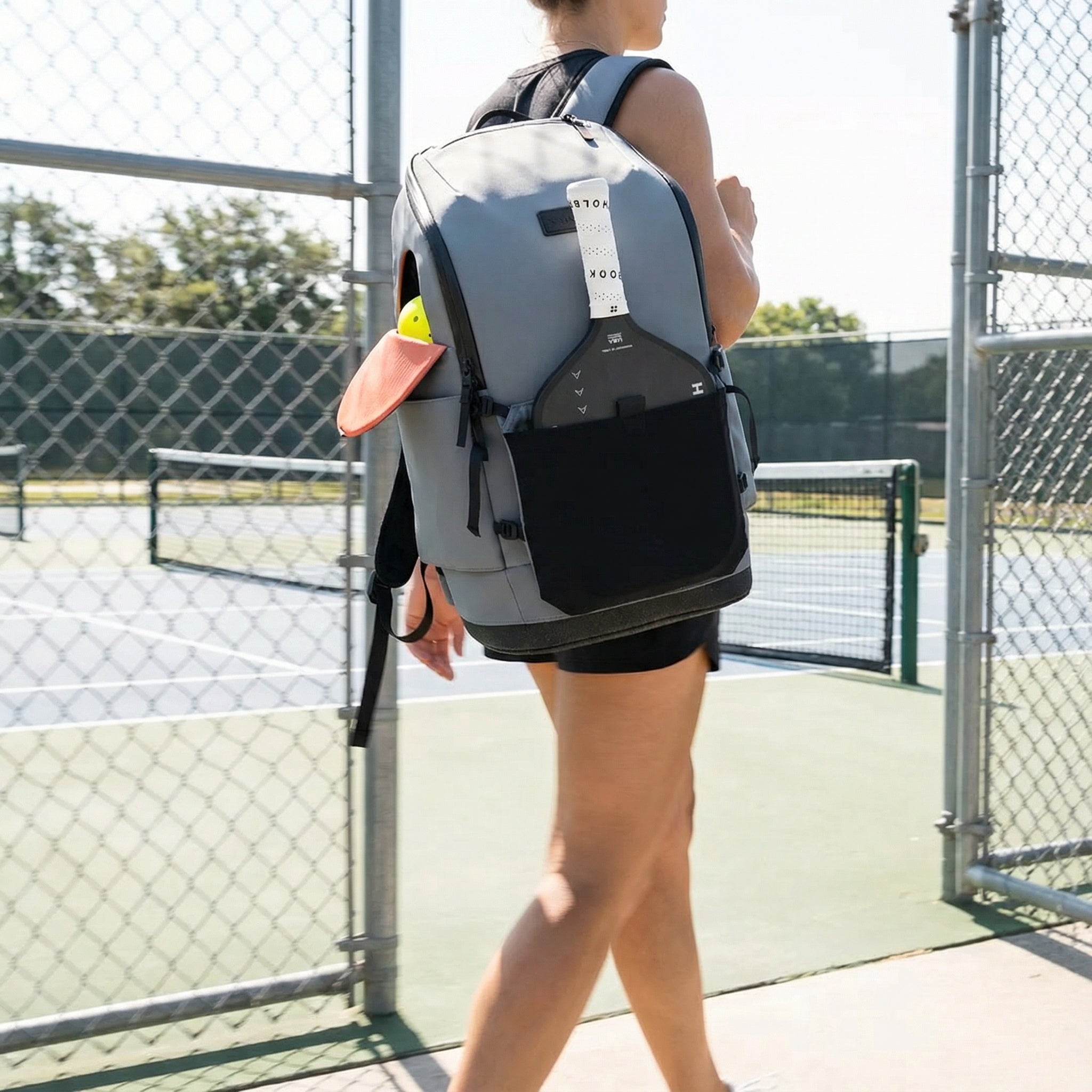
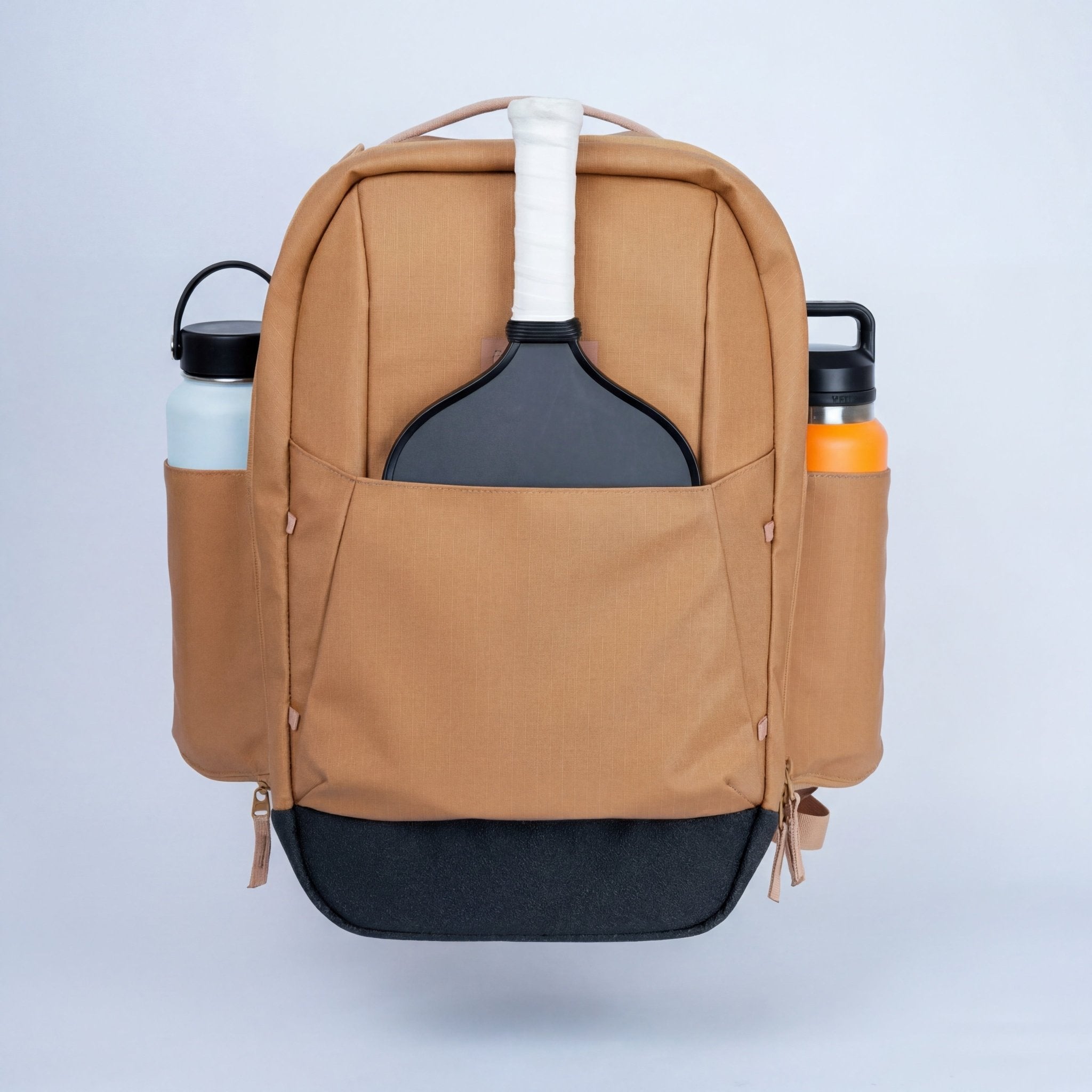
- Backpacks: two-strap bags with full organization — paddle compartments, water bottle sleeves, gear pockets, and (in quality bags) a laptop sleeve. The daily driver for serious recreational players.
- Duffle/tour bags: large-capacity bags with a shoulder strap or dual handles. Built to carry everything for a full tournament day. The professional's bag for 6–8 hour events.
Most of the confusion happens between slings and backpacks. Players assume a sling is fine for everyday play — it's lighter, it's cheaper, it's less to carry. The reality: a sling runs out of room fast. Two paddles, three balls, a water bottle, a towel, and your phone. You're at the limit before you've added sunscreen or a change of shirt.
 Side-by-side of a sling bag, Court Ranger V2 backpack, and Court Caddy on a court bench showing size and capacity differences -->
Sling Bags — Compact, Fast, and Limited
A sling bag is genuinely good for one player type: the casual recreational player who shows up to open play twice a week, carries one paddle, grabs a few balls from the court basket, and is done in 90 minutes. If that's you — a sling works great. It's light, it swings around easily, and there's nothing wrong with not overcomplicating your kit.
The problem is when players use a sling bag as a daily driver for more serious play. A 15L sling holds one or maybe two paddles, some balls, and your basics. Add a water bottle and a towel and it's full. There's no laptop sleeve if you commute. No shoe compartment if you're coming from work. No room for a spare paddle grip or first-aid kit for a tournament session.
Sling bag works for you if:
- You carry one paddle to most sessions
- You play at open play facilities where balls are provided
- You travel light by preference and won't resent the limited space
- You're a beginner who hasn't built out a full kit yet
Sling bag doesn't work if:
- You carry two or more paddles (teaching, playing with a partner, backup paddle)
- You bring your own balls regularly
- You go from court to work or work to court on the same day
- You play outdoors and want a water bottle plus sunscreen plus a towel
Price range for sling bags: $25–$60. The lower price point is attractive — but see the key facts above about the sling bag trap. Buying a sling and then a backpack costs more than starting with the right backpack.
Browse pickleball sling bags at Pickleball Central if you've confirmed a sling is the right call for your play style.
 Pickleball sling bag worn across body showing minimal footprint and quick-access design -->
Backpacks — The Right Call for Most Players
A well-designed pickleball backpack is the answer for the majority of players because it hits the right balance of every variable: enough capacity to carry a full kit without excess bulk, comfortable two-shoulder carry that distributes weight evenly, and enough organizational structure to keep gear sorted without digging.
The key word is "well-designed." Not every pickleball backpack is worth buying. The main differentiators that matter at this level:
- Dedicated paddle sleeve: not just a wide main compartment where paddles roll around. A proper sleeve that holds paddles upright and separated.
- Zipper quality: this is where budget bags fail first. Plastic zipper pulls on a bag used 200+ sessions per year don't survive. YKK zippers — which FORWRD uses on both bags — are the standard worth paying for.
- Laptop sleeve: non-negotiable if you go court-to-work. A padded sleeve that fits a real laptop without putting pressure on the corners.
- Padded shoulder straps: a 12–15 lb loaded backpack needs real strap padding. Thin straps become painful fast.
The FORWRD Court Ranger V2 is the backpack that covers recreational and competitive daily players. It has a modular paddle sleeve (holds 2–4 paddles without flat-stacking them, which causes edge wear), a 16" padded laptop sleeve that fits virtually any consumer laptop, YKK AquaGuard zippers, padded shoulder straps, and a lifetime warranty. At $195, it's priced above the entry-level field but below the Court Caddy — and the quality gap between it and a $70 bag is immediate and obvious in your first session.
If you want more capacity — four paddles, organized compartments for a tournament kit, plus the laptop sleeve — that's the FORWRD Court Caddy at $325. The Court Caddy is the bag for players who need it to work as a work bag and a court bag on the same day, 3–5 days a week.
"The biggest mistake we see new players make is buying a sling bag because it's compact and cheap. Then they're back in the market three months later when they realize they can't fit water, balls, and a change of shirt at the same time. The upgrade is almost always worth it from day one. Start with a real backpack."
— Grub, FORWRD Co-founder
Backpack works for you if:
- You play 2–5 times per week with a full kit
- You carry 2–4 paddles (your own plus extras for partners)
- You go court-to-work or work-to-court and need a laptop sleeve
- You play both indoor and outdoor and need weather-resistant construction
Duffle and Tour Bags — When Capacity Is the Point
Tournament players and coaches understand why duffle bags exist. A full tournament day is 6–8 hours, requires two pairs of shoes (different surfaces play differently), multiple paddles for different conditions, a change of clothes, food, sports tape, ball hoppers, and gear for drilling during warm-up. A backpack simply can't carry all of that. A duffle or tour bag can.
Real talk: if you're not playing in USA Pickleball sanctioned events, PPA/APP qualifiers, or similar — you probably don't need a duffle. And even tournament players often find that a high-capacity premium backpack like the Court Caddy handles their full tournament day without the weight penalty of a traditional duffle.
The downside of a traditional duffle is real: 15–22 pounds fully packed is uncomfortable over a long carry, and the single-strap or handle carry doesn't distribute that weight well. The modern answer — which is where the Court Caddy lives — is a high-capacity backpack that carries as much as a duffle but distributes the weight across both shoulders.
Duffle/tour bag works for you if:
- You compete in multi-day or full-day tournaments regularly
- You're a coach who carries equipment for students
- You're carrying 6–8 paddles for teaching or team play
- You need to transport ball hoppers or other large equipment
Consider a premium backpack instead if:
- You play 1–3 tournament days per month and want your bag to work on regular court days too
- You need to carry a laptop in addition to your court gear
- You want one bag that works in all contexts — court, office, travel — without announcing itself as sports equipment
Pros & Cons: All Three Styles Side-by-Side
| Feature | Sling Bag | Backpack | Duffle / Tour Bag |
|---|---|---|---|
| Paddle capacity | 1–2 | 2–4 | 4–8+ |
| Typical volume | 10–20L | 25–35L | 35–60L |
| Carry comfort (long distances) | Fair — single strap | Best — two padded straps | Variable — single strap or handles under heavy load |
| Laptop sleeve | Rarely | Often (Court Ranger V2: 16", Court Caddy: 15") | Rarely |
| Typical price range | $25–60 | $60–325+ | $80–200+ |
| Best for | Quick casual sessions, one paddle, basics only | Daily play, commuters, competitive recreational, tournaments | Coaches, heavy tournament players, multi-day events |
| Worst for | Players who carry more than 2 paddles, commuters, tournament players | Carrying 6+ paddles or coaching equipment | Everyday carry — too bulky, heavy, and impractical for regular sessions |
| FORWRD recommendation | Tier 2 pick — browse PBC for options | Court Ranger V2 ($195) or Court Caddy ($325) | Court Caddy handles most tournament loads — or browse PBC tour bags for coaching-scale capacity |
How to Decide: 4 Questions
Answer these in order. The first "yes" determines your bag type.
Question 1: Do you carry a laptop to or from the court?
Yes → you need a backpack with a padded laptop sleeve. Full stop. A sling won't fit a laptop, and a traditional duffle won't protect one. Go to Court Ranger V2 (16" sleeve, $195) or Court Caddy (15" sleeve, $325).
Question 2: Do you compete in tournaments more than once per month?
Yes → you need either a high-capacity backpack (Court Caddy handles most tournament loads) or a true duffle/tour bag if you're coaching or carrying 6+ paddles. If it's personal competition, the Court Caddy covers you. If you're coaching a team, a tour bag makes sense.
Question 3: Do you carry more than two paddles regularly?
Yes → a backpack is the minimum. Slings don't reliably fit two full-size paddles plus anything else. The Court Ranger V2 holds 2–4 paddles in its modular sleeve; the Court Caddy holds four.
Question 4: Do you play fewer than twice per week and carry just one paddle and basics?
Yes → a sling bag is a legitimate option at this usage level. You won't outgrow it quickly, and the lower price point makes sense for casual frequency. Browse options on Pickleball Central.
Still deciding? Also see: Best Pickleball Bags for Women 2026 and Best Pickleball Bags 2026: Top 8 Picks.
Frequently Asked Questions
What's the difference between a pickleball sling bag and a backpack?
A sling bag uses one strap worn across the body and typically holds 10–20L — enough for 1–2 paddles and basics. A backpack uses two padded shoulder straps, holds 25–35L, and can carry a full kit including paddles, balls, shoes, a towel, water, and often a laptop. Backpacks distribute weight better over longer carries and scale with more serious play.
Which bag type is best for beginner pickleball players?
A backpack — specifically a mid-range backpack like the FORWRD Court Ranger V2. Beginners often underestimate how fast they'll build a kit. Starting with a backpack means you won't need to upgrade in six months when you add a second paddle, start carrying your own balls, or begin going to the courts more frequently. The sling bag upgrade path always costs more in total.
Can a sling bag hold two pickleball paddles?
Some sling bags can hold two paddles, but barely — with no room for much else once you add two paddles plus balls and a water bottle. Sling bags are genuinely designed for one paddle and the basics. If you're regularly carrying two paddles, a backpack is the right call.
Are duffle bags good for pickleball tournaments?
Traditional duffles work for tournament days but have a real downside: 15–22 lbs of gear on a single shoulder strap is uncomfortable over long carries. A high-capacity backpack like the FORWRD Court Caddy carries nearly as much as a duffle but distributes the weight across both shoulders — which matters when you're walking through a convention center or resort facility for 45 minutes. For coaches or players carrying 6+ paddles, a true tour bag may still be worth the bulk.
How heavy should a pickleball bag be when packed?
A realistic packed-bag weight for a recreational player: 8–12 lbs (two paddles, 6 balls, water bottle, shoes, towel, phone, keys). A tournament player packs 14–20 lbs. The key isn't minimizing weight — it's making sure the carry system (straps, back panel) handles that weight comfortably. Two padded shoulder straps on a backpack distribute that load better than one sling strap or two handles on a duffle.
Bottom line: most players who land on this page are deciding between a sling and a backpack. The backpack wins for anyone who plays more than twice a week, carries more than one paddle, or wants a bag that also works as a work bag. Start with the Court Ranger V2 — it's the right bag for the widest range of players. Step up to the Court Caddy if you need full court-to-office carry with four-paddle capacity.

Leave a comment
This site is protected by hCaptcha and the hCaptcha Privacy Policy and Terms of Service apply.