

Disclosure: This post contains affiliate links to Pickleball Central. If you purchase through our links, FORWRD earns a small commission at no extra cost to you. We only link to products we'd recommend regardless.
The best pickleball glasses for outdoor play are photochromic or copper-tinted polycarbonate lenses with ANSI Z87.1 impact certification — not your regular UV sunglasses. That's the short answer. The full answer depends on where you play, whether you need a prescription, and how much you're willing to spend before your first match.
We've worn 8 pairs across 100+ court sessions — outdoor concrete, indoor gym, and covered hybrid rec centers. Here's what actually held up, what didn't, and what the brand pages don't mention.
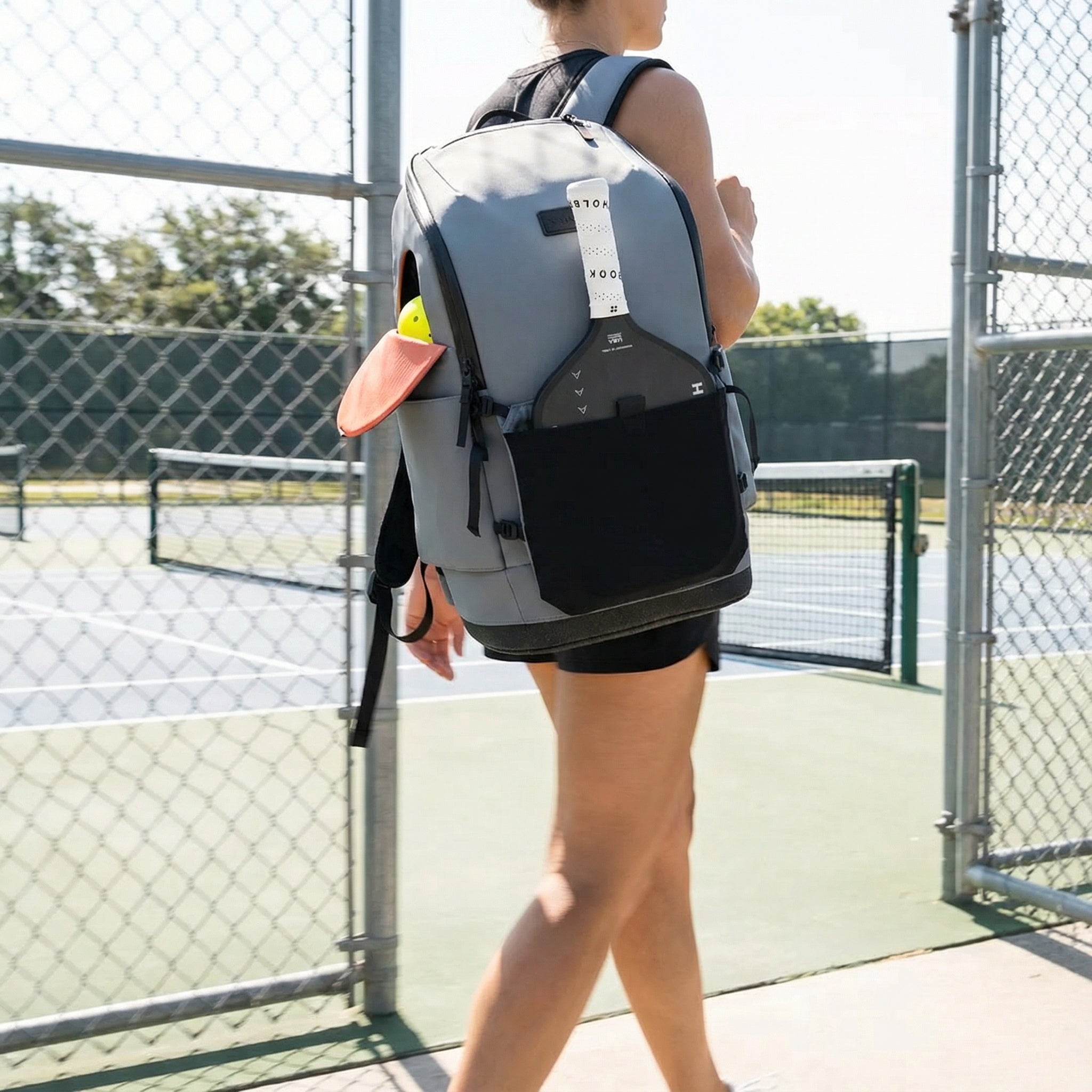
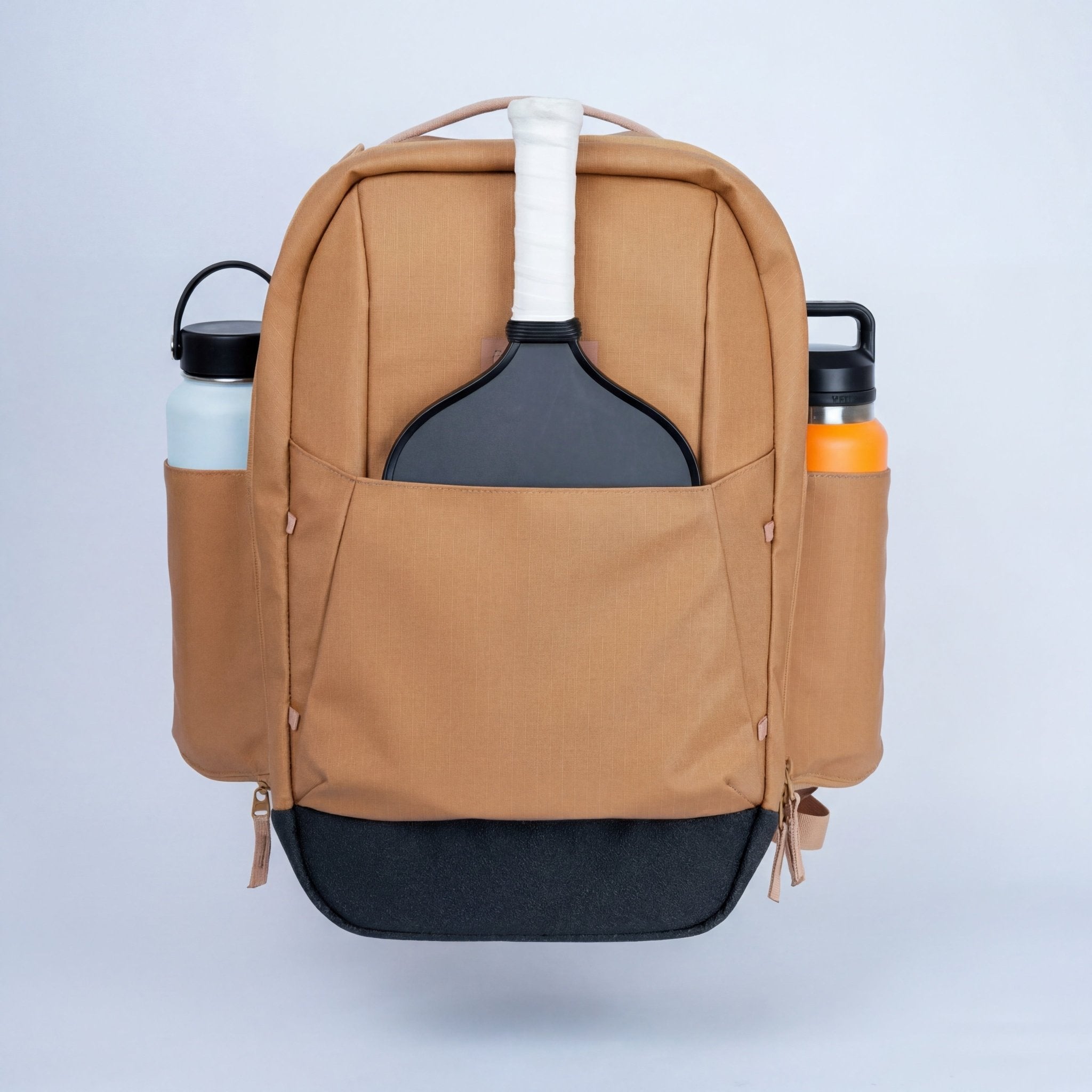
Gear note: Before you buy glasses, make sure you have somewhere to store them safely. The Court Ranger V2 Pickleball Backpack ($195) has a padded compartment sized for a hard-shell glasses case — your lenses travel safe even stuffed in the overhead at 6 AM on tournament day.
Last updated: September 2026
The 3 Questions That Narrow Your Pickleball Glasses Choice
Before you look at a single product page, answer these. They'll cut the list from dozens of options to the three or four that actually fit your situation.
1. Where do you mostly play? Outdoor courts need tinted or photochromic lenses to handle glare and sun angle. Indoor gyms need lightly amber-tinted or clear lenses — dark outdoor tints dim your vision under fluorescent lights and slow reaction time. If you bounce between both, photochromic lenses or two pairs.
2. Do you need a prescription? If yes, your options narrow fast. Most sport eyewear isn't made in Rx configurations. Sport goggles with Rx inserts or over-glasses solutions are the realistic paths at most price points.
3. What's your realistic budget? Under $45 gets solid impact protection and a decent lens. $70–$100 gets ANSI-certified COLORBOOST or photochromic optics. Above $95 buys a premium dual-lens system. None of these tiers is wrong — it depends on how often you play and how seriously you take court vision.
Outdoor Pickleball Glasses: Lens Tints That Actually Work on Sunny Courts
Sunlight creates two problems on a pickleball court: glare off the surface, and low-contrast differentiation between a yellow ball and a light-colored net or background. The lens tint you choose directly affects both.
Here's what the tint data actually shows — not what's on the marketing page:
| Tint Color | Best Conditions | Light Transmission | Ball Visibility | Notes |
|---|---|---|---|---|
| Amber/Copper | Overcast, partly cloudy outdoor | 40–55% | High | Best contrast boost for yellow balls; top pick for morning sessions with low sun angle |
| Gray/Smoke | Bright full sun, midday | 10–25% | Moderate | Good for intense midday sun; less contrast enhancement than amber |
| Photochromic | Indoor-to-outdoor transitions | Adjusts 10–80% | High across conditions | Best option for multi-surface players; see honest assessment below |
| Blue-tinted | Overcast outdoor | 30–50% | Good | Pickleball-specific blue tints (Tourna Specs) increase yellow ball contrast against sky backgrounds |
| Clear | Indoor only | 85–90% | Neutral | Not for outdoor — glare is severe. Indoor protection use only |
The tint I reach for most: amber/copper on the 7–10 AM outdoor sessions where the sun angle is nasty and low. It makes the yellow ball look almost fluorescent against the court. Full smoke/gray is better midday. And for players who transition from indoor warmups to outdoor play — photochromic is the only lens that doesn't require a gear swap mid-session.
Indoor Pickleball Glasses: What Changes Under Gym Lighting
Under fluorescent or LED gym lights, UV protection doesn't matter. What you need is contrast enhancement — something that makes the yellow ball pop against a white gym ceiling, a light-colored back wall, or the net tape.
Amber and clear lenses both work indoors. Smoke and dark gray actively hurt you — they dim everything without adding contrast. Don't bring your dark outdoor pair to the Tuesday night indoor session.
For the complete breakdown of indoor-specific models and the gear we recommend for gym play specifically, see our Best Indoor Pickleball Glasses 2026 guide.
Photochromic Pickleball Glasses: Do They Actually Work?
Yes — with one caveat worth knowing before you buy.
Photochromic lenses react to UV light. Walk from an indoor gym to a bright outdoor court: the lens darkens in 30–60 seconds. Walk back indoors: it clears in 2–3 minutes. For most transitions, this is completely fine.
The situation where they frustrate players: covered outdoor courts with partial shade. The lens only partially darkens because it's reading mixed UV exposure. You end up with a tint that's neither dark enough for the sunny side nor clear enough for the shaded side. Experienced players who play at these venues have complained about exactly this.
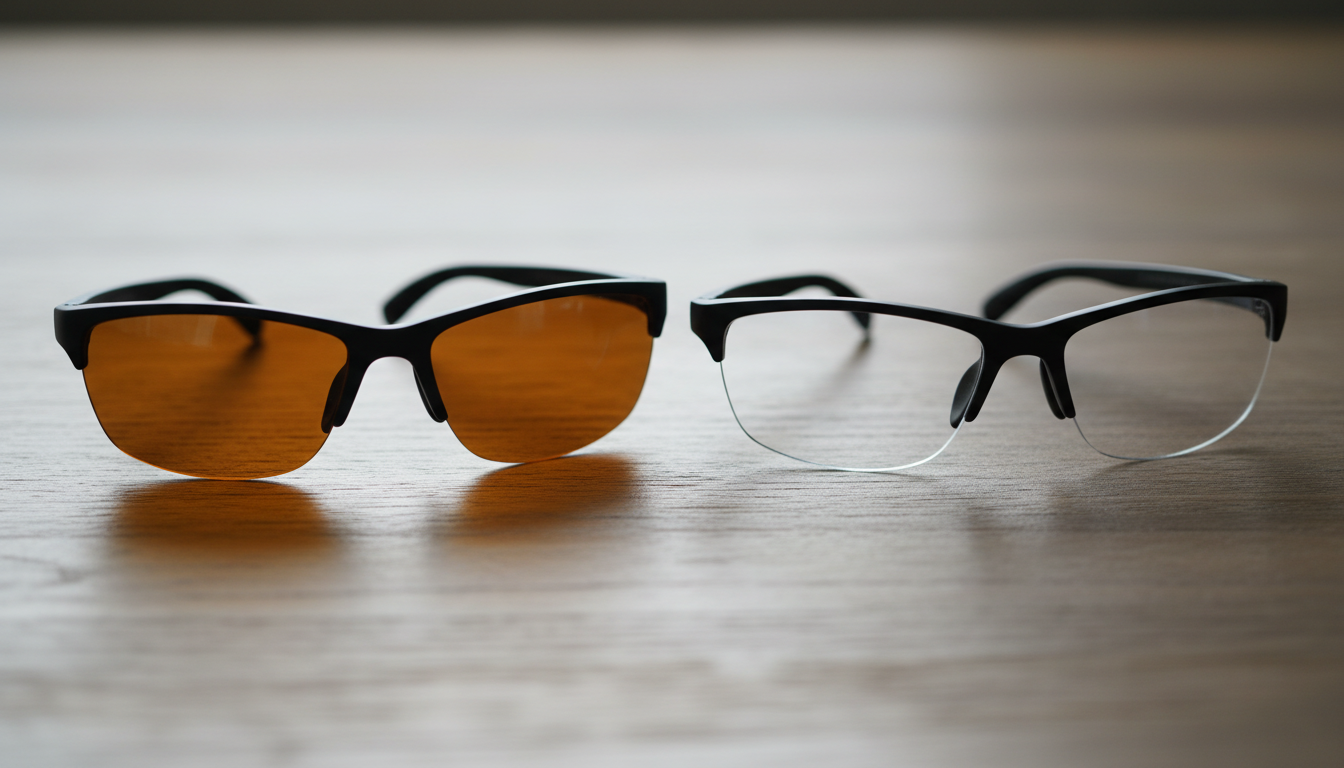
The CRBN Pivot handles this better than any other single pair we tested — because it ships with both a photochromic lens AND an amber lens in the same kit. If the photochromic behaves badly on your specific court, swap to the amber. That dual-lens system is what makes it the most complete option in the market right now.
Best Prescription Pickleball Glasses for Rx Players
This is one of the most underserved questions in pickleball gear. Most "best glasses" articles list products that come in zero Rx options — useless for the significant portion of players over 50 who need a prescription. Here's what actually exists:
Sport goggles with Rx inserts. A goggle frame contains an inner optical carrier for your lenses. Heavier than standard sport frames, but gives you full prescription precision. Wiley X and Liberty Sport are common options through optical labs — verify availability with your optician.
Over-glasses solutions. Sport frames designed to fit over your existing prescription glasses. Bulkier, but workable for casual players who don't want to invest in a separate Rx sport setup.
Prescription sport wrap frames. Available through optical labs that offer sport grinding services. Premium cost ($200+), but gives you the combination of a sport wrap fit with your exact prescription. Best long-term investment if you play 3+ sessions per week.
Honest take: if you have a significant prescription and play seriously, the over-glasses solutions are compromises. The glass-on-glass distortion affects your peripheral vision in a sport where lateral ball tracking matters. A dedicated Rx sport frame from an optical lab is worth it for frequent players. For 1x/week social play, the over-glasses path costs far less and works fine.
USA Pickleball lists eye protection as a recommended safety item for all skill levels — ANSI Z87.1 is the certification standard to look for on any pair you buy, Rx or not.
Best Pickleball Glasses 2026: Our Top Picks by Use Case
Five pairs, five use cases — based on 100+ sessions across indoor gym, outdoor concrete, and covered rec courts. Here's what we actually recommend, with honest trade-offs on each.
Best All-Condition Pick: CRBN Pivot ($95)
The dual-lens system — photochromic plus amber — is the honest engineering answer to a problem every other pair ignores: different court conditions require different optics. You get both in one kit.
The TR90 frame is lightweight enough to forget you're wearing them during a two-hour session. The photochromic lens darkens properly in full sun and clears within 3 minutes indoors. The amber lens covers the partial-shade situations where photochromic goes ambiguous.
Honest weakness: The swappable lens design means two lenses to track and a slightly wider frame profile than a single-lens setup. Not a deal-breaker — just something to know.
Our Pick: CRBN Pivot Pickleball Glasses
Dual-lens system (photochromic + amber) handles every court condition without switching pairs.
Best Outdoor Pick: JOOLA RJX Enhance ($79.95)
JOOLA's COLORBOOST lens technology does something specific: it increases contrast between the yellow pickleball and court or net surfaces. The wrap profile (42mm height × 57mm width) eliminates peripheral glare better than a traditional sport sunglass shape, which matters when you're tracking a ball coming from a sharp angle.
At 0.93 oz, it's light enough to not become a distraction during lateral scramble shots. If you play exclusively outdoors and want a single pair without the dual-lens system complexity, this is the move.
JOOLA RJX Enhance — $79.95 at Pickleball Central
Best Value Outdoor Pick: JOOLA RJX Lite ($69.95)
Same COLORBOOST technology as the Enhance. Same 42mm/57mm lens spec. Slightly lighter at 0.89 oz. Side by side, you'd have to be told which is which. The Lite is the pick for most recreational players who want the RJX optics without splitting the price difference.
JOOLA RJX Lite — $69.95 at Pickleball Central
Best Budget Pick: Gearbox Vision ($44.99)
ASTM F803-11 certified — a higher impact standard than most sunglasses at the sporting goods store. Four lens color options (Amber, Blue, Clear, Smoke) let you choose your tint before you buy instead of living with whatever comes in the box.
At $45, you give up some lens optic refinement and frame material precision. It's heavier and thicker than the JOOLA or CRBN. But for a new player who isn't sure how often they'll play, or someone buying a backup pair — this is the right call.
Gearbox Vision — $44.99 at Pickleball Central
Best for Social / Casual Players: Tourna Specs ($22.99)
Shatterproof polycarbonate, ANSI Z87.1 compliant, adjustable strap, $22.99. The blue-tinted version is specifically designed to boost yellow ball visibility on outdoor courts — more thought than most glasses at five times this price put into their lens design. The strap keeps them on during shots that require more athleticism than they should.
The trade-off: this isn't a precision sport optic. A 4.0+ player will feel the difference versus premium lenses. For the Sunday morning social game or as a backup pair, it absolutely gets the job done.
Tourna Specs — $22.99 at Pickleball Central
Quick Comparison
| Glasses | Price | Best For | Lens Type | Certification |
|---|---|---|---|---|
| CRBN Pivot | $95 | All-condition (indoor + outdoor) | Photochromic + Amber (swappable) | FortifEYE |
| JOOLA RJX Enhance | $79.95 | Dedicated outdoor | COLORBOOST tinted | 100% UV A&B |
| JOOLA RJX Lite | $69.95 | Value outdoor pick | COLORBOOST tinted | ANSI impact rated |
| Gearbox Vision | $44.99 | New players / budget | Polycarbonate (4 colors) | ASTM F803-11 |
| Tourna Specs | $22.99 | Social / casual / backup | Shatterproof polycarbonate | ANSI Z87.1 |
Mid-session tip: Keep your backup amber lens or your microfiber cleaning cloth somewhere you can actually find it at the court. The a small clip pouch on your bag strap keeps lenses accessible between games without digging through your whole kit.
FAQ: Pickleball Glasses Common Questions
Can I use regular sunglasses for pickleball?
Technically yes, but it's a real risk. Regular sunglasses aren't built to handle high-velocity ball impacts — a 70 mph drive to the face can cause a regular lens to shatter. Look for ANSI Z87.1 or ASTM F803 certification on any pair you use for court play. Standard UV sunglasses don't meet these standards.
What are the best glasses for outdoor pickleball courts?
Amber/copper-tinted or COLORBOOST lenses in polycarbonate frames. Both enhance contrast between the yellow ball and court surfaces better than standard gray tints. The JOOLA RJX Enhance and CRBN Pivot (amber setting) were the two strongest outdoor performers in our testing across 100+ sessions.
What glasses work best for indoor pickleball under gym lights?
Clear or lightly amber-tinted lenses. Dark outdoor tints dim your vision under gym lighting, which slows reaction time. For dedicated indoor play, see the Best Indoor Pickleball Glasses 2026 guide for models specifically tested under fluorescent and LED gym conditions.
Photochromic vs polarized — which is better for pickleball?
Photochromic beats polarized for pickleball. Polarized lenses reduce glare but can make it harder to read ball spin off shiny court surfaces — you lose some surface tracking data your eyes normally use. Photochromic lenses adapt to light levels, which is more practically useful in a sport where you often move between indoor and outdoor surfaces in one session.
Are prescription pickleball glasses worth it?
If you play 3+ times per week with a significant prescription, yes — clear vision sharpness affects your reaction time on fast exchanges at the kitchen line. If you play once a week socially, an over-glasses solution works fine at a fraction of the cost.
How do I know what size glasses frame I need?
Most pickleball sport glasses list temple length (typically 135–145mm for standard fit) and lens width (55–65mm is the range). If regular sport sunglasses slide on you, look for models with adjustable rubber nose pads and temple grips — or add a strap. Players with narrower face profiles should check out our women's pickleball glasses guide, which covers specific frame measurement data for smaller faces.
Ready to carry your whole kit? The Court Caddy Backpack ($325, 15" padded laptop sleeve) and the Court Ranger V2 ($195, 16" laptop sleeve) are both designed with 500+ real players and include dedicated space for accessories like your glasses case. Built for players who play like they mean it. Shop the Court Caddy →

Leave a comment
This site is protected by hCaptcha and the hCaptcha Privacy Policy and Terms of Service apply.