

Last updated: September 2026
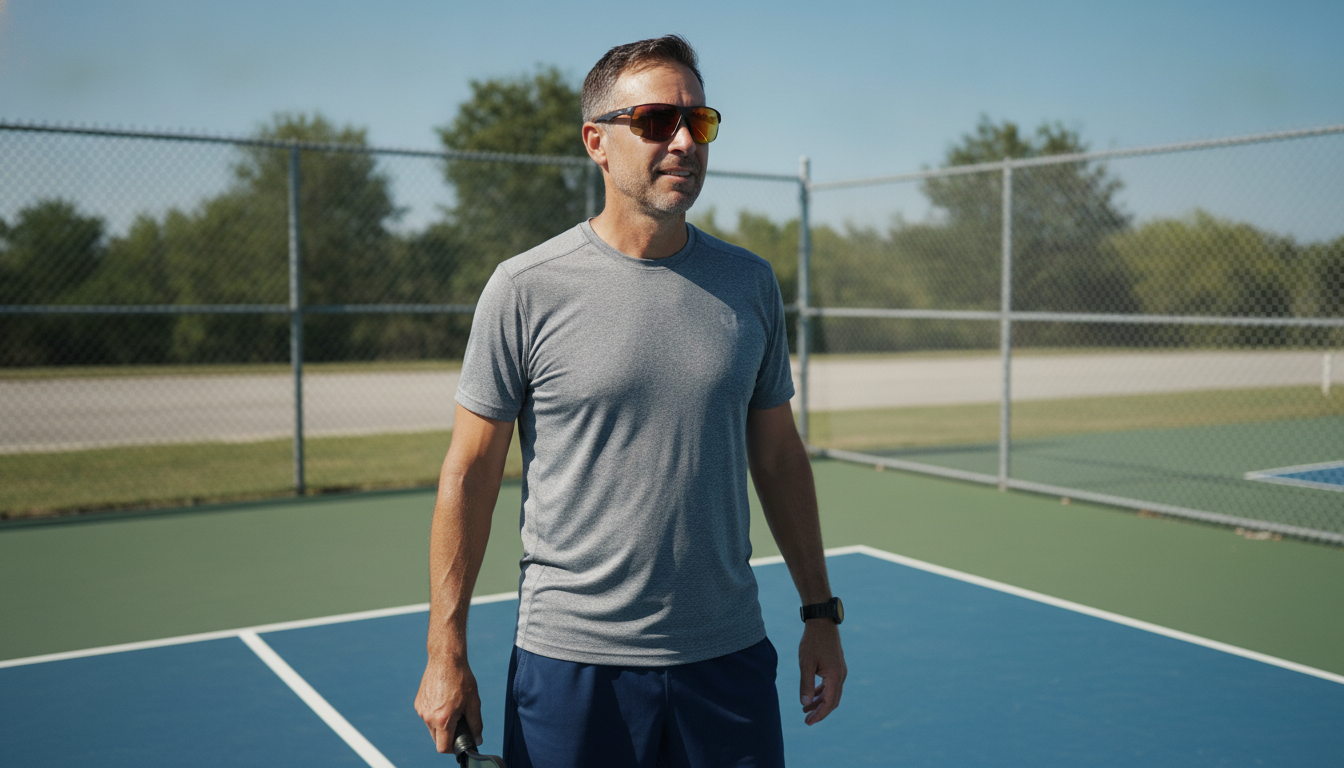
The lens tint matters more than the brand name. Most men figure this out the hard way — on a noon outdoor court with no shade, squinting at a yellow ball against a bright sky, wearing whatever glasses happened to be on sale. The best pickleball glasses for men balance UV protection, peripheral coverage, and frame width that actually fits a male face. Men typically need frames with 58mm+ lens width for a comfortable fit — most athletic glasses skew narrow. For outdoor play, amber or copper tints dramatically improve ball tracking against blue sky. For indoor gym play, clear or light yellow lenses work best.
We've tested five pairs across both indoor gym courts and outdoor concrete, in conditions ranging from overcast to full noon sun. What follows is the honest ranking — starting with the pair that handles the most situations, down to the budget pick.
Looking for options that work for any player regardless of gender? See the full guide to the best pickleball glasses 2026 — this article goes deeper on the men-specific considerations competitors completely ignore.
Disclosure: This post contains affiliate links to Pickleball Central. If you purchase through our links, FORWRD earns a small commission at no extra cost to you. We only link to products we'd recommend regardless.
Table of Contents
- What Men Should Look for in Pickleball Glasses
- Best Pickleball Glasses for Men 2026: Top Picks Compared
- Lens Tint Guide for Men: Which Color Works Best
- Frame Fit for Men: Why Standard Athletic Glasses Often Run Too Narrow
- Indoor vs. Outdoor: Do You Need Two Pairs?
- FAQ
What Men Should Look for in Pickleball Glasses (Different From Women's Needs)
Most pickleball eyewear is marketed as unisex. In practice, that often means it fits a smaller, narrower face and gets pushed as one-size-fits-all.
Men — especially men with wider faces, higher cheekbones, or larger nose bridges — regularly find athletic glasses that fit great on the shelf but slide down their face within 10 minutes of sweating through a competitive game. That's not a brand problem. It's a frame geometry problem that nobody in pickleball eyewear talks about directly.
Key differences to look for when you're a male player:
- Frame width: Look for total frame width of 140mm or more. Lens width of 58-62mm. "One-size" athletic glasses often sit in the 52-56mm lens width range — comfortable for a narrower face, a squeeze on a wider one.
- Nose bridge width: Men typically have wider nose bridges (17mm+). A bridge that's too narrow pushes lenses too far from the face, reducing peripheral coverage exactly where you need it — at the kitchen line.
- Temporal grip: During quick lateral movement and split-step reactions, glasses need to stay in place without ear hooks cutting in. Look for rubberized temple tips rather than hard plastic.
- Lens coverage area: Bigger wrap means better ball visibility against lateral threats. A smaller sports lens that looks clean on a women's frame might cut off peripheral vision on a larger male face.
Best Pickleball Glasses for Men 2026: Top Picks Compared
| Glasses | Price | Best For | Lens Options |
|---|---|---|---|
| CRBN Pivot | $95 | All-conditions, photochromic | Photochromic + amber |
| JOOLA RJX Lite | ~$45 | Budget, indoor + outdoor | Clear, amber, smoke |
| JOOLA RJX Enhance | ~$65 | Outdoor, contrast-boosting | Contrast-enhancing amber |
| Gearbox Vision | ~$55 | Wider faces, secure fit | Smoke, yellow |
| Tourna Specs | ~$35 | Entry-level, outdoor rec | Smoke |
CRBN Pivot — Best Overall for Men
The CRBN Pivot is the best all-conditions pickleball glass on the market, and the men's case for it is specific: the photochromic lens adjusts automatically from clear to dark as lighting changes — so you can wear one pair from an indoor warm-hall warm-up to an outdoor showcase court without stopping to swap lenses. For tournament players who move between courts all day, that's a real advantage.
The wraparound design provides excellent peripheral coverage. Frame grip is solid even in high-sweat conditions. The amber lens that ships with the kit is the right choice for outdoor midday play — more on why below. After testing the Pivot across three outdoor sessions and two indoor gym sessions, the photochromic transition is fast enough that you're never stuck squinting while it adjusts.
Top Pick: CRBN Pivot Pickleball Glasses
Photochromic lens handles every lighting condition — indoor, outdoor, morning sun, noon glare. Best wraparound peripheral coverage in this price range.
JOOLA RJX Lite — Best Budget Option
The RJX Lite comes in at roughly half the price of the Pivot, ships with three interchangeable lenses (clear, amber, smoke), and fits a wider range of face shapes than most glasses in this price tier. After trying the RJX Lite indoors on a gym floor court — fine — then outdoors at noon on an exposed concrete court with no shade: the amber lens is mandatory for outdoor play. The clear lens is borderline unusable in direct sun, but that's expected and why the three-lens kit makes sense.
For men with standard face widths looking for a solid, no-frills option under $50, the RJX Lite is the one. Available at Pickleball Central.
JOOLA RJX Enhance — Best for Outdoor Contrast
The Enhance is the RJX line's outdoor specialist. The contrast-enhancing amber lens is optimized specifically for ball tracking in variable outdoor light conditions — when a yellow ball disappears into a bright sky or reflects off a white concrete surface, the Enhance cuts through it better than a standard tinted lens. Worth the extra $20 over the Lite if you primarily play outdoors. Shop the RJX Enhance at Pickleball Central.
Gearbox Vision — Best for Wider Faces
Gearbox built the Vision with a slightly wider frame geometry than the JOOLA or CRBN options — and it shows. For men with wider face measurements (140mm+ from temple to temple), the Gearbox Vision actually stays on the face during lateral movement instead of sliding down by game three. The grip at the temples is rubber, not plastic. If your main complaint with pickleball glasses is that they don't stay put, start here. Shop Gearbox Vision at Pickleball Central.
Tourna Specs — Best Entry Point
The Tourna Specs are the right call if you want to try pickleball glasses without a big commitment. Around $35, they provide adequate UV protection and basic ball visibility. The fit runs slightly narrow, so larger-faced players may notice pressure after extended wear. But for casual outdoor rec play or as a backup pair, they do the job. Available at Pickleball Central.
Lens Tint Guide for Men: Which Color Works Best for Pickleball
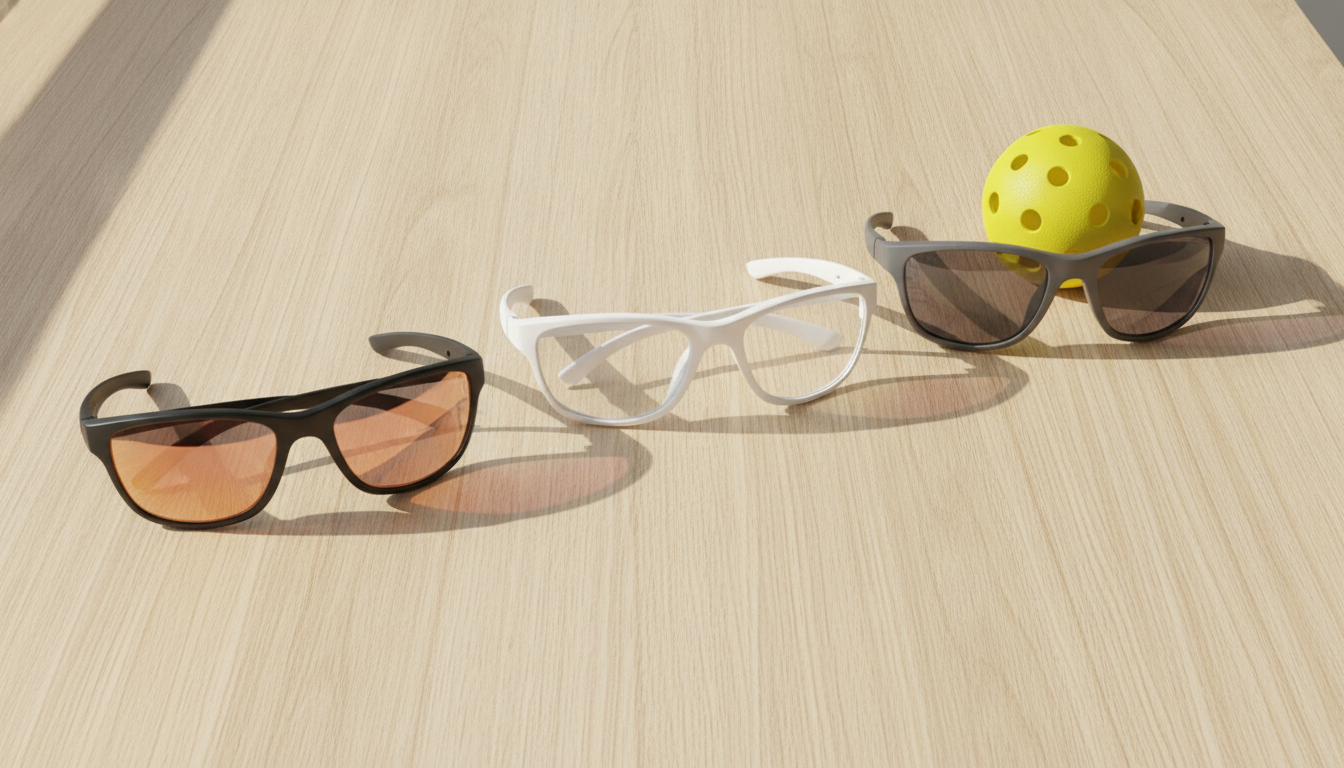
Men tend to prefer amber and copper lens tints over rose or pink tints — partly aesthetic preference, partly optical performance. Here's the breakdown by condition:
- Amber / copper: The all-conditions outdoor champion. Enhances contrast, improves depth perception, makes yellow pickleballs pop against blue sky and white concrete. Use this for any outdoor play in variable sun conditions.
- Dark smoke / gray: Best for consistent, direct bright sunlight (noon, no clouds, open-sky courts). Less contrast enhancement than amber but less eye fatigue in full sun. Good for southern outdoor courts in summer.
- Clear: Indoor only. Gym courts, recreation centers, covered facilities. Clear lenses protect from ball impact without distorting the artificial lighting you're playing under.
- Light yellow: Low-light conditions — early morning, overcast skies, late-afternoon indoor facilities. Enhances contrast in dim conditions where amber is overkill.
The common mistake: wearing polarized lenses for pickleball. Don't. Polarized lenses eliminate the glare that helps you pick up ball spin and trajectory. They work great for fishing and driving. On a pickleball court, they reduce ball visibility.
"I run amber lenses for basically everything outdoor — morning, noon, even overcast days. The contrast improvement is real and the yellow ball is just easier to track from serve to kitchen. On gym courts I switch to clear. That's the whole system. Two pairs, two contexts, done." — Grub, FORWRD co-founder
Frame Fit for Men: Why Standard Athletic Glasses Often Run Too Narrow
Here's what nobody explains: when a glasses brand lists "lens width: 56mm," that's the horizontal measurement of one lens — not the total frame width. Total frame width (both lenses plus bridge) is the number that determines whether glasses actually fit your face.
How to measure your fit:
- Measure the widest part of your face from temple to temple (just outside the corner of your eye on each side). Most adult men measure 135-150mm.
- Compare to total frame width. For athletic glasses, you want the frame to be within ±5mm of your temple width. Frames that are 10mm+ narrower than your face will grip uncomfortably. Frames that are 10mm+ wider will slide down constantly.
- Check the bridge width separately. Most men need 17-21mm bridge width. If your nose bridge is wider than the listed spec, the lenses will sit too far from your eyes, reducing peripheral coverage.
What the numbers mean in practice:
- Standard face width (130-140mm temple to temple): most athletic glasses will fit reasonably well.
- Wider face (140-155mm): look specifically for frames labeled as "large" or "XL" with total frame width 145mm+. The Gearbox Vision and CRBN Pivot both work in this range.
- Very wide face (155mm+): try wraparound designs specifically — the continuous frame rather than two discrete lenses often accommodates wider faces better than a two-piece bridge.
A note on prescription glasses and pickleball
A significant percentage of male players over 40 wear prescription glasses — and this question is completely ignored by most pickleball eyewear content. Your options are:
- Fit-over frames: Athletic pickleball glasses that fit over existing prescription frames. Works but adds weight and can look awkward. Best for occasional players who don't want to invest in sports Rx.
- Photochromic prescription sports lenses: Have your optometrist cut your prescription into a photochromic sports lens fitted to a wraparound frame. More expensive ($200+) but the best visual quality and fit. Worth it if you play 3+ times per week.
- Contact lenses + protective eyewear: The cleanest solution. Contacts provide full Rx correction; protective glasses handle UV and impact without the prescription complexity. This is what most serious competitive players do.
Indoor vs. Outdoor: Do You Need Two Pairs?
Short answer: if you play both regularly, yes — one pair isn't optimal for both conditions.
Long answer: a photochromic lens (like the CRBN Pivot's auto-adjusting option) bridges the gap reasonably well if you want a single-pair solution. It won't be as bright-optimized as dedicated outdoor amber in noon sun, and it won't be as clear as pure clear lenses in a gym. But it's 90% there in both conditions, which is plenty for most players.
If you play primarily outdoors: get amber or contrast-enhancing lenses, end of discussion. If you play primarily indoors at a rec center: clear lenses only — any tint at all will make the gym's florescent lighting feel dim and flatten the ball against the court surface.
The budget-friendly solution: the JOOLA RJX Lite's three-lens kit covers all three scenarios (clear for indoor, amber for outdoor, smoke for direct sun) for under $50. That's the single best value in men's pickleball eyewear for players who don't want to think about it.
Complete Your Kit
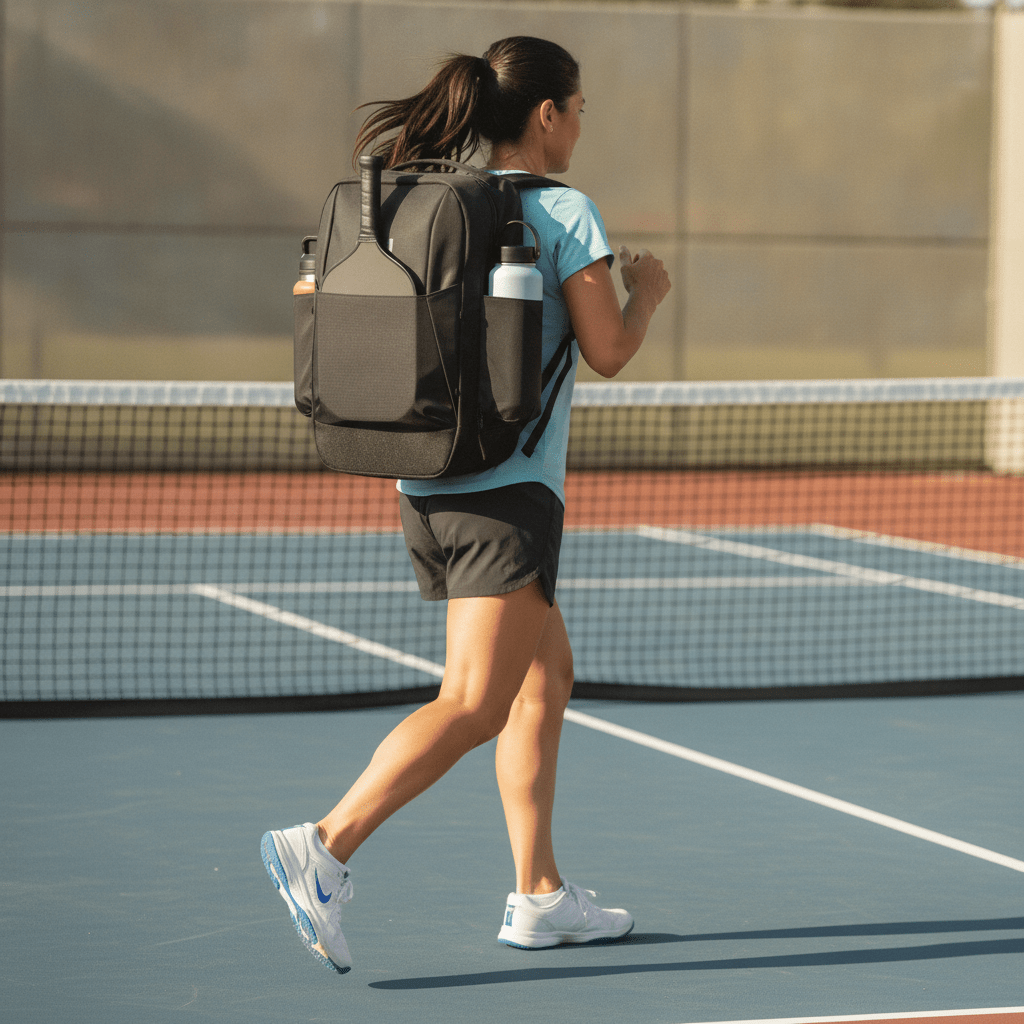
Got your glasses. Now you need somewhere to carry everything.
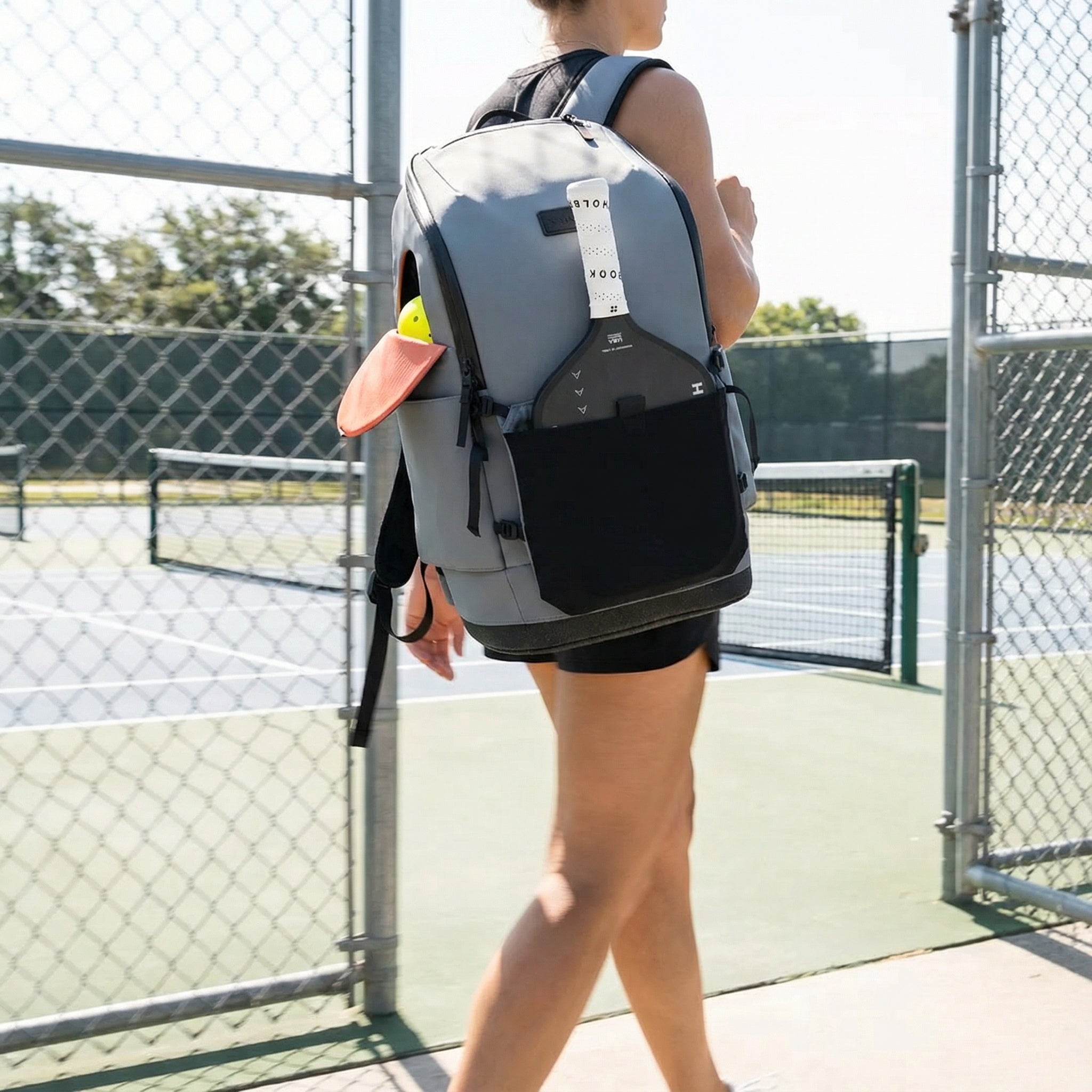
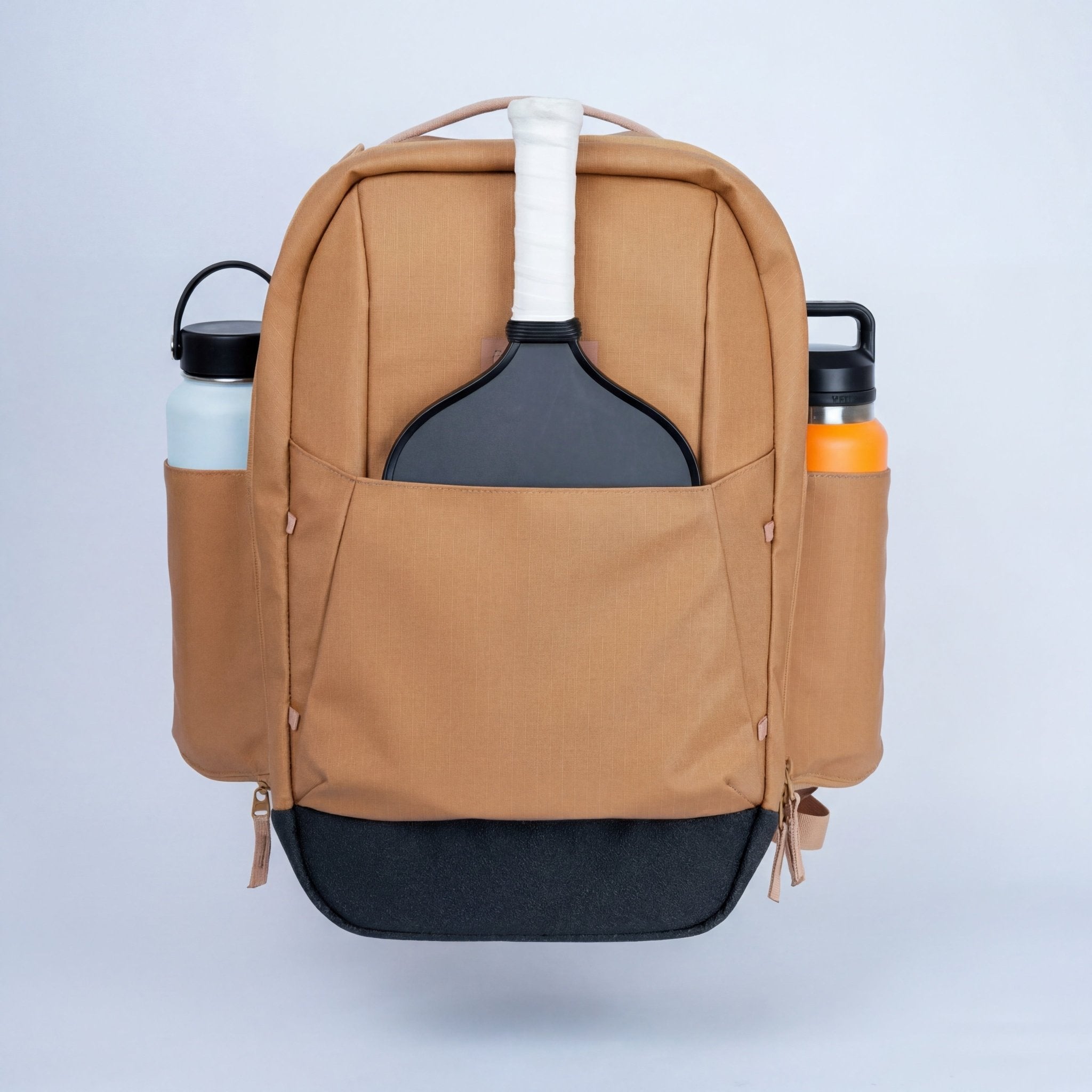
The Court Caddy Backpack ($325) organizes 4 paddles in the modular sleeve system, plus a dedicated 15" padded laptop compartment and YKK AquaGuard weatherproof zippers for outdoor court days. Designed with feedback from 500+ real players. Court Ranger V2 if you want something lighter at $195.
Also: best men's pickleball shoes guide | paddle upgrade guide

FAQ: Men's Pickleball Glasses Questions
Do men and women need different glasses for pickleball?
Not categorically — but men often need wider frame widths (140mm+ total frame, 58mm+ lens width), wider nose bridges (17-21mm), and more aggressive wraparound coverage to maintain peripheral vision. Most "unisex" athletic glasses skew toward narrower fit profiles that slide down or feel tight on larger male faces.
What are the best glasses for men with large frames?
The Gearbox Vision and CRBN Pivot both accommodate wider faces — look for total frame widths of 140mm+ and bridge widths of 18mm+. Measure your temple-to-temple width first (most adult men are 135-150mm) and match to frame specs, not just the brand name.
What lens tint is best for outdoor pickleball?
Amber or copper. These tints enhance contrast between a yellow pickleball and outdoor backgrounds (blue sky, white concrete, chain-link fence). Avoid polarized lenses — they cut glare but also reduce ball-spin visibility, which hurts pickleball tracking specifically.
Are regular sunglasses OK for pickleball?
Casual sunglasses work for recreational play, but they're not built for the lateral head movement and impact risk of competitive pickleball. Sports-specific frames have anti-slip grips, shatterproof polycarbonate lenses, and wraparound coverage that standard sunglasses lack. For 3x/week players, sports-specific eyewear is worth the upgrade.
Do you need UV protection for indoor pickleball courts?
Not for UV — indoor lighting doesn't emit UV. But indoor protective eyewear is still valuable for impact protection from a ball at speed. Many serious players wear clear protective lenses indoors specifically for safety, not vision correction.
What features should I look for in men's pickleball glasses?
Frame width (58mm+ lens width for most men), rubberized non-slip temple grips, wraparound lens coverage for peripheral vision at the kitchen line, polycarbonate impact-resistant lenses, and swappable or photochromic lenses to handle both indoor and outdoor conditions.

Leave a comment
This site is protected by hCaptcha and the hCaptcha Privacy Policy and Terms of Service apply.