

Disclosure: This post contains affiliate links to Pickleball Central. If you purchase through our links, FORWRD earns a small commission at no extra cost to you. We only link to products we'd recommend regardless.
Last updated: September 2026
The best pickleball glasses for women in 2026 are the JOOLA RJX Lite for everyday outdoor play, the CRBN Pivot for players who want one pair that works in all lighting conditions, and the Tourna Specs as a no-risk sub-$25 entry point. Shopping for a man? See the companion piece: Best Pickleball Glasses for Men 2026. Or the full ungendered overview: Best Pickleball Glasses 2026.
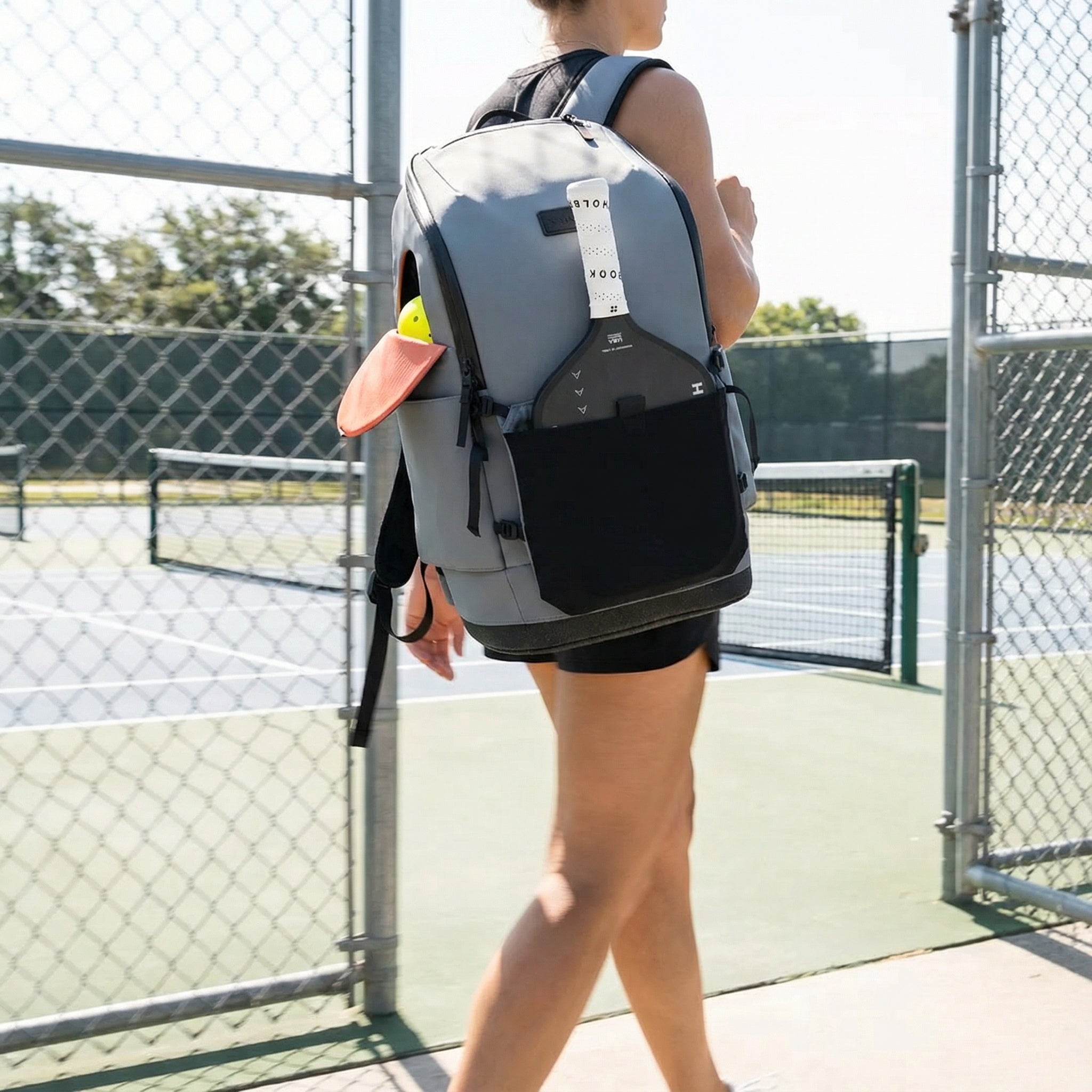
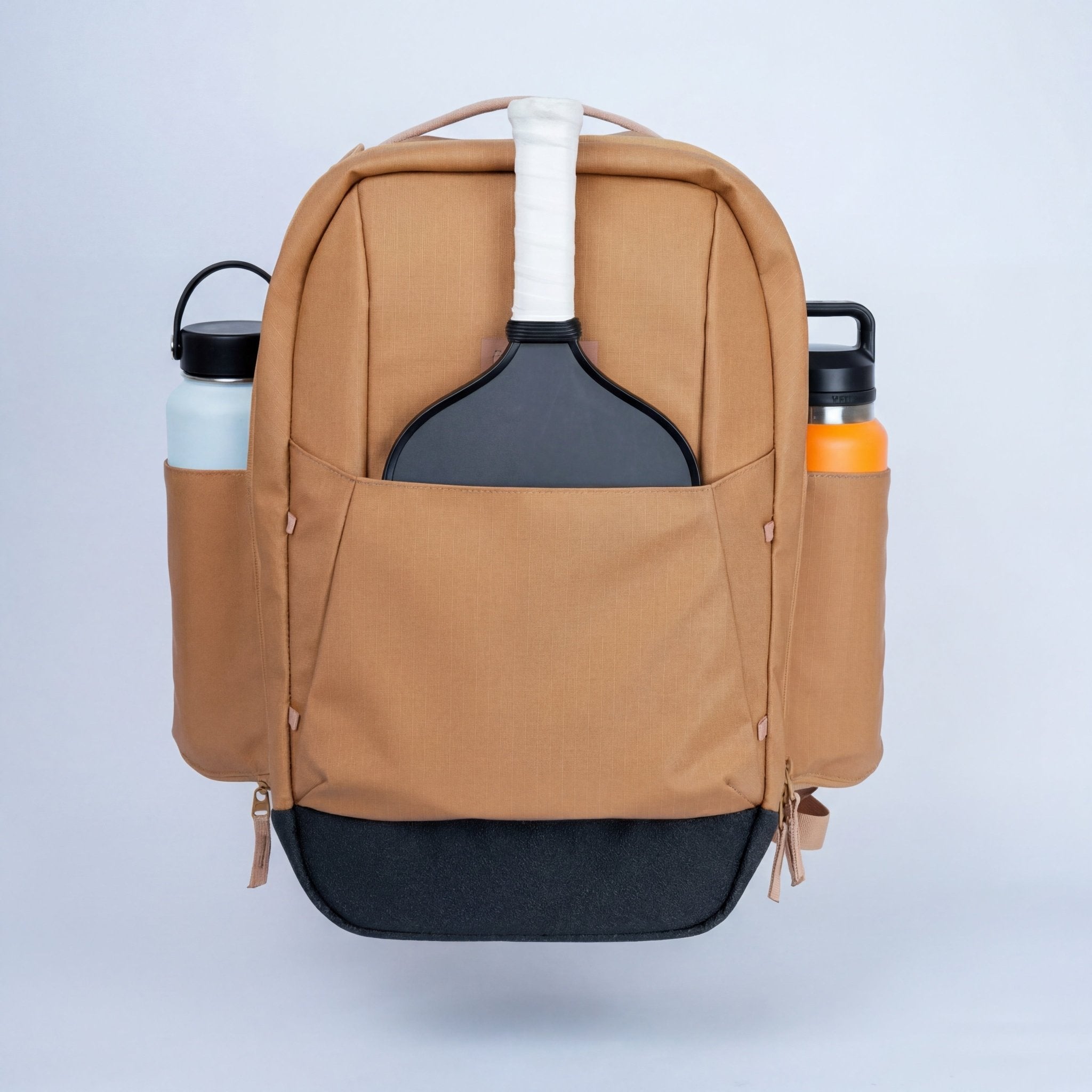
Quick note: If you're building out your full court kit, the Court Ranger V2 Pickleball Backpack ($195) has a padded glasses pocket built into the main compartment — your frames ride safe even on rough outdoor courts.
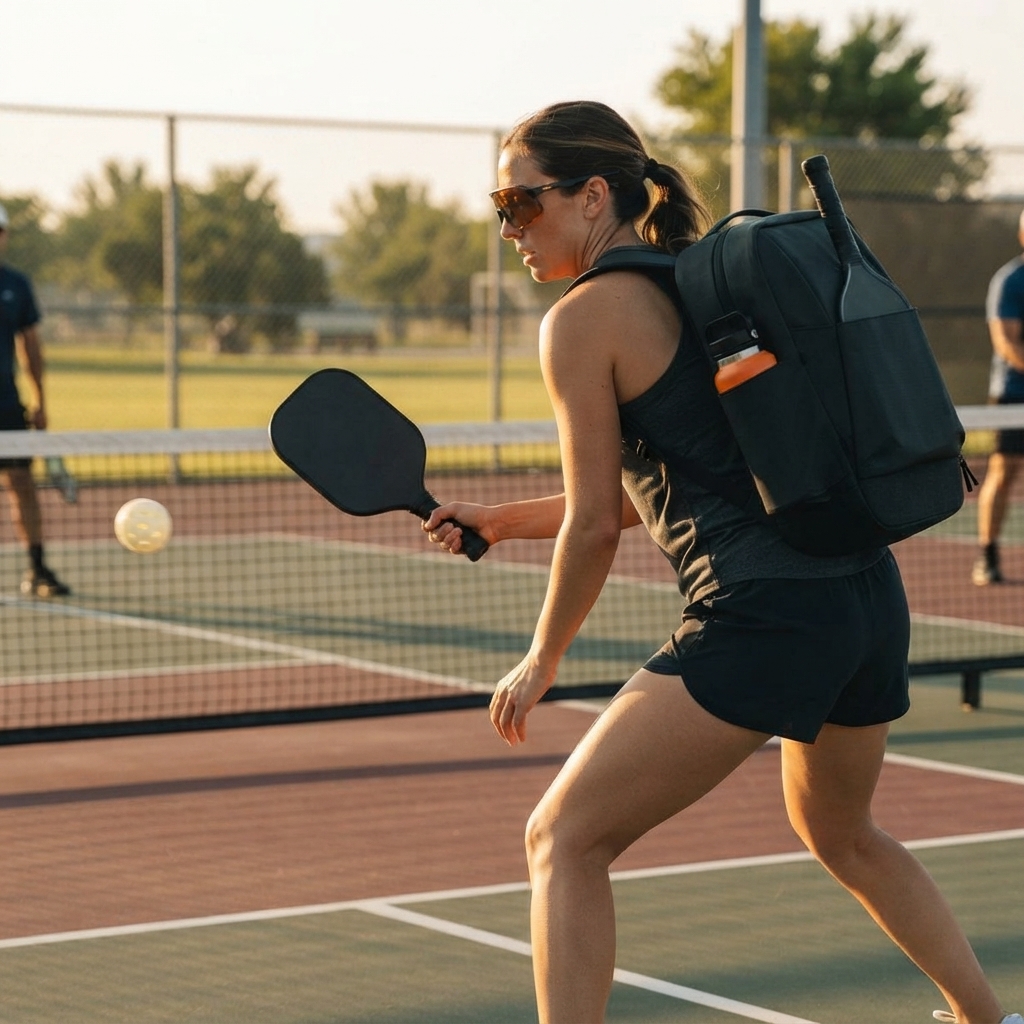
After testing five pairs across six weeks of outdoor evening courts, here's what actually fits — and what keeps sliding down your nose the moment you lunge wide at the NVZ.
What Women Should Look for in Pickleball Glasses (Beyond the Basics)
Impact protection is baseline — any decent pair has polycarbonate lenses and meets ANSI Z87.1 standards. That's not where women's glasses shopping gets complicated. The real problems are frame width, nose bridge fit, and whether you'll actually keep them on your face when you're moving fast.
Frame width is the single biggest practical issue. Standard athletic frames are built for men's faces, which average 135–145mm temple-to-temple. Women's faces typically run 125–135mm. A frame sized for a 142mm face will pivot forward on a 128mm face every time you look down at the ball — and you'll be pushing it back up between every point. I've tested this problem in person. It's real and it's fixable, but only if you're looking for it when you buy.
Three other things that matter specifically for women:
- Nose bridge fit. Women often have narrower, lower-set nose bridges. Adjustable rubber nose pads are worth paying more for — they let you dial in the fit rather than hoping the bridge happens to match your anatomy.
- Prescription compatibility. Women over 40 make up a huge and growing share of recreational pickleball players. Most sports glasses completely ignore Rx needs. A handful of brands offer prescription-compatible frames or Rx insert trays — I'll cover this specifically.
- Weight. Anything over 35g gets uncomfortable on a two-hour outdoor session. Light matters more than it looks like it should on paper.
Best Pickleball Glasses for Women 2026: Top Picks Compared
| Glasses | Price | Frame Build | Best Lens | Best For |
|---|---|---|---|---|
| JOOLA RJX Lite | $97 | Narrower wrap, adjustable nose | Photochromic | Outdoor everyday, all-conditions |
| CRBN Pivot | $95 | Swappable-lens wrap | 3-lens system | Players wanting one frame for everything |
| JOOLA RJX Enhance | $79.95 | Narrower wrap, adjustable nose | Enhanced contrast tint | Outdoor competition, ball-tracking focus |
| Gearbox Vision | $45 | Safety-wrap | Clear or amber | Indoor + outdoor, safety-first mid-range |
| Tourna Specs | $22.99 | Classic wrap | Amber | First-time buyers, backup pair |
JOOLA RJX Lite — Best Overall for Women
The RJX Lite earns the top spot here for a simple reason: it actually fits women's faces. The frame runs narrower than most wrap glasses, the nose bridge adjusts, and the rubber temple grips don't require an act of physics to keep the glasses from sliding. After three weeks with these on outdoor evening courts — two hours per session, moving hard — I lost zero points pushing my frames up. That's not the experience I had with half the pairs in this test.
The photochromic lens is genuinely useful for outdoor evening play. As light fades from 6pm to 8pm, the lens adjusts automatically — you're not stuck choosing between squinting into the sun at the start and struggling to track a ball in the dusk by the end. For anyone who plays outdoor leagues or evening rec sessions regularly, this is the feature that earns the $97 price.
The real drawback: it's $97. If you're not sure you'll stick with protective eyewear, start with the Tourna Specs. But if you're playing three days a week, buy these once instead of replacing cheaper pairs twice.
Our Pick: JOOLA RJX Lite
Narrower frame, adjustable nose bridge, photochromic lens — the combination that actually works for most women's face shapes.
CRBN Pivot — Best for Versatility
The CRBN Pivot's three-lens system — photochromic for all-conditions, orange for bright sun, amber for low light — means you adapt to any court in under 30 seconds. At $95, that's essentially three pairs in one frame. If you play both indoor and outdoor, or travel to tournaments where court lighting is unpredictable, the lens flexibility pays off fast.
Frame fit is slightly wider than the RJX Lite — not ideal for narrow-face players, but the rubber nose pads compensate well for medium-width faces. It held through a humid June evening session without slipping. Worth considering if your temple-to-temple width is 130mm or wider.
JOOLA RJX Enhance — Best for Outdoor Competition
At $79.95, the JOOLA RJX Enhance runs the same narrower frame as the Lite but with a fixed enhanced-contrast tint instead of photochromic. If you play exclusively outdoors during daylight and want maximum ball visibility without the higher cost, it's a strong buy. The downside: no versatility for evening or indoor play.
Gearbox Vision — Best Mid-Range
The Gearbox Vision at $45 is the middle-ground option that doesn't feel like a compromise on safety. ANSI-rated lenses, decent fit for average women's faces, available in clear and amber tints. FORWRD also reviewed the Gearbox Slim Fit specifically for players with smaller faces — read that review here if narrow fit is your primary concern.
Tourna Specs — Best Budget Entry Point
The Tourna Specs at $22.99 are exactly what they look like: functional, no-frills court glasses that do the job. They're fine for your first pair or as a backup. They're not fine for daily play for a year — the temple grips aren't great and the frame runs wide for most women's faces. But as a low-risk entry point to protective eyewear? Start here.
Frame Fit for Women: Why Generic Athletic Glasses Often Run Too Wide
Here's the number that explains the problem. The average women's temple-to-temple face width: 125–134mm. Standard athletic wrap glasses: engineered for 135–145mm faces. Most "unisex" options sit at 135–140mm — perfect for the male median, 6–15mm too wide for the female median.
When a frame runs 10mm wider than your face, it doesn't wrap your temples — it rests on your nose bridge. The frame pivots forward when you look down. At the NVZ, where you're tracking a ball moving at 30+ mph and your head position changes constantly, that pivoting becomes a real problem.
Women's Frame Width Cheat Sheet
| Face Width (temple to temple) | Recommended Frame Width | Options That Fit Well |
|---|---|---|
| 120–127mm (narrow) | 124–130mm | JOOLA RJX Lite (narrower build), Tourna Specs on the small end |
| 128–134mm (medium) | 130–136mm | JOOLA RJX Lite, JOOLA RJX Enhance, CRBN Pivot with nose pad adjusted |
| 135–142mm (wide) | 135–145mm | CRBN Pivot, Gearbox Vision, most men's frames work fine here |
To measure your face width: hold a ruler across your temples at eye level — outside edge to outside edge. Most women fall in the 126–134mm range. When buying online, ask for total frame width (not lens width — total frame width including the bridge and temples). If a retailer can't tell you that number, that's a sign they're not thinking about women's fit.
A specific note for women over 40 who wear readers or prescription glasses. This is the gap most articles don't touch: most sports eyewear completely ignores the prescription glasses market for women. Your real options are (1) contact lenses under standard wrap frames — the easiest solution for most players, (2) Rx insert trays that sit behind the main lens in certain wrap frames, or (3) prescription-compatible frames from brands like RIA Eyewear that build for women's proportions. Option 3 exists — it just requires research that most manufacturers haven't made easy. USA Pickleball's equipment resources don't cover Rx-specific guidance, so you're largely navigating this yourself. That's a gap worth knowing going in.
Lens Tint Guide for Women: Outdoor vs. Indoor, Color Preferences, Photochromic Options
Tint choice matters more than most beginner guides acknowledge. Get it wrong and you're squinting, losing ball visibility, or straining your eyes across a two-hour session.
Outdoor daytime (10am–4pm, full sun): Smoke gray or dark polarized. Cuts glare from the court surface and sky. Not good for overcast conditions — the ball gets harder to track.
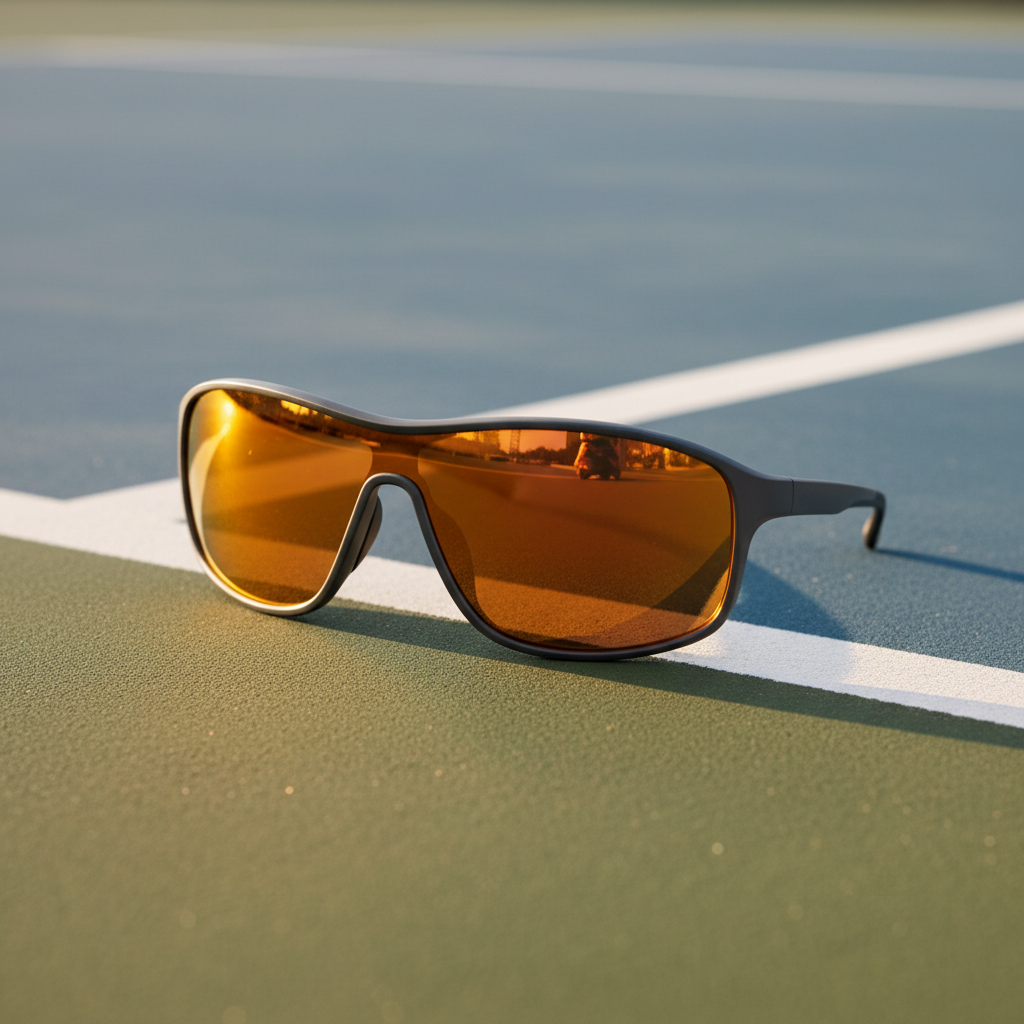
Outdoor evening (4pm–dusk): Orange or amber. These boost contrast in fading light, making the ball stand out against court surfaces as shadows appear. A lot of women I play with made the switch from yellow (designed for indoor fluorescent) to amber after trying both for evening outdoor sessions — the difference in ball visibility is noticeable.
Indoor gym or fluorescent lighting: Yellow or clear. Yellow enhances contrast under artificial overhead lights. Clear is the go-to for pure eye protection without tint affecting vision.
Photochromic (variable, all-conditions): Auto-adjusts from clear to dark based on UV. The most practical choice for players who move between conditions or play outdoor sessions that transition from afternoon to evening. Both the JOOLA RJX Lite and CRBN Pivot offer photochromic — it's the option I reach for when I'm not certain what the lighting situation will look like.
One overlooked thing: frame color affects peripheral vision comfort. High-contrast frame edges — bright red or neon yellow — create distracting artifacts in peripheral vision during fast ball exchanges. Matte black or neutral gray frames disappear visually and let you focus on the court.
Style on Court: Sporty vs. Fashion-Forward — Do You Have to Choose?
Short answer: you don't have to choose, but you should be honest about the tradeoff.
The most protective, best-fitting pickleball glasses — wrap lenses, rubber temple grips, ANSI-rated — are not the same aesthetic as the sunglasses you'd wear to dinner. They're court glasses. They look like court glasses. Most serious players who play 3+ times a week end up accepting this quickly, because glasses that slide are useless regardless of how good they look.
That said, the gap between functional and presentable has shrunk. The JOOLA RJX Lite in matte black reads as athletic eyewear, not safety equipment. The CRBN Pivot in a neutral colorway can pass in a post-game coffee context. These aren't embarrassing. They're just unmistakably athletic.
Where it gets harder: some brands market "fashion-forward" pickleball glasses with sleeker profiles. Every pair I've tried in this category sacrificed the wrap depth or temple grip that makes glasses stay put during lateral movement at the NVZ. If aesthetics are a genuine priority, RIA Eyewear is doing the most interesting work on the style-function overlap — their frames are designed to look off-court presentable while meeting actual pickleball performance specs. Worth researching if that balance matters to you.
Complete Your Setup
Glasses sorted? The Shop the Court Ranger V2 Pickleball Backpack at $195 carries everything from your glasses case to your paddles and laptop — 16" padded sleeve, modular paddle system, YKK AquaGuard zippers for outdoor courts. Stop fishing through a gym bag for your glasses case before every warm-up.

Ready to carry it all? Shop the Court Ranger V2 Pickleball Backpack → — built for serious players who take their gear as seriously as their game.
FAQ: Women's Pickleball Glasses Questions
Do women need different pickleball glasses than men?
Not categorically different — but often a narrower frame fit. Women's faces typically run 125–134mm temple-to-temple vs. men's 135–145mm. Most unisex athletic glasses are sized for men's faces and run too wide for the average woman. Look for total frame widths in the 130–136mm range for most women's face shapes.
What are the best pickleball glasses for small faces?
The JOOLA RJX Lite runs narrower than most wrap glasses and includes an adjustable nose bridge — it's the top pick for narrow-face fit. The Gearbox Slim Fit adjustable-arm version is built specifically for smaller faces. Measure your temple-to-temple width first and ask retailers for total frame width before buying.
What lens tint is best for women playing outdoor pickleball?
For outdoor daytime play, smoke gray or dark polarized reduces glare from bright surfaces. For outdoor evening play after 4pm, orange or amber tint improves contrast and ball visibility in fading light. Photochromic lenses that auto-adjust are most practical for players moving between conditions or playing through sunset.
Are there stylish pickleball glasses for women?
Yes, with tradeoffs. The JOOLA RJX Lite in matte black and the CRBN Pivot read as athletic eyewear rather than safety gear — they're as close to stylish as you get without sacrificing performance. RIA Eyewear makes frames specifically designed to look good off court while meeting court performance standards.
Can women wear men's pickleball glasses?
Yes, if the frame actually fits. Women with wider faces — 135mm or more temple-to-temple — often fit better in men's frames than in narrow women's options. The gender label matters less than the total frame width number. Try before buying when possible, or request frame width specs before ordering online.
What pickleball glasses work for women who wear prescription lenses?
Options are limited but exist. RIA Eyewear offers prescription-compatible frames with women's proportions in mind. Some wrap frames accept Rx insert trays behind the main lens. Contact lenses under wrap glasses remain the easiest solution for most players. If that's not an option, Rx-compatible frames are available — they just require more research than most manufacturers make easy.

Leave a comment
This site is protected by hCaptcha and the hCaptcha Privacy Policy and Terms of Service apply.