

Last updated: May 2026
Disclosure: This post contains affiliate links to Pickleball Central. If you purchase through our links, FORWRD earns a small commission at no extra cost to you. We only link to products we'd recommend regardless.
The right portable pickleball net makes the difference between a backyard game that actually happens and one that gets cancelled because setup took 25 minutes. Regulation specs matter. Stability matters. So does whether it fits in your car. We've looked at every major portable net on the market in 2026 — here's what's worth buying and what to skip.
Quick answer: for most backyard and driveway setups, the Franklin Official Portable Net System covers the essentials at an accessible price, while the JOOLA Portable Pickleball Net is the step up if you want tournament-quality stability without going permanent.
Key Facts: Portable Pickleball Nets
- Regulation net height: 36 inches at the sideposts, 34 inches at center — maintained by a center strap. Both dimensions are required for official play per USA Pickleball rules.
- Regulation net width: 22 feet total — matching the full pickleball court width of 20 feet with 1-foot overhang on each side.
- Setup time matters: Top portable nets today set up in 5–10 minutes solo. Avoid any net with a setup time over 15 minutes for recreational use — you'll stop using it.
- Weight vs. stability trade-off: Lighter nets (under 25 lbs) are easier to transport but tend to move under hard shots. Heavier nets (35–55 lbs) stay planted but need two people to carry.
- Portable nets don't require anchoring: Well-designed portable nets use weighted bases or spread-frame systems to stay stable on asphalt, concrete, and gym floors without stakes.
- Franklin and JOOLA are the two most widely available brands in the mid-price portable category — both available at major sporting goods retailers and online.
What to Look for in a Portable Pickleball Net
Not all portable pickleball nets are equal — and the differences that matter aren't always what you'd expect. Here's what separates a net you'll actually use from one that collects dust in the garage.
Regulation Dimensions
This is non-negotiable. If you want to practice skills that transfer to public courts, the net has to match regulation dimensions: 22 feet wide, 36 inches high at the sides, 34 inches at center. Any net shorter than 22 feet or with wrong heights is just for casual play — your shots won't train the right muscle memory.
Setup Time
The number-one reason people stop using portable nets: they're too annoying to set up. Anything over 10 minutes for a solo setup kills the spontaneity of backyard play. Modern well-designed nets use slip-fit frames, accordion systems, or pop-up designs that get you from bag to court in 5–8 minutes. Prioritize this if you're playing frequently.
Stability
A net that slides across your driveway every time someone drives a ball at it is useless. Look for nets with weighted bases, spread-frame designs, or cross-bar feet that grip the surface. For outdoor use on asphalt or concrete, a heavier net (30+ lbs) generally stays planted better than an ultralight one.
Frame Material and Durability
Steel frames are more durable and stable; aluminum frames are lighter and more portable. For driveway or backyard use where you're not hauling it far, steel is often worth the weight. For travel — parking lots, parks, beach courts — aluminum is the right call.
Net Material and Tension
The net itself should hold tension across 22 feet without sagging to regulation height. Look for center straps (which pull the net to 34 inches at center) and side tension points. Cheap nets sag in the middle within a few months of use.
Regulation Specs You Need to Know
Per USA Pickleball official equipment standards:
- Height at sidelines: 36 inches (3 feet)
- Height at center: 34 inches — achieved with a center strap that pulls the net down from the top cable
- Net width: 22 feet (extending at least 12 inches beyond each sideline of the 20-foot wide court)
- Net mesh: Must prevent the ball from passing through — standard mesh spacing is fine for any regulation ball
- Post height: Posts should be no taller than 36 inches above the playing surface
Any net claiming "official size" or "regulation" should match these exactly. When in doubt, bring a tape measure to verify the first time you set it up — incorrect dimensions affect every shot you practice.
The Best Pickleball Nets of 2026: Our Top Picks
1. Franklin Official Portable Net System — Best Entry-Level Pick
The Franklin Official Portable Net System is the most accessible regulation-size portable net on the market — widely available, straightforward to set up, and priced for casual to regular backyard players. The steel frame holds regulation dimensions reliably, the center strap maintains proper 34-inch center height, and the design sets up in under 10 minutes solo.
Who it's for: Recreational players who want a proper regulation net for occasional backyard games without a big investment. If you play once or twice a week with family or neighbors, this is the right call.
Trade-off: The steel frame makes it heavier than premium options — not ideal if you're hauling it to parks or parking lots frequently. Frame durability is good for casual use but won't hold up to daily tournament practice the way a JOOLA or Srikel will.
Shop Franklin nets at Pickleball Central
2. JOOLA Portable Pickleball Net — Best Mid-Range Upgrade
JOOLA's portable net is the step up serious recreational players reach for — better frame construction, more stable under hard shots, and built to handle regular use over seasons rather than months. The wide-spread frame design resists sliding on hard court surfaces, which is the issue you'll notice immediately with cheaper alternatives.
Who it's for: Players who practice 3–4 times a week, run regular backyard sessions with multiple players, or want a net that won't need replacing in a year. JOOLA's pickleball equipment is used at competitive events, and the portable net inherits that build standard.
Trade-off: Heavier than Franklin and costs more. If you're playing once a week casually, you're paying for quality you won't fully use.
Shop JOOLA nets at Pickleball Central
3. Srikel FlashCourt — Best Quick-Setup Option
The Srikel FlashCourt has developed a strong following among players who prioritize fast setup — its accordion-style frame deploys in roughly 2 minutes, making it the fastest regulation-size net available. At around 25 lbs, it's light enough to carry solo while still holding regulation dimensions.
Who it's for: Players who want to maximize court time over setup time. Great for impromptu sessions where you're setting up and breaking down frequently. Also popular for group sessions where getting multiple courts ready quickly matters.
Trade-off: The accordion mechanism adds complexity — more moving parts mean more potential failure points over time. Read recent reviews for your specific model generation before purchasing.
4. SwiftNet 2.1 — Best for Travel and Transport
At around 17 lbs, the SwiftNet 2.1 is the lightest regulation-size portable net available and was designed specifically for players who take their game on the road — parks, parking lots, travel courts. The aluminum-carbon construction is surprisingly rigid for its weight, and it sets up in under 3 minutes.
Who it's for: Players who play in multiple locations, travel frequently for pickleball, or need a net that fits in a small car or carry-on bag.
Trade-off: Lighter frames are less stable under aggressive play — on windy outdoor days, the SwiftNet will shift more than heavier alternatives. Best suited for practice and casual play rather than competitive sessions.
5. OnCourt OffCourt PickleNet Deluxe — Best Heavy-Duty Option
At 56 lbs, the PickleNet Deluxe is the opposite of ultralight — it's built for players who want a net that stays planted under every condition. The locking wheel system makes repositioning manageable despite the weight. This net won't move under hard shots, won't tip on uneven surfaces, and won't degrade under daily outdoor exposure.
Who it's for: Players with a dedicated backyard court space who want set-and-forget stability. If you're leaving the net up for weeks at a time and playing daily, this is the durable choice.
Trade-off: It's 56 lbs. Two people to move it, not one. Not a travel net by any measure.
6. Budget Pick: Under-$80 Options
Budget nets under $80 (BAGAIL and similar) are functional for very casual backyard use — they meet rough regulation dimensions and set up quickly. They won't hold up to regular outdoor use long-term and tend to sag at center within a season. Fine for a one-time family gathering. Not fine for anyone playing more than a few times a month.
Side-by-Side Comparison Table
| Net | Weight | Est. Setup Time | Best For | Frame | Where to Buy |
|---|---|---|---|---|---|
| Franklin Official Portable | ~30 lbs | 8–10 min | Casual backyard play | Steel | Pickleball Central |
| JOOLA Portable Net | ~35 lbs | 8–12 min | Regular practice, 3–4×/week | Steel | Pickleball Central |
| Srikel FlashCourt | ~25 lbs | 2–3 min | Fast setup priority | Aluminum | Sporting goods retailers |
| SwiftNet 2.1 | ~17 lbs | Under 3 min | Travel, multi-location play | Carbon/Aluminum | Direct from manufacturer |
| OnCourt OffCourt PickleNet Deluxe | 56 lbs | 15–20 min | Dedicated backyard court | Heavy-gauge steel | Sporting goods retailers |
| Budget options (<$80) | ~15–20 lbs | 5–8 min | Occasional casual play only | Light steel/aluminum | Major online retailers |
Franklin vs. JOOLA: Which Brand Wins?
These are the two portable net brands you'll encounter most often, and the comparison question comes up constantly. Here's the honest breakdown.
Franklin wins on: Price and availability. Franklin's portable net is less expensive, available at more retailers, and fine for casual play. If you're buying your first net and aren't sure how often you'll use it, start here.
JOOLA wins on: Build quality and stability. JOOLA's construction is tighter, the frame holds regulation dimensions more consistently over time, and it handles daily use better. JOOLA has deeper roots in competitive table tennis and racket sports manufacturing, and that quality transfers to their pickleball line.
Verdict: Play 1–2×/week casually → Franklin. Play 3+×/week seriously → JOOLA. It's that simple.
Portable vs. Permanent: What Do You Actually Need?
Permanent pickleball nets — in-ground systems or weighted court setups — are great if you have a dedicated court and play daily. They're overkill for most backyard situations. The maintenance, the cost, and the installation effort make them a major commitment.
Portable nets make sense for 95% of recreational players. They meet regulation specs, they work on asphalt, concrete, or gym floors, and they store in a bag when you're done. The only scenario where permanent wins: you have a dedicated court space, you're playing every day, and you want zero setup friction. Otherwise, portable is the right answer.
A middle ground exists: semi-permanent systems with removable posts that mount to anchor sleeves in the ground. These offer stability close to permanent installations but can be removed when needed. They're the right call for players with a backyard court who travel occasionally.
3-Question Net Matchmaker: Find Your Right Pick
Not sure which net fits your situation? Three questions:
Question 1: How often do you play?
→ Rarely (once a month or less): Budget pick under $80 is fine. You don't need to invest in quality you won't use.
→ Occasionally (1–2×/week): Franklin Official Portable. Good regulation specs, accessible price.
→ Regularly (3+×/week): JOOLA Portable or Srikel FlashCourt. Build quality pays off over time.
Question 2: Do you play in one place or multiple locations?
→ One backyard or driveway: Weight doesn't matter. Prioritize stability (JOOLA, OnCourt OffCourt).
→ Multiple locations (parks, parking lots, gyms): Weight matters. SwiftNet or Srikel FlashCourt.
Question 3: Is setup time a friction point?
→ Yes, I want to be playing in 3 minutes: Srikel FlashCourt or SwiftNet — both set up fastest.
→ No, I can take 10 minutes: Franklin or JOOLA — better stability at the cost of slightly slower setup.
"A net that's a pain to set up is a net you won't use. We've seen it over and over with players who bought heavy permanent setups and ended up just going to public courts because the backyard setup was too much friction. Buy the net that matches your actual frequency of play — don't buy aspirationally."
— Topher Lake, FORWRD Co-founder
Complete Your Backyard Court Setup
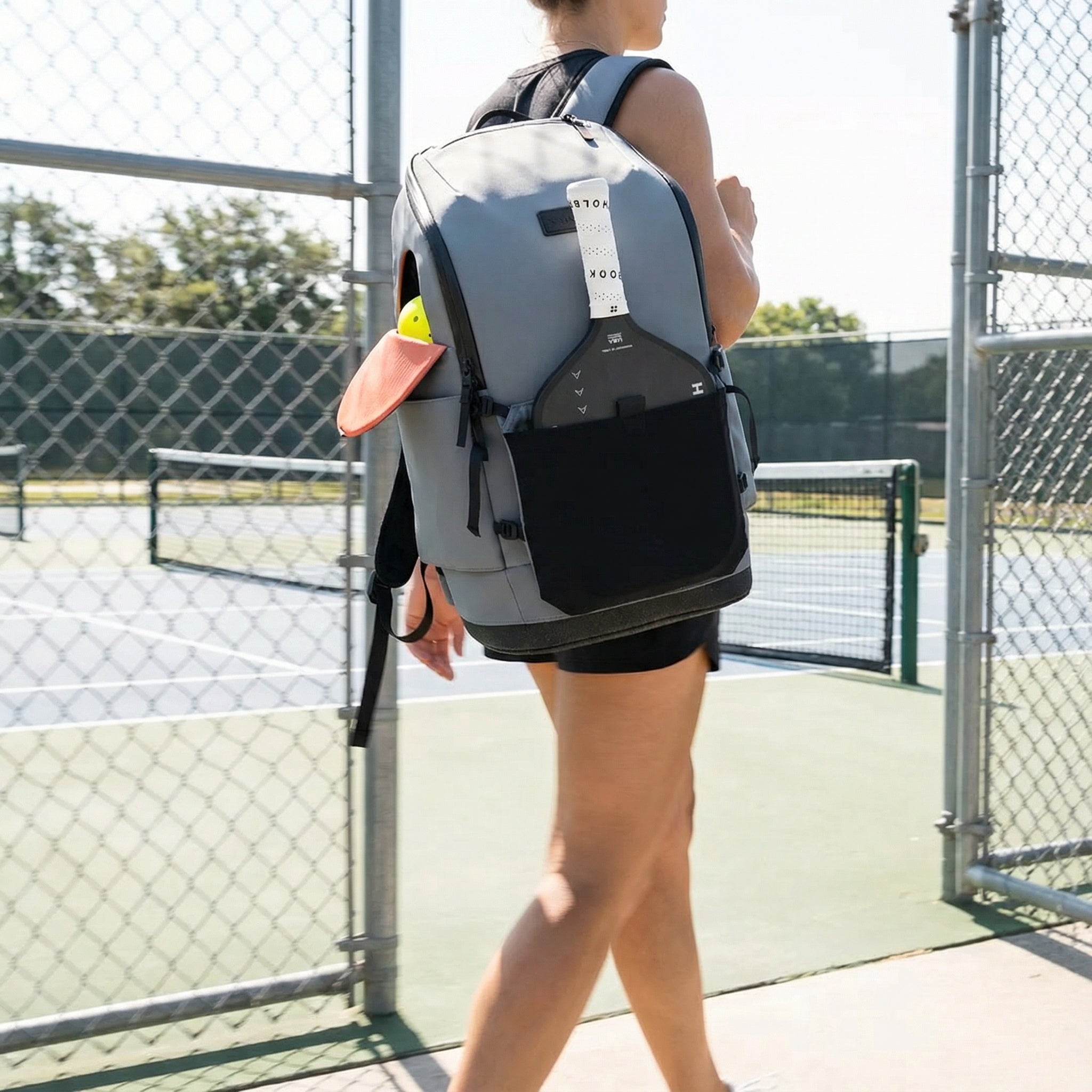
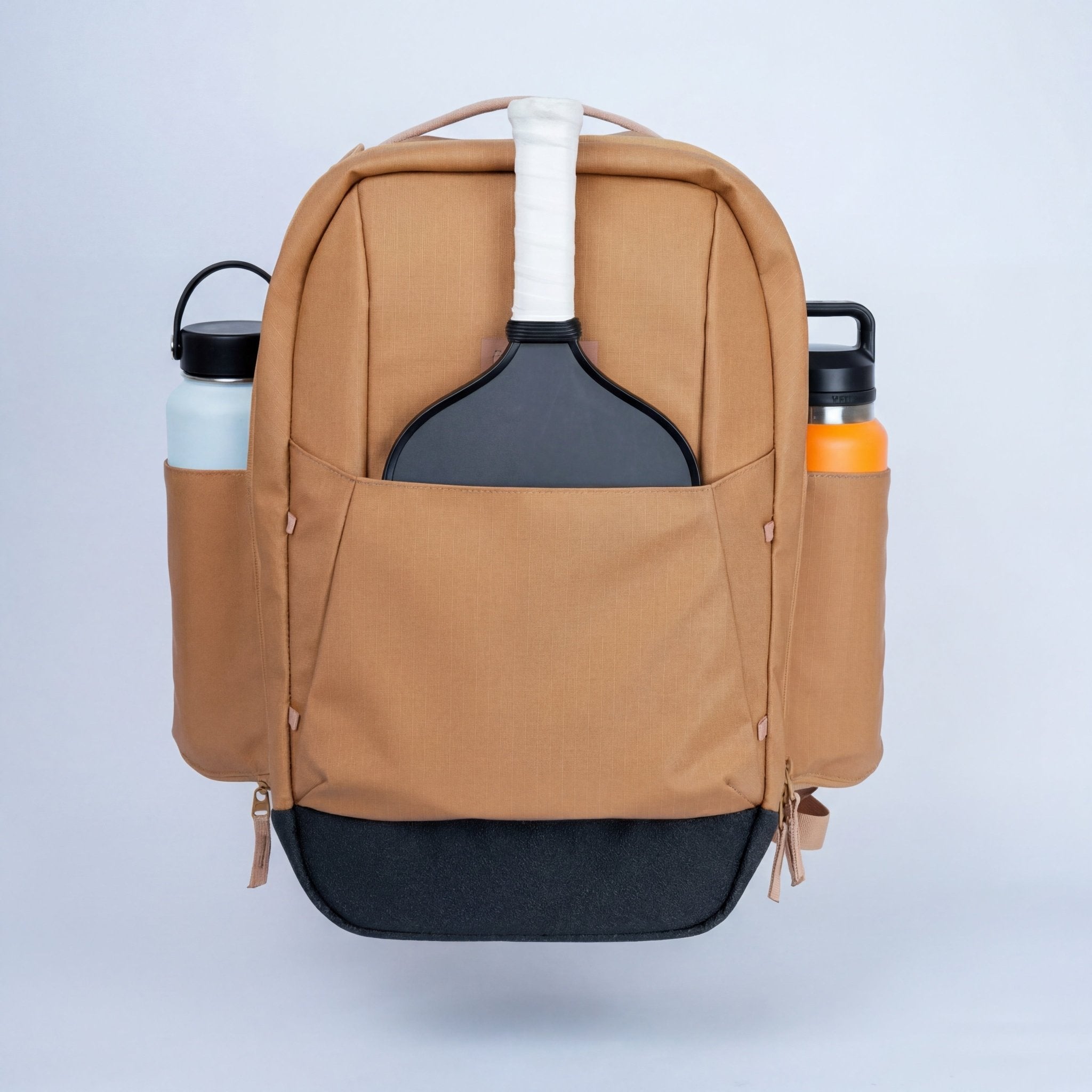
Once the net is up, the next gap in most backyard setups is gear organization. If you're hauling paddles, balls, water, and accessories out to the driveway repeatedly, the FORWRD Court Ranger V2 ($195) handles all of it — a 16" padded laptop sleeve, modular paddle compartment, and YKK AquaGuard zippers designed for outdoor use. It's the bag built for players who play multiple times a week in multiple settings.
Also worth bookmarking: our portable pickleball net buying guide covers the full market including premium semi-permanent options for players building dedicated court setups. And if you're setting up a practice space, the pickleball training equipment guide has ball machine and rebounder recommendations that pair well with a home court.
Shop the Court Ranger V2 — the everyday bag built for players who take their game seriously.
FAQ: Portable Pickleball Nets
What is the regulation height for a pickleball net?
A regulation pickleball net is 36 inches high at the sidelines and 34 inches high at the center, maintained by a center strap. The net must be 22 feet wide — matching the full court width with 12 inches of overhang on each side. These specs are set by USA Pickleball and apply to all sanctioned play.
What is the best portable pickleball net for backyard play?
For most backyard setups, the Franklin Official Portable Net System is the best entry-level choice — it meets regulation specs, sets up in under 10 minutes, and is widely available. If you play 3 or more times per week, upgrade to the JOOLA Portable Net for better long-term stability and construction quality.
Can I use a portable pickleball net on my driveway?
Yes. Most portable nets are designed for hard court surfaces including asphalt and concrete. Nets with spread-frame legs or weighted bases grip hard surfaces without needing anchoring or stakes. Lighter nets may slide on smooth asphalt under aggressive drives — heavier steel-frame nets (30+ lbs) stay planted better on hard surfaces.
How do I keep a portable pickleball net from moving during play?
Choose a net with weighted cross-bar feet or spread-frame base design. For extra stability on smooth surfaces, add sandbag weights to the base legs, or use court tape to mark leg positions and check after each point. The OnCourt OffCourt PickleNet Deluxe's 56-lb frame is the most stable portable option if movement is a persistent problem.
Are Franklin and JOOLA pickleball nets regulation size?
Yes — both the Franklin Official Portable Net System and the JOOLA Portable Pickleball Net are designed to meet USA Pickleball regulation dimensions (22 feet wide, 36 inches at sides, 34 inches at center with center strap). Verify with a tape measure on your first setup to confirm the center strap is properly tensioned to 34 inches.
What's the difference between a portable and a permanent pickleball net?
Portable nets use spread-frame or weighted-base systems and store in carry bags — setup takes 5–20 minutes depending on the model. Permanent nets mount to in-ground posts and require court installation but offer maximum stability and zero setup time. Portable nets are right for 95% of recreational players; permanent nets are for players with a dedicated court who play daily.

Leave a comment
This site is protected by hCaptcha and the hCaptcha Privacy Policy and Terms of Service apply.