

Disclosure: This post contains affiliate links to Pickleball Central. If you purchase through our links, FORWRD earns a small commission at no extra cost to you. We only link to products we'd recommend regardless.
Last updated: May 2026
The best men's pickleball shoe in 2026 depends almost entirely on how you play — not which brand has the best marketing budget. A kitchen specialist who lives at the NVZ line needs different shoe characteristics than a baseline driver who covers the full court, and both have different needs from a player showing up three times a week on outdoor asphalt. Every roundup that ignores this distinction is leaving money on the table and giving you a shoe that doesn't match your game.
This guide breaks down men's pickleball shoes by play style first, then by fit needs (wide feet, high arches, heel support), with a realistic look at how long shoes actually last on different surfaces.
What Makes a Pickleball Shoe Different From a Running or Tennis Shoe
Running shoes are built for heel-to-toe forward motion. The cushioning stack is high at the heel, the outsole is designed for propulsion, and the midsole rewards forward momentum. None of that helps you on a pickleball court.
Pickleball movement is lateral-first. You're making small side steps near the kitchen line, planting hard during pivots, and making quick directional changes that put stress on the lateral edge of your foot — not the heel. A running shoe in this context is actively worse than a flat court shoe because the high heel stack creates an ankle lever that increases rollover risk during lateral cuts.
Tennis shoes are closer to correct, but they're designed for longer, faster baseline-to-net sprints on a much larger court. The outsole wear patterns are different too — a tennis shoe's herringbone is optimized for the heavy drag-stop moves at baseline. Pickleball wear happens primarily on the outer lateral edge and the toe area from kitchen pivots.
What a dedicated pickleball shoe gets right: lower heel-to-toe drop (keeps you closer to the court surface for stability), reinforced lateral support through the midfoot, and a toe cap that handles the kitchen pivot wear that destroys regular trainers in two months.
Key Features for Men: Stability, Width Options, and Court Grip
Men's pickleball shoe shopping has a few specific considerations that don't come up as much in women's sizing:
Width. Men's feet tend to be wider relative to shoe last measurements, and this compounds with age — foot width spreads after 40 for most men. A standard (D) width shoe that fits at 25 may be uncomfortably tight at 45. The 2E and 4E wide-fit options from ASICS and K-Swiss cover the majority of men who've been squeezing into standard-width court shoes and wondering why their feet hurt after 90 minutes.
Outsole durability at body weight. Heavier players put more stress on outsole lugs during lateral cuts. The herringbone pattern on a $90 court shoe wears at a different rate for a 220-pound player than a 155-pound player. This affects longevity estimates significantly — outdoor acrylic court wear data varies by body weight more than any other variable.
Stability vs. speed tradeoff. Men's shoes typically run heavier than women's equivalents, partly because the last is wider. The lightest men's options (K-Swiss Express Light) sacrifice some lateral stability reinforcement for weight savings. Whether that tradeoff is correct depends entirely on whether you play a speed game or a power-plant game.
Best Men's Pickleball Shoes 2026: By Play Style
If You're a Kitchen Specialist (Live at the NVZ Line)
Kitchen-dominant players make hundreds of small lateral shuffle steps per session. Your outsole wears primarily at the lateral midfoot, you need good grip for quick directional changes, and you want a shoe that doesn't fatigue your feet during extended net play. Weight matters less here than stability and grip.
K-Swiss Express Light — Our top kitchen pick. The lightest dedicated pickleball shoe at its price point, with a lateral outrigger design that specifically supports the side-step pattern kitchen players use constantly. Available in standard and 2E wide. The outsole holds up well on indoor gym floors and outdoor acrylic. Break-in period is minimal — most players report comfort from the first session.
ASICS Gel-Resolution X — Best if you want maximum lateral support. The Gel-Resolution line has been the gold standard for court sport lateral support for a decade. The X version comes in standard and 2E widths. It runs heavier than the K-Swiss, but the lateral stability is noticeably better for players who throw their weight hard into side-step changes. If you've ever rolled an ankle on a lateral cut, the Gel-Resolution X's outrigger sole geometry makes a real difference.
If You're a Baseline Driver (Cover the Full Court)
Baseline players need more forefoot flexibility for the push-off on full-court sprints, combined with ankle stability for the stop-and-plant at net. You also wear through the toe area faster from those plant stops.
HEAD Motion Pro — Best for court coverage. HEAD's Motion Pro is built for players who cover ground. The forefoot rocker geometry promotes forward propulsion better than a flat court shoe, and the ankle collar gives enough containment for aggressive stop-and-plant movements. HEAD makes paddles that most competitive players know, but their shoe line is genuinely underrated for men who play a more athletic, court-coverage style.
ASICS Court FF 3 is another baseline-friendly option — the FlyteFoam cushioning gives more rebound on the forefoot push-off than standard court shoes. Good choice for 3.5+ players who move aggressively.
If You Play Outdoors 3x/Week (Durability Is Your Primary Concern)
Outdoor hard courts are the most aggressive on outsoles. Asphalt is brutal. Outdoor acrylic (the standard public court surface) wears at a moderate rate that punishes cheap herringbone patterns within 60–80 hours of play.
Skechers Viper Court Pro 2.0 — Most popular men's shoe on outdoor courts. The Viper Court is consistently the most-worn shoe at outdoor open play sessions. The ULTRA GO cushioning handles the additional impact of harder surfaces without fatiguing your feet, and the rubber outsole compound holds up better on asphalt than several more expensive competitors. Arch Fit insole is a genuine bonus for players with any arch sensitivity. It runs comfortable from day one — no break-in period most players notice.
JOOLA FUNKSH1N R4lly is worth a look if you want a shoe that doesn't look like a pickleball shoe. The gum outsole is positioned as an outdoor court-specific choice. JOOLA's pickleball footwear line is newer than their paddle line but has been getting good reception from outdoor players who want a cleaner aesthetic.
Men's-Specific Fit Issues: Wide Feet, High Arches, and Heel Support
Men over 40 have a disproportionately high rate of having been wearing the wrong shoe width for years. Standard (D) width works fine until it doesn't — and it usually stops working around the time you start playing a sport that requires 90 minutes of lateral movement three times a week.
For wide feet: the K-Swiss Express Light in 2E is the lightest wide-fit dedicated pickleball shoe currently available. The ASICS Gel-Resolution X comes in both E and 2E widths — one of the few brands with two width tiers for their pickleball-specific line. For more detail, see FORWRD's guide to pickleball shoes for wide feet.
For high arches: avoid flat last shoes. The Skechers Viper Court Pro's Arch Fit insole is purpose-built for this. ASICS Gel-Resolution X also has good arch contact geometry. If you've been using a custom orthotic in running shoes, most of the above options have removable insoles that accept standard orthotics without affecting the heel counter fit.
For heel support: men who've had plantar fasciitis history do best with higher heel cushioning. The ASICS Gel-Resolution X leads here — it was partly designed for players managing lower-limb overuse issues. HEAD Motion Pro is also worth a look for heel cushioning on the longer movement patterns of baseline play.
How Long Do Pickleball Shoes Last? Realistic Expectations for Regular Players
Surface type is the biggest variable. Here's what to expect at 3x/week play (approximately 4–5 hours of court time per week):
Indoor gym floors (wood or rubberized court): 12–18 months before lateral grip degrades noticeably. Indoor play is gentle on outsoles. The bigger wear factor is the toe cap from kitchen pivots — look for rubber toe guards or reinforced tip zones when buying for indoor primary play.
Outdoor acrylic (standard public court surface — USA Pickleball's official sanctioned surface): 6–9 months before the lateral outsole lug pattern flattens enough to affect traction on lateral cuts. Heavier players (200+ lbs) should expect the lower end of this range. The herringbone pattern on quality shoes (ASICS, K-Swiss) holds up better than on budget options where the rubber compound is softer.
Outdoor asphalt: 3–5 months before significant outsole wear. Asphalt is sandpaper for court shoe rubber. If you play primarily on asphalt, budget for more frequent replacement or specifically look for outsoles marketed for hard surface durability. The Skechers Viper Court Pro holds up comparatively well on asphalt given its price point.
Practical test: run your fingers across the lateral outsole lug pattern under bright light. When the herringbone ridges have worn to less than half their original depth, your lateral braking is compromised. Most players notice this as a feeling of "sliding" on lateral cuts before they look at the outsole and realize what's happened.
Quick Comparison: Best Men's Pickleball Shoes 2026
| Shoe | Best For | Width Options | Court Type |
|---|---|---|---|
| K-Swiss Express Light | Kitchen players, lightweight | Standard, 2E | All courts |
| ASICS Gel-Resolution X | Lateral support, advanced players | Standard, E, 2E | All courts |
| Skechers Viper Court Pro 2.0 | Cushioning, outdoor durability | Standard | Outdoor |
| HEAD Motion Pro | Baseline players, court coverage | Standard | Outdoor hard courts |
| JOOLA FUNKSH1N R4lly | Outdoor acrylic, style-forward | Standard | Outdoor acrylic |
FAQ: Men's Pickleball Shoe Questions
What is the best pickleball shoe for men?
It depends on your play style. Kitchen players who live at the NVZ line should prioritize lateral support — the K-Swiss Express Light and ASICS Gel-Resolution X lead here. Baseline players covering more court do better with the HEAD Motion Pro. For outdoor 3x/week players who need durability, the Skechers Viper Court Pro 2.0 is the most popular choice. No single shoe wins every category.
Are tennis shoes OK for pickleball?
Better than running shoes, but not optimal. Tennis shoes are designed for larger court movements and heavier baseline drag-stop patterns. Pickleball's kitchen pivots and lateral shuffles wear the outsole differently. A dedicated pickleball shoe will outlast a tennis shoe on a pickleball court, and the lateral stability geometry is specifically tuned for pickleball's movement pattern rather than tennis's.
What features matter most in men's pickleball court shoes?
Lateral support (the shoe shouldn't roll under hard side cuts), outsole durability matched to your court surface, width fit (2E options matter for men over 40), and heel cushioning if you play on hard outdoor surfaces. Weight matters mainly for kitchen-dominant players who make hundreds of small shuffles per session — for baseline players, stability beats lightness.
Do men need special shoes for pickleball?
Not "special" — but dedicated court shoes outperform running shoes or cross-trainers measurably. The specific differences are lateral outsole support, lower heel-to-toe drop for court stability, and a rubber compound optimized for court surface grip rather than pavement or trail. After two months on a dedicated pickleball shoe vs. running shoes, most players notice the difference in ankle fatigue and foot stability during long sessions.
What pickleball shoes have the best lateral support for men?
The ASICS Gel-Resolution X has the most purpose-built lateral support geometry in the current men's lineup — it's designed to handle aggressive side-to-side cuts that would roll a standard court shoe. The K-Swiss Express Light is the best lightweight lateral support option. Both come in 2E wide and have outsoles specifically designed for the lateral movement demands of court sports.

Complete Your Setup
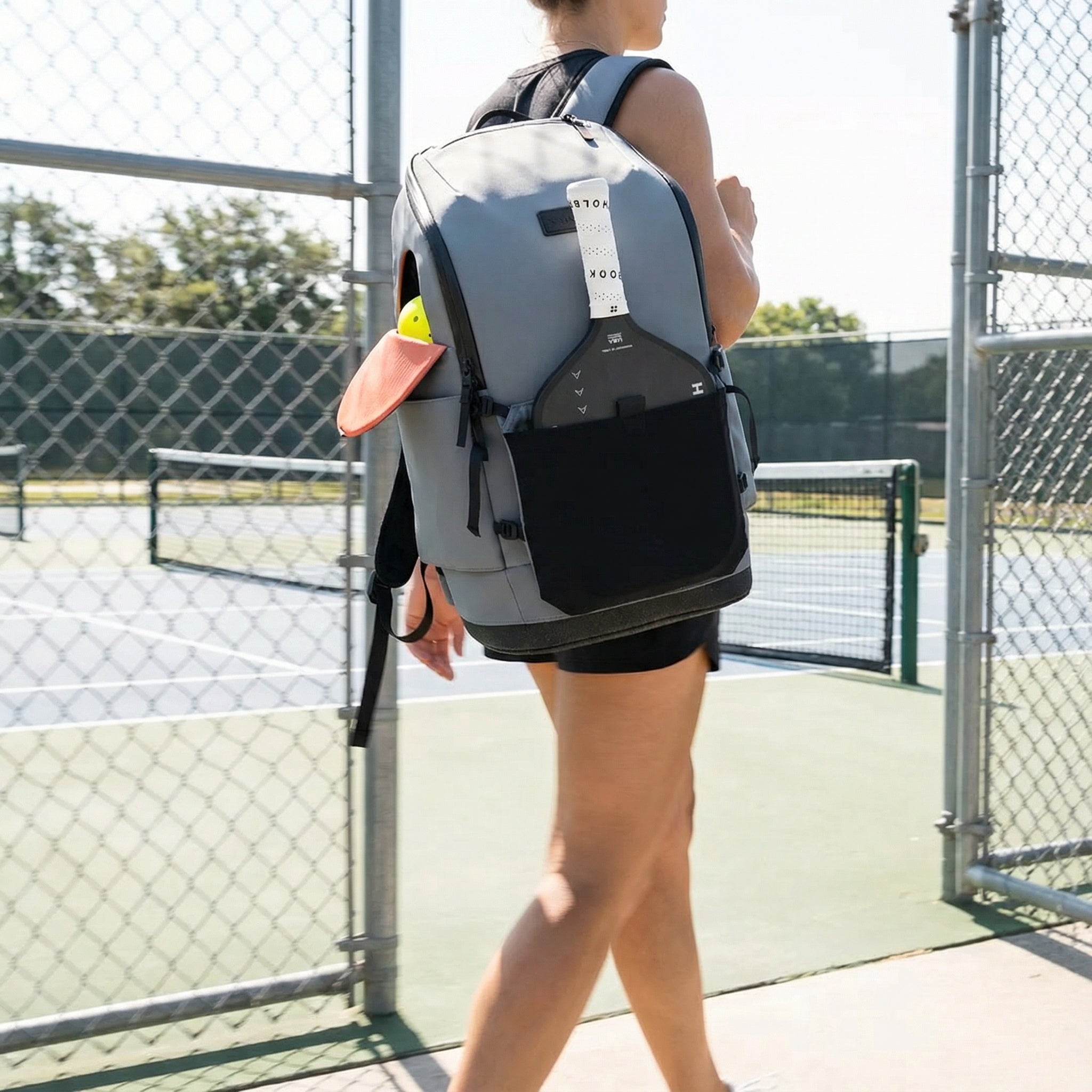
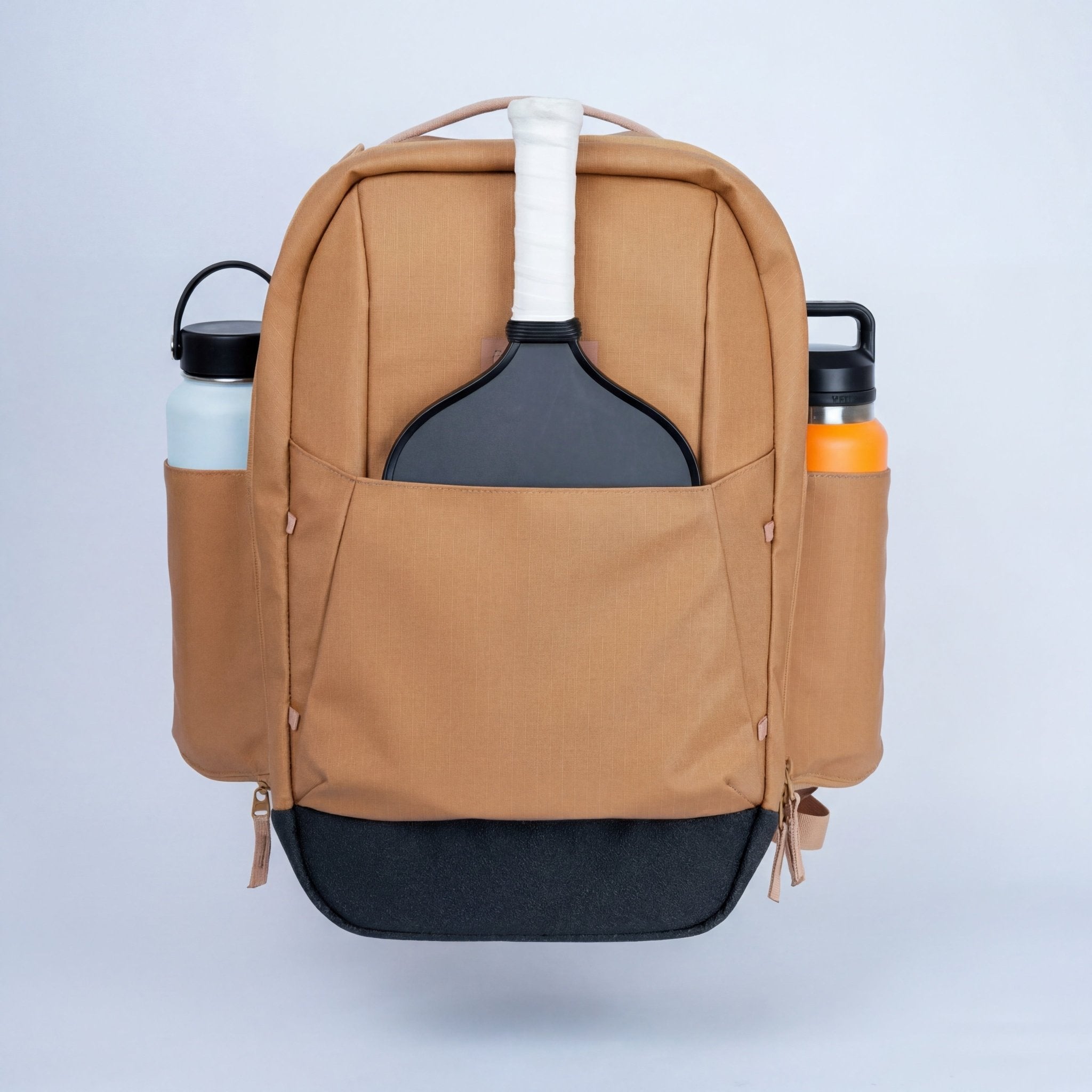
Got your shoes sorted? The bag is next. The Court Ranger V2 ($195) has a dedicated shoe compartment that keeps court dust off your paddles — your post-game shoes go in the bottom section, paddles stay in the modular sleeve up top. 16" laptop sleeve for court-to-work days, YKK AquaGuard weatherproof zippers. Built for exactly the 3x/week player this guide is written for. Court Caddy ($325) if you need more capacity — four paddles, separate shoe storage via the Shoe Cube add-on, and a 15" padded laptop sleeve.
For more on women's footwear options, see Best Pickleball Shoes for Women 2026. For the full shoe guide covering all player types, see FORWRD's complete pickleball shoe guide.


Leave a comment
This site is protected by hCaptcha and the hCaptcha Privacy Policy and Terms of Service apply.