

Last updated: May 2026. The best pickleball shoes for women over 50 are the ones designed for the foot you have now — not the one you had at 30. Your feet have changed in predictable, documented ways since then. Most shoe guides don't account for any of them. This one does.
After 50, the arch drops, the forefoot widens, and the fat pads in your heel and ball of foot thin out. Play three times a week on a concrete outdoor court in a shoe built for a 28-year-old runner, and you'll feel it by month two. The right court shoe matches those specific changes. This guide maps each one to the features that actually address it — then applies that framework to the four best options on the market right now.
Disclosure: This post contains affiliate links to Pickleball Central. If you purchase through our links, FORWRD earns a small commission at no extra cost to you. We only link to products we'd recommend regardless.
What Changes in Your Feet After 50 (and Why It Matters for Court Shoes)
This isn't a warning label — it's the most useful thing you can read before buying court shoes. Four changes happen to almost every woman's feet over time, and all four affect which shoe will actually work for you.
1. Arch lowering. The ligaments and tendons that hold your arch up gradually loosen over decades. The arch drops — sometimes noticeably, sometimes subtly. The result is that your weight distributes differently across the ball of your foot. A shoe built with minimal arch support (or one designed for a higher arch profile) will feel unstable on lateral cuts, and your foot will work harder to compensate. Over a two-hour session, that adds up.
2. Forefoot widening. Fat redistributes, and toes can splay more with each step. Many court shoes — especially lightweight options marketed to competitive players — are built on a narrow last. That means pressure across the bunion area and little toe on almost every step. If you've written off court shoes as "uncomfortable," there's a good chance the last shape was the problem, not the shoe category.
3. Reduced plantar cushioning. The fat pad in your heel and ball of foot thins with age. On a rubberized indoor court, that's manageable. On the concrete surfaces where most outdoor pickleball gets played, it's not. Concrete transmits shock more aggressively than any other common playing surface, and without an adequate midsole cushioning system, plantar fasciitis risk climbs with every session you add to your week.
4. Prior joint history. Many women over 50 arrive at pickleball with a knee replacement behind them, ongoing hip issues, or a history of ankle sprains. Lateral stability becomes a non-negotiable here — not a nice-to-have. A shoe that allows ankle roll doesn't just feel unstable; it adds stress to every joint up the chain on every lateral movement you make.
"When we were designing the Court Ranger V2, the feedback from women in the 45–60 age range was consistent: shoe fit was the single biggest barrier to getting court-ready gear. Not price, not style — fit. Arch support and a wide enough toe box came up over and over. They weren't asking for specialty orthopedic shoes. They just wanted shoes that accounted for what their feet actually look like."
That feedback tracks with what podiatrists say: most mass-market court shoes are designed around a 25–35 demographic. If your feet have changed, you need to shop around that reality — not against it.
Key Features to Prioritize: Arch Support, Toe Box Width, and Lateral Stability
Call this the 3-Criteria Court Test. Every shoe recommendation below gets scored on these three dimensions. Use the same criteria when you're standing in a store.
1. Arch support score. You're looking for a structured insole with a defined midfoot arch — not a flat EVA blank that compresses uniformly. Specific signs: a built-in arch bridge that you can feel when you press the insole from below, or a deep heel cup (which keeps your foot in position and works with aftermarket orthotics if you use them). If the insole is paper-thin and flat, it won't help a dropped arch — and might work against it. Bonus points for shoes explicitly compatible with custom orthotics: they'll have removable insoles and enough depth in the shoe to accommodate them.
2. Lateral stability score. This is the feature most women's cross-trainers lack. A court-specific lateral stability system has two parts: an outsole pattern built for lateral grip (herringbone or modified herringbone holds on hard courts) and a rigid TPU support wrap on the side of the midsole that resists the inward collapse that happens during quick direction changes. Running shoes don't have either. They're engineered for forward motion — heel-to-toe — and they're built to flex laterally, which is exactly wrong for pickleball. Don't play pickleball in running shoes.
3. Toe box width. The practical question is: does the shoe come in wide, and does the forefoot have enough internal volume for your foot to splay without pinching? Shoes built on a true women's last — not a shortened men's last — tend to perform significantly better here. The forefoot shape follows women's foot geometry more closely. If you're between sizes, go half a size up before going wide; if you're a full size into the wide zone, look for brands that offer W (wide) versions specifically.
At the store, press your thumb into the front of the toe box with your foot fully in the shoe. You want roughly a thumb-width of space. Anything less and forefoot splay will be restricted. Anything more and you'll slide forward on quick stops.
Best Pickleball Shoes for Women Over 50: Tested and Ranked
Four shoes, each with the 3-Criteria Court Test applied. All four are purpose-built court shoes — not tennis crossovers, not running shoes rebranded. All four are available through Pickleball Central.
ASICS Gel-Resolution X — Best for Stability and Court Feel
If your primary concern is stability — ankle security, predictable lateral grip, reliable heel support — this is the shoe. The Gel-Resolution X is ASICS's flagship court shoe, and the stability credentials are real, not marketing copy.
The AHAR+ (ASICS High Abrasion Rubber) outsole is harder and more durable than standard rubber compounds, and the herringbone pattern holds on both indoor gym floors and outdoor hard courts. The external TPU cage that wraps the midsole side wall is what separates this shoe from most of the field — it physically resists the inward roll that causes ankle sprains during lateral cuts.
- Arch support: 9/10 — ASICS Gel cushioning units in both the heel and forefoot absorb impact in multiple zones. The midsole is structured, not compliant.
- Lateral stability: 9/10 — AHAR+ outsole, TPU external support cage. The best lateral package in this group.
- Toe box: 7/10 — Available in standard women's width only. If you have significant forefoot spread, size up half a size. It's not narrow, but it's not generous either.
- Best for: Intermediate to advanced players with stability as the top priority. Players with prior ankle history.
Price: ~$130 — View at Pickleball Central
Skechers Viper Court Pro 2.0 — Best Comfort for Joint-Conscious Players
The headline feature here is the Arch Fit insole — it's podiatrist-certified and designed around a defined arch shape that molds to your foot over time. That's not the same as a memory foam insert. Arch Fit has structural shape built into it. For players dealing with early plantar fasciitis or general foot fatigue after longer sessions, this is the most targeted solution in the category.
The Viper Court Pro 2.0 is also the roomiest shoe in this group from a forefoot standpoint, and it's available in wide through Pickleball Central (check stock, as wide sizes sell out).
- Arch support: 10/10 — The standout in this group. If arch support is your primary criterion, this is your shoe.
- Lateral stability: 7/10 — Lighter side support than ASICS. Adequate for casual to intermediate play. If you're playing aggressive lateral games at a competitive level, the ASICS or K-Swiss will serve you better.
- Toe box: 8/10 — Slightly roomier forefoot than most court shoes. Wide sizing available.
- Best for: Comfort-first players, those with early foot pain, plantar fasciitis history, or anyone who spends long hours on court.
Price: ~$115 — View at Pickleball Central
K-Swiss Express Light — Best Lightweight Option
Most lightweight court shoes sacrifice structure to hit a low weight target. The Express Light doesn't. K-Swiss's 180-degree Plantar Support Chassis is a full-length arch system built into the midsole — it runs from heel to toe and keeps feet stable through lateral cuts without the heel stack height that some players find uncomfortable or disorienting.
It's also available in a Wide variant, which is worth noting if you're in the "slightly wider forefoot but not extreme" category. The standard Express Light runs slightly wider than industry average for a women's last anyway.
- Arch support: 8/10 — The Plantar Support Chassis provides solid structure. Not as aggressive as Skechers Arch Fit, but more accommodating for orthotics users.
- Lateral stability: 8/10 — Lightweight but genuinely structured. Court-specific outsole pattern holds on hard courts.
- Toe box: 8/10 — True women's last, slightly wider forefoot than average. Wide variant available for significant forefoot spread.
- Best for: Players who want a lightweight feel without giving up structured support. Great everyday-play shoe.
Price: ~$115
- Standard: K-Swiss Express Light Women's at Pickleball Central
- Wide: K-Swiss Express Light Wide Women's at Pickleball Central
HEAD Motion Pro — Best for All-Day Wear
If you're playing full tournament days — three matches, long warm-ups, extended doubles rotations — the Motion Pro is built for that load. The ExoSkeleton midsole wrap locks the heel in place and resists fatigue-related loosening that happens when most shoes are worn for four-plus hours. The toe box is the roomiest in this group, which matters when feet swell slightly during extended play (a normal physiological response that most shoe guides ignore).
- Arch support: 7/10 — Supportive, but not as structured as ASICS or Skechers. If arch support is your primary concern, look elsewhere.
- Lateral stability: 8/10 — The ExoSkeleton heel lock is effective. Strong choice for multi-court days.
- Toe box: 9/10 — The widest forefoot in this group. If shoe width has been the consistent problem for you, start here.
- Best for: Players with wider feet, or anyone playing full tournament days where foot fatigue and swelling are factors.
Price: ~$120 — View at Pickleball Central
Quick Comparison
| Shoe | Price | Arch Support | Lateral Stability | Toe Box | Best For |
|---|---|---|---|---|---|
| ASICS Gel-Resolution X | ~$130 | ★★★★★ (9/10) | ★★★★★ (9/10) | ★★★★☆ (7/10) | Stability-focused players |
| Skechers Viper Court Pro 2.0 | ~$115 | ★★★★★ (10/10) | ★★★★☆ (7/10) | ★★★★☆ (8/10) | Comfort + early foot pain |
| K-Swiss Express Light | ~$115 | ★★★★☆ (8/10) | ★★★★☆ (8/10) | ★★★★☆ (8/10) | Lightweight, everyday play |
| HEAD Motion Pro | ~$120 | ★★★★☆ (7/10) | ★★★★☆ (8/10) | ★★★★★ (9/10) | Wide feet, all-day wear |
How to Know If a Shoe Actually Fits for Court Play
Fitting a court shoe isn't the same as fitting a casual sneaker. You need the shoe to hold your foot through lateral stress, not just feel comfortable standing still. Four tests you can do before you buy:
1. The thumb-width test. Stand in the shoe with your heel fully seated. Press your thumb into the front of the toe box. You want roughly one thumb-width of space between your longest toe and the end of the shoe. Less than that and forefoot splay will compress on quick stops. More than half an inch and you'll slide forward into the toe box during lateral cuts — which causes toe bruising and instability.
2. The heel-slip check. Simulate the push-off motion: stand on one foot in the shoe and lift your heel slightly (like the beginning of a step). Your heel should stay seated in the heel cup with minimal lift. A half-inch or more of heel movement means the shoe is too long or the heel counter isn't firm enough. Heel slip on court translates directly to blisters and instability during quick direction changes.
3. The lateral lean test. Stand in the shoe and slowly rock your foot side to side — inner edge to outer edge. A court shoe should compress very little on the outer edge (the lateral stability zone). If the midsole compresses all the way to the outsole under modest pressure, the shoe won't protect your ankle during game-speed lateral movement. Running shoes almost universally fail this test. They're engineered to flex laterally — which is exactly wrong for pickleball.
4. The two-step shuffle. Take two quick lateral shuffle steps in the store. Feel for grip delay on the start and slip at the stop. Hard court outsoles grip differently on carpet than on asphalt — if the store has a hard floor area, use it. What you're testing is whether the outsole pattern engages quickly and releases cleanly. Grip lag means slower transitions on court.
Running shoes fail tests 2 and 3 routinely. They're built for forward motion — heel strike to toe-off — and they compress laterally by design. Playing pickleball in running shoes isn't just suboptimal; it's a genuine ankle injury risk over time. If you're currently doing it, the shoes in this guide are all under $135. That's a reasonable insurance premium.
If you're building out your court kit, the best pickleball bags for women in 2026 have a dedicated shoe compartment — which matters once you're traveling to courts and tournaments. See also our full pickleball bag guide if you're starting from scratch.
When to Consult a Podiatrist Before Buying Court Shoes
Most players don't need a podiatrist to buy court shoes. But some do, and it's worth knowing the difference. See a podiatrist before buying if you experience heel pain in your first steps in the morning (classic plantar fasciitis presentation), if knee or hip pain has worsened since you started playing pickleball, if bunions or hammertoes make any current shoe painful after 30 minutes, or if you have a history of recurring ankle sprains. In those cases, custom orthotics may outperform any over-the-counter insole — and a podiatrist can tell you whether the shoe you're considering is compatible. The American Podiatric Medical Association has a shoe-finder tool on their site if you want a starting point.
FAQ: Pickleball Shoes for Women Over 50
What are the best pickleball shoes for women over 50?
The ASICS Gel-Resolution X is the best overall choice for stability and court protection. The Skechers Viper Court Pro 2.0 leads on arch support and comfort. The K-Swiss Express Light is the best lightweight option with genuine structure. The HEAD Motion Pro is the pick for wide feet and all-day tournament wear. The right answer depends on your specific foot profile.
What features should older women look for in pickleball shoes?
Prioritize arch support (structured insole with midfoot arch bridge, not flat EVA), lateral stability (TPU support cage and herringbone outsole pattern — not running shoes), and toe box width (true women's last, or available in wide). These three features map directly to the foot changes most women experience after 50: arch drop, forefoot widening, and reduced plantar cushioning.
Are court shoes necessary for pickleball?
Yes, if you're playing more than once a week. Court shoes have lateral stability features that running and cross-training shoes don't. Playing pickleball in running shoes increases ankle roll risk on every lateral cut and provides no grip pattern optimized for hard court surfaces. The lateral stability gap is the critical one — it's not about grip feel, it's about injury prevention.
What pickleball shoes have the best arch support for older players?
The Skechers Viper Court Pro 2.0 has the best arch support in this category — the Arch Fit insole is podiatrist-certified with a defined structural arch shape, not just cushioning. The ASICS Gel-Resolution X is the second-strongest for arch support while adding a superior lateral stability package. Both are good picks for players with dropped arches or early plantar fasciitis.
Are ASICS or Skechers better for women over 50 playing pickleball?
It depends on what your feet need most. If stability and ankle protection are your primary concerns — especially with prior joint history — ASICS Gel-Resolution X is the stronger shoe. If arch support and all-day comfort are the priority, particularly with foot pain or plantar fasciitis, Skechers Viper Court Pro 2.0 wins. Both are excellent; the choice is about which failure mode you're more concerned about.
Complete Your Setup
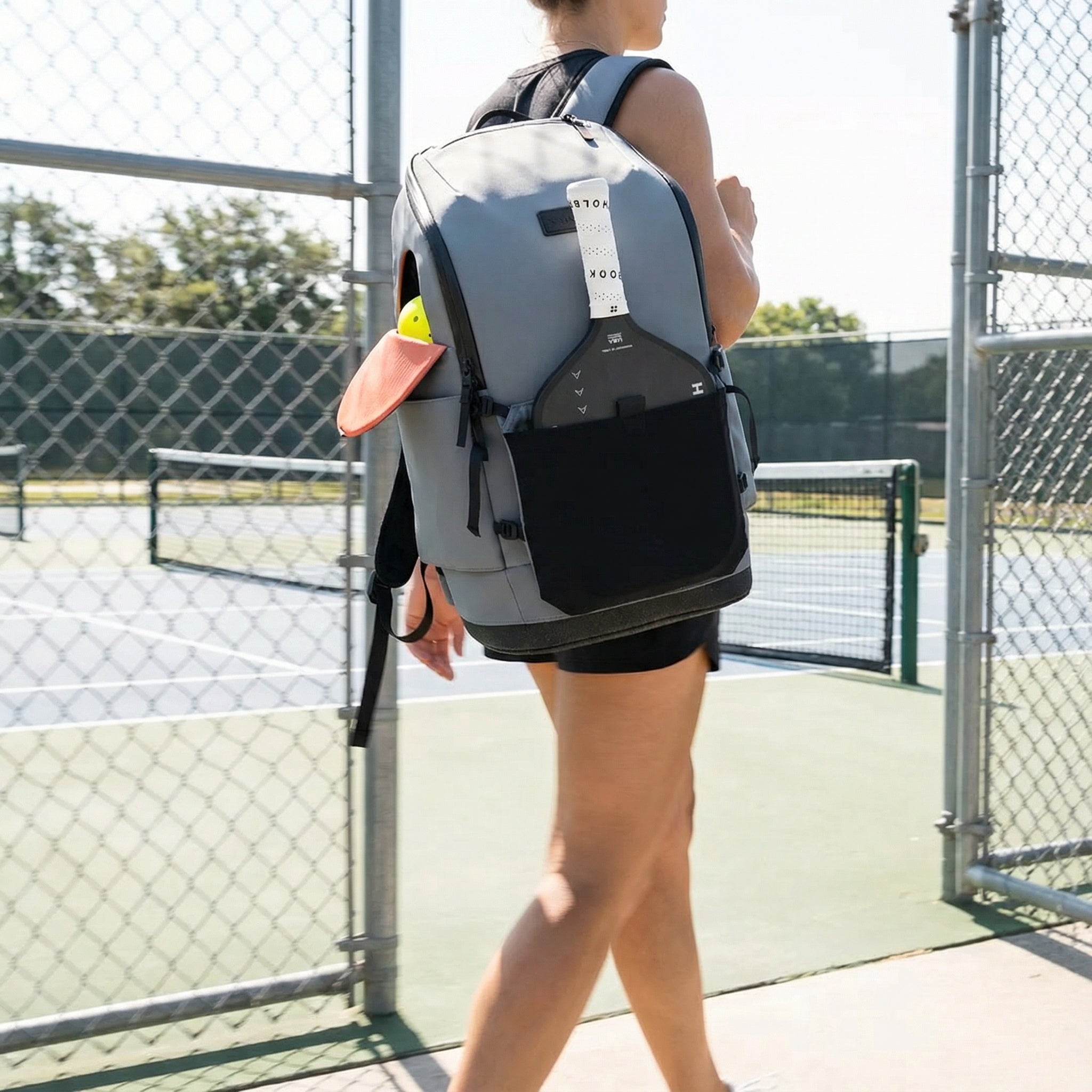
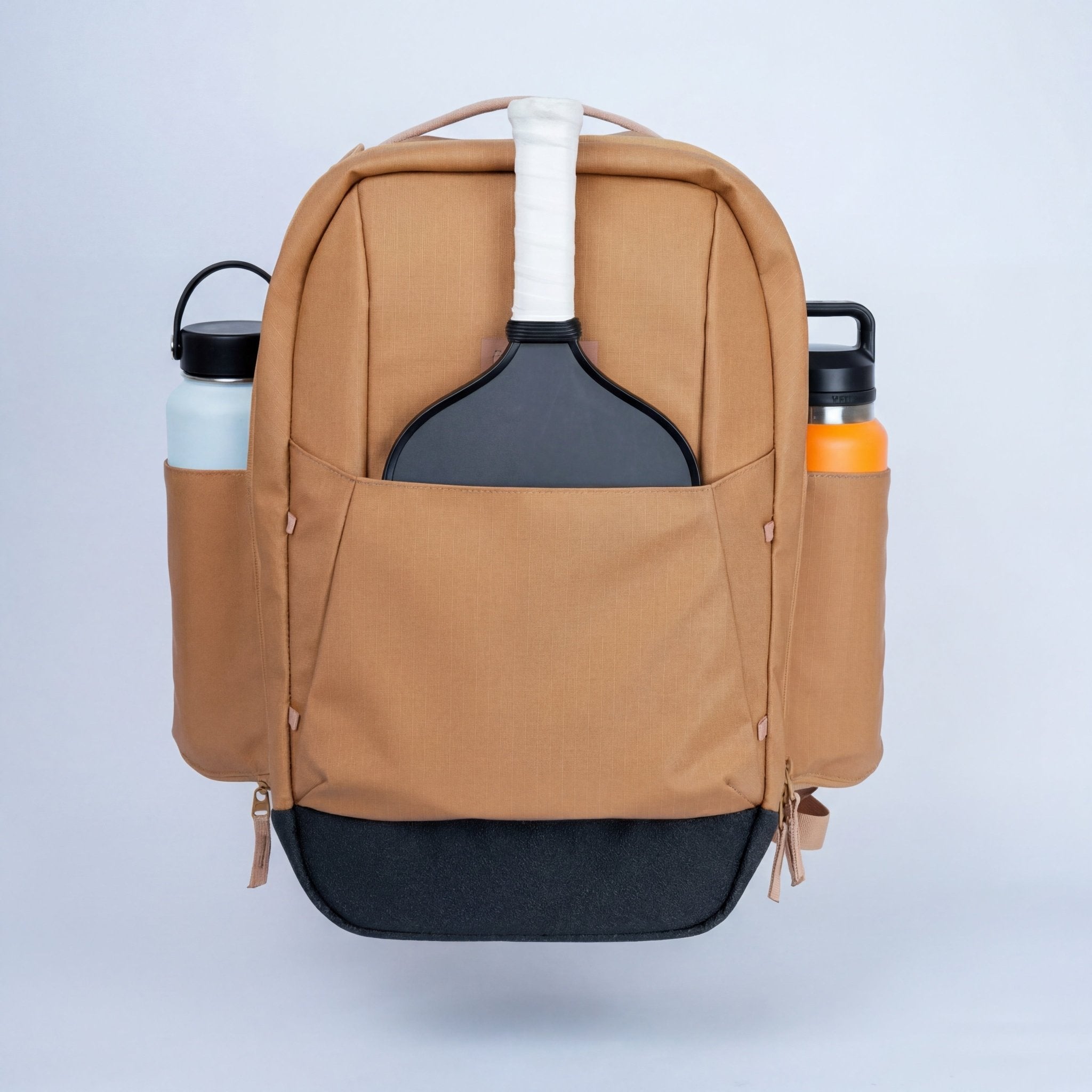
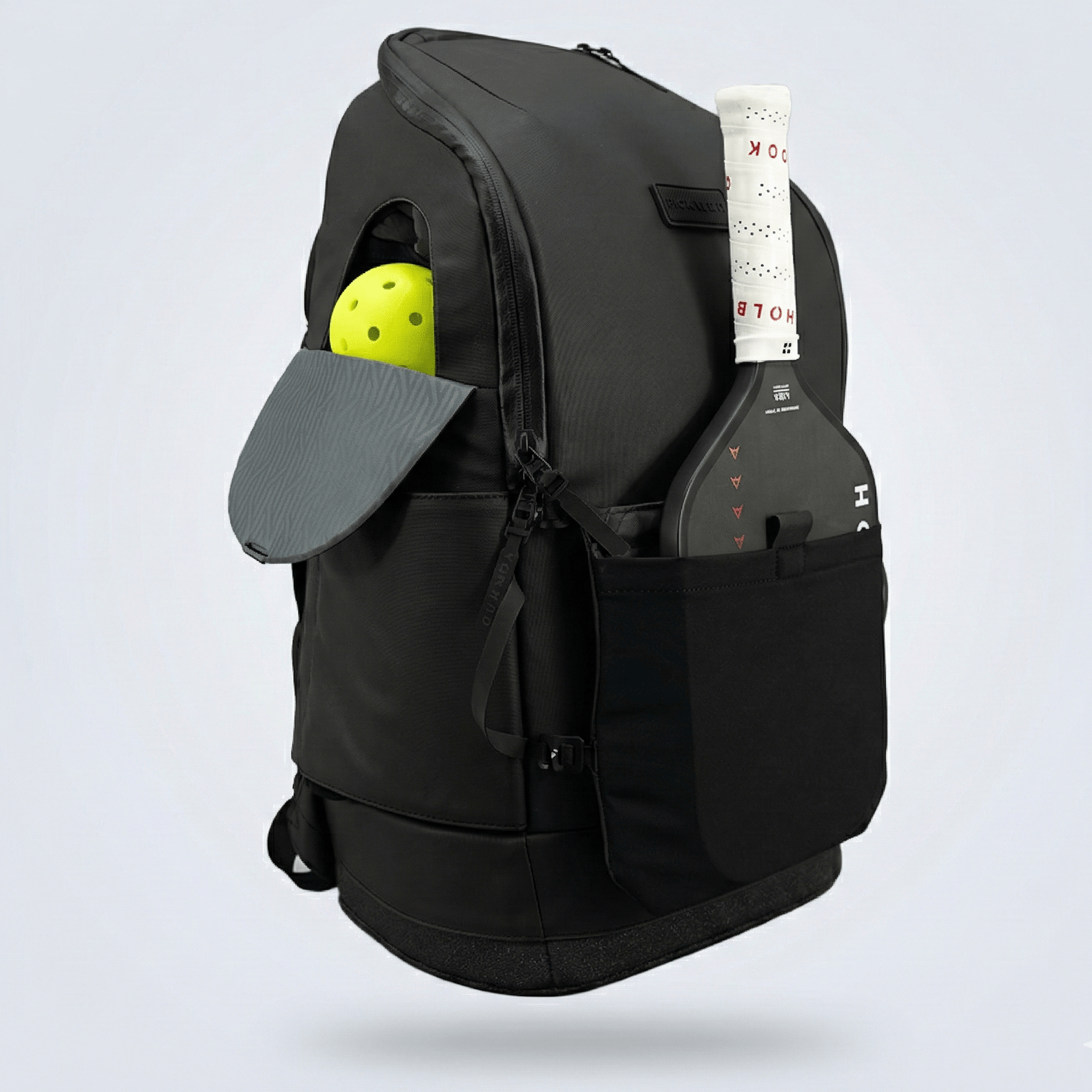
Got your court shoes sorted? The next upgrade is a bag that fits them properly. The Court Ranger V2 has a dedicated shoe compartment, fits a 16" laptop, and uses YKK AquaGuard zippers that hold up on outdoor courts. $195 — built for players who take their gear as seriously as their game.

Also worth checking: our best pickleball paddle guide if you're upgrading more than shoes, and the pickleball fitness guide for building the conditioning base that keeps your feet and joints healthy long-term.

Leave a comment
This site is protected by hCaptcha and the hCaptcha Privacy Policy and Terms of Service apply.