

Last updated: September 2026
Pickleball burns more calories than brisk walking — and for most adults over 40, it's easier on the joints than running or tennis. Recreational doubles clocks in around 350 calories per hour for a 150–165 lb player. Competitive singles can push past 500. Those numbers are real, not marketing copy.
The catch: pickleball alone probably won't get you to your weight loss goal. Not because it's ineffective — it isn't — but because no single activity does the whole job. This guide gives you the data, an honest comparison, and a weekly plan you can actually follow.
Disclosure: This post contains affiliate links to Pickleball Central. If you purchase through our links, FORWRD earns a small commission at no extra cost to you. We only link to products we'd recommend regardless.
How Many Calories Does Pickleball Actually Burn? (The Real Data by Intensity Level)
The most-cited figure in pickleball fitness coverage is roughly 350 calories per hour for recreational doubles. That number comes from a 2023 East Carolina University study tracking recreational players at an average heart rate of 108–134 bpm — solidly in the moderate aerobic zone. It's real, it's peer-reviewed, and it's useful as a baseline.
Where it gets interesting is when you factor in intensity. The Compendium of Physical Activities (published by the ACSM) assigns pickleball MET values between 4.0 and 6.5 depending on how hard you're playing. MET stands for Metabolic Equivalent of Task — a standardized way to measure exercise intensity independent of body weight. The formula is straightforward: calories per hour = MET × body weight in kilograms.
Body weight is the most underappreciated variable in pickleball calorie burn. A 180 lb player burns roughly 17–18% more calories than a 155 lb player doing the exact same activity at the same intensity.
| Format | Cal/hr (155 lb / 70 kg) | Cal/hr (180 lb / 82 kg) | Intensity (MET) |
|---|---|---|---|
| Recreational doubles | 280 | 328 | 4.0 |
| Competitive doubles | 385 | 451 | 5.5 |
| Competitive singles | 455 | 533 | 6.5 |
| Drills / warmup | 245 | 287 | 3.5 |
Singles burns approximately 30–40% more calories than recreational doubles. That gap exists because you're covering the full court alone — there's no partner to handle the wide ball, and rest intervals between rallies are shorter. If weight loss is the primary goal and your joints allow it, singles or competitive doubles should be your default format.
Pickleball vs. Other Cardio: How It Compares to Walking, Tennis, and Cycling
Context matters. Calorie numbers only mean something relative to the alternatives you'd actually do.
| Activity | Cal/hr (155 lb) | Joint Impact | Social Factor | Entry Barrier |
|---|---|---|---|---|
| Brisk walking | ~275 | Low | Optional | Zero |
| Cycling (moderate) | ~420 | Low–Medium | Low | Equipment cost |
| Tennis (singles) | ~520 | Medium–High | Medium | High (skill) |
| Pickleball (competitive doubles) | ~385 | Low–Medium | High | Low |
| Pickleball (singles) | ~455 | Medium | Medium | Low |
Pickleball beats brisk walking by 50–80% in calorie burn depending on intensity. It sits within range of tennis singles but on a smaller court with less lateral sprinting. That matters for players managing knee issues or those coming back from injury who can't absorb the high-impact demands of a full tennis match.
The skill floor difference between pickleball and tennis is significant. Most beginners can sustain a real pickleball rally — and therefore a real workout — within a few sessions. Tennis requires weeks or months before you're athletic enough for a calorie-meaningful match. Pickleball's compactness (44 feet of court versus 78 for tennis singles) means less running per rally, but rallies happen faster and more continuously, which closes the metabolic gap quickly.
Here's where walking wins outright, though: it requires nothing. No court, no partner, no reservation, no specific shoes. Rain at 6am? You can still walk. Pickleball requires coordination of at least two schedules, court availability, and a minimum of gear. Walking's value for total daily movement — the NEAT calories you accumulate just by staying active — shouldn't be dismissed. The best outcome is playing pickleball for structured cardio and walking on off days.
Is Pickleball Enough for Weight Loss? What You Need Besides Court Time
Short answer: it depends on how much weight you want to lose and how fast.
What pickleball genuinely delivers: sustained aerobic conditioning, improved balance and reaction time, and something most gym routines can't match — social accountability. Players show up because their partner is waiting. The group keeps you consistent when motivation craters. Check out USA Pickleball's growth data if you want to understand why pickup court culture has become a legitimate fitness ecosystem for adults in their 40s, 50s, and beyond.
What pickleball doesn't replace: strength training. This is non-negotiable, especially for players over 40. Muscle mass is metabolically expensive — it burns calories at rest, protects joints, and directly improves on-court performance. Pickleball provides no progressive overload. You're not adding resistance week-over-week. Without dedicated strength work, most players lose muscle mass even while their cardiovascular fitness improves.
The math is blunt. To lose one pound per week, you need a 3,500-calorie weekly deficit. Playing pickleball three times per week at 90 minutes per session burns approximately 1,575 calories — using the competitive doubles estimate. That's about 45% of the deficit you need. The remaining 55% has to come from diet adjustments, additional activity, or both. Pickleball alone can help you maintain your current weight. To maximize fat loss, you need all three levers working: court time, strength training, and calorie awareness.
Think of it as a triangle. Three to five pickleball sessions per week handle aerobic conditioning and the social pull that keeps you exercising. Two strength sessions per week handle muscle preservation and metabolic rate. Nutrition closes the gap. Remove any side of that triangle and progress stalls.
For a deeper look at how to structure your on-court development alongside fitness goals, the third shot drop guide is worth reading — better shot mechanics mean less wasted energy chasing avoidable mistakes, which means higher-quality rallies and more useful cardio per session.
A Pickleball Workout Plan: 3-Day and 5-Day Weekly Cadences for Different Goals
"The gym never stuck for me. I'd go for three weeks and fall off. Pickleball is different — I have four people texting me if I don't show up on Tuesday. That accountability is the actual fitness hack nobody talks about. I've played four days a week for two years straight. I've never done that with anything else." — Grub, FORWRD ambassador and 4.5-rated player
Two plans below. Pick the one that matches your current schedule and goal, not the one that sounds impressive.
3-Day Plan: Fitness Maintenance / Active Lifestyle
| Day | Activity | Duration | Notes |
|---|---|---|---|
| Monday | Pickleball | 60–90 min | Focus: competitive doubles |
| Wednesday | Strength + mobility | 45 min | Bodyweight or weights, focus on legs and core |
| Friday | Pickleball | 60–90 min | Bring a friend, play harder |
| Weekend | Optional: walk, casual pickleball | — | Recovery-friendly movement |
Estimated weekly burn from pickleball alone: ~1,050–1,575 calories.
5-Day Plan: Active Weight Loss / Athletic Performance
| Day | Activity | Duration | Notes |
|---|---|---|---|
| Monday | Pickleball | 90 min | Competitive, minimize rest |
| Tuesday | Strength training | 45 min | Upper/lower split |
| Wednesday | Pickleball | 60 min | Drill work + casual games |
| Thursday | Rest or walk | — | Active recovery only |
| Friday | Pickleball | 90 min | Tournament sim — play hard |
| Saturday | Pickleball | 60 min | Casual doubles, social |
| Sunday | Rest | — | Full recovery |
Estimated weekly burn from pickleball alone: ~1,575–2,625 calories.
The 5-day plan is genuinely demanding. Don't start there unless you're already active. The 3-day plan is more sustainable for most people who work full-time, and it's consistent enough to produce real results over 8–12 weeks.
The Gear That Makes Consistent Play Easier (and the Gear That Doesn't Matter)
Most gear advice for pickleball fitness is backwards. People obsess over paddles and ignore shoes. For a fitness-focused player, that priority order is wrong.
Shoes are the only gear decision that directly affects your workout. Wrong shoes — running shoes, cross-trainers, casual sneakers — create lateral instability on a court surface. That instability leads to ankle rolls, knee fatigue, and sessions that end earlier than they should. Court-specific shoes solve this. Three options worth considering:
- ASICS Gel-Resolution X — Best combination of stability and court feel. If you're playing 3+ days per week and want a shoe that handles lateral cuts without letting you feel every hard stop in your knees, this is the pick.
- Skechers Viper Court Pro 2.0 — Maximum cushioning for joint-conscious players. Heavier than some options, but the extra absorption matters during long sessions or if you're carrying a few extra pounds while you work toward your goal weight.
- K-Swiss Express Light — Lightweight option for players who prioritize speed and quick foot repositioning over max cushioning. Good for competitive singles where the shorter reaction distances reward agility.
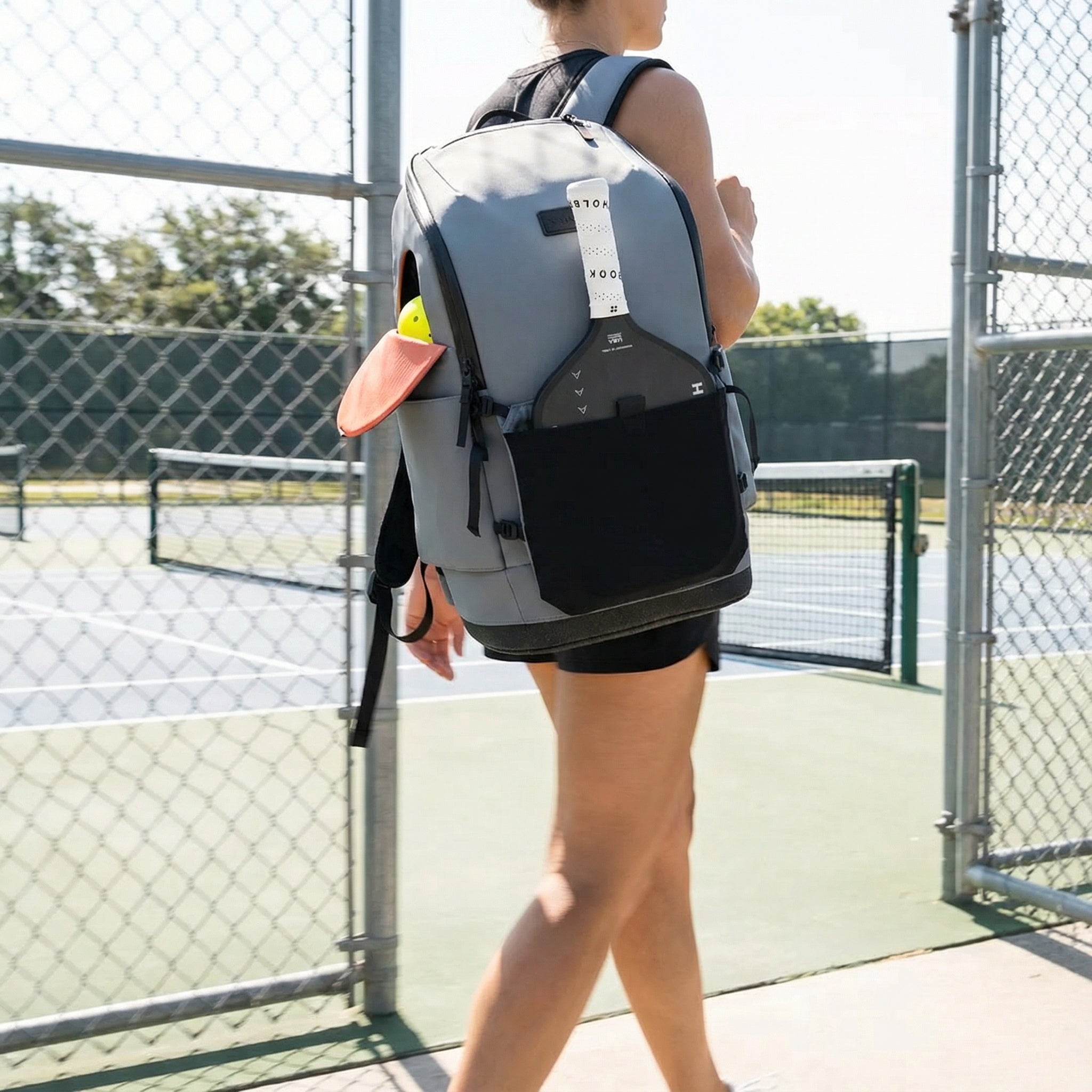
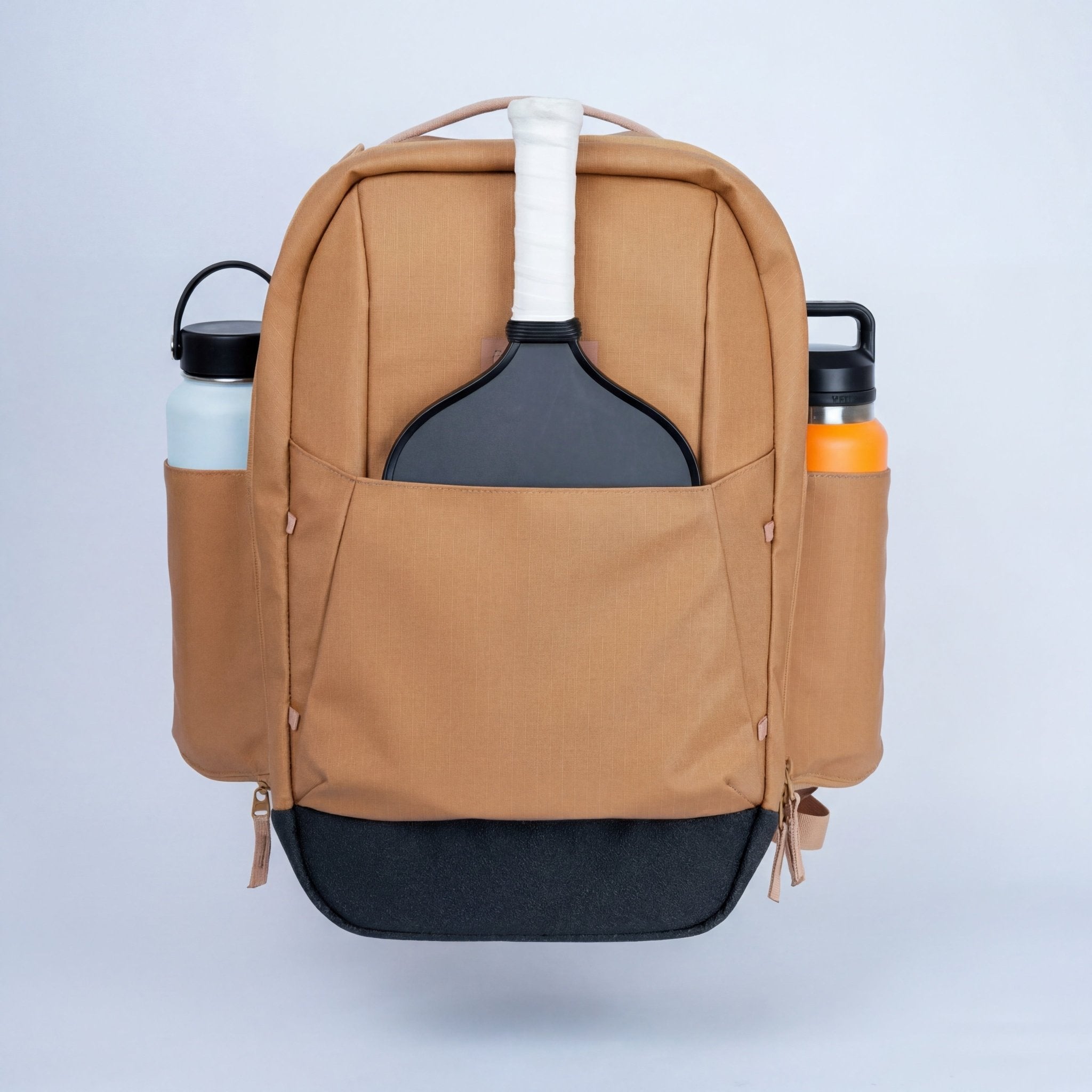
For players who commute to courts — before work, at lunch, after the office — the bag situation matters more than most people admit. Carrying a paddle bag and a work bag into the building twice is a friction point that quietly kills consistency. The Court Ranger V2 ($195) handles this specific problem: it has a dedicated laptop sleeve, modular paddle storage that keeps your paddle faces from grinding against gear, and enough main compartment space for court shoes plus a change of clothes. It's the bag that replaces the second trip to the car. Browse the full best pickleball bags 2026 roundup for more options if the Court Ranger isn't the right fit for your setup — and if you prefer women's-specific fits and sizing, the best pickleball bags for women 2026 guide covers that ground thoroughly.
Gear that genuinely doesn't matter much for fitness goals: paddle price and ball type. A $60 paddle and a $220 paddle produce the same calorie burn. Ball choice (outdoor vs. indoor) matters for playability, but neither one makes your workout harder or easier. Don't let gear shopping distract from the actual work of showing up consistently.
Playing before or after work? Stop making two trips.
The Court Ranger V2 fits a laptop, paddles, court shoes, and a change of clothes — all in one bag designed for players who treat pickleball as part of their workday.
 Shop the Court Ranger V2 →
FAQ: Pickleball Fitness and Weight Loss Questions
How many calories do you burn playing pickleball?
A 155 lb player burns approximately 280–455 calories per hour, depending on intensity. Recreational doubles land around 280–350 cal/hr. Competitive doubles pushes to 385. Singles can reach 455 or higher. Body weight scales the number — heavier players burn more calories doing the same activity at the same intensity.
Is pickleball good for weight loss?
Yes, with an honest caveat. Pickleball provides real aerobic conditioning and burns meaningful calories — but it works best as part of a plan that includes strength training and calorie management. Playing 3–5 times per week can contribute 1,000–2,600 calories of weekly burn, which is a substantial portion of what most people need for gradual fat loss.
How many times a week should you play pickleball to lose weight?
Three sessions per week is a productive minimum. Five sessions per week combined with two strength training days will produce faster results. The key variable isn't just frequency — it's intensity. Three competitive doubles sessions beat five casual social games for calorie burn and cardiovascular adaptation.
Is pickleball better exercise than walking?
For calorie burn, yes — pickleball beats brisk walking by 50–80% depending on how hard you're playing. Walking wins on accessibility: no court, no partner, no equipment. The practical answer is to use both. Play pickleball for structured cardio and treat walking as active recovery and daily movement on off days.
Is pickleball a good workout for seniors?
It's one of the best options for active adults over 60. The court is small enough to minimize running distance, rallies are short enough to allow natural rest between points, and the social component drives long-term adherence. Balance, reaction time, and coordination benefits compound over time. It's low-impact compared to running or tennis singles.
Ready to upgrade your bag?
The Court Ranger V2 is built for players who play before work, after work, and whenever they can squeeze in a session. One bag for paddles, a laptop, and everything else.

Leave a comment
This site is protected by hCaptcha and the hCaptcha Privacy Policy and Terms of Service apply.