

Indoor vs. Outdoor Pickleball Shoes: What Actually Matters on Each Surface
Disclosure: This post contains affiliate links to Pickleball Central. If you purchase through our links, FORWRD earns a small commission at no extra cost to you. We only link to products we'd recommend regardless.
Indoor and outdoor pickleball shoes use different rubber compounds, different tread depths, and different construction priorities. Using the wrong shoe for your surface costs you grip, performance, and — in the case of indoor shoes worn outdoors — 6 to 9 months of shoe life. The short version: the shoe type matters more than the brand.
Here's the full breakdown: how the surfaces differ, what those differences demand from the shoe, which shoes win on each surface, and the one case where one pair genuinely does both jobs without serious trade-offs.
Last updated: September 2026
Table of Contents
- How Indoor and Outdoor Courts Are Actually Different
- The Outsole Science: Shore A Hardness, Tread, and Non-Marking Rubber
- Best Indoor Pickleball Shoes for 2026
- Best Outdoor Pickleball Shoes for 2026
- Can One Shoe Handle Both Surfaces?
- Decision Matrix: Which Setup Is Right for You?
- FAQ: Indoor vs. Outdoor Pickleball Shoes
How Indoor and Outdoor Courts Are Actually Different
Outdoor pickleball courts are almost universally acrylic-coated concrete or asphalt. The acrylic layer adds texture and color — it's why you see those blue-and-green courts — but the surface underneath is rigid and abrasive. At a microscopic level, outdoor acrylic is rough. Great for traction. Merciless on rubber.
These courts also deal with sun, temperature swings, grit, moisture, and debris. A shoe worn outdoors needs rubber hard enough to resist abrasion and a tread deep enough to clear court debris from underfoot on each footfall. Anything softer burns down fast.
Indoor courts are a different physics problem entirely. Tournament venues use hardwood — the same surface as basketball courts. Rec centers often use synthetic sport tile or rubberized gym floors. These surfaces are sealed and smooth. The challenge isn't abrasion resistance; it's getting enough grip on a surface that has very little texture to grip against. And there's the non-marking rule: any shoe that leaves black streaks on a gym floor gets you turned away at the door.
Why this gap in shoe design matters: an outdoor shoe on indoor hardwood grips less reliably than a shoe built for that surface — you'll notice slip on lateral cuts, especially when sweat is involved. An indoor shoe used outdoors wears through in 3-4 months instead of 12+. You're not just getting worse performance. You're spending more money on replacement shoes.
USA Pickleball's court construction standards document the approved surface materials and specifications used at sanctioned events — the same surface properties that determine which shoe compound performs best.
The Outsole Science: Shore A Hardness, Tread, and Non-Marking Rubber
Most guides on indoor vs. outdoor shoes skip this entirely. The rubber compounds in court shoes have genuinely different hardness ratings — measured on the Shore A durometer scale, which quantifies rubber stiffness from 0 (gel-like) to 100 (hard plastic). The difference between an indoor and outdoor compound isn't marketing — it's physics.
Indoor shoes: softer gum rubber (Shore A 62–65). This tacky compound deforms slightly into the microscopic texture of sealed hardwood, creating grip without needing an aggressive tread. It's also inherently non-marking — no carbon black, so no streaks on gym floors. The trade-off is durability: put this compound on outdoor acrylic and it burns down in months.
Outdoor shoes: harder, silica-infused rubber (Shore A 70–75). The added hardness resists abrasion from rough acrylic and concrete. Silica particles embedded in the compound improve grip on textured outdoor surfaces without sacrificing longevity. Tread patterns run deeper and more aggressive to clear debris with each step. This same compound on smooth indoor hardwood? It doesn't deform into the surface, so traction suffers — and it squeaks.
What makes a shoe non-marking? Standard black rubber contains carbon black pigment, which leaves streaks. Non-marking rubber substitutes a different pigment system — the gum rubber (amber or translucent) on most indoor shoes is inherently non-marking. Many outdoor shoes also use non-marking formulations, but darker compound colors are worth checking. The test: rub the outsole against a white piece of paper. If it leaves a mark, your gym will reject it before you reach the court.
Best Indoor Pickleball Shoes for 2026
HEAD Motion Pro — Best Overall Indoor Pick (~$89)
The Motion Pro is purpose-built for gym floors: softer gum rubber outsole with a fine herringbone tread, true non-marking compound, and a lateral stability system designed for the quick direction changes that indoor play — with its faster pace and tighter angles — demands. The breathable mesh upper with reinforced sidewalls handles 90-minute competitive indoor sessions without your feet overheating or your ankles losing containment during hard cuts.
At ~$89, it's the most accessible dedicated indoor court shoe on the market. The cushioning hits the right balance: enough joint protection for long sessions, not so much stack that you lose court feel on split steps. If you play primarily at a gym or rec center, this is the straightforward answer.
One thing to understand clearly: the softer gum rubber that makes this shoe excellent indoors makes it a bad choice outdoors. Regular outdoor use will destroy the outsole in a few months. Don't use this shoe on outdoor acrylic unless you want to replace it before spring.
Our Pick: HEAD Motion Pro
Best indoor-specific court shoe. Gum rubber outsole, non-marking, lateral support built for gym floors. Indoor-only.
Best Outdoor Pickleball Shoes for 2026
ASICS Gel-Resolution X 2E Wide — Best Outdoor Pick (~$130)
For outdoor play on acrylic courts, the Gel-Resolution X is the durability benchmark. Its AHAR+ (ASICS High Abrasion Rubber) compound is engineered specifically for the kind of surface abuse outdoor pickleball courts deliver. Tread depth and geometry are optimized for acrylic — deeper grooves than an indoor shoe, with a pattern that channels away court grit rather than trapping it underfoot.
The 2E wide sizing is genuinely wider — real room through the forefoot, not a slightly stretched standard mold. For players who've spent years uncomfortable in D-width court shoes, the difference is immediate. The Gel cushioning system absorbs the repeated impact of split steps and long outdoor sessions in summer heat without the forefoot fatigue that hits cheaper outdoor shoes by hour two.
Honest trade-off: this is a firm shoe. The lateral stability is excellent, but the cushioning system is stiffer than something like the Skechers Viper. Some players need two or three sessions to break it in. The payoff is longevity — this shoe regularly lasts 12 months of regular outdoor play where softer competitors wear out in 6-8.
Our Pick: ASICS Gel-Resolution X 2E Wide
Best outdoor-specific court shoe. AHAR+ abrasion-resistant rubber, genuine 2E width, built to last 12+ months on acrylic.
"The question I get most from players who split time between indoor and outdoor courts is whether they can just use one pair. Technically yes — but if you're playing four or five days a week on outdoor courts and then showing up for an indoor league twice a week, your outdoor shoe is going to slide on that gym floor more than you want. I've watched players go down on indoor hardwood in shoes built for outdoor concrete. Separate shoes for serious players isn't elitism — it's the right call."
Can One Shoe Handle Both Surfaces?
Yes — with honest caveats. Hybrid court shoes exist because most recreational players don't want to own and rotate two pairs. The Skechers Viper Court Pro is the clearest example: its rubber compound lands at a middle hardness that delivers acceptable grip on both outdoor acrylic and indoor gym floors, with a non-marking outsole that passes indoor rules at essentially any facility.
"Acceptable" is doing a lot of work in that sentence, though. On outdoor acrylic, the compound is softer than an AHAR+ outdoor shoe — expect 8-10 months of regular outdoor use instead of 12+. On indoor hardwood, it grips less reliably than the softer gum rubber of the HEAD Motion Pro, particularly in sweaty sessions where every fraction of traction matters. These are real performance differences, not theoretical ones.
At recreational skill levels up to about 3.5, most players won't notice. Your footwork patterns aren't generating the lateral force that reveals traction differences on hardwood. The Skechers Viper handles both surfaces well enough that the shoe never becomes the problem.
At 4.0 and above, it starts to matter. You're moving faster, cutting harder, and your body is generating real lateral force. Surface-matched shoes help your game and last longer — meaning two pairs ultimately costs less per session than running one hybrid shoe into the ground twice as fast.
Best Hybrid: Skechers Viper Court Pro
The one shoe that handles both surfaces competently. Non-marking, herringbone tread, multiple widths. Right for most recreational players under 4.0.
Decision Matrix: Which Setup Is Right for You?
| Your Situation | Best Approach | Recommended Shoe |
|---|---|---|
| Play exclusively indoors | Dedicated indoor shoe | HEAD Motion Pro (~$89) |
| Play exclusively outdoors | Dedicated outdoor shoe | ASICS Gel-Resolution X 2E (~$130) |
| Mix of both, under 4.0 | Hybrid shoe | Skechers Viper Court Pro (~$110) |
| Mix of both, 4.0+ | Two pairs — surface matched | HEAD Motion Pro (indoor) + ASICS Gel-Resolution X (outdoor) |
| Mostly outdoor, occasional indoor | Outdoor shoe — confirm non-marking | ASICS Gel-Resolution X 2E (verify non-marking at your facility) |
Complete Your Court Setup
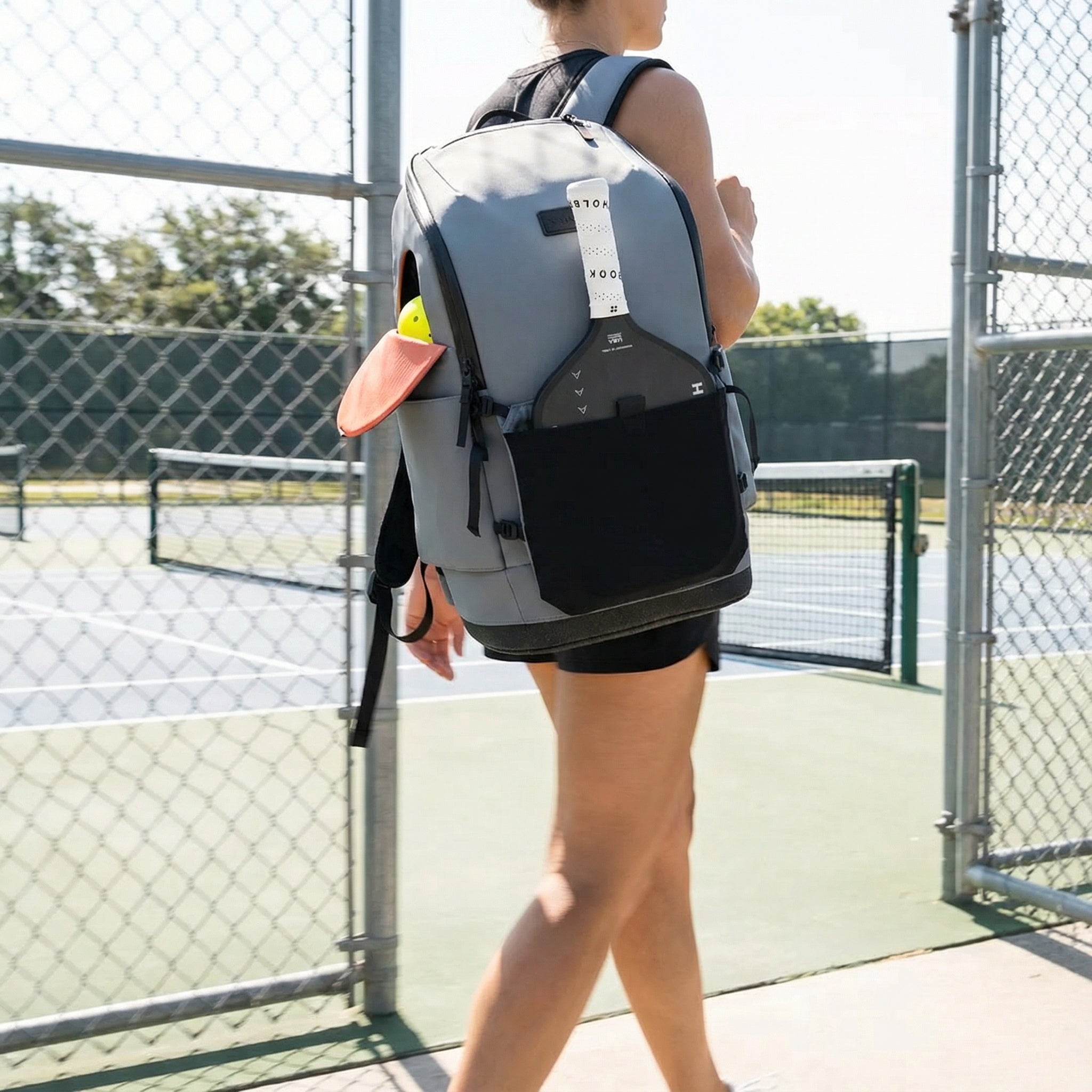
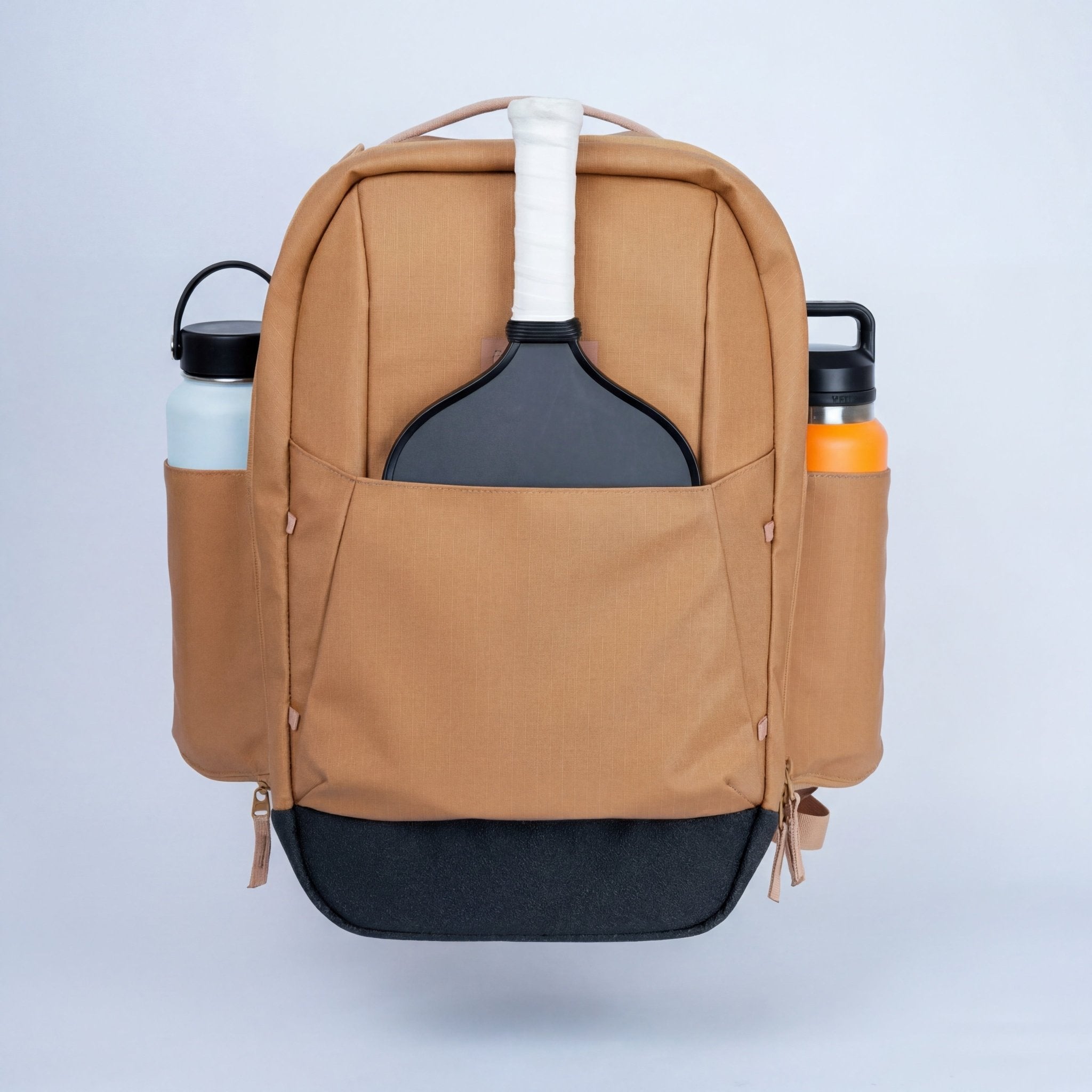
Got your shoes sorted? The next thing most players skip: a bag with a proper shoe compartment. The Court Ranger V2 ($195) has an isolated bottom shoe compartment that keeps your court shoes separated from paddles, balls, and any post-work laptop — useful when you're rotating between indoor and outdoor pairs. YKK AquaGuard weatherproof zippers, 16" padded laptop sleeve. If you want the full tournament setup, the Court Caddy at $325.

FAQ: Indoor vs. Outdoor Pickleball Shoes
What is the difference between indoor and outdoor pickleball shoes?
Rubber compound and tread design. Indoor shoes use softer gum rubber (Shore A 62–65) with fine herringbone tread for smooth gym floors — and it must be non-marking. Outdoor shoes use harder, silica-infused rubber (Shore A 70–75) with deeper tread designed for textured acrylic courts. Use the wrong shoe and you lose grip, burn through the outsole faster, or — with an outdoor shoe indoors — risk getting turned away at the door for leaving streaks.
Can I use outdoor pickleball shoes indoors?
Only if they're confirmed non-marking. Many outdoor shoes are non-marking, but not all — check before you show up. Beyond the marking rule, outdoor shoes grip smooth indoor floors less well than purpose-built indoor shoes. On dry hardwood you'll probably be fine. If there's any sweat or moisture on the floor — and there usually is — an outdoor sole on hardwood can slide faster than you expect on hard lateral cuts.
Do outdoor courts wear down pickleball shoes faster?
Yes, dramatically. Outdoor acrylic and concrete surfaces are abrasive at the microscopic level. An indoor-specific shoe with softer gum rubber can wear through in 3–4 months of regular outdoor play. A purpose-built outdoor shoe with abrasion-resistant compound — AHAR+, premium silica-infused rubber — lasts 12+ months on the same surface. The Shore A hardness difference (62–65 vs. 70–75) is exactly what accounts for this durability gap.
What makes a pickleball shoe non-marking?
The rubber uses pigments other than carbon black — the ingredient in standard black rubber that leaves streaks on gym floors. Gum rubber (the amber or translucent compound in most indoor shoes) is inherently non-marking. Many outdoor shoes also use non-marking formulas. To verify: rub the outsole against white paper. If it leaves a mark, your gym will turn you away before you reach the court. When in doubt, ask the facility — some are stricter than others.
For the full breakdown — shoe selection by skill level, foot type, playing frequency, and price range — the Complete Pickleball Shoes Guide 2026 covers everything in one place.

Leave a comment
This site is protected by hCaptcha and the hCaptcha Privacy Policy and Terms of Service apply.