

Disclosure: This post contains affiliate links to Pickleball Central. If you purchase through our links, FORWRD earns a small commission at no extra cost to you. We only link to products we recommend regardless.
Your outsoles look fine. The tread is still there. But every lateral cut feels a little slower, every split-step a little less certain. That is not tired legs — that is a dead midsole. Most pickleball players retire their shoes based on how the rubber looks, not how the foam performs. That is backwards, and it is costing games.
Here is what the data actually shows, plus a 10-second test you can run right now to know exactly where your shoes stand.
Last updated: September 2026
Table of Contents
- How Long Do Pickleball Shoes Last: The Real Numbers
- Durability by Court Surface
- Durability by Brand and Rubber Compound
- The Midsole Problem Nobody Talks About
- The Thumb-Press Midsole Test (Do This Now)
- 5 Signs Your Shoes Are Ready to Retire
- How to Make Your Shoes Last Longer
- Complete Your Setup
- FAQ
How Long Do Pickleball Shoes Last: The Real Numbers
The honest range is 3 to 24 months — and yes, that spread is not a typo. The variable is not the shoe brand. It is the court surface.
Outdoor asphalt and concrete chew through rubber and compress foam in a fraction of the time indoor wood or sport tile does. A player logging 3 sessions per week on outdoor courts will replace shoes 3 to 4 times more often than someone playing exclusively indoors. Same shoe, same player, dramatically different lifespan.
Measured in hours on court — the metric that actually controls durability:
- Outdoor asphalt / concrete: 40 to 80 hours before functional failure
- Outdoor acrylic hardcourt: 60 to 100 hours
- Indoor sport tile: 150 to 200 hours
- Indoor wood gym floor: 200 to 300 hours
At 3 sessions per week, 90 minutes each, you log roughly 4.5 hours weekly. On outdoor concrete, that burns through a pair in 9 to 18 weeks — call it 2 to 4 months. Indoor players at the same frequency get 8 to 14 months from the same shoe.
For a full breakdown of how court surface should drive your shoe selection in the first place, see our indoor vs. outdoor pickleball shoes guide.
Durability by Court Surface
| Surface | Expected Hours | Months at 3x/week | Primary Wear Pattern |
|---|---|---|---|
| Outdoor asphalt | 30 to 60 hrs | 2 to 3 months | Rapid heel/toe abrasion, fast midsole compression |
| Outdoor concrete | 40 to 80 hrs | 3 to 5 months | Outsole tread loss, lateral edge wear |
| Outdoor acrylic hardcourt | 60 to 100 hrs | 4 to 7 months | Lateral edge wear, toe drag, moderate compression |
| Indoor sport tile | 150 to 200 hrs | 8 to 13 months | Grip pattern polishing, slow midsole breakdown |
| Indoor wood gym floor | 200 to 300 hrs | 12 to 20 months | Grip pattern wear, minimal compression |
Durability by Brand and Rubber Compound
Outsole rubber formulation is the single biggest lever brands pull on durability. Here is how the major court shoe brands rank based on rubber compound and midsole foam density — not marketing copy.
| Brand | Outsole Material | Outdoor Rating | Indoor Rating | Notes |
|---|---|---|---|---|
| JOOLA | High-density carbon rubber | Excellent | Very Good | Best outdoor durability; heavier than most competitors |
| ASICS | AHAR+ compound | Very Good | Excellent | Best midsole rebound retention; consistent across court types |
| HEAD | Non-marking rubber | Very Good | Very Good | Predictable wear patterns; BOA closure models add fit-retention longevity |
| Skechers | APEX traction rubber | Good | Very Good | Softest feel; midsole compression typically noticeable around hour 60 to 70 |
| K-Swiss | DuraWrap rubber | Good | Very Good | Strong toe cap reinforcement; outsole often outlasts midsole on rough courts |
| Selkirk | Standard PU outsole | Moderate | Good | Lightest option; shorter lifespan; best for indoor players who replace often |
The durability standout: ASICS models built on AHAR+ compound hold up better than their price point suggests. The rubber resists abrasion while the midsole foam retains cushion longer than most comparable-priced options. If you play predominantly on outdoor courts, JOOLA carbon rubber or ASICS are the smart durability bets. Browse ASICS court shoes at Pickleball Central.
If you are playing indoors and prioritizing feel over maximum lifespan, the Skechers Viper Court Pro punches above its weight for comfort-to-price. Plan for replacement around the 12-month mark indoors, 5 to 6 months outdoors. For more value options, see our best pickleball shoes under $100 guide.
The Midsole Problem Nobody Talks About
Here is what almost every shoe replacement guide misses: the part that fails first is not the part you can see.
Outsoles are rubber. They visibly wear — you can see the tread flatten, the lateral edge thin, the toe cap scuff. But the cushioning system — the EVA foam midsole sitting between your foot and the outsole — compresses silently. Every lateral cut, every split-step landing, every hard pivot compresses those foam cells. Unlike rubber, compressed foam cells do not rebound fully. They stay partially collapsed.
A compressed midsole means:
- Less shock absorption on hard lateral landings (higher joint stress on knees and ankles)
- Reduced lateral stability on quick direction changes
- Loss of energy return — that "springy" feeling that makes a good court shoe feel fast
The dangerous part: the outsole can look perfectly fine while the midsole is functionally dead. You are essentially playing in flat-soled shoes with decent-looking rubber bolted to the bottom.
"I played through a pair of Skechers for almost five months — outsoles looked totally fine, maybe 30% worn. But every lateral cut felt like I was sliding in socks. That is what midsole collapse feels like. The squeeze test is part of my monthly gear check now."
The Thumb-Press Midsole Test (Do This Right Now)
This is the diagnostic no other guide walks through step by step. Takes 10 seconds. Do it on both shoes before your next session.
- Hold the shoe firmly with the outsole in your palm. Support it from below without squeezing the midsole — you are testing foam rebound, not shoe flexibility.
- Press your thumb firmly into the heel midsole. The midsole is the foam layer visible from the side profile — usually a distinct color from the rubber outsole below. Apply steady pressure for 2 to 3 full seconds.
- Release and watch the rebound. If the indentation disappears within 1 to 2 seconds, the foam is still performing. If the dent lingers for 3 or more seconds, or stays partially compressed, the midsole is breaking down.
- Repeat on the forefoot. Players who stay at the kitchen line burn through forefoot foam faster than heel foam. Check both zones — a shoe can pass the heel test and fail the forefoot.
- Compare against a new shoe if you have one. The difference in rebound speed between a fresh foam and a compromised one is immediately obvious. That tactile gap is your benchmark.
The verdict: If one or both shoes fail the thumb-press test, the shoe has reached the end of its useful life — regardless of outsole condition. The foam is gone. Playing on collapsed midsoles significantly increases ankle and knee injury risk from lateral load.

Shop the Court Caddy Backpack — designed with 500+ real players
5 Signs Your Pickleball Shoes Are Ready to Retire
The thumb test gives you the clearest signal. These five additional signs confirm it is time for a new pair — even if you have not yet hit the expected hour threshold.
- You are slipping more on courts you know well. If a surface you play every week suddenly feels unpredictably slick, the grip pattern is gone — not the court. Do not chalk this up to humidity or a wet floor until you have eliminated shoe wear.
- Your knees or ankles feel more sore after play. Reduced cushioning shifts impact stress to joints. If post-session soreness is creeping up without a change in volume or intensity, check the midsole before blaming age or overuse.
- The midsole fails the thumb-press test. See above. This is the definitive sign — not a maybe.
- The outsole exposes midsole color underneath. When the rubber wears thin enough that you can see the foam through it, structural protection is already compromised at that zone. Replacement is overdue.
- The heel counter has collapsed or deformed. Stand your shoe on a flat surface and view it from directly behind. The heel cup should be vertical and symmetric. If it leans, dents softly, or feels mushy when pressed from the side, the ankle stability structure is gone.
If you are seeing two or more of these signs simultaneously, stop playing in those shoes. The risk of ankle roll — particularly on hard lateral movements — increases significantly once the support structures are compromised. For how shoe structure maps to injury patterns, see our pickleball vs. tennis shoes wear pattern guide.
How to Make Your Pickleball Shoes Last Longer
EVA foam compression is physics — you cannot stop it entirely. But these habits meaningfully slow the rate of breakdown and extend the window before replacement.
Rotate Between Two Pairs
EVA foam rebounds better after 24 hours of unloaded rest. Players who rotate between two pairs — even if the second pair is a budget backup — extend each pair by 15 to 20% in effective hours. Over 18 months, the math almost always favors buying two cheaper pairs over one premium pair used exclusively.
Match the Shoe to the Surface
Never wear outdoor shoes indoors or indoor shoes outdoors. Beyond grip-pattern mismatch, rubber compounds optimized for low-abrasion indoor surfaces degrade 40 to 60% faster on rough outdoor concrete. Surface-mismatched use is one of the fastest ways to burn through a shoe. See our complete pickleball shoe guide for which features to prioritize by surface.
Dry Shoes Completely Between Sessions
Moisture accelerates EVA foam breakdown. After outdoor play especially, remove shoes and let them air-dry completely before storage — never seal damp court shoes in a bag for hours. Stuff with paper towel to absorb moisture and maintain the toe box shape while drying.
Store Them Protected, Not Loose
Court shoes stored loose in a bag compress against paddle handles, water bottles, and hard edges. Over time, this deforms the heel counter and toe box — both structural elements that affect fit and support. A dedicated shoe compartment protects the shoe shape between sessions and keeps court grit separate from the rest of your gear.

The Court Caddy Shoe Cube ($49.99) is a rigid-sided cube designed for exactly this: it protects shoe structure inside the Court Caddy bag, prevents heel counter compression from other gear, and keeps court grit isolated from paddles, towels, and clothing. Small habit, measurable impact on shoe lifespan.
Track Your Hours, Not Just Months
Calendar-based replacement ("I will replace these in April") is unreliable because play frequency varies. Instead, note the date of first use and your weekly session average. At 3 sessions per week on outdoor courts, set a reminder at the 10-week mark to run the thumb-press test. Do not wait until something hurts.
Complete Your Setup
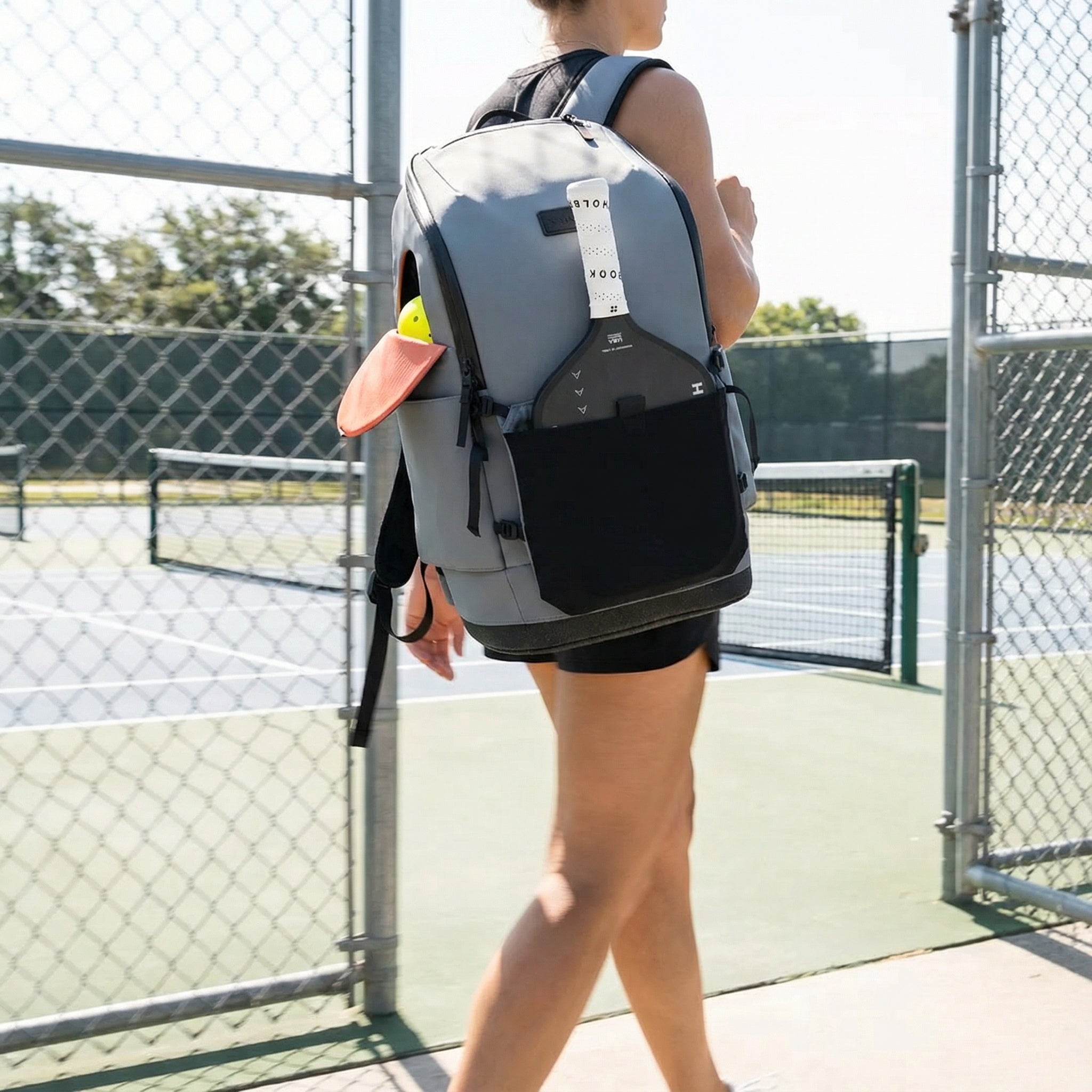
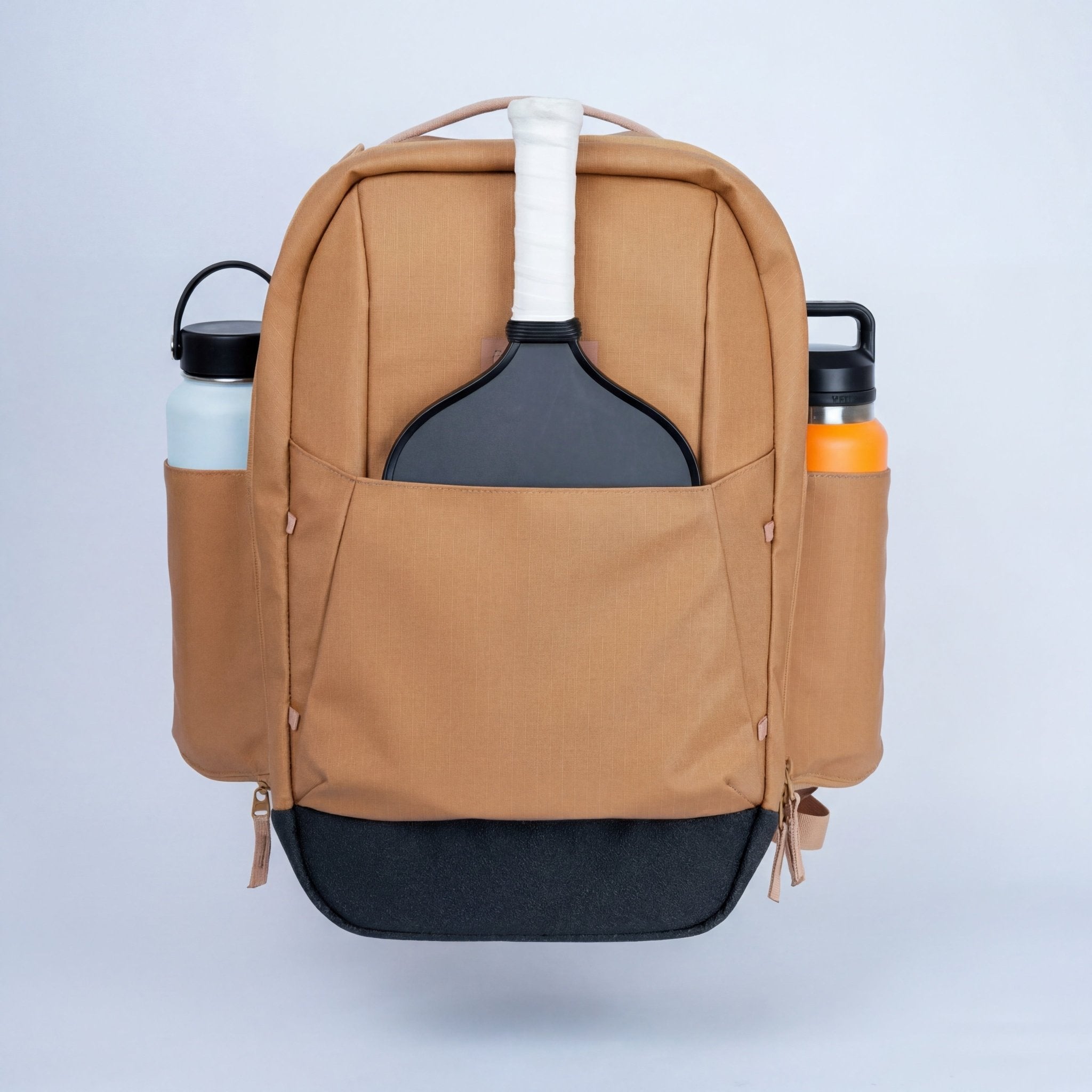
New court shoes deserve a bag that carries them properly. The Court Caddy Backpack ($325) was designed with feedback from 500+ players and includes a dedicated shoe organization system that keeps court grit away from your paddles, clothes, and gear. The Court Ranger V2 ($195) if you want something lighter. Either way, your shoes will last longer stored right than thrown loose in a bag.
FAQ: Pickleball Shoe Durability and Replacement
When should I replace my pickleball shoes?
Replace when the midsole fails the thumb-press test, when grip is noticeably reduced on familiar courts, or when ankle and knee soreness increases without a change in training load. Outdoor players at 3-plus sessions weekly should plan for replacement every 3 to 6 months. Indoor players typically get 12 to 18 months from a quality pair.
How many hours do pickleball shoes last?
Typically 40 to 100 hours on outdoor courts and 150 to 300 hours on indoor courts. Midsole foam usually shows measurable compression between 60 and 80 hours regardless of surface type. The outsole may look acceptable well beyond that point — but the shoe functional protection is already reduced.
Why do pickleball shoes wear out so fast?
The lateral movement demands of pickleball — split-steps, quick direction changes, kitchen-line pivots — stress shoe structures in ways forward-motion sports do not. EVA foam compresses fastest under repeated lateral shear forces. Outdoor abrasive courts compound this by simultaneously grinding rubber and heating the midsole during play.
Do cheaper shoes wear out faster?
Generally yes, but not always for the reason you expect. Budget shoes typically use lower-density EVA foam and thinner rubber compounds, both of which compress and abrade faster. However, a $75 court shoe used exclusively indoors may outlast a $150 shoe used on outdoor concrete. Surface matters more than price tag.
Can rotating two pairs really extend shoe life?
Yes. EVA foam requires approximately 24 hours to partially rebound from compression. Alternating pairs allows partial recovery before the next session, slowing cumulative collapse. Players who rotate two pairs consistently report each pair lasting 15 to 20 percent longer than single-pair use at equivalent weekly volume.
Is it okay to play pickleball in running shoes?
For casual players playing once a week, running shoes are workable short-term. For anyone playing two or more times per week or making competitive lateral movements, running shoes lack the lateral support structures that prevent ankle rolls on the pickleball court. For a full comparison, see our complete pickleball shoe guide.

Leave a comment
This site is protected by hCaptcha and the hCaptcha Privacy Policy and Terms of Service apply.