

Disclosure: FORWRD earns a commission on purchases made through links in this article. We only recommend products we've evaluated honestly — our editorial opinions are not influenced by affiliate relationships. Full disclosure policy →
Last Updated: September 2026
The bottom line: At $849, the Pickleball Tutor Mini is Sports Tutor's entry point — and it earns its place in the lineup. It's not the machine for serious grinders who want 2-hour solo sessions. But for recreational players who want more reps without a hitting partner, or coaches who need a portable feeder on multiple courts, it delivers exactly what it promises. The 55-ball capacity and basic controls aren't limitations so much as design choices. The question is whether those choices match your actual practice style.
Quick Verdict: Pickleball Tutor Mini
✓ Pros
- Lightest portable machine in the Tutor lineup (24 lbs)
- Genuinely simple to operate — 4 knobs, no app required
- Random oscillation adds realistic movement drills
- 3-year machine warranty, made in USA
- Battery holds 3 hours — enough for a full practice session
✗ Cons
- 55-ball hopper means reloading every ~17 minutes at 3-sec intervals
- No remote — you're walking to the machine to adjust settings
- No spin control (can't program topspin/backspin shots)
- No digital display or preset drills
Specs at a Glance
| Price | $849 (Pickleball Central) |
| Ball Capacity | 55 pickleballs |
| Max Speed | 50 mph |
| Feed Rate | Adjustable: 2–10 seconds between balls |
| Oscillation | Yes (random, on/off toggle) |
| Weight | 24 lbs |
| Dimensions | 15" H x 12" L x 13" W |
| Battery | Built-in lithium-ion, ~3 hours per charge |
| Remote | None |
| Spin Control | None (flat shots only) |
| Warranty | 3 years (machine), 1 year (battery) |
| Made In | USA (Sports Tutor) |
Why Trust This Review
FORWRD has reviewed the Pickleball Tutor Plus Ultra ($1,799) and the Pickleball Tutor Spin ($1,119), plus the Lobster Pickle Champion, the ERNE, and the Titan ONE. We know the Sports Tutor lineup specifically — not just specs off a product page, but what the upgrade path actually looks like across machines at different price points. That context matters when evaluating the Mini, because the honest answer to "should I buy this or spend more?" requires knowing what the more expensive machines actually add in real drilling sessions.
We also read the top 5 existing reviews of the Mini before writing this. Most of them list specs accurately. None of them clearly answer the two questions that actually drive the purchase decision: what does the 55-ball capacity feel like during real drilling sessions? And is spending $270 more for the Tutor Spin actually worth it for most players? We're going to answer both.
What $849 Gets You — Specs That Actually Matter
The Tutor Mini is Sports Tutor's stripped-down entry point. One motor, hard plastic shell, four knobs: speed, feed rate, oscillation on/off, and power. That's it. No touchscreen, no Bluetooth, no app, no remote. The machine doesn't remember your last settings. You dial it in fresh each session.
That simplicity is either a selling point or a dealbreaker depending on who you are.
Ball Speed: 0–50 mph
For context: a recreational 3.0–3.5 player drives the ball at roughly 25–35 mph. A competitive 4.5 player generates 45–55 mph on a full-swing drive. The Mini's 50 mph ceiling covers the full recreational spectrum and will challenge intermediate players on drives. It won't replicate a professional's 60+ mph smash — but honestly, neither will most $1,500 machines. If you're training for tournament play at the 4.5+ level, you're probably not looking at an $849 machine.
Feed Rate: 2–10 Seconds Between Balls
This matters more than most reviews acknowledge. At a 2-second interval, the Mini throws 30 balls per minute — a hard conditioning pace where you're moving constantly and hitting on the run. At 10 seconds, it's closer to a coach feeding you one ball at a time with recovery time between. Most players land in the 4–6 second range for drilling dinks, resets, and third-shot drops. Adjusting is a quick knob turn, but you do have to walk to the machine to do it.
Oscillation: Worth Having
The PBC version of the Mini includes the oscillation feature, which randomly alternates shots across the court. Turn it on for movement drills — you're reading the machine, moving laterally, and hitting on the run, which is much closer to game conditions than standing in one spot. Turn it off when you're isolating technique on a specific shot type and want consistent ball placement.
If you're buying new, the oscillation version is the right call. Without it, you're essentially using a stationary pitching machine.
The Capacity Reality Check
Here's the math most reviews skip:
At a 3-second feed rate (fast but sustainable for drilling), 55 balls lasts 165 seconds — about 2 minutes and 45 seconds before the hopper empties. Factor in walking to the far end of the court to collect balls and reload: call it 4–6 minutes total per cycle. Over a 90-minute session at that pace, you're doing 12–15 reload cycles. That's a lot of interruptions to your rhythm.
At a more measured 6-second interval — better for technique work where you're thinking between balls — 55 balls lasts about 5.5 minutes. Total cycle with reset is roughly 8–9 minutes. That's genuinely workable for focused drilling where you'd be pausing to think and adjust anyway.
The real-world implication: the Mini works best for technique drilling in focused 6–10 minute bursts, not for marathon conditioning sessions. If conditioning is your goal and you want to go hard for 30 minutes straight, the capacity will frustrate you. If you're drilling a specific shot type with mental focus between rounds, the reload cadence doesn't hurt much.
The Sports Tutor External Battery Pack ($195) extends playtime, but it doesn't increase hopper size. You'll still reload every 55 balls — the battery just means you can keep doing it for longer without losing power. Worth having if you're using the machine for back-to-back coaching sessions.
Battery Life and Portability
24 lbs is genuinely light for a dedicated ball machine. Most machines in this category weigh 30–50 lbs. The Mini fits in a standard car trunk with room to spare, and one person can carry it with effort — two people handle it comfortably. At 15" × 12" × 13", it stores under a workbench or in a closet without dominating the space.
Three hours of battery life is enough for a 90-minute session with meaningful buffer. The built-in lithium-ion is non-removable, so when it drains, you stop — but at 3 hours of runtime, you'll rarely hit the ceiling in a single session. For coaches running back-to-back lessons, carry the External Battery Pack as insurance.
One real-world note: the Mini's wheels are designed for smooth surfaces — gym floors and hard courts work great. On cracked outdoor concrete with debris, it rolls fine. On grass or rough terrain, you're carrying it.
How It Compares to the Next Step Up
vs. Pickleball Tutor Spin ($1,119 — $270 more)
The Tutor Spin at $1,119 adds topspin/backspin control and a meaningfully larger hopper than the Mini. Both are real advantages — and whether they're worth $270 depends on your game.
Topspin training is valuable for players working on third-shot drop technique, defensive resets, or reading how topspin balls behave off their paddle. If you have a specific spin-related weakness and you know it, the Spin's ability to program topspin or backspin into the feed is worth the extra money.
If you're a beginner or early intermediate working on footwork, dink consistency, and shot fundamentals — flat feeds are fine. Spin variation adds complexity before the fundamentals are solid. Save the $270 and put it toward court time or lessons. Our full Tutor Spin review has the detailed breakdown.
Short version: If spin sounds interesting rather than essential, stay with the Mini. If you specifically want to train against spin, the Spin earns the $270 premium.
vs. Lobster Pickle Ball Machine ($1,139 — $290 more)
The Lobster Pickle Ball Machine ($1,139) is a fundamentally different philosophy. It has a digital control panel, multiple preset drill programs, and 8" wheels for easy maneuvering across courts without lifting. It also adds spin control.
Lobster's strength is programmability — you can set shot sequences and let the machine run a pattern. For coaches running structured drill programs without manually adjusting between sets, this is genuinely useful. For solo players who want a defined workout without thinking about adjustments, same thing.
Tutor Mini's advantages: simpler operation (no learning curve), lighter weight, the 3-year USA-made warranty, and $290 less out of pocket. For players who want portability and simplicity above programmability, the Mini holds up despite costing less.
The tiebreaker: if you're a solo player who just wants balls coming at you, Mini is fine. If you're a coach building structured drill programs, the Lobster's preset system is worth the extra cost.
vs. Pickleball Tutor Plus ($1,319 — $470 more)
The Tutor Plus at $1,319 is the Tutor DNA in a larger package — same simple controls, same USA-made quality, but with a significantly bigger hopper. If the reload interruptions of the Mini's 55-ball capacity are the thing you're most concerned about, the Plus solves that problem without changing the interface you prefer.
The $470 gap is meaningful. If budget is the primary constraint and you can live with the Mini's capacity, it makes sense. If you'll be frustrated by frequent reloads and can stretch the budget, the Plus is worth saving up for.
Complete Your Setup
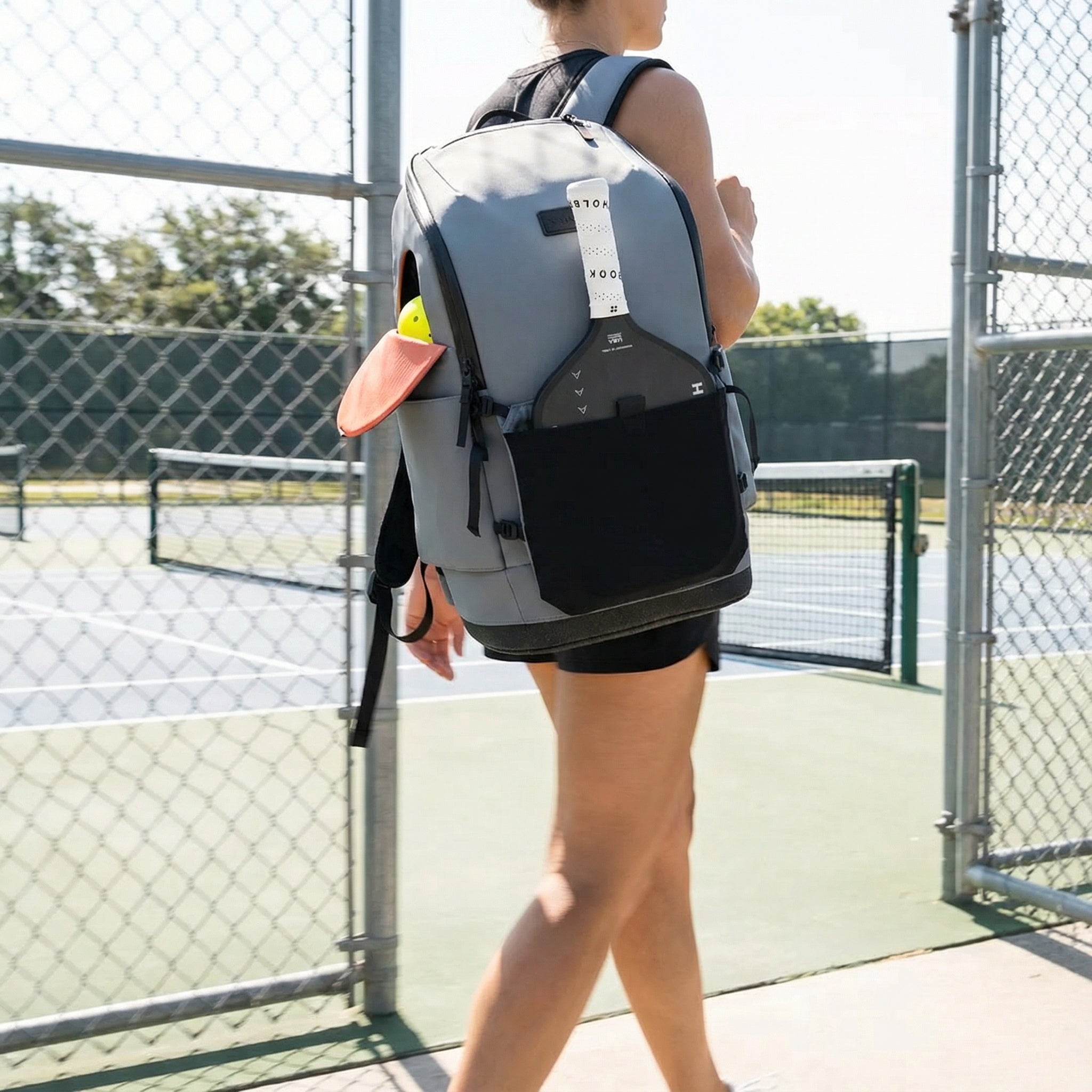
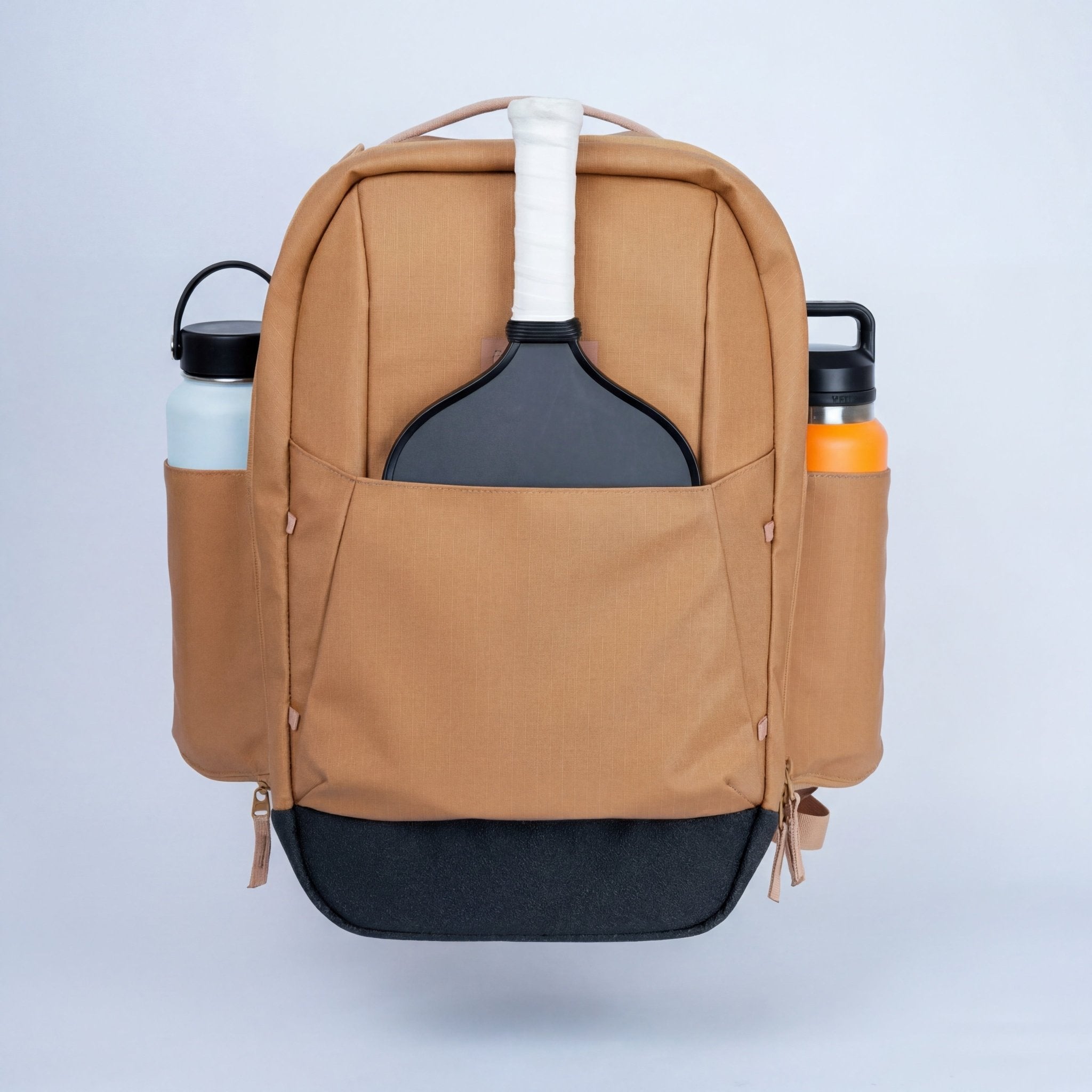
Your Tutor Mini handles the solo reps. Getting your gear to and from the court is the other part of the equation. The FORWRD Court Ranger V2 ($195) packs your paddle, balls, and court essentials with organized compartments for all your court accessories — including a dedicated ball pocket — so you're not making two trips when you haul the machine out.
See the Court Ranger V2 →
Who Should Buy It
Buy the Tutor Mini if you:
- Play 2–4 times per week and want more reps between sessions without needing a hitting partner
- Are a coach who feeds balls across multiple courts and needs a machine that's easy to carry and quick to set up
- Play at the 2.5–4.0 level and are building shot fundamentals — flat-feed drilling is exactly right for muscle memory work on dinks, drops, and resets
- Have limited storage space — 15" × 12" × 13" fits in a closet
- Want simplicity: turn a knob, press go, start hitting
Skip it if you:
- Want 90-minute uninterrupted grinding sessions — spend $270 more and get the Tutor Spin with its larger hopper
- Specifically want to train against topspin or backspin ball flight
- Need preset drill programs you can run without adjusting between sets
- Play at 4.5+ and are training for competitive events — you'll outgrow the Mini's constraints within a few months
Pricing and Where to Buy
The Pickleball Tutor Mini is available at $849 from Pickleball Central — the same price as buying direct from Sports Tutor, with PBC's inventory and customer service backing it. It ships from the USA directly to your door.
FAQ
Does the Pickleball Tutor Mini come with a remote?
No — the Mini has no remote control option. All adjustments (speed, feed rate, oscillation on/off) happen directly on the machine via knobs. That means walking to the machine to change settings between drilling rounds. If a remote is important to your practice flow, the Tutor Plus or Lobster lineup offers remote options.
Can the Pickleball Tutor Mini be used indoors?
Yes. The battery-powered operation means no cord management, making gym and community center setups clean and easy. It works on both indoor wood floors and outdoor hard courts. On outdoor courts with minor cracks, it handles fine. Avoid rough gravel or natural grass surfaces where the small wheels struggle.
How long does the Pickleball Tutor Mini battery last?
The built-in lithium-ion battery provides approximately 3 hours of continuous play per charge. At a 3-second feed rate, that's roughly 3,600 total balls before recharge. Most recreational sessions run 45–90 minutes, so you'll get 2–4 sessions per charge. The optional External Battery Pack ($195) extends runtime further — useful for coaches running back-to-back sessions.
What type of pickleballs work in the Tutor Mini?
Any standard USAPA-approved pickleball — indoor or outdoor — works in the Mini. It doesn't require a specific brand or hardness. Worn or cracked balls affect feed consistency, so use reasonably fresh balls. Morning dew can also make balls wet and affect trajectory — dry them before loading for consistent shot output.
Is the Pickleball Tutor Mini worth it compared to hiring a coach?
Different tools. A coach fixes technique, builds strategy, and gives feedback the machine can't. The Mini gives unlimited repetition on a specific shot without scheduling constraints. At $849 upfront vs. $60–100/hour for coaching, the machine pays for itself in 8–14 sessions if you'd otherwise hire a coach just for ball feeding. Most serious players use both: coaching to fix the shot, machine to ingrain it.
How does the Pickleball Tutor Mini compare to a rebounder?
A rebounder ($150–$250) returns your shots back, training your swing in sequence — but incoming speed is determined by your own shot. The Tutor Mini fires balls at set speeds regardless of your shot quality, which is better for footwork, positioning, and responding to a specific pace. For reaction and positioning training, the machine wins. For full-rally simulation on a budget, a rebounder is solid. Both are worthwhile — they train different things.
Final Verdict
The Pickleball Tutor Mini isn't trying to be the best ball machine on the market — it's trying to be the best ball machine for players who don't need the best ball machine on the market. At $849, it's the entry point to the Sports Tutor lineup, and it's a legitimate product for what it is.
The 55-ball capacity is a real constraint. No remote is a real inconvenience. No spin control limits advanced technique training. These aren't secrets — they're trade-offs Sports Tutor made to hit a price point and a portability target, and for the right player, those trade-offs make total sense.
If you're a recreational player who wants more reps, a coach who needs portability, or someone building fundamentals at 3.0–3.5 who doesn't need spin variation yet — the Mini is your machine. Buy it, use it consistently, and you'll improve faster than players who only get reps from weekly open play.
If you're a grinder who wants marathon sessions or a player specifically training against spin — spend the extra $270 for the Tutor Spin. It's the right upgrade for that use case, and our full review walks through exactly what you get.

Leave a comment
This site is protected by hCaptcha and the hCaptcha Privacy Policy and Terms of Service apply.