

Why Running Shoes Fail on the Pickleball Court — And When They Don't
Last updated: September 2026
Short answer: you can play pickleball in running shoes. You shouldn't, for more than a few casual sessions. Running shoes are built for forward motion — heel-to-toe, impact absorption, straight-line efficiency. Pickleball demands lateral cuts, split-steps, and planted pivots. Those two things are biomechanically incompatible enough that the ankle injury risk is real, and your running shoes will wear out on a court surface in a fraction of their expected lifespan.
That said, if you've never played before and you're borrowing a paddle for a Saturday afternoon session, wear whatever's on your feet. This guide is for everyone else — players who are playing regularly and wondering whether the shoe upgrade actually matters.
Disclosure: This post contains affiliate links to Pickleball Central. If you purchase through our links, FORWRD earns a small commission at no extra cost to you. We only link to products we'd recommend regardless.
Table of Contents
- How Running Shoes Are Actually Built
- What Pickleball Courts Actually Demand
- The 3 Specific Ways Running Shoes Fail on Court
- When Running Shoes Are Actually Fine
- When to Upgrade — and What to Get
- FAQ
How Running Shoes Are Actually Built
Running shoe design follows one priority: forward propulsion efficiency. Everything else is secondary.
The heel-to-toe drop — typically 8–12mm in most road running shoes, sometimes higher in max-cushion styles — is specifically designed to rock your foot forward through a stride cycle. The thick EVA foam stack underneath? That's for impact absorption from heel strikes on pavement, where you're landing hard, repeatedly, on one foot at a time. The midsole is deliberately flexible in the forefoot because that flex helps you push off during your running stride.
The outsole pattern is designed for pavement and treadmill surfaces — smooth, regular, predictable. The rubber compound is optimized for those surfaces too: soft enough for grip on asphalt, durable enough for hundreds of miles of straight-line forward movement.
None of this is bad engineering. It's excellent engineering — for running. Pickleball isn't running.
What Pickleball Courts Actually Demand
Every court sport has a specific demand profile, and pickleball's is distinct even from tennis. Here's what actually happens to your feet during a competitive rally:
The split-step: As your opponent contacts the ball, you drop your weight onto both feet simultaneously — loaded and ready to push in any direction. This creates a brief explosive landing on your midfoot, not your heel, with both feet at once. Running shoes are designed around single-foot heel strikes. That's the opposite of what's happening here.
Lateral acceleration: You push off sideways far more often than you sprint forward. Court shoes have a reinforced upper on the medial (inner) side specifically because lateral push tears apart running shoe sidewalls over time. Running shoes have no such reinforcement — they flex where you need rigidity.
Planted pivots: At the kitchen line, you're planting, rotating, and reaching. You need grip that holds your foot in place on a gritty hard surface while your upper body rotates. Running shoe outsoles weren't engineered for that rotational hold.
Pickleball courts — especially indoor Sport Court and outdoor concrete — have a surface texture designed to give players traction. That texture also shreds running shoe outsoles at a disproportionate rate. Expect 30–50% of the lifespan you'd get on pavement.
The 3 Specific Ways Running Shoes Fail on Court
1. The Ankle Roll Problem
Running shoes have little to no lateral support structure. The upper is flexible because it needs to flex with your forward stride — and that's exactly what you don't want when you're pushing off sideways toward a wide dink.
Ankle rolls in pickleball happen overwhelmingly during two movements: lateral acceleration and split-step landings where the foot doesn't set cleanly. In running shoes, there's no lateral support wall to stop your ankle from inverting. Court shoes have a firm, reinforced upper that resists this movement — it's literally built into the design.
Baptist Health's sports medicine team specifically flags running shoes as inadequate for lateral court sports — ankle sprains from footwear mismatch are among the most common pickleball injuries they treat.
2. Outsole Destruction on Court Grit
Here's the one most comparisons skip: running shoe rubber isn't formulated for court surfaces. Outdoor pickleball courts — especially in hot climates — are basically sandpaper. The grit on a Sport Court or outdoor hard surface chews through running shoe outsoles in 8–12 weeks of regular play. Court shoes use a harder, more durable rubber compound specifically rated for these abrasive surfaces.
Do the math. A $140 running shoe that lasts 400+ road miles might give you three months on a pickleball court before the tread is gone and you're sliding. A $90–$120 court shoe lasts 12–18 months. You're not saving money wearing running shoes on court; you're burning through them faster and playing on compromised traction while you do.
3. The High Stack Creates Instability
Modern max-cushion running shoes — HOKA Bondi, Brooks Ghost, New Balance 1080 — have heel stack heights of 35–40mm. Playing pickleball in one of these is like playing on a platform. During a split-step or hard lateral push, that height creates a lever arm that multiplies any ankle angle. You don't have to feel the instability happening for it to matter; micro-instability during split-steps accumulates into muscle fatigue and, eventually, overuse injuries in the knee and ankle.
Court shoes sit low to the ground. That's not a limitation — it's the whole point. You want court feel, not cushioning. Cushioning is for absorbing the impact of forward running. Court feel is for stopping, planting, and changing direction on a dime.
When Running Shoes Are Actually Fine
Let's be honest about this: plenty of recreational players wear running shoes and never get hurt. Here's when the risk is genuinely low:
- You're brand new. First session, unsure if you'll stick with it — wear your existing athletic shoes. Don't buy gear before you know you love the sport.
- You play once a week or less, at a slow pace. Recreational play with long rallies and minimal hard lateral acceleration is a different demand profile than competitive rec-league play. Your ankles don't get tested as hard.
- You're on a softer surface. Older rubberized gym floors or padded outdoor courts are gentler on outsoles and more forgiving of less-stable footwear.
Once you're playing twice a week or more, competing in any kind of league format, or playing on hard outdoor concrete, the calculus flips. The shoe upgrade costs $80–$120. A sprained ankle costs weeks off the court and potentially months of rehab.
When to Upgrade — and What to Get
Two clear signals: you've played five or more sessions and you keep coming back, or you've felt your ankle give — even slightly — during a lateral push. Either one means it's time.
For most players, the Skechers Viper Court Pro is the "just make the switch" shoe. It runs $80–$110 depending on the variant, fits most foot shapes well, has proper lateral support structure and court-appropriate outsole rubber, and doesn't require a serious gear budget to justify. Shop Men's Skechers Viper Court Pro at Pickleball Central.
For a deeper look at what separates pickleball-specific shoes from tennis court shoes — which are often used interchangeably and sometimes shouldn't be — read our breakdown of pickleball shoes vs tennis shoes: what the wear patterns actually tell you. And for the full guide to every shoe category, surface type, and top pick at every price point, the complete pickleball shoe guide has you covered.
Once you have court shoes you trust, store them right. Crumpling them into your bag with your paddle and water bottle after every session is the fastest way to shorten their life. The FORWRD Court Caddy Shoe Cube ($49.99) keeps your court shoes separate, ventilated, and protected — fits inside the Court Caddy and most larger pickleball bags.

Complete Your Setup
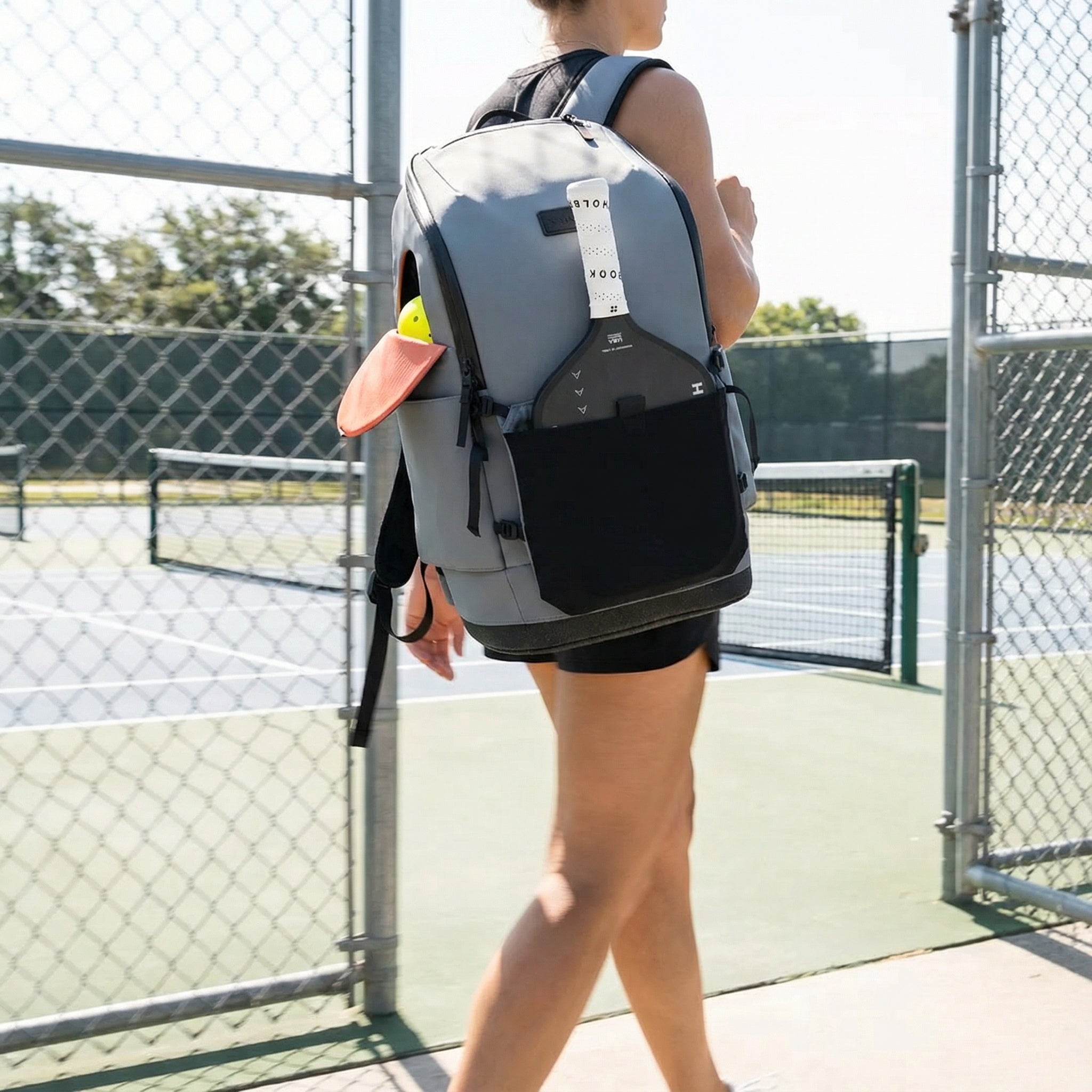
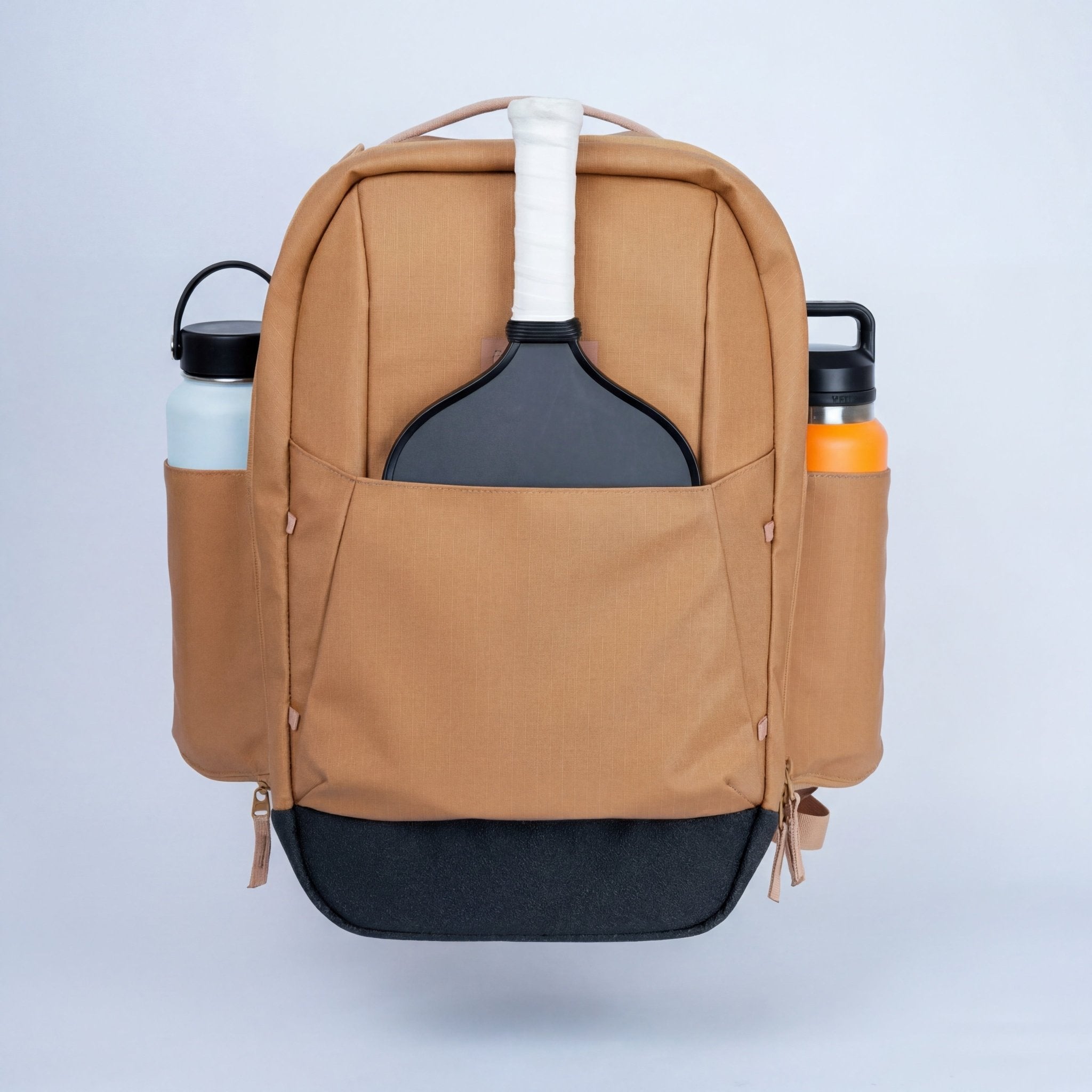
Got your court shoes sorted? You need somewhere to carry everything — paddles, court shoes, water, and the rest of it. The Court Caddy Backpack was built with feedback from 500+ real players and fits your court shoes in a dedicated Shoe Cube compartment, with a 15" padded laptop sleeve and YKK AquaGuard weatherproof zippers. Court Ranger V2 if you want a lighter everyday option at $195.


FAQ
Can I play pickleball in running shoes?
Yes, but not for regular play. Running shoes lack lateral ankle support and use outsole rubber that wears out quickly on court surfaces. For occasional beginner play, the risk is low. For anyone playing twice a week or more, the ankle injury risk and outsole wear make dedicated court shoes worth the relatively small investment.
What's wrong with wearing running shoes for pickleball?
Three specific problems: no lateral ankle support wall (ankle roll risk during direction changes), outsole rubber that isn't built for court grit (wears out in 8–12 weeks vs. 12+ months for court shoes), and a high heel stack that creates instability during split-steps and planted pivots at the kitchen line.
Do I need special shoes for pickleball?
You need court shoes — shoes designed for lateral movement on hard surfaces. They don't have to be pickleball-branded. Tennis shoes, racquetball shoes, and dedicated pickleball court shoes all work. Running shoes, cross-trainers, and casual athletic shoes lack the lateral support structure that court sports require.
Will running shoes hurt my knees playing pickleball?
Potentially, over time. High heel-stack running shoes create instability during lateral movement that puts asymmetric stress on the knee joint. The micro-instability during split-steps and direction changes can contribute to patellar tendon stress and knee fatigue across longer sessions. Court shoes keep you lower and more stable, which reduces that stress.

Leave a comment
This site is protected by hCaptcha and the hCaptcha Privacy Policy and Terms of Service apply.