

Most pickleball players retire their court shoes because they smell — not because the outsole is worn through. That's a fixable problem. A consistent cleaning routine extends shoe life by months, keeps EVA cushioning performing at spec, and means your court bag doesn't become a biohazard between sessions.
This guide covers the full process: outsole grit removal (which competitors skip entirely), material-specific upper cleaning for mesh, leather, and synthetic, proper deodorizing, heat-free drying, and the storage move that preserves the shape. Last updated: September 2026.
For a full breakdown of how to evaluate and choose court shoes before buying, start with our Complete 2026 Pickleball Shoe Guide.
What You Need (and What to Leave in the Cabinet)
The full kit costs nothing if you already own dish soap and baking soda. For most cleanings you need:
- Soft-bristled brush — an old toothbrush works for upper detailing; a stiffer utility brush is better for outsoles
- Mild dish soap or sneaker cleaner — a few drops in warm water; no harsh detergents, no bleach
- Microfiber cloth — for wiping and drying the upper without scratching
- Baking soda — for deodorizing; more effective than most commercial sprays
- Newspaper or paper towels — for stuffing during the drying phase
What you do not need: a washing machine, a dryer, a hairdryer, or any solvent-based cleaner. These all cause damage. See the next section for why.
Why Machine Washing Destroys Court Shoes
Every major shoe brand includes a "no machine wash" warning. Here's the actual science behind it — because knowing why helps you avoid equivalent mistakes:
Heat degrades EVA foam. The midsole cushioning in virtually every court shoe is expanded EVA (ethylene-vinyl acetate). EVA foam is engineered to compress and rebound under foot strike. Expose it to sustained heat — from a washer's hot cycle or a dryer — and the foam structure breaks down permanently. You lose cushioning response and ground feel, and there's no fixing it.
Water warps the heel counter. The heel counter is the stiff plastic or composite insert that keeps the back of the shoe structured and your heel locked in during lateral cuts. When it's repeatedly soaked and dried, it distorts. A warped heel counter causes heel slippage, which is a direct path to blisters and ankle instability on hard cuts.
Agitation breaks adhesive bonds. Court shoes are built with performance adhesives that bond the upper to the midsole and outsole. The agitation cycle is aggressive enough to stress these bonds over time, leading to delamination — where the sole begins to separate from the upper at the edges.
Hand washing controls all three variables: no heat, controlled water exposure, no agitation. It takes 15 minutes and your shoes last years longer.
Step 1: Clean the Outsole First
Start with the outsole, not the upper. If you clean the upper first and then flip the shoe, you'll drag outsole grit across clean material.
Tap the soles together over a trash can to knock loose debris. Then use a stiffer brush with soapy water to work through the tread pattern. Brush in the direction of the tread grooves — herringbone patterns trap court grit in directional channels, and scrubbing against the grain pushes particles deeper instead of out.
What you're removing matters depending on your court surface. USA Pickleball's court specifications cover approved surfaces — and each plays differently on your outsole rubber. Outdoor hardcourt (concrete, asphalt) leaves fine silica particles that act as abrasive compounds — they accelerate rubber wear if left embedded. Indoor hardwood courts leave wax residue and fine dust that reduce traction without looking dirty. Both need thorough outsole cleaning, but indoor shoes may need a second pass with a barely-damp cloth to cut the wax layer.
For more on how surface type affects shoe wear patterns, see our Indoor vs Outdoor Pickleball Shoes guide.
Rinse the outsole with clean water and set the shoe upright to drain before moving to the upper.
Step 2: Clean the Upper by Material
This is where most generic cleaning guides fail you. Different upper materials require different approaches — using the wrong technique on the wrong material causes discoloration, stiffening, or surface damage.
Mesh and Knit Uppers
Most modern pickleball shoes use engineered mesh or knit — it's lightweight and breathable, but the open weave is a dirt magnet. Use a soft brush (toothbrush-sized) with a mild soap solution. Work in small circular motions at low pressure. Mesh is delicate — hard scrubbing distorts the weave and creates permanent white fuzzing on dark uppers. Wipe with a damp microfiber cloth and repeat until clean.
Do not saturate mesh. The goal is surface cleaning, not soaking — water trapped inside the shoe's interior lining is what creates odor-causing bacteria growth.
Leather and Premium Synthetic Leather
Leather uppers (common on more premium or stability-focused court shoes) respond well to a light soap solution, but need conditioning after cleaning or they'll dry out and crack. After cleaning with a damp cloth, apply a small amount of leather conditioner or a neutral shoe cream while the leather is slightly damp. This is a 60-second step that extends leather life dramatically.
Avoid soaking leather — just like the heel counter, leather warps when oversaturated and dried.
Standard Synthetic (PU / TPU Uppers)
Polyurethane and thermoplastic polyurethane uppers are the most forgiving. A damp cloth with mild soap handles most surface dirt. For scuff marks, a white eraser (the kind designed for sneaker cleaning) works without disturbing the material surface. Avoid anything abrasive.
Step 3: Deodorize Properly
Shoe odor is bacterial, not just sweat. The bacteria live in the shoe's interior lining — particularly in the insole foam — and produce odor compounds as they process moisture. Removing the smell means dealing with the bacteria, not just masking it.
Best method: baking soda. Remove the insoles and sprinkle a generous amount of baking soda into each shoe. Leave overnight (8–12 hours minimum). Shake out completely before wearing. Baking soda is alkaline and neutralizes the acidic odor compounds at the source — it's not a mask, it's a chemical fix. This outperforms most commercial sprays in sustained effectiveness.
Second option: activated charcoal inserts. Reusable activated charcoal shoe deodorizers (small bags you drop inside) absorb moisture and odor between sessions. Less effective for deep odor but good for maintenance between cleanings.
What doesn't work long-term: spray deodorizers that contain fragrance but no antimicrobial agent. They cover the smell for a day. Baking soda actually reduces the bacterial load when applied consistently.
Step 4: Dry Without Heat
This step causes more shoe damage than any other. The instinct is to speed up drying — dryer, direct sunlight, radiator, hairdryer. All of these apply the heat that destroys EVA foam and warps heel counters.
The correct method: stuff each shoe loosely with crumpled newspaper or paper towels. The paper absorbs interior moisture through contact and airflow without trapping heat. Replace the paper once if it's saturated. Set shoes in a well-ventilated area at room temperature — near an open window is ideal. Most shoes are dry enough to wear within 8–12 hours.
Never dry shoes in direct sunlight. UV exposure on mesh can cause premature yellowing and material brittleness on synthetic uppers over time.
Step 5: Store Them Right
Once clean and dry, where and how you store your shoes determines whether they hold their shape and stay odor-free between sessions.
Two things to avoid: storing shoes compressed inside a bag (kills the heel counter structure) and storing in a completely sealed, non-breathable space (creates the damp environment bacteria need).
"The reason we made the Shoe Cube breathable is that most players stuff their court shoes in their bag right after play — damp shoes in an enclosed space is the fastest path to outsole separation and permanent odor. Ventilation buys you months of extra shoe life."
— Topher, FORWRD Co-founder
The Court Caddy Shoe Cube was designed specifically for this — a breathable, structured compartment that attaches to the exterior of the Court Caddy Backpack. It keeps shoes isolated from your paddles and fresh gear, maintains the shoe's shape with the structured walls, and the ventilation mesh prevents the sealed-environment odor problem. Once clean, your shoes go here — not loose in the main compartment.

How Often Should You Clean Your Pickleball Shoes?
The honest answer depends on how many times per week you play and what surface you're on.
- 2–3x per week outdoors: Quick outsole brush after every session; full cleaning every 2–3 weeks
- 4–5x per week outdoors: Full cleaning weekly; baking soda treatment every 1–2 weeks
- Indoor courts only: Full cleaning every 4–6 weeks; quick wipe after every session to remove wax/dust buildup that degrades grip
- Tournament players: Full clean the night before any multi-day tournament; inspect outsole wear and heel counter integrity
No shoe lasts forever regardless of cleaning. If you're wondering when to replace rather than clean, our pickleball shoe durability and replacement guide covers the specific wear indicators to watch for by surface type and play volume.
Store Your Clean Shoes the Right Way
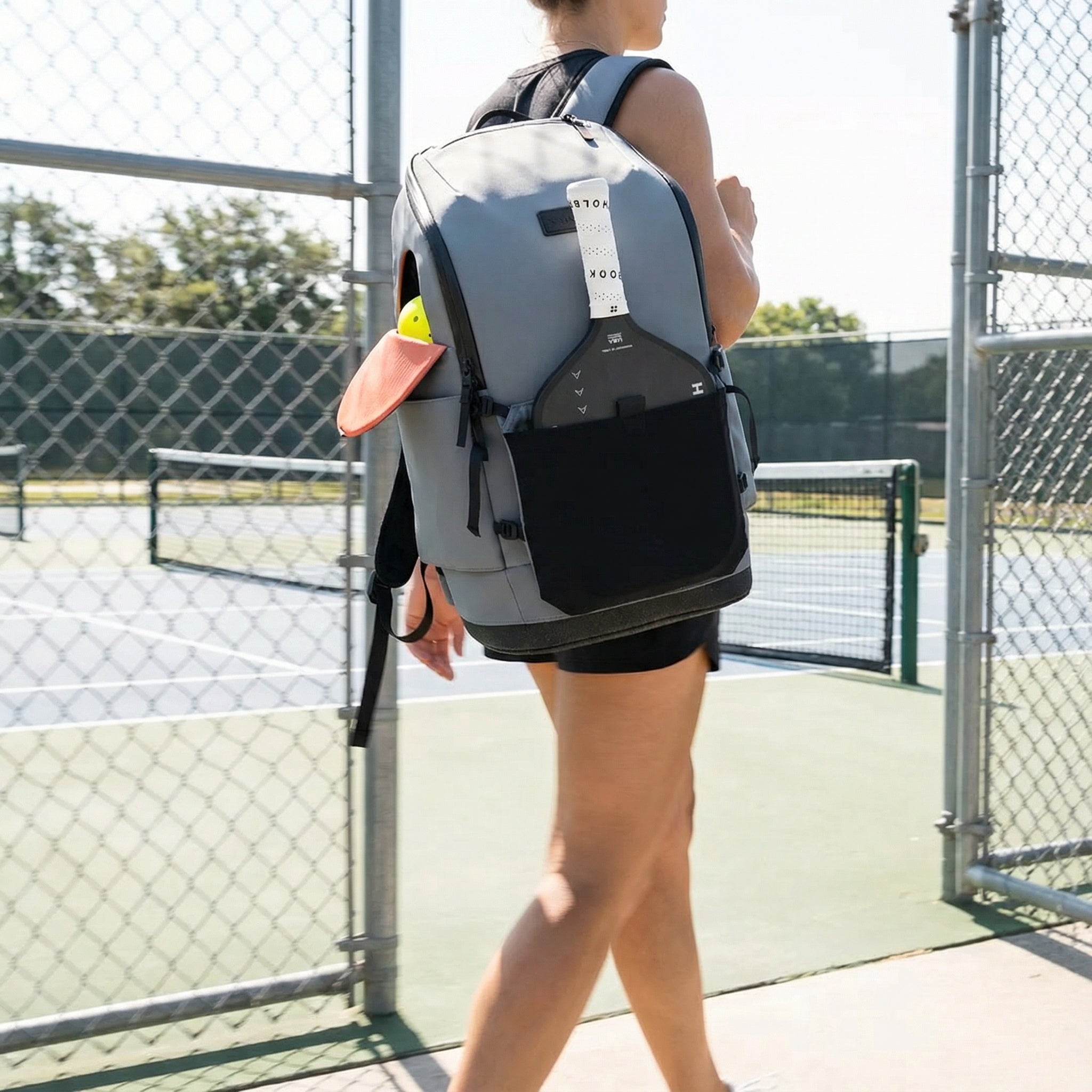
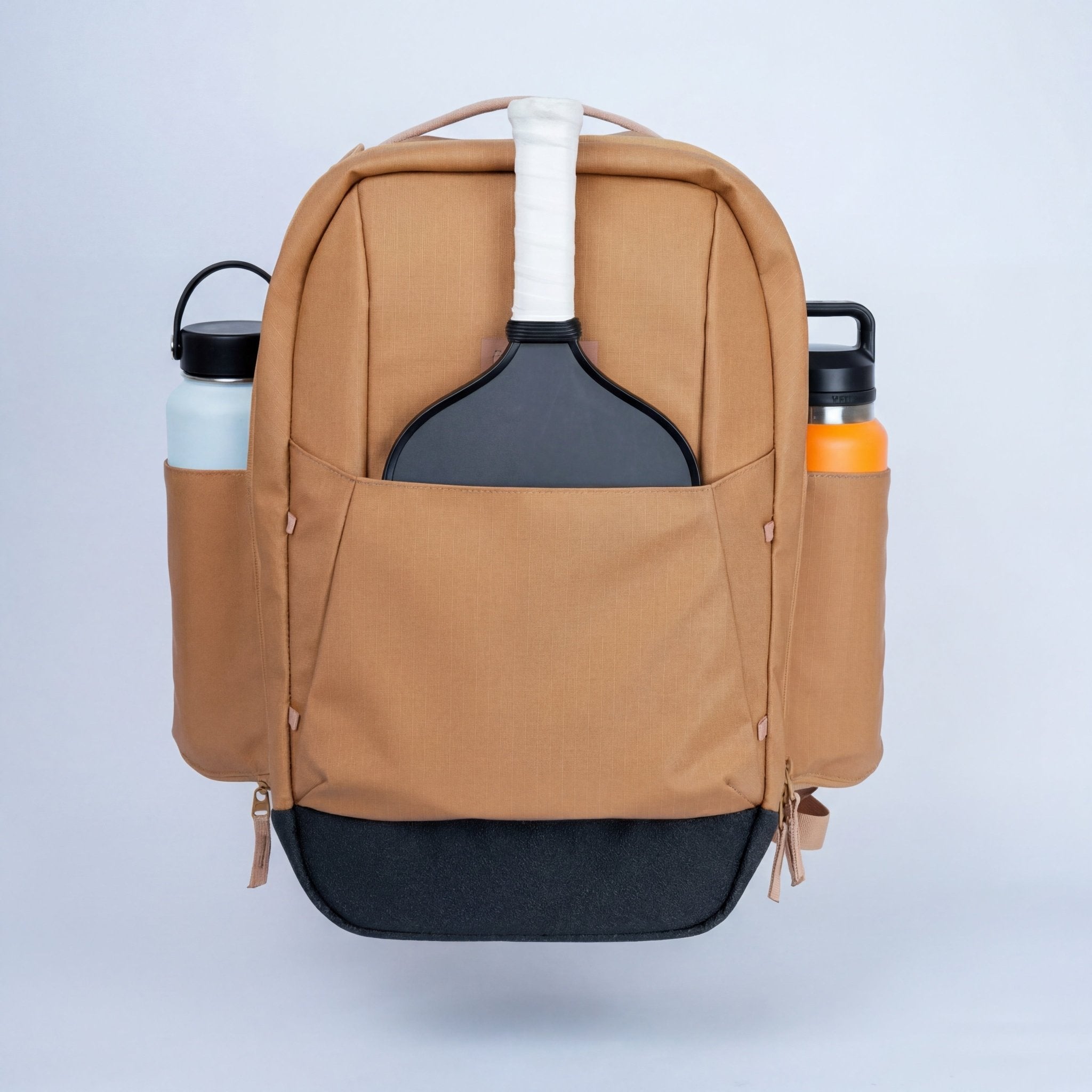
Got your shoes freshly cleaned? Now you need somewhere to carry them that doesn't undo all that work. The Court Caddy Backpack features a dedicated Shoe Cube attachment — a breathable, structured external compartment that keeps your clean shoes separate from paddles and gear. Court Ranger V2 is the lighter carry option at $195 if you want something more compact.
Frequently Asked Questions
Can you wash pickleball shoes in the washing machine?
No. Machine washing exposes court shoes to heat, sustained water saturation, and mechanical agitation — all three damage EVA foam cushioning, warp the heel counter, and stress adhesive bonds that hold the sole together. Hand washing with mild soap and a soft brush takes 15 minutes and preserves the shoe's structural integrity.
How do you get the smell out of pickleball shoes?
The most effective method is baking soda: remove insoles, pour a generous amount into each shoe, leave overnight (8–12 hours), then shake completely clean. Baking soda neutralizes odor-causing acids at the source rather than masking them. Repeat every 2–3 cleanings for best results. Commercial sprays with fragrance but no antimicrobial agent only cover the smell temporarily.
How often should you clean court shoes?
Outdoor players should do a full cleaning every 2–3 weeks at 2–3 sessions per week, or weekly at 4–5 sessions. Indoor-only players can go 4–6 weeks between full cleanings since hardwood leaves less abrasive grit. A quick outsole brush-out after every session — regardless of surface — slows material wear significantly.
What's the best way to clean the rubber outsole?
Use a stiffer brush (utility brush or stiff toothbrush) with a mild soap solution. Brush in the direction of the tread pattern grooves — herringbone tread traps grit directionally, and scrubbing against the grain pushes particles deeper. Rinse thoroughly. For outdoor shoes, this step matters more than upper cleaning for long-term outsole rubber preservation.
Can I use a hairdryer to speed up drying?
No. Direct heat from a hairdryer, dryer, or radiator degrades EVA midsole foam and can warp the heel counter. Stuff shoes with newspaper or paper towels and dry at room temperature in a well-ventilated space. Most shoes are fully dry within 8–12 hours using this method — faster if near an open window with airflow.

Leave a comment
This site is protected by hCaptcha and the hCaptcha Privacy Policy and Terms of Service apply.