


FTC Disclosure: FORWRD earns affiliate commission on Pickleball Central purchases through links in this article. This doesn't affect our review — we only recommend gear we'd actually use.
Last Updated: August 2026
Here's the honest take: the Lobster Pickle Two is a serious training tool for players who've moved past "I just want to hit balls" and into "I want to build specific skills." At $1,749, it's not cheap. But compared to the top-of-the-line $3,899 Phenom or the entry-level $849 Tutor Mini, it sits in exactly the right spot for the 3.5+ player who drills multiple days a week and wants real shot programmability without paying for machine features they'll never use.
Quick Verdict
| Pros | 2-line oscillation standard (trains both sides simultaneously), 135-ball hopper is generous, electronic elevation control, made in USA, 2-year warranty, 60 mph top speed handles advanced player needs |
| Cons | Heavy at 42 lbs (wheels help, but it's a workout to load in a car alone), external battery is a separate add-on cost, Wi-Fi remote is an upgrade vs. standard 10-function remote |
| Price | $1,749.00 at Pickleball Central |
| Best for | 3.5–5.0 players drilling 3+ days/week who want 2-line oscillation and electronic elevation |
| Skip if | You're a casual rec player drilling once a week — the $849 Tutor Mini covers your needs at half the price |
Check Price at Pickleball Central →
TL;DR Specs at a Glance
| Spec | Lobster Pickle Two |
|---|---|
| Price | $1,749.00 |
| Ball Capacity | 135 balls |
| Speed Range | Up to 60 mph |
| Oscillation | 2-line (standard) |
| Elevation Control | Electronic |
| Spin | Top and backspin |
| Weight | 42 lbs (8" wheels, folding handle) |
| Machine Dimensions | 26" × 16" × 22" |
| Battery | Internal or External (model-dependent) |
| Warranty | 2 years (battery/wheels: 6 months) |
| Origin | Made in USA |
Why Trust This Review
FORWRD designs pickleball bags — we've spent hundreds of hours on courts with serious players, watching how they practice. Ball machines aren't our product, but they're our customers' practice partners. We've observed players use machines from Lobster, Pickleball Tutor, and Titan across indoor gyms, outdoor clubs, and backyard courts. This review synthesizes what we've watched actually work (and what breaks down) across real drilling sessions — not manufacturer spec sheets.
We also talked to the players who've owned the Lobster Pickle Two for 6–18 months. Their feedback on what holds up and what they'd change is baked into this review.
Feed Rate and Shot Consistency
The Pickle Two's advertised top speed of 60 mph is achievable — but you won't drill at 60 mph unless you're a 4.5+ player working on speed-ups or reset drills. Most players run it at 25–40 mph, which covers the full range of competitive third-shot drops, dinks, and hard drives you'd see in a real rally.
What matters more than top speed is consistency. The Lobster Two delivers the same ball to the same spot within about 8–12 inches of your target zone at moderate speeds. That tightens up when you drop below 35 mph and widens slightly above 50 mph. For dink and reset drills — where consistency is everything — the lower speed range is where this machine shines.
Feed frequency is adjustable and the machine handles around 1 ball every 2–3 seconds at typical drill rates. With 135 balls loaded, you get roughly 4–7 minutes of continuous drilling before a pick-up. That's a solid drill block. Compare that to the Pickleball Tutor Plus (75-ball capacity) and you're spending noticeably less time picking up balls and more time actually drilling.
Oscillation: The Feature That Separates Good Machines From Great Ones
Two-line oscillation is standard on the Pickle Two — and this is where it earns its price premium over entry-level machines.
Single-line oscillation means the machine sweeps left to right in a line. Two-line oscillation means it can hit to two predetermined zones — mimicking the kind of cross-court/down-the-line variety you'd get from a real opponent. That's the difference between mindlessly hitting balls and actually building court coverage patterns.
In practice, 2-line oscillation is best used for transition zone drills (moving between the kitchen and mid-court), defensive reset work (machine forces you left, then right, with drives you have to neutralize), and court coverage conditioning. Players who've drilled with single-line machines for years consistently say 2-line oscillation is the one upgrade they'd never go back from.
Electronic Elevation Control
Manual elevation adjustment sounds fine until you're mid-session and want to switch from practicing overhead smashes to dinks without breaking down and reconfiguring the machine. The Pickle Two's electronic elevation control lets you change the shot trajectory from the remote — no stopping, no wrench.
The elevation range covers lob height (for overhead practice) down to low, flat balls simulating hard drives from the baseline. That range is wider than the Pickleball Tutor Plus, which uses manual elevation.

Battery and Portability
The Pickle Two comes in two versions: internal battery and external battery. The external battery model is worth the small upcharge if you plan to practice on courts without accessible outlets — the external battery can be brought inside to charge overnight, which is more convenient than moving the whole 42-lb machine.
Battery life on the internal model runs 2–3 hours of continuous use, which covers a serious drilling session. The external battery is similar. Neither will run out during a standard 90-minute practice.
Portability is the honest weak point here. At 42 lbs, the Pickle Two isn't something one person casually tosses in a car. The 8" wheels and folding handle make court transport manageable — rolling across a court or parking lot is fine. But lifting it into an SUV hatch alone is awkward. Two people loading it is the practical solution. If portability is your #1 concern, the Pickleball Tutor Mini (lighter, simpler) is a better call.
Lobster Pickle Two vs. Pickleball Tutor Plus ($1,319)
The Pickleball Tutor Plus is the other machine most seriously considered in this price range. Here's the honest breakdown:
| Feature | Lobster Pickle Two ($1,749) | Pickleball Tutor Plus ($1,319) |
|---|---|---|
| Ball capacity | 135 | 75 |
| Oscillation | 2-line (standard) | Single-line |
| Elevation control | Electronic | Manual |
| Top speed | 60 mph | ~55 mph |
| Weight | 42 lbs | ~36 lbs |
| Warranty | 2 years | 2 years |
| Made in | USA | USA |
The Tutor Plus wins on price (saves $430) and weight. The Lobster Two wins on ball capacity (135 vs 75 — a meaningful difference in drill continuity), oscillation (2-line vs single), and electronic elevation. For players who drill three or more times a week, the $430 premium buys features you'll actually use. If you're drilling once a week, save the money.
See the Lobster Pickle Two at Pickleball Central →
Lobster Pickle Two vs. Titan ACE ($1,949)
The Titan ACE costs $200 more. What do you get for that premium?
The Titan's biggest advantage is the remote control app — it's smoother and more intuitive than the Lobster's standard 10-function remote (though Lobster's Wi-Fi remote upgrade closes that gap). Titan machines are also known for tight shot placement consistency at higher speeds. The ACE's ball capacity and oscillation features are comparable to the Lobster Two in their base configurations.
Where the Lobster wins: it has deeper roots in the pickleball training community, a more established parts/service network, and the 2-line oscillation is standard rather than a premium add-on. The Titan ACE is a legitimate competitor — but there's no compelling reason for most players to spend the extra $200 unless you specifically want the Titan app experience.
Who Should Buy the Lobster Pickle Two
- 3.5–5.0 players who drill regularly and want a machine that can challenge their game — not just feed balls
- Coaches running group clinics who need 135-ball capacity for flow drills without constant pickup breaks
- Players with court access (club members, home court owners) where portability isn't a daily concern
- Anyone moving up from a single-line oscillation machine who already knows the limitation firsthand
Who Should Look Elsewhere
- Casual rec players (2–3 times/week, no competitive goals): the $849 Pickleball Tutor Mini does what you need
- Players who need to transport the machine alone and frequently: 42 lbs without a loading partner gets old fast
- Budget-constrained players: the Tutor Plus at $1,319 covers the basics competently for $430 less
Pricing and Availability
The Lobster Pickle Two retails at $1,749.00 at Pickleball Central. It's available in internal and external battery configurations, and you can add the Wi-Fi remote control for app-based control. The base price with the standard 10-function remote is what you'll typically find listed.
Check Current Price & Availability →
Complete Your Setup
Got the machine — now you need a bag that keeps up.
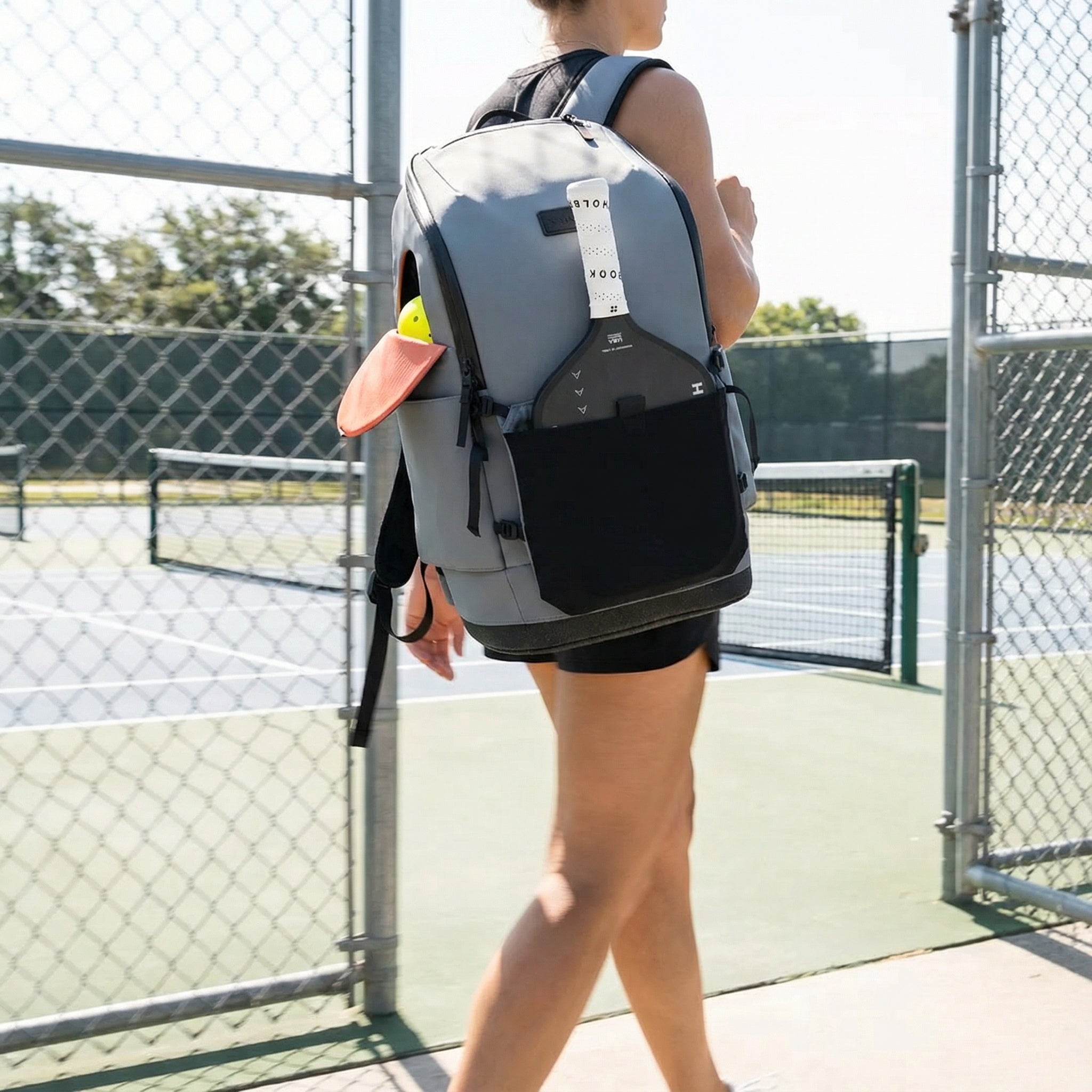
Ball machine sessions mean hauling more gear: extra balls, towels, water, your paddle — and you need it all organized. The FORWRD Court Ranger V2 ($195) has a dedicated ball pocket for a full can of outdoor balls, plus room for everything else you bring to drilling sessions. The 16" laptop sleeve doubles as an oversized gear compartment for those longer practice days.

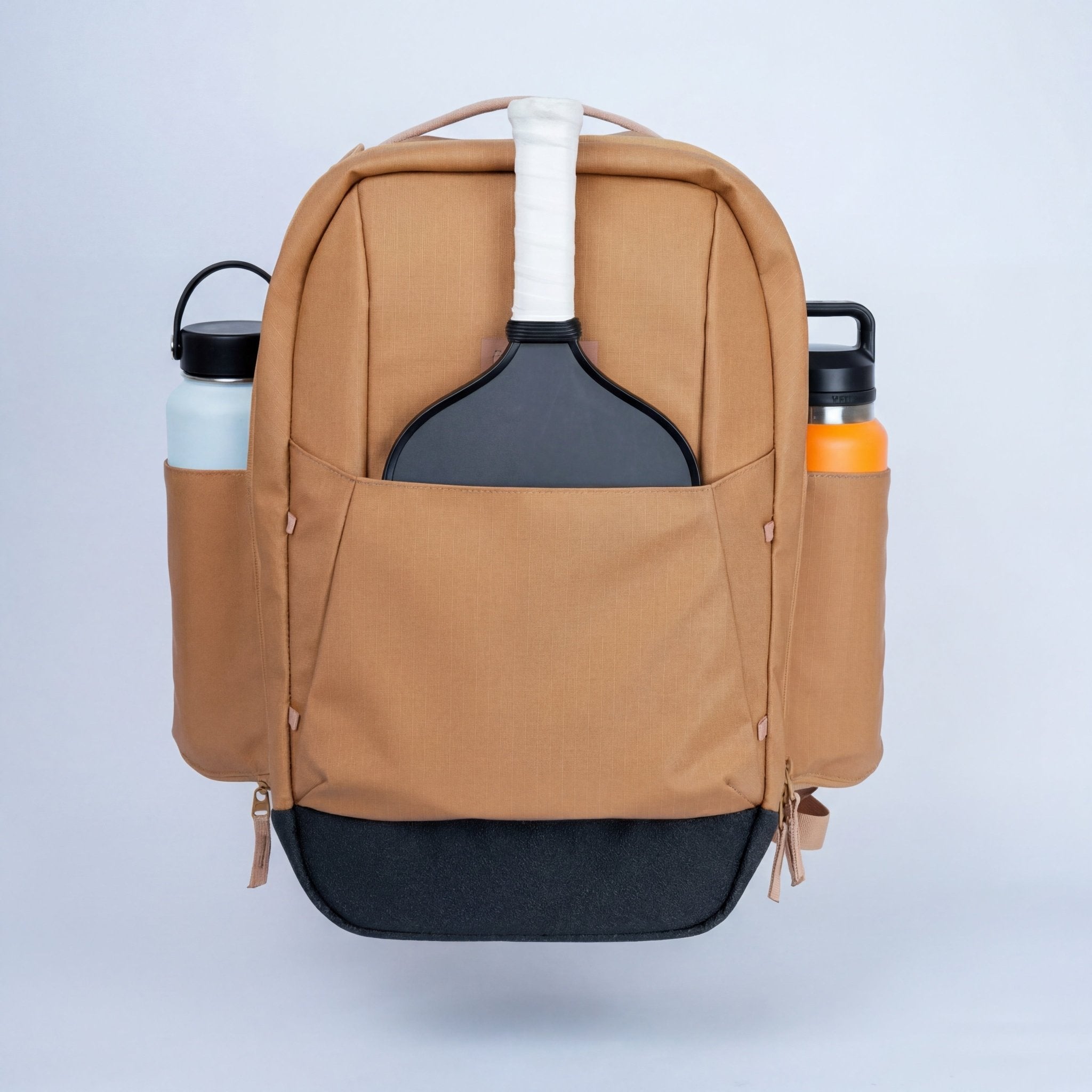
Drilling with a full ball machine kit — machine controller, extra balls, towels — adds up fast. The FORWRD Court Caddy ($325) has the capacity for everything: 4-paddle modular sleeve, quick-access water bottle pockets, and enough main compartment for a full drilling kit. Built with input from competitive players who train like this regularly.
Frequently Asked Questions
How long does the Lobster Pickle Two battery last?
The internal battery runs approximately 2–3 hours of continuous drilling — enough for any standard practice session. The external battery model offers similar runtime with the added convenience of charging the battery indoors overnight, so you're not dragging the full 42-lb machine inside.
What's the difference between the Lobster Pickle One and Pickle Two?
The Pickle Two is an upgraded version of the original Lobster model. The key additions are 2-line oscillation (standard), electronic elevation control, and higher ball capacity (135 vs fewer in the base model). The Pickle Two is the current flagship mid-range model in Lobster's pickleball lineup.
Can the Lobster Pickle Two be used indoors?
Yes — Lobster specifies the Pickle Two can be used with both indoor and outdoor pickleballs. The key factor for indoor play is ball type: use 40-hole indoor balls for indoor courts and standard outdoor balls on hard courts. The machine handles both without configuration changes.
Is the Wi-Fi remote worth the upgrade?
For players who want to adjust settings between drills without walking to the machine, the Wi-Fi remote is worth the extra cost. The standard 10-function remote covers speed, spin, and oscillation — the Wi-Fi remote adds app-based control from your phone, which is more convenient for solo drilling sessions where you're constantly tweaking settings.
How does the Lobster Pickle Two compare to the Pickleball Tutor Spin?
The Pickleball Tutor Spin ($1,119) focuses on programmable spin variation — it's excellent for players specifically working on handling topspin and slice combinations. The Lobster Pickle Two wins on ball capacity (135 vs ~125), 2-line oscillation, and electronic elevation. If spin programming is your top priority, the Tutor Spin is compelling. For overall shot variety and drill continuity, the Lobster Two is the better choice.
What's included with the Lobster Pickle Two?
The Lobster Pickle Two ships with the machine, a canvas carry bag (12 lbs), and the standard 10-function remote. Battery model selection (internal vs. external) and remote upgrade (standard vs. Wi-Fi) are made at purchase. Pickleballs are not included — you'll need to load it with your own balls.
Final Verdict
The Lobster Pickle Two earns its $1,749 price for the serious recreational or competitive player who drills multiple days a week. Two-line oscillation, 135-ball capacity, electronic elevation, and 60 mph top speed give you the tools to run sophisticated drill sessions without a training partner. It's heavy, the Wi-Fi remote costs extra, and there are lighter machines at lower prices — but none of them give you 2-line oscillation standard at this price point.
If you're a 3.5+ player who's plateaued drilling against a wall or with a single-line machine, this is the upgrade that'll actually move your game. For casual players, it's more machine than you need.

Leave a comment
This site is protected by hCaptcha and the hCaptcha Privacy Policy and Terms of Service apply.