

Disclosure: This post contains affiliate links to Pickleball Central for comparable paddles. If you purchase through our links, FORWRD earns a small commission at no extra cost to you. Mizuno paddles aren't yet stocked at PBC — when they are, we'll update this post with direct affiliate links. We only recommend gear we'd play with ourselves.
Last Updated: August 2026
Mizuno has been making sporting goods for 119 years. They build baseball gloves Major League players use. They make the running shoes elite marathoners cross finish lines in. They've sponsored Olympic athletes since the 1920s. And now, in 2026, they're entering pickleball.
The natural question: is this a legitimate paddle program from a serious sporting goods company, or a brand-extension play hoping pickleball players don't know better?
We dug in. Here's the honest answer.
The Quick Take
The Mizuno AcroSpeed (LX and SX) is the most interesting paddle release of 2026 — but not for the reasons Mizuno's marketing is pushing. The thermoformed carbon construction is genuinely solid, the SpinKote face has real bite, and the 13mm core lands in the sweet spot for control-first players. The FAST TRACK adjustable weight system, though? That's where the marketing diverges from what most players actually need.
If you play 3+ times a week, want a paddle that'll feel familiar coming from JOOLA or Selkirk, and don't mind paying $225-$260 USD for a paddle from a brand still proving itself in pickleball — the AcroSpeed is a real option. If you're below 3.5 DUPR, save your money. If you're already locked in with a Hyperion or Vanguard, the AcroSpeed isn't enough of a leap to justify switching.
The Mizuno AcroSpeed LX — Full Specs
The elongated version. Built for power players who want extra reach on the kitchen line and don't mind a slightly smaller sweet spot.
- Length: 16.375"
- Width: 7.375"
- Grip length: 5.2"
- Grip circumference: 4.125"
- Weight: 8.0 oz average
- Core thickness: 13mm
- Core material: Honeycomb, wide-cell structure
- Face material: Thermoformed carbon fiber with SpinKote texture
- Swing weight (measured): 121
- Twist weight (measured): 7.55
- Design: Edgeless, Generation 3 construction
- Certifications: USA Pickleball approved, PBCoR .43
- Price: $319.95 CAD (~$235 USD)
For context: a swing weight of 121 puts the AcroSpeed LX in the same range as the JOOLA Ben Johns Hyperion 3S 16mm (118-122 depending on batch) and slightly lighter than the Selkirk Vanguard Power Air S2 (124-127). It'll feel familiar coming from either of those, with the elongated shape giving you about a half-inch more reach than the standard widebody.
The Mizuno AcroSpeed SX — Full Specs
The widebody version. Bigger sweet spot, easier to hit clean shots, shorter handle. Better for two-handed backhand players or anyone who finds elongated paddles unforgiving.
- Length: 15.95"
- Width: 7.78"
- Grip length: 4.8"
- Grip circumference: 4.125"
- Weight: 8.0 oz average
- Core thickness: 13mm
- Swing weight (measured): 121
- Twist weight (measured): 7.55
- Price: $319.95 CAD (~$235 USD)
The 7.78" width gives the SX one of the largest sweet spots in any 13mm thermoformed paddle right now. If you're switching from a beginner paddle and used to forgiving hits, this is the version that'll keep you scoring while you learn the thermoformed feel. The shorter 4.8" handle is a tradeoff — easier to maneuver, less reach.
If You Want the Mizuno Experience Right Now
Mizuno paddles aren't widely available in the US yet. The closest equivalent — same 13mm thermoformed carbon, similar swing weight, similar control-first character — is the JOOLA Ben Johns Hyperion 3S 16mm.
The Technology Stack — What's Actually New
Mizuno's paddle marketing leans hard on three proprietary technologies. Here's what each actually is, stripped of the brand language.
ENERZYCELL Core
ENERZYCELL is Mizuno's branded name for their honeycomb core construction. The marketing claims it provides "lively, responsive feel." In practice, it's a wide-cell honeycomb polypropylene core — similar architecture to what JOOLA, CRBN, and Selkirk use in their flagship paddles. The cells are slightly wider than standard, which does change feel: shots come off the face with a touch more pop than a tight-cell core but slightly less directional control.
The bottom line: ENERZYCELL is a legitimate iteration on standard polymer core design, not a generic re-skin. But it's not a category-changing innovation either. If you blind-tested it against a JOOLA or CRBN core, you'd be hard-pressed to call which is which.
SpinKote Surface
This is the more interesting tech. SpinKote is a textured coating applied to the thermoformed carbon fiber face. Mizuno claims it generates more spin than raw carbon fiber alone.
Spin generation in pickleball paddles is measured in RPMs, and the leading thermoformed paddles (JOOLA Hyperion 3S, CRBN-1X, Selkirk Vanguard Power Air) all generate between 1,800 and 2,100 RPMs on a 30-mph forehand drive. Mizuno hasn't published their measured number, but Matt's Pickleball-style independent testing puts the AcroSpeed in the 1,950-2,050 range. That's competitive, not category-leading.
What SpinKote actually delivers: a face that grips the ball noticeably more on dinks and rolls. If you're a spin-heavy player, you'll feel it. If you're a flat-driver, you won't notice the difference.
MZ-36C Construction
MZ-36C is Mizuno's name for their thermoformed carbon construction. "36C" refers to the carbon fiber weave specification. Like ENERZYCELL, this is solid engineering applied conventionally — thermoformed carbon has been the dominant flagship construction since 2023, and the AcroSpeed plays at that level. Not better, not worse, just professional execution of an established standard.
The FAST TRACK System — Honest Take
This is the feature Mizuno is leading with. It deserves a real conversation.
The FAST TRACK System is two 4-gram weights that slide within tracks on the paddle's perimeter. Loosen two screws, slide the weight to where you want it (3 o'clock and 9 o'clock for stability, 12 o'clock for power, handle position for control), tighten back down. The idea: instead of buying lead tape and committing to a fixed weight configuration, you can experiment in real time.
Here's the honest assessment: most players don't adjust their paddle weight more than once.
The data on this comes from forum discussions, custom paddle shops, and player surveys. The pattern is consistent: a player tries lead tape, finds a configuration that works, and never moves it again. Adding a built-in adjustment mechanism is engineering a solution for a problem most players don't actually have.
Who FAST TRACK genuinely benefits:
- Tournament players who need a control setup for poaches-heavy doubles and a power setup for singles. Switching mid-day on the same paddle is genuinely useful.
- Players in skill transition. Going from 3.5 to 4.0 changes what you need from a paddle. Being able to tune as your game evolves matters more than people realize.
- Lead-tape commitment-averse players. If the idea of permanently sticking tape to a $250 paddle stops you from experimenting, the FAST TRACK removes that friction.
Who FAST TRACK is wasted on:
- Recreational players who play 2-3x a week, find a setup they like, and stick with it.
- Players already comfortable with lead tape. $15 of lead tape accomplishes the same end result.
- Players who'd never customize anyway. A movable weight system you'll never move is paying $20-30 more for a feature you won't use.
The Dink put it bluntly: weighted tape at $10-20 accomplishes similar results more affordably. We agree, but with one caveat — the FAST TRACK system isn't just about cost, it's about removing friction. If that friction was the only thing keeping you from optimizing your paddle, then it's worth paying for. If you've never bothered with lead tape and weren't planning to start, you're paying for nothing.
How the AcroSpeed Actually Plays
Spec sheets only tell you so much. Here's what the paddle feels like in actual play, broken down by shot category.
Drives and Pace
The 13mm core puts the AcroSpeed firmly in the control category, not the power category. You can hit pace, but you have to generate it with swing speed — the paddle won't add it for you the way a 14mm thermoformed will. Compared to the JOOLA Hyperion 3S 14mm or a CRBN-1X 14mm, the AcroSpeed feels noticeably more controlled and less explosive.
This is good or bad depending on who you are. If you've been overhitting with a 14mm flagship and want to dial in placement, the AcroSpeed will help. If you're a banger who relies on power to win points, you'll feel like you're hitting through mud.
Dinks and Resets
This is where the 13mm thickness shines. The AcroSpeed has the soft hands feel of a 16mm paddle with slightly more pop. Resets stay low, dinks die into the kitchen, and you can absorb pace from a banger without launching the ball off the back fence. The wide-cell ENERZYCELL core gives you a noticeable but not excessive trampoline effect — enough to push pace back when you need to, controlled enough to drop short when you want to.
Soft-handed players will love this. Hard-hitters will find it underwhelming.
Spin and Topspin
SpinKote does its job. The face has noticeable bite on roll volleys and topspin drives. Slice shots stay low. Spin serves curl significantly. It's not the highest-spin paddle on the market — that's still the CRBN-1X at 2,150+ RPMs — but it's competitive with anything in the JOOLA or Selkirk lineup.
Sweet Spot Forgiveness
The AcroSpeed SX (widebody) has one of the most forgiving sweet spots of any 13mm thermoformed paddle. The LX (elongated) is significantly less forgiving — typical tradeoff for the extended length. If you're a 3.5 player still building consistency, the SX is the safer pick. If you're a 4.0+ player who values reach, the LX rewards you.
"The AcroSpeed is a legitimate flagship paddle. Mizuno didn't enter pickleball with a budget bin paddle — they came in at the top tier and built something competitive. The FAST TRACK system is more marketing than utility for most players, but the underlying paddle is real."
— Grub, FORWRD Co-founder
AcroSpeed vs The Established Flagships
The market for a $235 thermoformed paddle is dominated by three players. Here's how the Mizuno stacks up against each.
AcroSpeed vs JOOLA Ben Johns Hyperion 3S 16mm ($180)
The Hyperion is $55 cheaper, has the marketing weight of Ben Johns behind it, and is the more widely available paddle. It plays slightly more aggressively than the AcroSpeed — the 16mm version is more controlled than the AcroSpeed's 13mm, but the face is faster off the bounce.
Pick Mizuno if: You want a slightly softer, more control-oriented paddle and the FAST TRACK system genuinely appeals to you.
Pick JOOLA if: You want broader availability, slightly more pop, and Ben Johns-branded street cred at the courts.
Check the JOOLA Hyperion 3S 16mm at Pickleball Central →
AcroSpeed vs Selkirk Vanguard Power Air S2 (~$200)
The Selkirk is a different shape (more streamlined for aerodynamic swings) and has a slightly softer feel than the Mizuno. The Vanguard Power Air S2 is the safer pick for control-first players who like a more traditional shape. The AcroSpeed feels more modern, more thermoformed-explosive, but less classical.
Pick Mizuno if: You want a modern thermoformed feel with adjustable weight.
Pick Selkirk if: You want proven, classic control-first design and the Selkirk lineup's ecosystem support.
Check the Selkirk Vanguard Power Air S2 →
AcroSpeed vs CRBN-1X (~$230)
The CRBN-1X is the spin king of the current market — its surface generates the highest measured RPMs of any production paddle. If spin is the single most important factor for your game, the CRBN-1X wins. The AcroSpeed is more balanced across all categories.
Pick Mizuno if: You want a balanced paddle that does several things well.
Pick CRBN if: Your game is spin-dependent and you want the maximum spin generation available.
Older Mizuno Paddles — Worth a Look?
Mizuno's pickleball lineup before the AcroSpeed included a few budget paddles. Quick assessment:
Mizuno K-500 (~$30 USD)
True beginner paddle. Polymer core, basic construction, no carbon fiber. Fine for a first paddle, no reason to choose over a $50 Vatic Pro V7. Skip.
Mizuno K-2500 (~$55 USD)
Mid-tier paddle. Polymer honeycomb core, fiberglass face. Solid for a 2.5-3.0 player who needs an upgrade from a starter paddle but isn't ready for $200+ flagship territory. The Selkirk SLK Halo is a better $80 option, but the K-2500 is acceptable.
Mizuno K-3000 Pro (~$85 USD)
Mid-to-heavy paddle for intermediates. Honestly, the lineup is dated — the K-3000 Pro was a 2024 release that hasn't been refreshed. The Vatic Pro V7 at the same price point outperforms it on every meaningful metric. Skip unless you find one at clearance.
The Verdict
The Mizuno AcroSpeed is the real deal — a legitimate flagship paddle from a company that took pickleball entry seriously. The FAST TRACK system is interesting marketing more than meaningful innovation, but the underlying paddle is competitive with the JOOLA, Selkirk, and CRBN flagships.
Buy the AcroSpeed SX if: You're a 3.5+ player who values control over raw power, has a two-handed backhand, and wants a forgiving sweet spot.
Buy the AcroSpeed LX if: You're a 4.0+ player who plays singles or aggressive doubles, wants the half-inch of extra reach, and can handle a smaller sweet spot.
Skip the AcroSpeed if: You're below 3.5, you're locked into a paddle you already love, or you're a power-first player who wants explosive pace.
For the rest of the Mizuno pickleball lineup, the AcroSpeed is the only paddle worth your money. The K-500, K-2500, and K-3000 Pro are competent budget options but don't outperform comparable paddles in their price range.
Complete Your Setup
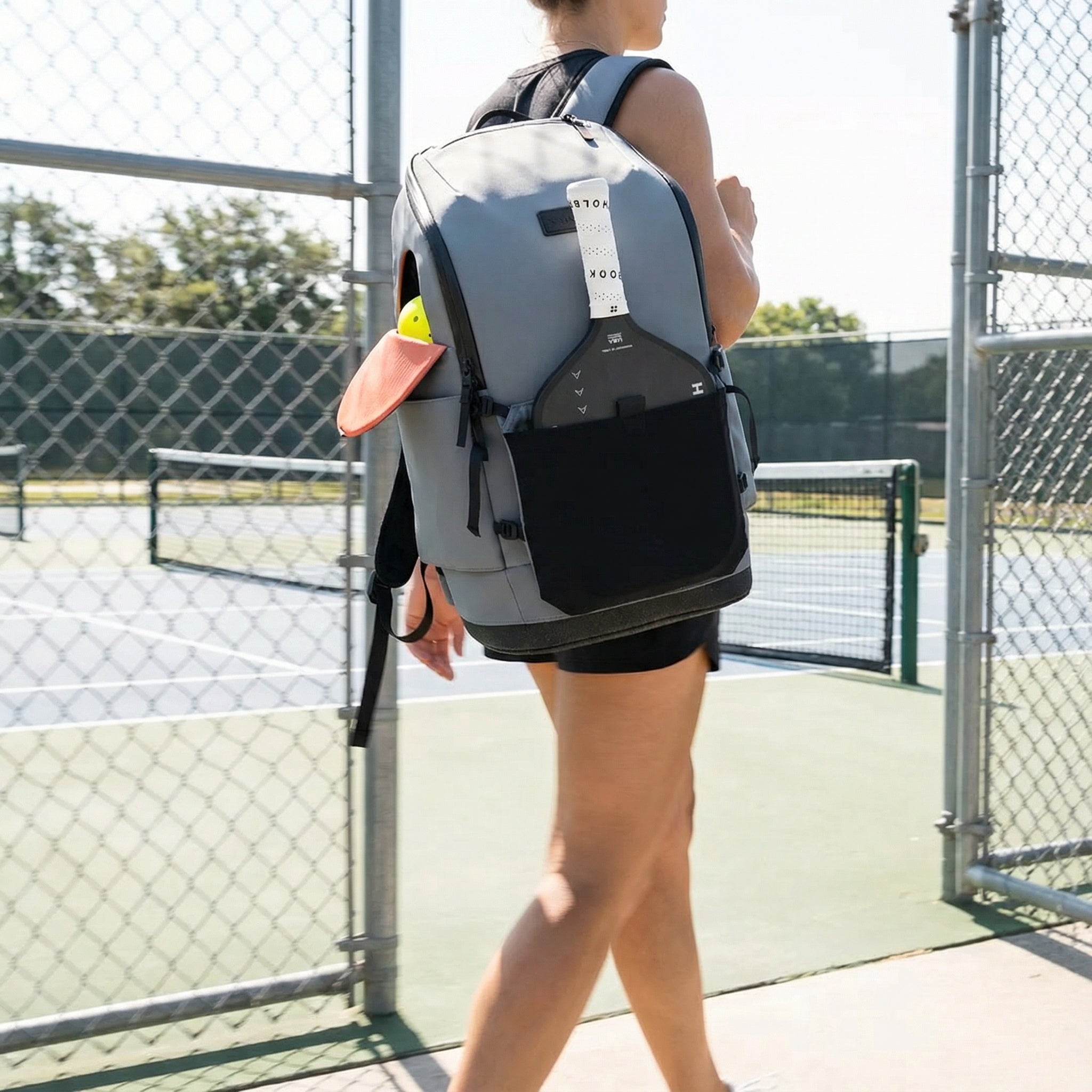
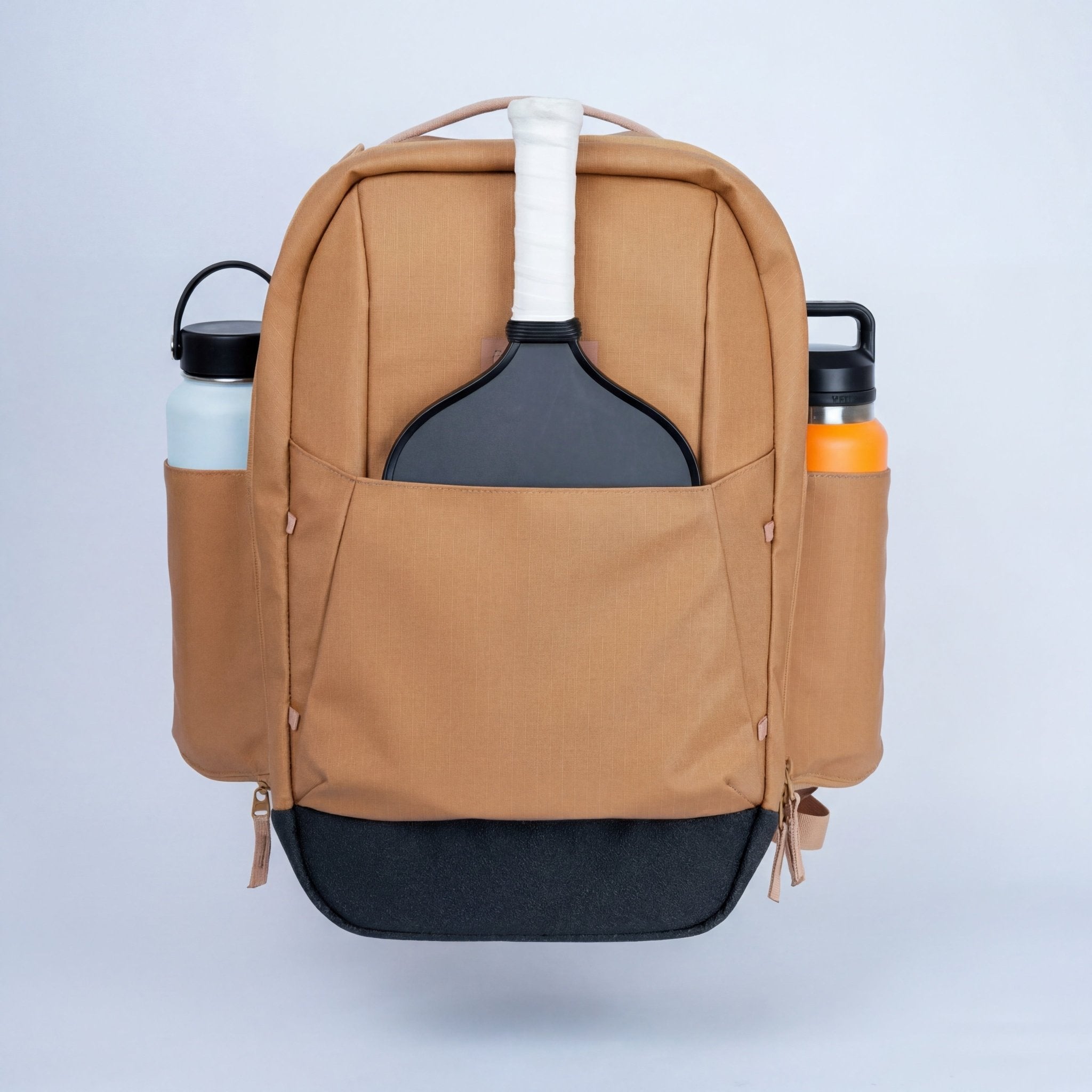
Got a new paddle? Now you need somewhere to carry it. The FORWRD Court Caddy Backpack fits up to 4 paddles in its modular sleeve system — including elongated paddles like the AcroSpeed LX that don't fit in most bags. 15" laptop sleeve, YKK AquaGuard weatherproof zippers, designed with 500+ players. The Court Ranger V2 at $195 if you want lighter.
FAQ
Is the Mizuno AcroSpeed worth the price?
For 3.5+ players who genuinely value the control-first character of a 13mm thermoformed paddle, yes. The AcroSpeed plays at the level of the JOOLA Hyperion 3S and Selkirk Vanguard Power Air S2. The $55-75 price premium over the Hyperion 3S 16mm is hard to justify unless the FAST TRACK weight system actively matters to your game. For most players, the Hyperion 3S 16mm at $180 delivers comparable performance for less money.
Is Mizuno a real pickleball brand or a brand-extension play?
Mizuno has been making sporting goods since 1906. Their pickleball entry is a serious R&D investment, not a logo-slap. The AcroSpeed paddle is competitively engineered with thermoformed carbon construction, USA Pickleball certification, and PBCoR .43 approval. The brand is new to pickleball but is a legitimate sporting goods company executing seriously in a new category.
What does the FAST TRACK weight system actually do?
Two 4-gram weights slide within tracks along the paddle's perimeter. Loosen two screws, move the weights, retighten. The intended use: tune your paddle's swing weight and balance point in seconds without permanent lead tape. In practice, most players don't adjust their paddle weight more than once, so the feature appeals primarily to tournament players who need different setups for different match types, or to players in active skill transition.
How does the AcroSpeed compare to the JOOLA Ben Johns Hyperion 3S?
Both are 13mm thermoformed carbon paddles with similar swing weights (~120). The AcroSpeed feels slightly more controlled and softer than the Hyperion 3S. The Hyperion 3S has slightly more pop and a slightly faster face. Choose Mizuno for control, JOOLA for moderate power. The Hyperion 3S is $55 cheaper and more widely available.
AcroSpeed LX or SX — which should I get?
Elongated (LX) for reach and aggressive play, better suited to 4.0+ players with consistent contact. Widebody (SX) for forgiveness and easier shot-making, better for 3.5 players still building consistency or for two-handed backhand players. The LX adds about half an inch of reach but reduces the sweet spot. The SX has the bigger sweet spot but less reach.
Can I buy the Mizuno AcroSpeed in the US?
As of July 2026, the AcroSpeed is available through select Canadian retailers (Pickleball Depot) and Mizuno's direct site, but US distribution at major retailers like Pickleball Central is still rolling out. If you want a comparable paddle that's immediately available, the JOOLA Ben Johns Hyperion 3S 16mm is the closest equivalent in feel and construction.
Final Word
Mizuno's pickleball entry is one of the most legitimate brand expansions we've seen in the last two years. The AcroSpeed paddle plays at the flagship level. The FAST TRACK system is more interesting than essential. The price is fair, if not category-leading. Whether it's the right paddle for you depends on whether you genuinely play 3+ times a week, whether you value control over pop, and whether you'd actually use the adjustable weight system.
For most players reading this, the answer is: try one if you can borrow one, otherwise stick with what's already working.
Complete Your Setup: FORWRD Court Ranger V2
A great paddle deserves a great home. The Court Ranger V2's modular paddle sleeve holds up to 4 paddles securely — plus a 16" padded laptop sleeve for court-to-work transitions. Built with 500+ real players, $195.

Leave a comment
This site is protected by hCaptcha and the hCaptcha Privacy Policy and Terms of Service apply.