

Disclosure: This post contains affiliate links to Pickleball Central. If you purchase through our links, FORWRD earns a small commission at no extra cost to you. We only link to products we'd recommend regardless.
Last Updated: October 2026
Pickleball Overgrip Buying Guide 2026: When to Replace It, Which to Buy, and How to Apply It
An overgrip costs $7–$12. A new paddle costs $80–$300. You'd think the overgrip would get more attention, but most players either ignore it until the paddle literally slips out of their hand, or they overthink it and end up with a grip that's wrong for their sweat level or play style. After rotating through a half-dozen options across a full outdoor season on concrete courts — from cool spring mornings to 95°F summer afternoons — we've settled on a clear set of recommendations. This guide covers when you're overdue for a change, which materials hold up in the heat, and the step-by-step application that makes the difference between a bubble-free wrap and a lumpy mess.
Quick Verdict
| Play Style | Our Pick | Price |
|---|---|---|
| Best Tack, Dry Hands | Tourna Mega Tac | ~$6–8 |
| Best for Sweaty Hands | Tourna Grip Pickleball | ~$6–8 |
| Best Value 3-Pack | Selkirk Tacky 3-Pack | $6.99 |
| Best Premium Pick | CRBN DryTec Overgrip | $11.99 |
Overgrip vs. Replacement Grip: The Difference (And When Each Makes Sense)
People mix these up constantly, and it matters because the application and purpose are different.
A replacement grip is the base layer — it's thicker (about 1.8–2.0mm), comes on the paddle from the factory, and wraps directly on the handle core. You replace it when the handle is physically worn down or feels undersized for your hand. Paddletek's Arrotac Pro ($8.99) and similar replacement grips are in this category. Replacing the base grip changes the handle diameter noticeably.
An overgrip is a thin wrap (0.5–0.6mm) applied over the existing base grip. It absorbs sweat, restores tack, and adds a small amount of circumference. You apply an overgrip when the surface feel is degraded but the handle geometry is still right. 95% of grip changes you'll do are overgrip applications.
The practical rule: if your paddle handle feels too thin — like you're squeezing bare handle — that's a replacement grip situation. If the grip just feels slippery, smooth, or gross from sweat: overgrip.
The Palm-Press Test: How to Know When Your Overgrip Is Done
Here's the fastest field test. Press your palm flat against the grip surface. Slide it slowly without squeezing. If you feel resistance — the grip "grabs" your palm — it still has life in it. If your palm slides smoothly like it's on a lacquered wood handle, the grip is finished.
You don't need to wait for visible peeling or discoloration, though those are obvious signals too. The palm-press test catches the performance degradation before it's visible. A grip that looks fine but slides on the press should be replaced — you're already compensating with a tighter grip without realizing it, and that compensation is the first domino in forearm fatigue.
Secondary signs it's time to replace:
- Grip tape is shiny or has a glazed appearance (tack is gone)
- The surface feels hard rather than slightly cushioned
- Sweat soaks through almost instantly in the first 5 minutes of play
- You're gripping noticeably tighter than usual to maintain control
How to Apply a Pickleball Overgrip: Step-by-Step
This is where players make the most mistakes. A sloppily applied overgrip bubbles up, creates uneven spots, and falls off faster than one applied correctly. Here's the technique:
- Peel the plastic film off the overgrip. Most overgrips have a small adhesive strip at one end — that's your starting point.
- Start at the butt end of the handle. Anchor the adhesive end about 1/4 inch below the butt cap, at roughly a 45-degree angle to the handle length. This starting angle determines the spiral pitch of the wrap — don't skip it.
- Apply firm tension as you wrap. Not so tight that you stretch the material thin, but tight enough that there are no air pockets. The grip should feel slightly resistant in your hands as you pull it around.
- Overlap by about 15–20%. Each successive wrap should cover roughly 1/5 of the previous strip. Too much overlap and you'll run out of grip before covering the full handle; too little and you get gaps.
- Angle adjustment: spiral upward. Keep a consistent upward angle as you progress. If your wraps start going flat (parallel to the butt), the grip will bunch. If they go too steep, you'll run out of grip mid-handle.
- At the top, cut the excess cleanly with scissors or a razor, and secure with the finishing tape that comes in the package. Some players skip this and the grip unravels within a session — don't skip it.
First-timer tip: the whole process takes about 3 minutes when you know what you're doing. Your first two applications will probably take 10 minutes and you might redo one of them. That's fine. By your third time, it's muscle memory.
Best Pickleball Overgrips in 2026: What Each Is Good For
Tourna Mega Tac — ~$6–8
The Tourna Mega Tac is the most tacky overgrip in pickleball — it's aggressively sticky on application and holds that tack longer than anything else we tested. After 50+ sessions on outdoor concrete, the Mega Tac holds its grip feel for roughly 6–8 sessions before the tackiness fades. For reference, most standard overgrips degrade in 4–5 sessions.
The downside: that tack can feel almost uncomfortably sticky in humid conditions if your hands don't sweat much. Players with dry hands in dry climates find it perfect. Players who sweat heavily or live in Florida find it absorbs too little moisture and feels slick when it can't manage the sweat load.
→ Get the Tourna Mega Tac at Pickleball Central
Tourna Grip Pickleball — ~$6–8
Where the Mega Tac maximizes tack, the standard Tourna Grip maximizes moisture absorption. It's a dry-feel grip — not tacky in the traditional sense, but it wicks sweat away from your palm actively, leaving a surface that stays manageable even during hot outdoor play. Tack retention is shorter (4–5 sessions before you notice the feel change) but during those sessions, sweaty-hand players get significantly more security than with tacky options.
The classic for high-sweat players. If you play outdoors in summer heat and your grip gets soaked by game 2, start here.
→ Get the Tourna Grip at Pickleball Central
HEAD Xtreme Soft — $7.49
HEAD's Xtreme Soft is the balanced middle — moderate tack, moderate moisture absorption, and a soft cushioned feel that some players strongly prefer over the thinner, drier Tourna options. It runs slightly thicker (0.6mm vs. 0.5mm) which means it adds a bit more circumference to the handle — useful if you've been playing with a grip that feels marginally thin.
Good for players who want a comfortable everyday grip without strongly favoring either the "dry" or "tacky" end of the spectrum.
→ Get the HEAD Xtreme Soft at Pickleball Central
Selkirk Tacky 3-Pack — $6.99
The best value play in this guide — $6.99 for three grips works out to $2.33 per grip. Selkirk's tacky formula is a step below Tourna Mega Tac in stickiness but noticeably more affordable on a per-grip basis. For players changing grips frequently (every 3–4 weeks at 3× per week play), the 3-pack economics make sense.
Build quality is consistent — they apply cleanly and hold the wrap without peeling at the edges. Not the most premium feel, but reliable.
→ Get the Selkirk Tacky 3-Pack at Pickleball Central
CRBN DryTec Overgrip — $11.99
CRBN's DryTec is the premium outlier — $11.99 for a single grip is objectively expensive, but the DryTec uses a microporous moisture-wicking material that genuinely outperforms standard options for heavy sweaters. The surface stays dryer longer than the Tourna Grip, and the tack retention in humid conditions is better than both Tourna options.
If you've tried the Tourna moisture grip and still have issues in hot outdoor play, the DryTec is the logical next step. For players in temperate climates or air-conditioned indoor courts, it's hard to justify the price.
→ Get the CRBN DryTec at Pickleball Central
GAMMA Pro Wrap Overgrip — $7.99
GAMMA's Pro Wrap is a workhorse grip — consistent, available, and fairly priced. Not exceptional in any single metric but solid across all of them. Good for players who just want a reliable everyday grip without overthinking the category. The GAMMA PureTac 3-Pack ($7.99) offers the same performance in a three-pack economy format.
Sweaty Hands: Which Grip Materials Actually Work
The material type matters as much as the brand. Here's the breakdown:
| Material Type | Sweat Performance | Tack | Best For |
|---|---|---|---|
| Polyurethane (PU) tacky | Moderate — absorbs some, gets slick when soaked | High initially, fades fastest | Dry or low-sweat players; indoor courts |
| Dry-feel cotton/synthetic | Best — wicks actively, stays dry longer | Lower — relies on texture, not tackiness | High-sweat players; outdoor summer play |
| Microporous DryTec-style | Best — actively channels moisture away | Moderate, holds longer in humid conditions | Extreme sweaters; hot outdoor play |
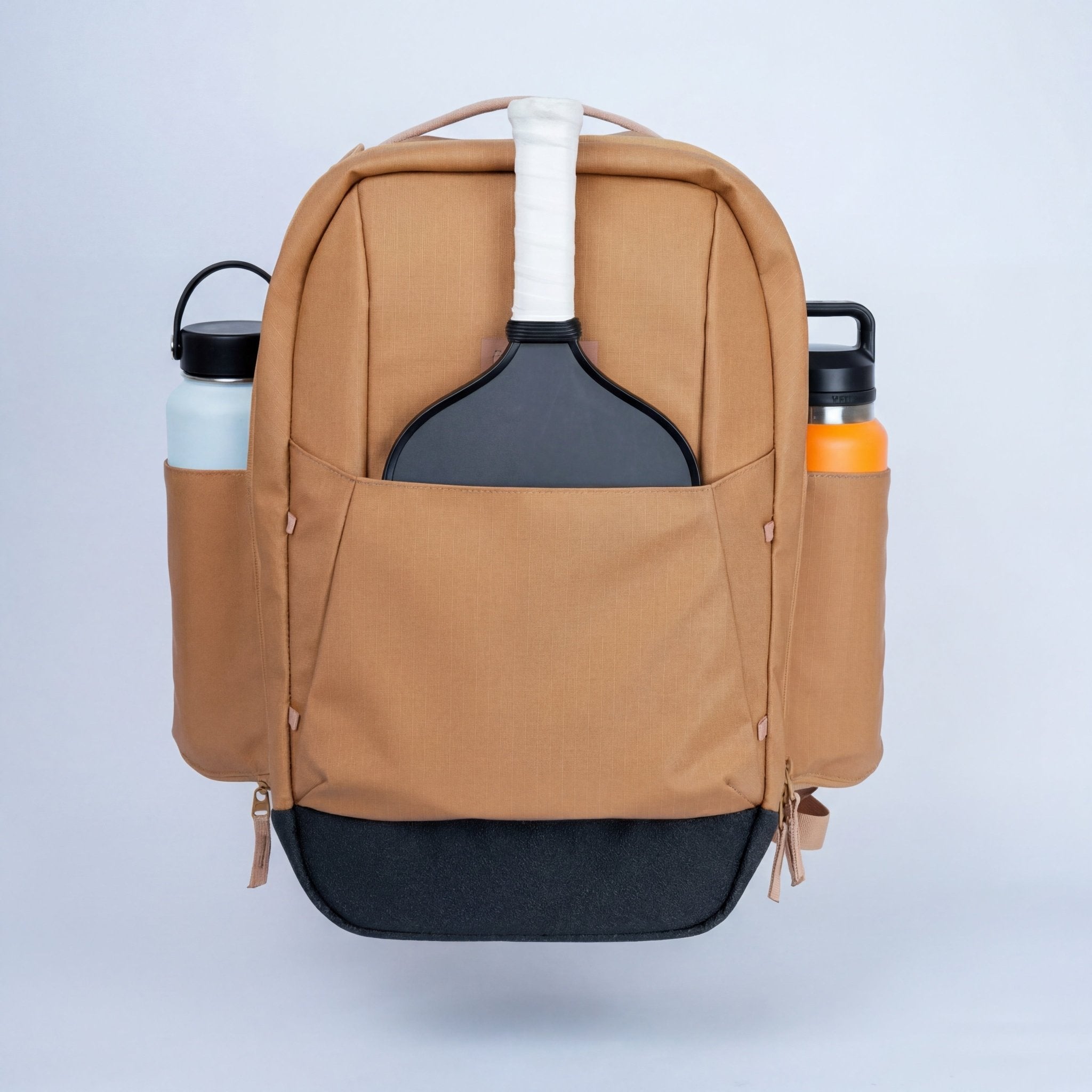
One thing that doesn't work: trying to wipe sweat off a grip mid-game. Once a tacky grip is saturated, it's done. The better play is carrying 2–3 extra overgrips in your bag and doing a mid-session swap if you're playing in heat. Takes 3 minutes; the improvement in feel is immediate. The FORWRD Court Ranger V2 has a front quick-access pocket sized perfectly for a few rolled overgrips — grab one without interrupting your warm-up.
How Often Should You Change? A Session-Based Timeline
Replacement Timeline by Play Frequency
| Play Frequency | Estimated Replacement Interval |
|---|---|
| Daily player (5–7 sessions/week) | Every 2–3 weeks |
| 3× per week recreational | Every 5–6 weeks |
| Weekend casual (1–2×/week) | Every 2–3 months |
| Tournament prep (any frequency) | Fresh grip the day before each tournament |
Note: high-sweat players and outdoor summer players should halve these intervals. Heat and humidity degrade grip materials significantly faster than indoor climate-controlled play.
If you're playing a tournament, there's no reason not to start with a fresh grip. The cost is $7. The confidence of knowing your grip is at its best tack level is worth far more than $7 in match pressure.
Can You Use Tennis Overgrips on a Pickleball Paddle?
Technically yes, they're the same thin wrap material. Head, Wilson, and GAMMA all make tennis overgrips that apply just fine to a pickleball handle. The practical issue: pickleball handles are typically shorter than tennis grips (4–4.5 inches vs. 4.5–5+ inches), so you'll have excess grip material at the top. Just cut it off cleanly with scissors before applying the finishing tape. No problem.
The bigger question is whether the tennis grip's material profile — often optimized for a 90-minute match on a clay court — matches your pickleball use case. Generally fine for recreational use; power players who want specific sweat management should stick to pickleball-specific options that are tuned for the faster, wrist-snap game.
Complete Your Setup
Extra overgrips are worthless if they're loose at the bottom of your gym bag when you need them. The Court Caddy has a front quick-access compartment that's exactly right for this — fits 4–6 rolled overgrips alongside your ball can without digging around mid-session. Small thing, but when you're doing a mid-game grip swap in 95°F outdoor heat, having them right there matters.

FAQ: Common Questions About Pickleball Overgrips
When should you replace a pickleball overgrip?
Use the palm-press test: press your palm flat against the grip and slide it slowly. If your palm slides without resistance, the tack is gone and it's time to replace. Visual cues like a shiny surface, fraying edges, or the grip feeling hard rather than slightly cushioned also indicate it's done. Most players at 3× per week frequency should replace every 5–6 weeks.
How do you apply a pickleball overgrip?
Start at the butt end at a 45-degree angle, apply firm tension as you spiral upward with 15–20% overlap on each successive wrap, cut the excess at the top of the handle, and secure with the finishing tape included in the package. The whole process takes 3–5 minutes once you've done it a few times. First-timers should plan for 10 minutes and possibly one redo.
What is the difference between an overgrip and a replacement grip?
A replacement grip (1.8–2.0mm thick) is the base layer applied directly to the handle core, changing the diameter significantly. An overgrip (0.5–0.6mm) is a thin wrap applied over the existing grip to restore surface tack and sweat absorption without changing handle geometry much. Most grip changes are overgrip applications; replacement grips are for when the handle itself feels undersized.
How often do you change a pickleball overgrip?
Daily players: every 2–3 weeks. Players at 3× per week: every 5–6 weeks. Casual 1–2× per week players: every 2–3 months. Tournament players should start with a fresh grip the day before each event. Hot outdoor play in summer accelerates degradation — cut those estimates in half if you're sweating heavily through every session.
What is the best pickleball overgrip for sweaty hands?
The Tourna Grip Pickleball (moisture-absorption formula) is the most accessible solution for sweaty-hand players — it wicks sweat actively rather than just being tacky. For extreme sweaters in hot outdoor conditions, the CRBN DryTec uses a microporous material that outperforms standard options at the cost of $11.99 per grip vs. $6–8 for Tourna.
Can you use tennis overgrips on a pickleball paddle?
Yes — tennis overgrips apply to pickleball handles just fine. The material is the same thin wrap. You'll likely have excess grip tape at the top since tennis handles are longer; cut it cleanly with scissors before applying the finishing tape. The performance difference between tennis and pickleball-specific overgrips is minimal for recreational play.
Final Verdict
Most players are playing on a grip that's past its useful life. If you haven't replaced yours in the last 6 weeks — and you play 3× per week — do the palm-press test right now. Odds are you've been compensating with a tighter grip without realizing it, and that compensation is the first domino in forearm fatigue.
For most players, the Tourna Mega Tac (dry hands) or Tourna Grip (sweaty hands) is the right call — proven, affordable, and available. Upgrade to the CRBN DryTec if outdoor summer heat is your specific challenge. Everything else is just a personal preference for feel.
And replace it before it fails — not after.

Leave a comment
This site is protected by hCaptcha and the hCaptcha Privacy Policy and Terms of Service apply.