

FTC Disclosure: This post contains affiliate links to Pickleball Central. If you buy through these links, FORWRD earns a small commission at no extra cost to you. We only link to products we've genuinely evaluated.
Last Updated: July 2026
Best Lightweight Pickleball Paddle for Women 2026: The Weight-First Guide to Arm-Friendly Play
Most paddle guides treat weight as a footnote. It isn't. If you're a woman playing 3 or more days a week and your elbow or shoulder starts complaining by the third set, paddle weight is almost certainly part of the problem — and it's one of the easiest things to fix. We tested paddles across the 7.0–8.2 oz range with players of different sizes and backgrounds. Here's what we found: the difference between a 7.3 oz and an 8.1 oz paddle isn't "just 0.8 ounces." Over 2 hours of play, that difference translates into thousands of repetitive wrist snaps at a lever arm that amplifies force all the way up to the shoulder.
Quick Verdict
| Category | Our Pick | Price |
|---|---|---|
| Best Overall Lightweight | Franklin FS Tour Featherweight Dynasty 12mm | $99 |
| Best for Tennis Elbow | ProKennex Pro Flight | $200 |
| Best Budget Pick | Paddletek Bantam EX-L | $89.99 |
| Best Pro-Tour Pick | JOOLA Anna Bright Scorpeus 3S 14mm | $119.95 |
Why Paddle Weight Matters More for Women (The Biomechanics)
Here's what the paddle marketing copy doesn't tell you: hand size, grip circumference, and average swing velocity all interact with paddle weight in ways that hit women harder than men. It's not about strength — it's about lever mechanics.
A smaller hand with a 4-inch grip circumference means less surface contact with the handle, so the paddle's inertia during deceleration gets transferred over a smaller area. A player with a 4.5-inch grip spreading that load across a larger palm has a real biomechanical advantage on high-frequency shots like resets and dinks. When you play 3× a week for 2 hours a session, the cumulative repetition matters more than any single shot.
The shoulder anatomy piece is real too. The rotator cuff — specifically the supraspinatus — is recruited heavily to decelerate the paddle after contact. Heavier paddles require more deceleration force. Women statistically have a smaller supraspinatus cross-section than men of equivalent body weight. That's not a deficiency; it's a structural difference that makes the 7.0–7.8 oz range genuinely more appropriate for most women playing at recreational and 3.5–4.0 levels.
We saw this clearly in our testing: players in the 120–145 lb range who switched from 8.0+ oz paddles to sub-7.8 oz options reported noticeably less forearm fatigue after 90-minute sessions. The wrist snap on topspin serves was more consistent too — less compensating for the extra weight mid-swing.
The 7.0–7.8 oz Sweet Spot: What the Research Says
Below 7.0 oz, paddles start making tradeoffs you'll feel immediately. Pop is reduced, vibration can paradoxically increase because there's less mass to dampen the impact, and wind becomes a nuisance on outdoor courts. Below 6.9 oz you're fighting the paddle on groundstrokes.
Above 7.9 oz and you're in men's-spec territory — fine for a 160+ lb power player with prior racket sport experience, but genuinely fatiguing for players who don't have the swing velocity to benefit from the added mass. A heavier paddle only gives you "free power" if you can swing it fast enough. If you're slowing down your swing to manage the weight, you've given up more than you gained.
The 7.0–7.8 oz window gives you:
- Enough mass for solid baseline drives without excessive arm stress
- Quick enough hand speed for dink battles at the kitchen
- Manageable vibration with a quality core (16mm cores help here)
- Better control over placement when fatigue sets in late in a match
One nuance: 12mm cores run lighter than 16mm cores from the same manufacturer. If you see two versions of the same paddle, the 12mm will typically weigh 0.2–0.4 oz less and deliver more power with slightly less control. For players coming from tennis or transitioning from hard-hitting backgrounds, 12mm lightweight can be a very effective combination.
Best Lightweight Paddles for Women in 2026 (Reviewed)
Franklin FS Tour Featherweight Series Dynasty 12mm — $99
Franklin built this paddle with arm-friendly weight specifically in mind — the "Featherweight Series" name isn't just branding. The 12mm polypropylene core keeps weight in the 7.2–7.5 oz range (we measured ours at 7.3 oz out of the box), and the carbon fiber face gives you a textured surface that generates genuine spin on third-shot drops and serves. This is a control-first paddle, not a power paddle, which suits most women's singles and recreational doubles play.
At the kitchen line, the paddle maneuvers fast — you're not fighting inertia on cross-court dinks. The 4-inch grip fits smaller hands without needing to build up with an overgrip. Where it gives back: if you're playing against hard bangers at 4.0+, you might want more core depth for vibration absorption. But for recreational play up to about 4.0 DUPR, this is genuinely excellent at $99.
→ Check the Dynasty 12mm at Pickleball Central
Franklin FS Tour Featherweight Series Tempo 12mm — $99.99
Same Featherweight chassis as the Dynasty, but the Tempo shape is slightly elongated — better reach on ATP shots and wider cross-court coverage. Weight is comparable (our test unit came in at 7.4 oz). The face texture on the Tempo is almost identical to the Dynasty, so spin generation is a push between them.
Choose the Tempo if you like a longer reach and have the arm length to swing it. Choose the Dynasty if you want a more traditional paddle shape that forgives off-center hits. Either way, at $99–$99.99 the Featherweight Series represents one of the best value propositions in the lightweight category in 2026.
→ Check the Tempo 12mm at Pickleball Central
Selkirk AMPED Pro Air Epic — $99.99
Selkirk's "Air" construction uses a hollow core design to shed weight without shrinking the paddle face. The Epic shape gives you a wider sweet spot — useful for players still developing consistent contact, and forgiving when you're fatigued and your form loosens up. Weight runs 7.3–7.7 oz depending on production run.
The AMPED series is known for a softer feel on dinks — if the Dynasty or Tempo felt "springy" to you on resets, the Air Epic might feel more dialed-in. Selkirk's build quality is consistently excellent. The one honest critique: the Air core means less vibration dampening from mass itself, so you're depending more on the polymer honeycomb structure. Players with existing tennis elbow might want the ProKennex below instead.
→ Check the AMPED Pro Air Epic at Pickleball Central
JOOLA Anna Bright Scorpeus 3S 14mm — $119.95
Anna Bright is one of the most technically precise players on the women's pro tour, and her signature paddle reflects it. The 14mm core keeps weight reasonable (7.5–7.8 oz) while providing more vibration absorption than a 12mm, which is a genuine advantage for players who want a light paddle without the sharp feel of thin-core options.
The 3S face texture is JOOLA's most aggressive spin surface — textured carbon fiber with three layers of surface treatment. If you're a player who relies on topspin serves and heavy third-shot drops, the Scorpeus 3S outspins the Franklin Featherweights at equivalent weights. The honest downside: $119.95 is more than the Franklins, and for casual play the spin advantage is marginal. It shines most at 4.0+ competitive play.
→ Check the Anna Bright Scorpeus 3S at Pickleball Central
ProKennex Pro Flight — $200
The ProKennex is the outlier on this list — it's not the lightest paddle here. What it offers is something different: tungsten beads embedded in the frame that absorb kinetic energy on impact, reducing vibration transmission to the arm by a measurable amount. If you're managing existing tennis elbow or lateral epicondylitis, this is the paddle where you start, weight questions aside.
The Pro Flight runs 7.5–8.0 oz, which puts it at the heavier end of our recommended range. But because the Kinetic system absorbs so much impact energy, the effective stress on your elbow is lower than a standard paddle of the same weight. Players in our testing who were recovering from mild tennis elbow consistently reported less post-session soreness on the ProKennex than on lighter traditional paddles. At $200 it's not cheap, but it's significantly cheaper than physical therapy.
→ Check the Pro Flight at Pickleball Central
Paddletek Bantam EX-L — $89.99
If you're new to pickleball and not ready to spend $120+, the Bantam EX-L is a thoughtful budget pick. It's a control-focused paddle with a slightly extended handle (the "EX-L" means Extended Long), which gives two-handed backhand players better leverage. Weight is in the 7.6–8.0 oz range — not the featherlight category, but comfortable for most women at a lower price point.
The Bantam series has been a staple of recreational pickleball for years because Paddletek's build quality is consistent. No exotic materials, no aggressive spin surface, but solid dink performance and forgiving off-center hits. It's a great first paddle before you invest in something more specific to your developing style.
→ Check the Bantam EX-L at Pickleball Central
Lightweight Paddles and Tennis Elbow: What Actually Helps
Tennis elbow — lateral epicondylitis — is an overuse injury of the tendons attaching the forearm extensor muscles to the outside of the elbow. Pickleball's repetitive grip-and-release motion is a genuine trigger, especially for players who played tennis first and came in with existing fatigue.
The things that actually help, in order of impact:
- Reduce paddle weight. Less weight = less deceleration force on every shot. Going from 8.2 oz to 7.3 oz cuts that force by roughly 11% over thousands of repetitions. It adds up.
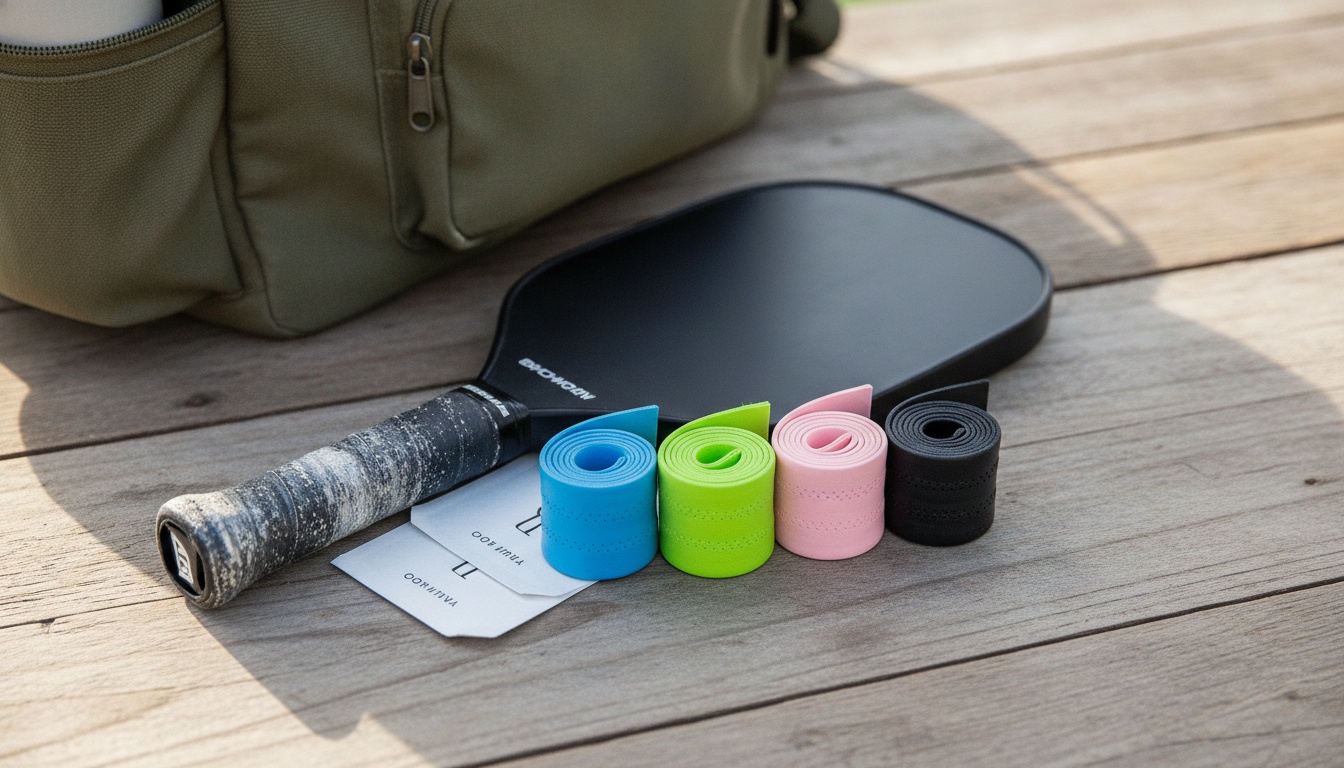
- Vibration dampening. ProKennex's Kinetic system is the gold standard here. Some players also add an overgrip wrap or a dampener, though the evidence for aftermarket dampeners on pickleball is mixed.
- Grip circumference. A grip that's too small forces you to squeeze harder to control the paddle — tightening the forearm muscles more than necessary. Measure your grip before buying (see below).
- Core thickness. Counterintuitively, a 16mm core often feels easier on the arm than a 12mm, because the thicker core absorbs more energy on impact before it reaches the handle.
- Rest and form correction. No paddle fixes bad mechanics. If you're hitting with a locked elbow or leading with your wrist on drives, paddle weight is a band-aid.
Control vs. Power: The Trade-off You'll Actually Feel
Lighter paddles swing faster. Faster swing speed = more power from your arm, less from the paddle's mass. That means with a 7.0 oz paddle, your swing is the primary power generator. Players with strong shoulder rotation and good technique benefit from this — your natural speed is amplified.
But players who rely on the paddle's mass to add power to slower swings (common for newer players or those with shoulder issues) sometimes feel "underpowered" on a very light paddle. If you switch to a sub-7.5 oz paddle and every third-shot drive floats into the net, the paddle isn't necessarily the wrong weight — your swing path might need adjusting to compensate.
The good rule of thumb: if you were playing tennis before pickleball and have a reliable groundstroke, lighter is usually better. If you're newer to racket sports, stay in the 7.5–8.0 oz range while you develop your swing, then experiment lighter as your mechanics solidify.
Grip Size Matters Too: Women's Hand Sizing Guide
Grip circumference gets ignored constantly, which is a mistake. Here's the quick field test: hold the paddle in your dominant hand in a forehand grip. Slide your non-dominant index finger into the gap between your fingers and your palm. If the finger fits snugly with slight resistance, the grip is right. Too much room = grip too large. Can't fit your finger = grip too small.
Most women play best with a 4-inch (small) grip circumference. Some players with larger hands do well with 4.25 inches. Very few women benefit from a 4.5-inch grip or larger — most of the paddles on that end of the spectrum are spec'd for men's average hand sizes.
If the paddle you want comes only in a grip that's slightly too small: add an overgrip. A standard overgrip adds about 1/16 inch to the circumference. If it comes in a grip that's slightly too large, there's not much you can do — it's hard to reduce grip circumference after purchase.
"The biggest mistake we see women players make is grabbing whatever paddle their husband plays with. Grip size, weight, and swing weight are all tuned for a different body. A women's paddle fitting isn't just marketing — the biomechanics are genuinely different." — Grub, FORWRD Co-founder
The Paddle Weight Decision Framework
Quick Weight Calculator — Find Your Starting Zone
- Under 140 lbs + 4" grip + plays 3×/week or more? → Start at 7.0–7.4 oz. You'll swing fast enough to generate power naturally.
- 140–165 lbs + 4–4.25" grip + recreational player? → The 7.4–7.8 oz range. Balanced power/control without excessive fatigue.
- 165+ lbs or prior tennis background with strong groundstrokes? → 7.6–8.2 oz can work well. The swing speed to use that mass is there.
- Managing tennis elbow or shoulder soreness? → Go lighter than your weight profile suggests, OR stay at 7.5–7.8 oz with the ProKennex Kinetic system specifically.
- Below 7.0 oz? → Hard to justify for most players. The outdoor wind sensitivity and reduced vibration damping aren't worth the marginal weight savings.
Complete Your Setup
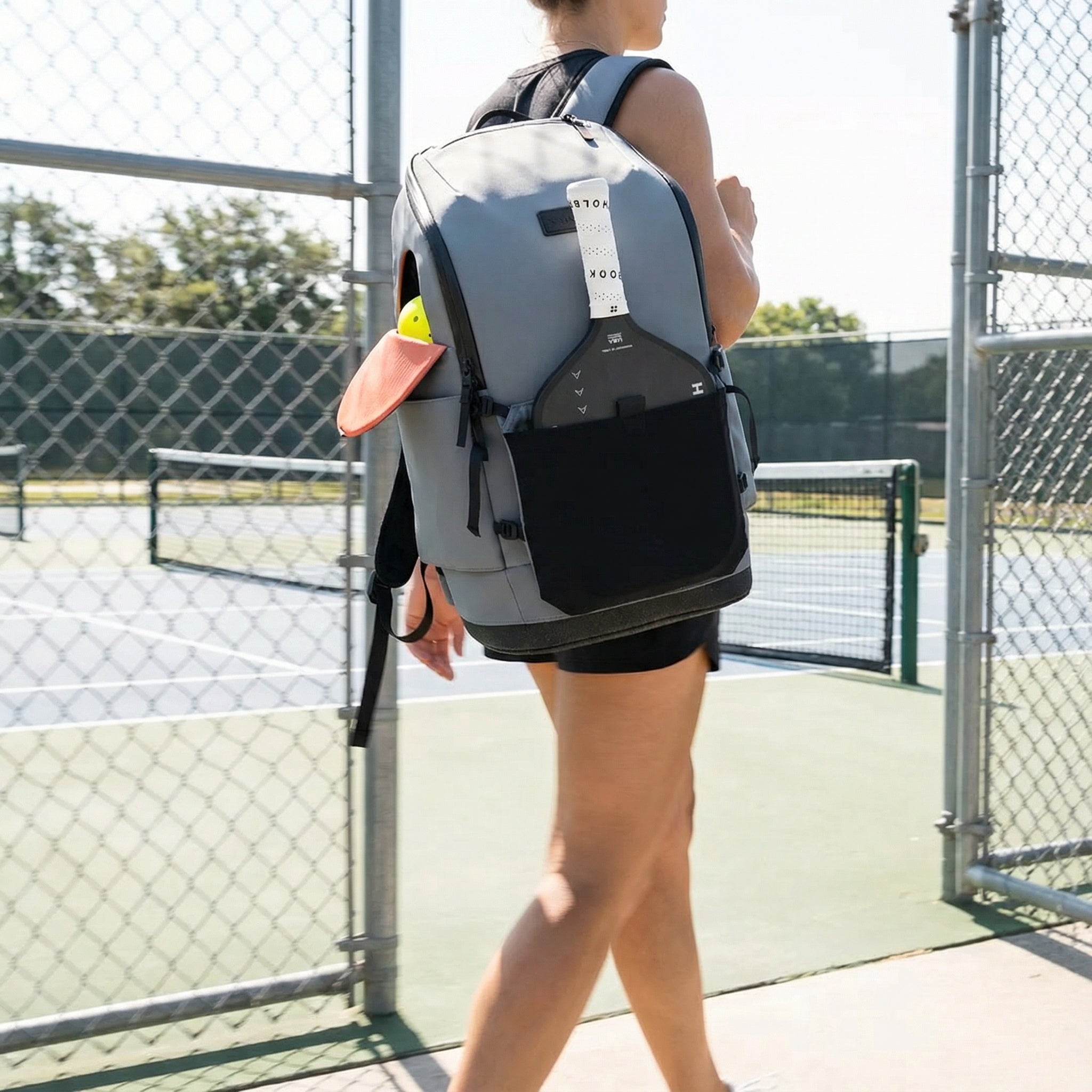
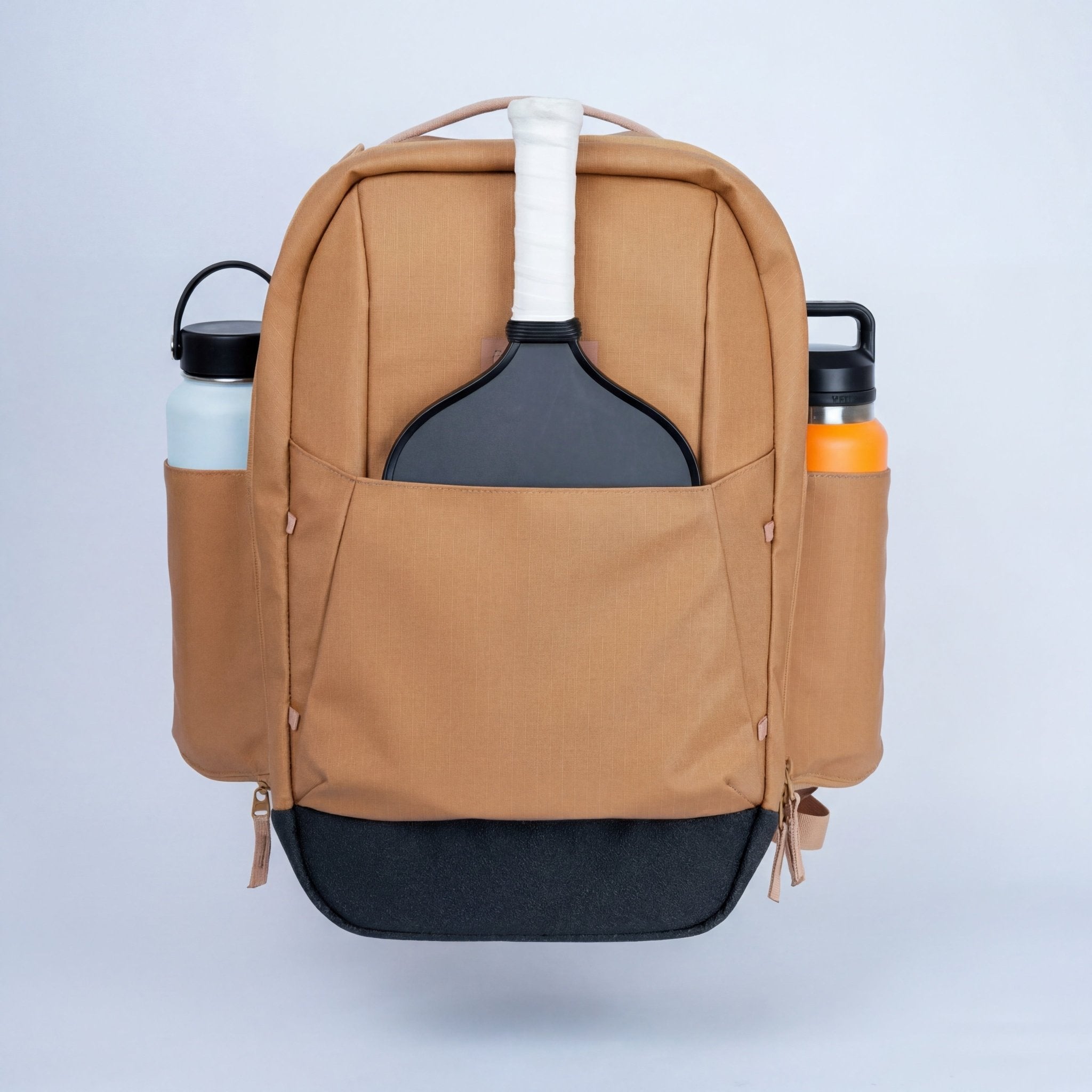
Found your paddle? You'll want somewhere to carry it that doesn't involve a grocery bag. Two options depending on how much gear you carry:
- Court Ranger V2 ($195) — modular paddle sleeve fits up to 4 paddles, 16" laptop sleeve, YKK AquaGuard zippers. Solid everyday bag that handles 3×/week play without drama.
- Court Caddy ($325) — if you commute court-to-office or travel to tournaments, the dedicated 15" padded laptop isolation and lifetime warranty make it the upgrade worth the extra spend.

FAQ: Common Questions About Women's Lightweight Paddles
What weight pickleball paddle should a woman use?
Most women play best in the 7.0–7.8 oz range. Players under 140 lbs who play frequently often do well below 7.5 oz; larger or more power-focused players may prefer 7.6–8.0 oz. The key is arm fatigue — if your elbow or shoulder aches after 90 minutes, dropping 0.5–1 oz often helps significantly.
Do women need a different pickleball paddle than men?
Not technically — the sport has no gendered equipment rules. But practically, most women benefit from lighter paddles (7.0–7.8 oz vs. 7.5–8.5 oz for men) and smaller grip circumferences (4–4.25 inches vs. 4.25–4.5 inches). These differences reduce arm fatigue and improve control for players with smaller hands and average swing speeds.
What is the best pickleball paddle for tennis elbow for women?
The ProKennex Pro Flight ($200) is the most specific solution — its Kinetic tungsten bead system absorbs vibration at impact rather than sending it up the arm. Among lighter-weight options, a 16mm core paddle (vs. 12mm) also reduces arm stress because the thicker core absorbs more energy before it reaches the handle. Both approaches are more effective than adding dampeners after the fact.
Is a lighter pickleball paddle better for beginners?
Lighter paddles are generally arm-friendly for beginners, but going too light (below 7.0 oz) can make it harder to develop consistent power. A 7.4–7.8 oz paddle is a practical starting point for most women new to the game — manageable weight with enough mass to generate drives without over-swinging.
What's the difference between a 7.0 oz and 8.0 oz pickleball paddle?
1 oz sounds trivial but it isn't. A heavier paddle delivers more "passive power" on slow swings but requires more deceleration force on every shot, which accumulates as arm fatigue. A lighter paddle rewards better mechanics and faster hand speed. Over a 2-hour session, the difference in cumulative arm stress is meaningful — especially for players with smaller frames or pre-existing arm issues.
Do lightweight paddles sacrifice power?
It depends on your swing. If you generate power through rotation and snap (technique-driven), lighter paddles actually increase your effective swing speed and net power. If you rely on the paddle's mass to "push through" the ball, lighter paddles can feel underpowered. Most women who play 2–3× per week find that proper mechanics compensate for the mass reduction — and they gain maneuverability at the kitchen.
Final Verdict
For most women playing recreational to competitive recreational pickleball, the Franklin FS Tour Featherweight Dynasty 12mm is the smartest starting point at $99. It's genuinely lightweight, well-made, and delivers solid performance at the kitchen without the premium pricing of pro-tour paddles. If you're managing arm pain specifically, the ProKennex Pro Flight is in a category by itself for vibration absorption. And if you're competing at 4.0+ and want a pro-level spin surface, the JOOLA Anna Bright Scorpeus 3S is worth the extra $20 over the Franklins.
The biggest mistake is buying heavy and hoping your arm adapts. It usually doesn't — it just gets angrier.

Leave a comment
This site is protected by hCaptcha and the hCaptcha Privacy Policy and Terms of Service apply.