

Disclosure: This post contains affiliate links to Pickleball Central. If you purchase through our links, FORWRD earns a small commission at no extra cost to you. We only link to products we'd recommend regardless.
If you're switching from tennis to pickleball, you've probably already grabbed a paddle and found a court. The bag situation takes a little longer to sort out — because your tennis bag, while perfectly fine for tennis, is specifically wrong for pickleball in ways that aren't obvious until you're standing at the sideline trying to organize three paddles and a sleeve of Franklins into a compartment built for a single Babolat.
This guide is for players making that switch. We'll walk through exactly what a tennis bag gets wrong for pickleball, what you should look for instead, and which bags actually work — with the Court Caddy ($325) and Court Ranger V2 ($195) at the top of the list for reasons that have nothing to do with the fact that we make them.
Last updated: June 2026
Why Your Tennis Bag Doesn't Work for Pickleball
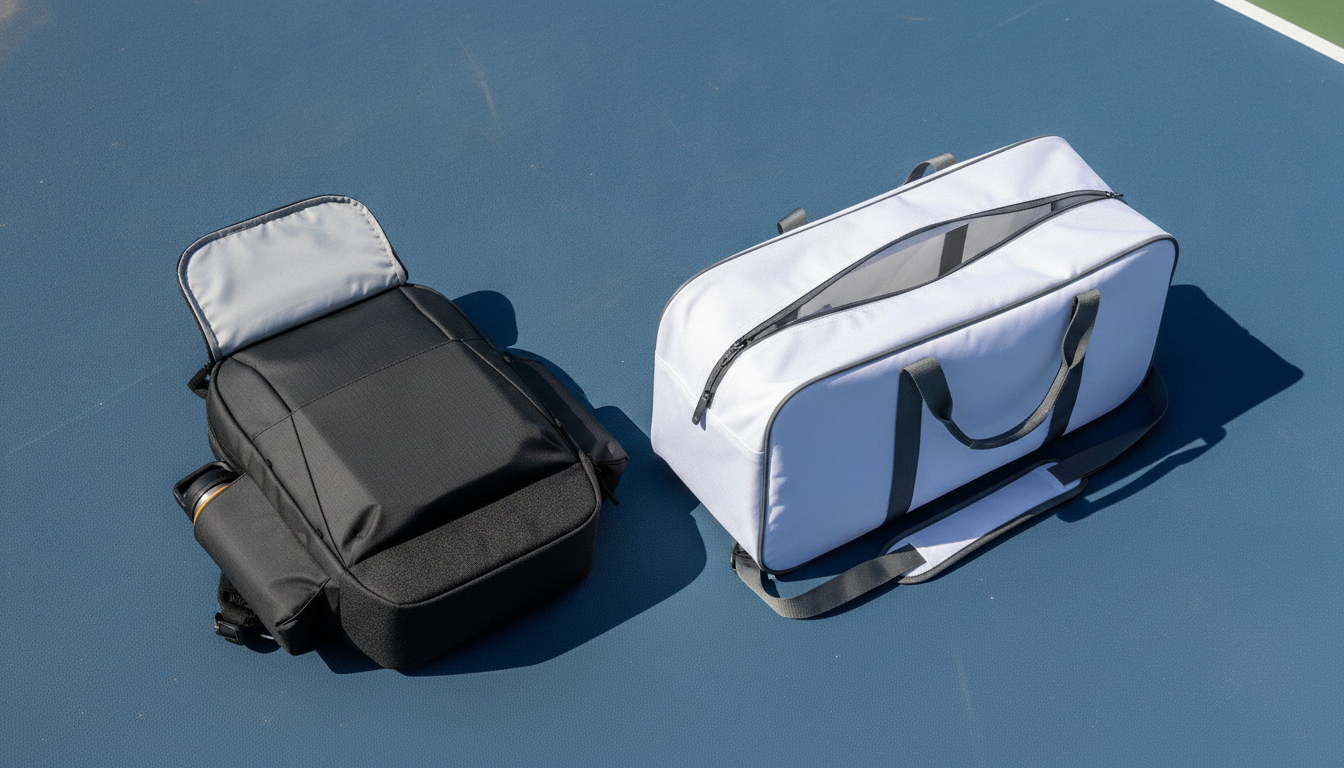
Tennis bags are engineered around one racket — or, on the high end, two or three rackets sharing the same shape, same head size, same handle length. The interior geometry reflects that. A racket slot is long, wide, and padded along the frame. It's not designed for pickleball paddles, which are shorter, heavier per square inch, and often carried in multiples of three or four.
Here's where the mismatch actually shows up in practice:
Paddle count: A recreational pickleball player typically carries two paddles — primary and backup. A serious recreational player carries three. A tournament player carries four (some events allow mid-match paddle swaps, and a cracked edge guard costs you a game). A six-pack tennis bag technically holds six rackets in a long, dedicated sleeve. That sleeve holds two pickleball paddles awkwardly and four paddles not at all — without forcing them sideways or leaving the bag half-open every session.
Ball organization: Tennis balls come in a canister. Pickleball balls don't — they're loose, they roll, and if you keep them in the main compartment they migrate to every corner until you're digging for them mid-game. Tennis bags don't have the shaped, zippered ball pocket that every purpose-built pickleball bag includes as a core feature.
Laptop protection: A lot of tennis players are also working adults heading to the courts before or after the office. Tennis bags have no laptop sleeve — there's no reason a racket sport bag would need one. Pickleball bag brands noticed this gap. FORWRD built around it. Most tennis-derived bags still ignore it completely.
Zipper design: Subtle, but real. Tennis bag zippers are designed for occasional access to a bag that sits stationary in a duffel configuration. Pickleball bags get accessed dozens of times per session — balls retrieved, paddles swapped, water bottle grabbed, towel pulled. The zipper layout and quality matter differently. Tennis bag zippers aren't worn out by pickleball usage; they're just in the wrong place for how the sport actually works.
What to Look For in a Pickleball Bag (When You're Coming from Tennis)
Coming from tennis gives you a head start on appreciating quality hardware. You already know the difference between a good zipper and a cheap one, between padded straps and straps that dig into your shoulder after 200 meters. Here's what transfers — and what's new:
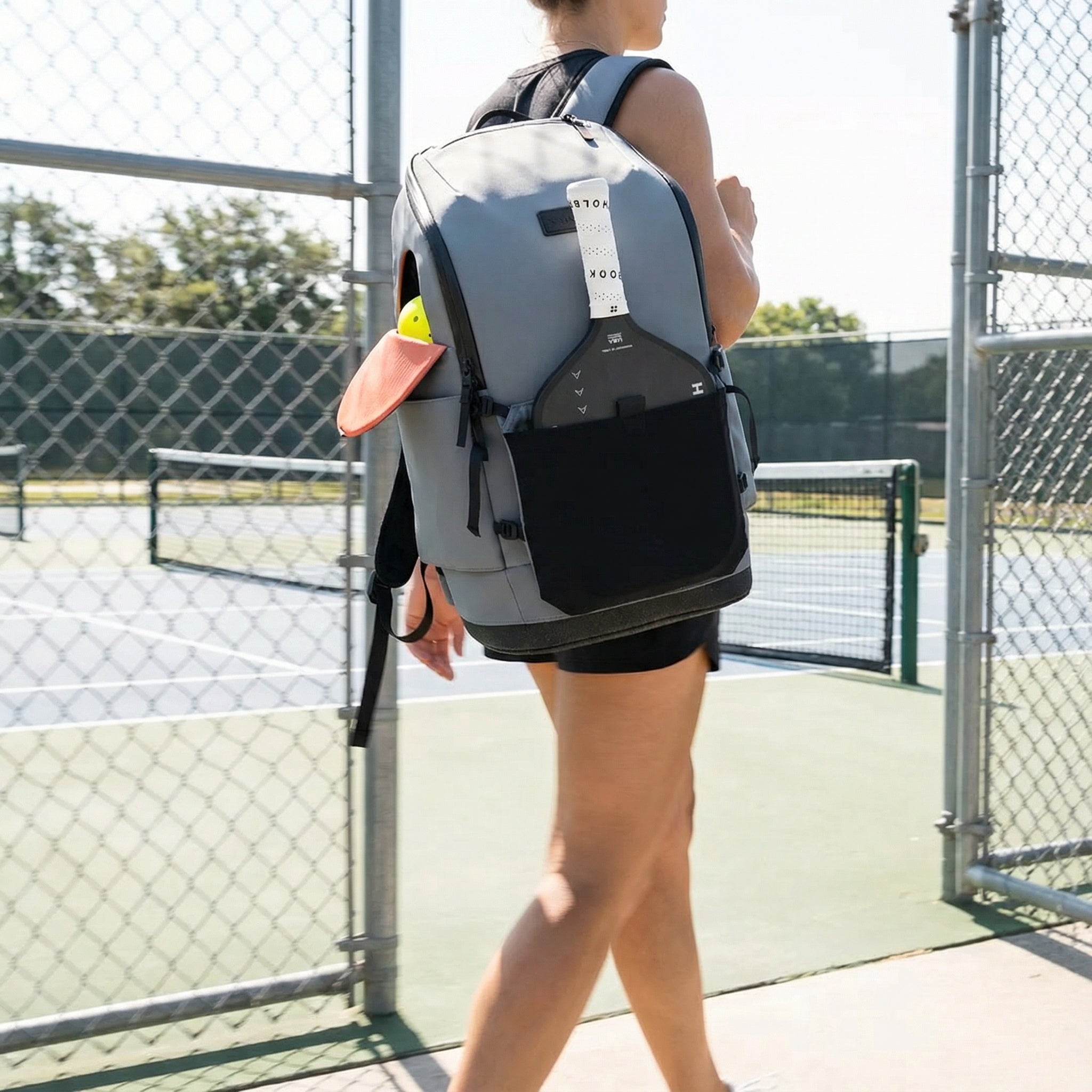
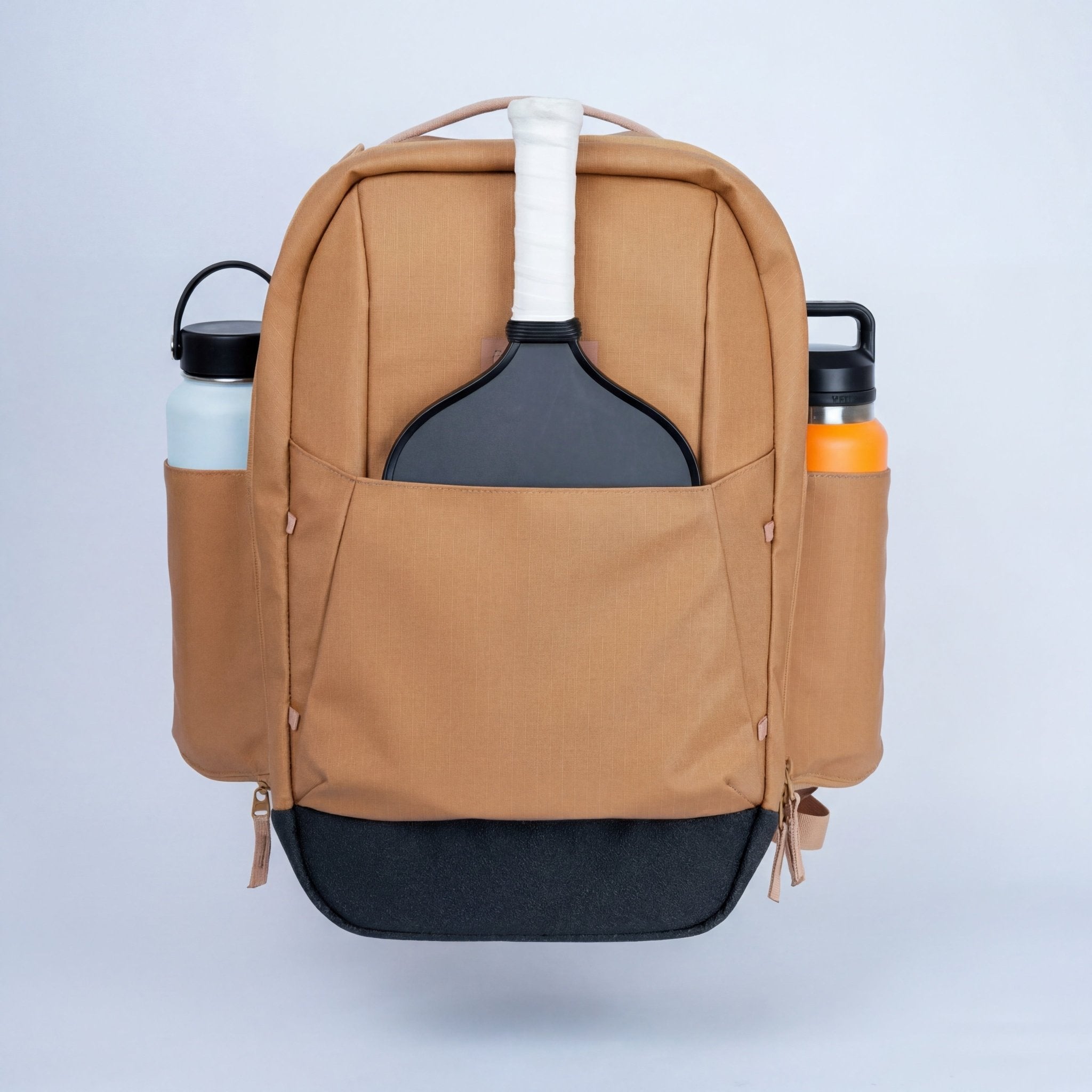
A dedicated paddle sleeve, not just a big main compartment. A modular paddle sleeve holds paddles in their own pocket, with the head protected and the handles accessible without digging. The Court Caddy and Court Ranger V2 both use a sleeve designed specifically for pickleball paddle proportions — not a tennis racket slot relabeled for pickleball marketing.
YKK AquaGuard zippers. If you've owned quality tennis gear, you know YKK. For pickleball bags specifically, look for the AquaGuard variant — the weatherproof zipper used on high-end luggage. Outdoor courts get wet. Morning dew and afternoon thunderstorms are not exceptional conditions for a player who shows up four times per week. Your bag should handle it.
A real laptop compartment. Not a stretchy pocket. Not a "padded section." A 15" padded sleeve with friction pad so the laptop doesn't shift in transit. That's the Court Caddy. The Court Ranger V2 goes to 16". Tennis bags and generic pickleball bags rarely get this right — it's one of the clearest spec gaps between the category and what serious crossover players actually need.
Lifetime warranty. Your Head or Wilson tennis bag came with a 1-year limited warranty. The FORWRD lifetime warranty is a material spec — if your zipper fails or strap seam separates, it's covered. On a bag at $195–$325, that warranty changes the cost-per-use math significantly.
Top Picks: Best Pickleball Bags for Tennis Players
#1 — FORWRD Court Caddy Pickleball Bag ($325): Best for the Serious Crossover Player
The Court Caddy was designed for players who play four or more times per week and carry a full load. Four paddles, a laptop, two water bottles, tournament accessories, and room for a change of clothes if you're going court-to-office. At $325 it's not a casual purchase — it's the right tool for a player who takes pickleball seriously from day one.
For tennis converts specifically: the 15" padded laptop sleeve replaces the function your tennis bag never had. The modular paddle sleeve holds up to four paddles in exactly the configuration you'd want for a practice session or a tournament day. YKK AquaGuard zippers on every compartment. Lifetime warranty. Designed with feedback from 500+ real players, which means the pockets are where they're actually useful — not where a product designer guessed they'd be useful.
Our Pick: FORWRD Court Caddy Backpack
4-paddle modular sleeve, 15" padded laptop compartment, YKK AquaGuard zippers, lifetime warranty. What tennis bags were never built to do.
#2 — FORWRD Court Ranger V2 ($195): Best for the Everyday Crossover Player
If you're playing 2-3 times per week and not doing tournament circuits yet, the Court Ranger V2 is the right entry point. It's lighter than the Court Caddy, still carries a 16" laptop sleeve and YKK AquaGuard zippers, and it looks as comfortable in a coffee shop as it does at the courts — which matters if you're still calibrating the pickleball-to-social-life balance that comes with the sport.
"We designed the Court Ranger V2 paddle sleeve specifically so you don't have to fight with your bag courtside. Tennis bags are built for one racket, which is why they're awkward the moment you need three paddles and don't want to dig through the main compartment to find them."
— Grub, FORWRD co-founder

Side-by-Side Comparison
| Feature | Court Caddy ($325) | Court Ranger V2 ($195) | Typical Tennis Bag |
|---|---|---|---|
| Paddle capacity | 4 (modular sleeve) | 2–3 | 1 racket slot (wrong shape) |
| Laptop sleeve | 15" padded | 16" padded | None |
| Zipper quality | YKK AquaGuard | YKK AquaGuard | Standard |
| Warranty | Lifetime | Lifetime | 1 year limited |
| Weather protection | Weatherproof | Weatherproof | Water-resistant at best |
| Ball storage | Dedicated pocket | Dedicated pocket | None |
| Best for | Tournament-level crossover | Everyday crossover player | Tennis only |

Can You Use a Tennis Bag for Pickleball?
For casual rec play, yes. If you're showing up to open play twice a month with one paddle and a sleeve of balls, your tennis bag will get the job done. Nobody'll notice, and you'll be fine.
Once you're playing three or more times per week, carrying multiple paddles, or commuting court-to-office — your tennis bag stops working fast. The paddle slot geometry is wrong. Ball organization doesn't exist. And the first time it rains on the way to an outdoor morning session, you'll wish you had weatherproof zippers.
The practical break-even: once you have your second paddle, it's time for a proper bag. The organizational friction of fitting two pickleball paddles into a racket sleeve is exactly the problem FORWRD built around. Our guide to bags for tournament players covers the progression in more detail if competition is on your radar.
What Equipment Do Tennis Players Need to Start Pickleball?
Your tennis background is a genuine advantage. The hand-eye coordination transfers. The court movement translates — though you'll need to unlearn some tennis geometry instincts. Here's the gear reality:
Paddles: You need at least one; two is practical. Most tennis converts land in the $80-$150 range for a first paddle. If you want a premium entry point, the JOOLA Perseus Pro V Ben Johns 16mm gives you the control-to-power balance most tennis players prefer — the feel is closer to a dense tennis string bed than the springier mid-range options. The Selkirk LUXX Control Air InfiniGrit Epic is another strong choice for players who rely on spin and touch over raw power.
Balls: Get a dozen Franklin X-40s for outdoor play — they're the official USA Pickleball tournament ball and what you'll see at every serious session. Indoor sessions usually use a softer ball; ask the facility which one they stock before buying a case of the wrong type.
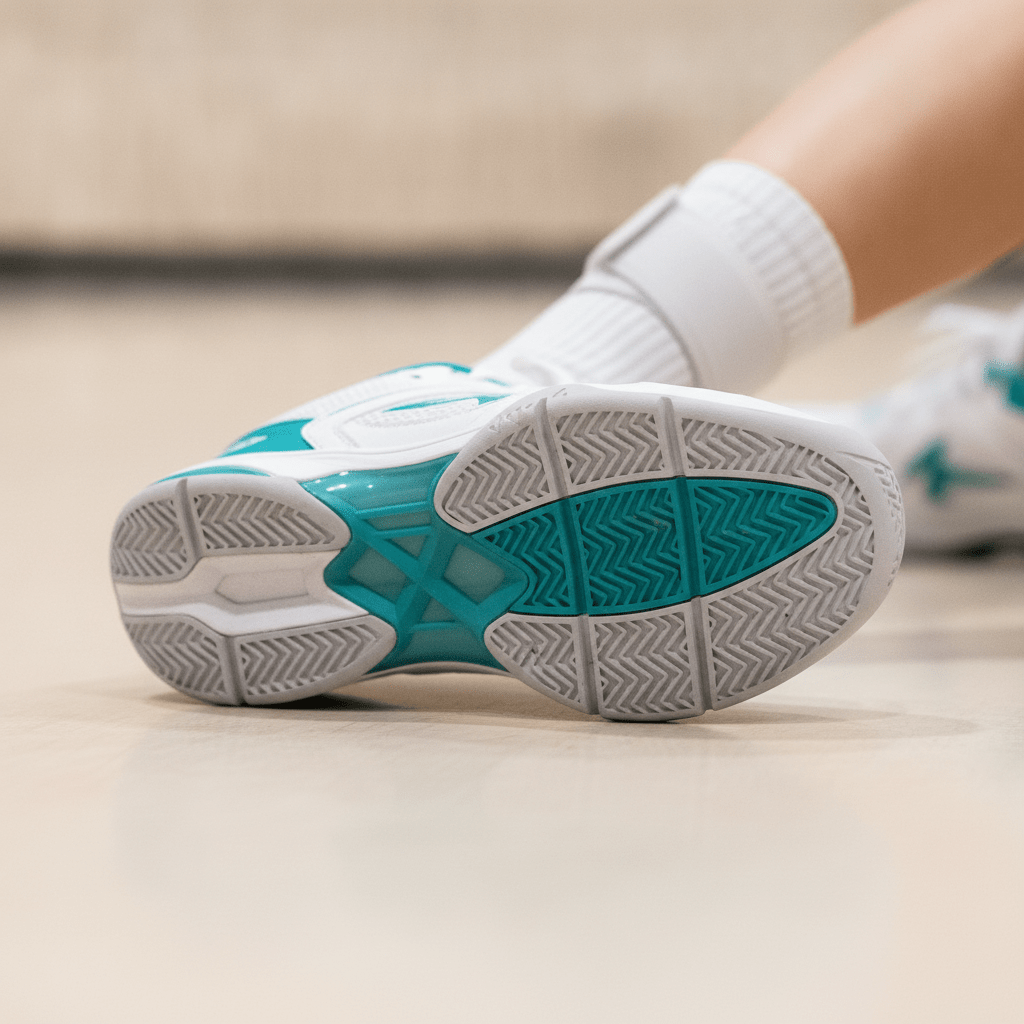
Shoes: Your tennis shoes work for now — court shoes are court shoes. As you play more, you'll notice pickleball-specific lateral support features that differ from tennis design, but there's no reason to buy new shoes on day one.
Making the Switch: The Practical Side
A few things about the transition nobody really warns you about:
The dink game is going to frustrate you for the first two to three weeks. Tennis trains you to clear the net with margin; pickleball rewards skating just over it. Your instinct to hit up will cost you points early. The touch comes faster than it feels like it will — trust the process.
Your serves are probably too powerful. In tennis, a hard serve is an asset. In pickleball, a serve that lands deep and tough is good — a serve that's 10% harder but lands an inch long is just a fault. Dial it back until placement feels automatic.
You'll love the social side faster than you expect. Pickleball's scoring structure, smaller court, and mixed-level play culture make it easier to find games than a tennis ladder. Pack accordingly — our tournament packing guide is worth bookmarking for when you inevitably sign up for your first event. The Court Ranger V2 review is also worth a read if you want a deeper look at the everyday crossover bag before committing.
FAQ: Tennis Players Switching to Pickleball
Can you use a tennis bag for pickleball?
Yes, for casual play — but you'll outgrow it quickly. Tennis bags lack the right compartments for multiple pickleball paddles, don't include ball storage, and have no laptop protection. Once you have two paddles and are playing regularly, a proper pickleball bag earns its cost within a month.
What size bag do you need for pickleball?
A standard pickleball backpack holds 2-3 paddles comfortably, with a dedicated ball pocket, water bottle pockets, and gear storage. For tournament play, look for 4-paddle capacity. The Court Caddy handles full tournament load-outs at 4 paddles; the Court Ranger V2 handles everyday 2-3 paddle carry at a lighter weight and lower price.
How many paddles can a pickleball bag hold?
Depends on the bag. Mid-range backpacks: 2. Higher-end bags like the Court Ranger V2: 2-3 comfortably. Tournament bags like the Court Caddy: 4 in the modular sleeve. For open play, 2 paddles is plenty. For tournaments where you want a backup-of-your-backup, 4 is the standard setup.
Is pickleball equipment similar to tennis equipment?
The court is smaller, the ball is perforated plastic instead of pressurized rubber, and the paddle is solid composite instead of strung. The fundamentals — grip, footwork, court awareness — transfer well from tennis. The equipment is different enough that a dedicated setup matters, and a pickleball bag built for pickleball carries it far better than a tennis bag ever will.

Leave a comment
This site is protected by hCaptcha and the hCaptcha Privacy Policy and Terms of Service apply.