

Disclosure: This post contains affiliate links to Pickleball Central. If you purchase through our links, FORWRD earns a small commission at no extra cost to you. We only link to products we'd recommend regardless.
Last updated: June 2026
Here's something the rolling bag brands won't tell you: most pickleball players who buy rolling bags stop using them within six months. Not because the bags are bad — some are genuinely excellent — but because rolling bags solve problems that recreational players don't actually have. The player who needs a wheeled bag is very specific. You might not be that player.
That said, if you are the right player for a rolling bag, there's nothing better for hauling serious court gear. This guide helps you figure out which side of that line you're on — and if wheels aren't right for you, what backpack actually is.
When a Rolling Pickleball Bag Actually Makes Sense (And When It Doesn't)
Rolling bags were designed for a specific kind of pickleball player: the coach who shows up to three courts at once with 8 paddles, demo gear, ball hoppers, and teaching aids. Or the tournament competitor who packs for a full weekend — four outfits, two pairs of shoes, extra balls, and enough snacks to survive a 5-game run through bracket play. For those players, wheels aren't a luxury. They're the only practical option.
For everyone else? The math doesn't work out.
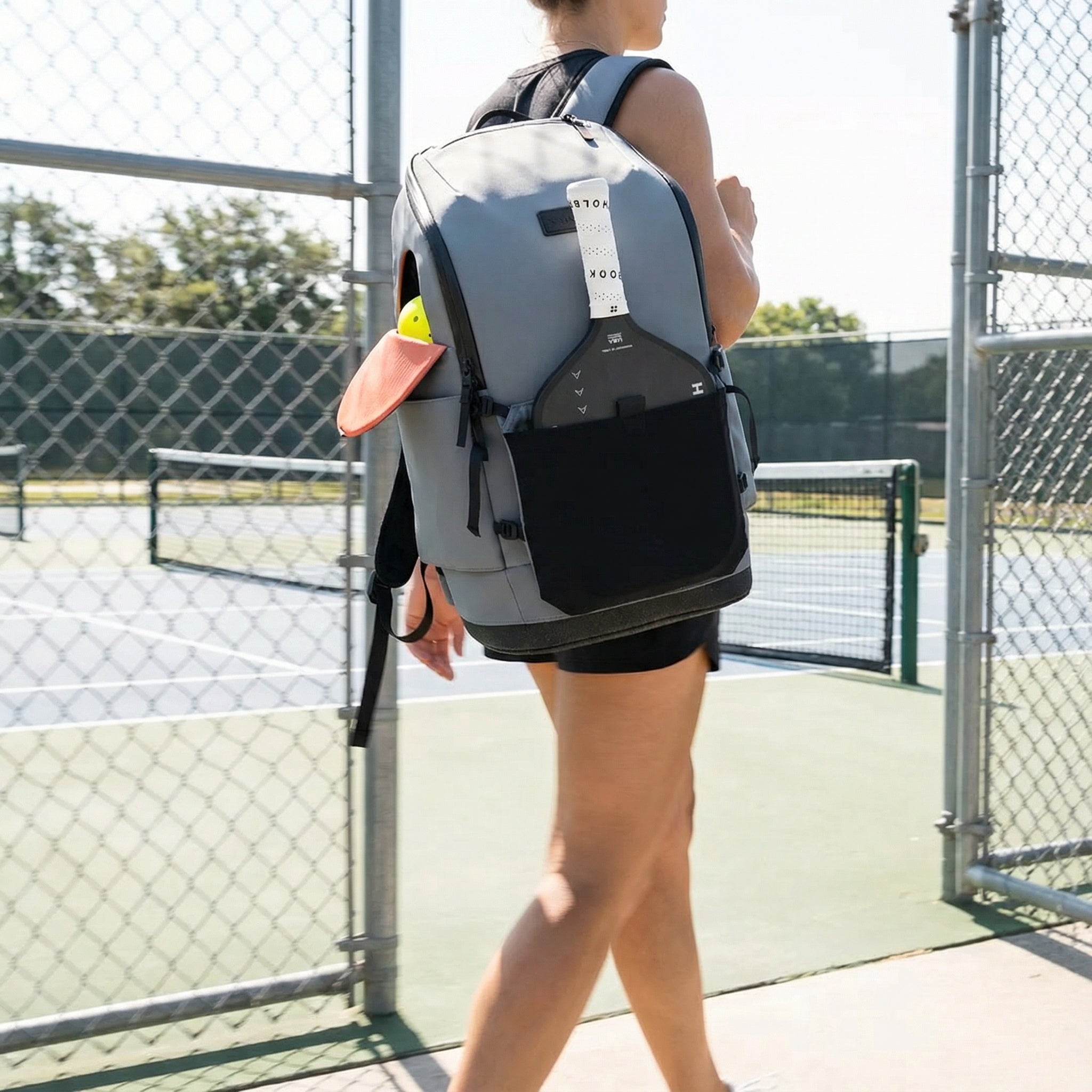
A fully loaded rolling bag can hit 18–22 lbs when packed for a weekend tournament. A FORWRD Court Ranger V2 packed for a typical rec session — two paddles, water bottle, shoes, towel, phone — weighs roughly 8–10 lbs and goes over your shoulder in three seconds. The rolling bag means unfolding the handle, navigating wheel ruts in parking lot asphalt, dragging it up stairs if the indoor facility doesn't have an elevator, and folding the handle back when you need both hands free on the court.
None of that is a problem if you're a coach running three courts. It's an annoyance tax on a 3x/week recreational player who just needs to get from the car to the court.
You probably need a rolling bag if you:
- Coach pickleball and carry 4+ demo paddles plus teaching equipment regularly
- Compete in multi-day tournaments and pack 3+ outfits, extra shoes, and a full kit
- Have chronic shoulder or neck issues where any loaded backpack causes pain
- Organize a club or coordinate gear for multiple players at once
You probably don't need a rolling bag if you:
- Play 2–4x/week at a local club or outdoor courts
- Compete in single-day tournaments where you pack light and move fast
- Commute to courts on foot, by bike, or via public transit
- Need to grab your bag off the fence or bench quickly between games
Best Rolling Pickleball Bags 2026: Ranked by Use Case
Best Overall: ZÜCA Sport Bag + Pickleball Insert
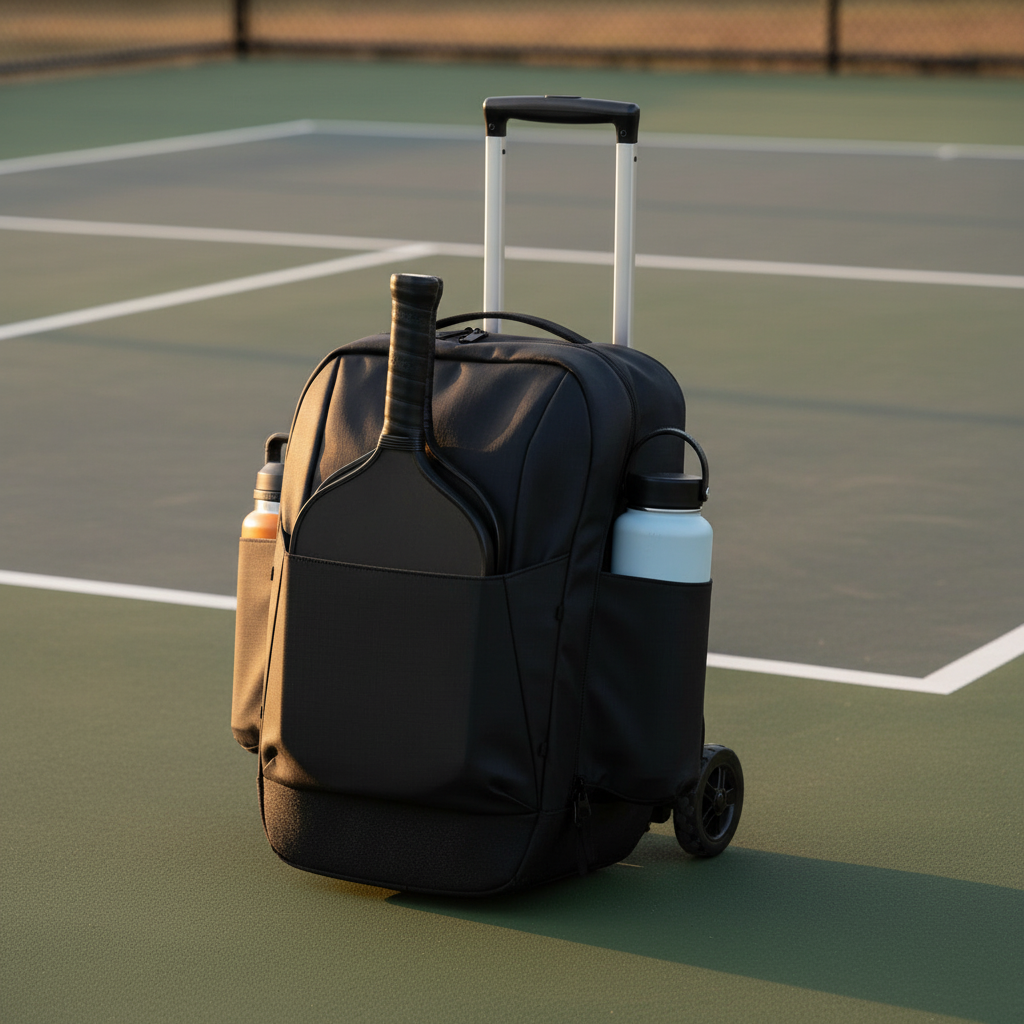
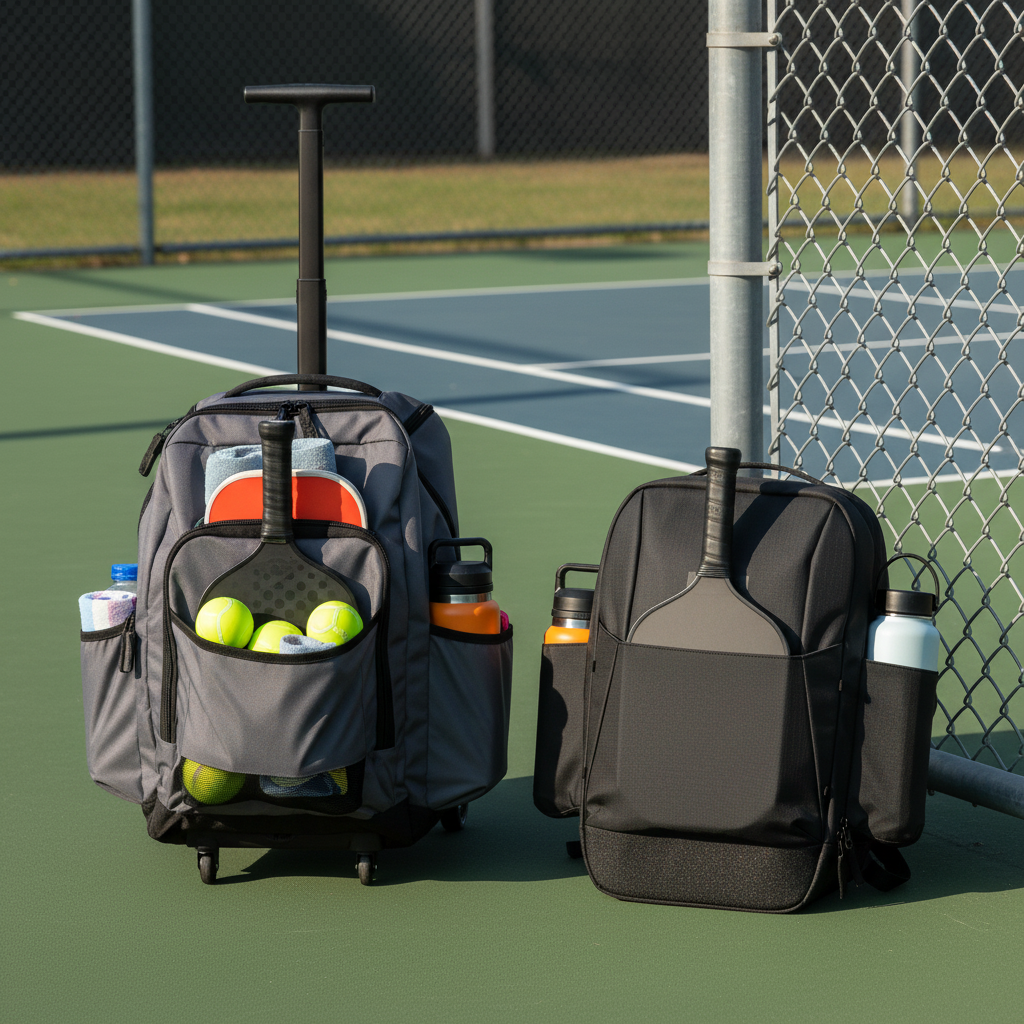
ZÜCA has built the most recognized rolling bag system in racquet sports. The setup is a hard-shell frame cart with interchangeable insert bags — you swap equipment between sports without buying a new cart. The pickleball-specific insert holds paddles, balls, apparel, and shoes in organized compartments. One feature that's underrated: the frame is strong enough to sit on between games. At long indoor tournaments where courtside benches fill up fast, that's legitimately useful.
The ZÜCA system is genuinely premium, which means premium pricing. For coaches and serious tournament players, it's the most versatile rolling option on the market. Shop ZÜCA at Pickleball Central →
Best for: Coaches, competitive tournament players, multi-sport players who want one cart for everything.
What ZÜCA doesn't do well: Rough outdoor surfaces with wheel ruts or cracks. Folded handle logistics on crowded courts. Cost — a quality ZÜCA setup runs $200–$350+.
Best Coaching Cart: OnCourt OffCourt Coach's Cart
If you're a coach who needs to move a ball hopper, teaching aids, and multiple paddles between courts, the OnCourt OffCourt Coach's Cart ($295) is a better tool than a rolling bag. It's designed specifically for the court — large capacity, durable wheels that handle outdoor surfaces, and a frame built to carry ball hoppers. Less of a bag, more of a coaching command center on wheels.
Best for: Full-time coaches and club pros on multiple courts daily.
Best Tour-Style Option (Non-Wheeled): ProKennex VIP Tour Bag
Not every player who wants high-capacity gear needs wheels. The ProKennex VIP Tour Bag (~$120) is a shoulder-carry bag that holds serious gear without the wheel hardware adding weight and bulk. For tournament players who want expansion room but prefer the mobility of shoulder carry over a rolling cart, this is the middle ground.
Best for: Tournament players who pack heavy but don't want rolling bag logistics.
Rolling Bag vs. Backpack: The Honest Trade-Off
| Category | Rolling Bag | FORWRD Court Ranger V2 ($195) |
|---|---|---|
| Packed weight | 18–22 lbs (full tournament kit) | 8–10 lbs (full rec kit) |
| Paddle capacity | 6–8+ paddles | 2 paddles (modular sleeve) |
| Portability | Difficult on stairs, rough terrain | Any terrain, both hands free |
| Court-side access | Must park at courtside, handle to collapse | Hang on fence, bench, or shoulder |
| Laptop sleeve | Varies by model | 16" padded sleeve (standard) |
| Warranty | Typically 1 year | Lifetime |
| Price | $150–$500+ | $195 |
Here's what most rolling bag guides skip: the rolling bag isn't heavier when empty — it's heavier when you pack it the way it's designed to be packed. You don't buy a rolling bag to carry 2 paddles and a water bottle. You buy it for the full tournament load. That's where the weight comparison actually matters, and where most recreational players realize the format is wrong for them.
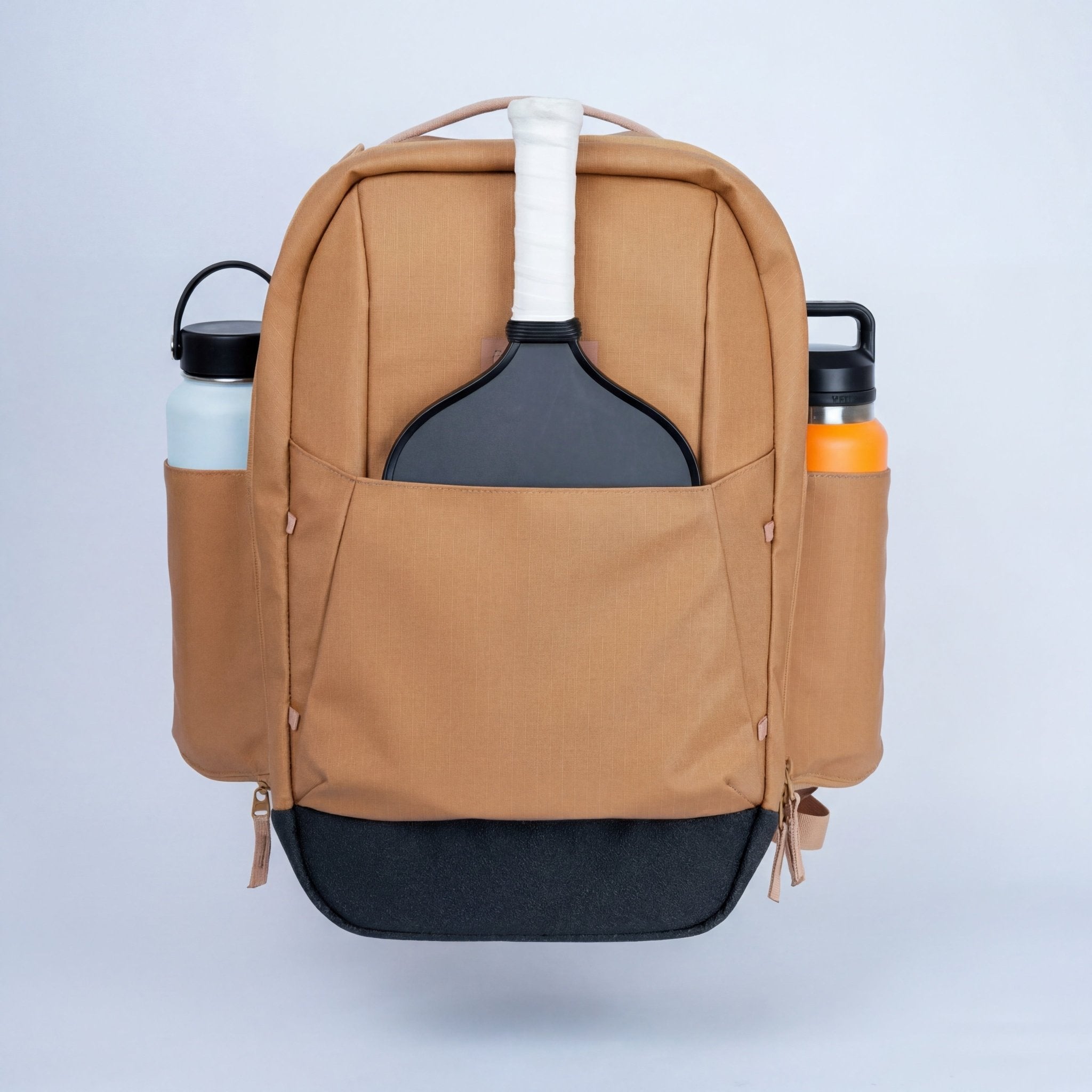
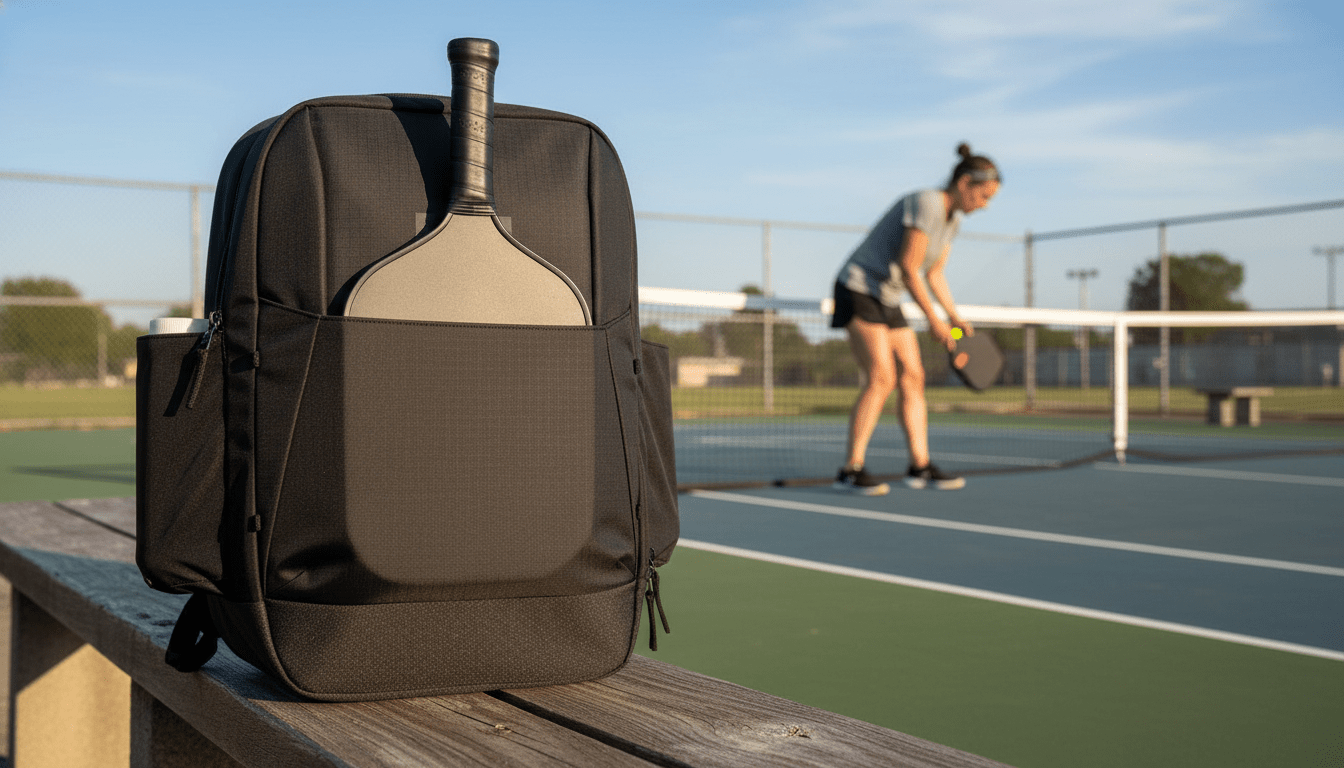
The Court Ranger V2 has a 16" padded laptop sleeve, a modular paddle sleeve, YKK AquaGuard weatherproof zippers, and a lifetime warranty — at $195. For the recreational player going to an indoor club three times a week, that's the right tool. The rolling bag is over-engineered for that use case and will spend most of its time sitting in your trunk.

If you're a competitive player who does single-day tournaments plus regular rec play, the Court Caddy ($325) adds more capacity — 15" padded laptop sleeve, a larger modular paddle sleeve, same YKK AquaGuard zippers and lifetime warranty. It handles a full tournament kit in a backpack format that doesn't require parking logistics or stair navigation. That's the right answer for most competitors who don't need 6+ paddle slots.
"We designed the Court Ranger V2 specifically for the player who plays three to five times a week — the volume player who doesn't need a coach's cart but does need a bag that survives year-round outdoor courts. Our target was under 12 lbs for a packed rec kit. If you're consistently packing more than that for a typical session, you're probably a coach." — Grub, Co-founder, FORWRD
What to Look for in a Rolling Pickleball Bag
If you've read this far and you're still in the rolling bag camp, fair. Here's what actually matters when comparing options.
Wheel Quality and Surface Compatibility
The difference between a $79 rolling bag and a $300 one often shows up here. Cheap plastic wheels crack on rough outdoor asphalt or break when you hit a parking lot seam at speed. Urethane wheels — what ZÜCA uses, and what quality luggage uses — handle outdoor surfaces significantly better and last longer. If you play exclusively indoors on smooth gym floors, cheaper wheels are fine. Outdoor concrete and asphalt will expose cheap wheels within a season.
Frame vs. Bag-Only Design
ZÜCA's hard-shell frame design is unique in pickleball. The frame stays rigid and the insert bag drops in — frame protects your gear, and the built-in seat is genuinely useful at long tournaments. Most other rolling pickleball bags are just duffel bags with wheels sewn to the bottom. The bag-only design is lighter and cheaper but less protective and less durable over time.
Paddle Capacity vs. Your Actual Needs
Rolling bags advertise 6–8 paddle capacity. Most recreational players own two paddles. Don't buy capacity you don't need — it's extra weight and extra bulk every session. If you're a coach with demo inventory, more capacity matters. If you're a competitive player who brings one match paddle and one practice paddle, you don't need six slots.
Zipper Quality
On any bag above $150, look for YKK zippers — the same specification on FORWRD bags. Generic zippers are the first thing to fail on outdoor sports bags, especially with humidity, sand, and court grit. Rolling bags are often loaded heavier than backpacks, which puts more stress on zippers every open/close cycle. YKK AquaGuard adds weather sealing on top of durability — non-negotiable if you play outdoor courts in variable weather.
Warranty Coverage
Most rolling bags — ZÜCA included — offer 1-year manufacturer warranties. The FORWRD Court Ranger V2 carries a lifetime warranty at $195. If you're comparing a $200+ rolling bag to the $195 Court Ranger V2, the warranty comparison alone can flip the long-term cost calculation. One replacement of a rolling bag at $250 = two Court Ranger V2s over the same period, with no replacements if you're covered for life.
FAQ: Rolling Pickleball Bag Questions
What is the best rolling pickleball bag?
ZÜCA is the market standard — the Sport Bag system with a pickleball insert has the best build quality, terrain-handling urethane wheels, and a frame that doubles as a court-side seat. For coaches and multi-day tournament players, it's the most durable and versatile rolling option available. Players can also shop ZÜCA at Pickleball Central. For rec players playing 2–4x/week, the FORWRD Court Ranger V2 ($195) is a better fit than any rolling bag.
Are rolling bags worth it for pickleball players?
It depends entirely on your play style and gear load. Coaches carrying demo paddles and teaching equipment, or competitive players packing for multi-day tournaments — yes, rolling bags are worth it. For the typical rec player with one or two paddles and a standard session kit, rolling bags are over-engineered. You'll end up dragging a 20-lb cart where a 9-lb backpack would have served you better. Most players who regret the purchase aren't coaches or tournament grinders — they're 3x/week club players who overestimated how much gear they actually need.
What bag do pickleball coaches use?
Most pickleball coaches at the club or pro level use rolling bags or dedicated coaching carts. ZÜCA is common for its capacity and seat functionality. The OnCourt OffCourt Coach's Cart is popular when coaches need to move ball hoppers between courts. Coaches with lighter loads — teaching one-on-ones rather than running full clinics — sometimes use a large backpack like the Court Caddy, which holds up to 4 paddles in its modular sleeve.
When should a pickleball player use a rolling bag vs. a backpack?
Rolling bags make sense when you consistently carry 4+ paddles, multi-day tournament gear, or coaching equipment — and when your courts have good surface access without stairs. Backpacks win for portability, quick court access, stair navigation, commuting, and any time you need both hands free on the move. For most players playing 3–5x/week, a backpack handles everything they actually bring to the court.
What is the best pickleball bag for seniors who need to carry less weight?
Senior players with shoulder or back concerns are often told rolling bags are the answer — but a fully loaded rolling bag (18–22 lbs for a tournament kit) often outweighs a well-packed backpack. The FORWRD Court Ranger V2 at $195, packed with a standard rec kit, typically comes in under 10 lbs. That's the right answer for most senior rec players. Rolling bags genuinely earn their keep for seniors who are coaching or competing at multi-day tournaments — not for the typical club session.
Most Players Don't Need Wheels — They Need This
The Court Ranger V2 handles everything a rec or club player brings to the court: 16" laptop sleeve, up to 7 paddles, YKK AquaGuard zippers, under 10 lbs loaded. Lifetime warranty. $195.

Leave a comment
This site is protected by hCaptcha and the hCaptcha Privacy Policy and Terms of Service apply.