

Last updated: June 2026
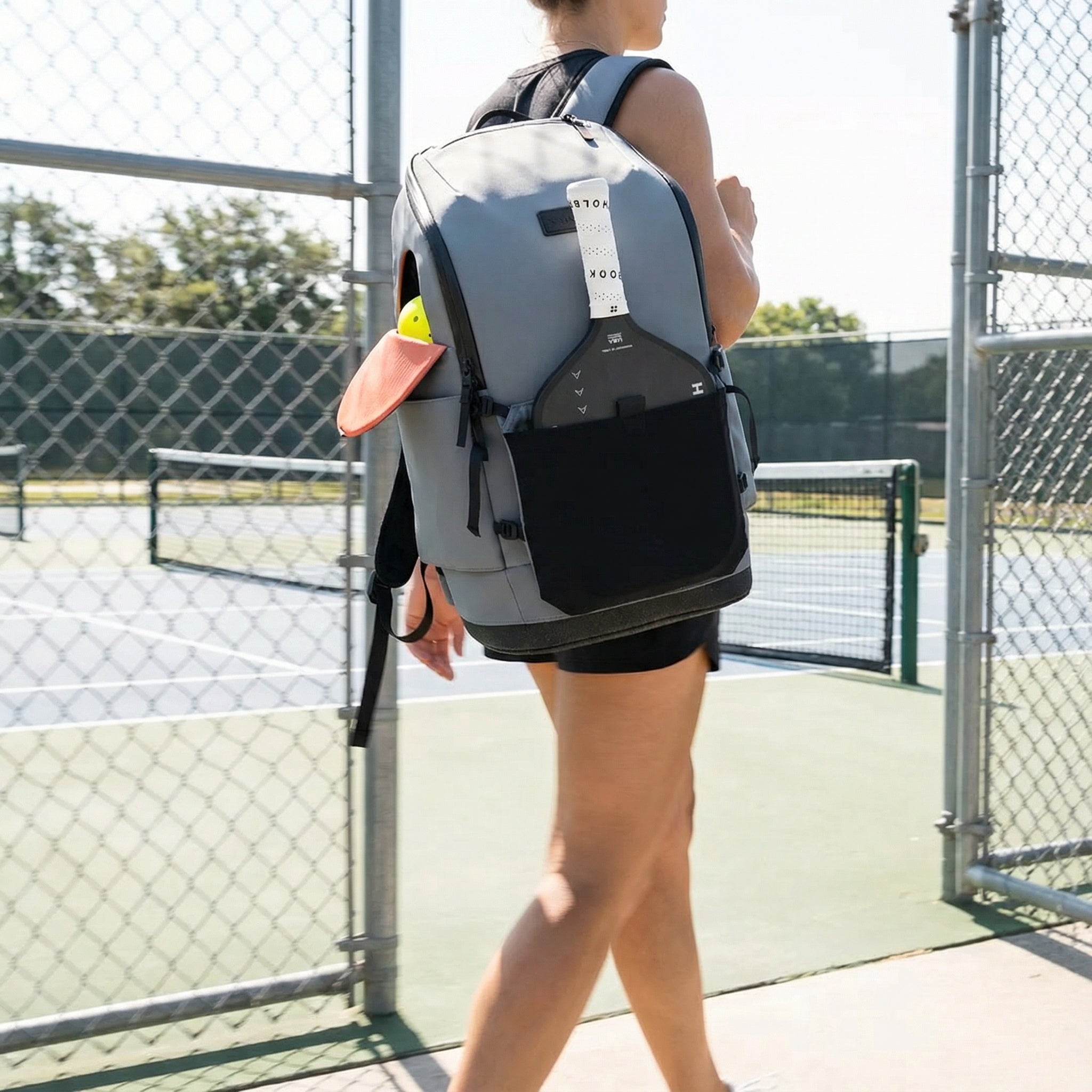
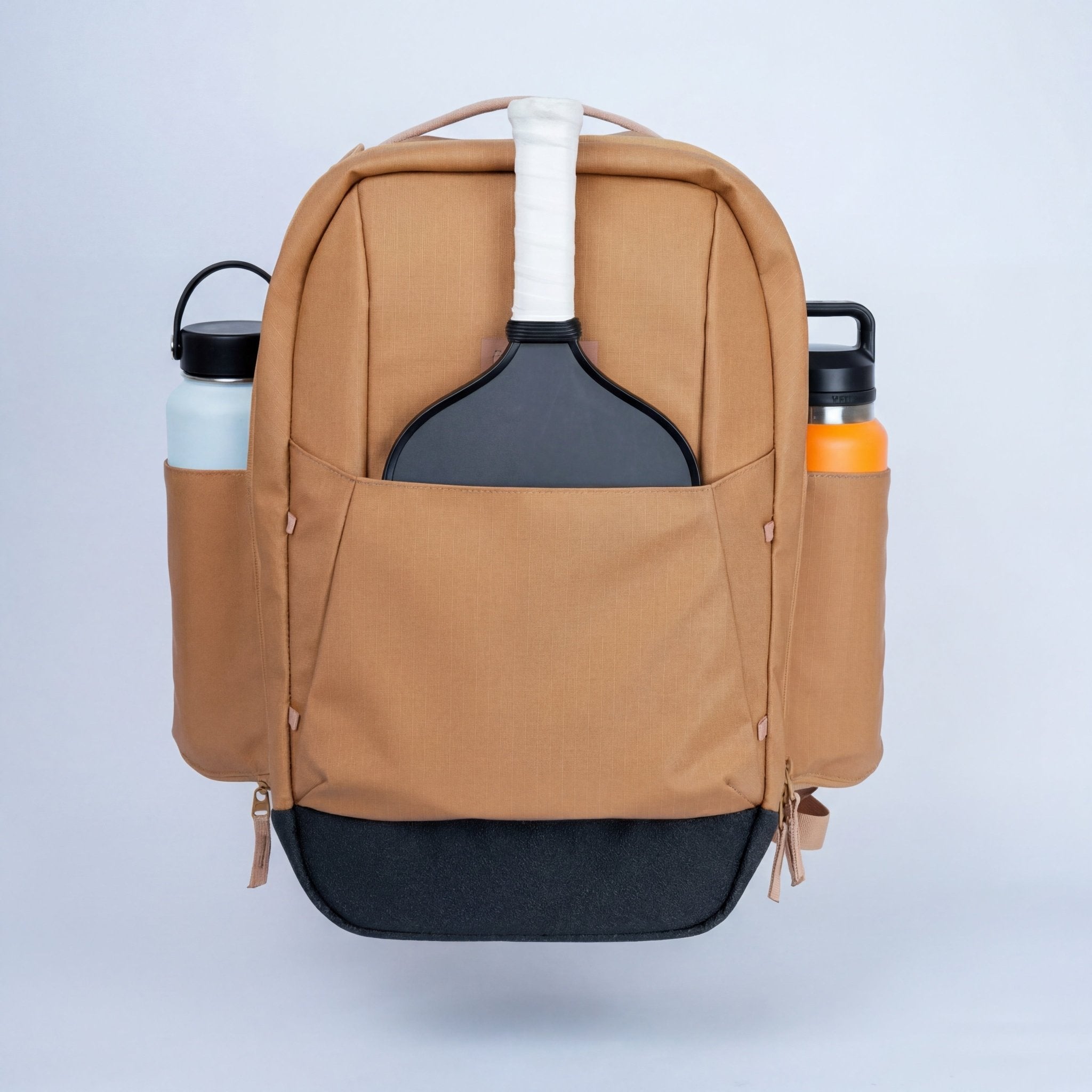
After 200+ sessions on outdoor concrete courts — including Florida summers, PNW rain, and every variation of dusty asphalt in between — the Court Ranger V2 in my regular rotation still looks clean. Not because it cleans itself. Because I figured out what actually works, and stopped doing what ruins the material.
Most "how to clean a sports bag" guides say "wipe with a damp cloth." That's technically correct for about half of what's on the market. Do it wrong on a PU leather exterior bag and you'll crack the finish. Use the wrong cleaner on a nylon shell and you'll strip the DWR coating that keeps it water-resistant. The YKK AquaGuard zippers on FORWRD bags need a dry silicone spray — not oil — or the sealant degrades.
This guide goes material by material so you don't ruin your bag trying to clean it.
Why Bag Material Changes Everything for Cleaning
Pickleball bags are made from three main exterior materials, and each one behaves differently when wet, dirty, or exposed to cleaning products:
840D Ballistic Nylon (Court Ranger V2)
This is the most forgiving material for cleaning. 840D ballistic nylon is a tightly woven synthetic fiber originally designed for military gear — dense enough to resist abrasion, and it doesn't absorb water or odors the way woven fabrics do. You can hand-wash it, use mild soap, rinse thoroughly, and air dry without issue. What kills it: machine washing with agitation (it can stress the seams and stitching), and any solvent-based cleaner that strips the DWR water-resistant coating applied at the factory.
PU Leather (some Court Caddy variants)
PU leather looks premium and ages well when maintained, but it's the most sensitive to moisture. Soak it, and the finish can bubble or crack at the stress points — especially along zipper edges and shoulder strap attachment points. Clean PU leather with a damp cloth only, using minimal moisture. Never submerge it. A gentle leather conditioner applied lightly after cleaning keeps the material from drying out and cracking over time.
Polyester (budget/entry-level bags)
Standard polyester is more forgiving than PU leather but less durable than nylon. It can typically be spot-cleaned or hand-washed without issue. Avoid hot water — it can relax the structure of polyester bags and cause them to lose their shape. Most polyester bags don't have DWR coatings, so water resistance isn't a concern for cleaning.
Step-by-Step: How to Clean a Pickleball Bag (By Material Type)
For 840D Ballistic Nylon Bags (Court Ranger V2)
- Empty completely. Check every pocket — stray balls, wraps, and especially food wrappers. Turn each pocket inside out to shake out debris.
- Dry brush the exterior. A soft-bristle brush (old toothbrush works) removes loose court grit and chalk dust without pushing it into the weave.
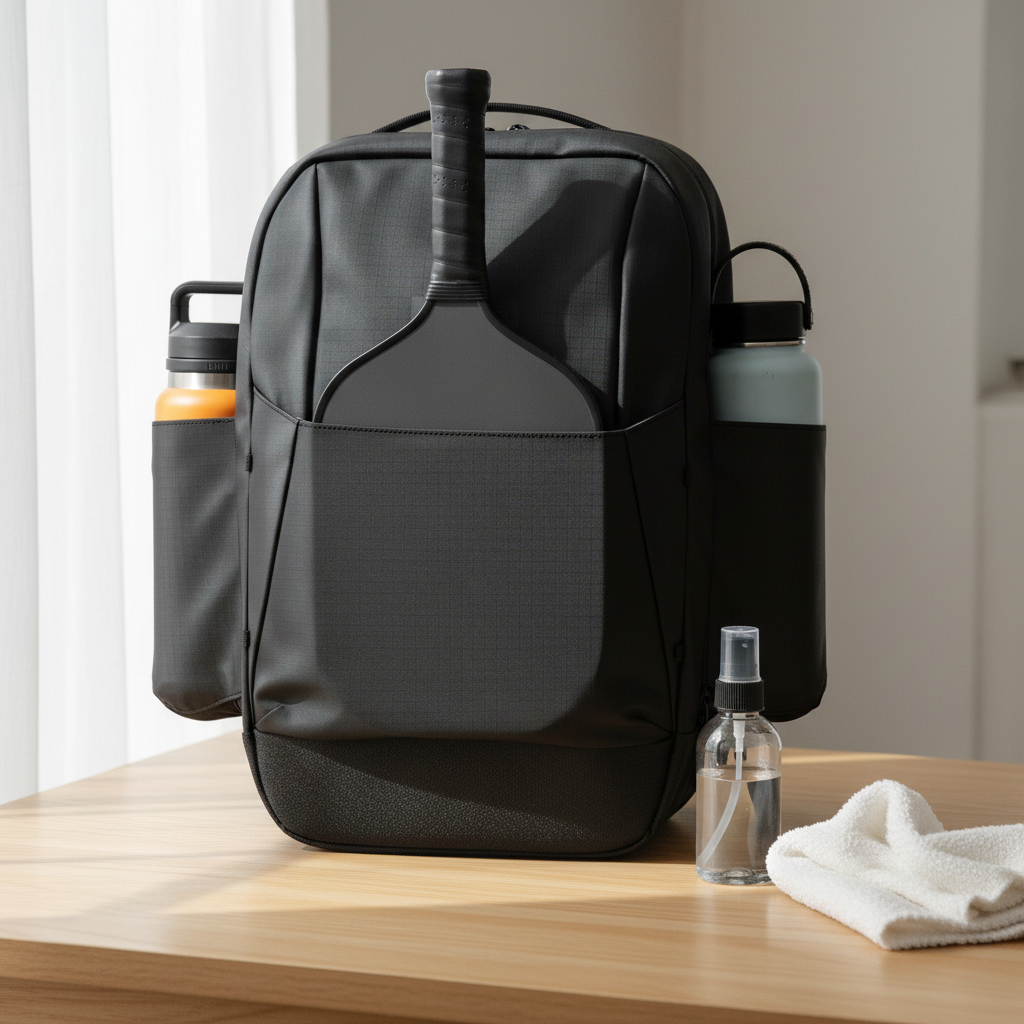
- Mix mild soap + cool water. A few drops of dish soap in a bowl of cool water. Nothing with bleach, solvents, or "degreaser" labeling — these strip the DWR coating.
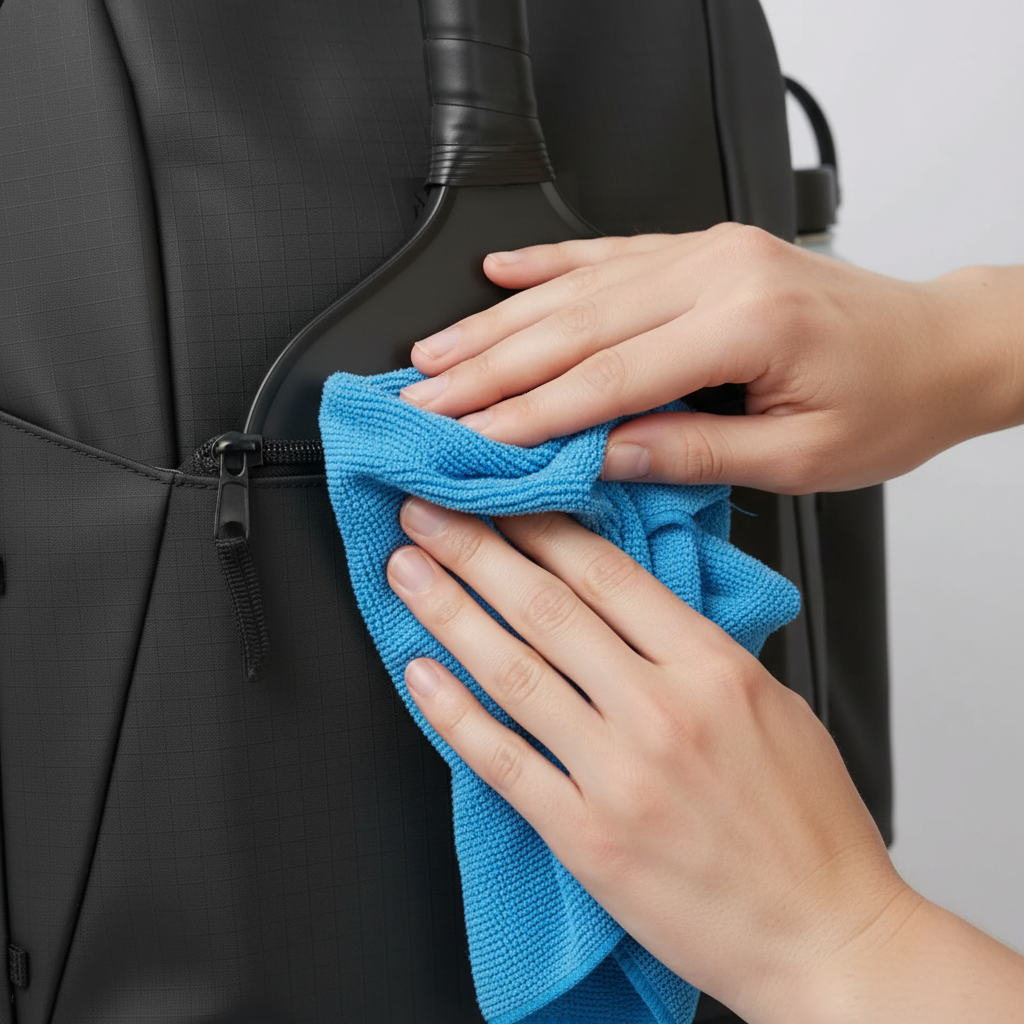
- Wipe down with a soft cloth. Damp, not soaking. Work in the direction of the weave. For stubborn spots, the soft brush with soapy water works well.
- Rinse with clean damp cloth. Remove soap residue — it attracts dirt if left.
- Air dry, open, in indirect light. Don't dry in direct sun (UV fades the material over time). Keep all zippers open so moisture can escape the interior. Allow 4–6 hours minimum.
For PU Leather Bags
- Dry brush or vacuum the exterior to remove surface debris before introducing any moisture.
- Barely-damp cloth only. Wring it almost completely dry before touching the bag. You want to wipe, not wet.
- Work in small sections. PU leather can watermark if you wet a large area and let it dry unevenly.
- Condition after cleaning. A light application of a PU leather conditioner (not oil-based) after cleaning keeps the material supple. Skip this and the leather will eventually crack at flex points.
- Air dry fully before storing. PU leather traps moisture under the finish — if you fold or compress it while damp, the finish can separate.
Interior Cleaning (All Bag Types)
The interior mesh pockets and main compartment are usually the dirtiest — chalk dust from court lines, grips tape residue, and general court grit accumulate fast. For all bag types:
- Turn pockets inside out and shake out debris over a trash can
- Wipe interior surfaces with a lightly damp cloth + mild soap
- For mesh pockets, let them dry fully open — mesh traps moisture and that's where mildew starts
- The laptop sleeve (padded interior) needs a gentle wipe only — no soaking
How to Get Sweat Smell Out of a Pickleball Bag
Damp gear left in a closed bag is the smell problem. The fix isn't cleaning the bag — it's changing the routine after court sessions.
The after-session protocol that works:
- Open all zippers and compartments immediately after you finish playing
- Pull out damp gear — especially towels, shoes, and sweaty court clothes — don't leave them closed inside
- Leave the bag open overnight, or prop it against a wall with pockets unzipped
- If you have a separate shoe compartment, let shoes air separately — shoes are the biggest odor source in any sports bag
If your bag already has an odor, baking soda works without the chemical smell other deodorizers leave behind. Pour 2–3 tablespoons of baking soda into the main compartment, close it, leave it overnight, then vacuum or shake out completely. For stubborn odors, a diluted white vinegar spray (1 part vinegar, 4 parts water) applied inside and air-dried eliminates bacteria causing the smell. Test in a hidden corner first on any bag with dye that might not be colorfast.
Silica gel packets in the main compartment absorb ambient moisture between sessions — the kind that comes in shoe boxes or can be bought cheaply in bulk. Replace them when the indicator changes color (usually monthly with regular use). This is especially effective in humid climates where bags don't dry fully between sessions.
How to Care for Bag Zippers (Especially YKK AquaGuard)
This is where most bag care guides fall short. Zipper care is different from bag care — and the most common mistake is using the wrong lubricant.
YKK AquaGuard zippers — the kind on the Court Ranger V2 and Court Caddy — have a built-in sealing bead that runs along the coil. This bead is what makes them waterproof. Oil-based lubricants (like WD-40 or similar) degrade the sealant over time, breaking down the waterproofing. The right lubricant is a dry silicone spray (per YKK's own maintenance guidelines) — it reduces friction without affecting the seal chemistry.
For regular maintenance on any pickleball bag zipper:
- Clean the zipper track first. Court grit and dirt in the coil is what causes hard-pulling zippers — not lack of lubrication. Run a dry toothbrush along the coil from both sides to clear debris.
- Apply dry silicone spray to a cloth, then wipe along the coil — don't spray directly into the coil. You want a thin coat on the coil teeth, not soaked fabric around them.
- Zip and unzip several times to work the lubricant into the mechanism. A smooth-moving zipper after this step means you've done it right.
- Repeat every 3–4 months if you play outdoors regularly, or when the zipper starts pulling hard.

For standard zippers (non-AquaGuard), the same process works, but you can use beeswax or a zipper lubricant stick if you don't have silicone spray handy. Avoid oil-based products on all bag zippers regardless of type — they attract more dirt and gum up the mechanism over time.
How Often Should You Clean Your Pickleball Bag?
The answer depends more on conditions than on a calendar. Here's a practical framework:
| Situation | Cleaning Frequency |
|---|---|
| Indoor courts only, dry climate | Full clean every 4–6 weeks; interior wipe monthly |
| Outdoor courts, varied weather | Full clean every 2–3 weeks; exterior wipe after muddy sessions |
| Daily play / 5+ sessions per week | Weekly interior wipe; full clean every 2 weeks |
| After any session with heavy rain | Wipe down exterior, leave open to fully dry immediately |
The single most important habit is the post-session routine: open the bag, remove damp gear, and leave it open. That alone prevents 80% of odor and mold issues. Deep cleaning every few weeks handles the rest.
If you're investing in a bag built to handle this kind of regular care, the Court Ranger V2 ($195) — 840D ballistic nylon exterior, YKK AquaGuard zippers, lifetime warranty — is designed for exactly this maintenance cycle. Clean it properly and it'll outlast any bag in the under-$200 category. That lifetime warranty isn't decoration; it covers manufacturing defects for as long as you own the bag.
FAQ: Pickleball Bag Cleaning Questions
How do you clean a pickleball bag?
Empty completely, dry brush exterior debris, then wipe down with a soft cloth dampened with mild soap and cool water. Work in the direction of the material weave for nylon bags. Rinse with a clean damp cloth, then air dry open for at least 4–6 hours. For PU leather bags, use minimal moisture and a light conditioner after cleaning. Don't machine wash any bag with padded sleeves or structured pockets.
Can you put a pickleball bag in the washing machine?
Not recommended for most pickleball bags, especially those with padded laptop sleeves, structured back panels, or PU leather elements. Machine agitation stresses seams, can separate padding, and strips DWR water-resistant coatings from nylon exteriors. Hand-washing with mild soap and cool water is safer and typically more effective. If a bag is labeled machine washable, use a gentle cycle in a mesh laundry bag with cold water only.
How do you get smell out of a pickleball bag?
Pour 2–3 tablespoons of baking soda into the main compartment, close it, and leave overnight — baking soda absorbs odor without leaving residue. For stubborn smell, a diluted white vinegar spray (1 part vinegar to 4 parts water) inside the bag, left to air dry, eliminates the bacteria causing the odor. The long-term fix is the post-session routine: open all zippers immediately after playing and remove damp gear before it sits closed in the bag.
How often should you clean your pickleball bag?
For most recreational players on outdoor courts, a full exterior clean every 2–3 weeks with an interior wipe monthly keeps a bag in good condition. High-frequency players (5+ sessions/week) should do a light interior wipe weekly. After any heavy rain session, wipe down the exterior and leave the bag fully open to dry. The single most effective habit is opening the bag after every session and removing damp gear — that alone prevents most odor and mold issues.
How do you care for YKK zippers on a pickleball bag?
Clean the zipper coil first with a dry soft-bristle brush to remove grit. Then apply dry silicone spray to a cloth and wipe along the coil — never oil-based products, which degrade the AquaGuard waterproof seal on YKK AquaGuard zippers. Zip and unzip several times to work the lubricant in. Repeat every 3–4 months or when the zipper starts pulling hard. This keeps zippers smooth and the weatherproofing intact for the life of the bag.


Leave a comment
This site is protected by hCaptcha and the hCaptcha Privacy Policy and Terms of Service apply.