

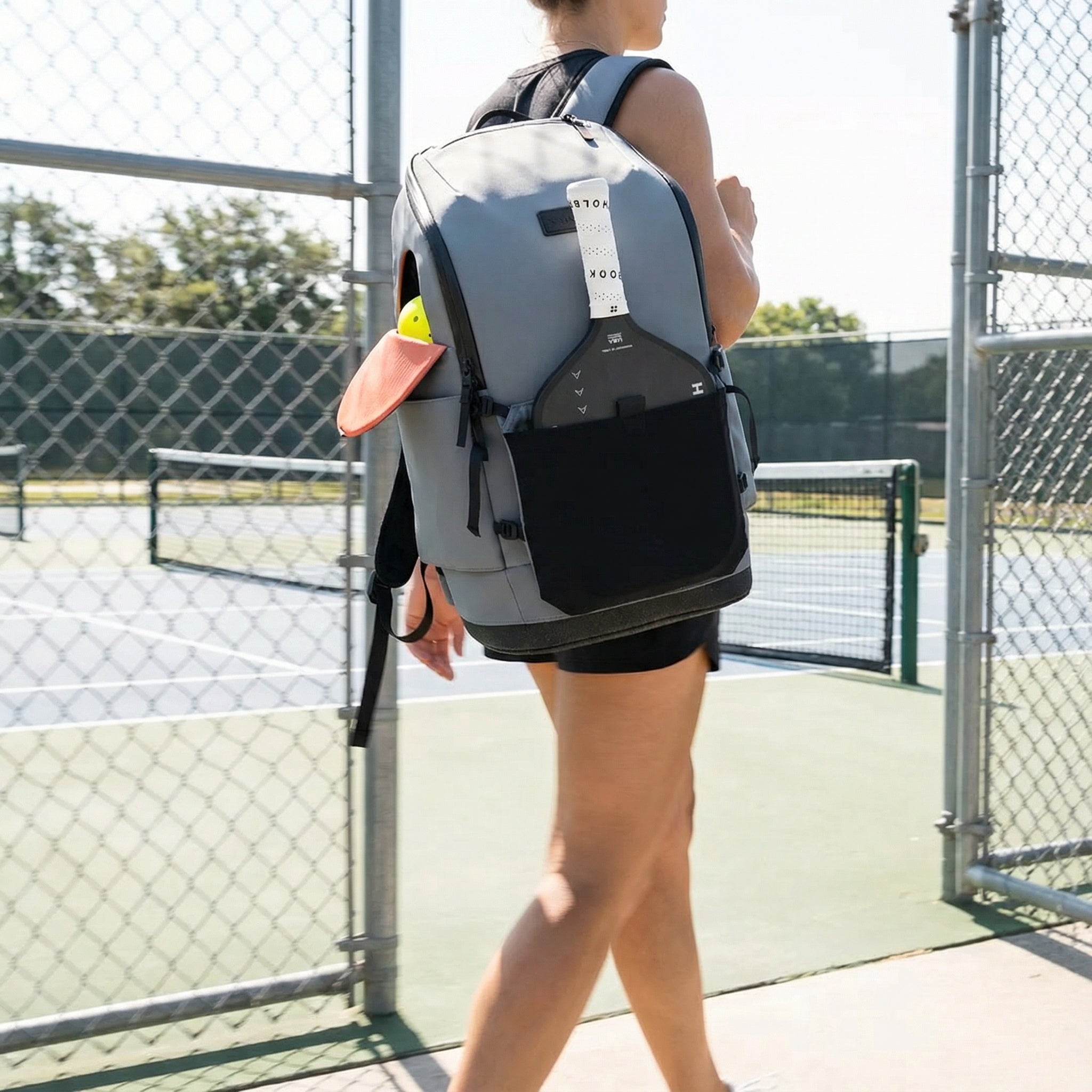
The Best Pickleball Bags with Shoe Compartments in 2026
Last updated: April 2026
Court shoes carry everything from outdoor clay to indoor gym rubber — and then sit inches from your paddle face and clean shirt inside your bag. A dedicated shoe compartment solves that. The real question isn't whether you need one — it's which design actually works for how often you play.
Two approaches dominate the market: built-in shoe compartments (standard on JOOLA, CRBN, and most competitors) and modular shoe storage (the approach FORWRD took with the Court Caddy). Neither is universally better. This guide breaks down the difference, ranks the top picks for 2026, and gives you a clear framework for choosing.
Table of Contents
- Why a Shoe Compartment Matters More Than You Think
- Best Pickleball Bags with Shoe Compartments in 2026
- FORWRD Court Caddy: The Modular Shoe Solution
- Built-In vs. Modular Shoe Storage: Which Wins for Your Game
- FAQ: Common Questions About Pickleball Bags with Shoe Compartments
Why a Shoe Compartment Matters More Than You Think
Most players discover the case for shoe compartments the hard way. You pack your bag after an outdoor session, and by the time you unpack at home, your paddle face has red clay dust on it. Or you're heading from the office to an indoor facility, and your court shoes — sitting loose in the main compartment — have spent 45 minutes pressing their rubber soles against your paddle grip and your laptop sleeve.
Shoes are the most contaminating item you carry. They pick up dirt, grip residue, sweat, and bacteria from every court surface. Pair that with paddles that cost $100–$250 and a clean shirt you're wearing to lunch afterward, and the case for physical isolation becomes obvious.
A proper shoe compartment does two things: it physically separates your shoes from everything else, and it provides ventilation to manage odor rather than trap it. The bags that execute this well create a real, daily improvement in how you use your gear. The ones that don't — a thin zip pocket with no airflow — might as well not have it.
What "Ventilated" Actually Means
Ventilated shoe compartments use mesh panels, perforated fabric, or open-weave construction to allow airflow while still isolating the shoes. This matters because sealed compartments trap humidity, which breeds odor-causing bacteria faster than an open design. The best options keep shoes physically contained and let the compartment breathe between sessions.
One honest limitation: ventilated means not waterproof. If your shoes are soaking wet from rain play, a mesh compartment will let moisture migrate. That's an expected tradeoff — ventilation and waterproofing work against each other by design. For wet-shoe situations, a separate bag or towel inside the compartment is the practical fix.
Shoe Compartment Placement Matters Too
Bottom-loading compartments (accessed through a zipper at the base of the bag) are the most effective for odor isolation — hot, damp air rises, so bottom placement keeps shoe humidity away from the main compartment. Side-access compartments are more convenient but less effective at containing odor long-term. Modular cubes that attach externally eliminate the issue entirely.
Best Pickleball Bags with Shoe Compartments in 2026
| Bag | Price | Shoe Storage | Paddle Capacity | Zipper Standard | Best For |
|---|---|---|---|---|---|
| FORWRD Court Caddy | $195 | Modular shoe cube (sold separately, magnetic) | 1–5 paddles (modular sleeve) | YKK AquaGuard | 3x+/week players who vary their session load |
| JOOLA Tour Elite | ~$130–150 | Built-in ventilated compartment | Up to 4 paddles | Standard | Players who always change shoes at the facility |
| CRBN Pro Team | ~$149 | Built-in mesh shoe section | Up to 3 paddles | Standard | Compact build, budget-conscious club players |
| FORWRD Court Ranger V2 | $195 | Modular (expanded capacity) | Multiple | YKK AquaGuard | Multi-day tournament players needing full kit |
JOOLA Tour Elite: The Best Built-In Shoe Compartment
The JOOLA Tour Elite ($130–150) is the most accessible built-in shoe compartment option at this price point. Its lower ventilated section fits shoes up to size 14 and physically separates them from the paddle and main compartment. The thermal paddle sleeves are a genuine differentiator for players in extreme outdoor heat — no other bag in this tier offers that combination.
The honest limitation: The Tour Elite uses standard zippers throughout. After a summer of outdoor play — sunscreen residue, sweat, rain — standard zippers begin to corrode and stiffen. For players using the bag 3–4 times per week, this becomes noticeably worse around the 6–9 month mark. The shoe compartment itself holds up; the zipper longevity is where the price gap between $150 and $195 starts to matter.
If you play 1–2 times per week and want built-in shoe convenience at a competitive price, the Tour Elite is a legitimate choice. See our full budget bag guide for a detailed comparison.
CRBN Pro Team: Compact with Shoe Isolation
The CRBN Pro Team (~$149) packs a mesh-lined shoe compartment into a slightly smaller footprint than the Tour Elite. It's built for players who prioritize paddle protection (thermal lining) and basic shoe isolation without the Tour Elite's fence hook and duffle-conversion system. Paddle capacity tops at 3, which limits utility for players who carry backups.
Like the Tour Elite, the Pro Team uses standard zippers. Its strength is a clean, compact organization layout. Its weakness is long-term durability at high-frequency outdoor use. For players who switch bags every season and want a reliable option in the $149 range, it delivers.
See How the Court Caddy Compares →
FORWRD Court Caddy: The Modular Shoe Solution
The FORWRD Court Caddy takes a fundamentally different approach to shoe storage: instead of building a permanent compartment into the bag, it uses an optional modular shoe cube that attaches magnetically and removes when you don't need it.
This is a design decision rooted in real player behavior. In testing with 500+ real players across skill levels, FORWRD found that players who played 3 or more times per week don't need shoe storage on every session. On days when they're heading straight from home already wearing court shoes, a fixed shoe compartment just adds dead weight and takes up space that could hold an extra layer or more balls.
Players who tested both configurations at 3x/week frequency overwhelmingly preferred the modular approach. Players who played 1–2x/week and always changed at the facility preferred built-in for its zero-friction convenience.
Court Caddy Build Quality — What You're Getting for $195
- YKK AquaGuard zippers on every compartment — the water-resistant coil zipper standard used on high-end outdoor gear. Resists sweat, sunscreen residue, and rain without corrosion. Featured in The Dink as a genuine differentiator in this category.
- 840D ballistic nylon — significantly more abrasion-resistant than the 420D or 600D nylon used on most sub-$150 bags. Built for outdoor courts, benches, and concrete ledges.
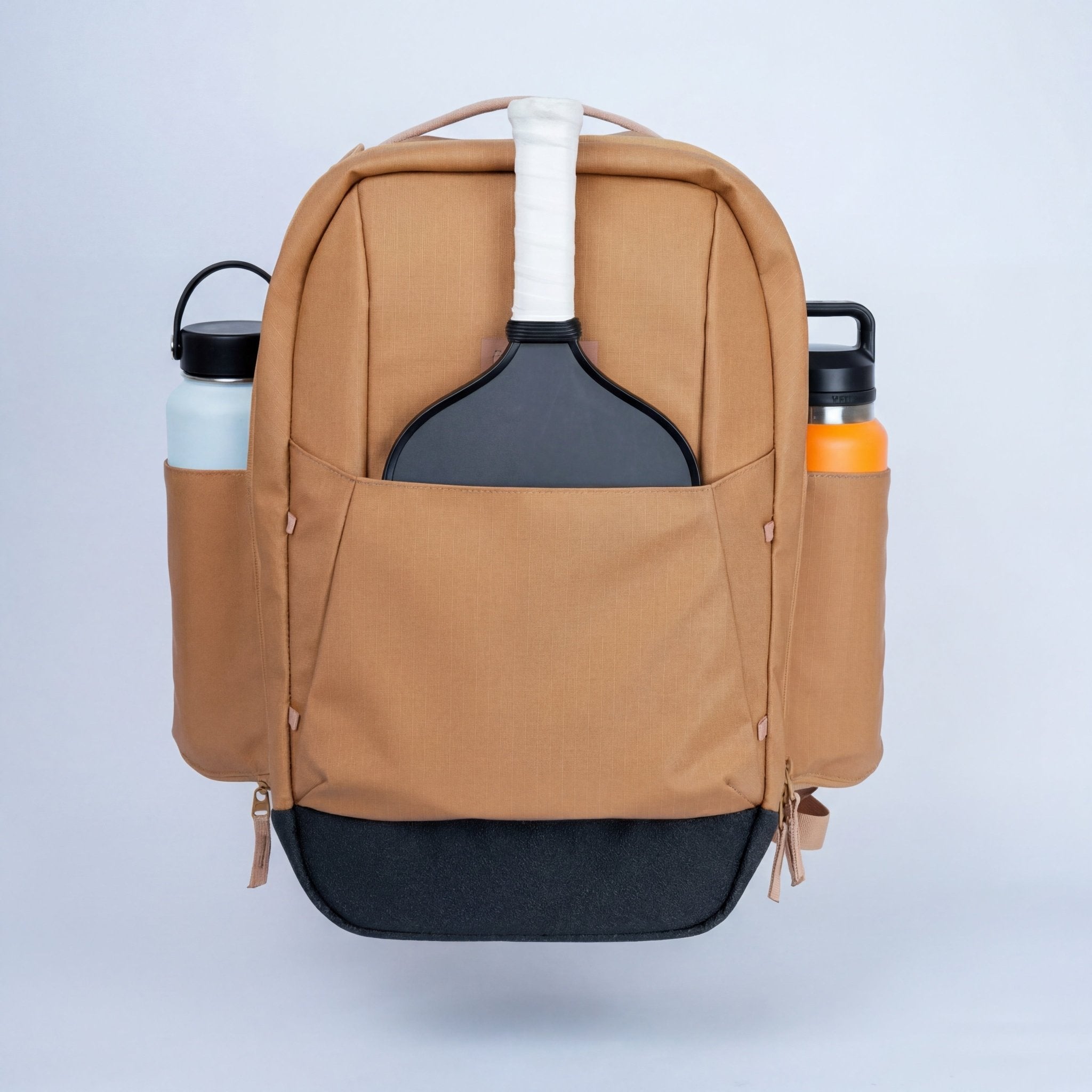
- Modular paddle sleeve configures from 1 to 5 paddles — flexible enough that your bag setup changes with your session, not just your shoes
- 15" padded laptop sleeve — doubles as a secure valuables pocket on days you're not carrying a laptop
- Structured base that stands upright on the bench — no digging, no tipping
The Court Caddy is the choice for players who've been through a cheaper bag and know what failed. At PPA Tour and APP Tour events, it's the bag you see on the bench next to Ben Johns-level infrastructure — purpose-built gear from people who play at that intensity. It's been covered in Pickleball Effect and The Kitchen as the standard for serious recreational and competitive players.
Built-In vs. Modular Shoe Storage: Which Wins for Your Game
This is the question no other shoe compartment roundup answers directly. Most guides list bags with shoe pockets and move on. Here's the decision framework FORWRD built — and why it changed the design of the Court Caddy.
Choose Built-In When:
- You always arrive in street shoes. If you change into court shoes at the facility 100% of the time, a built-in compartment is ready for every session with zero setup required.
- You play 1–2x per week. At lower frequency, the weight of a fixed compartment is negligible, and the convenience of "always there" outweighs the flexibility you'd gain from modular.
- Budget is the primary filter. The JOOLA Tour Elite and CRBN Pro Team deliver solid built-in shoe isolation at $130–149. If the modular system's premium doesn't fit your use case, these are genuinely good bags for their price tier.
Choose Modular When:
- You play 3+ times per week. Session variety matters at this frequency. Some days you need shoe isolation; some days you're heading straight to the court in your court shoes. Modular adapts; built-in doesn't.
- Durability matters over a multi-year horizon. YKK AquaGuard zippers outlast standard zippers significantly for outdoor players. The shoe compartment configuration is secondary to the bag's core structural durability — and on that score, the Court Caddy wins decisively.
- You want a bag that grows with your game. The Court Caddy's entire architecture is modular — paddle sleeve, shoe cube, accessory organization. As your needs evolve, the bag adapts rather than forcing a replacement.
The Honest Tradeoff
The Court Caddy's shoe cube is sold separately — that's a real upfront consideration. For players who are already sold on the bag and need shoe isolation on most sessions, it adds to the total cost. For players who need it occasionally, the option to add it when needed (and leave it home when not) is exactly the point.
The Court Caddy comes with a lifetime warranty. Players who carry it to APP and PPA Tour events, outdoor summer sessions, and court-to-work commutes aren't replacing it every season — the $195 investment spreads across years. At that horizon, the modular investment makes sense. See our tournament bag guide for the full breakdown of what serious players carry.
Shop the Court Caddy Pickleball Backpack →
FAQ: Common Questions About Pickleball Bags with Shoe Compartments
Which pickleball bags have a ventilated shoe compartment?
The JOOLA Tour Elite has a fully ventilated built-in shoe compartment accessible at the bottom of the bag. The CRBN Pro Team includes a mesh-lined shoe section. The FORWRD Court Caddy uses an optional modular shoe cube with ventilated construction. ADV Tennis Pro also features a dedicated ventilated shoe pocket designed for larger shoe sizes.
Does the Court Caddy have a separate shoe compartment?
Not built-in. The Court Caddy uses an optional modular shoe cube that attaches magnetically, keeping shoes isolated when you need it, removed when you don't. Players who tested both approaches at 3x+/week frequency consistently chose the modular option for its per-session configurability. If you need shoe isolation on every session, a built-in compartment bag like the JOOLA Tour Elite is worth considering.
What is the best pickleball bag for keeping shoes separate?
For players who always change shoes at the facility, the JOOLA Tour Elite (~$130–150) delivers solid built-in ventilated separation at a competitive price. For players who play 3+ times per week, want long-term zipper durability, and value a configurable load, the FORWRD Court Caddy is the stronger long-term investment — especially combined with its lifetime warranty and YKK AquaGuard zippers.
Are shoe compartments in pickleball bags waterproof?
No — built-in shoe compartments are ventilated mesh by design, which means breathable but not waterproof. The ventilation prevents odor buildup, which is the primary problem they solve. For weather protection of your paddles and main compartment, prioritize YKK AquaGuard zippers on primary pockets over any waterproofing claims on the shoe section — the two design goals work against each other. For more on weather protection, see our summer bag guide.

Leave a comment
This site is protected by hCaptcha and the hCaptcha Privacy Policy and Terms of Service apply.