

Last updated: June 2026
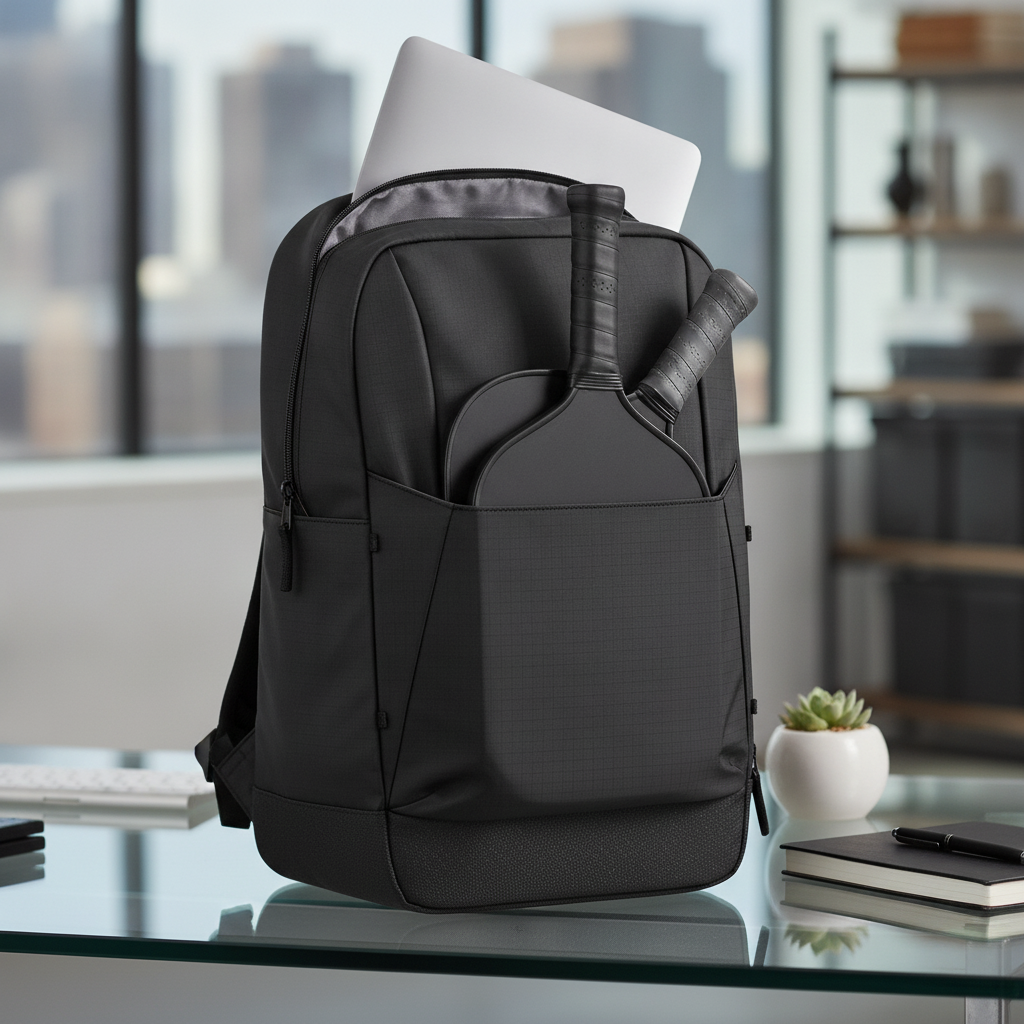
The best pickleball commuter bag holds a 15"+ laptop, at least two paddles, a change of clothes, and fits into a conference room without announcing that you're about to bolt to the courts at 6 PM. Most pickleball bags fail two of those four requirements — usually the laptop sleeve (too shallow, or doesn't exist) and the office part (it looks like a gym bag). Here's what actually works, based on 3 months of commuting with paddles on public transit, and why the design decisions that make a bag work for the office are different from what makes it work at a tournament.
Disclosure: This post contains affiliate links to Pickleball Central. If you purchase through our links, FORWRD earns a small commission at no extra cost to you. We only link to products we'd recommend regardless.
The Court-to-Work Lifestyle: Who Actually Needs a Commuter Pickleball Bag
Three years ago, the obvious advice was "just use two bags." A work backpack for the office, a court bag in your car. Clean separation, no odor crossover, no problem.
Then I moved to a city without a car.
Tuesday and Thursday: subway at 8:30 AM in work clothes, straight to a downtown office, then a 6:30 PM league match across town, then subway home with damp wristbands and an empty water bottle. The two-bag system stops working when you're walking 10 blocks between locations. You either carry both everywhere — awkward — or you leave gear at two different locations and spend Tuesday morning wondering if you packed extra socks.
The commuter pickleball player exists in larger numbers than most gear companies acknowledge. It's anyone who:
- Plays before or after work 2+ days a week
- Commutes to courts via transit, walking, or bike (no car as staging area)
- Works in an office environment where gear appearance matters — business casual and above
- Hates repacking the same items every morning
Pickleball skews toward employed adults. Which means a significant portion of the player base shows up to games from offices, not parking lots. The market for a work-capable pickleball bag is bigger than the gear companies building for tournament duffels seem to realize.
The Minimum Spec Checklist: What a Real Commuter Bag Must Have
Not "nice to have" — must have. If your bag misses any of these, you need either two bags or a different bag. This is the commuter test — it's stricter than the court-only test because you're solving two different problems simultaneously.
If you want to dive into the laptop sleeve specifically, the Best Pickleball Bag With Laptop Sleeve (2026 Fit Test Results) covers every major option with actual size measurements. What follows is the full commuter picture.
| Spec | Minimum | Why It Matters |
|---|---|---|
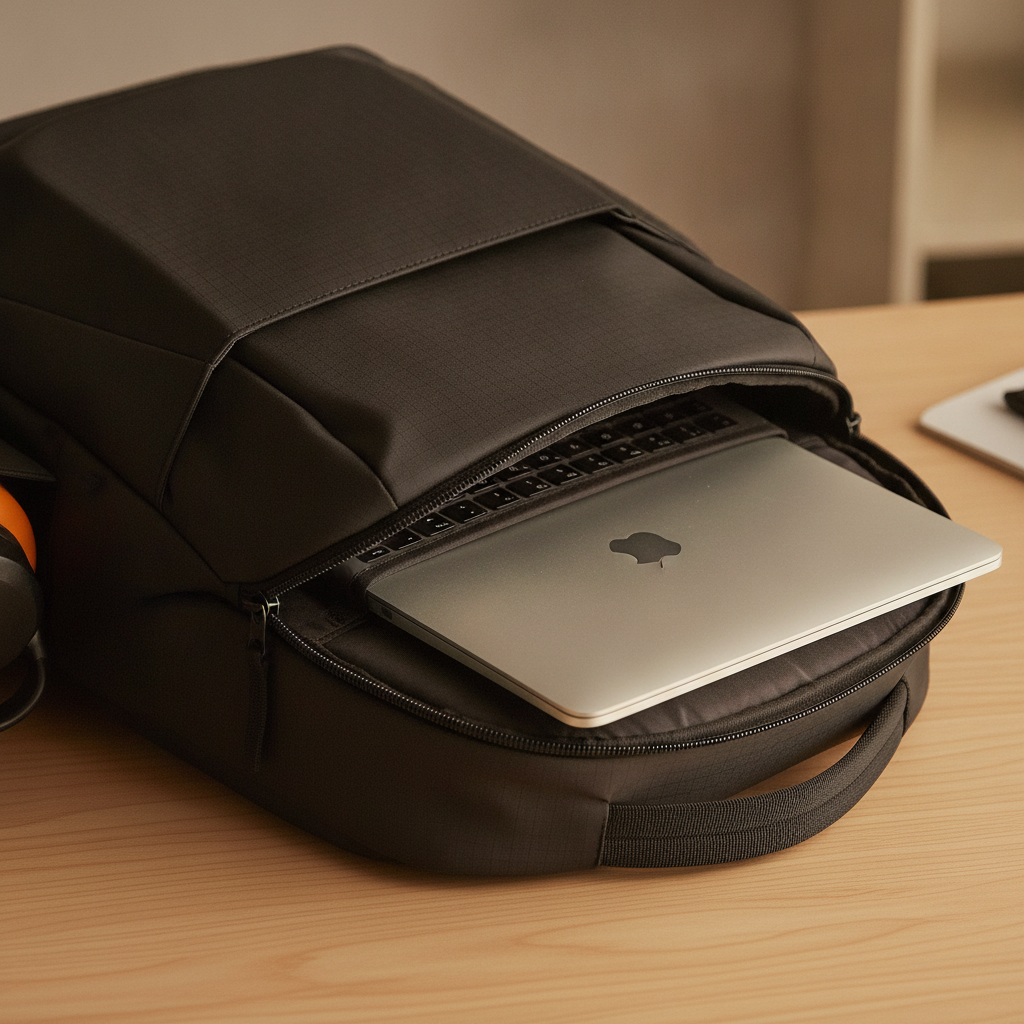
| Laptop sleeve | 15" padded, dedicated pocket | Your $1,500 laptop can't share space with paddles. Dedicated means padded on all sides — not a fabric divider with a flap |
| Paddle isolation | Dedicated sleeve, separate from main compartment | Paddles sharing space with files or a water bottle = scratched faces and damp documents |
| Weather resistance | Water-resistant zippers + outer shell | You will get caught in rain at some point. Your laptop cannot get wet. Non-negotiable in any climate. |
| Office profile | Neutral colorway, no molle webbing or brash sport branding | A tournament duffel in a glass conference room reads wrong. The bag signals who you are before you open your mouth. |
| Carry ergonomics | Padded back panel + sternum strap | A fully loaded commuter bag weighs 15–20 lbs. Worn 2–3 hours daily on transit, your spine keeps track. |
| Wet/dry separation | Isolated compartment or dedicated shoe cube | Post-game gear (wristbands, damp shirt, sweaty socks) cannot share space with work clothes. The smell arrives before you do. |
What to Pack: The Exact Loading Strategy That Works
Here's the commuter insight that took me longer to figure out than it should have: you're not repacking this bag every day. That's the whole point. The strategy that actually works separates what stays permanently from what you add and remove on game days.
The commuter bag packing checklist:
| Stays in the bag permanently | Add on court days |
|---|---|
| Practice paddle (dedicated sleeve) | Match paddle (second slot) |
| 2–3 pickleballs | Court shoes (in shoe bag or shoe cube) |
| 2 spare overgrips | Athletic clothing (shorts, shirt, wristbands) |
| Sunglasses (hard case) | Water bottle |
| Charger cable | Snack |
| Sunscreen single-use packet | Post-game towel (in stuff sack) |
| Laptop + charger (work days) |
The paddles and the work gear never need to cross paths if the bag is designed right. Laptop in the dedicated sleeve, paddles in their isolated compartment, court shoes in a cube or bag within the main compartment. The bag is sectioned — not a single cavity where everything competes for space. That's the fundamental design difference between a commuter-capable bag and a court-only bag that happens to be big enough to carry a laptop.
How to Handle Sweaty Gear at Work (the Part No One Writes About)
Every bag guide covers specs and features. Nobody covers what actually happens at 7:45 PM on the subway after a 6:30 match, with damp wristbands and a wet shirt in your bag.
What breaks down in cheap commuter bags after 3 months of the work-to-court routine:
- Zipper pull corrosion. Salt from sweat accelerates corrosion faster than rain alone. Bags with standard plastic zippers start sticky-pulling within a season of daily wet/dry cycling. YKK AquaGuard zippers handle this — the rubber seal keeps the zipper mechanism isolated from the salt.
- Shoulder strap separation. The anchor point stitching fails first, usually at the d-ring attachment. Most bags use single stitching at this junction; the load-bearing stress of a 15–18 lb bag multiplies when you're moving fast on stairs or grabbing a pole on the subway.
- Laptop sleeve foam collapse. The compressed foam padding in cheaper bags loses structural integrity after 8–10 months of daily carry. The sleeve stops protecting once the foam flattens out.
The practical fix isn't buying a more expensive bag — it's process:
- Bag a separate stuff sack for post-game gear. Wristbands, damp shirt, and socks go directly into a lightweight mesh bag right after the match. They never touch the main compartment loose. A small mesh gear bag costs under $10 and completely solves the odor-spread problem.
- Crack the main zipper on the commute home. Even 2 inches of airflow on a 20-minute subway ride cuts next-morning smell by 70%. The bag ventilates; you arrive home with a fresh bag.
- Court shoes get their own system. Dedicated shoe cube (sealed fabric structure) or a waterproof shoe bag — never loose in the main compartment. Shoe rubber picks up court grit, and that grit ends up on your laptop sleeve if you're not deliberate about it.
Court Caddy vs Court Ranger V2: Which Commuter Setup Fits You
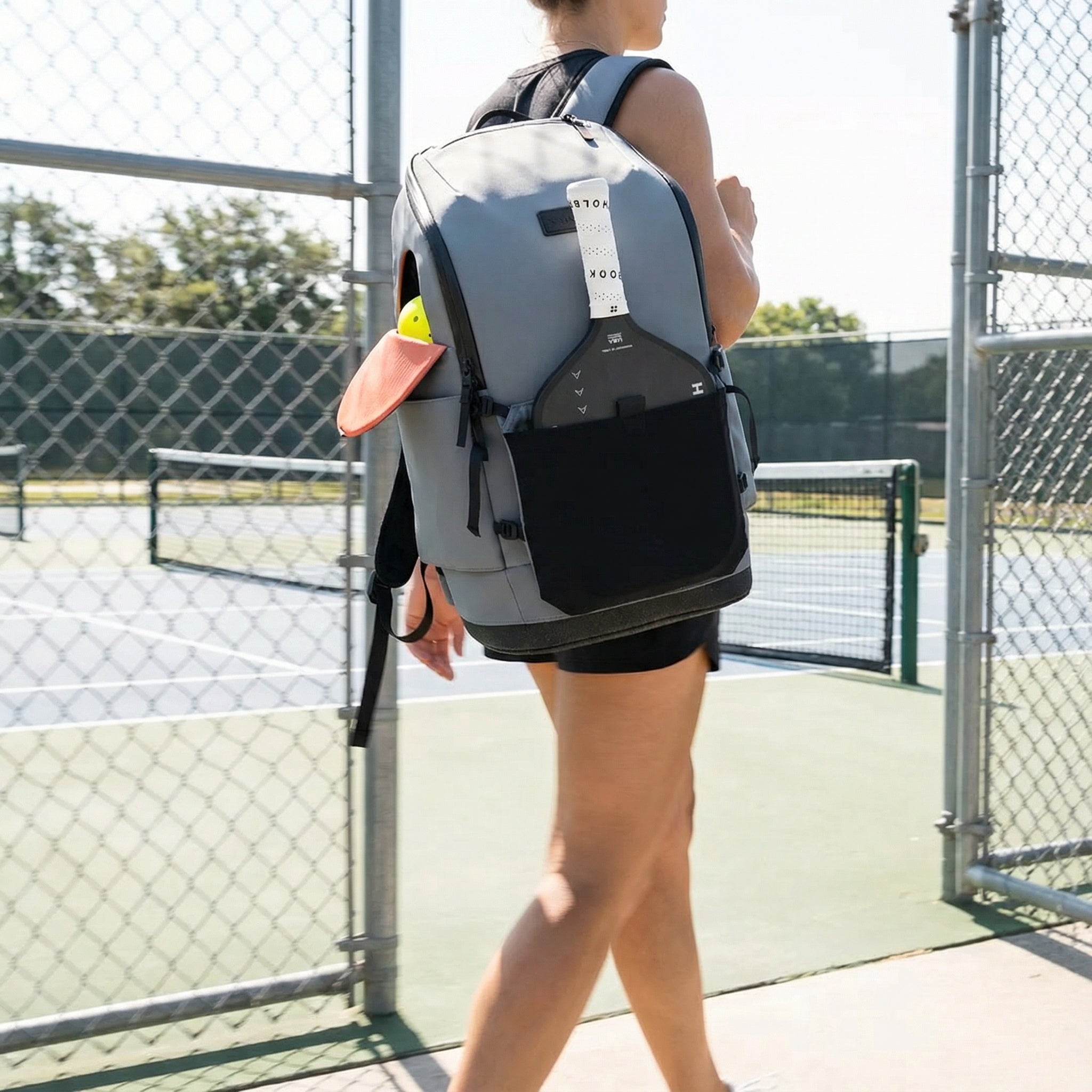
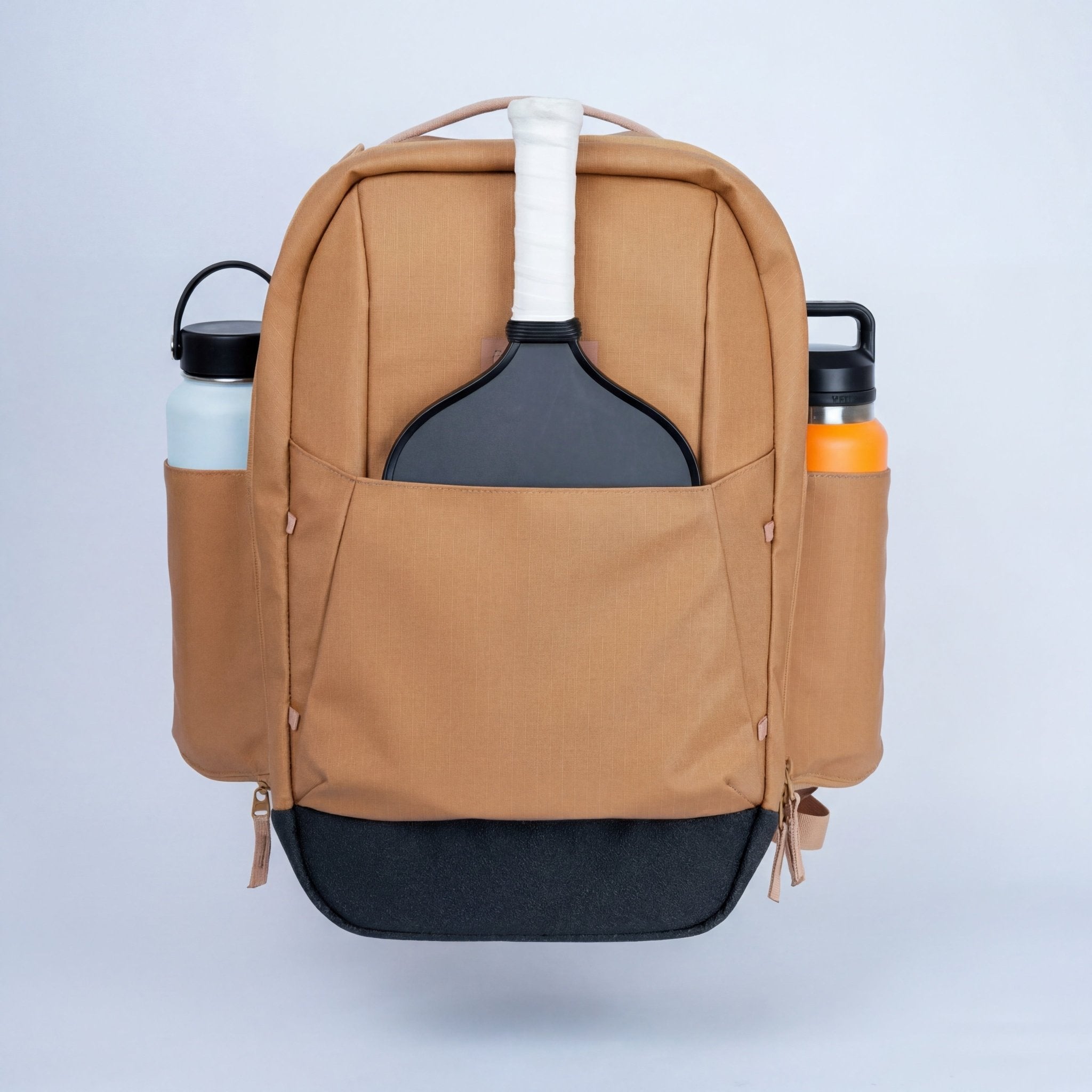
FORWRD makes two bags, both designed with input from 500+ real players, and both clear the commuter bar — padded laptop sleeve, YKK AquaGuard weatherproof zippers, clean profile. The choice between them comes down to how many paddles you carry and how much you care about volume versus daily weight.
| Court Caddy | Court Ranger V2 | |
|---|---|---|
| Price | $325 | $195 |
| Laptop sleeve | 15" padded | 16" padded |
| Paddle capacity | Up to 4 (modular sleeve) | 2–3 paddles |
| Warranty | Lifetime | Lifetime |
| Best commuter fit | Players with 2+ paddles in rotation, coaches, tournament travelers | Daily commuters who want lighter carry, players with 1–2 paddles |
The case for the Court Caddy in a commuter setup: you keep a practice paddle permanently in the bag and add your match paddle on game days. The modular sleeve configures from 1 to 4 paddles, so the permanent paddle sits cleanly without rattling around in an oversized slot. No rearranging the whole bag to access it.
"The sleeve modularity wasn't just about capacity — it was about not having to unpack the whole bag on a city sidewalk to get to your second paddle. If you're coming from the office, you don't have time for that."
— Topher, FORWRD Co-Founder
The case for the Court Ranger V2: lighter daily carry, slightly lower profile at the office, and the 16" sleeve actually gives you more room for larger laptops — MacBook Pro 16" and Dell XPS 15 both fit with comfortable clearance. If you play twice a week and never carry more than two paddles, it's the better value by a meaningful margin.

Top Pick: FORWRD Court Caddy Backpack
15" padded laptop sleeve, modular paddle system (1–4 paddles), YKK AquaGuard weatherproof zippers, lifetime warranty. The only pickleball bag designed from the ground up for the work-to-court commute.

The Bags Worth Considering Besides FORWRD
Two bags come up consistently in commuter conversations on r/pickleball and in pickleball Facebook groups. Neither fully solves the commuter problem, but both are worth knowing about honestly:
CRBN Pro Team Backpack (~$110)
Clean aesthetic, solid build, well-organized paddle compartment with thermal lining. The problem for commuters: no dedicated padded laptop sleeve. The main compartment has enough volume to carry a laptop, but it rides alongside your other gear with no padding protection. For a $1,500 laptop on a daily commute, that's a hard pass. If you work from home and only need the bag for transit to and from the court — not a work laptop in tow — CRBN is worth a serious look at that price point. See CRBN bags at Pickleball Central →
Selkirk Core Tour Bag (~$120)
More volume than the CRBN, decent organization, and a profile that reads professional enough for casual office environments. Same fundamental commuter limitation: no dedicated padded laptop sleeve. If you carry your laptop in a separate protective sleeve and just need a court bag that won't look out of place at the office, the Selkirk Core Tour is a reasonable $120 choice. It won't last as long as a lifetime-warranted bag at this price, but it's honest competition. See Selkirk bags at Pickleball Central →
The honest summary: if carrying a laptop is non-negotiable, neither bag fully solves the problem. They're solid court bags that look presentable at the office. FORWRD built the Court Caddy and Court Ranger V2 because no one else was treating "laptop-carrying office worker" as a primary design requirement rather than an afterthought.
Stop carrying two bags.
The Court Caddy ($325) handles the full commuter spec: laptop, paddles, court shoes, work clothes, weatherproof construction, lifetime warranty. The Court Ranger V2 ($195) covers the same ground lighter, with a 16" sleeve. Designed with 500+ real players who had the same problem.
FAQ: Pickleball Commuter Bag Questions
Can you wear a pickleball bag as a work commute bag?
Yes — if it has a dedicated padded laptop sleeve and doesn't look like a gym bag. Most pickleball bags fail on one or both counts. The FORWRD Court Caddy and Court Ranger V2 are specifically designed for the work-to-court commute, with padded laptop sleeves (15" and 16" respectively) and clean professional profiles that work in most office environments.
What's the best pickleball bag for laptop and paddles together?
The Court Caddy Backpack ($325) is the strongest option — 15" padded laptop sleeve, modular paddle sleeve (1–4 paddles), YKK AquaGuard weatherproof zippers, lifetime warranty. The Court Ranger V2 ($195) is the lighter alternative with a 16" laptop sleeve for daily commuters who carry 1–2 paddles and want lower-profile daily carry.
How do you pack a pickleball bag for the office?
Keep permanent items in the bag at all times: one practice paddle, overgrip, sunglasses, charger. On court days, add: laptop in the padded sleeve, match paddle, court shoes in a shoe bag, and a change of clothes. Keep post-game damp gear in a separate stuff sack so it never touches your work clothes on the commute home.
Is the Court Caddy good for commuting?
Yes — the Court Caddy is one of the only pickleball bags explicitly built for the commuter use case. The 15" padded laptop sleeve fits MacBook Pro and most 15" laptops with room to spare. The modular paddle sleeve isolates paddles from work documents. YKK AquaGuard zippers handle rain. The black colorway and clean profile work in most office environments.
What size laptop fits in a pickleball backpack?
Most pickleball bags with laptop sleeves fit 13"–15" laptops. The FORWRD Court Caddy fits up to 15"; the Court Ranger V2 fits up to 16". Bags without dedicated padded sleeves — CRBN, Franklin, most Selkirk options — can physically fit a laptop in the main compartment but offer zero padding protection. Not recommended for daily commute use.
Do I need two separate bags for work and pickleball?
Only if your current bag fails the commuter checklist: dedicated padded laptop sleeve, isolated paddle compartment, weather-resistant shell, and professional enough aesthetics. If your bag misses any of those, two bags is the safer call. If it hits all four, one bag is lighter, cheaper to maintain long-term, and means one less thing to forget at home.

Leave a comment
This site is protected by hCaptcha and the hCaptcha Privacy Policy and Terms of Service apply.