

Disclosure: This post contains affiliate links to Pickleball Central. If you purchase through our links, FORWRD earns a small commission at no extra cost to you. We only link to products we'd recommend regardless.
Here's the honest answer: most pickleball players don't need a rolling bag. If you drive to your local courts and carry two paddles, a few balls, and a water bottle — wheels are solving a problem you don't have. A well-organized backpack handles daily court carry better than any rolling option on the market right now.
Three player profiles genuinely benefit from wheels: seniors managing joint or shoulder issues, frequent air travelers flying to multi-day events, and competitive tournament players hauling 6+ paddles and a full day's gear. This guide covers all of them — and tells the other 80% of players what they need instead.
Last updated: June 2026
Who Actually Needs a Rolling Pickleball Bag (And Who Doesn't)
Rolling bags got popular in pickleball the same way they got popular in tennis: tournament players needed to move a lot of gear across a big venue. But pickleball's most common use case — driving 15 minutes to open play with a backpack — doesn't have that problem. Here are the four player profiles that split on this question.
Profile 1: The Senior Player with Shoulder, Back, or Joint Issues
This is the clearest case for wheels. If a loaded backpack through a parking lot causes real discomfort — or you're managing a shoulder injury, bad knee, or general mobility limitations — a rolling bag solves a genuine problem. ZÜCA's bags double as seats, which means you can park courtside and sit between games. That's not a gimmick when your back demands it.
Profile 2: The Frequent Air Traveler
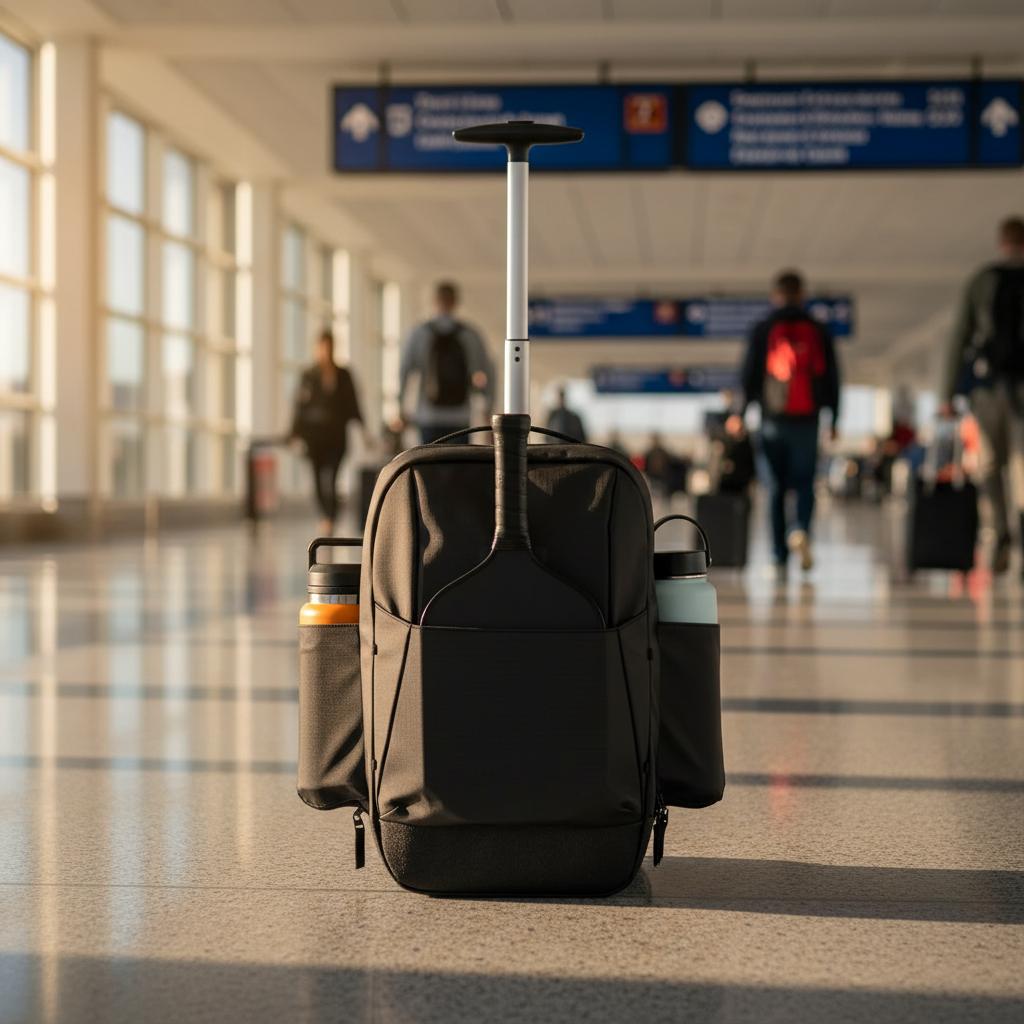
Flying to PPA or APP events regularly? A rolling bag makes check-in and airport navigation meaningfully easier than hauling a loaded backpack through a terminal. Worth knowing upfront: most rolling pickleball bags are checked-luggage-only — more on the overhead bin reality in a minute — but for a 3-day tournament trip where you're checking luggage anyway, that's completely fine.
Profile 3: The Competitive Player Hauling a Full Tournament Kit
A 4.5+ player heading to an all-day event might carry 4-6 paddles, two pairs of court shoes, a change of clothes, compression sleeves, recovery items, and enough food for 8 hours of competition. That gear gets heavy fast. Pulling it across a venue from 7 AM to 7 PM is easier on your shoulders than the alternative. Rolling bags were made for exactly this load.
Profile 4: The Recreational Player Driving to Local Courts 3-5x a Week
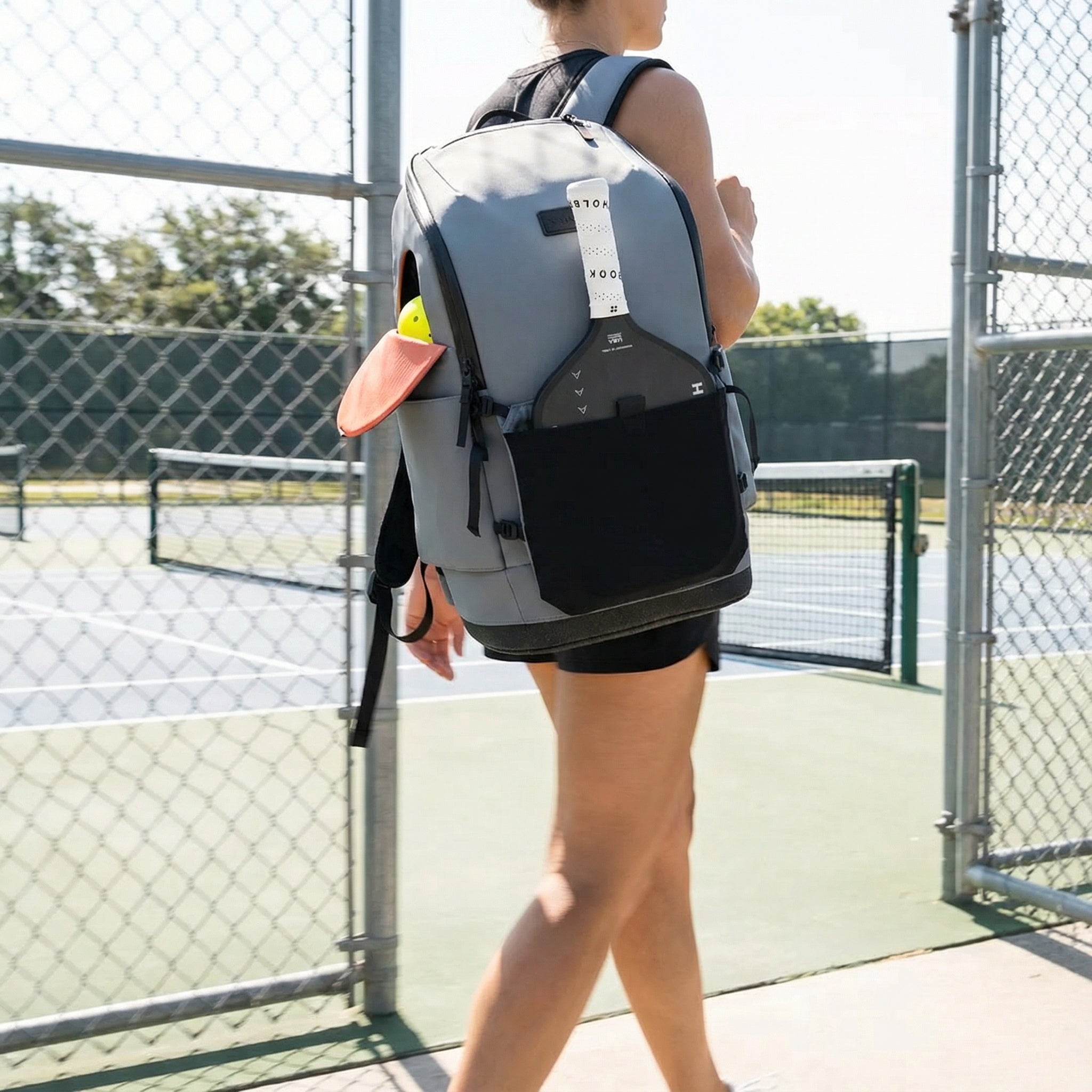
Honest answer: skip the wheels. A backpack with a proper paddle sleeve is faster out of the car, easier to stow in a back seat, and handles outdoor court surfaces better — rolling bag wheels catch on cracked concrete and gravel in ways that get old fast. If your biggest challenge is staying organized, a purpose-built pickleball backpack solves that more elegantly than any rolling bag at any price.
Best Rolling Pickleball Bags 2026: Top Picks Compared
The rolling pickleball bag market is much smaller than the backpack market. Three bags are worth knowing — plus the backpack alternative for the majority who don't need wheels.
| Bag | Price | Dimensions | Carry-On? | Best For |
|---|---|---|---|---|
| ZÜCA Pickleball Pro | $299 | 19.5"H × 10"W × 13.5"D | No (13.5" depth exceeds 9" limit) | Air travelers, seniors wanting courtside seat |
| ZÜCA Pickleball Sport | $259 | 18"H × 10"W × 13"D | No | Everyday rolling carry, seniors |
| ONIX Pro Team Wheeled Duffel | $139.99 | 31"L × 16"W × 12.5"H | No (oversized for all cabins) | Tournament players, max volume |
| FORWRD Court Caddy | $325 | Standard backpack sizing | Yes — fits standard overhead bins | Daily carry, air travel, court-to-office |
ZÜCA Pickleball Pro — $299
ZÜCA is the standout name in rolling pickleball bags, and the Pro is their flagship. At 9.3 lbs empty, it's heavier than most loaded backpacks — the tradeoff is a built-in seat rated to 300 lbs that matters if you're spending 8 hours at a tournament venue. The aluminum alloy frame, shock-absorbing urethane wheels, and telescoping handle are all premium-quality. Paddle cover and hand-washable insert are included.
What ZÜCA doesn't communicate clearly: their "TSA Compliant" designation refers to frame screening readability — the metal frame passes X-ray without triggering secondary screening. It does not mean the bag fits in an overhead bin. At 13.5" deep versus the 9" standard airline limit, the ZÜCA Pro is checked luggage. Plan accordingly before you get surprised at the gate.
Shop ZÜCA pickleball bags at Pickleball Central →
ZÜCA Pickleball Sport — $259
Same core concept as the Pro — same seat, same frame quality — slightly smaller at 18"H × 10"W × 13"D and $40 cheaper. For most seniors and everyday rolling-bag users, the Sport is the better buy. The extra 1.5 inches the Pro adds in height doesn't offer a meaningful storage advantage for pickleball-specific packing, and the "TSA Compliant" label on the Pro is misleading enough that the savings feel earned either way.
ONIX Pro Team Wheeled Duffel — $139.99
A completely different approach from ZÜCA. At 31"L × 16"W × 12.5"H, the ONIX is a wheeled duffel with serious tournament-volume storage — four zippered pockets, urethane wheels, retractable handle. It won't sit upright the way a ZÜCA does, so courtside seating is out. But for a competitive player who checks luggage and needs maximum gear capacity at a fair price, the ONIX at $139.99 is more practical than a ZÜCA at twice the cost.
Shop ONIX bags at Pickleball Central →
Hard-Sided vs. Soft Rolling Bags: Which Works Better for Pickleball?
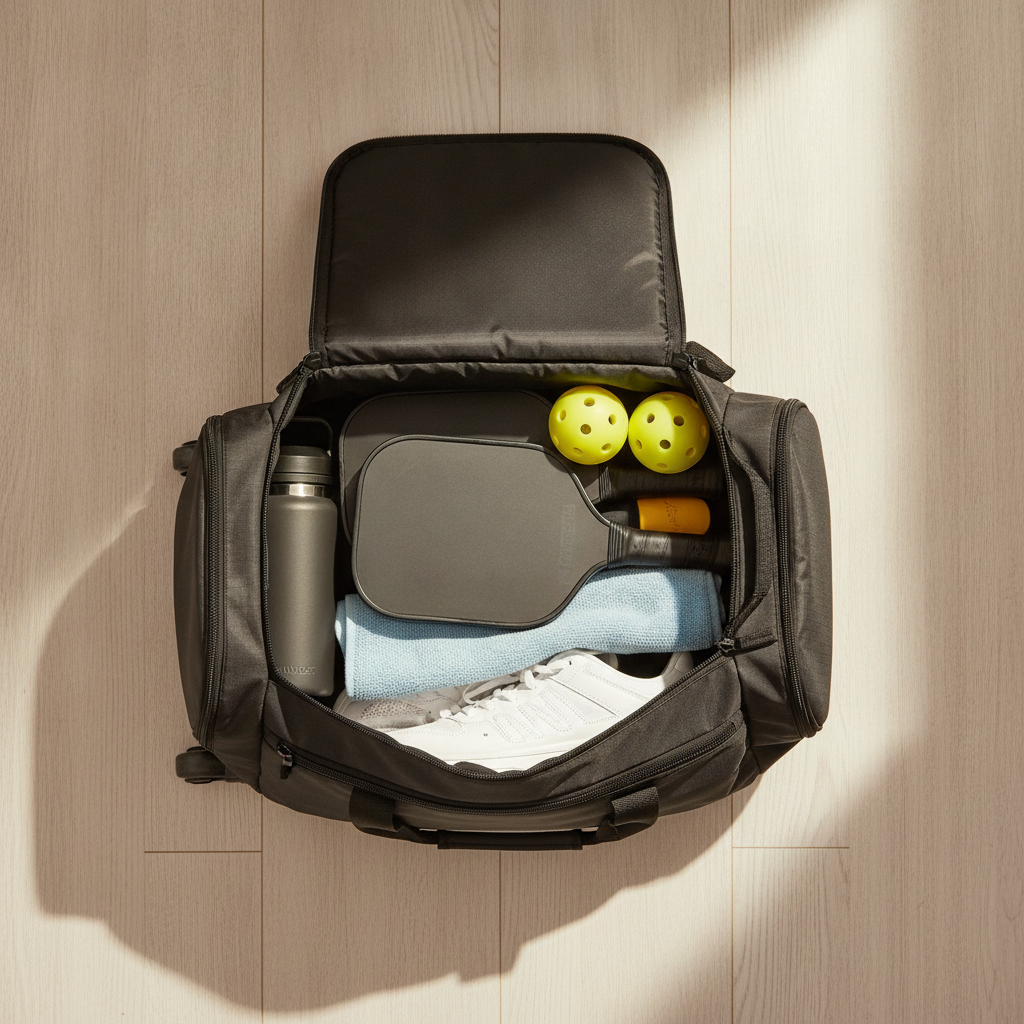
Nearly all rolling pickleball bags are soft-sided — fabric bodies mounted on wheeled frames, like ZÜCA's design. True hard-sided rolling cases exist for racket sports but aren't marketed for pickleball specifically in 2026.
Soft rolling bags (ZÜCA, ONIX Duffel): Lighter frames. Compressible when empty. ZÜCA's customizable insert system is a genuine advantage. The downside: softer fabric sides offer less paddle protection than rigid cases. For car transport, soft is fine. For checked luggage with premium paddles inside — a $350 thermoformed paddle getting crushed in baggage handling is a real concern with any soft bag.
Hard-sided cases for paddles: If paddle protection during flights is your priority, dedicated hard paddle cases are better than a soft rolling bag. You'd check the hard case and carry a personal-item bag for clothes and accessories. More pieces to manage, but your paddles stay intact.
On wheel quality: ZÜCA's urethane wheels handle smooth surfaces cleanly. Cheap rolling bags under $80 on Amazon typically use brittle plastic wheels that don't roll true and crack in cold weather. On outdoor concrete — where surface gaps and cracks are standard — bad wheels are a persistent frustration. If you're committing to a rolling bag, the wheel quality alone justifies paying for ZÜCA or ONIX over off-brand alternatives.
Do Rolling Pickleball Bags Fit in an Overhead Bin? The TSA Reality Check
Most pickleball travel guides give vague "check with your airline" non-answers on this question. Here are the actual numbers.
Standard carry-on size limits for the three major US carriers:
- United Airlines: 22" × 14" × 9"
- Delta Air Lines: 22" × 14" × 9"
- American Airlines: 22" × 14" × 9"
Run the rolling bag dimensions against that limit. The ZÜCA Pickleball Pro is 19.5"H × 10"W × 13.5"D. That depth is 4.5 inches over the 9" limit. The Sport is 13"D — still 4 inches over. The ONIX Duffel at 31"L isn't close on any dimension.
ZÜCA markets the Pro as "TSA Compliant." What they mean: the aluminum frame passes X-ray screening without triggering a secondary check. What they don't mean: the bag fits in a standard overhead bin. That terminology has caught enough players off-guard at gates that it's worth stating plainly here.
The actual takeaway: if you need paddles in the cabin, a pickleball backpack that fits within standard carry-on dimensions is more reliable than any rolling option on the market. The Court Caddy and Court Ranger V2 both fit in standard overhead bins and carry 2-3 paddles securely. No baggage fees. No carousel wait.
Rolling Bag vs. Backpack: A Decision Framework
"We designed the Court Caddy to go from Tuesday morning open play to a Wednesday afternoon flight to a Thursday conference — no bag swap. Rolling bags are great for tournament weeks. Court Caddy is for every other day of the year."
— Grub, FORWRD Co-Founder
Daily Commuter / Recreational Player
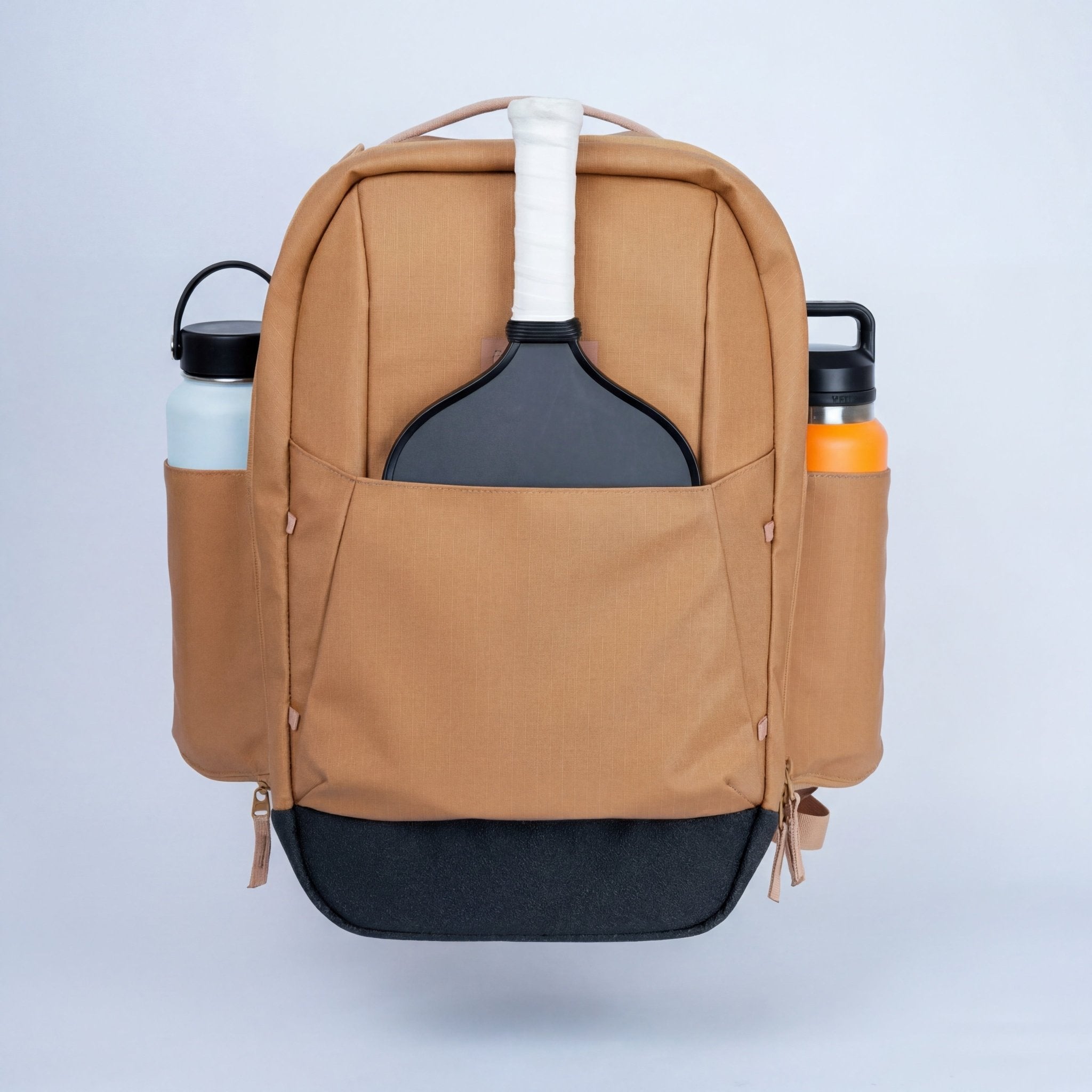
Get a backpack. A rolling bag is slower out of the car, awkward on uneven outdoor court surfaces, and overkill for a 2-paddle daily carry. The Court Caddy ($325) — designed with feedback from 500+ real players, featured in The Dink and Pickleball Effect — has a 15" padded laptop sleeve, a modular paddle sleeve for 2-4 paddles, and YKK AquaGuard zippers that don't fail in rain. It goes from car to court to office without looking out of place.
Occasional Air Traveler
Still probably a backpack. A carry-on backpack means no baggage fees, no carousel wait, and paddles stay with you in the cabin. The Court Ranger V2 ($195) carries 2 paddles, fits in standard overhead bins, and handles the airport-to-court transition cleanly. If you're already checking luggage for a longer trip, a rolling bag adds volume without the trade-offs.
Senior Player or Anyone Managing Mobility Issues
Rolling bag makes sense here. ZÜCA Sport ($259) is the pick — $40 cheaper than the Pro, same 300 lb-rated seat, same essential functions. Don't pay for the Pro's "TSA Compliant" designation since neither model fits in an overhead bin.
Multi-Day Tournament Player with Heavy Gear
Rolling bag earns its place. ONIX Wheeled Duffel ($139.99) offers more volume than any pickleball backpack at nearly half the price of the ZÜCA Pro. Check it, and pair with a personal-item bag for paddles in the cabin. ZÜCA Pro is the better choice if you want the courtside seat function at the venue.

Our Pick for Daily Court Carry
The Court Caddy fits 2-4 paddles in its modular sleeve, has a 15" padded laptop compartment, and travels in overhead bins — no wheels required.
FAQ: Rolling Pickleball Bag Questions
What are the best rolling pickleball bags?
The ZÜCA Pickleball Pro ($299) is the top rolling pickleball bag for seniors and tournament players who want a built-in courtside seat (rated 300 lbs). The ONIX Pro Team Wheeled Duffel ($139.99) is the better pick for maximum volume at a lower price. Neither fits in a standard airline overhead bin.
Do wheeled pickleball bags work as airline carry-on luggage?
No. Standard US airline carry-on dimensions are 22" × 14" × 9" (United, Delta, American). The ZÜCA Pro measures 13.5" deep — 4.5 inches over the depth limit. ZÜCA's "TSA Compliant" label refers to security screening, not overhead bin sizing. Plan to check any rolling pickleball bag when flying.
What is the difference between hard-sided and soft rolling pickleball bags?
Most rolling pickleball bags are soft-sided fabric on a wheeled frame. Hard-sided options are rare in pickleball-specific gear. Soft bags are lighter and more flexible; hard-sided cases offer better paddle protection for checked-luggage situations where rough baggage handling is a concern.
Are rolling pickleball bags worth it for recreational players?
Probably not. If you drive to local courts 3-5x per week with 2 paddles and standard gear, a backpack handles daily carry better — faster out of the car, easier on outdoor court surfaces, and no overhead. Rolling bags earn their place for seniors with mobility concerns, frequent air travelers, and competitive players with heavy tournament gear loads.
What size rolling bag fits in an overhead bin?
No current rolling pickleball bag fits within standard airline carry-on limits (22" × 14" × 9"). If you need paddles in the cabin, a full-size pickleball backpack like the FORWRD Court Caddy or Court Ranger V2 is more reliable for overhead bin travel than any rolling option on the market.

Leave a comment
This site is protected by hCaptcha and the hCaptcha Privacy Policy and Terms of Service apply.