

Disclosure: This post contains affiliate links to Pickleball Central. If you purchase through our links, FORWRD earns a small commission at no extra cost to you. We only link to products we'd recommend regardless.
The fastest way to get your kid into a pickleball league this fall: search "youth pickleball" + your city on USA Pickleball's junior programs page, or check your local recreation center's fall session schedule. Most programs open registration in August for a September start. If nothing exists nearby, scroll down — we'll show you how to start a school club from scratch.
Last updated: June 2026
Our kid started playing pickleball at a rec league two summers ago. The signup process was confusing, the skill groupings were off (she got placed with adults who'd been playing for years), and we spent $180 on gear before realizing half of it was overkill. None of that is unusual, apparently — we've heard the same story from a dozen parents at this point. This guide exists because we wish someone had given us a clearer picture first.
Why Pickleball Is Perfect for Kids Right Now
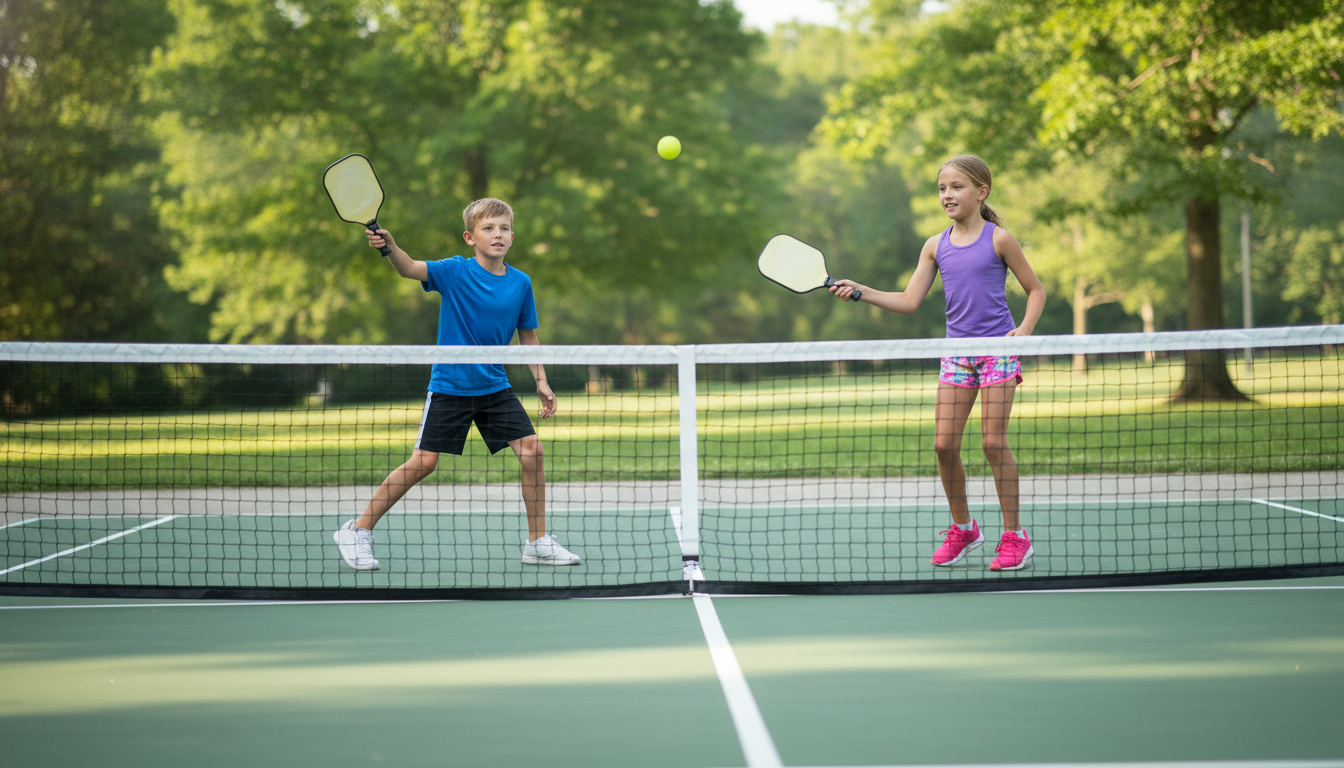
Most racket sports take years before they're fun. Tennis? You're chasing balls for six months before a rally lasts more than three shots. Pickleball's smaller court and slower ball means kids are rallying on their second day — and that early success matters enormously for keeping them engaged.
The numbers back this up. USA Pickleball reports that junior participation increased over 40% between 2023 and 2025, and several state athletic associations have added sanctioned high school club pickleball programs for the first time. Major League Pickleball launched Junior MLP in 2024, bringing team-style competition to youth athletes nationwide. The sport went from "something grandparents play" to a legitimate youth athletic pathway surprisingly fast.
Here's what makes it genuinely well-suited for school-age kids:
- Lower physical barrier. A 10-year-old can rally with an adult from day one. The court is 44 feet long — about the length of a driveway. Serves are underhand. Contact points are forgiving.
- Cheap to start. You need a paddle, a few balls, and court access. That's it. We'll break down costs in the gear section, but you can get a kid properly equipped for under $80.
- Social by design. Doubles is the standard format, which means your kid's always got a partner. Even open play involves constant rotation, so shy kids make friends faster than in individual sports.
- School integration is actually happening. PE coaches are adopting pickleball faster than any other racket sport because the equipment is cheap and multiple courts fit in one gym. If your kid's school doesn't have a program yet, the path to creating one is shorter than you'd think.
How to Find a Youth Pickleball League Near You
Start here — in this order:
1. USA Pickleball's club finder. Go to usapickleball.org/juniors and use their ambassador/club search. Filter by junior programs. This is the most reliable national database — clubs listed here have at least one credentialed ambassador or registered organizer.
2. Your local parks and recreation department. This is where most youth leagues actually live. Search "[your city] parks and recreation pickleball" and look for fall session registrations. Most rec centers open fall signups in July or August. Call the front desk if the website's outdated — which it often is.
3. The Picklr. They've built a Junior Academy membership program (ages 8-18) that includes open play, clinics, and tournaments for one monthly fee. If you have a Picklr location nearby, this is honestly one of the most structured entry points for kids — the programming is consistent and the skill groupings are better calibrated than most rec leagues.
4. Pickleball community Facebook groups. Search "[your city] pickleball" on Facebook. These groups are where local organizers announce junior programming, summer camps, and casual youth play. Post and ask — the pickleball community is genuinely welcoming to kids and parents.
5. School physical education programs. If your kid's school has pickleball in PE (increasingly common), the PE teacher is often the best person to ask about local youth leagues. They usually know the local club landscape and can make a direct introduction.
One thing worth knowing: many junior programs fill up within days of opening registration. If you find a program you want, don't wait. Set a calendar reminder for when fall signups open and register early.
What to Expect: Youth League Formats, Skill Levels, and Age Groups
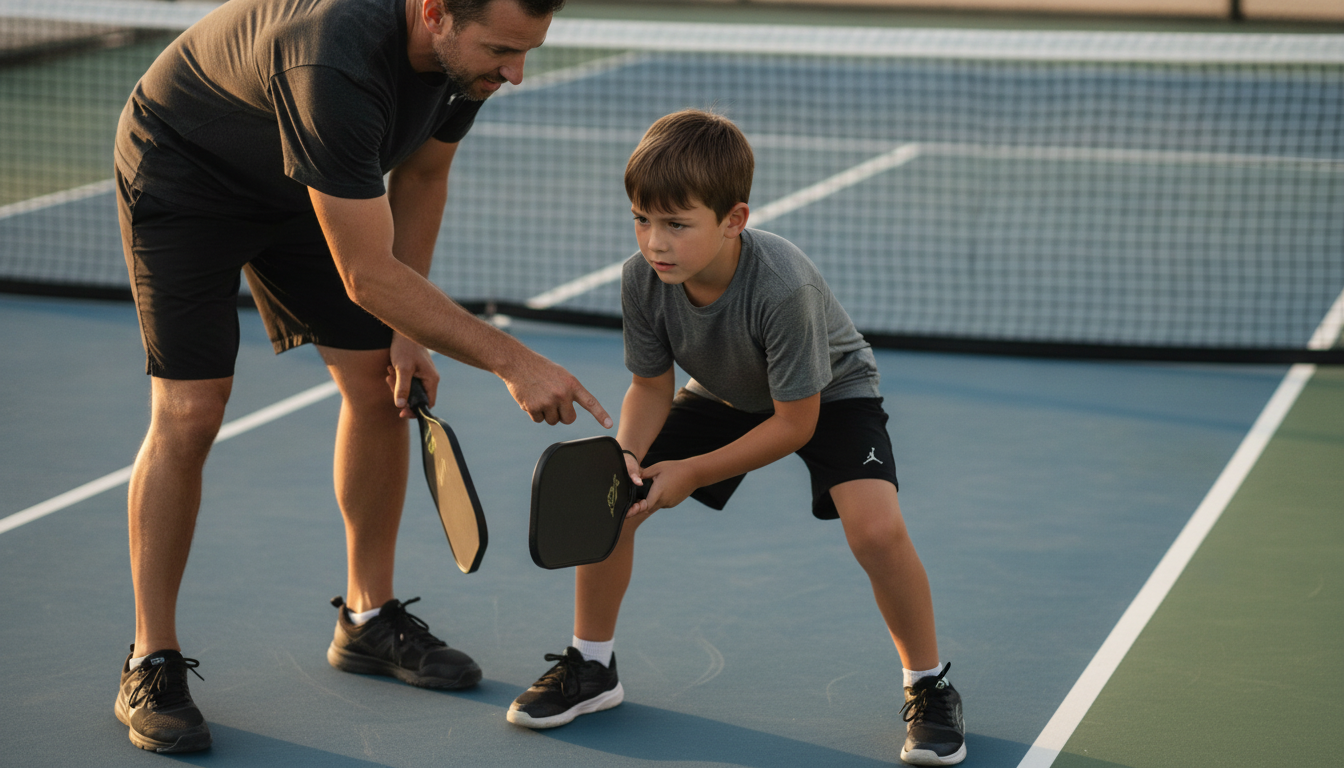
The biggest source of parent frustration we hear: skill mismatches. A kid who's been playing for three weeks doesn't belong in the same group as a 14-year-old who's been playing since sixth grade — but many rec programs don't have the bandwidth to calibrate carefully. Here's what to know going in.
Age groupings typically run: 8 & under, 9-10, 11-12, 13-14, 15-18. Some smaller programs collapse these into two groups (youth 8-12, juniors 13-18). If your program doesn't separate by age and skill, ask whether they do any initial assessment before placing players.
Skill levels for juniors: USA Pickleball uses a junior skill rating system similar to the adult DUPR (Dynamic Universal Pickleball Rating) system, but most rec leagues use informal groupings — beginner, intermediate, advanced. "Beginner" in a kids' league usually means genuinely new to the sport. If your child has ever played tennis or ping pong, they'll likely progress out of true beginner faster than expected.
Typical program formats:
- Rec league season: 6–8 weeks, 1-2 sessions per week, ends with a small round-robin tournament. Cost: $50–$120 per session depending on location.
- Clinic series: Skills-focused, usually 4–6 weeks. Better for brand-new players before entering match play.
- Open junior play: Drop-in, no structure. Great once your kid knows the rules and wants reps. Can be hit-or-miss on skill grouping.
- Junior tournaments: USA Pickleball-sanctioned events where kids register as juniors ($35 fee) and compete in their age/skill bracket. More competitive, but don't worry about this until after they've completed at least one league season.
One honest caveat: coaches in youth rec programs vary enormously in quality. Some have real teaching backgrounds; others are just experienced adult players who volunteered. Before registering, ask specifically: does the coach have any youth sports or USA Pickleball instructor certification? It matters more at the beginner stage than it does later.
How to Start a Pickleball Club at School: A Parent's Playbook
No local program? Or your kid wants to play at school specifically? Here's the path. We've walked through this process and the biggest unlock is realizing how low the institutional barriers actually are compared to other school sports.
Why school clubs work better than you'd expect
Starting a pickleball team requires athletic budget, a formal season schedule, and administrative buy-in that can take years. A club is different — it needs a faculty advisor, student interest, a time slot, and basic equipment. That's it. Pickleball specifically benefits from this because four courts fit in a single gym, the equipment costs under $500 for a full setup, and USA Pickleball has free educator resources and grant programs to cover some of the cost.
Step-by-step process
Step 1: Build student interest before you approach administration. Get 8-10 students to sign an interest sheet. Administrators respond better to demonstrated demand than parent enthusiasm. Your kid's friend group is the right starting point.
Step 2: Find a faculty advisor. Ideally the PE teacher — they already have court access and understand equipment management. If the PE teacher isn't interested, any faculty member who plays or is curious about the sport works. The advisor's time commitment is minimal (supervising practice, signing off on forms).
Step 3: Check what equipment already exists. Many PE departments already have pickleball equipment purchased for PE class. If that equipment can be borrowed for club use, you've eliminated the biggest cost hurdle.
Step 4: Apply for a USA Pickleball equipment grant. USA Pickleball's educator resources include grant opportunities and subsidized equipment kits specifically for schools and youth programs. A basic school setup (nets, paddles, balls) can cost $300-$500, but with a grant, that drops significantly or to zero.
Step 5: Pitch the principal. This is where most parents stall. Here's what actually works:
The One-Page Principal Pitch (Copy and Adapt This)
Sport overview: Pickleball is the fastest-growing sport in the U.S. (over 10 million registered players). It's low-impact, easy to learn, and appropriate for all fitness levels — which makes it uniquely accessible for students who don't participate in traditional school sports.
What we're asking for: Approval for a student club that meets [X days/week] after school in the gym for [Y months]. We have a faculty advisor committed to supervising ([Teacher Name]).
Equipment cost: $0 to start — we'll use existing PE equipment. Long-term, USA Pickleball offers equipment grants for school programs. No budget ask from the school.
Student interest: [X] students have signed an interest form (attached).
National resources available: USA Pickleball provides free curriculum guides, instructor training, and event support for school programs through their educator portal at usapickleball.org/educators.
Our ask: Approval to run a pilot for one semester, after which we'll report on participation and request continuation if interest holds.
The "pilot for one semester" framing matters — it reduces the perceived commitment from the administration and dramatically increases approval rates.
"The school program model works because you're not asking for much upfront — just a tryout. Give us a semester and we'll show you the numbers. That's how every successful school pickleball program we've worked with started."
— Grub, FORWRD co-founder and youth pickleball advocate
What Gear Do Kids Actually Need?
Short answer: a paddle, outdoor balls, and court shoes. Nothing else is required to start. Here's how to spend intelligently.
The paddle
For kids under 12, weight matters more than anything else. Look for paddles under 7.5 oz — anything heavier causes arm fatigue and bad habits (hitting with the elbow instead of the shoulder). For ages 12+, standard adult paddles in the 7.5–8.2 oz range work fine.
For beginners of any age, a graphite or fiberglass face is the right starting point. Carbon fiber is the performance tier — great for 4.0+ adult players, overkill for a 10-year-old still learning the third shot drop. Franklin makes solid beginner paddles in the $40–60 range at Pickleball Central, and JOOLA's entry-level line is similarly priced and widely available. Both hold up through a full season of junior play.
Balls
Outdoor pickleballs (harder plastic, smaller holes) are the standard for rec and league play. The Franklin X-40 is the official ball of USA Pickleball tournaments and about $10 for a 3-pack — it's the correct choice for junior play, not the foam training balls sold at big box stores.
Shoes
This is where parents overspend OR skip entirely — both are mistakes. Running shoes aren't designed for lateral movement and increase ankle injury risk on a pickleball court. Any court shoe (tennis shoe, volleyball shoe, dedicated pickleball shoe) with lateral support works. Budget $40–70 for a durable pair. Don't buy the cheapest option if your kid is playing twice a week — the support matters.
The bag question
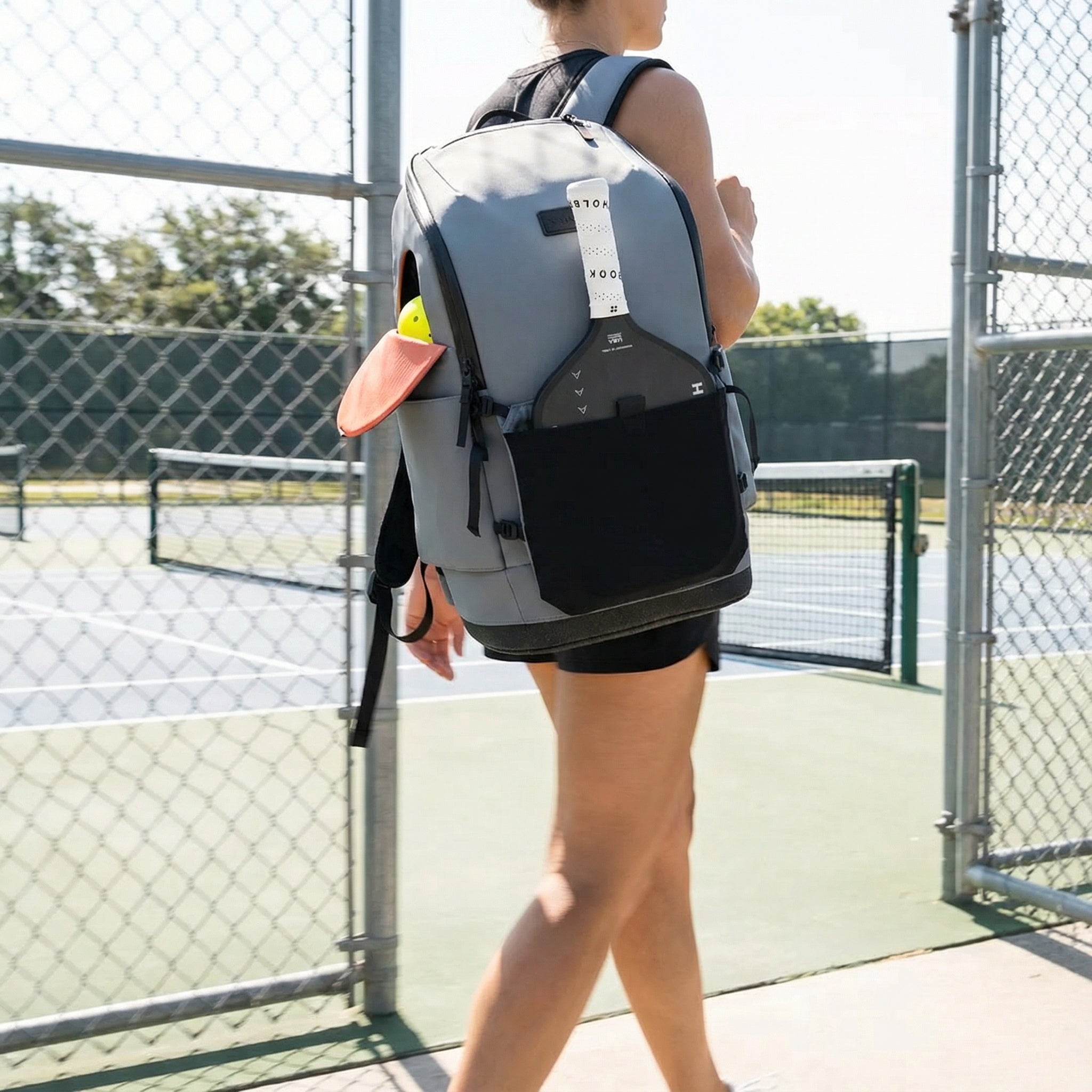
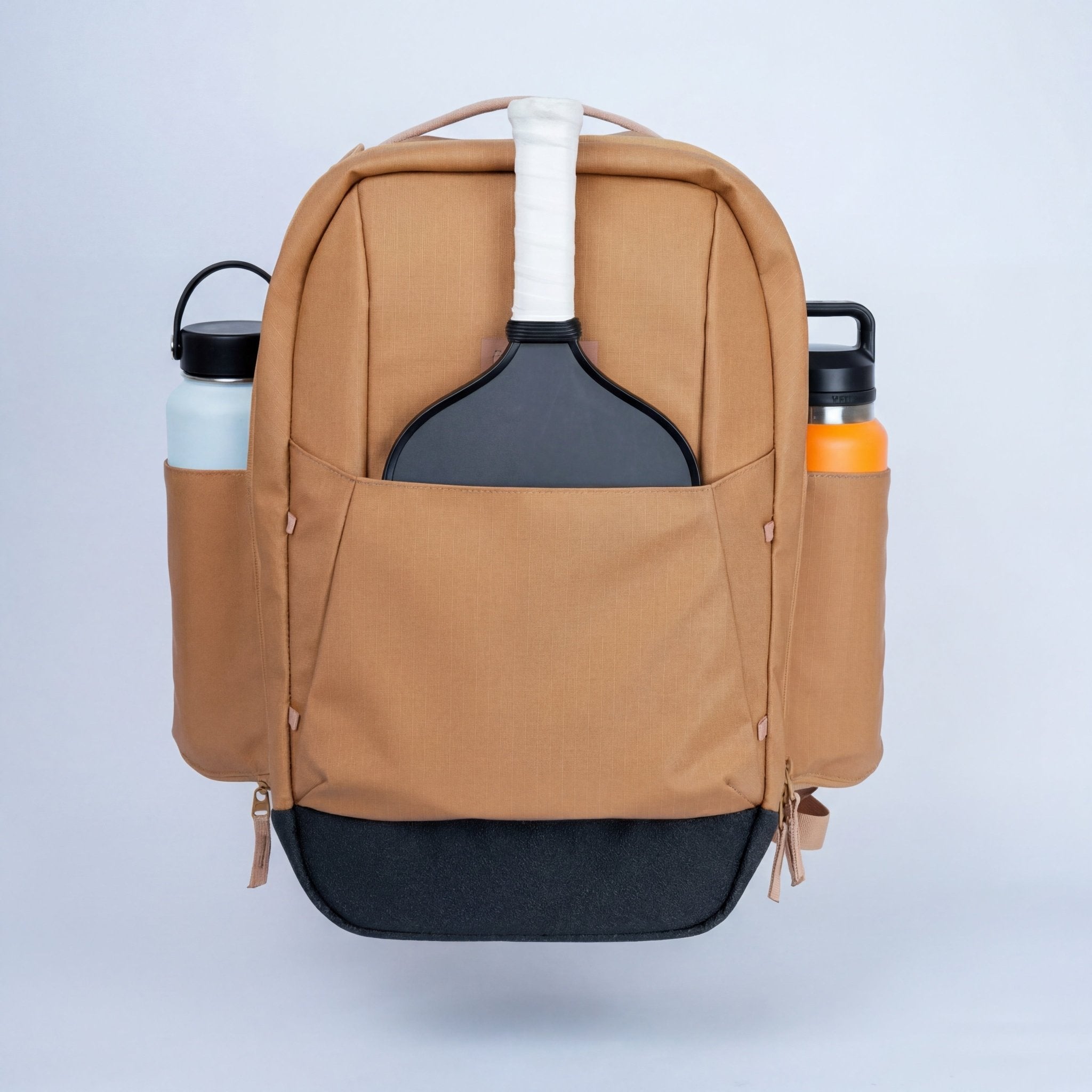
Kids who play 2+ days a week eventually need a dedicated bag — especially once they're carrying gear to school and then to practice. The Court Ranger V2 is worth a look for older kids (middle school and up) because the 16" laptop sleeve means it doubles as a school backpack — one bag for books and paddles. That's a practical consideration most "youth pickleball bag" guides skip over.
For younger kids, any bag that fits a paddle and a few balls is enough. See our full guide to the best pickleball bags for kids for age-by-age recommendations.

Our Pick for Active Junior Players: Court Ranger V2
Lightweight build with a 16" laptop sleeve — fits paddles and textbooks in the same bag, which matters when you're carrying everything from school to the court.
Total budget to start
Beginner paddle ($45–60) + 3-pack of balls ($10) + court shoes ($50–70) = $105–140 to start properly. A bag is optional until they're playing regularly. Resist the impulse to buy a premium paddle before they've finished their first league season — most kids change their grip style significantly in the first three months.
FAQ: Youth Pickleball League Questions
How do I find a pickleball league for my kid?
Start at USA Pickleball's junior programs page (usapickleball.org/juniors) for nationally listed youth clubs and ambassador-run leagues. Then check your local recreation center's fall session calendar and search "[your city] pickleball" Facebook groups, where local organizers often post youth programming that doesn't make it onto official websites.
What age can kids start playing pickleball?
Most kids can start playing casual pickleball at age 6–7, and be ready for structured rec league play by 8–9. USA Pickleball offers sanctioned junior competition starting at age 8. For kids under 7, foam-ball versions on smaller courts (sometimes called "mini pickleball") work well as an introduction.
Is pickleball good for kids?
Yes — and specifically in ways other sports aren't. The hand-eye coordination development is real, the lateral movement builds athleticism that transfers to other sports, and the social format (doubles, rotation play) develops teamwork. The low injury rate compared to contact sports is a genuine practical advantage for parents too.
How do I start a pickleball club at school?
Get 8–10 students interested, find a faculty advisor (the PE teacher is ideal), and check whether existing PE equipment can be borrowed for club use. Then apply to USA Pickleball's educator resources for a potential equipment grant and submit a one-page proposal to the principal. Start by asking for a one-semester pilot — that framing reduces resistance significantly.
What equipment does a beginner kid need for pickleball?
A paddle (under 7.5 oz for kids under 12), outdoor Franklin X-40 balls, and a court shoe with lateral support. Total cost to start: $105–140. Skip the foam training balls and running shoes — both create bad habits and injury risk that take time to unlearn.
How much does youth pickleball cost?
Equipment to start: $105–140. A rec league season: $50–120. Private lessons: $50–100/hour, though most beginners don't need private instruction — a group clinic series is more appropriate and costs $15–30/session. USA Pickleball junior membership for sanctioned tournaments: $35/year. Total first-year cost for an active junior player: $300–500 all-in.
Ready to gear up for the season? The Court Ranger V2 is designed for players who carry their gear and their life in one bag — including kids heading straight from school to the court. And if you're still figuring out what your junior player needs, our youth pickleball bag guide breaks it down by age and commitment level.

Leave a comment
This site is protected by hCaptcha and the hCaptcha Privacy Policy and Terms of Service apply.