

Last updated: July 2026
Disclosure: This post contains affiliate links to Pickleball Central. If you purchase through our links, FORWRD earns a small commission at no extra cost to you. We only link to products we'd recommend regardless.
Summer pickleball leagues typically run mid-July through late August, with registration happening right now. The best way to find one near you: search USA Pickleball's Places to Play directory, check your local parks and rec department online, or search "pickleball league [your city]" and filter for listings from this year. Most leagues take 2–3 weeks to fill once registration opens.
If you've been playing rec open play and want to add structure, competition, and a group of regular opponents to your game, summer leagues are the right next step. Here's what you actually need to know before signing up — including the surprises that catch first-season players off guard.
What Makes Summer Pickleball Leagues Different (And Why Players Love Them)
Summer leagues aren't just rec play with a scoreboard. The format, the social dynamic, and the outdoor conditions all change the experience in ways worth knowing before you commit.
Shorter seasons, higher intensity. Most summer leagues run 6–10 weeks instead of the longer indoor formats some facilities run in winter. Fewer weeks means every match matters. Players show up ready — you don't get the laid-back energy of Thursday morning open play. That's a good thing if you want to improve quickly. It's an adjustment if you're used to relaxed rec sessions.
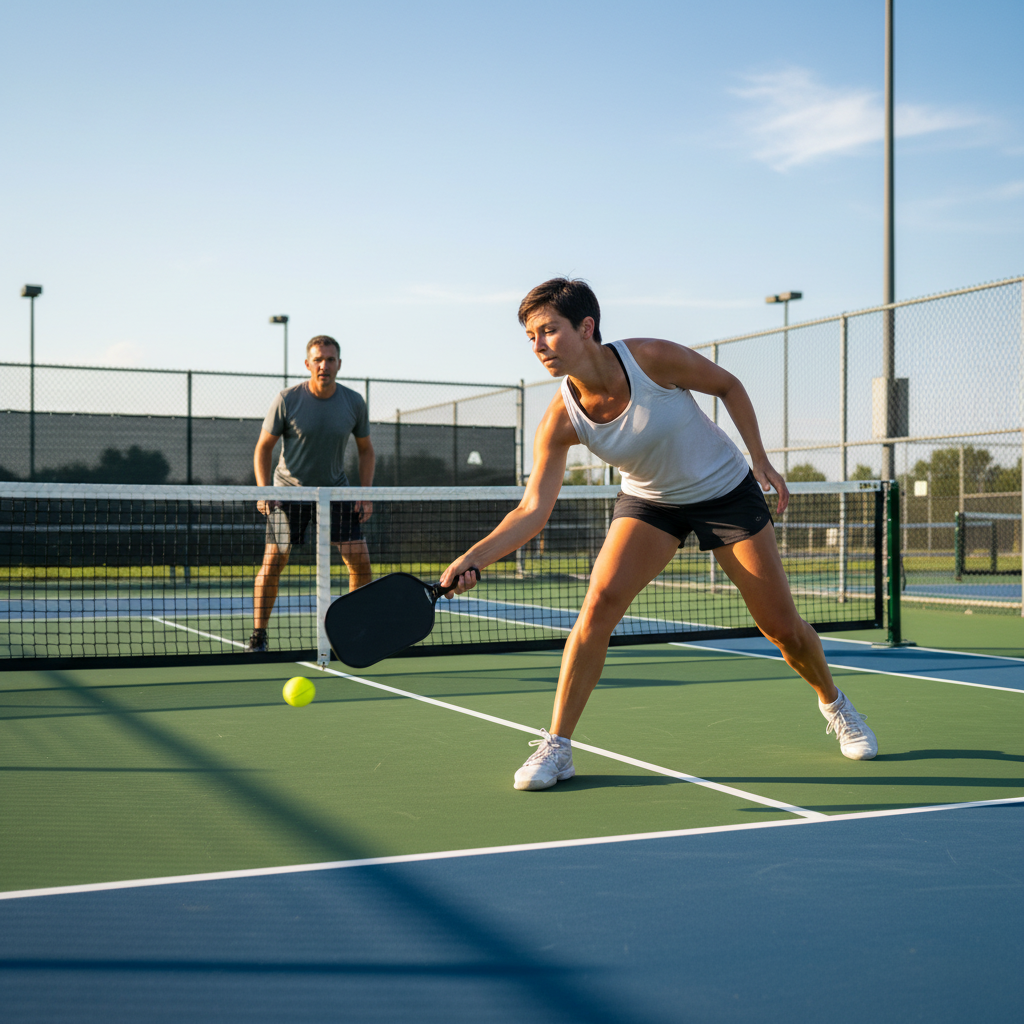
Outdoor courts change the game. Hard outdoor courts play faster than indoor gym floors. The ball bounces higher and moves differently in heat. Wind — a factor you simply don't deal with indoors — can turn a reliable third shot drop into a sailing miss. Most serious rec players who've played both say the outdoor game requires a distinct mental adjustment, not just a physical one.
The social dimension is real. Summer leagues attract a consistent group — you play the same people week after week, develop rivalries, and end up staying for water and conversation after matches. It's how most recreational players build their regular pickleball community. Open play is great for variety; leagues are great for connection.
Three common summer league formats you'll encounter:
- Round-robin: Every team or pair plays every other team. Works well for shorter leagues; everyone gets similar court time. Common in parks and rec contexts.
- Team league: You're assigned to a team and compete as a unit across the season, with match results contributing to team standings. More stakes, more camaraderie.
- Ladder league: Your ranking adjusts week to week based on match results. Win and move up; lose and stay or drop. Highly competitive — suited for players who want to push their rating.
How to Find a Summer Pickleball League Near You (The Real Search Strategy)
Most summer leagues don't show up in a general Google search until after registration has already closed. Here's where to actually look:
1. USA Pickleball Places to Play tool. The most comprehensive national database. Filter by location and look for facilities that show league play options. Not every league is listed, but most organized club leagues are. Start at usapickleball.org.
2. Your city or county parks and rec website. Many municipal summer leagues fly completely under the radar on social media. Search "[your city] parks recreation pickleball league 2026" specifically. Registration often opens in April or May for July start — which means some have already opened and some still have spots.
3. Local Facebook groups and NextDoor. Search "pickleball [your city/neighborhood]." Local groups often post league announcements before any official website does. This is where last-minute openings and free agent slots get filled.
4. Pickleball Brackets app. Primarily tournament-focused, but increasingly used for league scheduling too. Worth downloading and searching your area — some local leagues use it for scoring and schedules.
5. Ask at your regular open play spot. Whoever runs the open play session almost certainly knows what leagues are forming nearby. The pickleball community is small and word of mouth is faster than any directory.
One thing first-timers miss: many summer leagues have a "free agent" registration option. If you don't have a partner or team already, you sign up as an individual and get placed. Don't let not having a built-in partner stop you from registering.
What Skill Level Do You Need? (Rating Systems Explained)
Most summer leagues require a self-rating or a DUPR rating. Here's what you actually need to know:
DUPR (Dynamic Universal Pickleball Rating) is the most widely used rating system for league play in 2026. It goes from 2.0 (complete beginner) to 8.0 (professional). Most recreational summer leagues are organized by skill bracket:
- 2.5–3.0: New players who know the basic rules and can sustain a short rally. Perfect for first-season league players.
- 3.5–4.0: Consistent dinking, third shot drop attempts, some spin. The largest bracket in most leagues.
- 4.5+: Competitive recreational and tournament players. League play at this level is fast and demanding.
If you don't have a DUPR yet, most leagues accept self-ratings. Be honest when you self-rate. Sandbagging — rating yourself lower to play in an easier bracket — is a well-known problem in recreational leagues and genuinely ruins the experience for other players. If you've been playing six months and winning at open play, you're probably a 3.0–3.5. Rate there.
DUPR is free to track at mydupr.com. If you're planning to play leagues or tournaments, getting a real DUPR is worth it — it follows you as your game develops.
What to Expect Your First Summer League Season
My first summer league season after a year of open rec play had a few surprises I didn't see coming. In order of how much they affected me:
Outdoor balls play completely differently. Franklin X-40s and similar outdoor balls are harder, heavier, and less bouncy than the softer indoor balls used in gym play. The touch game — dinking, resets, the third shot drop — changes. The margin of error on soft shots is smaller. Expect the first couple of weeks to feel slightly off even if you've been playing consistently indoors.
The mix of skill levels in competitive pools is wider than you expect. League brackets are imperfect. You'll play against players who are clearly sandbagging down, and you'll occasionally face someone who belongs in a higher bracket. This is true of virtually every recreational league. The league coordinators do their best, but self-rating is imprecise. Go in with flexibility.
Score disputes happen. Open play is relaxed about scoring. League play isn't. Know the scoring rules cold before your first match — specifically the service sequence and how to call a fault. USA Pickleball's official rulebook is available online if you want to brush up. Looking at how competitive players prepare for tournament play gives you a useful mindset framework even for league-level competition.
Summer heat is a real factor. Outdoor summer leagues in most of the US mean playing in 85–95°F heat, often on blacktop that adds another 10–20 degrees at surface level. Two water bottles minimum, sunscreen, a hat, and a cooling towel. This isn't optional if you're playing two hours of competitive outdoor doubles in July.
Gear Checklist for Summer League Play (What Outdoor Courts Demand)
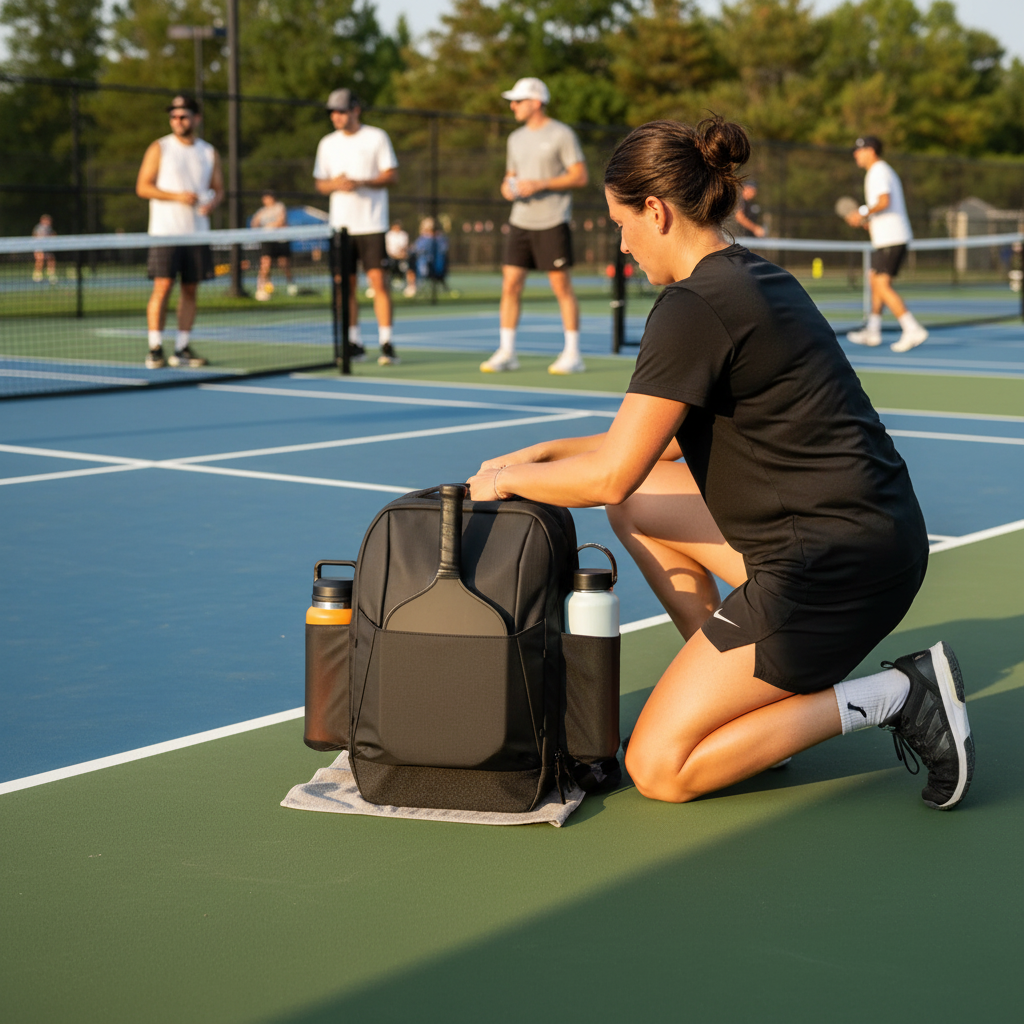
Open play gear doesn't always translate to league gear. A few things actually matter more when you're showing up consistently to compete.
The First Summer League Survival Checklist
| What to Bring | What to Know |
|---|---|
| 2+ paddles (string or grip can fail mid-match) | Your DUPR or self-rating number |
| Outdoor balls — your league likely specifies Franklin X-40 or similar | The league format (round-robin vs. ladder) and match format |
| Court shoes with lateral support (not running shoes) | Score-keeping system — who serves first, server number calls |
| 2 full water bottles — you'll finish both in summer heat | How to report your match results (app, website, or paper) |
| Sunscreen and a hat | Default rules for fault calls and lets |
| Cooling towel or wristbands for heat management | Your partner's contact info for scheduling flexibility |
| Bag with dedicated organization (paddle sleeve, water bottle pocket) | The league coordinator's name and contact |
Gear notes that matter specifically for summer outdoor leagues:
Outdoor balls: Most leagues specify the ball. Franklin X-40 outdoor balls are the most common specification — buy a sleeve so you're always carrying fresh ones.
Court shoes: Running shoes are wrong for pickleball. You need lateral stability for the NVZ movement pattern — running shoe soles aren't built for side-to-side cuts. The ASICS Gel-Renma is a solid court shoe option, or the Skechers Viper Court Pro 2.0 (women's) if you want something built for women's fit.
Overgrip: Summer heat means your grip gets slick fast. Buy a roll of Tourna Mega Tac XL overgrip before the season and replace it every 2–3 sessions. A slipping grip mid-match is avoidable — this costs $10.
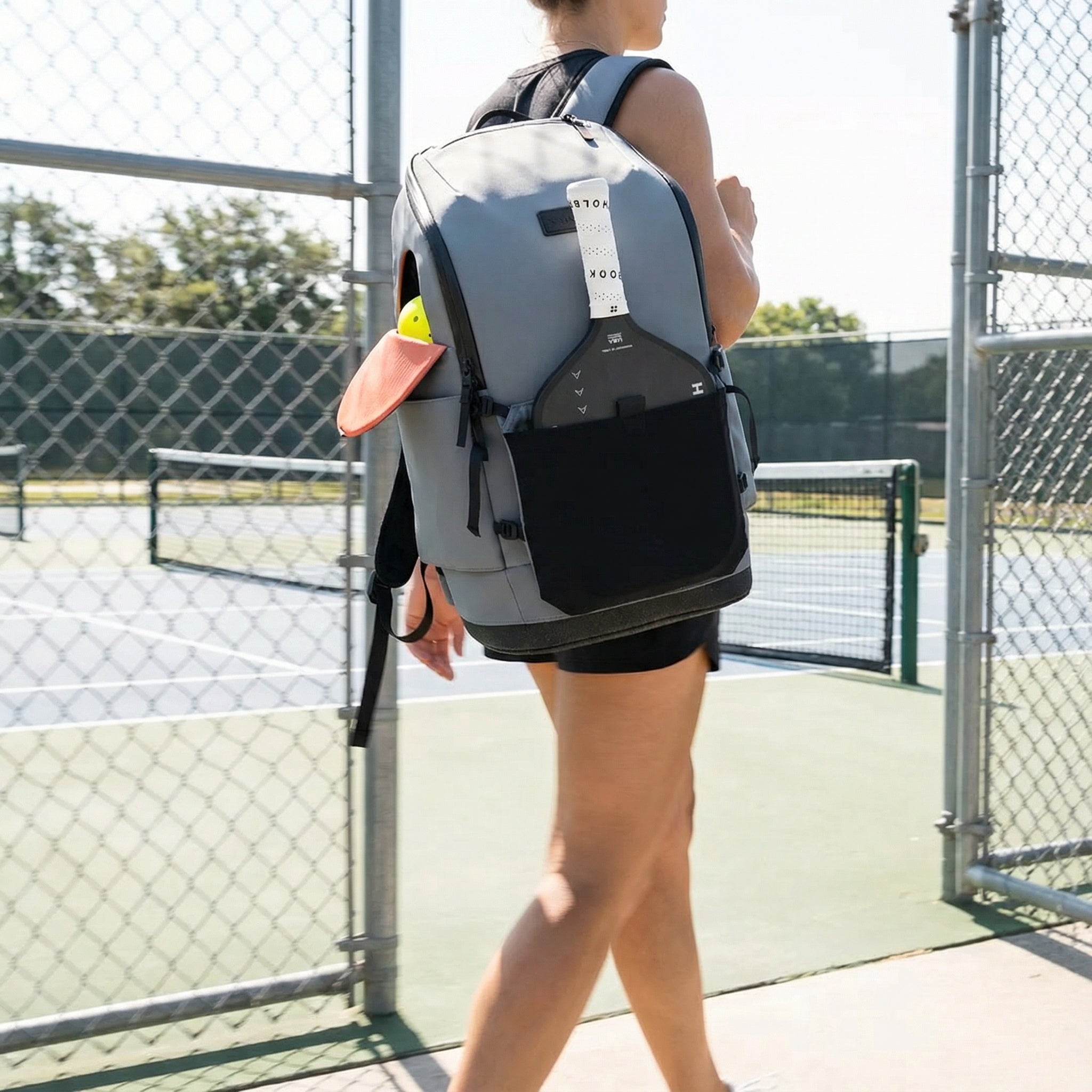
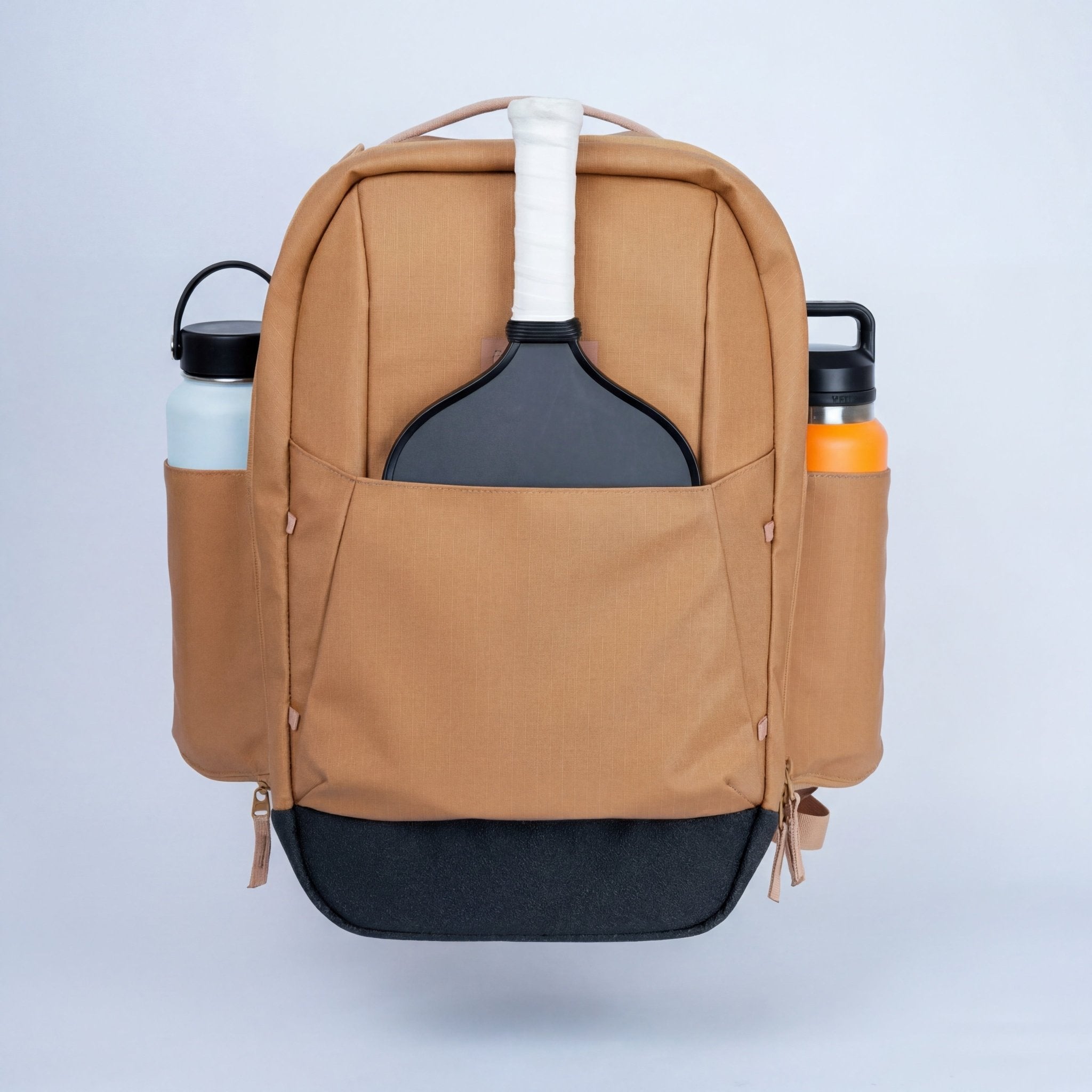
Your bag: League play means showing up 2–4 times per week, often straight from work, and carrying 2+ paddles, balls, shoes, water, and accessories. A gym bag falls apart fast for this use case. The Court Ranger V2 at $195 is built for exactly this: modular paddle sleeve, 16" laptop compartment, YKK AquaGuard zippers for outdoor courts, and enough organization that you're not digging for your second paddle before a match starts. For tournament players or anyone regularly carrying 3+ paddles, the Court Caddy at $325 is the upgrade — see our full outdoor pickleball bag review for the complete breakdown.

Shop the Court Ranger V2 — built for 4-session-per-week league play →
FAQ: Summer Pickleball League Questions
How do I find a summer pickleball league near me?
Start with USA Pickleball's Places to Play directory at usapickleball.org. Then check your local parks and recreation website directly. Local Facebook groups and NextDoor are often faster — league announcements show up there before official websites update. Searching "[your city] pickleball league 2026" also surfaces facility websites and community boards.
When do summer pickleball leagues start and end?
Most US summer pickleball leagues run mid-July through late August or early September — typically a 6–10 week season. Registration usually opens 4–8 weeks before play starts, so May and June are the critical sign-up window. Some leagues have already opened registration for 2026; don't wait until July to look.
What skill level do I need to join a summer pickleball league?
Most summer leagues accept players from 2.5 DUPR (beginners who know the rules) through 4.5+ (competitive recreational players). Most leagues organize play into skill brackets so you compete against similar players. A DUPR rating is ideal but not always required — most leagues accept a self-rating. Be honest when you self-rate.
How much does a summer pickleball league cost?
Registration fees vary widely: parks and rec leagues typically run $40–$90 for the season; private club or facility leagues can range from $100–$220 per player. Some leagues charge per match. Most fees cover court time, scheduling, and league organization — they typically don't cover equipment or balls.
What should I bring to my first summer league match?
Two paddles (grip or string can fail mid-match), outdoor balls matching the league spec (usually Franklin X-40), court shoes with lateral support, two full water bottles, sunscreen, and a hat. Know your DUPR or self-rating, your league format, and how to report match results. An organized bag keeps the logistics stress-free.
Is outdoor pickleball harder than indoor?
Different, not just harder. Outdoor balls are heavier and bounce higher, so your touch game adjusts — the third shot drop and dinking margin shrinks. Wind adds a variable that indoor play eliminates entirely. And heat on blacktop courts in summer creates a physical conditioning factor that matters more than most players expect until they experience it.

Leave a comment
This site is protected by hCaptcha and the hCaptcha Privacy Policy and Terms of Service apply.