

The right summer league changes your game. The wrong one wastes your entire season. Summer pickleball league registration for 2026 is open now — and most players sign up before they've figured out whether the league actually fits their skill level, schedule, or goals. This guide fixes that. You'll learn the three types of leagues, how to find one near you on every major platform, and the three-question framework that routes you to the right registration every time.
Last updated: July 2026
Disclosure: This post contains affiliate links to Pickleball Central. If you purchase through our links, FORWRD earns a small commission at no extra cost to you. We only link to products we'd recommend regardless.
Why Summer Is the Best Time to Join a Pickleball League (And What You're Missing If You Wait)
Summer leagues run on outdoor courts with extended daylight hours — which means more court time, longer sessions, and a larger player pool than any other season. Registration windows for mid-July starts are closing now. Wait until August and you're waiting for fall.
There's also a social pull that's harder to quantify but easier to feel: summer league pickleball has an energy that indoor winter leagues don't. Post-match conversations happen. Parks fill with players. The court community feels accessible in a way it doesn't when everyone's racing indoors before dark. If you've been thinking about joining but waiting for the "right time," this is it — mid-July league starts mean registration closes in the next two to three weeks in most markets.
"The best thing about summer leagues isn't the competition — it's that you end up playing with people you'd never find at open play. I joined my first summer league as a 3.5 player and came out playing at 4.0 because I was pushed every single week instead of drilling in my comfort zone."
The Three Types of Pickleball Leagues (And How to Pick the Right One for Where You Are)
Signing up for the wrong format is the single most common mistake new league players make — and it's also the most avoidable one. Here's what's actually out there:
Social Recreational Leagues
Designed for 2.5–3.5 players who want consistent court time and a low-pressure environment. Match results are tracked, but roster fun and skill progression matter more than wins. These leagues run a wider skill band in each bracket and prioritize inclusion over strict competitive enforcement. Good for players returning after a break, anyone new to competitive play, or anyone currently playing 1–2 times per week.
Competitive DUPR-Rated Leagues
DUPR-rated competition, strict bracket enforcement, and real consequences for self-misrating. These leagues move fast, assume you know the rules cold, and expect score reporting. Brackets are enforced across sessions — showing up at 3.5 skill level and mopping up a 3.0 bracket has consequences that follow you into the next season's placement. Good for players 3.5+ who want measurable progress and are playing 3+ times per week.
Club-Sponsored Team Leagues
Affiliated with a specific club or facility — sometimes invitation-only, sometimes priority access for members. Formats vary: some run round-robin, some run modified ATP-style bracket play. Good for players already embedded in a specific court community who want structured competition within that group.
| League Type | Skill Range | Format | Best For |
|---|---|---|---|
| Social Rec | 2.5–3.5 | Round-robin, relaxed scoring | New league players, social focus |
| Competitive DUPR | 3.5+ | DUPR-rated, bracket play | Serious players, measurable progress |
| Club Team League | Varies by club | Club-specific format | Club members, embedded community players |
The League Fit Framework: 3 Questions Before You Register
This framework came out of a hard lesson. My first competitive summer league was a disaster — I joined a 4.0-rated bracket thinking I could hang, went 0–6 across three weeks, and didn't enjoy a single match. Here are the three questions that would've saved me a season of frustration.
Question 1: How often do you currently play?
- 1–2 times per week: Social or developmental league. You're building consistency, not chasing wins yet. A competitive league at this frequency burns you out before you see improvement.
- 3+ times per week: You're ready for competitive play — but still check Question 2 before jumping into DUPR-rated leagues.
Question 2: What's your honest skill estimate?
- Under 3.5 DUPR / self-assessed: Social league. Competitive leagues at 3.5+ move faster than you're ready for — you'll spend matches reacting instead of executing anything you've practiced.
- 3.5–4.0: Mid-level competitive bracket. This is where most serious recreational players belong and where the most improvement happens.
- 4.0+: Competitive bracket only. Open social leagues will bore you inside two sessions.
Question 3: Do you want to win, or do you want to improve?
- Win: DUPR-rated competitive league. Clear bracket outcomes, tracked results, measurable standings.
- Improve: Social league plus a weekly clinic or coach session. You need both match reps and technical feedback — competitive leagues deliver the former but rarely the latter.
Three questions. Ten minutes. You now know which league to join. Most guides just say "check local listings." This is the routing logic behind those listings.
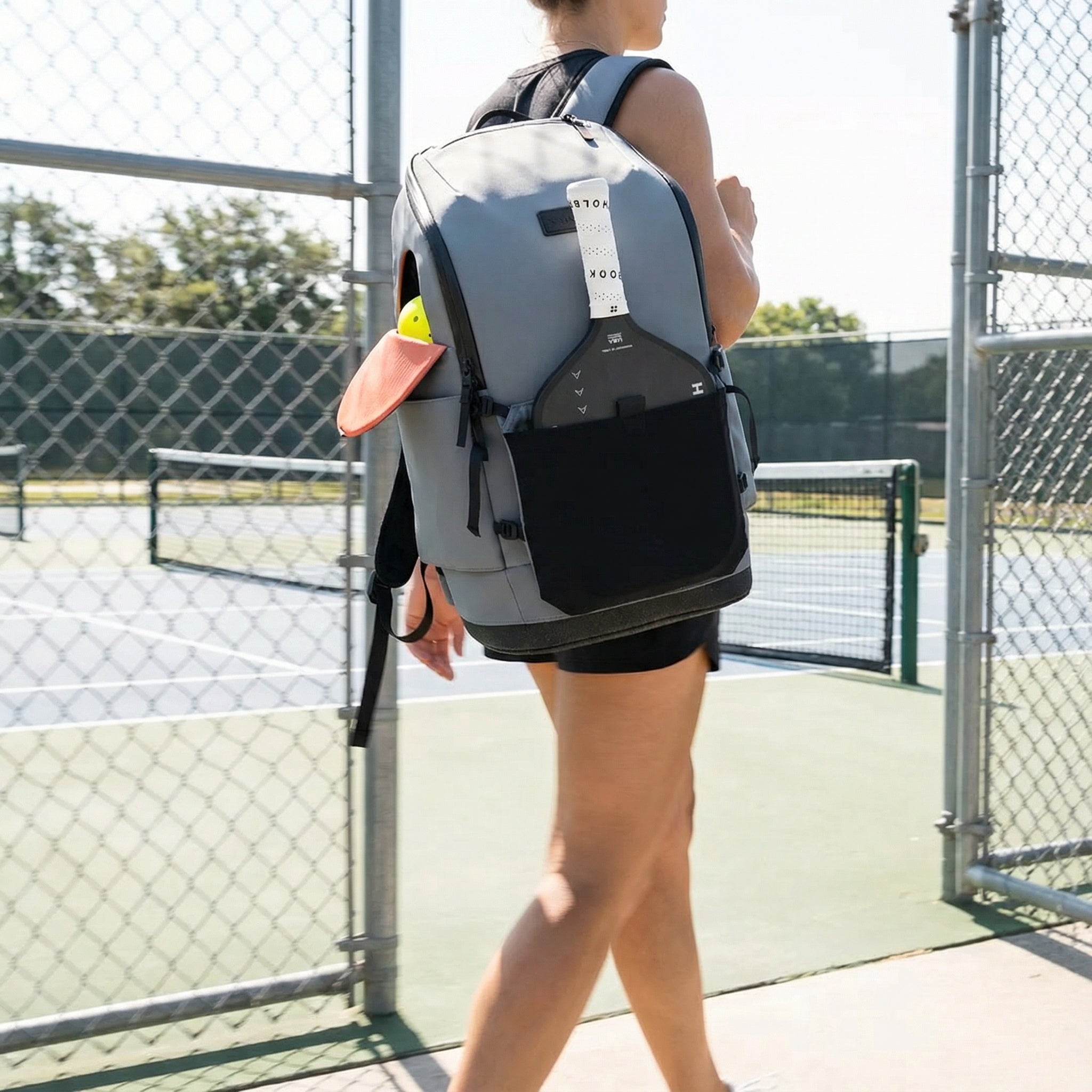
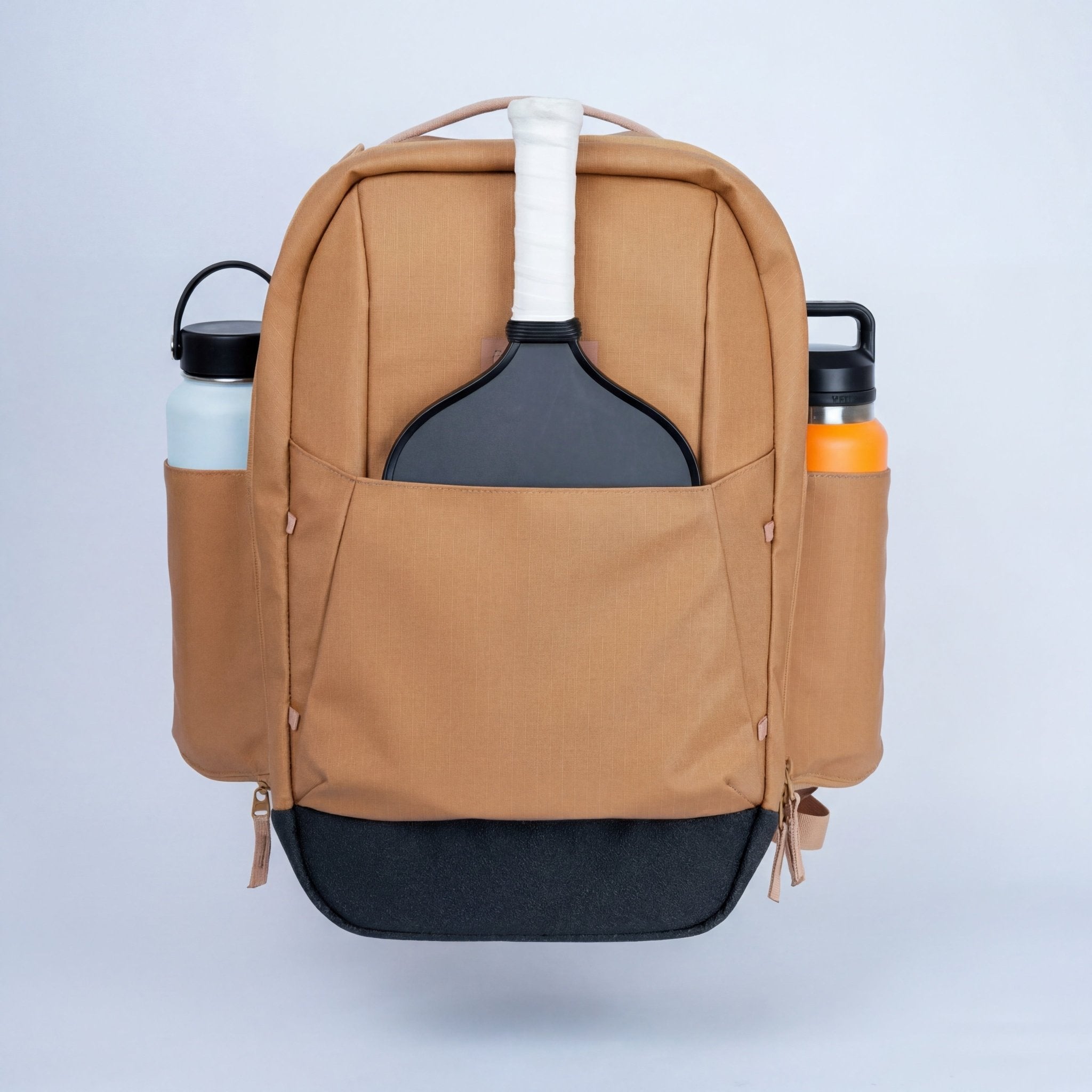
League-Ready Bag: FORWRD Court Ranger V2
Two paddles, outdoor balls, court shoes, water — all organized for a 3-match league night without digging through the bag mid-game. The 16" laptop sleeve handles the work-to-league transition.
How to Find Local Summer Leagues: Platform-by-Platform Guide
Don't just Google "summer pickleball league near me" and scroll through random event pages. Use the platforms that actually have current, organized listings:
DUPR League Finder
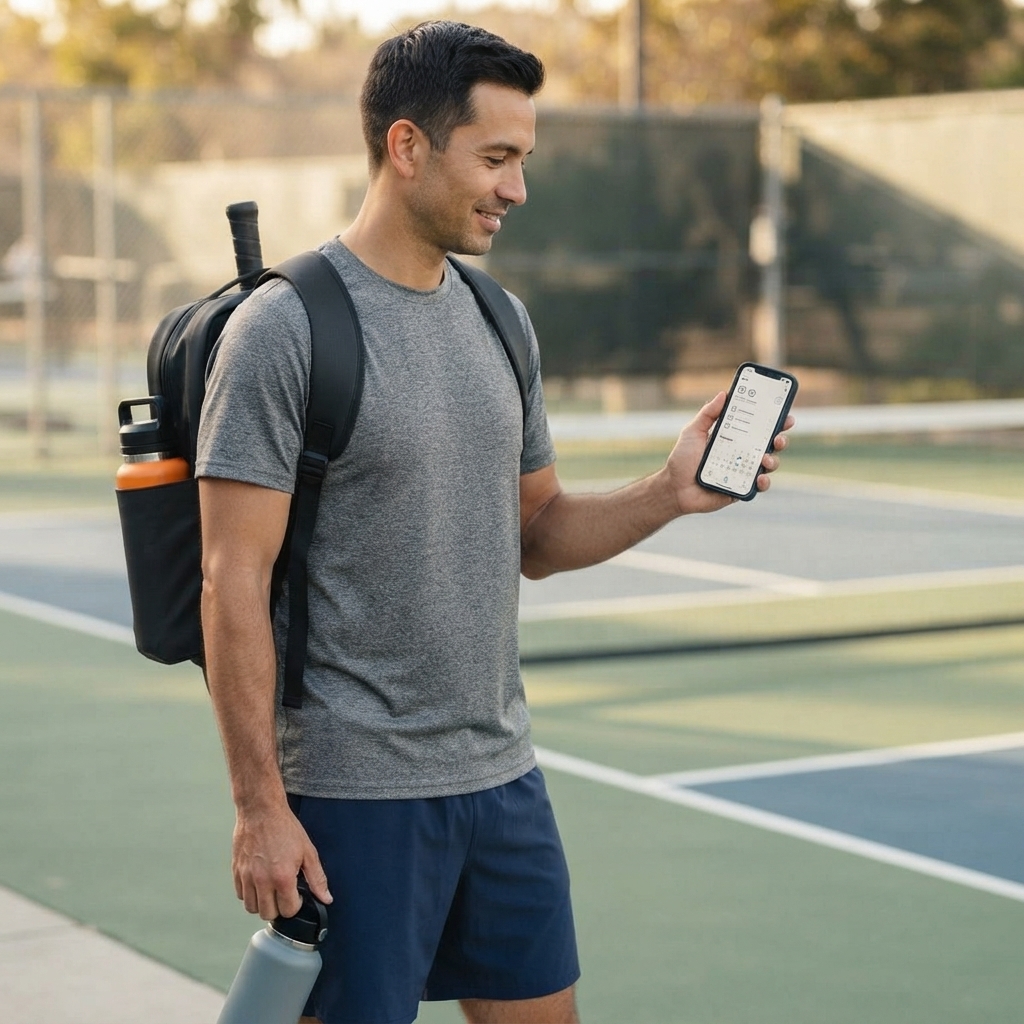
The most useful tool for competitive players. DUPR's league platform lets organizers list rated leagues directly — search by zip code and filter by sport. You'll see which leagues count toward your official DUPR score and which are social-only. Download the DUPR app (iOS and Android) and search "league" in the Discover tab. If you're 3.5+, start here before anywhere else.
USA Pickleball Places to Play
The national registry — search by zip code, filter activity type to "league." Best for finding sanctioned clubs and USA Pickleball-affiliated organizations. Weakness: listings depend on clubs staying current. Some entries are months stale. Cross-reference with the club's own website if you find something interesting here.
Pickleheads
Strong for court and open play searches, less reliable for structured leagues. But the community boards inside Pickleheads often carry pinned league announcements from local organizers before those events hit any directory. Worth a scan if you've exhausted the DUPR and USA Pickleball searches.
Local Rec Centers and City Park Websites
Most municipal summer leagues still run through city parks and recreation departments — and they don't show up on any national platform. Go directly to your city's parks website and search "pickleball" under summer programs. Registration often opens 4–6 weeks before the season and fills fast in active markets. This is the most underused search method and the one that finds the most affordable leagues ($40–$65 for a full season).
Local Facebook Groups
Search "[your city] pickleball" on Facebook. Local groups are often the first place league announcements land — and group admins know every organizer in town. Informal but consistently more current than any directory. This is also where last-minute spots open up when someone drops out of an already-registered team.
What to Expect Your First League Night (Honest Guide for New League Players)
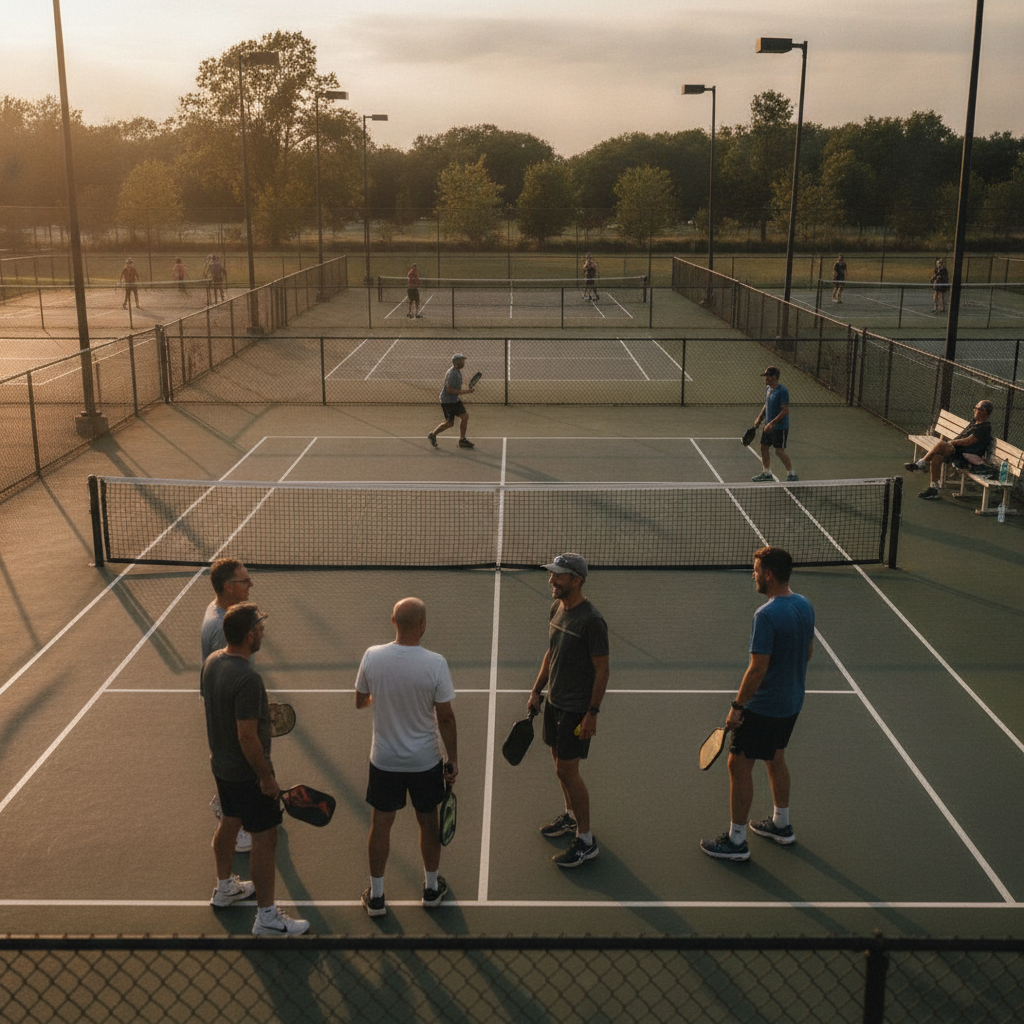
League play differs from open play in ways that sneak up on new players.
You're self-refereed. Most recreational leagues don't use line judges. Call your own faults, agree on scores after every rally, and — if there's a dispute — replay the point. Arguing about score is the fastest way to become the player no one wants to share a court with.
The format is usually round-robin. Three or four games per night, rotating through different partners and opponents. Some leagues assign partners for each session; others let you bring one. Know which format before you show up so you're not the person asking basic format questions at 6 PM when play starts.
Sportsmanship is tracked informally — and socially. League players talk. Being the person who calls every borderline ball out and disputes serves follows you across the entire season. Call honestly, accept replays graciously, move on.
Skill mismatch happens even with brackets. The 3.5 bracket will contain players ranging from honest 3.3s to players who've clearly plateaued since their last rating. Adjust your expectations and your game accordingly — this is normal, not a league failure.
Before your first night, read our guide to pickleball court etiquette — the unwritten rules that distinguish league veterans from first-timers before a single rally is played.
What to Pack for League Night (Gear That Actually Matters When You Play Multiple Matches)
League night isn't a casual open play session. You might play 3 games across 90 minutes against different opponents at different skill levels. One paddle and a half-empty water bottle doesn't cut it.
| What Stays in the Bag (Always) | What You Add on League Night |
|---|---|
| Primary paddle | Backup paddle |
| Court shoes | Fresh overgrip (applied before you leave) |
| Towel | 3–4 outdoor pickleballs |
| Sunscreen (outdoor leagues) | 2 full water bottles + electrolyte packet |
| Extra overgrip tape | Light snack (90-minute sessions drain you more than you expect) |
On outdoor pickleballs: most leagues specify the ball they use (often the Franklin X-40 outdoor or Onix Pure 2), but they rarely supply them in quantity. Bring your own and you'll never be waiting on someone else's cracked ball mid-match. Shop outdoor pickleballs at Pickleball Central.
Overgrips are a league-player essential — a fresh grip every 4–6 sessions is about right for active league play, and a new grip before a competitive night makes a real difference in touch during long rallies. Stock up on overgrips at Pickleball Central.

The bag that makes all of this work: the Court Ranger V2 ($195) carries everything listed above without the bulk of a full tournament bag. Modular paddle sleeve keeps paddles isolated from everything else, the 16" laptop sleeve handles the work-to-league transition, and the TPU-coated ripstop holds up on outdoor courts across a full season. Players who drive straight from the office to a 6 PM league match have been running this setup for months.
Running a 4.5-level league with 3–4 paddles? The Court Caddy ($325) adds a modular sleeve that holds 4 paddles organized by role, plus a 15" laptop sleeve and a lifetime warranty built for players who take their gear as seriously as their game. See how it performs outdoors in our best outdoor pickleball bag 2026 roundup.
Also worth reading: our tournament packing guide — the gear overlap with competitive league play is about 80%, and the remaining 20% (multi-day carry, hotel logistics) is useful to know even if you're only playing day leagues this summer.
FAQ: Pickleball Summer League Questions
How do I find a pickleball summer league near me?
Start with the DUPR app (League Finder) for rated leagues, then check USA Pickleball's Places to Play tool filtered by "league" activity type. For municipal leagues, go directly to your city's parks and recreation website. Local Facebook groups ("[city] pickleball") are consistently the most current source for league announcements and open roster spots.
Do pickleball leagues use DUPR ratings?
Competitive leagues increasingly use DUPR to assign brackets and track results — this is where the sport is heading for anything above social recreational play. Social and rec leagues typically use self-assessed ratings (2.5, 3.0, 3.5). For skill-matched competition that actually improves your game, look for leagues that explicitly advertise DUPR bracket assignment. See our DUPR rating explainer for how the system works.
What is the difference between a social pickleball league and a competitive league?
Social leagues prioritize consistent court time and a mixed-skill environment — results are tracked but bracket enforcement is loose and the social atmosphere is the draw. Competitive leagues use verified ratings to assign brackets, enforce skill matching strictly, and track results toward your official DUPR score. The on-court tone is different too: social leagues tolerate experimentation; competitive leagues expect clean execution and score discipline.
What gear do I need for my first pickleball league night?
Two paddles (primary and backup), court shoes with lateral support, 3–4 outdoor pickleballs approved by your league, two water bottles, fresh overgrip tape, and a towel. A bag that organizes all of this — the Court Ranger V2 ($195) fits everything for a 3-match league night without having to unpack and repack between games. See the full checklist table above.
How much does a recreational pickleball league cost?
Most recreational summer leagues run $40–$120 for the full season. City parks and rec leagues are typically on the lower end ($40–$65). Private club leagues and DUPR-rated competitive leagues tend to run $80–$120+. Factor in equipment wear — grips, balls — which adds another $20–$40 across a typical 6–8 week season. The cost-per-session is almost always lower than a comparable tennis or golf league.
Can beginners join a pickleball league?
Yes — if you pick the right one. Most cities have 2.5–3.0 beginner brackets in social leagues designed for players who've learned the basics and want consistent match play. Don't register for a 3.5+ competitive bracket as a beginner. Use the League Fit Framework above to identify your correct entry point before you register, and save yourself a season of mismatched competition.

Leave a comment
This site is protected by hCaptcha and the hCaptcha Privacy Policy and Terms of Service apply.