

Disclosure: This post contains affiliate links to Pickleball Central. If you purchase through our links, FORWRD earns a small commission at no extra cost to you. We only link to products we'd recommend regardless.
Last updated: May 2026
If you're over 60 and thinking about picking up pickleball, here's the short answer: don't wait. The court is smaller than tennis (a lot smaller), the pace is entirely manageable in doubles, and the community is genuinely welcoming to people starting at any age. You don't need to be athletic. You don't need a partner already lined up. Most rec centers and public courts run open play sessions every morning where new players show up, borrow a paddle, and find someone to hit with.
What you need is a realistic picture of what the first 30 days look like — and what gear decisions actually matter vs. what you can defer. FORWRD's bag design process involved hundreds of players, including dozens over 60, and what they told us about playing three times a week shaped how we think about equipment for older players. This guide pulls that directly.
Why Pickleball Is the Fastest-Growing Activity for Adults Over 60
The 60+ demographic is growing faster than any other segment in USA Pickleball's registration data — and it's not because of marketing. Pickleball solves a problem that most other racket sports don't: it rewards touch, patience, and placement over athleticism and power. Those happen to be skills that improve with age, not decline.
The court is 20x44 feet, compared to a 78-foot tennis court. You're almost never more than 14 feet from the kitchen line where most points are decided. That matters when you're 65 and your knees have strong opinions about sprinting. You're not chasing lobs to the baseline. You're playing a game that punishes pace and rewards the soft shot.
There's also the social dimension, which isn't a soft selling point — it's a primary driver of long-term adherence. Open play sessions run across the skill and age spectrum together. Players in their 50s, 60s, 70s, and 80s compete in the same games. Unlike a tennis club ladder, nobody is being sorted by a rating system on day one. You just show up and play.
The Real Health Benefits: What the Research Actually Shows
A 2024 scoping review of 27 studies published in the Journal of Physical Activity and Health found consistent associations between regular pickleball participation and improved cardiovascular fitness, balance scores, and psychological wellbeing in players over 65. These weren't vague correlations — the studies measured VO2 max, blood pressure, and depression screening scores before and after adding pickleball to weekly routines.
Three specific benefits worth understanding:
Cardiovascular conditioning at a manageable intensity. Recreational doubles pickleball typically runs at 60–70% of maximum heart rate — the sweet spot for aerobic conditioning without the joint stress of running or high-impact aerobics. You're getting real cardio work without feeling like you're doing real cardio work.
Balance and fall prevention. The lateral repositioning, quick pivots, and reaction-time demands of kitchen play have been linked to improved dynamic balance in older adults — the kind that matters on stairs and uneven surfaces, not just on the court. It's effectively balance training disguised as a game.
Cognitive engagement. Tracking ball position, reading opponents, managing score, and making shot decisions in real time requires active mental processing. The dual-task nature of sport — physical movement plus real-time decision-making — is associated with cognitive resilience in aging populations. Players who describe pickleball as "exhausting in a good way" aren't wrong about why.
"The feedback from senior players in our design sessions was consistent: the bag needs to work for someone going from car to court to coffee without making it a production. Not a tournament bag. Just a daily driver that doesn't fight you." — Grub, FORWRD co-founder
Getting Started: First-Time Player Guide for Seniors
The First 30 Days: Week by Week
Most guides say "take a lesson and find open play." That's fine as far as it goes. Here's what actually helps when you're starting from zero:
Week 1 — Rules and dinking basics only. Attend one open play session or beginner clinic and focus on one thing: the kitchen line and the dink. You don't need to know every rule to play. You need two things — you can't volley from inside the non-volley zone (the kitchen), and soft shots that land in the opponent's kitchen win more points than blasting. Stay near the kitchen. Watch what the experienced players do. Ask questions; almost everyone is happy to explain.
Week 2 — Play full games. You'll lose a lot. That's correct. Your two goals this week: keep rallies going longer than five shots, and learn the scoring system well enough to keep score yourself. Don't worry about technique yet. Volume of contact beats technique work at week two.
Week 3 — Establish a regular group. Three 60-minute sessions per week beats one three-hour marathon every weekend. This matters more for older players than younger ones — your tendons and connective tissue need time to adapt to the new movement patterns. The body adapts to pickleball footwork, but it needs incremental exposure, not sudden volume spikes.
Week 4 — Evaluate your gear. After a month you'll know: is the borrowed paddle limiting you? Are your shoes causing foot fatigue or ankle instability? Is the bag situation (or lack thereof) adding friction to your routine? Week four is the right time to upgrade — not day one, before you know the sport is for you.
Gear Upgrade Timeline
Start free. Borrow a paddle, wear any non-marking sneakers, bring a water bottle in a grocery bag. After 4–6 sessions, the upgrade order matters:
- Paddle first ($80–$180). The single biggest variable in your learning curve. A lightweight paddle (7.3–7.8 oz) with a polymer core reduces vibration on contact — important for anyone with any shoulder or elbow history. Skip anything under $40; the core degrades quickly.
- Court shoes second ($80–$130). Before a bag. Ankle rolls on hard courts are the most common senior pickleball injury, and court shoes with proper lateral containment make a real difference vs. running shoes designed for forward motion only.
- Bag third ($100–$325). Once you're playing 3x/week consistently, the bag starts mattering. A bag that fits two paddles, a water bottle, and a change of shoes without a daily repacking puzzle is worth spending on.
The Right Gear for Older Players: What to Prioritize
Paddles: Lightweight and Soft Is the Starting Point
Heavier paddles (8.5+ oz) and stiff carbon fiber faces amplify vibration at every contact point. Manageable at 30; potentially a problem at 65 with any shoulder impingement or elbow sensitivity history. Polymer (polypropylene honeycomb) core paddles absorb vibration far better than fiberglass faces.
For most senior recreational players, we'd look at the JOOLA Perseus Pro V 16mm — it sits at the lighter end of the performance range while still giving you spin development as your game evolves. The Selkirk LUXX Control Air InfiniGrit Epic is worth a look if touch play and control are your focus — Selkirk's control-oriented paddles consistently get high marks from senior players who've shifted their game to soft-shot strategy.
One hard rule: don't start with the heaviest, stiffest paddle in the demo rack. Your arm pays for it in weeks two and three.
Court Shoes: The Non-Negotiable Upgrade
Running shoes are built for forward motion. Pickleball demands lateral movement — quick side steps near the kitchen, small repositioning pivots, occasional lunge shots. The lateral lug pattern and wider base of a court shoe provides stability during directional changes that running shoes simply don't deliver.
For senior players specifically: prioritize heel cushioning (impact absorption on dinks and resets) and a non-slip outsole rated for your court surface. The K-Swiss Express Light is the lightest dedicated pickleball shoe in its price range, comes in wide-fit options (useful for men over 40 whose feet have spread), and gets good reviews from older players for not requiring a lengthy break-in period. For ASICS options, their Gel-Renma line is consistently recommended for senior players needing cushioning and court grip — find ASICS Gel-Renma at Pickleball Central.
For a full shoe breakdown, see FORWRD's complete pickleball shoe guide.
The Daily Bag: Making Your Routine Frictionless
The bag test isn't about specs. It's: does this make showing up to the court three times a week easier, or does it add friction? A bag that needs repacking before every session, can't fit a change of shoes, or looks like contractor equipment isn't staying in the rotation.

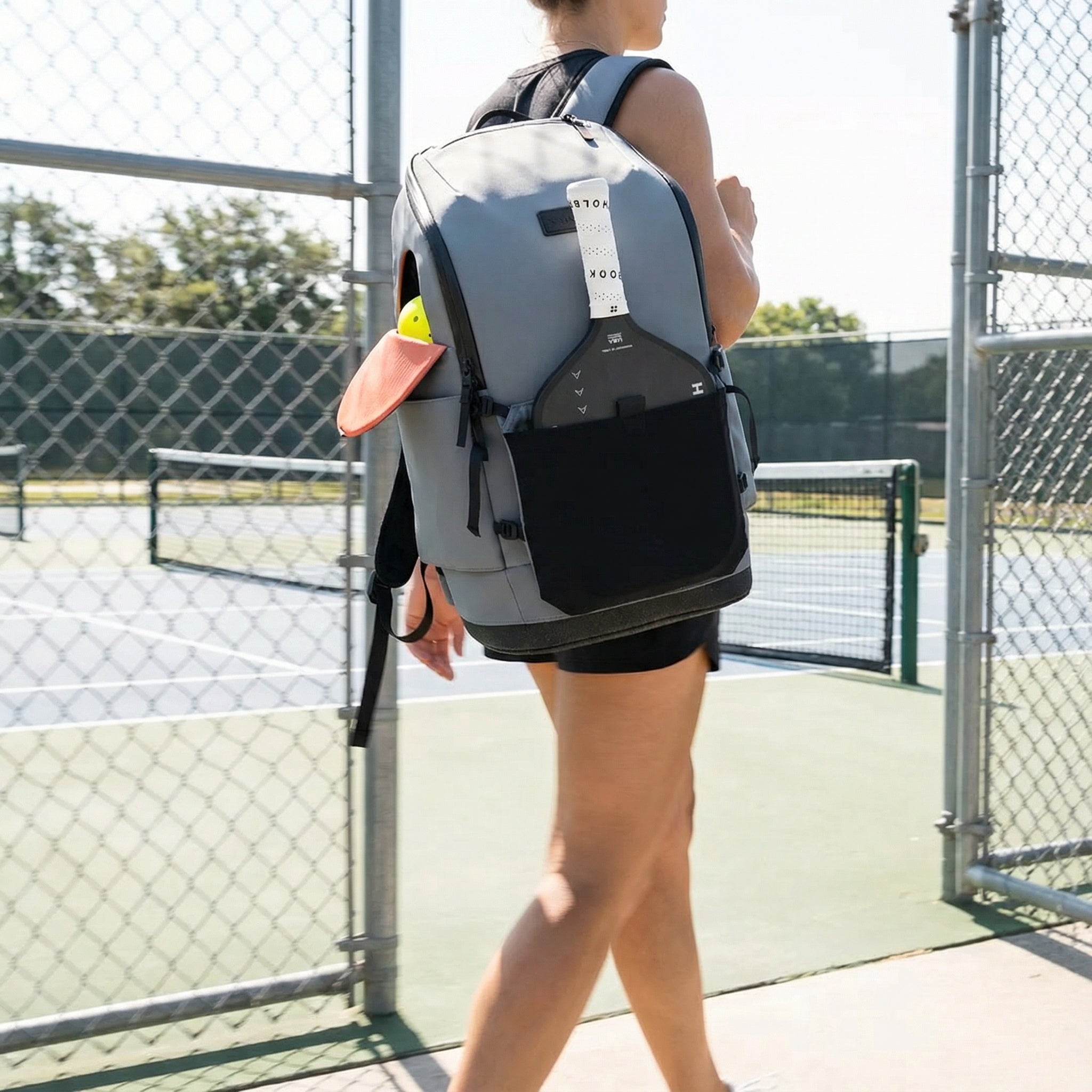
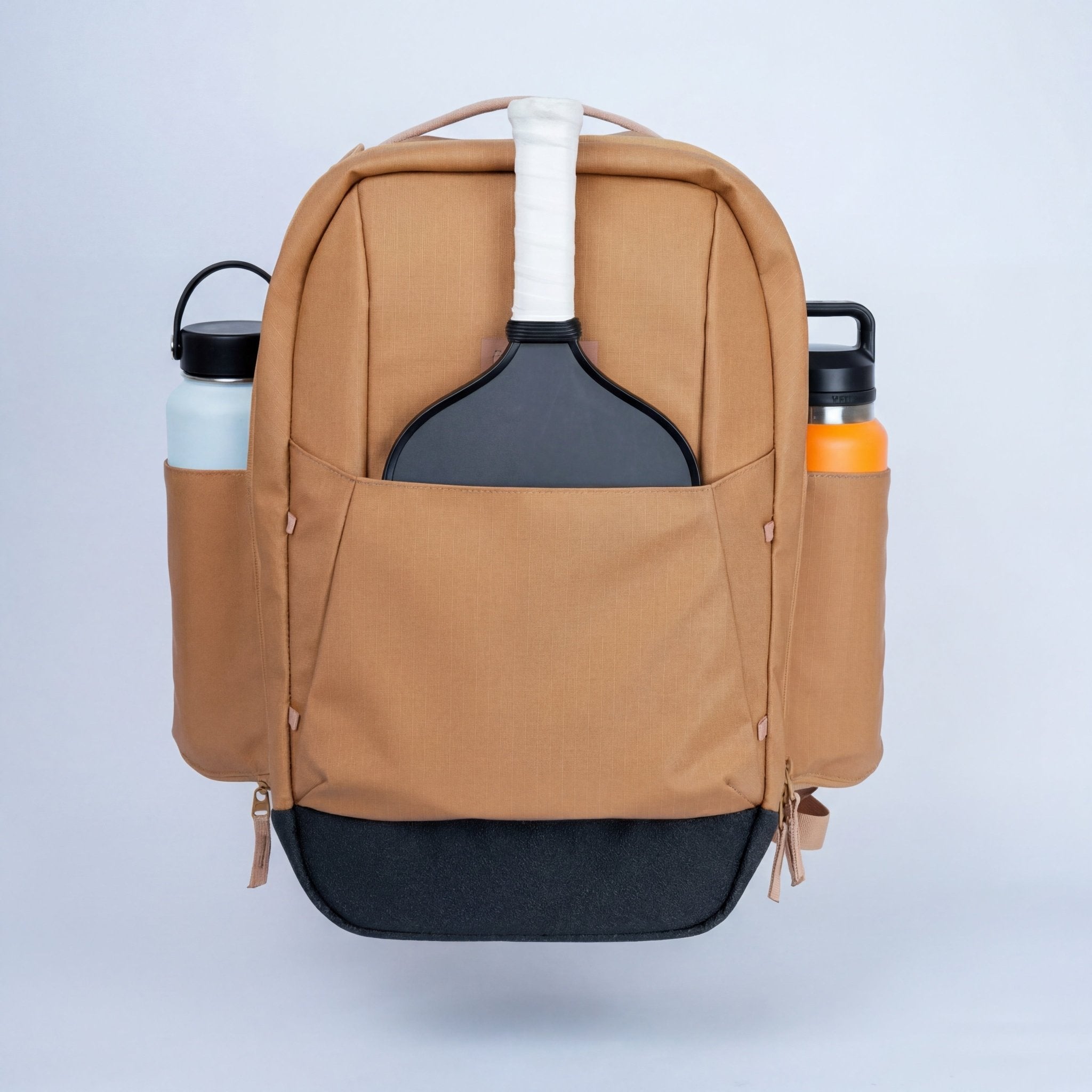
The Court Ranger V2 ($195) was designed for the player making that 3x/week run — a 16" laptop sleeve, modular paddle sleeve that keeps both paddles separated and protected, and a bag weight that doesn't compete with your shoulder load on the court. Multiple players over 60 in our design feedback specifically asked for strap adjustability for shorter torso fits. That feedback is in the current design. If you're also carrying a laptop for work or a streaming setup for tournaments, the Court Caddy ($325) steps up with 4-paddle capacity and a 15" padded laptop sleeve — designed for the more serious player with more kit to manage.
For a full breakdown of the best bags across categories, see Best Pickleball Bags 2026.
Protecting Your Joints: Common Senior Pickleball Injuries and How to Prevent Them
The three most common injuries in senior pickleball are ankle sprains, knee pain, and shoulder/elbow overuse. None are unique to pickleball — they're standard racket sport issues — but the specific movement patterns create predictable risk factors.
Ankle sprains happen during lateral movement — reaching wide for a ball, pivoting quickly near the kitchen. Two prevention measures work: purpose-built court shoes with lateral containment (not running shoes), and staying within your comfortable movement range rather than diving for everything. Five minutes of ankle circles and calf raises before play costs nothing and matters more than any brace.
Knee pain in the first few weeks almost always comes from volume — too many hours before the muscles and tendons supporting the knee are conditioned for the movement patterns. Build gradually: 45–60 minute sessions in week one, not three-hour open play marathons. Your tendons adapt, but they need incremental load.
Shoulder and elbow sensitivity is almost always paddle-related. Heavy, stiff paddles vibrate more on every contact. If you're developing elbow sensitivity, examine the paddle before the swing mechanics. Drop to a lighter weight and a softer core. Most players find the sensitivity resolves within two weeks of switching.
One rule that covers all three: warm up before you play. Five minutes of light walking, arm circles, and hip rotations. Players who walk from the parking lot directly to the first rally are the ones pulling something in week two.
Finding Courts and Community: Resources for Older Players
The USA Pickleball website has a court finder that lists public, club, and rec center courts by zip code. Most areas with any population density have open play sessions within 20 minutes. USA Pickleball's senior division structure — 50+, 60+, 70+, 80+ age brackets — means competitive players can eventually find brackets where physical profile matters as much as rating.
Local rec centers and YMCAs are the easiest entry point. Many run beginner clinics or ladder leagues specifically for new players, and pickleball access is almost always significantly cheaper than a tennis club membership. The social structure at these venues is informal and welcoming in a way that helps people stick with the sport past the first two weeks.
FAQ: Pickleball for Seniors
Is pickleball good for seniors?
Yes — it's one of the most accessible low-impact racket sports for adults over 60. The smaller court limits sprinting, the doubles format keeps cardiovascular intensity manageable, and polymer core paddles absorb vibration at contact. A 2024 scoping review of 27 studies in the Journal of Physical Activity and Health found consistent improvements in fitness, balance, and wellbeing in players over 65 who play regularly.
What are the health benefits of pickleball for older adults?
Research documents cardiovascular conditioning (60–70% max heart rate in doubles play), improved dynamic balance and fall prevention scores, cognitive engagement through real-time decision-making, and significant social health benefits. A 2024 review of 27 studies found associations between regular play and better VO2 max, lower resting blood pressure, and improved depression screening scores in older adult populations.
Is pickleball hard on your knees or joints?
Less so than tennis or running. The smaller court limits sprinting, and doubles play limits explosive lateral movement. The main risks are ankle sprains during lateral reaches and elbow sensitivity from heavy or stiff paddles. Both are preventable: wear court shoes with proper lateral support and use a lightweight paddle (7.3–7.8 oz) with a polymer core to minimize vibration transfer to joints.
What equipment do seniors need to start playing pickleball?
For the first 4–6 sessions, borrow a paddle and wear any non-marking sneakers. After that, upgrade in order: paddle first (lightweight, polymer core, $80–$180), court shoes second (lateral support, cushioned heel, $80–$130), bag third once you're consistently playing 3x per week. There's no reason to invest before you know the sport is genuinely for you.
At what age do most people start playing pickleball?
The average new player age is in the 50s and 60s — and the fastest-growing registration segment per USA Pickleball data is adults 60 and older. While younger players have entered the sport in volume, the core base is still adults who found tennis too physically demanding or running too hard on their joints. Pickleball absorbed that group and kept them active.
Our Pick: Court Ranger V2 — the 3x/week daily driver
Designed with feedback from 500+ real players, including dozens over 60 who asked for lighter carry, better strap adjustability, and a 16" laptop sleeve for court-to-coffee days.

Leave a comment
This site is protected by hCaptcha and the hCaptcha Privacy Policy and Terms of Service apply.