

DUPR (Dynamic Universal Pickleball Rating) is the official rating system used by the PPA Tour, USA Pickleball, and virtually every sanctioned tournament in 2026. It's the number that determines which bracket you enter, how you compare to players across the country, and whether the work you're putting in is actually moving the needle. The scale runs from 2.0 to 8.0. Ben Johns sits near the top. Most recreational tournament players fall somewhere between 3.5 and 4.5 — and here's exactly what that means for your game.
Last updated: June 2026
What DUPR Stands For and Why It Replaced Self-Rating
DUPR stands for Dynamic Universal Pickleball Rating. The word "Dynamic" is doing the real work there — unlike USAPA's older self-assessment system, where players rated themselves once and left it there, DUPR recalculates every time a result gets logged. That difference has real consequences for how competitive play is organized.
Before DUPR took hold, pickleball's self-rating system was a mess. Players called themselves 3.5 when they played like 4.0s. Others sandbagged to dominate lower-skill brackets. Tournament directors had no reliable way to seed draws fairly. The result: mismatched competition, frustrated players, and a sport that couldn't scale its competitive infrastructure.
DUPR flipped the model. Instead of asking players to rate themselves, it uses actual match results — opponent strength, score margin, and a statistical algorithm — to calculate where a player genuinely falls on the skill curve. The PPA Tour adopted it early. USA Pickleball followed. By 2026, DUPR is effectively the universal language of competitive pickleball skill. If you plan to enter any serious event, you need one.
How to Create a DUPR Account and Get Your First Rating
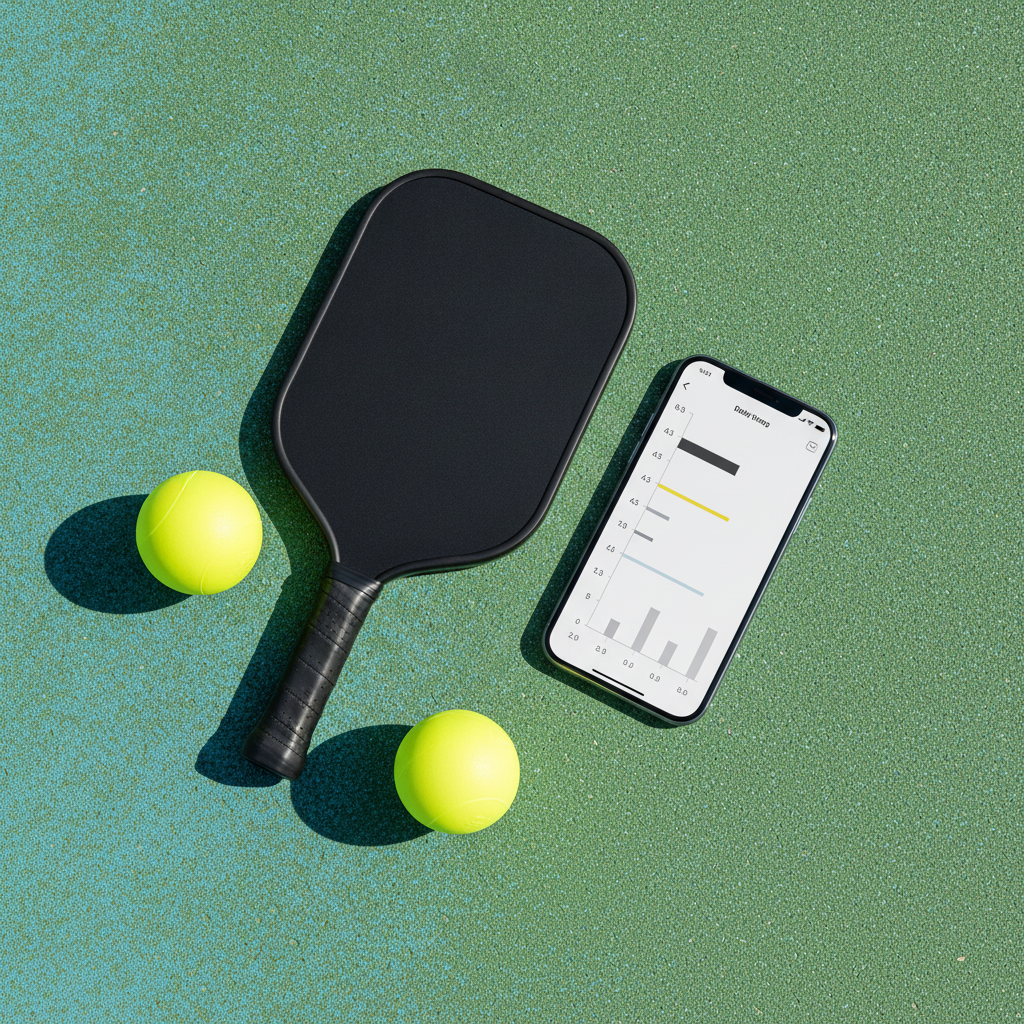
Setting up DUPR is free. Go to dupr.com, create an account, and you'll start as NR (Not Rated). That's expected — the algorithm needs match data before it can place you meaningfully on the scale.
Your first rating appears after a handful of logged matches. The quickest paths:
- Join a local DUPR-affiliated club. Club admins can log match results directly into the system. Most clubs in 2026 have DUPR integration built in.
- Register for a DUPR-tracked tournament. Results feed automatically to your profile without extra steps.
- Submit mutual results with a friend. Both players confirm the score through the app. These count as unverified (more on that below) but still build your rating history.
Expect your first 5–10 matches to feel unstable — your rating will jump around as the algorithm calibrates. After roughly 20 logged matches, the number settles into something reliable. Log everything, including losses. Incomplete data creates a weaker, less stable rating than a complete honest record.
This guide is part of our complete pickleball tournament guide — everything from registering for your first event to understanding brackets and formats.
The DUPR Scale: What Each Range Actually Means on the Court
The scale runs from 2.000 to 8.000. Here's what each band looks like in a real match — not the marketing copy version, the actual on-court reality:
| DUPR Range | Level | What You See on the Court |
|---|---|---|
| 2.000–2.999 | Beginner | Still learning the rules, inconsistent serve, rarely reaches the NVZ |
| 3.000–3.499 | Early Intermediate | Can sustain rallies, learning kitchen play, dinks developing but inconsistent |
| 3.500–3.999 | Intermediate | Gets to the kitchen, third shot drop in progress, targeting developing |
| 4.000–4.499 | Advanced | Consistent kitchen play, deliberate targeting, understands pace and spin |
| 4.500–4.999 | High Advanced | Tournament-competitive, attacks high balls reliably, fast hands at the kitchen |
| 5.000–6.999 | Elite Amateur / Semi-Pro | Competing on the amateur circuit, playing PPA/APP qualifiers and open events |
| 7.000–8.000 | Professional | Full-time pros — Ben Johns, Anna Leigh Waters, Tyson McGuffin |
Most recreational tournament players land between 3.5 and 4.5. The 4.0 line is where play changes character — opponents start targeting you deliberately, rallies become strategic rather than just athletic, and matches feel like chess games.
Verified vs. Unverified Ratings: How to Get Verified Faster
Two types of match results exist in DUPR: verified and unverified. The distinction affects how much weight each match carries in your rating calculation.
Verified results come from tournament play, DUPR-affiliated leagues, or club admins logging results through the official system. The data comes from a trusted source, so DUPR assigns it higher statistical confidence.
Unverified results are self-submitted — you and your opponent both confirm the score through the app. They count, but with less weight. Your rating still moves; it moves more conservatively on this data.
Fastest path to a verified rating: join a local DUPR club and play in their weekly ladder or league. Most clubs have DUPR integration in 2026. Alternatively, enter your first sanctioned tournament — results submit automatically. You'll typically have a verified rating within a week of your first event.
One thing first-timers get confused about: you might log your first few wins, see an unverified score that feels too low, and wonder if the system is broken. It's not. The algorithm needs more data to be confident. Give it 20+ matches and it stabilizes.
How DUPR Updates After Every Match (in Plain Language)
DUPR doesn't just record wins and losses. It predicts what should happen based on both players' current ratings — then compares that prediction against what actually happened, including the score margin.
Beat a player rated 0.3 above you? Your rating climbs more than it would for beating someone at your level. Lose to someone rated 0.5 below you? That stings the algorithm more than a close loss to a peer. Score margin factors in too — winning 11–2 carries more signal than winning 11–9, even though both are wins in the record.
Two other mechanics worth knowing:
- Older results decay. A match from 18 months ago counts less than one from last week. Recent form matters.
- Rating confidence builds over time. Early on, uncertainty is high — swings are bigger. After 30+ logged matches, your rating stabilizes and moves more slowly because the algorithm has better data. That's accuracy, not a bug.
Practical takeaway: play consistently, log everything, and don't panic over one result. The system averages across your full match history, weighted by recency and opponent quality. A single loss to a weaker player matters less than you think after you have 30+ matches in the system.
DUPR vs. USAPA Skill Rating: When Each System Applies
Both systems exist in 2026, and you'll encounter both. Here's when each one matters:
USAPA Skill Rating (1.0–6.0 scale): Self-assessed, used primarily for open recreational play. When someone posts a "3.5 open play session" at a local rec center, they're using USAPA-style skill brackets. It's informal, nobody verifies it, and it works fine for casual play because the stakes are low.
DUPR (2.0–8.0 scale): Algorithm-based, used for competitive tournaments, leagues, and any event where seeding and bracket integrity matter. PPA and APP events require a DUPR. USA Pickleball's sanctioned events use it for seeding. It's the system that defines your competitive standing.
Simple rule: open play uses USAPA-style labels. Any event with a bracket and ranking points on the line — you need DUPR.
How to Improve Your DUPR Rating (Match Selection Strategy)
This is the section no other DUPR guide covers. Everyone says "play more games." Nobody tells you which games to play. Here's the match selection framework — built from testing it across a full competitive season:
Target players rated 0.1 to 0.3 above your current rating
This band gives you the best upside-to-downside ratio. You're competitive enough that wins are genuinely achievable. The algorithm rewards you well for those wins because you were the statistical underdog. Lose? The downside is modest because the result was expected.
Avoid scheduling most of your play against players rated 1.0+ below you when rating improvement is the goal. Wins against much weaker players produce nearly zero gain — you were supposed to win. Any surprise loss in that scenario hurts disproportionately.
Singles vs. doubles: which moves the needle faster
Singles moves DUPR ratings faster because there's no partner variable diluting the result. When you win a singles match, the algorithm knows exactly what to credit you with. In doubles, four players' ratings interact. If you want to push your DUPR faster, add more singles play to your schedule. Both formats count; singles gives cleaner signal.
The stabilization phase: treat your first 20 matches as data-gathering
Your first 20 logged matches are your stabilization phase. The algorithm has the widest confidence intervals — so swings are bigger than they'll be later. The temptation is to cherry-pick easy wins to build a "good" starting rating. Don't. Log everything honestly, including losses. More data equals a more accurate and stable starting point. Players who only log wins in the early phase end up with an inflated, fragile score that corrects hard once they enter tournaments.
"The first time I logged a loss I thought my rating was going to crater. It barely moved. What actually pushed the number up was logging wins against players 0.2 above me consistently — those were the ones that moved the algorithm." — Grub, FORWRD Co-Founder
Play in formats you're strong in. Prioritize verified results. Focus on opponents in the 0.1–0.3 above your level sweet spot. That's the actual strategy — not just grinding volume.
FAQ: DUPR Questions Answered
What is a good DUPR rating for pickleball?
A 4.0 DUPR marks the line between intermediate and genuinely advanced competitive play. Most recreational tournament players sit between 3.5 and 4.5. A 4.5+ means you're consistently competitive in serious amateur events. Anything above 5.0 puts you in elite amateur territory — you're regularly playing people who compete full-time.
How do I get a DUPR rating?
Create a free account at dupr.com, then log match results through a DUPR-affiliated club, sanctioned tournament, or by submitting mutual results with your opponent through the app. You'll receive an initial rating after a handful of matches. It stabilizes meaningfully after 20+ logged results.
What is the difference between verified and unverified DUPR?
Verified results come from official sources — DUPR clubs, league administrators, or sanctioned tournaments — and carry higher statistical weight. Unverified results are self-submitted by both players and count with lower confidence. Both affect your rating; verified results move it more reliably and carry more credibility with tournament directors.
How does DUPR calculate your rating?
DUPR predicts the expected outcome of each match based on both players' current ratings, then compares the prediction to what actually happened — including score margin. Beat a higher-rated player and you gain more than for beating a peer. Older results decay over time so recent form carries more weight than matches from 18 months ago.
What DUPR do you need to enter a tournament?
Most sanctioned events accept any DUPR, even NR for beginner brackets. Competitive brackets often require a minimum verified DUPR in the target skill range — typically 3.5+ for intermediate and 4.0+ for advanced. Check each tournament's specific requirements, as they vary by organizer and event level.
Can you game the DUPR rating system?
Technically, selective result logging is possible. DUPR's algorithm is designed to flag statistical anomalies, and tournament results go through official channels that are harder to manipulate. The bigger practical risk: a gamed rating drops you into the wrong bracket, leading to early exits and months spent correcting your number. Not worth it.
Got Your DUPR? Now Gear Up for Your First Event
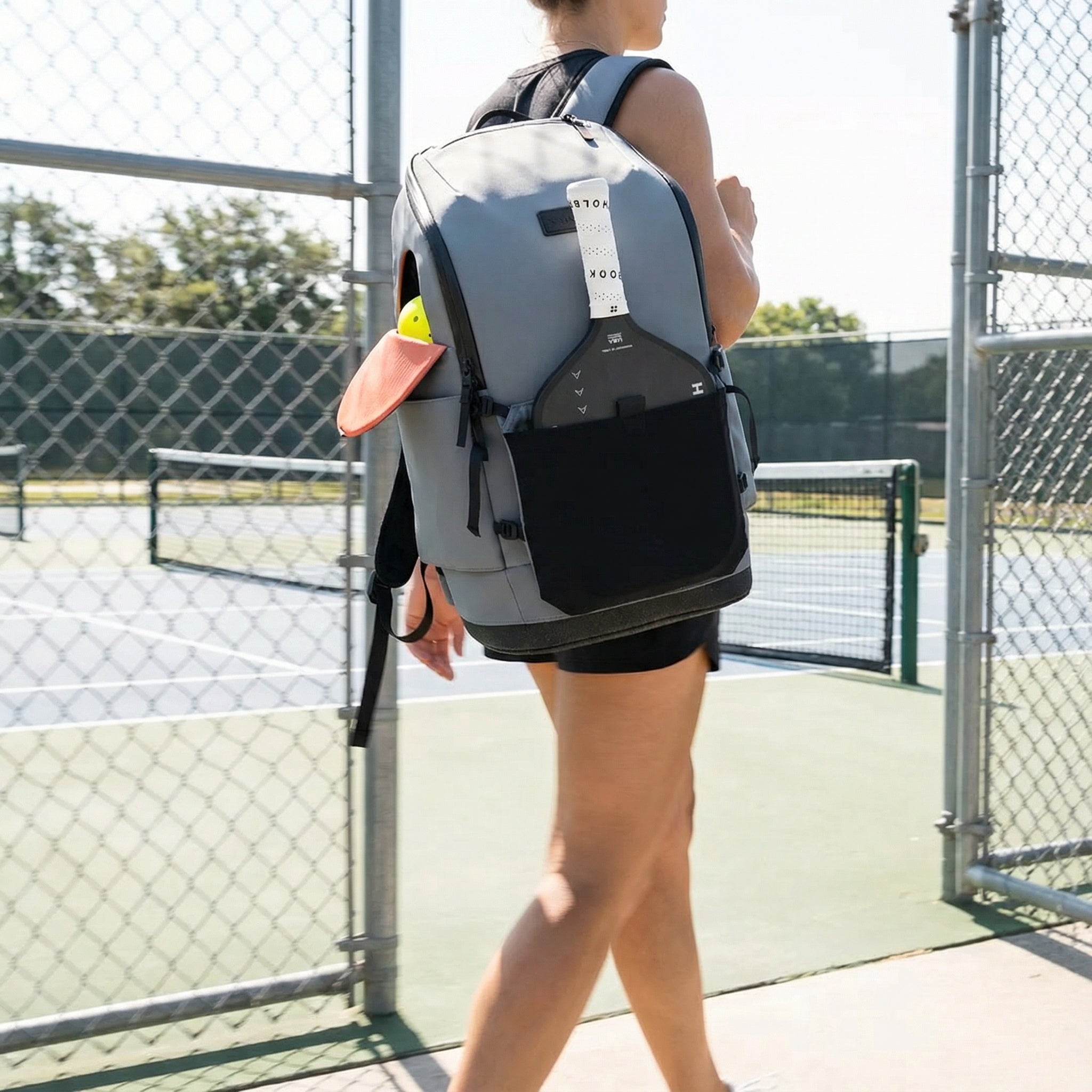
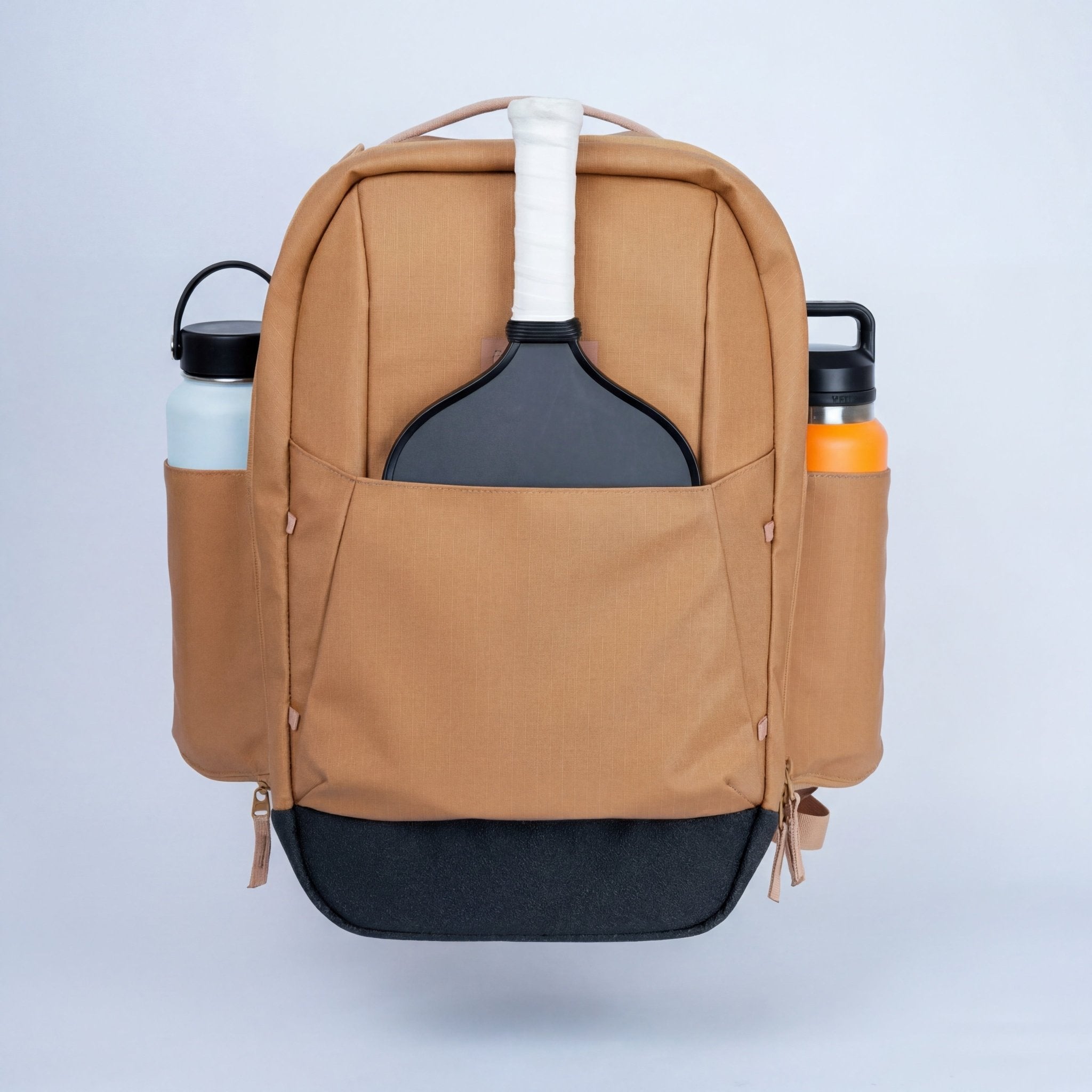
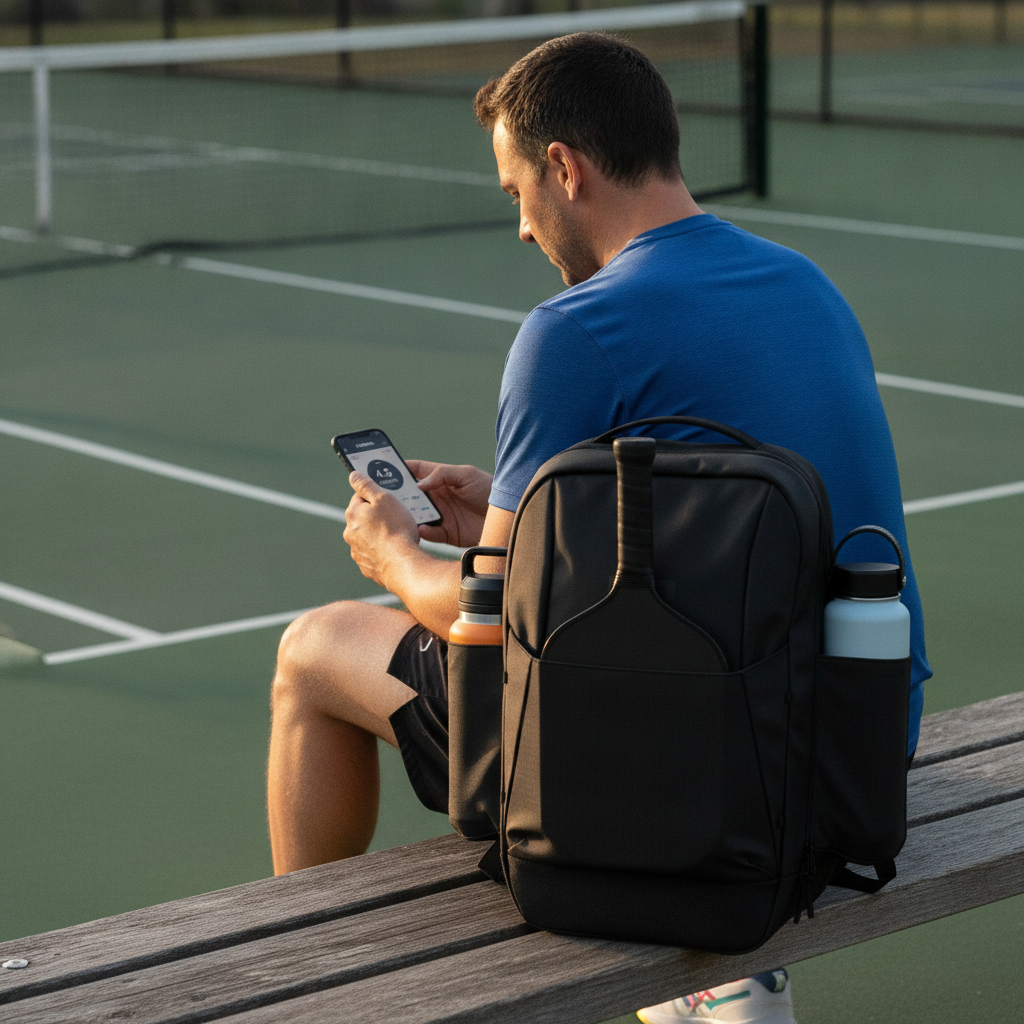
Once your DUPR is verified, tournament day demands real organization — paddles, water, nutrition, extra grip, a change of clothes. The Court Caddy holds everything with a 15" padded laptop sleeve, modular paddle sleeve, and YKK AquaGuard zippers built for outdoor conditions.


Leave a comment
This site is protected by hCaptcha and the hCaptcha Privacy Policy and Terms of Service apply.