

Every pickleball player has been there. You're mid-rally, the ball touches a line, someone steps into the kitchen, and suddenly everyone on the court has a different opinion about what just happened. Voices rise. Court time gets wasted. What should be a fun game turns into a frustrating rules debate.
Last updated: May 2026
Here's the reality: even experienced players get the rules wrong—a lot. According to tournament observations, disputes pop up in roughly 40% of recreational play matches, and the arguments almost always center on the same handful of rules that players think they understand but actually don't.
This guide will break down the most commonly misunderstood pickleball rules, helping you avoid confusion and play with confidence. Understanding how the ball bounces is central to many of these rules and is often at the heart of on-court disputes.
Looking for scoring help? Our complete scoring guide covers all formats.
Quick Overview: Rules Players Get Wrong Most Often
The most commonly misunderstood pickleball rules fall into a predictable pattern. Year after year, the same five areas create the most confusion:
-
Momentum in the kitchen – When does stepping into the non volley zone after a volley become a fault? Remember, momentum can carry you into the kitchen and affect your next shot, potentially leading to faults if not managed properly.
-
The double-bounce rule – The two-bounce rule states that each side must let the ball bounce once before hitting a volley after the serve.
-
Double hits – Is any second contact with the paddle automatically illegal?
-
Net and plane violations – Can you cross over the net after hitting? What about ATPs?
-
Line calls – Who gets to make them, and what happens when there's doubt?
In doubles, the third number in the score indicates whether a player is the first or second server for their team's turn.
Even in 2026 leagues and sanctioned tournaments, referees report that misunderstood rules about these five areas account for the majority of challenged calls. The USA Pickleball rulebook is the primary reference for recreational and competitive play, and it's worth noting that some rules have subtle differences from what you might see on PPA or MLP broadcasts. You can find the official USA Pickleball Rulebook here.
At FORWRD, we believe serious players deserve to understand the game as well as they understand their gear. Mastering the pickleball rulebook doesn't just make you a better competitor—it makes the game more enjoyable for everyone on the court. For the complete USA Pickleball rulebook breakdown, see our full Pickleball Rules Guide.
What this guide covers:
-
Rulebook myths vs. reality
-
The two-bounce rule explained
-
Kitchen and momentum rule breakdowns
-
Serving rules and common foot fault confusion
-
Double hits, carries, and trapped balls
-
Net plane violations and ATP shots
-
Line calls, ceiling shots, and permanent objects
-
Odd situations: cracked balls, injuries, and equipment problems
-
How rule knowledge protects your game
Rulebook Reality: What's NOT in the Rules (But Players Swear Is)
Before diving into specific rules, let's address a fundamental truth: if the USA Pickleball 2026 rulebook doesn't forbid something, it's usually allowed in rec play. The absence of a prohibition is, effectively, permission.
The most common myth? "If we've always played it that way at the park, it must be a rule."
This thinking causes endless confusion. Local customs get passed down like gospel, but they often have no basis in the actual rule book. Here are three things players constantly insist are illegal—but aren't:
-
Tossing the ball on a volley serve – USA Pickleball does not prohibit tossing the ball before striking it on a volley serve. Some players swear this is illegal, but you won't find that in the rules.
-
Switching hands mid-rally – Completely legal. You can switch your paddle from one hand to the other at any point.
-
Carrying an extra pickleball ball in your pocket – Allowed, as long as it doesn't fall out and interfere with play.
The next time someone insists on a call that sounds suspicious, try asking: "Can you show me the rule number?" Rules like 11.A (double hits) and 7.L (carrying) exist and can be looked up in seconds on your phone.
One important distinction: pro tours like the PPA, APP, and MLP sometimes use modified rules. What's legal on your local pickleball court might not fly on television, and vice versa. This article focuses primarily on USA Pickleball official rules for 2026, and we'll note where tour-specific variations apply.
The Two-Bounce (Double-Bounce) Rule: What It Actually Says
This is the most fundamental rule new players misapply, and the confusion starts with the name itself. Many beginners hear "double bounce" and think the ball must bounce twice on one side. That's not how it works.
The correct sequence is straightforward and centers on how the ball bounces after the serve:
-
The serving team serves. The ball must bounce once on the receiving team's side.
-
The receiving team returns the serve. The ball must bounce once on the serving team's side.
-
After both ball bounces have occurred—one on each side as required by the two-bounce rule—either side may volley or play the ball off the bounce.
Legal rally example:
-
Server (Team A) serves to the diagonal box.
-
Receiver (Team B) lets the ball bounce, then returns it.
-
Server's partner (Team A) lets the return bounce, then hits a drop shot.
-
From this point forward, all four players may volley.
Fault example:
-
Server (Team A) serves.
-
Receiver (Team B) lets the ball bounce, then returns it.
-
Server's partner (Team A) volleys the return before it bounces = fault on the serving team.
In 2026 beginner clinics, coaches report that this mistake happens constantly. New players assume "double bounce" means it must bounce twice total anywhere, not once per side in sequence. The two-bounce rule specifically requires that each side let the ball bounce once before hitting it after the serve. The rule exists to prevent the serving team from gaining an unfair advantage by rushing the net and volleying immediately.
Think of it as a forced patience rule: both teams must demonstrate restraint for exactly one shot each before the full game opens up.
The Kitchen & the Momentum Rule: When Stepping In Is a Fault
The non volley zone—affectionately called "the kitchen"—generates more arguments than any other area on the pickleball court. And most of those arguments stem from one massive misconception: players think the kitchen is completely off-limits during play. The kitchen (non-volley zone) is a 7-foot area on both sides of the net where players cannot volley the ball before it bounces.
It's not.
You can stand in the kitchen anytime you want. You can walk through it, camp in it, and even hit the ball while standing in it—as long as that ball has bounced first. The only restriction is this: you cannot volley (hit the ball before it bounces) while any part of your body, clothing, or paddle is touching the NVZ or its line.
Here's where things get messy. The momentum rule states:
If you volley while outside the kitchen, and your momentum carries you or anything you wear or carry into the NVZ afterward, it's a fault—even if the ball is already dead. The fault is assessed based on the moment the player hits the ball.
There is no time limit on momentum in the rulebook. If you volley from two feet behind the kitchen line, watch the ball sail past your opponent for a winner, then stumble forward into the kitchen three seconds later because you lost your balance… that's a fault. You must fully re-establish control and stop your forward motion before any part of you may legally enter the zone. If your momentum affects your ability to set up for the next shot, it can also lead to a fault if you enter the kitchen as a result.
Grey area scenarios that are all faults:
|
Scenario |
Ruling |
|---|---|
|
You volley, and your hat flies off into the kitchen |
Fault |
|
You volley, and your paddle slips from your hand into the NVZ |
Fault |
|
Your backpack strap or towel tucked in your waistband falls into the kitchen after a volley |
Fault |
|
You volley, regain balance, then step into the kitchen to retrieve the ball |
Legal (momentum ended) |
Video analysis from 2026 coaching sessions found that 70% of beginners incorrectly fault themselves for stepping into the kitchen after a volley—even when their momentum had clearly stopped. The key question is: did your momentum from the volley carry you in, or did you take a new, independent step?
Advanced players exploit the kitchen line with shots like the "Ernie," where you jump from outside the kitchen, volley mid-air, and land in the zone after contact. This is legal if your feet land after the ball leaves your paddle. But clip that kitchen line during your follow-through, and it's a fault.
Serving Myths: Tossing, Drop Serves, and Foot Fault Confusion
Serving rules have become one of the most confusing areas in pickleball, largely because 2026 pickleball rule updates and pro-tour exceptions have created a gap between what's legal at the park and what's allowed on TV. In this section, we will break down the serving rules and clarify common misconceptions.
The Volley Serve
For a legal volley serve, you must meet these requirements at the moment of contact:
-
Underhand motion – The paddle must move in an upward arc
-
Contact below the waist – Specifically, below your navel level
-
Paddle head position – Must be below the highest part of your wrist at contact
What about tossing the ball before striking it? Contrary to popular belief, USA Pickleball rules do not prohibit tossing on a volley serve. You can release the ball however you like—toss it, drop it from chest height, whatever works. The only requirements apply at the moment of contact.
However, PPA events currently allow only the drop serve and have banned tosses entirely. This is why watching pro pickleball can confuse recreational players: what you see on tour isn't always what's in the official rulebook.
The Drop Serve
The drop serve is the simpler alternative:
-
Ball must be released from your hand (or paddle) with no added force
-
You cannot throw it down or push it—just release and let gravity work
-
Once it bounces, all contact restrictions (waist, wrist, arc) are removed
The drop serve was designed as a beginner-friendly option, but many advanced players have adopted it because it eliminates the risk of a service fault on technicalities.
Foot Faults
At the moment of contact:
-
At least one foot must be behind the baseline
-
No part of either foot may touch the baseline or the court
-
You cannot extend beyond the imaginary extension of the sideline or centerline
Foot faults are rarely called in recreational play but can swing important points in officiated matches.
Double Hits, Carries, and "Trapped" Balls on the Paddle
Contact rules have been updated, and the biggest shift is that intent no longer matters for certain faults. The moment when a player hits the ball—whether it's a double hit, carry, or trapped ball—is now crucial for rule application, as the specific point of contact determines if a fault is called. Here's what you need to know.
Legal Double Hits
A double hit is legal under Rule 11.A when:
-
It occurs during one continuous, single direction stroke
-
Only one player makes contact
-
The double contact is unintentional (though this is assumed unless obvious)
Modern paddles with textured carbon fiber faces often create subtle bobble effects where the ball makes two quick contacts during a single swing. In a recent DUPR tournament analysis, over 25% of challenged calls involved double hits, and referees upheld 80% of them as legal because the stroke was continuous and in a single direction.
Illegal Double Hits
A fault occurs when:
-
You make two distinct swings at the ball
-
Your stroke changes direction mid-contact
-
A second player also touches the ball on the same side
Carries and "Catching" the Ball
Under Rule 7.L, any prolonged contact where the ball is held, rolled, or scooped on the paddle is a fault—regardless of intent. This update removed the intent requirement, which means even if you didn't mean to catch the ball, it's still a fault if it happens.
Real-world scenarios:
|
Situation |
Ruling |
|---|---|
|
Soft reset where ball briefly "sticks" on paddle during one smooth motion |
Usually legal |
|
Obvious scoop where you carry the ball forward before releasing |
Fault |
|
Ball gets trapped between paddle and wrist/arm |
Fault |
In social play, most players don't even feel these subtle contacts. Honesty and good sportsmanship matter more than trying to litigate every micro-touch. If you're unsure, offer to replay the point.
Net, Plane of the Net, and "Over-and-Back" Exceptions
Some of the loudest disputes in pickleball matches happen at the net, especially when it comes to understanding what happens when the ball or a player crosses to the other side of the net or court boundaries. Crossing the plane too early, touching the net system, and hitting around-the-post shots all create confusion, making it essential to know the specific pickleball rule for each scenario. Additionally, temporary pickleball nets—particularly those with a horizontal bar—have unique rules and considerations compared to permanent nets, such as how faults and let calls are handled if the net malfunctions during play.
The Plane Rule
The plane of the pickleball net extends vertically, including the imaginary extension beyond the net post on either side. The rule is simple:
-
You may not cross this plane before making contact with the ball on your side
-
You may follow through over the net after you've legally contacted the ball on your side
-
If you touch the net, posts, horizontal bar, center base, or opponent's court while the ball is live, it's a fault
The Over-and-Back Exception
This is the one situation where you may legally reach over the net before the ball touches your side:
When a ball with heavy backspin lands and the ball bounces on your side, then spins back over the net untouched, you may reach across to hit it. In this 'opponent hits' scenario, you are allowed to strike the ball after it has spun back over, as long as you do not touch the net or the opposing player's court in the process.
This situation is rare, but when it happens, players often freeze because they think crossing the net is always illegal. It's not—but only in this specific circumstance.
Around-the-Post (ATP) Shots
ATP shots have exploded in popularity, with usage up 150% in PPA Tour events since 2022. The rules:
-
The ball must travel around the outside of the net post to the other side
-
The ball must land in the opponent's court on the other side
-
The ball may pass below net height (no height requirement for ATPs)
-
Going between the post and the net is a fault
If the opposing team hits a wide-angle shot that pulls you off the court, an ATP can be a spectacular way to win the point—just make sure the pickleball travels around the post to the other side, not through the gap.
Line Calls, Ceiling Shots, and Permanent Objects
Most recreational players apply tennis instincts to pickleball, and this causes frequent mistakes with line calls, permanent object rules, and how external elements—like balls or animals from other courts—can impact play.
Line Calls
-
Lines are in – If any part of the ball touches any part of the line, the ball landed in bounds
-
Exception: On a serve, if the ball touches the kitchen line (NVZ line), it's out
-
When in doubt – The benefit goes to your opponents, not to you
-
Who calls what – In non-officiated play, you only call lines on your own side; you must give opponents the benefit of uncertainty on their calls
This last point trips up players constantly. If the ball lands near the opposing team's baseline and you think it was out, you don't get to make that call. They do. And if they're not sure, the ball is in.
Permanent Objects
A permanent object includes:
-
Ceilings, rafters, and overhead lights
-
Basketball backboards and gym equipment
-
Fences and walls
-
Spectators
-
Net posts
If the ball hits any permanent object before bouncing in the court, it's a fault on the player who hit it—even if the ball would have landed in.
Indoor example: During a winter league match at a community center, you hit a high lob that clips the ceiling, then drops into your opponent's court. This is a fault on you, not a replay, unless the facility has specific house rules that say otherwise.
The net post itself is a permanent object. If your shot hits the post, it's a fault on you as the striker. This is different from the net cord—if the ball touches the net cord and goes over, play continues.
Balls, Pockets, Injuries, and Other "Odd" Situations
Some rules only come up a few times per season, but they can swing crucial points when they do. Odd situations like a broken or cracked pickleball, a ball stuck in a pocket, or a player injury can confuse even experienced players. For example, if a player gets injured during a rally, the rally continues until its conclusion. When a cracked pickleball is suspected, players can appeal to the referee or the opposing player to verify if the ball is broken or cracked after the rally ends.
Cracked or Broken Pickleball
If you suspect a broken or cracked pickleball during a rally, play continues until the rally ends. After the rally, players may appeal to the referee or the opposing player to verify if the ball is broken or cracked. Only then may teams inspect the ball. If both teams agree the cracked pickleball affected play, the point is replayed and the ball is replaced before the next serve. You cannot stop play mid-rally to check.
Carrying an Extra Ball
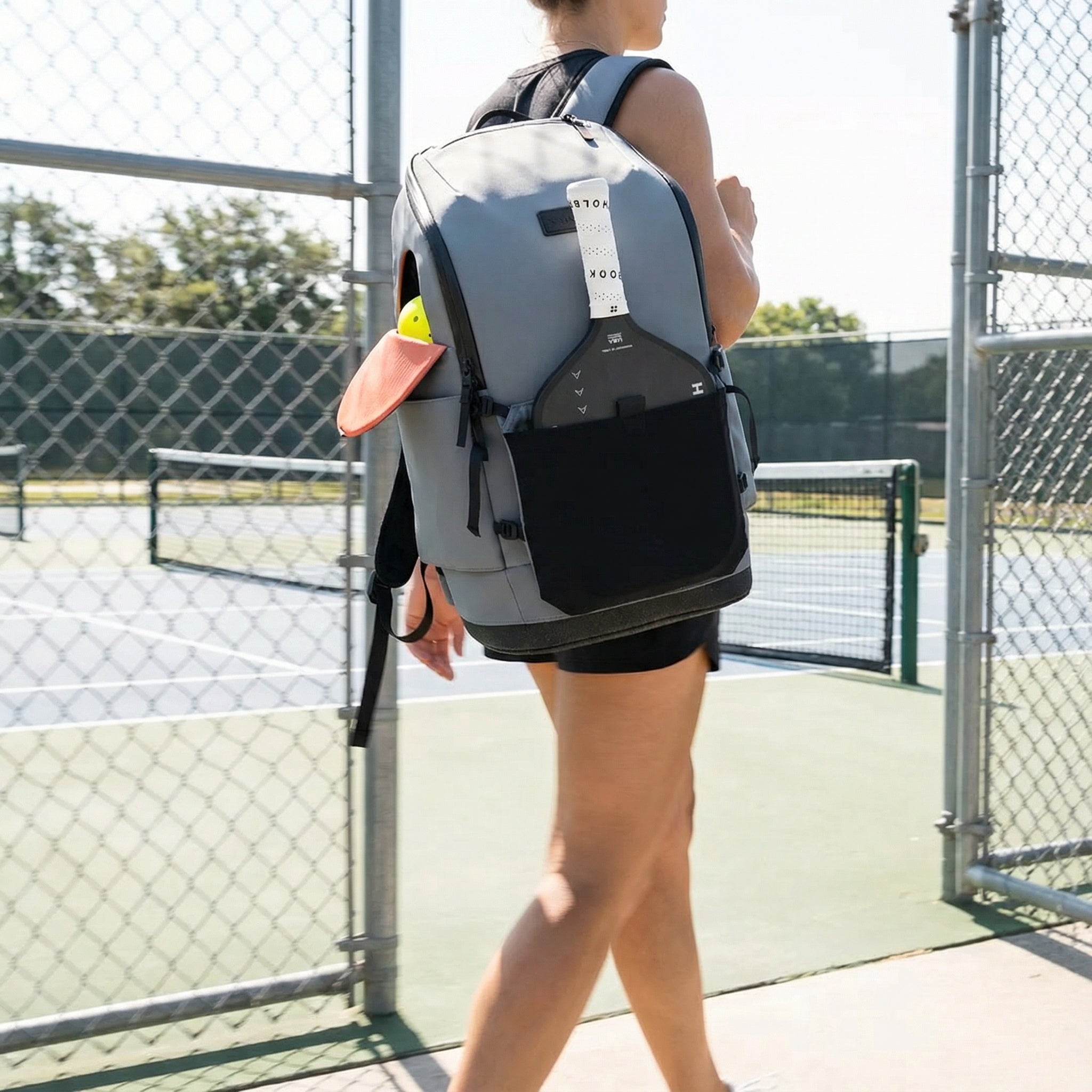
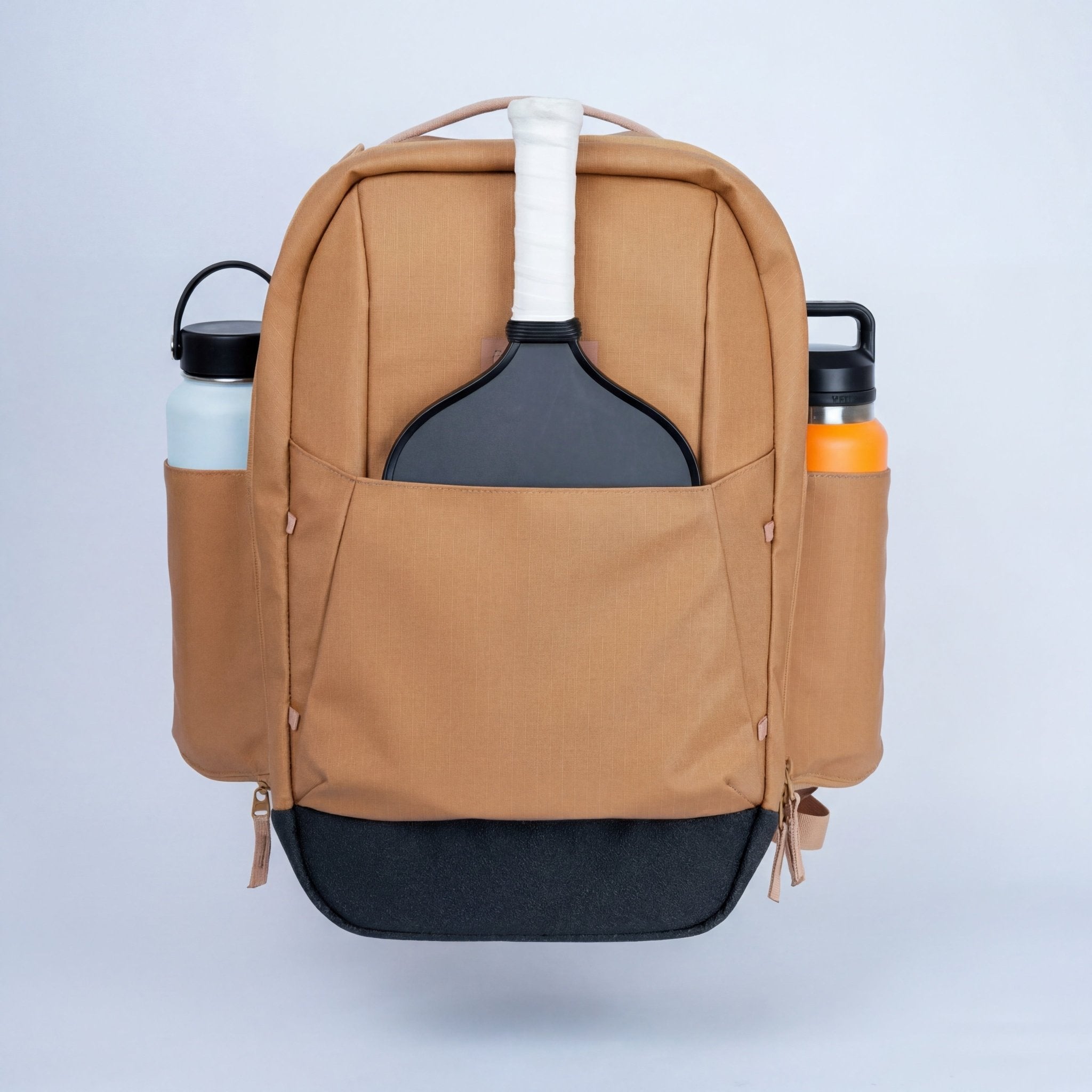
You're allowed to keep a spare ball in your pocket, clipped to your bag, or wherever you like. However, if it falls onto the court mid-rally, it's typically a fault on the player who dropped it. This is one reason serious players appreciate well-designed gear with secure storage—a broken paddle or dropped ball can cost you a game. Check out FORWRD's court bags and backpacks designed for pickleball players.
Injury During a Rally
This one surprises many players: in official play, if a player is injured mid-rally, play continues until a fault or dead ball occurs. The injured side cannot call a timeout until the point concludes. In recreational play, most groups choose to stop and replay out of courtesy, but that's etiquette, not the rule book.
Equipment Problems
|
Situation |
Ruling |
|---|---|
|
Broken paddle mid-rally |
Play continues; no replay |
|
Dropped hat, sunglasses, or water bottle |
Play continues |
|
Item falls into the NVZ during/after a volley |
Fault if tied to the volley's momentum |
|
Equipment creates a safety hazard |
Referee may issue a technical warning or stoppage |
The rule to remember: the rally almost never stops for equipment issues. A dropped item only matters if it triggers another rule (like the momentum rule in the kitchen).
Pickleball Rules FAQ: The Questions Players Ask Most
Can your momentum carry you into the kitchen after a volley?
Yes — this is one of the most commonly called kitchen violations. If you volley and your momentum carries you into the non-volley zone, it's a fault. The rule applies to any part of you, your clothing, or your paddle that touches the NVZ or its lines — even if you made the shot cleanly.
What is the double bounce rule in pickleball?
After the serve, both teams must let the ball bounce once before hitting a volley. The serving team must let the return bounce first, and the returning team must let the serve bounce first. After those two bounces, either team can volley or play off the bounce. Simple in theory, often forgotten mid-rally in practice.
Is a double hit always illegal in pickleball?
Not always. A double hit is legal if it happens on one continuous stroke — your paddle follows through and contacts the ball a second time unintentionally during the same swing. Deliberately hitting the ball twice, or stopping and re-hitting, is a fault. The intent matters: was it one fluid swing or two?
Who makes the line call in recreational pickleball?
The player on whose side the ball lands makes the call. If you genuinely can't tell whether it's in or out, the benefit of the doubt goes to your opponent — call it in. That's not just good etiquette; it's the USA Pickleball rulebook standard. Referees make all calls in sanctioned tournament play.
Can you reach over the net in pickleball?
You can follow through over the net after hitting — your paddle may cross the net plane after contact. But you cannot touch the net, posts, or your opponent's court. The around-the-post (ATP) shot is perfectly legal: you can hit a ball that's traveled around the outside of the net post without going over it at all.
Ready for your next game?
Now that you've got the rules down, make sure your gear is ready too. The FORWRD Court Caddy carries everything you need to the court — 4 paddle slots, 15" laptop sleeve, YKK AquaGuard zippers. Built with 500+ real players.

How Playing by the Book Protects Your Game (and Your Gear)
Understanding commonly misunderstood rules isn't just about avoiding arguments—it fundamentally changes how you play. When you know the momentum rule inside and out, you stop making unnecessary faults after volleys. When you understand double hits, you stop giving up points on perfectly legal shots. When you quickly realize what the rulebook actually says versus what someone at the park insists it says, you play with more confidence and fewer disputes. Outsmarting the other player by understanding the rules better can give you a real edge in tournaments and help you improve your skills.
There's a practical benefit too. Knowing when you can and can't enter the kitchen, when diving for a ball will cost you the point, and how net contact works—this awareness reduces dangerous lunges and collisions that can damage your paddles, balls, and even the premium pickleball bags you've left courtside.
As of 2026, remember that a player must call a ball 'out' immediately; otherwise, the ball is considered 'in'. Also, you switch sides with your partner only when your team scores a point while serving.
At FORWRD, we design durable court bags and backpacks with smart organization specifically for players who take pickleball seriously. We believe the best gear should let you focus on mastering the rulebook and the game itself, not chasing loose equipment or dealing with broken gear at the worst possible moment. Explore their pickleball gear collection here.
How to stay sharp on the rules:
-
Skim the latest USA Pickleball rulebook annually, especially after January 1 updates
-
Download the official app or bookmark the online rulebook for quick reference during disputes
-
Set a "we play by the book" standard in your local group—it raises everyone's game
-
When someone makes a questionable call, ask for the rule number instead of arguing
Pickleball is growing faster than almost any sport in America, with projections of 50 million players by 2026. The players who understand the rules—really understand them—are the ones who earn respect on every court they step onto.
For those who care enough about pickleball to learn the rules, compete hard, and invest in gear built to perform as seriously as they do, FORWRD is here to help you play forward.

Leave a comment
This site is protected by hCaptcha and the hCaptcha Privacy Policy and Terms of Service apply.