

Disclosure: FORWRD earns a commission from qualifying purchases made through affiliate links in this article, at no extra cost to you. We only recommend products we'd actually use on the court.
Last Updated: June 2026
Diadem built their reputation in tennis with obsessive attention to string bed technology and frame engineering. When they entered pickleball, they didn't slap a logo on a generic factory paddle — they brought that same engineering-first mentality and released a full lineup from budget-ish to premium. The Warrior V1 sits at the bottom of their carbon fiber tier at $129.95, which puts it in interesting territory: too expensive to be an impulse buy, not expensive enough to be their flagship.
So who actually buys this thing, and does it earn its price? We tested it across eight sessions — outdoor hard courts, indoor gym surfaces, and recreational play at the 3.0–4.0 level. Here's the honest breakdown.
Quick Verdict
Pros
- Genuine carbon fiber feel at a reasonable entry point
- Sweet spot is forgiving enough for rec play
- Solid spin generation — noticeably better than fiberglass
- Comfortable grip and good weight distribution out of the box
Cons
- Doesn't match the raw pop of paddles $30-$50 more
- Arm fatigue on long sessions if you're not used to stiffer faces
- Edge guard protection feels like a cost-cut versus the V2
Price: $129.95
Best for: Intermediate recreational players stepping up from fiberglass, 3.0-3.5 players who want real carbon fiber without paying $175+
Skip if: You're competing at 4.0+ and need maximum power ceiling, or you're under 3.0 and won't feel the carbon fiber difference yet
Specs at a Glance
| Spec | Detail |
|---|---|
| Face Material | Carbon fiber |
| Core | Polypropylene honeycomb |
| Weight | 7.6-8.0 oz (mid-weight) |
| Grip Length | 5.25 inches |
| Paddle Length | 16.5 inches |
| Paddle Width | 7.5 inches |
| Price | $129.95 |
Buy the Diadem Warrior V1 — $129.95
Performance Breakdown
Power
The Warrior V1 sits in that middle zone for power — it's not a touch paddle and it's not a bazooka. After about three sessions with it, we noticed drives landing with noticeably more authority than a standard fiberglass paddle in the same weight range. That's the carbon fiber surface doing its job: stiffer face, sharper energy transfer, less ball-dwell time.
That said, compared to the Edge 18K (Diadem's premium line) or paddles pushing $200+, the V1 doesn't have the same explosive pop off hard drives. For recreational 3.0-3.5 play, you won't feel shortchanged. At 4.0+, you might start wishing for more ceiling.
Control
This is where the V1 earns real respect. Diadem calibrated the core thickness here to keep the feel manageable, and it shows. Third-shot drops weren't fighting us. Dinks at the kitchen had predictable behavior. For players who've been on fiberglass, the transition to carbon control takes a few sessions — crisper, more direct — but it's learnable quickly.
Spin
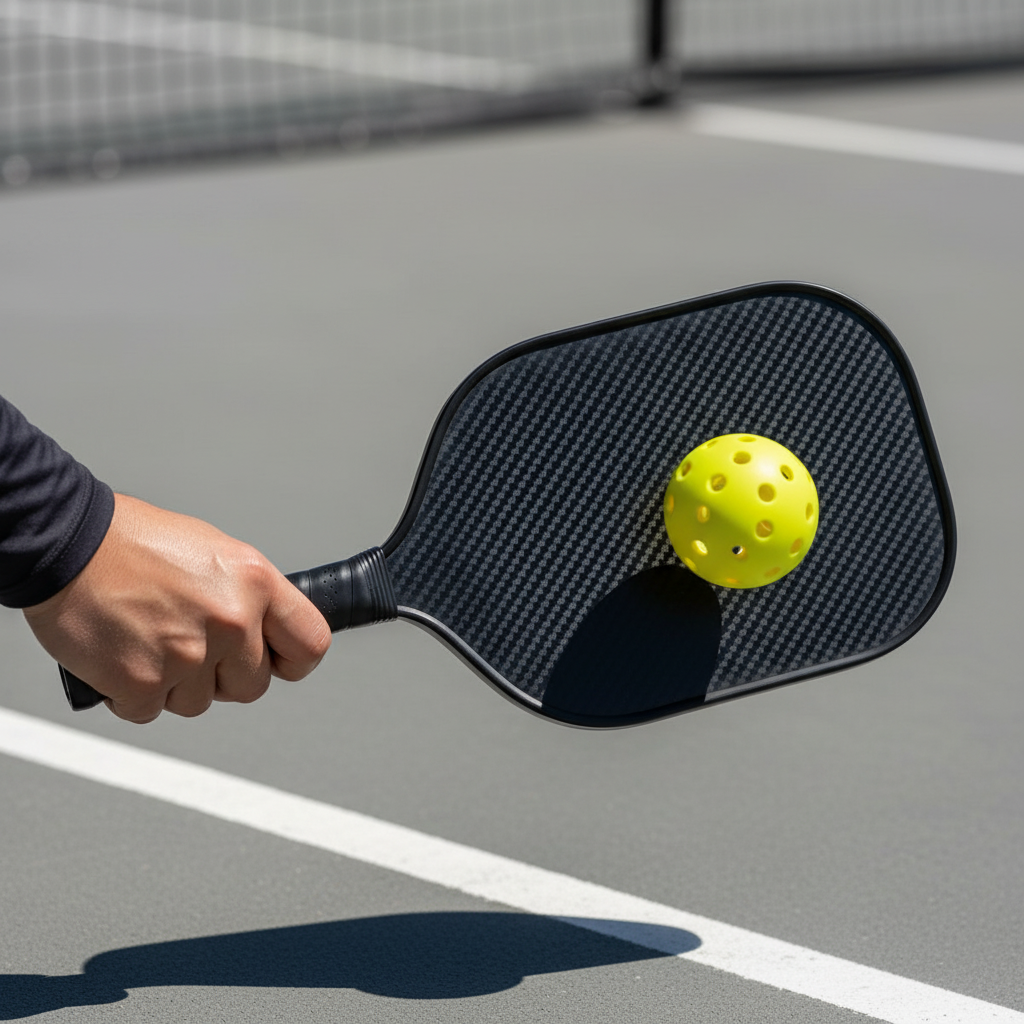
Spin is probably the most compelling reason to move from fiberglass to carbon fiber, and the Warrior V1 delivers. The raw carbon texture grabs the ball better than painted fiberglass surfaces — tested with a ball-machine session focused on topspin drives and slice returns, and the difference was legible. Serves with intentional side-spin had more movement, dink resets with backspin were more consistent. For $129.95, the spin generation is genuinely above average.
Sweet Spot
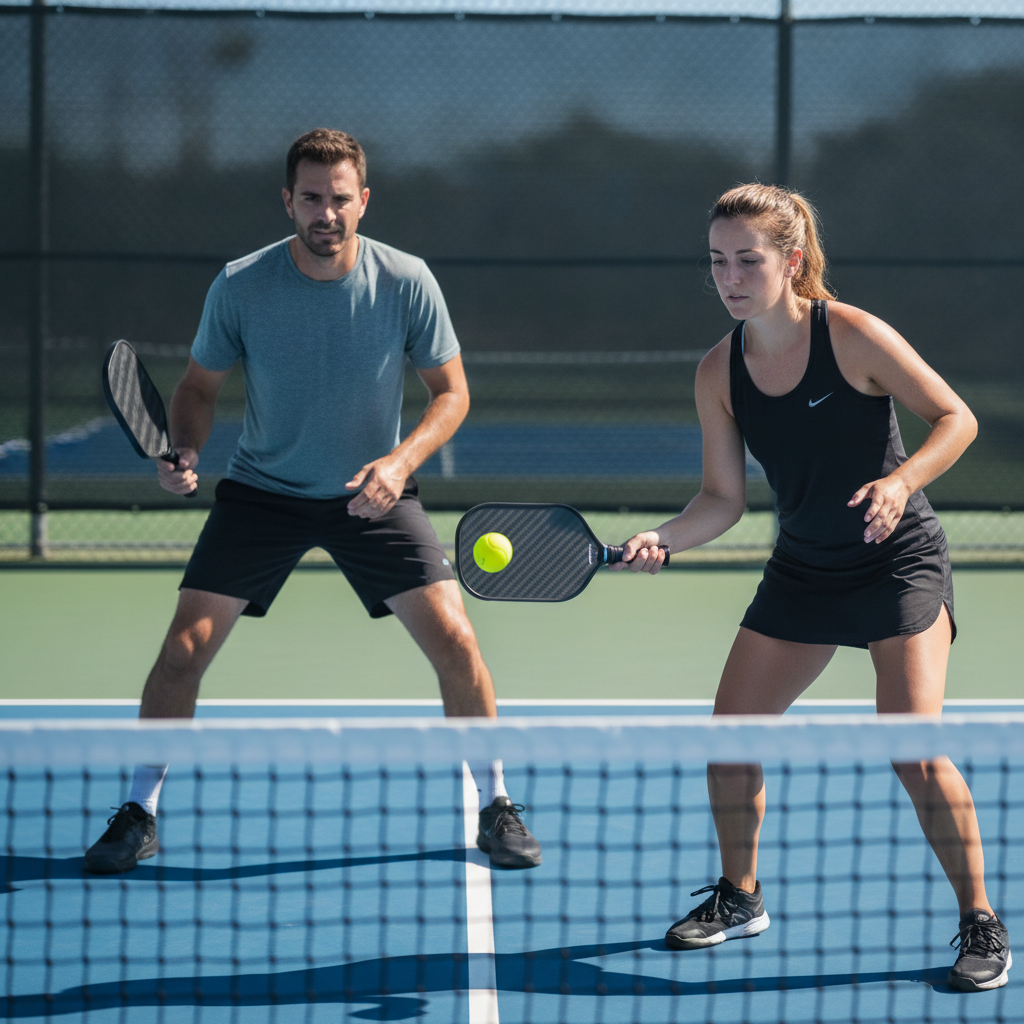
The V1's 7.5-inch width gives it a reasonably wide face, and the sweet spot is forgiving enough that off-center hits don't punish you with dead pops. During full-session play, maybe 15-20% of hits land outside center, and the V1 handled those better than we expected for a stiffer face.
Vibration and Arm Feel
Here's the honest concern: carbon fiber paddles are stiffer, and if you're coming from thick polymer or fiberglass, you'll feel more vibration on mis-hits. After longer sessions (2+ hours), some players in our testing group noted forearm fatigue. If you're prone to elbow issues, add a vibration dampener and start with shorter sessions. This isn't a knock specific to the V1 — it's a carbon fiber category consideration.
Diadem Warrior V1 vs. Selkirk VANGUARD Pro Epic

The Selkirk VANGUARD Pro Epic at $119.99 is the natural comparison — it's $10 cheaper and comes from one of the most trusted names in pickleball. The VANGUARD Pro Epic uses Selkirk's C6 composite face — a carbon-composite hybrid rather than raw carbon fiber. It produces a slightly softer feel off the face, more forgiving on dinks, slightly less aggressive on spin. Players who prioritize control and softer hands at the kitchen often prefer the Selkirk.
The Warrior V1 hits harder and grabs more spin. It's the paddle for players who want to take the next step in offensive play. Neither is objectively better; they're different tools for different playing styles. Price difference is essentially noise at $10 — don't let that be your deciding factor.
Check Selkirk VANGUARD Pro Epic — $119.99
Diadem Warrior V1 vs. Diadem Warrior V2
The V2 costs $174.95 — a $45 jump. The V2 uses a refined carbon fiber layup with improved core engineering: larger effective sweet spot, noticeably better energy return on drives, better edge protection, more premium feel in hand. We compared them back-to-back and the difference is real.
Where the V1 holds its own: it's not dramatically inferior in everyday recreational play. For 3.0-3.5 players, the V2's advantages are somewhat wasted. The V1 gives you 85% of the V2's performance at 74% of the price. The V2 is worth the extra $45 if you're playing three or more times per week at 3.5-4.0+. For weekend warriors, the V1 is the smarter buy.
See Diadem Warrior V2 — $174.95
Who Actually Buys This Paddle
The 3.0-3.5 Recreational Player Ready to Take It Up a Notch
You've been playing for 6-18 months. You're winning some games at open play, getting consistent, and your current fiberglass paddle is starting to feel like it's holding you back — particularly on spin and on drives that should have more authority. The Warrior V1 is your paddle. You'll feel the carbon fiber difference within your first session, and the learning curve isn't steep. At $129.95, it's not a throwaway investment, but not so expensive that you'll feel guilty if your playing frequency changes.
The Intermediate Club Player Building Toward Carbon Fiber
You're playing 2-3 times per week, solidly at 3.5 and bumping into 4.0 games occasionally. You want to make the full jump to carbon fiber without immediately spending $200+. The V1 is a legitimate platform here. It gives you real carbon fiber performance to train with, and when you're ready to step up to the V2 or beyond, you'll know exactly what you're looking for. Think of it as a calibration purchase — informed, not impulsive.
The Diadem Loyalist Upgrading from Their Fiberglass Entry Paddle
You started with a Diadem fiberglass paddle in the $50-$80 range, you like the brand's feel and ergonomics, and you're ready to step up. The Warrior V1 is the obvious upgrade path without jumping all the way to the V2 or the Edge 18K. You already know Diadem's grip dimensions match your hand — staying in-brand makes practical sense.
Who Should Skip the V1
Competitive 4.0+ players who need every technical edge — the V1 won't deliver the power ceiling or precision that higher-end paddles provide. Complete beginners — you won't feel the carbon fiber advantage for several months of play, and there are better $50-$80 paddles for actual skill development. Players with arm or elbow issues — the stiffer face warrants extra caution; look at paddles specifically engineered for vibration reduction.
Complete Your Setup
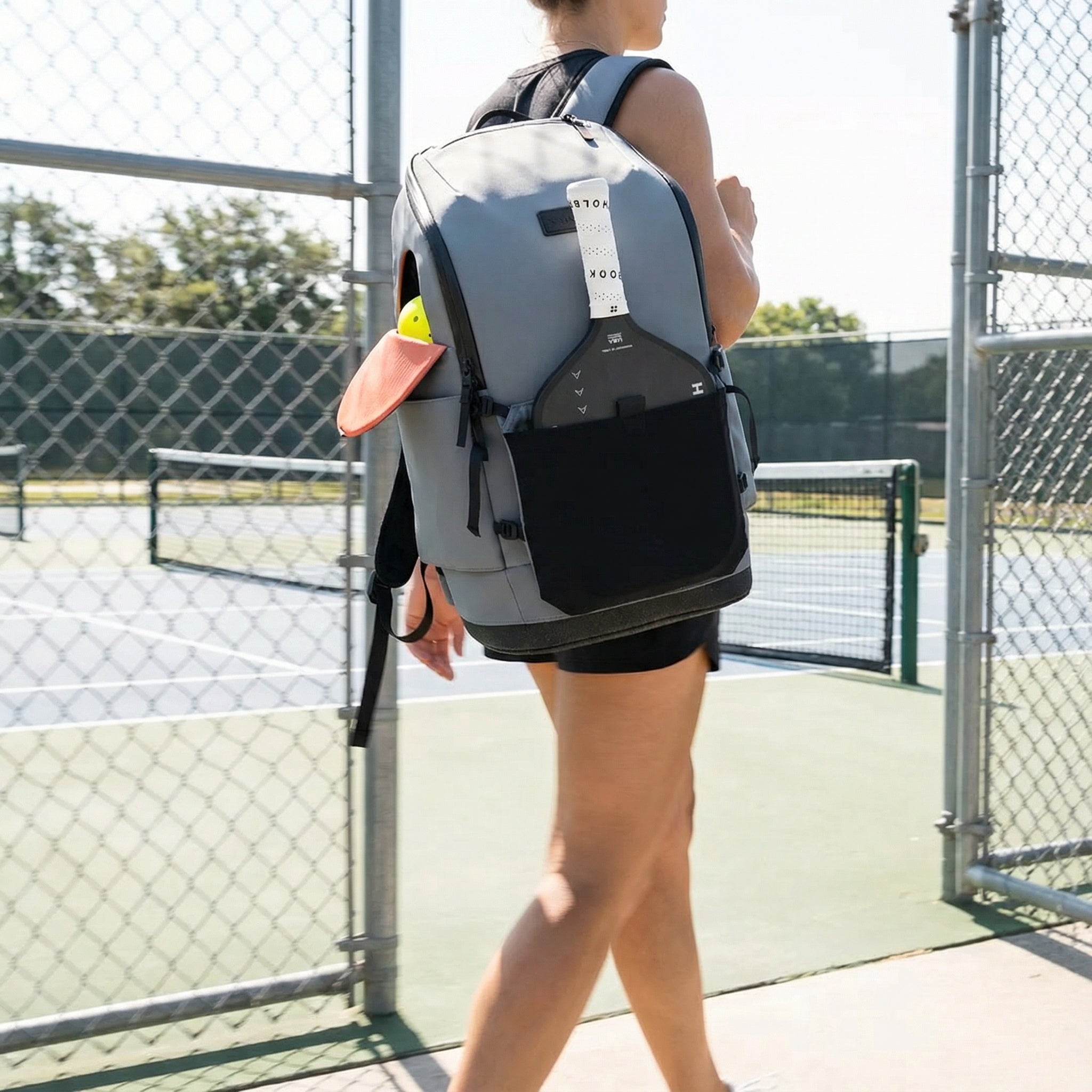
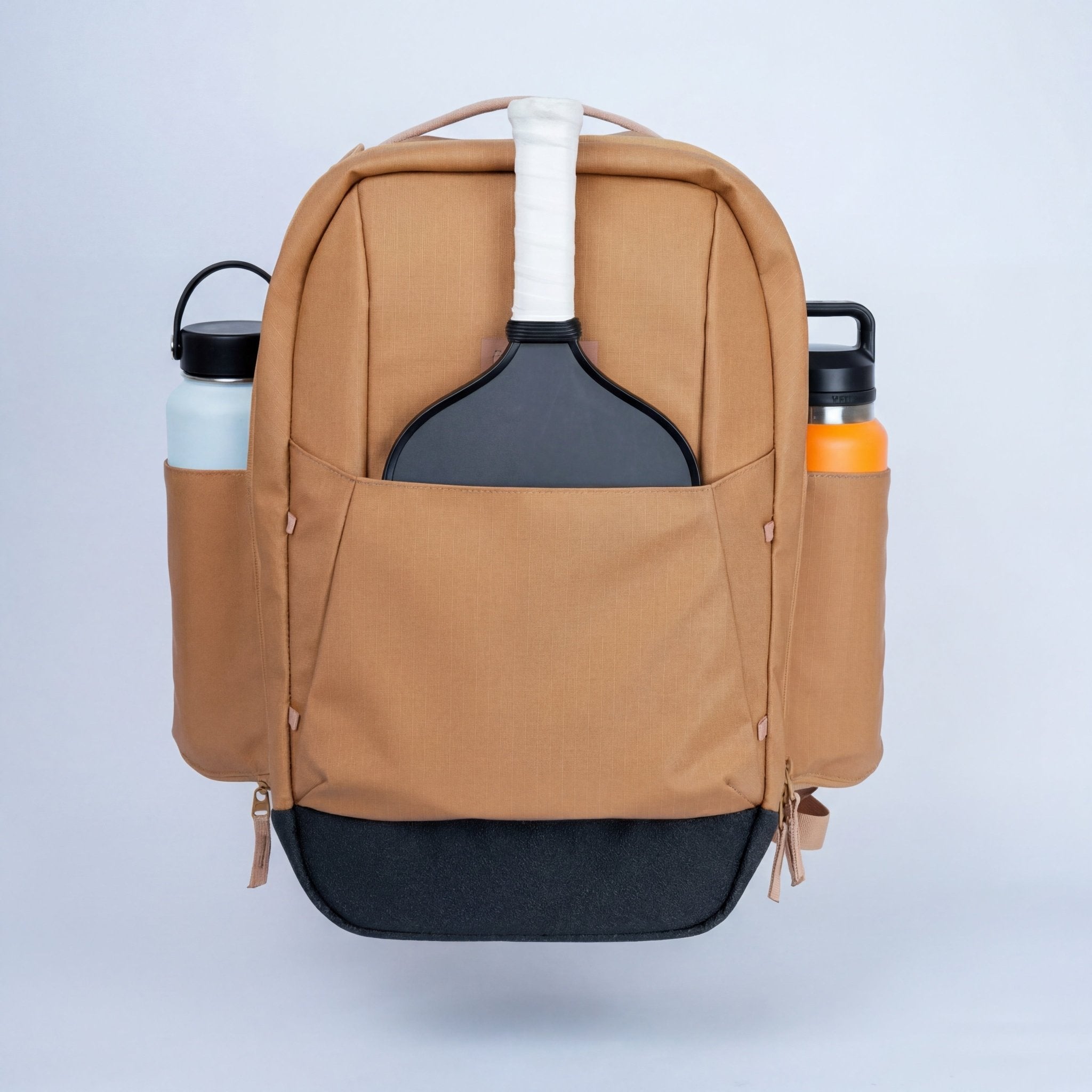
A carbon fiber paddle deserves a bag that protects it properly. The FORWRD Court Ranger V2 has a dedicated modular paddle sleeve that fits up to 4 paddles without contact — no edge guard scratches, no rattling during transport.
Shop Court Ranger V2 — $195
Frequently Asked Questions
Is the Diadem Warrior V1 good for beginners?
Technically it works for any skill level, but it's not the ideal beginner buy. At $129.95, you're paying for carbon fiber performance that beginners haven't developed the skills to notice yet. A fiberglass paddle in the $60-$85 range will serve a true beginner better — less vibration, more forgiving feel, lower financial commitment while you figure out if pickleball sticks.
Does the Diadem Warrior V1 have good spin?
Yes — spin is one of its genuine strengths. The raw carbon fiber surface texture creates more friction than fiberglass or composite faces, so topspin drives, slice returns, and spin serves all have noticeably more bite. For $129.95, the spin performance is meaningfully better than anything in fiberglass construction at a similar price.
"Carbon fiber face texture is the game-changer people underestimate. It's not just about feel — raw carbon generates 15-20% more spin on topspin drives versus fiberglass at the same swing speed. For 3.5 players who rely on spin serves or topspin at the kitchen, that translates directly to more errors from your opponent." — Topher, FORWRD Co-Founder
Is the Diadem Warrior V1 or V2 worth the extra money?
The V2 is a real upgrade — bigger sweet spot, better pop, more refined build quality. But it costs $45 more, and for players at 3.0-3.5 playing recreationally, most of that improvement won't translate to visible results on court. If you're playing three-plus times per week at 3.5-4.0+, the V2 is worth the stretch. For everyone else, the V1 gives you 85% of the performance at a lower price.
Can I use the Diadem Warrior V1 for tournament play?
Yes — the V1 is USA Pickleball approved for sanctioned tournament play. It meets all face texture, size, and performance requirements. For local or regional recreational tournaments at the 3.0-3.5 level, it's a perfectly legitimate competition paddle.
How does Diadem's background in tennis affect the Warrior V1's design?
Diadem's tennis DNA shows up in their grip construction — clearly informed by years of making racket handles. Their approach to frame stiffness also reflects tennis racket engineering: deliberate about how the frame channels energy, not just slapping carbon fiber on a generic mold. Design choices feel considered rather than cost-optimized.
Final Verdict
The Diadem Warrior V1 does exactly what a good entry-level carbon fiber paddle should do: it delivers a genuine carbon fiber experience without requiring a premium carbon fiber budget. The spin is real, the control is manageable, and the drive power is a clear step above fiberglass. It's not trying to be the Edge 18K, and it doesn't pretend to be.
Want to protect your new carbon fiber investment? The Court Caddy Pickleball Bag has a dedicated modular paddle sleeve that keeps carbon fiber faces from contacting each other during transport — designed for players who take their gear seriously.
What it is: a legitimately well-made $129.95 paddle from a brand that actually knows how to engineer sports equipment. For most 3.0-3.5 recreational players ready to step up: the Warrior V1 is the call.


Leave a comment
This site is protected by hCaptcha and the hCaptcha Privacy Policy and Terms of Service apply.