

Last updated: June 2026
With 19.8 million players in the United States alone, it's a fair question: is pickleball an Olympic sport? The short answer is no — pickleball is not currently an Olympic sport and will not be included in the 2028 Los Angeles Olympics. The sport that was chosen from the IOC's final shortlist? Cricket, baseball/softball, flag football, lacrosse, and squash. Pickleball didn't make the cut.
The longer answer is more interesting. The sport's trajectory, recent governance consolidation, and growing international footprint suggest Olympic inclusion is possible — just on a longer timeline than the pickleball community's enthusiasm might imply. Here's where things actually stand and what needs to happen next.
Current Olympic Status: Confirmed Not in 2028
As of June 2026, pickleball is definitively not an Olympic sport. In October 2023, the IOC finalized the 2028 Los Angeles sport lineup and pickleball wasn't on it. That decision is final — the 2028 Games program is locked.
The absence highlights a core challenge: no pickleball organization had achieved official IOC recognition by the time the 2028 decisions were made. Multiple international bodies exist — the World Pickleball Federation (WPF), formerly separate International Pickleball Federation (IPF) and WPF before a 2024-2025 merger — but unified authority under a single IOC-recognized body didn't materialize in time.
The Governance Problem in Plain Terms
The IOC doesn't deal with competing federations. To be considered for Olympic inclusion, a sport needs one governing body that speaks for the global sport — sets the rules, runs the anti-doping program, manages international competition. Pickleball had multiple organizations with overlapping claims to that authority for years. The 2024-2025 merger of the IPF and WPF addressed this directly, but IOC recognition requires demonstrated organizational stability over time, not just a recent merger announcement.
What the IOC Actually Requires for Inclusion
The path to Olympic inclusion involves specific, verifiable thresholds. Pickleball has to clear all of them:
Geographic Requirements
- Men's participation in at least 75 countries across four continents
- Women's participation in at least 40 countries across three continents
- Current data shows the WPF claiming 60+ country members — below the 75-country men's threshold
Governance and Compliance
- A single unified governing body with official IOC recognition
- Full adoption and implementation of the World Anti-Doping Code
- Compliance with the Olympic Charter and Olympic Movement Code
- Standardized anti-doping protocols across all member countries
Timeline Constraint
- Sports must be included in the Olympic program at least seven years before the relevant Games
- For 2032 Brisbane: the inclusion decision would need to happen by approximately 2025 — that window has effectively closed
- For 2036: the deadline is around 2029 — still achievable if governance accelerates
The IOC also evaluates youth engagement, gender balance, global appeal, and whether the sport enhances the Games' appeal while keeping athlete numbers manageable. Pickleball's youth growth and its appeal across age groups are genuine advantages here.
Why Pickleball Isn't in the Olympics Yet
Insufficient Global Reach
Pickleball's growth has been explosive in the US, Canada, and parts of Europe and South America. But significant gaps remain in Asia and Africa. The IOC's geographic thresholds aren't arbitrary — they ensure an Olympic sport represents global participation, not a North American phenomenon with international hobbyist pockets. Asia and Africa represent the development gap that needs closing.
Governance Fragmentation (Recent Progress)
The good news: the 2024-2025 WPF/IPF merger is a meaningful step. The consolidated WPF has established plans to base headquarters in Lausanne, Switzerland — the same city as IOC headquarters — which signals serious Olympic ambition rather than aspirational talk. The test is whether that unified body can demonstrate stable, effective governance over the next three to five years.
Infrastructure Gaps
Tennis benefits from courts that already exist globally. Pickleball courts are still being built. Many regions rely on converted tennis courts, which creates access inconsistencies and limits grassroots development in areas where tennis infrastructure is limited or expensive.
Competitive Structure Still Evolving
The Carvana PPA Tour and Major League Pickleball have built legitimacy for professional play in North America. But consistent international competitive frameworks — standardized rankings, athlete pathways, qualification systems — are still developing. The launch of Pickleball World Rankings (PWR) in July 2024 was real progress, but Olympic-level competition credibility builds slowly.
The Realistic Timeline
2032 Brisbane: Possible but Unlikely
Brisbane's organizing committee could theoretically propose pickleball through the Host City Proposal mechanism, which allowed activities like sport climbing and skateboarding to gain temporary Olympic inclusion. If Brisbane advocates for pickleball and the WPF has achieved IOC recognition by 2026-2027, a 2032 appearance is theoretically possible. Most serious observers put it at under 30% probability.
2036: The More Achievable Target
2036 gives the WPF time to achieve stable IOC recognition, expand membership to clear the 75-country threshold, implement anti-doping, and build international competitive structures that satisfy IOC scrutiny. A 2029 inclusion decision for the 2036 Games is realistic if current momentum continues. The host city for 2036 hasn't been determined — that announcement, expected in 2025-2026, could affect the politics significantly.
Demonstration Sport Pathway
Pickleball appearing at the 2022 Maccabiah Games and 2023 African Games isn't just optics — it's building the international competitive track record the IOC wants to see. The 2027 African Games and expected Invictus Games appearances continue that record. These events prove the sport can organize international competition at multi-sport scale.
What Olympic Status Would Actually Change
Olympic inclusion isn't just symbolic. The practical effects would be significant:
- Exposure to billions of viewers — not millions of current enthusiasts
- Government funding unlocked — many countries fund Olympic sports through national sport agencies; non-Olympic sports get none of that
- Athlete development infrastructure — national training centers, coaching resources, youth pathways that Olympic sports receive
- Legitimacy signal — the sport stops being "that thing played at retirement communities" in the global sports media narrative
- Exponential community growth — every Olympic sport sees a participation surge in the Games host country and beyond
Progress Since 2023
WPF/IPF merger (2024-2025) — unified governance under the WPF is the single most important development for Olympic prospects. The plan to establish Lausanne headquarters signals the federation understands how Olympic politics works.
Pickleball World Rankings (July 2024) — a credible international player ranking system is the foundation of any Olympic qualification structure. Without rankings, you can't build qualification pathways. This was a meaningful institutional step.
African Games and Maccabiah precedent — multi-sport international appearances create an institutional track record. The IOC watches how sports perform organizationally in these contexts.
Ben Johns, Anna Bright, and professional tour growth — elite athletes with international profiles help the IOC visualize what Olympic-level competition would look like. The PPA Tour's prize pools, broadcast deals, and athlete quality set a credible benchmark.
What Needs to Happen for Olympic Inclusion
Bluntly: the WPF needs to achieve official IOC recognition, expand membership past the 75-country men's threshold, implement anti-doping globally, and demonstrate several years of stable unified governance. That's not a short list, but none of it is impossible. The pieces exist — it's an execution problem, not a fundamental barrier.
For 2036, the window to achieve all of this is approximately 2025–2029. If the WPF hits IOC recognition by 2027 and member country expansion by 2028, the 2029 program decision becomes a real conversation.
Gear Up While the Sport Grows
Whether pickleball's Olympic moment comes in 2032, 2036, or later, the community playing today is already competitive in ways that matter at the club, regional, and national level. Tournament players and serious recreational players show up better when their gear keeps up with their game.
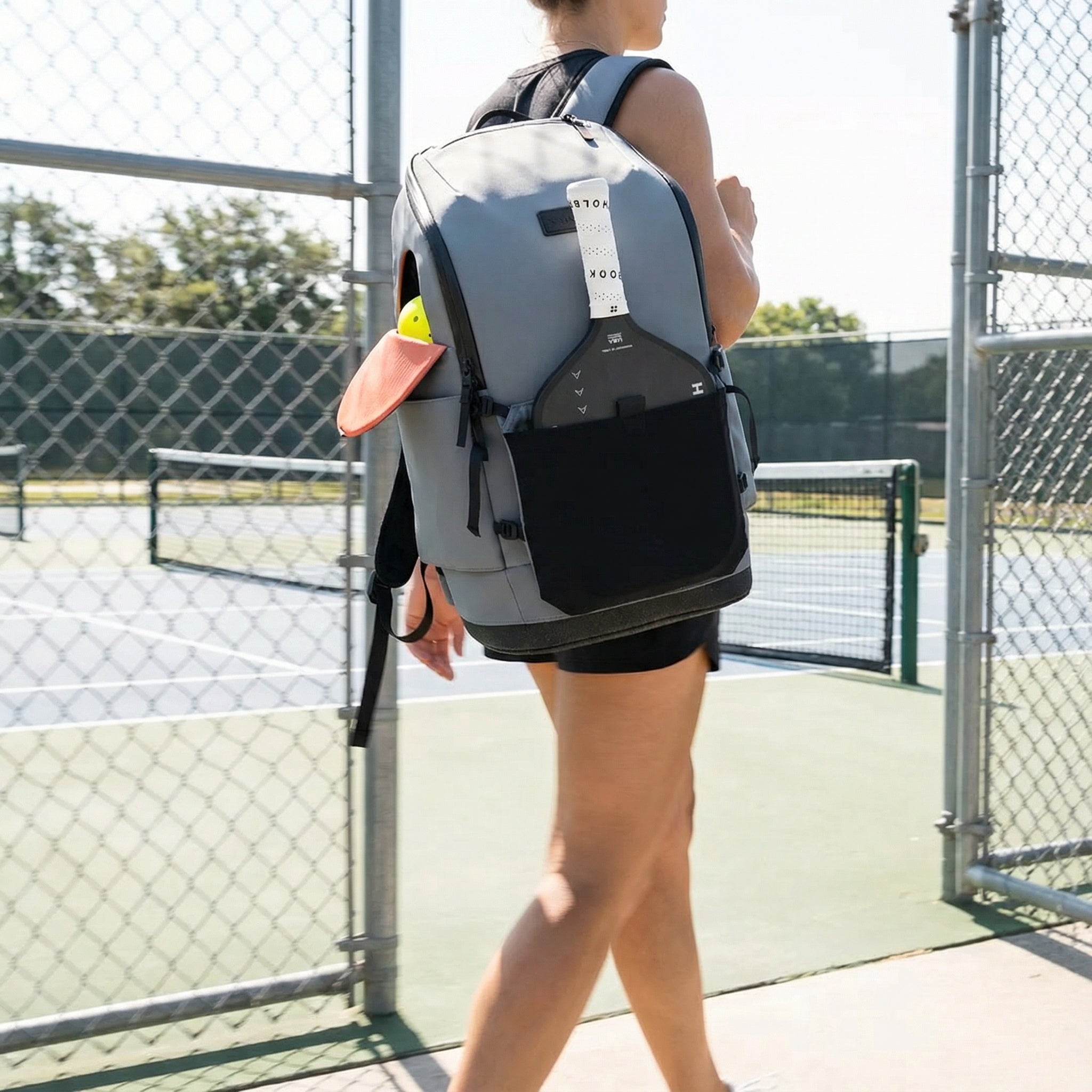
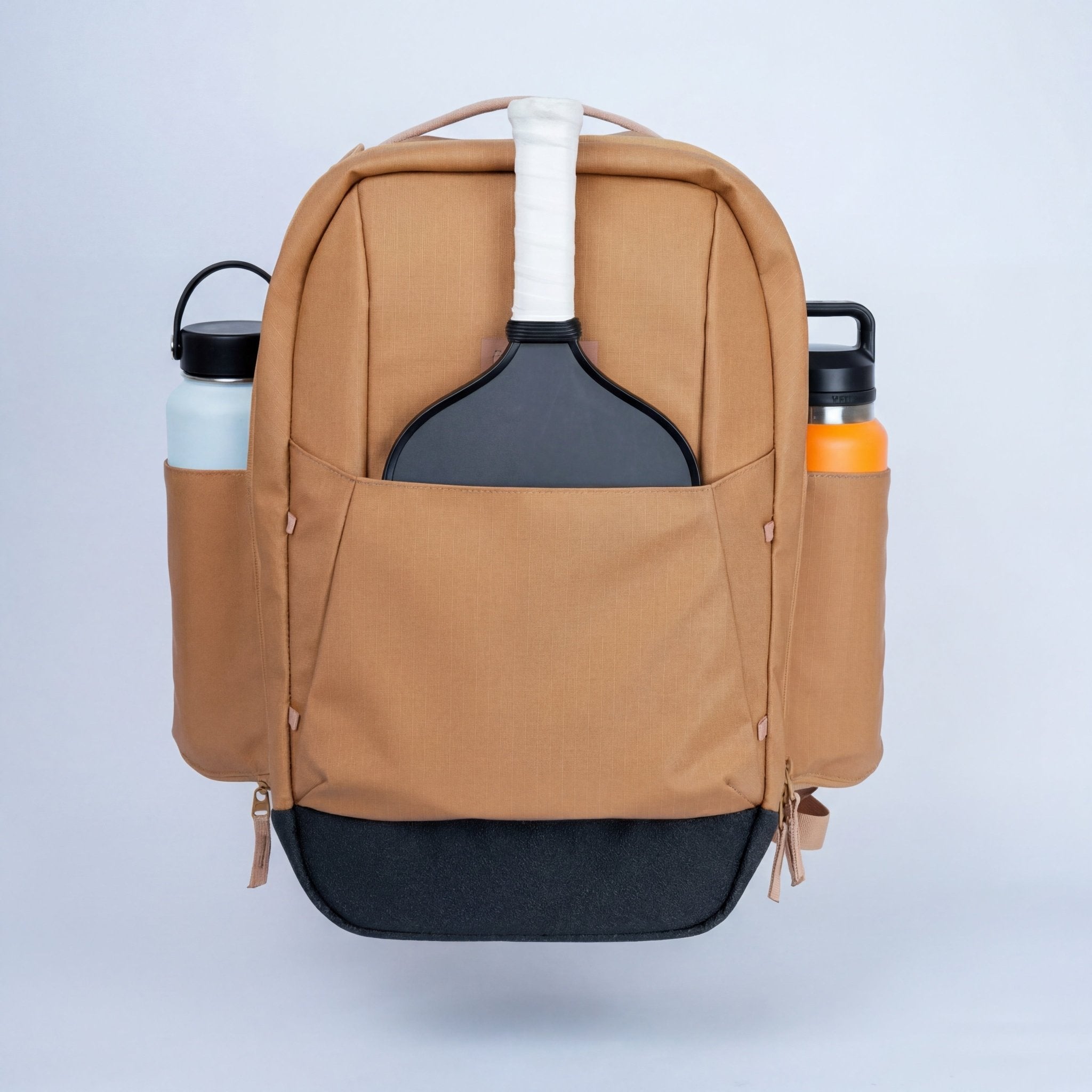
The FORWRD Court Caddy Backpack ($325) is the standard recommendation for players competing in tournaments — it carries two paddles, full court kit, and a 15" laptop, with the organization a tournament day requires. The Court Ranger V2 ($195) handles everyday practice with less weight.

For more on the sport's growth trajectory, read our coverage of college pickleball's rise and the 2026 paddle brand guide.
Frequently Asked Questions
Is pickleball an Olympic sport in 2026?
No. Pickleball is not an Olympic sport as of 2026 and was not selected for the 2028 Los Angeles Games.
Why wasn't pickleball chosen for 2028?
Governance fragmentation (multiple competing international federations) and insufficient geographic spread (below the 75-country men's participation threshold) were the two primary barriers. Cricket, baseball/softball, flag football, lacrosse, and squash were chosen instead.
What is the earliest pickleball could be an Olympic sport?
The 2032 Brisbane Games is a theoretical possibility through the Host City Proposal mechanism, but most analysts consider 2036 the first realistic target given the work still required on governance and geographic expansion.
Is there a pickleball world ranking?
Yes. Pickleball World Rankings (PWR) launched in July 2024 as an international ranking system. This is a significant step toward the standardized player classification framework Olympic-level qualification requires.
Ready to play at tournament level?
The Court Caddy was built with 500+ real players for exactly this — organized, protected, tournament-ready. 15" laptop sleeve, modular paddle pocket, YKK AquaGuard zippers.

Leave a comment
This site is protected by hCaptcha and the hCaptcha Privacy Policy and Terms of Service apply.