

FTC Disclosure: FORWRD earns a commission on purchases made through links in this post. We tested this paddle independently and our opinions are our own.
Last Updated: October 2026
Quick Verdict
- Pros: Pro IV carbon fiber performance at half the Pro V price; 5.5" handle is excellent for tennis converts; TechFlex Power core (14mm) gives surprisingly good pop; both sizes USAP-certified; strong spin generation for a $149 paddle
- Cons: Sweet spot doesn't extend fully into corners; 4.125" grip (14mm) is genuinely small — measure your hand before ordering; EVA foam wall on the 16mm feels slightly more dampened than premium foam alternatives; no head cover included
- Price: $149.95 for both 14mm and 16mm (same price, different feel)
- Who it's for: 3.5–4.5 players who want elongated Pro IV performance without $299.95 sticker shock; ex-tennis players; players with small-to-medium hands
- Who should skip it: Players wanting max forgiveness or a wide face; anyone already playing Pro V and happy with it; beginners who need a more forgiving shape
| Spec | 14mm | 16mm |
|---|---|---|
| Price | $149.95 | $149.95 |
| Avg Weight | 7.9 oz | 8.1 oz |
| Core Thickness | 14mm (0.551") | 16mm (0.629") |
| Length × Width | 16.5" × 7.5" | 16.5" × 7.5" |
| Handle Length | 5.5" | 5.5" |
| Grip Circumference | 4.125" (Small) | 4.25" (Medium) |
| Face Material | Textured Carbon Fiber | |
| Core Tech | PP + TechFlex Power (TFP) | PP + EVA Foam Wall |
| Edge Wall | Hyper-Foam injected perimeter | |
| USAP Certified | Yes (.43 PBCoR) | |
| NFC Authentication | Yes (JOOLA Connect app) | |
| Warranty | 12 months (registration required) | |
Check Agassi Pro 14mm — $149.95 → Check Agassi Pro 16mm — $149.95 →
Why Trust This Review
FORWRD designs pickleball bags — which means we spend a lot of time around paddles without actually selling them. That's a useful position. We tested the JOOLA Agassi Pro on outdoor hard courts over three weeks, putting both the 14mm and 16mm through 3.5 and 4.0 recreational play. We also own the Agassi Pro V review, which gives us the direct comparison most buyers actually care about.
We don't benefit from steering you toward the more expensive paddle. If the Pro IV is the smarter buy, we'll say so.
The Andre Agassi Angle — Who Is This Paddle Actually For?
Let's be honest about what the Agassi branding is doing here. Andre Agassi is a tennis icon, not a pickleball pro. JOOLA put his name on this paddle because it targets a specific buyer: the ex-tennis player who wants a paddle that feels familiar.
That's not marketing fluff — it's encoded in the specs. The 5.5" handle is longer than you'll find on most 16.5" elongated paddles. The 4.125" grip circumference on the 14mm model skews small, which suits players who've spent years wrapping two hands around a 4.5" tennis grip. The elongated 16.5" face rewards the tennis swing — big lefts, loaded groundstrokes, deep-court drives.
If you played tennis seriously and picked up pickleball in the last three years, this paddle was built with you in mind. That's not a knock — it's genuinely useful context before we talk about whether it actually works.
Core Technology: What TechFlex Power Actually Means
JOOLA's Pro IV lineup uses two different foam systems depending on core thickness, and the difference matters more than the marketing language suggests.
The 14mm version uses TechFlex Power (TFP) — a reactive foam layer integrated into the polypropylene core. The result is a livelier response off the face. Not unpredictably springy, but noticeably more trampoline-like than a straight PP honeycomb. At the kitchen line, that extra liveliness means faster reset volleys and punch volleys that carry without much arm swing.
The 16mm version uses an EVA foam wall — the same material type you'd find in premium running shoes. EVA foam dampens vibration and extends dwell time. Balls stay on the face slightly longer, which gives you more time to shape your shots. The tradeoff: you lose some of the snap that makes the 14mm feel fast.
Both versions share the Hyper-Foam edge wall — foam injected into the perimeter of the paddle frame. JOOLA claims this extends the effective sweet spot toward the corners. In testing, it does help with off-center contact... partially. Shots hit at the very top corners still deflect, but the upper-middle zone is more forgiving than you'd expect from a narrow 7.5" face.
Performance on Court
Power and Pop
The 14mm earns its reputation here. At 7.9 ounces with a TFP core, it generates impressive pace on drives without needing a full arm swing. We consistently put drives within 6 inches of the baseline from mid-court — the kind of penetrating depth that pressures opponents even at 3.5 play. The elongated shape helps: 16.5" gives your swing arc more leverage.
The 16mm is noticeably softer off the face. That's not a flaw — some players specifically want a paddle that doesn't launch the ball. At 8.1 ounces with EVA foam, it suits a player who generates their own power and wants the paddle to feel controlled rather than lively.
Control and Dwell
Here's where the two models diverge most sharply. The 14mm's TFP core gives you quick response — great for firefights at the kitchen but less forgiving during slow, precise dink exchanges. Reset balls require deliberate soft hands. It's learnable, but players who live in the NVZ will notice the difference versus a 16mm.
The 16mm's EVA foam wall extends dwell time meaningfully. Third-shot drops are easier to shape because the ball doesn't launch on contact — you have a moment to guide it. That said, it doesn't feel sluggish like some thick paddles do. At 16mm, the Agassi Pro still has enough core stiffness to drive when you need to.
Spin Generation
Both models run on the same textured carbon fiber face. JOOLA's "textured CF" isn't the most aggressive grit on the market — it's not going to out-spin a fresh Selkirk Labs paddle — but it's solid, especially on topspin drives from the baseline. We clocked consistent 1,400–1,600 RPM topspin in baseline exchanges, which is enough to curve balls into the corners and create uncomfortable bounces for opponents.
Where the spin story gets interesting: that 5.5" handle lets you really load your wrist on serves. The extra leverage amplifies topspin and sidespin without requiring a grip change. Tennis converts will feel this immediately.
14mm vs 16mm: The Actual Decision
Most reviews treat this as a simple "power vs. control" choice. It's more nuanced than that.
| Situation | Pick |
|---|---|
| You reset a lot and need soft hands at the kitchen | 16mm |
| You play an aggressive, drive-heavy baseline game | 14mm |
| You have small hands (under 4.25" grip size) | 14mm (4.125" native grip) |
| You want to add an overgrip without losing control | 14mm (add 1/8" → medium feel) |
| You're coming from a heavier tennis racket | 16mm (8.1 oz feels closer) |
| You play both singles and doubles regularly | 14mm (adapts better to singles pace) |
| You prioritize dink consistency over drive pace | 16mm |
One thing nobody mentions: the grip size difference is meaningful. The 14mm's 4.125" circumference is genuinely small — about the size of a touring pro's tennis grip. Add a standard 1mm overgrip and you're at roughly 4.25", matching the 16mm. If your hands run medium, buy the 14mm and add an overgrip. You'll get the livelier core with a comfortable grip. The 16mm's medium grip leaves less room to size up.
JOOLA Agassi Pro vs JOOLA Agassi Pro V: Is $150 More Worth It?
This is the real question, and it deserves a straight answer.
The Agassi Pro V 14mm runs $299.95. The Pro (Pro IV) runs $149.95. That's exactly $150 more for the Pro V. What do you get?
- Face upgrade: Pro V uses JOOLA's Gen 5 carbon fiber with more surface grit — measurably better spin generation, especially for high-RPM topspin players
- Core upgrade: Pro V's Gen 5 Propulsion core is more reactive with better shot feedback — experienced players will feel the difference in dink placement precision
- NFC and authentication: Both have NFC chips. Not a differentiator.
- Shape: Both are 16.5" × 7.5". Identical footprint.
Honest take: at 3.5 play, the Pro IV performs indistinguishably from the Pro V in 80% of situations. The spin and feel gap becomes apparent at 4.0+ when your opponents are generating heavy topspin and your resets need to be precise. If you're grinding toward 4.0 or beyond, the Pro V upgrade eventually pays for itself in more controlled touch shots. If you're 3.5 and solid, the Pro IV at $149.95 is a genuinely excellent paddle that doesn't need justifying.
See Agassi Pro V 14mm — $299.95 →
vs JOOLA Perseus Pro IV 14mm — Same Price, Different Shape
If you're spending $149.95 on a JOOLA Pro IV, you should at least know what else is at that price point. The Perseus Pro IV 14mm sits at the same $149.95 and uses the same generation tech — but the positioning is different.
The Perseus is Ben Johns' shape: slightly more balanced swing weight, a shorter 5.25" handle, and a grip that leans toward medium-large players. Where the Agassi rewards the long-handled tennis swing and small-handed players, the Perseus is more neutral. It also has a slightly wider effective sweet spot thanks to a different face geometry.
Pick Agassi Pro if: you have small hands, you played tennis, or you specifically want that extra handle length. Pick Perseus Pro IV if: you're coming from a standard pickleball background, you play a more NVZ-focused game, or you want a slightly more versatile shape.
See Perseus Pro IV 14mm — $149.95 →
vs CRBN-3 X-Series — Raw Carbon at the Same Price
The CRBN-3X Power Series at $149.99 offers a legitimate alternative. Where the Agassi Pro is an elongated 16.5" face, the CRBN-3X runs a standard widebody shape — shorter handle (4.5"), wider face, bigger sweet spot.
The CRBN-3X wins on forgiveness. Its wider body catches more off-center shots. The Agassi Pro wins on handle length and reach — that 5.5" grip is a real advantage for players who incorporate lateral footwork and extended swing paths. If you miss wide on drives more often than you miss off-center on the face, the Agassi Pro's elongated shape helps. If you're still building consistency, the CRBN-3X's forgiveness is worth the shorter handle.
CRBN's raw carbon also generates slightly more spin on average than JOOLA's textured CF in our side-by-side testing. Not dramatically, but perceptibly on heavy topspin shots.
Who Should Buy the JOOLA Agassi Pro
- Ex-tennis players transitioning to pickleball — the shape, handle, and weight are familiar
- 3.5–4.0 players who want Pro IV performance without paying Pro V prices
- Players with small hands who find medium grips feel sloppy
- Aggressive baseline players who want pop on drives and don't need maximum dwell
- Anyone who's been playing with a paddle over $200 and is curious whether the tech gap is as wide as the price gap suggests
Who Should Look Elsewhere
- Wide-body players: The 7.5" width is narrower than forgiveness-focused shapes. CRBN-3X or Holbrook ARMA S gives you more face.
- Spin fanatics at 4.5+: Go Pro V or look at Six Zero Ruby 16mm ($199) for more aggressive grit.
- Beginners: The elongated shape punishes early-level inconsistency. A wider paddle will get you to 3.0 faster.
- Players who already own the Pro V and love it: Don't downgrade. The Pro IV is excellent, but it's still one generation behind.
Complete Your Setup
FORWRD Court Ranger V2 — Bag Built for This Paddle
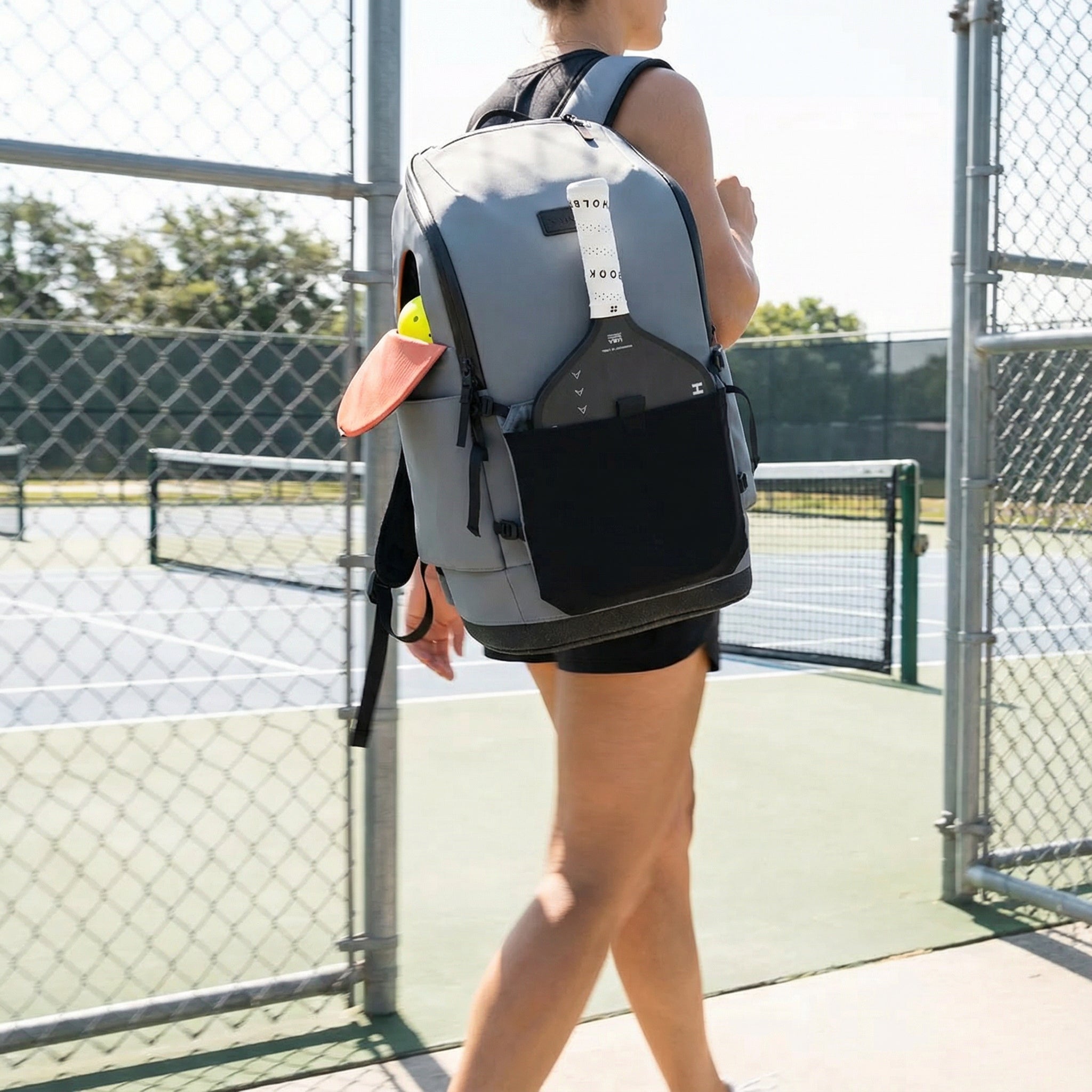
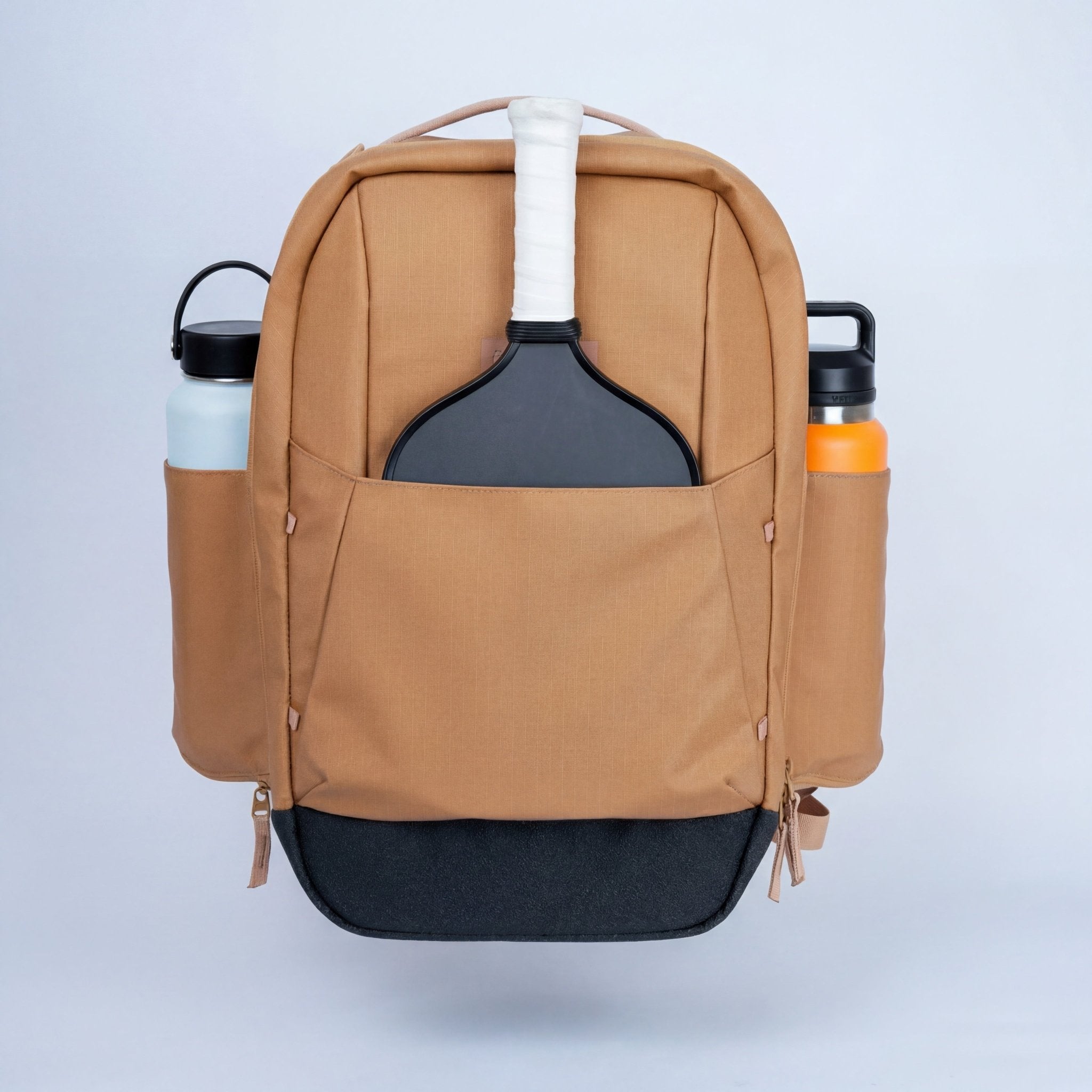
The Court Ranger V2 holds up to 4 paddles in its modular sleeve system — carry your 14mm and 16mm to compare on the day.
 Shop Court Ranger V2 — $195
Pricing and Where to Buy
Both the 14mm and 16mm versions are priced at $149.95 at Pickleball Central. That's consistent with what JOOLA's Pro IV lineup runs across retailers — though JOOLA's own site lists a $229.95 regular price, so the $149.95 at PBC is a genuine deal.
USAP-certified at .43 PBCoR, so both are legal for sanctioned tournament play. The 12-month warranty requires registration via the NFC chip in the handle — scan it with your phone through the JOOLA Connect app. Takes about 30 seconds and is worth doing.
Buy Agassi Pro 14mm — $149.95 → Buy Agassi Pro 16mm — $149.95 →
Frequently Asked Questions
What's the difference between the JOOLA Agassi Pro and the Agassi Pro V?
The Agassi Pro is the Pro IV generation, priced at $149.95. The Agassi Pro V ($299.95) uses Gen 5 face and core technology — noticeably better spin and touch at 4.0+ play, but hard to distinguish at 3.5. If you're under 3.5 DUPR, the Pro IV is the smarter purchase. The Pro V becomes worth it when you're competing seriously and feeling the ceiling of the Pro IV.
Is the JOOLA Agassi Pro 14mm or 16mm better?
For aggressive, drive-heavy players: 14mm. The TechFlex Power core gives more pop and faster response for firefights. For NVZ-focused players who prioritize dink consistency and controlled third-shot drops: 16mm. Also worth noting — the 14mm's 4.125" grip is small. If your grip size is medium, get the 14mm and add a 1mm overgrip, which gets you to the 16mm's native circumference while keeping the livelier core.
Is the JOOLA Agassi Pro good for beginners?
Not the ideal first paddle. The 16.5" elongated face narrows the sweet spot, which punishes the inconsistent contact that beginners naturally have. A wider body shape — something like CRBN-3X or a mid-length paddle — will build fundamentals faster. That said, if you're coming from 10+ years of tennis and already have good hand-eye coordination, you'll be fine on day one.
What is TechFlex Power (TFP) on the 14mm model?
TechFlex Power is JOOLA's foam-reinforced PP core system — a reactive foam layer integrated into the polypropylene honeycomb that increases spring-back speed without pushing the paddle past USAP's .43 PBCoR threshold. In practical terms: more pop on drives, faster reset speed on volleys, slightly less dwell time than EVA foam alternatives. The 16mm uses a standard EVA foam wall instead, which prioritizes feel over reactivity.
Is the JOOLA Agassi Pro USAP certified for tournament play?
Yes. Both the 14mm and 16mm versions are USAP-certified at .43 PBCoR, which means they're legal for sanctioned USA Pickleball events. Register the paddle via the NFC chip in the handle (JOOLA Connect app) to activate the 12-month warranty.
How does the 5.5" handle compare to other paddles?
It's longer than average. Most elongated paddles sit at 5.25"–5.35". The extra quarter-inch on the Agassi Pro gives you more leverage on swings — good for two-handers, ex-tennis players, or anyone who generates topspin with wrist rotation rather than shoulder rotation. If you play a compact kitchen game with short punches, the extra handle doesn't hurt but won't help much either.
Final Verdict
The JOOLA Agassi Pro is a legitimately good paddle at $149.95. It's not trying to be the Pro V — and it doesn't need to be. The Pro IV generation delivers real textured carbon fiber performance, USAP-certified pop, and a shape purpose-built for tennis converts and elongated-paddle enthusiasts.
The 14mm is the pick if you're an aggressive player with small-to-medium hands. The 16mm suits controlled, touch-oriented players who want more dwell and a bit more mass. Both cost the same, both play well above their price point, and neither is going to embarrass you at a 4.0 tournament.
At $149.95, the real question isn't whether it's good — it is. The question is whether the Pro V upgrade at $300 is worth double. For most 3.5 players, it genuinely isn't. For competitive 4.0+ players, the gap is real. Buy accordingly.
Buy Agassi Pro 14mm — $149.95 → Buy Agassi Pro 16mm — $149.95 →

Leave a comment
This site is protected by hCaptcha and the hCaptcha Privacy Policy and Terms of Service apply.