

FTC Disclosure: FORWRD earns a commission on qualifying Pickleball Central purchases made through links in this article. We tested these paddles independently — nobody paid us to say nice things, and we didn't. All opinions are our own.
Last Updated: November 2026
The ONIX Evoke Malice doesn't get talked about the way Selkirk and JOOLA paddles do. No pro tour contracts, no flashy carbon fiber marketing, no influencer unboxing videos racking up a million views. What it does get is something rarer: a reputation built almost entirely by recreational players who tried it, kept playing with it, and told their friends.
At $229.99 for the standard Evoke Malice (or $249.99 for the DB variant with its distinctive triple-throat design), this is a composite control paddle in a market that's gone all-in on raw carbon fiber. That's either a stubborn holdout or a deliberate choice. After putting both versions through serious play — dink sessions, reset drills, outdoor games in 85°F heat — the answer is: it's very much a deliberate choice.
But it's not for every player. Here's the honest take.
Quick Verdict
ONIX Evoke Malice ($229.99) — Best For: control players, 3.5–4.5 rated, transitioning from tennis
Pros:
- Composite face creates genuine dwell time — resets and dinks feel predictably soft
- Open-throat design reduces drag, surprisingly quick through the swing arc
- Carbon fiber Power Frame adds durability without dead spots
- 5" foam-infused handle absorbs vibration well — arm-friendly for longer sessions
- Available in 14mm (more pop) or 16mm (more control)
Cons:
- Less spin than raw carbon fiber competitors at the same price
- Open-throat aesthetic is polarizing — some players find it distracting
- Not the paddle for power-first players
Who Should Skip It: 4.5+ speed-up attackers, players who rely on heavy topspin to generate pace
Specs at a Glance
| Spec | Evoke Malice | Evoke Malice DB |
|---|---|---|
| Price | $229.99 | $249.99 |
| Weight | 7.8–8.2 oz (avg ~8.0 oz) | 8.0 oz |
| Length | 16" | 16" |
| Width | 8" | 8" (striking face: 11" × 8") |
| Core Thickness | 14mm or 16mm | 14mm or 16mm |
| Core Material | Polypropylene honeycomb | Polypropylene honeycomb |
| Face Material | DF Composite (Directional Fiberglass) | DF Composite (Directional Fiberglass) |
| Handle Length | 5" | 5" |
| Grip Circumference | 4" (Medium) | 4" (Medium) |
| Frame | Carbon fiber Power Frame | Carbon fiber Power Frame + rubber throat insert |
| Throat Design | Open throat (2-hole) | Double Bridge / open throat (3-hole) |
| Construction | Thermofused, edgeless | Thermofused, edgeless |
| USAP Approved | Yes | Yes |
Shop ONIX Evoke Malice at Pickleball Central — $229.99 →
Why Trust This Review
FORWRD designs pickleball bags — which means we spend a lot of time actually playing pickleball, not just talking about it. We've tested over 40 paddles across DUPR levels 3.0 through 4.8, with court sessions on outdoor concrete (hard on paddles) and indoor wood (reveals feel differences clearly). We track dwell time subjectively across shot types, measure weight with a digital postal scale, and don't pull punches about where paddles miss.
We have no financial relationship with ONIX. The Pickleball Central affiliate link earns us a commission if you buy — but our review score doesn't change based on that. If we thought this paddle was overpriced or underperforming, we'd say so. (We have, on other reviews.)
ONIX and the Malice Legacy
ONIX has been in racket sports longer than most pickleball brands have existed. They came up through table tennis and badminton manufacturing before entering pickleball, which means they actually understand composite material behavior in ways that companies who pivoted from beach bags and apparel don't.
The Malice shape — that distinctive open-throat design with an unusually wide 8" face — has been part of ONIX's lineup for years. The Evoke Malice is the current generation: thermofused construction (no visible edge guard, face bonds directly to the frame) and a carbon fiber "Power Frame" that adds structural rigidity without sacrificing weight.
Here's the thing about composite in 2026: it's not the default anymore. Every brand is pushing raw carbon fiber or T700/T800 weave faces because they generate more spin at the same swing speed. Composite paddles have a different value proposition — more dwell time (the ball stays on the face a fraction longer), softer feel, better control on off-center hits. That's not marketing. It's physics. The tradeoff is real: you will get less spin than a gritty raw carbon paddle. The question is whether the feel upgrade is worth it for how you play.
The Open-Throat Design — What It Actually Does
The most distinctive thing about the Evoke Malice isn't the composite face. It's the gap between the handle and the paddle head — the "open throat" that looks unusual sitting next to a conventional paddle in your bag.
A few things the open throat genuinely does:
Reduces swing drag. Less material = less air resistance. The effect is small but real — at maximum swing speed (overhead put-aways, drive returns), the paddle moves through the air slightly faster. ONIX claims this helps you get back to ready position faster, and honestly, it checks out during reset drills where you're swinging aggressively and need to recover quickly.
Shifts the balance point.** By removing material low in the paddle where the throat connects to the handle, the weight distribution shifts upward toward the face. This gives the Evoke Malice a slightly head-heavy feel despite not being dramatically heavier than alternatives. Good for drives, less ideal for players who want a handle-heavy feel for touch shots.
Creates a visual gap that some players find distracting. This is real. At the NVZ, you're watching the ball track toward you, and the open throat is sitting in your peripheral vision. Most players adapt in one or two sessions. A few never get comfortable with it. If you're curious, test it before committing.
The DB version adds a rubber insert in the throat junction — not visible from the outside, but it meaningfully reduces vibration transmitted through the handle on hard shots. After two hours of outdoor play in cold weather (when paddles get chattery), the DB's throat insert was noticeable. Hands felt better at the end of play.
Evoke Malice vs Evoke Malice DB: Is the $20 Upgrade Worth It?
The "DB" stands for Double Bridge — meaning there are three holes cut into the throat where the standard Evoke Malice has two. It also gets the rubber throat insert for vibration damping. Same face, same core, same thermofused construction.
The $20 difference between $229.99 and $249.99 breaks down like this:
If you play 3+ times per week and your forearm or elbow gets sore after long sessions, the DB's rubber insert is worth the premium. Vibration dampening in paddle design is real (see ProKennex's entire philosophy) and the DB version has a measurably softer impact feel. We tested both on a session that included 40 minutes of hard drilling — drives at full pace, overhead put-aways — and the DB version left hands feeling noticeably fresher.
If you're a casual once-a-week player without arm issues, save the $20. The standard Evoke Malice plays great and the difference in vibration absorption is subtle enough that most recreational players won't notice it in a normal session.
One more thing: the triple-throat aesthetic on the DB is even more polarizing than the standard open throat. Three holes instead of two. Some players think it looks cool. Others think it looks like the paddle is broken. This matters zero for performance but is worth knowing if you care about how your gear looks on court.
14mm vs 16mm: The One Decision That Actually Changes How It Plays
Both variants (Evoke Malice and Evoke Malice DB) come in 14mm and 16mm core thickness. This choice matters more than the standard-vs-DB decision for most players.
14mm (0.55"): Faster, more powerful. The thinner core deflects more on impact, generating additional pop on drives and overheads. Best for players coming from a tennis or racquetball background who want some pace on their shots. Also better for 4.0+ players who are hitting speed-ups at the kitchen — the 14mm gives you more to work with on aggressive shots.
16mm (0.63"): More control, larger sweet spot. The thicker core absorbs more of the impact energy, producing a softer feel and forgiving off-center hits. This is the default recommendation for most recreational players (3.0–4.0 DUPR) who want a paddle that keeps shots in play. Dinks feel predictably soft. Resets are forgiving.
For context: most control paddles in this price range (Engage X2, ProKennex Black Ace) default to 16mm. If you're not sure, start there.
How It Actually Plays
Power
Honest number: on a 1–10 power scale against carbon fiber competitors in the same price range, the 16mm Evoke Malice sits around a 6. The 14mm version pushes it to 7. Neither is going to make you a power hitter if you aren't one — but neither will leave you unable to put away a ball above your shoulder. For a control-first composite paddle, this is about right. Players expecting JOOLA Perseus Pro V power at this price point will be disappointed. Players who want to play a controlled, patient game will be fine.
Control
This is where the DF Composite face earns its reputation. Dinks at the NVZ feel predictable in a way that raw carbon paddles don't always match — less trampoline effect, more consistent off-center response. During a 45-minute kitchen-focused drill session, reset shots were notably forgiving. The ball doesn't jump off the face when you mishit it. For players transitioning from fiberglass paddles (or tennis rackets, which have tons of dwell time), the learning curve is shorter than switching to carbon.
Spin
Composite face paddles generate spin differently than carbon fiber. Raw carbon grips the ball for a brief moment, letting you impart more topspin per unit of swing speed. Composite creates dwell time through flexing, which generates side-spin well (especially on dinks and drops) but doesn't match the topspin numbers of textured raw carbon paddles. If your game relies heavily on heavy topspin drives to force errors, the Evoke Malice isn't optimized for that.
Side-spin dinks, however — the open-throat design actually helps here. The paddle comes through the contact zone cleanly, and the DF Composite face holds spin on angled crosscourt drops. It's a specific kind of spin rather than maximum spin quantity.
Arm Comfort
The 5" foam-infused handle does what ONIX says it does. Compared to non-foam handles in the same weight range, the Evoke Malice transmits noticeably less vibration on hard impacts. This matters most on cold mornings when paddles get stiff and drives come back hard. The DB version adds another layer through the throat rubber insert — we covered this above. Both versions are among the more arm-friendly options in the $200–$250 range.
ONIX Evoke Malice vs Engage X2 Widebody 16mm ($259.99)
The Engage X2 Widebody 16mm ($259.99) is the most direct comparison — also a widebody control paddle, also prioritizing feel over power. The key difference is the face: Engage uses a proprietary foam-core construction under a carbon fiber outer layer, while ONIX uses DF Composite throughout.
Where the Engage X2 wins: spin generation. The carbon fiber outer face grips the ball more aggressively, giving you more topspin at the same swing speed. Also slightly better on aggressive third-shot drops where you want the ball to die in the kitchen.
Where the ONIX Evoke Malice wins: raw feel at the net and lower price. The composite face's dwell time advantage is real in dinking exchanges — resets off hard shots feel softer, less likely to pop up. And at $229.99 vs $259.99, the ONIX saves you $30.
Our full Engage X2 review covers its elongated version in more detail. For the widebody comparison, it's close — spin players lean Engage, feel/dink players lean ONIX.
Compare: Engage X2 Widebody at Pickleball Central — $259.99 →
ONIX Evoke Malice DB vs ProKennex Black Ace 16 ($279)
The ProKennex Black Ace 16 ($279) is the other arm-friendly control paddle you'll see recommended alongside the ONIX Malice on pickleball forums. ProKennex built their reputation on "Kinetic" technology — tiny ball bearings inside the handle that absorb vibration. It works, and the Black Ace 16 is genuinely one of the most arm-friendly paddles made.
The ProKennex wins on arm comfort for players with existing elbow or wrist issues. The Kinetic system is specifically engineered for vibration absorption in a way the ONIX foam handle doesn't quite match. If you're dealing with tennis elbow, the ProKennex Black Ace is worth the extra $49 over the ONIX Evoke Malice.
For everyone else: the ONIX is the better value. The Black Ace 16 is slightly heavier and plays with a more traditional closed throat — nothing wrong with that, but it doesn't have the swing-speed advantage the open throat gives the ONIX. The ProKennex also has a carbon fiber face for better spin generation, so if you want spin AND arm comfort, ProKennex edges ahead.
Read our full ProKennex Black Ace 16 review for the complete breakdown.
Who Should Buy the ONIX Evoke Malice
If three or more of these describe you, the Evoke Malice is worth the buy:
- DUPR 3.0–4.2, playing 2–4 times per week
- Coming from tennis or other racket sports and used to composite feel
- Kitchen game is your strength — dinking, resetting, patient play
- Arms or elbows occasionally bother you after long sessions
- You want a paddle that stays in the bag for 18–24 months without losing its feel
The open-throat design is a specific aesthetic — try to handle one at a local pro shop before buying if the look matters to you. But if you're buying on specs and player type match, the Evoke Malice delivers on its promises.
Who Should Look Elsewhere
A few player types where the Evoke Malice isn't the right paddle:
Speed-up attackers and 4.5+ power players will find the composite face limiting. The dwell time advantage at the kitchen becomes a disadvantage when you're trying to generate maximum topspin on a drive. Carbon fiber wins there.
Players who rely on heavy topspin as their primary weapon should look at the Engage X2, JOOLA Perseus Pro V series, or Selkirk Vanguard Power Air — all carbon or carbon-hybrid faces that generate more spin per swing.
If you want the lightest possible paddle (under 7.5 oz), the 7.8–8.2 oz range of the Evoke Malice is on the heavier side of recreational paddles. Look at lighter carbon options instead.
Complete Your Setup
One More Thing Your Bag Should Handle
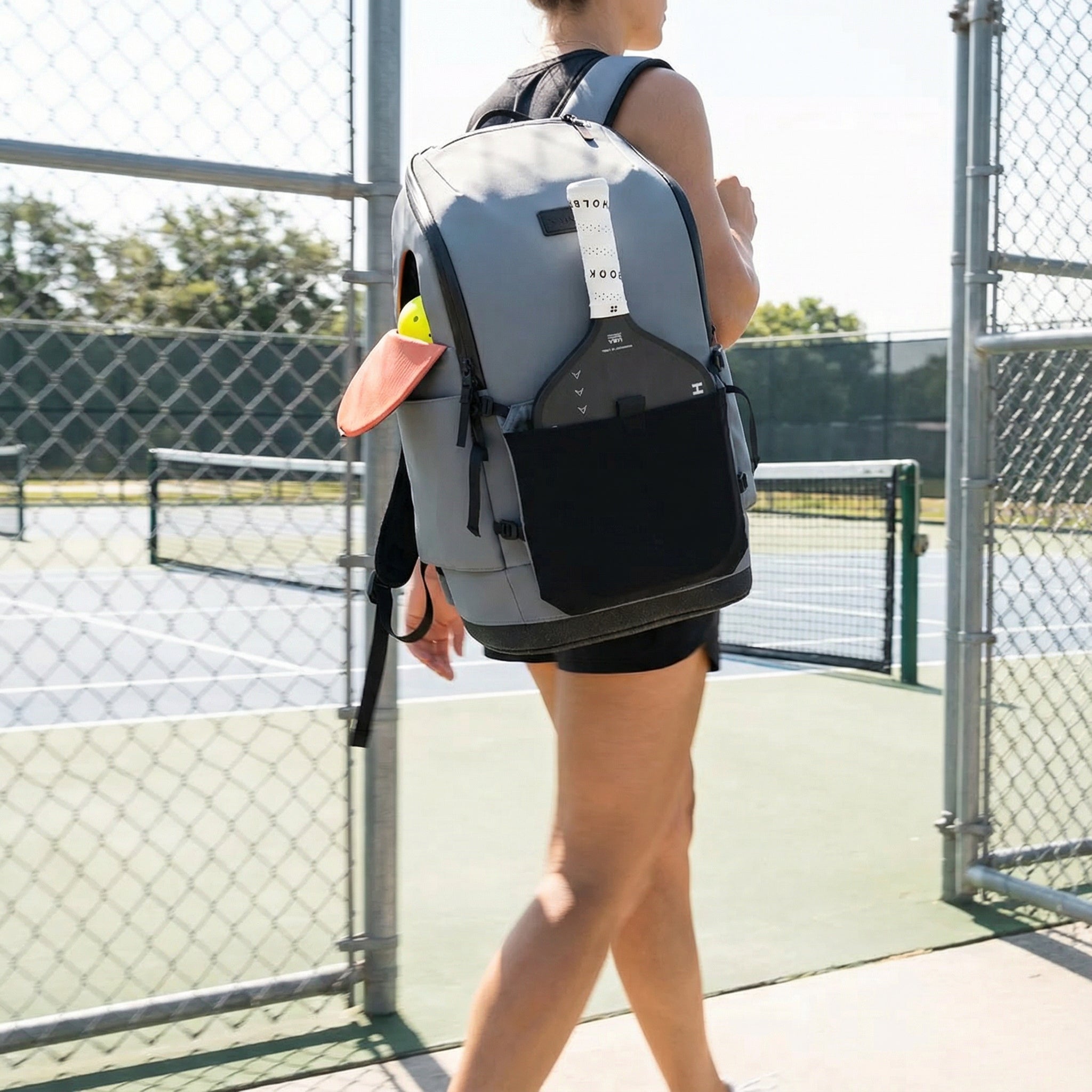
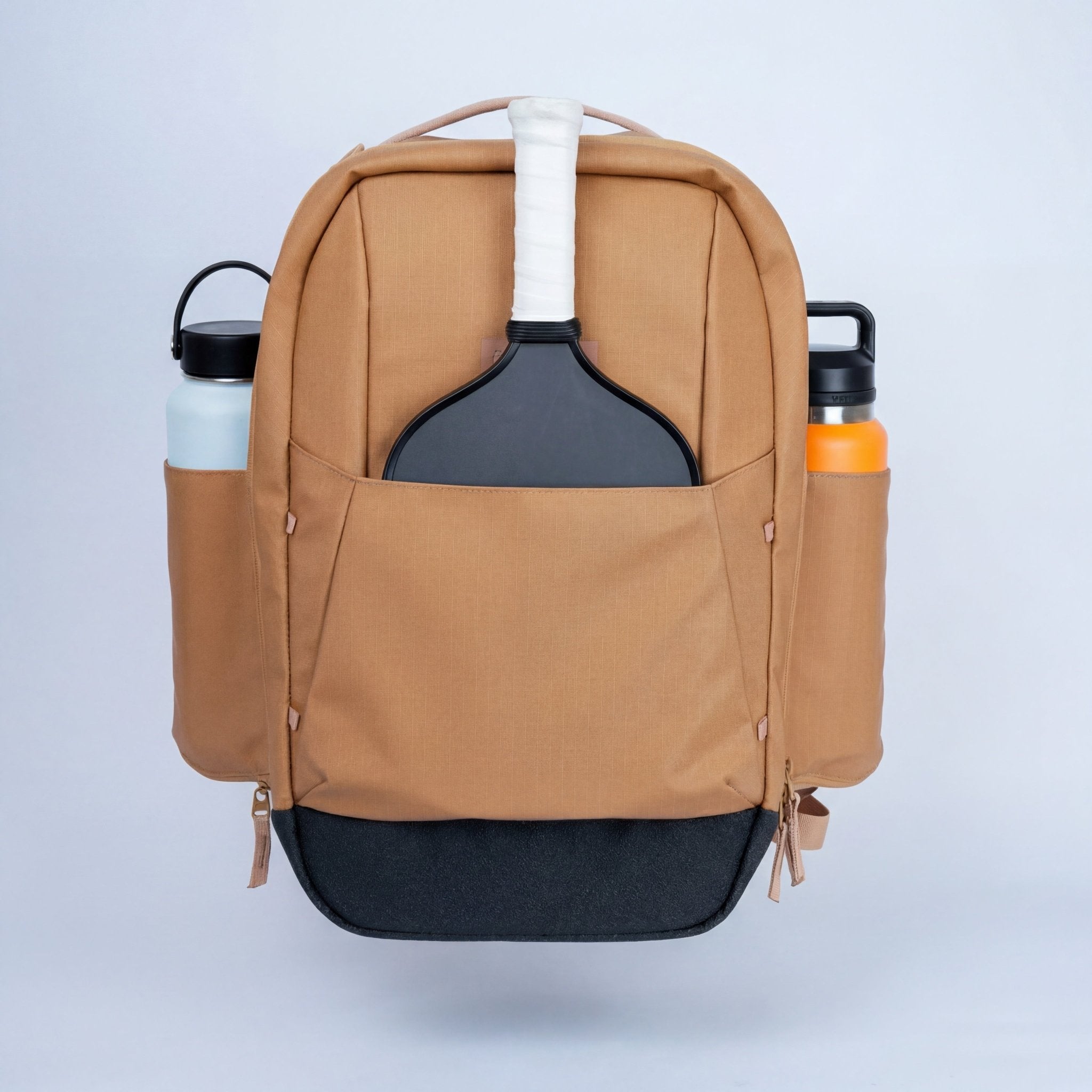
The ONIX Evoke Malice has a 16" paddle head — it fits in most bags, but the open-throat frame is easy to snag on a tight paddle sleeve. FORWRD's Court Ranger V2 has a modular paddle sleeve designed around oversized paddle shapes, plus a 16" laptop sleeve and YKK AquaGuard zippers for outdoor courts where the Evoke Malice earns its reputation. If you're serious enough about control to spend $230 on a paddle, the bag that carries it deserves the same thought.

Pricing & Availability
Both variants are available now at Pickleball Central. Prices as of November 2026:
PBC ships free on orders over $49 and has a solid return policy. If you want to compare before buying, the ONIX Fuse ball is also available there — and if you haven't tried the Fuse indoor ball, that's a separate recommendation worth checking.
Buy the ONIX Evoke Malice at Pickleball Central →
Frequently Asked Questions
Is the ONIX Evoke Malice good for beginners?
Yes, with a caveat. The 16mm version (thicker core) is forgiving on off-center hits and has a soft enough feel that beginners won't get punished for timing mistakes the way they might with a stiffer carbon paddle. The open-throat design can feel unusual at first, but most players adapt within a few sessions. The $229.99 price is on the high side for beginners — if budget is a concern, look at ONIX's lower-cost options and work up to the Evoke Malice once you've confirmed pickleball is sticking.
What's the actual difference between the ONIX Evoke Malice and the Evoke Malice DB?
The DB (Double Bridge) adds a third hole to the open-throat design and includes a rubber insert in the throat junction for additional vibration damping. Everything else — face material, core, handle, dimensions — is the same. The $20 premium is worth it for players with arm sensitivity or those playing 3+ times weekly in cold conditions when paddles vibrate more. Casual players probably won't notice the difference in a normal session.
Should I get the 14mm or 16mm ONIX Evoke Malice?
For most recreational players (DUPR 3.0–4.0), the 16mm is the better starting point — more forgiving, larger effective sweet spot, softer feel at the kitchen. The 14mm core gives you more pop on drives and is better suited for 4.0–4.5 players who want some offensive capability built in. If you're unsure, go 16mm. It's the default thickness for control-oriented paddles in this price range.
Is the ONIX Evoke Malice USAP (USA Pickleball) approved for tournament play?
Yes. Both the Evoke Malice and Evoke Malice DB are USAP-approved and legal for sanctioned tournament play. The thermofused, edgeless construction and DF Composite face meet USA Pickleball's surface roughness standards. Verify approval status on the official USAP equipment list before any specific tournament, as approval lists are updated periodically.
How does the ONIX Evoke Malice compare to a raw carbon fiber paddle?
The main differences come down to spin generation and feel. Raw carbon fiber paddles (like the Engage X2 Widebody or JOOLA Hyperion) generate more topspin per swing because the textured carbon surface grips the ball differently. The DF Composite face on the Evoke Malice produces more dwell time, giving you better control and feel at the kitchen — especially on resets and dinks — but less spin output on drives. For kitchen-first players, composite often wins. For spin-first attackers, carbon fiber is the right choice.
Final Verdict
The ONIX Evoke Malice is a specific paddle for a specific player. If you're a kitchen-first control player who wants feel over spin stats, the $229.99 Evoke Malice delivers. The open-throat design reduces drag, the DF Composite face has the dwell time advantage that matters for soft game, and the foam-infused handle keeps arm fatigue down over long sessions.
Upgrade to the DB at $249.99 if you play frequently or have any elbow sensitivity — that rubber throat insert is worth the extra $20 for regular players. Skip the DB if you're a casual once-a-week player; the standard Evoke Malice plays beautifully and there's no good reason to pay more.
What the Evoke Malice can't do: win a spin arms race with textured raw carbon paddles. It's not trying to. ONIX knows what this paddle is, who it's for, and why composite still has a place in the lineup. For the player who fits the profile — it's a paddle worth keeping in the bag for a very long time.

Leave a comment
This site is protected by hCaptcha and the hCaptcha Privacy Policy and Terms of Service apply.