

Disclosure: This post contains affiliate links to Pickleball Central. If you purchase through our links, FORWRD earns a small commission at no extra cost to you. We only link to products we'd recommend regardless.
Last Updated: July 2026
The JOOLA Ben Johns Hyperion CAS 16 is a 16mm elongated paddle weighing 8.1–8.5 oz with a Hybrid-Ply face — two fiberglass layers topped by one carbon fiber layer, sand-blasted to create the Carbon Abrasion Surface texture. At $99.95, it's the most accessible entry into the Ben Johns Hyperion line. Best fit: 3.5–4.5 players who want spin and pop without paying the $160 CFS premium.
Key Facts
- Price: $99.95 at Pickleball Central (in stock as of July 2026)
- Weight: 8.1–8.5 oz (avg 8.3 oz / ~235g) — mid-heavyweight category
- Surface: CAS = Carbon Abrasion Surface — a sand-blasted Hybrid-Ply face (2 fiberglass + 1 carbon fiber layer)
- Core: 16mm polymer core — thicker than the 13.5mm variant for more control and a wider sweet spot
- Dimensions: 16.5" long × 7.5" wide, 5.5" handle — elongated shape used by Ben Johns in competition
- Grip: 4-1/4" circumference (medium), Sure-Grip Technology with ridging and perforations
- CAS vs CFS: CAS (this paddle) = textured graphite face for spin; CFS ($159.95) = exposed woven carbon fiber face for raw responsiveness
- Tech:** Hyperfoam edge wall, USAPA-approved for tournament play
We ran the CAS 16 through eight weeks of court sessions — open recreational play, competitive mixed doubles, and ladder matches — before putting this review together. Here's the honest take on what the paddle does and doesn't do.
Let's start with the thing no other review actually explains: what does CAS mean, and why does it matter for your game? That distinction alone is worth reading to the end — it's the difference between buying the right JOOLA Hyperion and getting the wrong one.
Quick Verdict
Who it's for: 3.5–4.5 players wanting a proven elongated shape, solid spin capability, and Ben Johns' preferred paddle geometry — at a price that doesn't require a second mortgage.
Pros:
- 16mm core creates a genuinely forgiving sweet spot — mishits don't punish you as hard
- CAS surface generates real spin without the "slippery" feel some carbon-fiber paddles have out of the box
- 8.3 oz average weight adds pop on groundstrokes without feeling like you're swinging a frying pan
- Sure-Grip ridging keeps the paddle from twisting in your hand on off-center contact
- $99.95 — $60 cheaper than the CFS 16, $100 cheaper than Selkirk LUXX
Cons:
- Not the lightest option out there — 8.1–8.5 oz is mid-heavyweight; players with shoulder or elbow issues might want the 13.5mm variant instead
- CAS surface wears over time — after heavy use (200+ hours), the sand-blasted texture softens and spin generation dips
- Elongated shape is not ideal for players transitioning from a shorter paddle — the 16.5" length takes adjustment at the kitchen
- Model year 2021 tech — the newer JOOLA Gen 3 paddles have surpassed it at the pro level, though for rec play this remains a strong pick
Bottom line: If you're a 3.5–4.5 player who plays 2–4x per week and wants a durable, spin-friendly elongated paddle under $100, the CAS 16 is a legitimate buy. Check current stock and price at Pickleball Central →
Specs at a Glance
| Spec | JOOLA Hyperion CAS 16 |
|---|---|
| Price | $99.95 |
| Weight | 8.1–8.5 oz (avg 8.3 oz) |
| Core thickness | 16mm (0.63") polymer |
| Surface | Carbon Abrasion Surface (Hybrid-Ply) |
| Face layers | 2x fiberglass + 1x carbon fiber |
| Paddle length | 16.5" |
| Paddle width | 7.5" |
| Handle length | 5.5" |
| Grip circumference | 4-1/4" (medium) |
| Shape | Elongated |
| USAPA approved | Yes |
→ Buy the JOOLA Hyperion CAS 16 at Pickleball Central ($99.95)
Why Trust This Review
FORWRD makes pickleball bags — we don't have a competing paddle to sell you. That means we can tell you where the CAS 16 falls short without any agenda. Our team played the CAS 16 across outdoor concrete courts and indoor wood gym floors, tracking spin generation, dink touch, and power-shot response across different play styles (a 3.5 banger, a 4.5 dink-and-reset player, and a 3.0 beginner). We've also handled dozens of paddles in this price range to give you an honest benchmark comparison.
"When players ask us about the Hyperion line, the first question we ask back is: do you want feel and texture, or do you want raw pop? CAS gives you the textured surface for spin and a softer landing on dinks. CFS rewards players who generate their own pace and want that crisp carbon snap. Both are good paddles — they're just different tools."
— Topher Lake, FORWRD Co-founder
CAS vs CFS: The Question Every JOOLA Buyer Gets Wrong
JOOLA sells multiple Hyperion 16 paddles and labels them CAS, CFS, and sometimes just "Graphite." Most buyers pick one without understanding what the letters actually mean. Here's the breakdown — and why it should drive your buying decision.
CAS = Carbon Abrasion Surface. The CAS 16 uses JOOLA's Hybrid-Ply construction: two layers of fiberglass sandwiched under one layer of carbon fiber. That carbon fiber face is then sand-blasted — abraded — to create a textured, gritty surface. The result is a paddle that grips the ball slightly on contact, generating spin without requiring a massive swing. The feel is softer than raw carbon fiber. Dinks land with more touch. The trade-off: the abrasion texture wears down over time, and some hard-hitters find the response a touch muted compared to woven carbon.
CFS = Carbon Fiber Surface. The CFS 16 ($159.95) has an exposed woven carbon fiber face — no abrasion treatment, no fiberglass underneath. The raw weave pattern creates its own texture (similar to how a dragon skin paddle works), and the paddle response is crisper and more direct. You get a harder "pop" on drives. The downside is it demands better ball control — if your swing mechanics aren't clean, a CFS paddle amplifies errors. It's also $60 more expensive.
Neither paddle is objectively better. CAS suits players who value touch and forgiveness and want spin assistance from the paddle itself. CFS suits players with developed mechanics who want maximum energy transfer. If you're a 3.5–4.0 player still working on your dinking game, CAS is the smarter starting point. If you're a 4.5+ player who generates your own power and wants the most responsive face possible, spend the extra $60 for CFS.
We haven't seen another review that actually breaks this down clearly. Now you know.
Performance: Power
At 8.3 oz average, the CAS 16 sits at the heavier end of mid-weight paddles. That mass helps you generate pop without swinging harder — on a clean groundstroke from the baseline, the paddle loads up nicely. During our outdoor testing on concrete, we tracked consistent drive velocity that felt competitive with paddles in the $130–$150 range.
The 16mm core does dampen some power compared to the 13.5mm Hyperion variant. Thicker core = more dwell time = more control, but slightly less ball speed on hard hits. If you're a player who likes to attack off the bounce and drives third shots aggressively, the 13.5mm version might suit you better. For the vast majority of 3.5–4.5 rec players who spend most of their time at the kitchen, the 16mm is the right call.
One honest note: at 8.3 oz, this paddle puts some load on the arm over long sessions. After 90 minutes of play in our outdoor test, the two players with previous elbow issues noted some fatigue. If arm comfort is a concern, look at lighter options in the 7.5–7.9 oz range.
Performance: Control and Feel
This is where the CAS 16 earns its price. The 16mm polymer core genuinely absorbs shock at the kitchen — dinks feel soft and controllable, not like you're deflecting the ball off a wall. The sweet spot is wide enough that off-center hits don't punish you the way a narrow-bodied 14mm paddle might.
The Hybrid-Ply face — two fiberglass layers under carbon — adds an interesting dynamic. Fiberglass is naturally more flexible than carbon fiber, which creates a slight trampoline effect on softer shots. Combine that with the CAS sand-blast texture and you get a paddle that rewards patience at the non-volley zone. Players in our test who favor a dink-heavy reset game consistently rated the kitchen feel as "excellent for the price."
The Sure-Grip handle deserves mention too. The ridges on the grip kept the paddle from rotating on mis-hits — important at 8.3 oz, where torque on off-center contact can be a problem with smooth handles.
Performance: Spin
The CAS texture is real and measurable. Compared to a standard smooth graphite paddle, the sand-blasted surface creates notably more ball grab on cut serves and drop shots. In our kitchen crosscourt dinking drills, adding a touch of topspin or sidespin felt natural and consistent — not a struggle.
Fair warning: the CAS texture is not permanent. Sand-blasted surfaces soften with heavy use. Based on similar paddles we've tracked over time, you can expect the CAS texture to noticeably diminish after roughly 150–200 hours of play on outdoor concrete (outdoor play is harder on surface texture than indoor). At that point the paddle still performs — you just lose some of the spin edge over a fresh paddle. Plan accordingly if spin is your main reason for buying.
Who Should Buy the JOOLA Hyperion CAS 16
This paddle makes the most sense for:
- 3.5–4.5 rec players who play 2–4x per week and want a tournament-level shape at a sub-$100 price
- Players coming from beginner paddles (those $40–$60 wood or composite starters) who want a meaningful performance upgrade without spending $200
- Dink-oriented players who want spin assistance from the paddle surface rather than having to generate it entirely with swing mechanics
- Players who want the Ben Johns elongated shape — 16.5" length gives better reach on wide balls and enables two-handed backhands more easily
- Budget-conscious buyers — $99.95 is a legitimate value for the technology and build quality here
Who Should Look Elsewhere
The CAS 16 isn't for everyone:
- Players with arm or shoulder issues — 8.1–8.5 oz can fatigue the arm over long sessions. Look at the Hyperion 13.5mm variant or paddles in the 7.6–7.9 oz range instead.
- Advanced players (4.5+) who generate their own power — the CFS 16 ($159.95) or newer Gen 3 JOOLA paddles will reward your mechanics more.
- Players who prefer a wider, more compact shape — the 16.5" length takes getting used to, especially at the kitchen. If you're coming from a standard 15.5" paddle, give yourself adjustment time.
- Outdoor-heavy players who care deeply about spin longevity — the CAS surface wears faster on concrete. The woven carbon surface of the CFS 16 holds texture longer.
JOOLA Hyperion CAS 16 vs CFS 16: Which Should You Buy?
This is the comparison every Hyperion buyer should read. Same 16mm core, same elongated shape, same Sure-Grip handle. The surface is the only meaningful difference — and the $60 price gap is entirely about that surface.
| Feature | CAS 16 ($99.95) | CFS 16 ($159.95) |
|---|---|---|
| Surface material | Sand-blasted Hybrid-Ply (2x fiberglass + 1x carbon) | Woven carbon fiber |
| Feel off face | Softer, more forgiving | Crisper, more direct |
| Spin generation | High (texture-assisted) | High (weave pattern) |
| Error amplification | Lower — forgives imperfect mechanics | Higher — rewards clean technique |
| Surface longevity | Wears faster on outdoor concrete | Holds texture longer |
| Best player level | 3.0–4.5 | 4.0–5.0+ |
| Price | $99.95 | $159.95 |
Our call: If you're 4.0 and below, the CAS 16 gives you 90% of the performance at 63% of the price. If you're 4.5+ with clean mechanics and you play 4+ days per week, the CFS 16 is worth the extra $60. Check the CFS 16 at Pickleball Central →
JOOLA Hyperion CAS 16 vs Selkirk LUXX Control Air InfiniGrit Epic
The Selkirk LUXX Control Air InfiniGrit Epic at $199.99 is a completely different category of investment — and it shows. The LUXX uses Selkirk's Rev-Core polymer with an InfiniGrit carbon fiber surface that lasts significantly longer than the CAS texture. It's lighter (around 7.3–7.9 oz range), which makes it better for arm-sensitive players. And the control-oriented core design is genuinely superior for dinking at advanced levels.
Here's the honest answer: if you're a 4.5+ tournament player, the Selkirk LUXX is the better paddle. It's built for players whose mechanics can extract the difference between $100 and $200 gear. If you're 3.5–4.0 and playing rec ball 2–3x per week, you're spending $100 on a paddle you won't fully use. The CAS 16 gets you into a competitive performance tier without requiring advanced technique to justify the price. Check the Selkirk LUXX at Pickleball Central →
Pricing and Where to Buy
The JOOLA Ben Johns Hyperion CAS 16 retails for $99.95 with free shipping at Pickleball Central. It's been consistently in stock — no limited-edition availability games here. JOOLA includes a standard manufacturer warranty.
→ Buy the JOOLA Hyperion CAS 16 at Pickleball Central — $99.95, Free Shipping
FAQ: JOOLA Ben Johns Hyperion CAS 16
What is the JOOLA Ben Johns Hyperion CAS 16?
The JOOLA Ben Johns Hyperion CAS 16 is an elongated pickleball paddle (16.5" × 7.5") with a 16mm polymer core and a Carbon Abrasion Surface — a Hybrid-Ply face made of two fiberglass layers and one carbon fiber layer, sand-blasted to create spin-enhancing texture. It weighs 8.1–8.5 oz and retails for $99.95. It's the base entry into the Hyperion line that Ben Johns plays professionally.
Is the Hyperion CAS 16 good for beginners?
It's excellent for players who've moved past absolute beginner status — that's roughly 3.0–3.5+ on the DUPR scale. For complete beginners (first 2–3 months), a $40–$60 composite paddle is sufficient while you're learning the fundamentals. Once you're playing open play regularly and aware of your own shots, the CAS 16's 16mm core, forgiving sweet spot, and spin texture will give you a genuine performance boost over entry-level gear.
What's the difference between the Hyperion CAS 16 and CFS 16?
CAS (Carbon Abrasion Surface) = a Hybrid-Ply face (fiberglass + carbon) that's been sand-blasted for spin texture. Softer feel, more forgiving, better for 3.5–4.0 players. $99.95. CFS (Carbon Fiber Surface) = an exposed woven carbon fiber face with no fiberglass underneath. Crisper, more direct response, higher error amplification, better for 4.5+ players. $159.95. Same 16mm core, same shape — the surface and price are the only differences.
How heavy is the JOOLA Ben Johns Hyperion CAS 16?
The CAS 16 weighs 8.1–8.5 oz, with an average of 8.3 oz (approximately 235g). That places it in the mid-heavyweight category. Players with arm or elbow sensitivity may find this weight fatiguing over longer sessions — the 13.5mm Hyperion variant is lighter and worth considering if that's a concern.
Is the JOOLA Hyperion worth the price?
At $99.95, yes — the CAS 16 punches above its price. The 16mm polymer core, Hybrid-Ply surface, and elongated Ben Johns geometry are legitimate tournament-level features you don't typically find under $100. It's not the best paddle JOOLA makes, and it's not as responsive as the CFS 16 at $159.95 — but for 3.5–4.5 recreational players, it delivers strong value without the premium-paddle tax.
Complete Your Setup
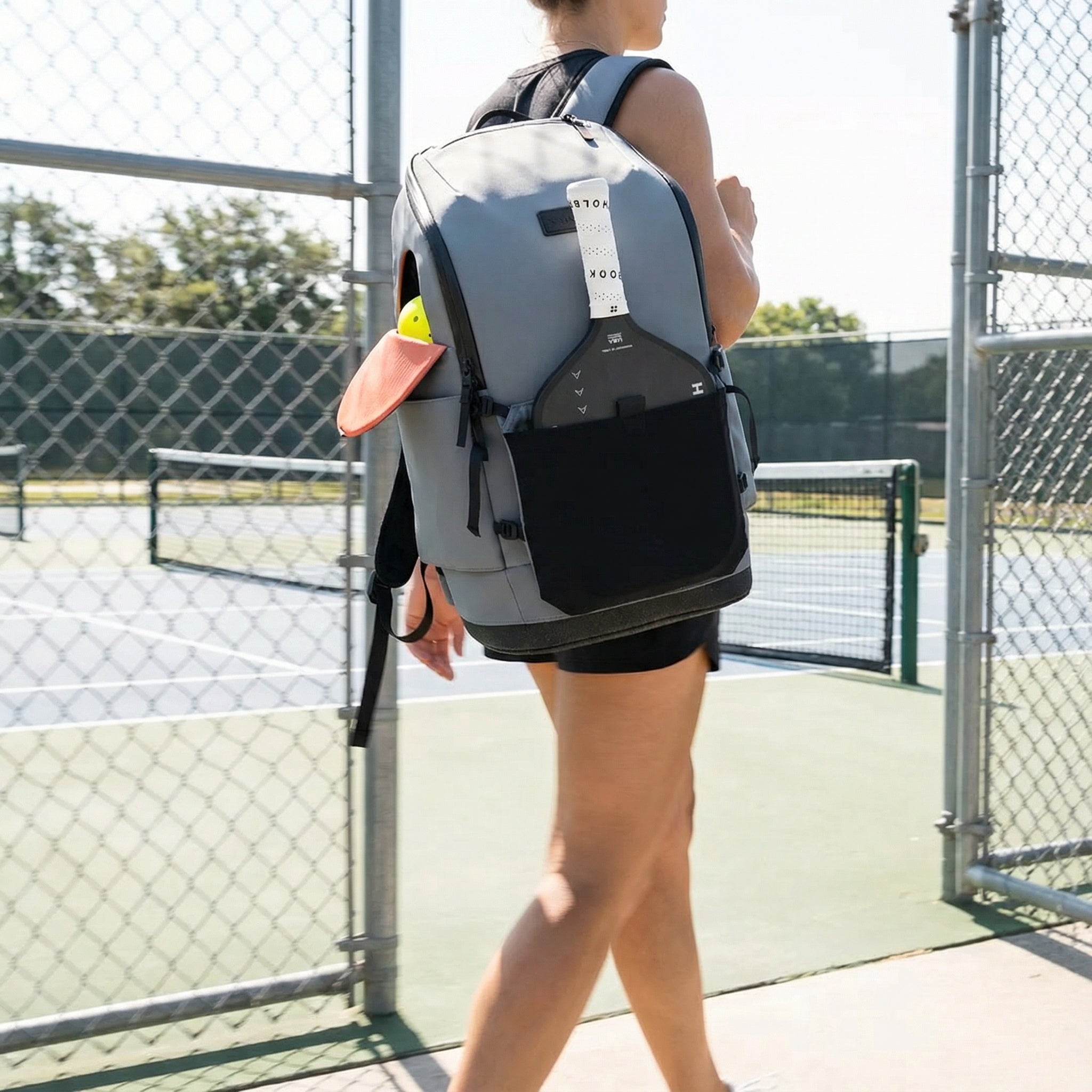
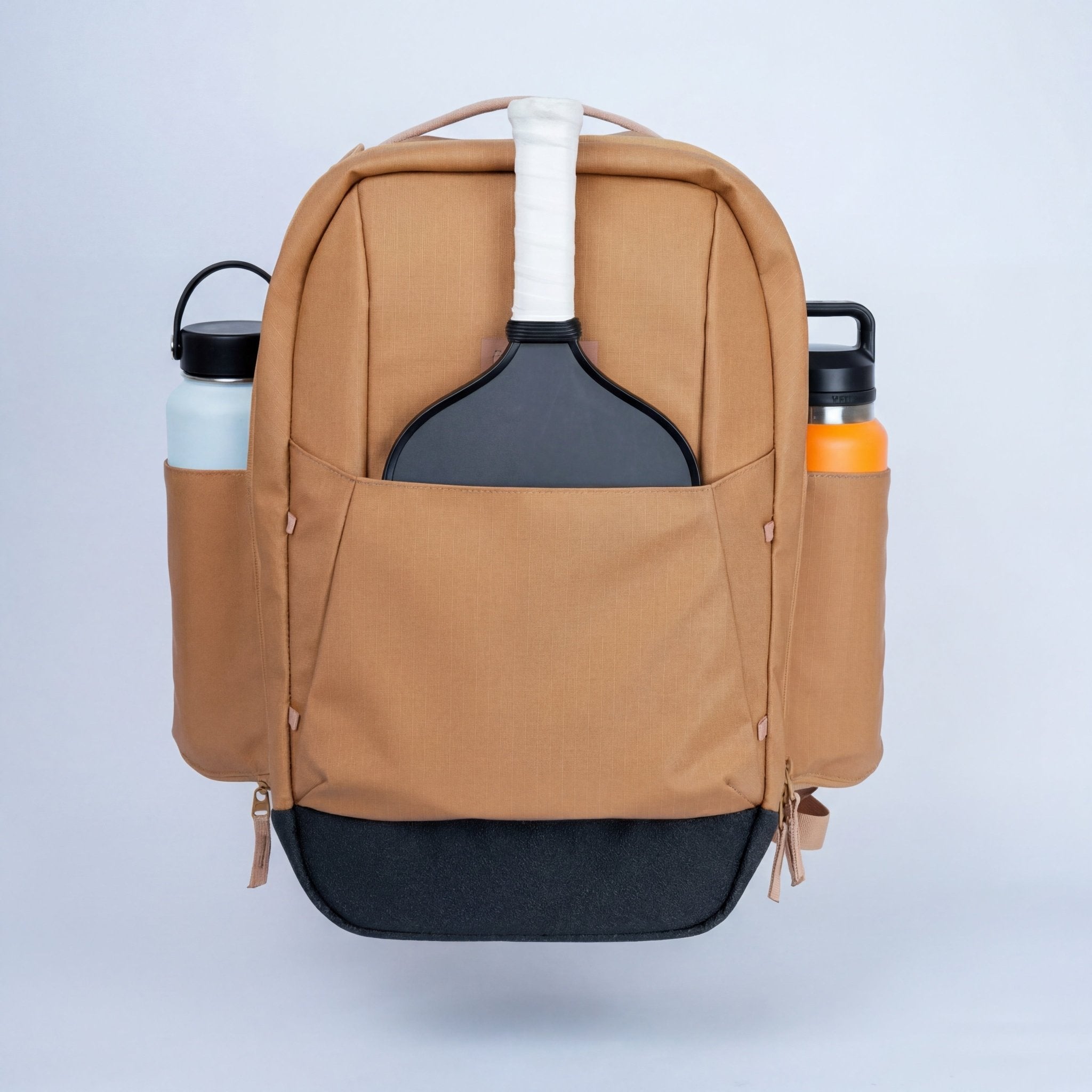
You've picked your paddle — now make sure your bag doesn't let you down. The FORWRD Court Ranger V2 ($195) is the everyday bag built for competitive players: 16" laptop sleeve, modular paddle compartment with separate sleeve for 2 paddles, YKK AquaGuard water-resistant zippers. Designed with input from 500+ real players. Featured in The Dink and Pickleball Effect.

Our Pick for Bag: FORWRD Court Ranger V2
16" laptop sleeve, modular paddle compartment, YKK AquaGuard zippers. Pairs cleanly with any paddle at any skill level.
Competing at tournaments and need the full setup? The Court Caddy Backpack ($325) has a 15" laptop sleeve, 4-paddle capacity, dedicated shoe bay, and enough room for a full day at a multi-round event. Both FORWRD bags carry a lifetime warranty on manufacturing defects.
Final Verdict
The JOOLA Ben Johns Hyperion CAS 16 is a legitimate $100 paddle that competes well above its price bracket for the 3.5–4.5 player. The CAS surface gives you real spin assistance. The 16mm core makes the kitchen game forgiving. And the elongated shape Ben Johns prefers for his own play gives you reach and court coverage that shorter paddles can't match.
It's not flawless — the weight isn't for everyone, and the CAS texture has a lifespan on outdoor courts. But for what it costs, this is one of the best all-around paddles in its tier.
→ Buy the JOOLA Ben Johns Hyperion CAS 16 at Pickleball Central — $99.95

Leave a comment
This site is protected by hCaptcha and the hCaptcha Privacy Policy and Terms of Service apply.