

Last updated: June 2026
Finding pickleball games near you is easier than most new players expect. Apps like PlayTime Scheduler and Pickleheads let you join games in minutes. Your local rec center probably already has open play several days a week. And if all else fails, showing up to any outdoor court on a weekend morning almost always ends in a game. Here are five methods that work — pick one or combine all of them.
Method 1: Pickleball Scheduling Apps
Scheduling apps are the fastest way to find games — you can go from zero to a confirmed spot in under five minutes.
PlayTime Scheduler
PlayTime Scheduler is one of the most widely used tools for organized recreational pickleball. Organizers post games with a location, time, skill level, and number of open spots. Players browse nearby games and RSVP with a single tap.
The skill-level filter is the most useful feature. When an organizer posts a 3.0–3.5 game, you can trust the group has a baseline level of experience — a much smoother first session than random open play where skill levels vary widely. Most games on the platform use the standard 2.5–5.0 self-rating scale, so you can find a group that matches your level before you ever show up.
How to start: Download the app (iOS and Android, free), set your location and skill level, then browse posted games. In metro areas you will typically find multiple options on any given day. In smaller markets, you may need to look a few days ahead. Organizers often run weekly recurring games — subscribe to one that fits your schedule and you are set for the month.
Pickleheads
Pickleheads started as a court finder and expanded into game scheduling. It is particularly strong for discovering courts you did not know existed — community-built court listings include surface quality ratings, lighting information, and whether courts have permanent nets.
The open play tab pulls in sessions posted by recreation centers and clubs — events that do not always appear on PlayTime Scheduler. If you are new to an area or visiting, Pickleheads is the faster way to get oriented. The map view shows you every court within a set radius and which ones have active games scheduled.
How to start: Go to pickleheads.com or download the app. Search by zip code. The "Open Play" tab lists sessions you can join without pre-existing connections. Filter by skill level and pick a time that works.
Method 2: Facebook Groups
Search Facebook for "[your city] pickleball" and you will almost certainly find a local group. These communities are where players organize games, announce open play changes, find hitting partners, and share local news.
The advantage over apps is responsiveness. Post "looking for a 3.0 game Saturday morning near [neighborhood]" and someone will reply within hours — often with a direct invitation. Many regulars post about games that never make it onto scheduling apps, especially doubles pickup games organized a day or two ahead.
The groups also function as informal skill-sorting tools. Regulars know who plays at what level. If you mention your approximate rating in your introduction post, experienced players will reach out directly when they need a fourth for a specific match.
How to find groups: Search "[city] pickleball," "[county] pickleball players," or "[state] pickleball community" on Facebook. Join two or three — some cover a whole metro area, others are neighborhood-specific with more targeted activity. Introduce yourself after joining. Stating your skill level and which courts you prefer helps locals find you for future games.
Method 3: Local Recreation Centers and Parks Departments
Your city or county recreation department is one of the most reliable sources of consistent, beginner-friendly pickleball. Most rec centers run open play sessions multiple times per week. The barrier to entry is a day pass or membership — not knowing anyone, not being on a list, not having a partner.
The environment at rec centers tends to be more controlled than self-organized outdoor play. Courts are often split by skill level, a staff member or volunteer manages rotations, and experienced players generally look out for newcomers. For a first session, this is the lowest-pressure way in.
How to find sessions: Go to your city's parks and recreation website and search "pickleball." If the schedule is not clear, call the main rec center — staff can tell you which days and times courts are designated for pickleball open play. Many rec centers have added pickleball programming in the last two years, so online schedules may lag behind what is actually happening in person. A quick call takes 90 seconds and saves a wasted trip.
Method 4: USAPA's Places2Play Directory
USA Pickleball maintains a searchable directory of pickleball venues at usapickleball.org/find-a-place-to-play. This is the most comprehensive court database available — it includes USAPA-sanctioned clubs, rec center courts, school facilities, and community courts, many of which do not appear on Pickleheads or any app.
The listing quality varies. Some entries include full schedules and contact information; others are basic location pins. For a new player in an unfamiliar city, it is the best single starting point for a full picture. Filter by state and city, then verify current schedule details by calling the facility directly before making the trip.
The directory is also useful for identifying clubs that run structured leagues and clinics — a step up from open play when you are ready to develop your game more systematically.
Method 5: Just Show Up
This method works more often than people expect. Outdoor pickleball courts at public parks in medium-to-large cities have consistent informal play — especially on weekend mornings between 8 and 11 AM. Players self-organize using a paddle stack: place your paddle at the end of the line, you are next on the next open court.
No app, no Facebook group, no planning required. Bring a paddle, arrive during peak hours, and introduce yourself. The pickleball community's reputation for welcoming newcomers is genuinely earned — most regulars will explain the local rotation system and make sure you get into a game within minutes of arriving.
The downside is inconsistency. Outdoor courts depend on weather, and informal sessions do not post cancellations anywhere. In markets with less-established outdoor play culture, this approach is a gamble. Use it as a complement to one of the methods above rather than a primary plan.
What to Bring to Your First Session
Most open play sessions provide balls, but you will need your own paddle. Court shoes with lateral support — not running shoes — matter more than most beginners realize. Running shoes wear down the wrong way and provide almost no ankle stability for the side-to-side movement pickleball demands.
- Court shoes with non-marking soles and lateral support
- Your own paddle — borrowing works for a first visit, but having your own means you show up ready
- Extra balls — a sleeve of Dura Fast 40s or Franklin X-40s is always welcome at pickup play
- Water and a small towel — pickleball is more demanding than it looks
- A bag that moves with you — not a gym duffel that gets in the way between courts
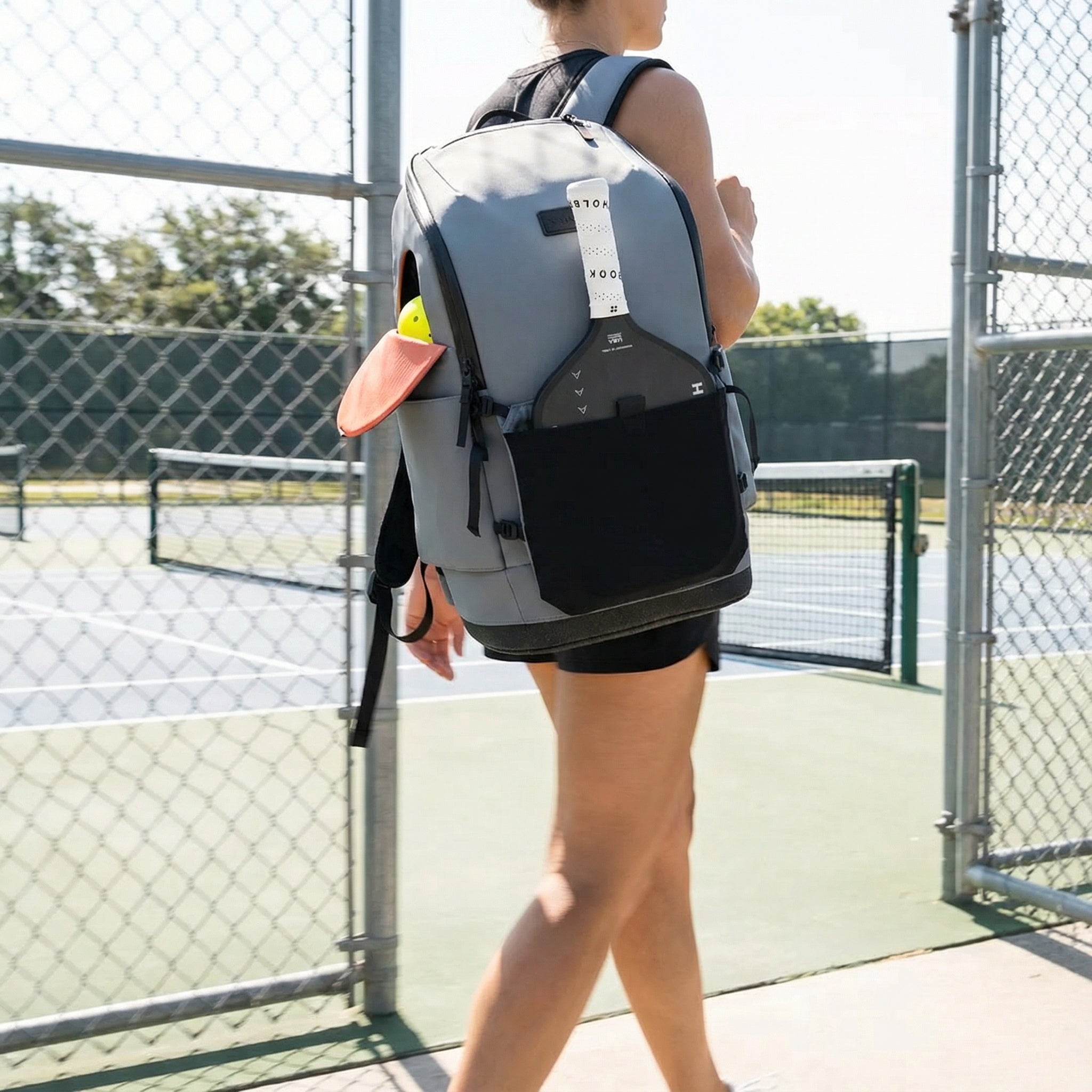
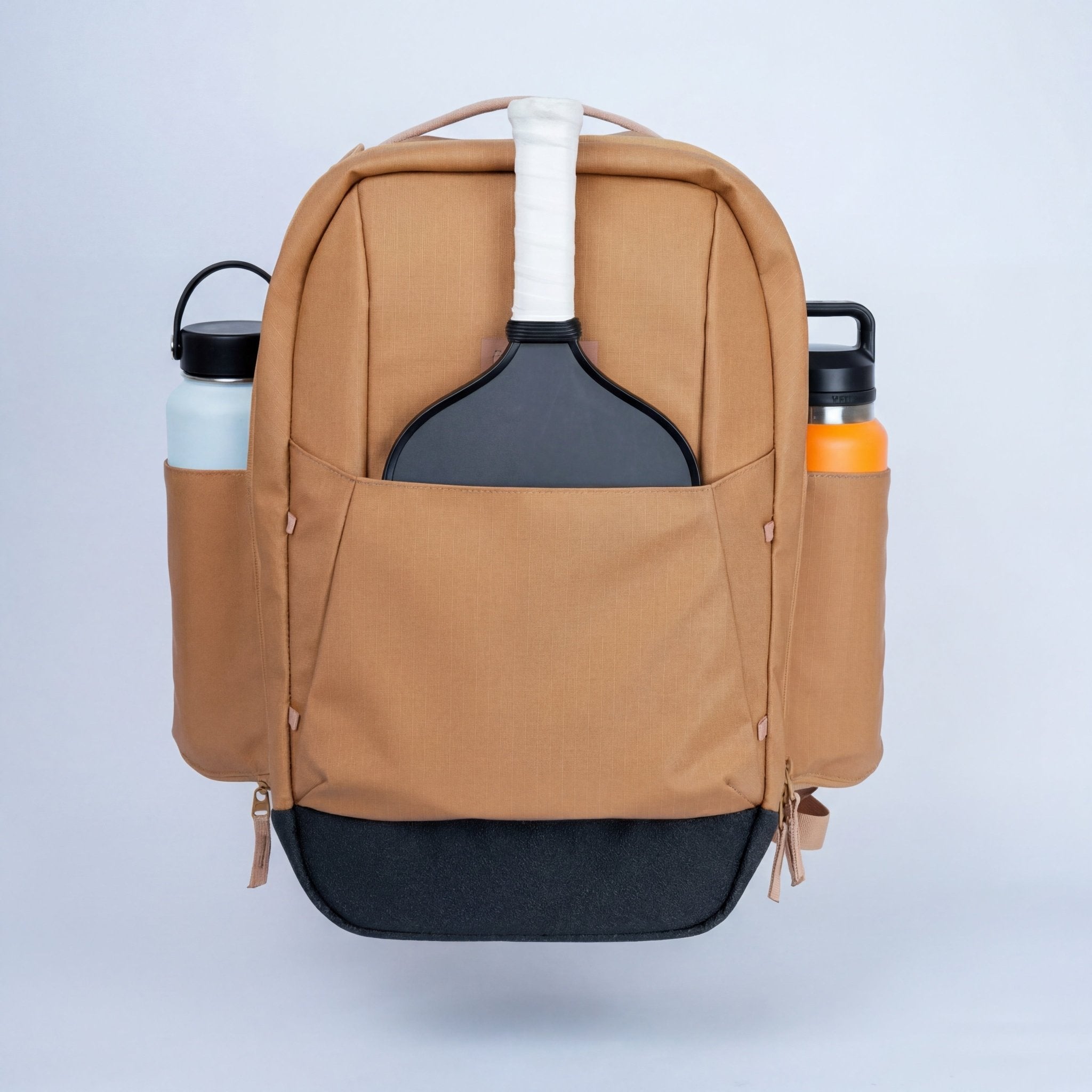
Players who go from occasional to regular quickly realize their gear setup matters. The Court Ranger V2 ($195) has a dedicated 16-inch paddle sleeve that holds two paddles with covers on, plus separated compartments for shoes, a water bottle, and a towel. It was designed with 500+ real players specifically for how pickleball bags actually get used — courts, trunks, and back-to-back sessions.

Tips for Your First Open Play Session
A few things that are not obvious your first time out:
- Arrive 10–15 minutes early. The paddle stack system and local rotation etiquette vary by court. Watching for a few minutes before jumping in tells you how that group operates — every court has its own rhythm.
- Call the score, every time. The server always announces the score before serving — this is a rule, not a courtesy. Server score, receiver score, server number (in doubles). Pickleball's scoring system is unique to the sport and worth reviewing the night before.
- Know the kitchen rule before you go. The non-volley zone (NVZ or "kitchen") is the most commonly misunderstood rule for new players. You cannot volley a ball while standing in the kitchen. Most regulars will give you a pass the first session, but knowing the rule prevents repeated disputes.
- Be honest about your level. Self-inflating your skill rating creates mismatches that are not fun for anyone. If you are new, say you are new. Most groups will pair you with a patient player who genuinely enjoys helping beginners develop.
- Placement beats power. The most effective approach at the recreational level is keeping the ball in play and getting to the kitchen line. Trying to blast winners your first session will mostly result in errors and frustration.
Frequently Asked Questions
What is PlayTime Scheduler for pickleball?
PlayTime Scheduler is a free app that lets players create and join pickleball games, manage RSVPs, and filter by skill level. Organizers post games with location, time, and open spots; players join with one tap. It is available on iOS and Android and is most active in metro areas with organized recreational pickleball communities.
What is the best app to find pickleball games near me?
PlayTime Scheduler and Pickleheads are the most widely used dedicated pickleball scheduling apps in 2026. PlayTime Scheduler works well for organized group play and RSVPs; Pickleheads is stronger for discovering courts and open play sessions by location. Using both gives you the widest coverage in most markets.
Is PlayTime Scheduler free?
Yes. PlayTime Scheduler is free to download and use for both players joining games and organizers creating them. Some club organizers use premium features to manage memberships and recurring events, but casual players can join and track games at no cost on iOS or Android.
How do I find open play pickleball near me?
Start with Pickleheads or the USAPA Places2Play directory to find courts near you. Then check Facebook Groups (search your city name plus "pickleball") for posted open play schedules. Your local recreation center almost certainly has a weekly open play session — it is often the most beginner-friendly option because courts are typically organized by skill level.
Can I play pickleball without knowing anyone?
Absolutely. Open play at recreation centers and park courts is designed for solo players. Show up, introduce yourself, and join a court — the pickleball community is consistently welcoming to new players. Most open play sessions rotate partners every game, so you will meet several people in the first hour without any awkward arrangements beforehand.
The Court Ranger V2 ($195) holds two paddles, court shoes, water, and a towel — everything you need for a full open play session without the bulk of a gym bag. Designed with 500+ real players. Built to move between courts.

Leave a comment
This site is protected by hCaptcha and the hCaptcha Privacy Policy and Terms of Service apply.