

Last Updated: May 2026
Disclosure: This post contains affiliate links to Pickleball Central. If you purchase through our links, FORWRD earns a small commission at no extra cost to you. We only link to products we'd recommend regardless.
Lead tape is one of the cheapest and most reversible performance upgrades in pickleball. A $8 roll of Tourna lead tape can meaningfully change how a $90 paddle plays — if you know what you're doing. Put it in the wrong spot, or use too much, and you've made your paddle worse.
Here's what actually works, based on how club players at 3.0–4.5 use it, and where the common mistakes happen.
Lead Tape Placement Quick Reference
| Position | What It Does | Best For |
|---|---|---|
| 12 o'clock (top edge) | Increases swing weight, more power on drives | Baseline/power players |
| 3 & 9 o'clock (sides) | Widens sweet spot, more stability on mishits | All-around/beginner players |
| Throat (low center) | Adds weight without changing swing feel much | Players who want overall weight without power shift |
"Most players who try lead tape don't add enough to actually notice a difference. Start with 2 inches at 12 o'clock, cover it with electrical tape, and play a full session before deciding whether to add more. The temptation is to experiment too aggressively and end up with a heavy, unresponsive paddle."
— Topher, FORWRD co-founder and competitive pickleball player
Why Lead Tape Works (And When It Doesn't)
The concept here is swing weight — not the same as static weight. A paddle that weighs 7.8 oz on a kitchen scale can have a very different swing feel depending on where that weight sits. Move mass toward the top of the paddle and it swings heavier, generating more momentum on drives. Move mass toward the grip and it feels maneuverable but less powerful. Lead tape lets you shift that distribution without buying a different paddle.
What it actually changes: power and stability, not touch. Adding 2 grams at 12 o'clock makes your drives hit harder and feel more authoritative at contact. It does nothing for dink feel, reset softness, or spin — those come from the paddle face construction and your technique. Players who expect lead tape to improve their short game will be disappointed. Players who want more punch on third-shot drives or overhead smashes? This is the right fix.
Where it doesn't help: if your paddle is already on the heavier side (8.5+ oz), adding more weight often just tires your arm faster rather than improving power. And if you're using a thin 11mm control paddle, loading it at 12 o'clock will make it feel sluggish at the kitchen line. Match the modification to what your paddle already does — and to what you already do. If your third shot drop is broken, lead tape doesn't fix it. That's a technique problem.
How Much Lead Tape to Actually Use
Start with 1 gram. At half-inch width, that's roughly 2–3 inches of tape. That's a subtle change — barely perceptible on a scale, but noticeable on the court if you're paying attention. Most players rush past this step, slap on 5–6 inches, and then wonder why the paddle "feels off" without understanding why.
Add one increment at a time, then play a full session before evaluating. Your arm needs time to adjust to a different swing feel — 10 warm-up balls isn't enough data. Most players settle between 1–3 grams total. Past 4 grams, the extra swing weight creates diminishing power returns and real fatigue risk on longer sessions, especially for players prone to tennis elbow.
One precision note: weight in grams is more useful than ounces when dealing with small tape quantities. Standard half-inch lead tape runs about 0.25g per inch. That means 4 inches = 1 gram. Know this before you cut, or you'll overshoot your target configuration on the first attempt.
Choosing Lead Tape: Thickness and Weight Options
Two widths matter for pickleball: ¼ inch and ½ inch. Half-inch is the standard — it sits cleanly on the paddle edge, covers with a single strip of electrical tape, and gives predictable weight-per-inch control. Quarter-inch tape is for fine-tuning in tighter positions, like adding a small amount to the throat area without extending past the edge guard. For most players starting out, ½ inch is the right choice.
Weight per inch varies by product. Standard tape runs roughly 0.25g per inch. Some options run 0.5g per inch — useful if you already know you need a significant weight addition, but unforgiving if you overshoot. Stick with the lighter option until you've dialed in your target configuration through a few test sessions.
Tungsten tape is worth knowing about as an alternative. It's non-toxic, roughly the same density as lead tape, and behaves identically in application. Performance math is nearly identical. It costs more and is harder to find at local stores, but if lead-free matters to you, tungsten is the right call.
Lead Tape Products Worth Using
Three lead tapes that players actually trust:
Tourna Pickleball Lead Tape — the go-to option. Pre-cut strips make application clean and consistent. Half-inch width is the standard for most paddle modifications. About $8 for enough tape to experiment through multiple configurations.
GAMMA Lead Tape — slightly thinner, works well when you want to add weight in smaller increments. Good for fine-tuning after you've done an initial setup with a thicker tape.
Selkirk Lead Tape — brand-name quality for players who want the ecosystem match. Pre-cut strips, good adhesion, consistent width. More expensive per strip but less prep work.
Cover any lead tape with 3M electrical tape after placement to prevent peeling during hard drives and humid outdoor sessions.
Step-by-Step Application Guide
Applying lead tape takes about 5 minutes and doesn't require tools beyond scissors and electrical tape.
Clean the paddle edge. Use a dry cloth or a small amount of isopropyl alcohol where the tape will sit. Oils and dust prevent proper adhesion. Skip this step and the tape starts peeling within a week.
Cut your tape. For a 1-gram starting point, cut 2–3 inches of half-inch tape. Use sharp scissors — lead tape doesn't tear cleanly. Dull scissors leave jagged edges that lift at the corners.
Position before pressing. Hold the tape against the edge without pressing down until it's exactly where you want it. Once you press it into the paddle surface, repositioning is difficult without leaving adhesive residue. Align with your intended clock position, then press firmly from center outward.
Cover with electrical tape immediately. Run a strip of 3M electrical tape over the full length of the lead tape, extending slightly past each end. Press down the edges. This is not optional — exposed lead tape peels fast, especially in heat or humid outdoor conditions.
Play a full session before evaluating. Your muscle memory needs time to adjust. Don't judge the result after 10 balls. Play a complete session — ideally two — before deciding whether to add more weight or try a different placement.
Covering and Securing Lead Tape
3M electrical tape is the standard for good reason: it's thin, has a strong adhesive, and comes in multiple colors if aesthetics matter to you. For most paddles, ¾-inch width electrical tape is right — wide enough to cover half-inch lead tape with enough overlap on each side to seal the edges properly.
Apply the electrical tape in a single smooth run from one end to the other, not in overlapping sections. Multiple pieces create bumps that affect ball contact during fast exchanges. Press down the edges with a card or your thumbnail, especially at the corners where peeling starts first.
Replace the covering tape every few months even if it looks intact. Old electrical tape loses its grip gradually, and once a corner starts lifting, humidity gets under the lead tape fast. A fresh re-cover takes 2 minutes and is worth doing at the start of each season.
Lead Tape and Tournament-Legal Paddles
Adding lead tape can affect your paddle's compliance status for sanctioned play. The USA Pickleball approved equipment database covers paddles as manufactured — modifications that change deflection, surface texture, or weight outside acceptable limits may disqualify the paddle for official events.
Practically speaking, most recreational and club players add lead tape without concern, because local round robins don't require USAPA-approved equipment. If you're competing in APP or PPA events, or any tournament that explicitly requires equipment compliance, check your modified paddle with a referee before your first match. A quick conversation beats a mid-tournament disqualification.
Thinking about which paddle to modify? The best pickleball paddles 2026 guide covers the top options by playing style — useful context for deciding whether to modify what you already have or start fresh with a better base.
Complete Your Setup
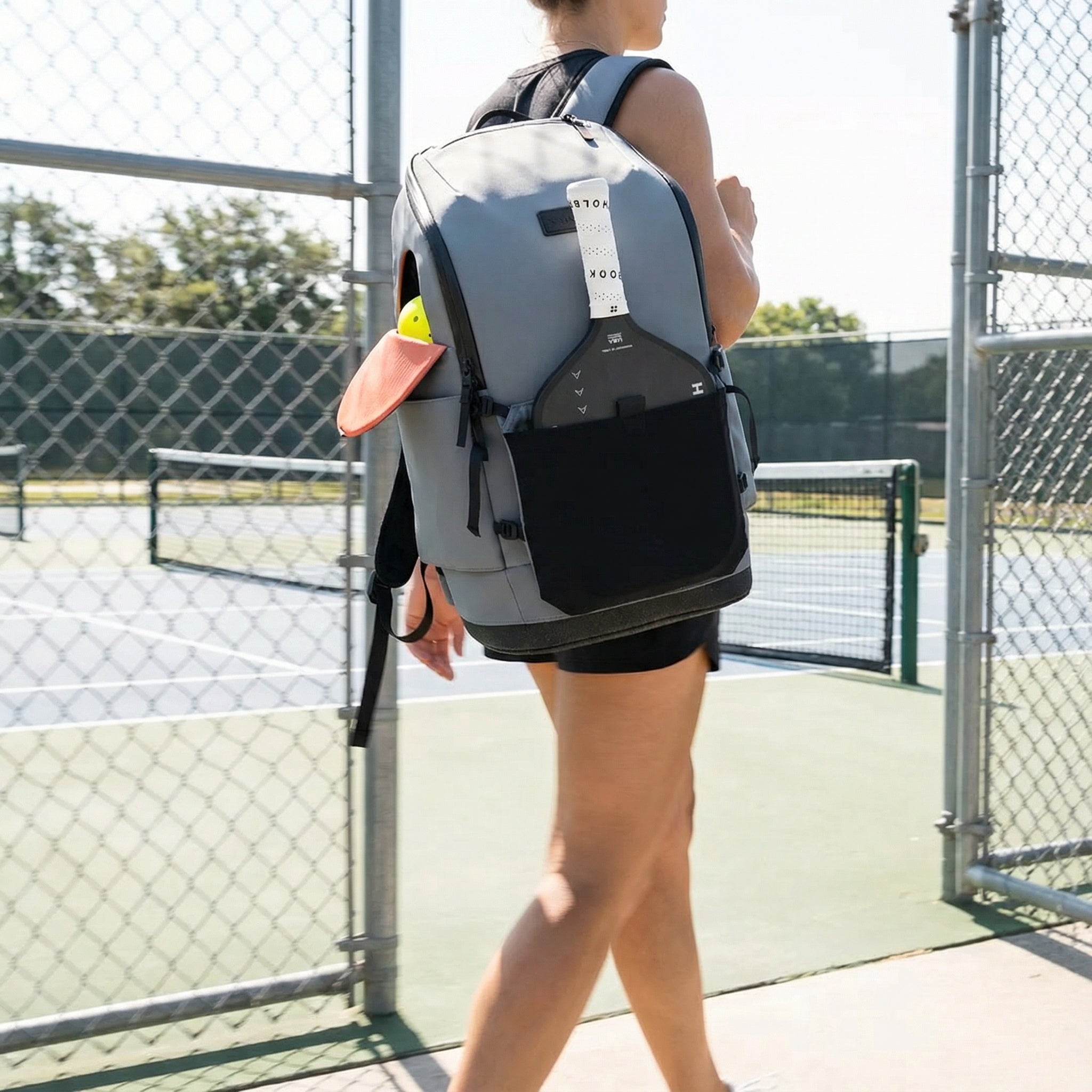
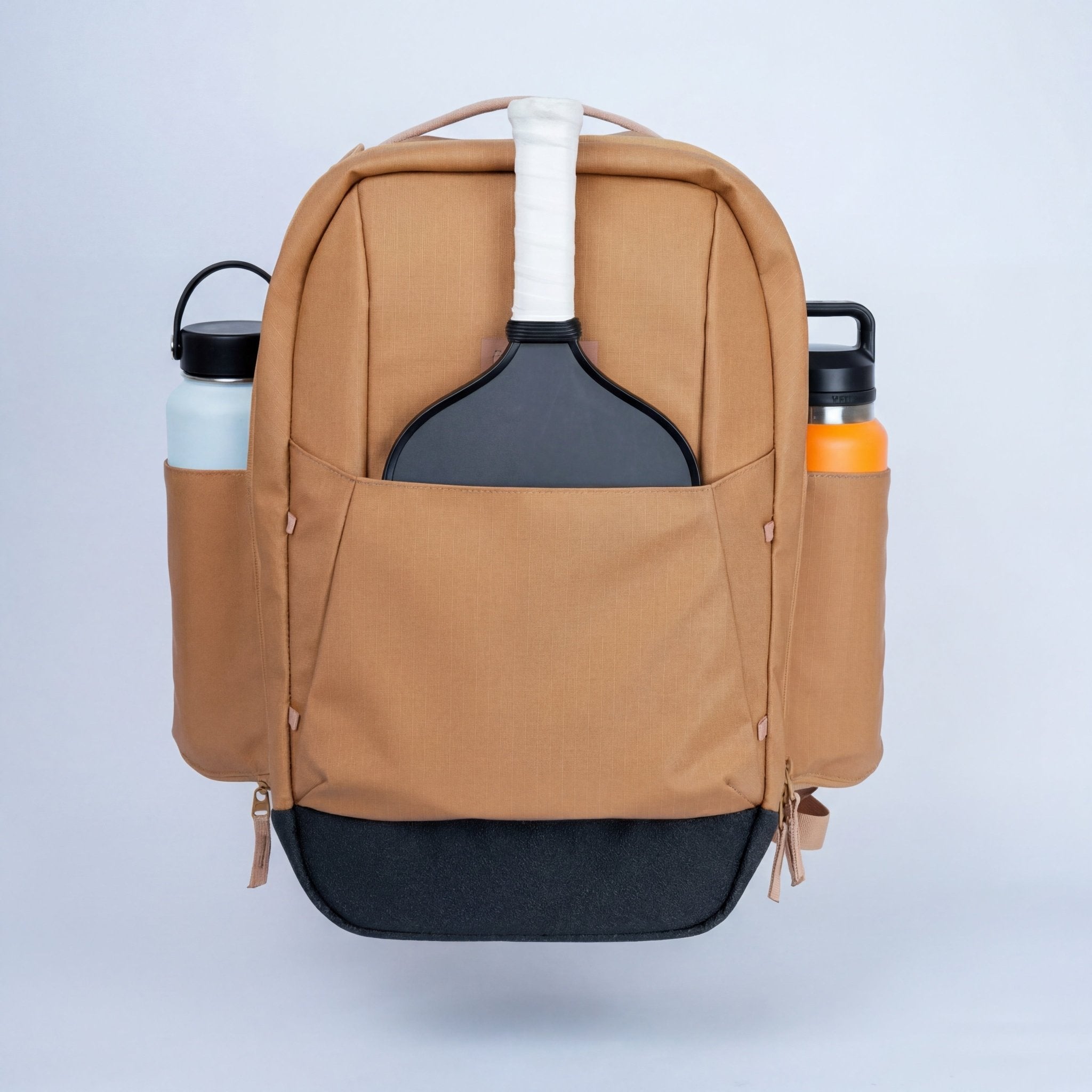
Lead tape keeps your paddle dialed in. The Court Caddy ($325) keeps everything else organized — paddles protected in the modular sleeve, gear stowed, and your 15" laptop ready for when the match ends and the workday starts. Built with 500+ real players.
Frequently Asked Questions
Is lead tape safe to use on my pickleball paddle?
Yes, lead tape is safe for recreational use. The amounts applied (0.5–3 grams) are trace quantities with no meaningful exposure risk during normal play, since the tape stays under a protective layer of electrical tape throughout every match. If lead is a concern, tungsten tape offers identical density and performance without the health considerations — it costs more but works the same way. For most players, standard lead tape is a non-issue.
How much lead tape should I use on my paddle?
Start with 1 gram — roughly 2–3 inches of half-inch tape. This is subtle enough to feel without dramatically shifting the paddle's balance. Add in 1-gram increments only, playing a full session between each change so your arm and muscle memory can actually register the difference. Most players land between 1–3 grams total. Above 4 grams, the added swing weight creates real arm fatigue on longer sessions without proportional power benefit.
Where should I place the lead tape on my paddle?
Placement depends on what you want to change. Top edge (12 o'clock) increases swing weight for more power on drives — best for baseline players who want heavier contact. Side edges (3 and 9 o'clock) widen the sweet spot and reduce paddle twisting on off-center hits. Throat placement adds overall weight with minimal impact on swing feel. The quick reference table at the top of this guide maps each position to player types and goals.
How do I secure lead tape so it doesn't peel off?
Cover the lead tape immediately with 3M electrical tape, extending the strip slightly past each end of the lead tape itself. Press the edges down firmly — corners are where peeling starts first. ¾-inch electrical tape is the right width for most half-inch lead tape applications. Replace the covering tape every few months regardless of how it looks, since the adhesive weakens with regular outdoor heat and humidity exposure even when visually intact.
Will lead tape void my paddle warranty?
Most manufacturers don't explicitly address lead tape in their warranty language — it's a grey area. Careful application and removal typically won't damage the paddle face or edge guard if done correctly. If a warranty claim involves the area where tape was applied, the manufacturer may decline to cover it. For tournament play, verify your modified paddle is still compliant using the USAPA approved equipment database before competing in sanctioned events.
One More Upgrade Worth Making
While you're dialing in your paddle, make sure your bag isn't the weak link. The FORWRD Court Ranger V2 ($195) has a dedicated paddle sleeve that protects your lead-tape-modified paddles between sessions — no rattling against each other, no edge damage from an overstuffed bag. Designed with feedback from 500+ players, including plenty who modify their equipment. YKK AquaGuard zippers handle outdoor courts and weather.

If you carry multiple paddles to compare different tape configurations in the same session, the Court Caddy Backpack ($325) fits up to four paddles in its modular sleeve system.
Ready to upgrade? Shop the Court Ranger V2 →

Leave a comment
This site is protected by hCaptcha and the hCaptcha Privacy Policy and Terms of Service apply.