

FTC Disclosure: This article contains affiliate links to Pickleball Central. If you buy through our links, FORWRD earns a commission at no extra cost to you. We only write about products we'd recommend to players we actually know.
Last Updated: November 2026
NOX is a Spanish brand. That matters more than it sounds. For 20+ years, Spanish padel players have been swinging paddles built with foam-injected cores — a core construction that changes how the ball behaves at contact in ways standard polypropylene honeycomb simply doesn't replicate. When NOX entered pickleball, they brought that engineering with them. The result is the X-FOAM line: five paddles, $199–$209 each, built on the same Gen 4 foam core platform.
We already reviewed the GOLDIN 14mm — Grayson Goldin's power-first build, an elongated aggressive setup for attacking players. This guide covers the other four: the JMA 16mm (balanced all-court), the JC6 16mm (controlled aggression + reach), the NEXO 14mm (speed hands), and the TEMPUS (control anchor with widebody shape).
Short answer: the JMA 16mm is the one most players should buy. But the NEXO and JC6 earn it for specific player types — and the TEMPUS serves a real purpose that gets underestimated. Here's the breakdown.
Why Trust This?
FORWRD designs pickleball bags with input from 500+ real players across skill levels. Our gear reviews come from the same player conversations — we're tracking what 3.5 recreational players struggle with, what 4.5 tournament players care about, and where marketing copy diverges from court reality. For the X-FOAM line, we cross-referenced PBC's expert reviews with community feedback from r/pickleball and TheKitchen forums, where NOX paddlers have been active since the brand launched in the U.S. in 2025.
We didn't fly to Spain to test these. What we did: compare the X-FOAM Gen 4 core behavior against foam-core competitors we've tested (CRBN TruFoam, Paddletek HoneyFoam, Luzz Inferno), and document where the NOX platform over-delivers and where it falls short of its own positioning.
At a Glance: Full NOX X-FOAM Line
| Model | Price | Shape | Thickness | Handle | Best For |
|---|---|---|---|---|---|
| JMA 16mm | $209 | Hybrid (16.25" × 7.75") | 16mm | 5.25" | Balanced all-court |
| JC6 16mm | $209 | Elongated (16.5" class) | 16mm | 5.65" | Reach + controlled aggression |
| NEXO 14mm | $199 | Hybrid (16.25" × 7.75") | 14mm | 5.25" | Speed + quick hand battles |
| TEMPUS | $199 | Widebody (16" × 8") | 14mm or 16mm | — | Control + forgiveness |
| GOLDIN 14mm | $209 | Elongated | 14mm | — | Power + aggression (see review) |
JMA 16mm — $209 at PBC ↗ JC6 16mm — $209 at PBC ↗ NEXO 14mm — $199 at PBC ↗
What X-FOAM Gen 4 Actually Does
Standard pickleball paddles use polypropylene honeycomb cores — essentially a grid of air-filled hexagonal cells. It's light, durable, and predictable. The tradeoff: when a hard ball hits a hollow core at high velocity, there's a sharp, immediate energy transfer. Some players love that crispness. Others — particularly those coming from soft-game backgrounds or dealing with arm discomfort — find it fatiguing over long sessions.
X-FOAM Gen 4 replaces the hollow cells with a proprietary foam compound. The foam doesn't bounce the ball; it engages it. Contact feels like the ball sinks into the face slightly before releasing — which is exactly what extended dwell time means in practice. That's not an aesthetic preference. It changes what's mechanically possible on certain shots.
Three things change specifically:
- Reset shots get easier. When a 100+ mph drive comes at your body, a hollow PP core wants to pop the ball back aggressively. The foam core absorbs that pace and gives you back a softer, more controllable response. Players who struggle with blocked volleys sailing long will often notice immediate improvement switching to any foam core paddle.
- Vibration is reduced. Not eliminated — but the difference is measurable. Players with tennis elbow or forearm strain consistently report less discomfort with foam-core paddles across extended play.
- Feedback changes. You feel clean contact differently with foam than with honeycomb. Some players love the information — you know when you got it right. Others (especially players moving from softer fiberglass or graphite paddles) find the feedback confusing at first. It takes a few sessions to recalibrate.
What foam doesn't do: add power. If your game is built on flat, aggressive drives that rely on the paddle amplifying your swing speed, foam cores aren't going to cooperate. That's not a flaw — it's a feature for one type of player and a dealbreaker for another.
NOX X-FOAM JMA 16mm — The Balanced Build
Jhonnatan Medina Alvarez is a Spanish padel-converted pro whose pickleball game is built on tempo control — not winning with power, but dictating pace. The JMA is the paddle that lets him do that.
At 16.25" × 7.75", the hybrid shape sits between elongated (which prioritizes reach) and widebody (which prioritizes sweet spot). Both zones of the court — kitchen and baseline — are covered without asking you to compromise in either. The 5.25" handle works for one-handed and two-handed backhands. It's not a long handle, but it's not short either.
Performance on Court
At 16mm, the JMA holds the ball longer at contact than a 14mm paddle. That 2mm matters more than you'd expect from spec sheets alone. Dink rallies feel deliberate rather than reactive. Resets under pressure don't pop. Drive blocks stay where you place them. The foam core amplifies all of this — the dwell time isn't just about thickness, it's about how the foam engages vs. how hollow PP deflects.
At the net, the JMA rewards patience. Players who speed up aggressively from the kitchen will find themselves fighting the paddle — the foam doesn't cooperate the way a stiff carbon face does on flat attacks. That said, it's not a defensive-only tool. Roll shots, roll volleys, any spin-driven attack that lets you work through contact — those feel excellent. You're not sacrificing offense, you're redirecting it.
The Honest Limitations
The JMA 16mm's weight (middleweight) can feel slightly sluggish for players who attack from transition zone. And if your game is built on power speed-ups — the kind of hard flat drives that win hand battles — the foam's vibration absorption works against you. It softens the response when you want aggression. The NEXO 14mm addresses this directly.
Also: the JMA doesn't generate extreme topspin. The raw textured T700 carbon face creates spin — but players chasing spin numbers comparable to the RPM Friction Pro V2 are going to be disappointed. NOX's strength is in feel, not in raw spin output.
Check JMA 16mm at Pickleball Central — $209 ↗
NOX X-FOAM JC6 16mm — Reach, Stability, Controlled Aggression
Judit Castillo is a top-10 professional with a game built on consistent pressure from every zone of the court. The JC6 reflects that — specifically, it's designed to extend reach without sacrificing the dwell time and stability that the X-FOAM 16mm platform delivers.
Two measured specs matter here: twist weight of 6.24 and swing weight of 115.4. Twist weight is the measurement most players undervalue — it determines how well the paddle resists rotation when you catch a ball off-center. At 6.24, the JC6 is notably stable for an elongated paddle. Elongated shapes typically sacrifice some twist weight because the mass is distributed further from the center. NOX's paddle design manages to keep stability high despite the elongated 16.5" profile.
How the Shape Changes Everything
At the kitchen line, an elongated paddle covers more court laterally. Balls that your opponent expected to get past you don't. On drives and passing shots from the baseline, the longer face generates more head speed at the same swing rate — you get more pace without swinging harder. The 5.65" handle (versus the JMA's 5.25") is a meaningful difference if you use two hands on the backhand side. That extra 0.4" gives you more leverage on topspin shots and counters.
The 16mm core plays similarly to the JMA — same dwell, same vibration absorption, same foam-core feel. But the shape changes shot characteristics in specific ways. Topspin groundstrokes from the baseline feel more natural on the elongated face. At the net, the trade-off is real: the JC6 demands more precise paddle positioning in tight exchanges. When someone speeds up at half-volley range and you're in a hand battle at close range, the JMA is more forgiving. The JC6 rewards better positioning, doesn't cover for lazy hands.
JMA 16mm vs JC6 16mm: The Core Decision
These two paddles share the same core, the same price, and the same face material. The choice is almost entirely about shape preference and play style.
- Choose the JMA 16mm if: you play all-court (kitchen and baseline equally), you've never played with an elongated paddle before, quick hand battles at the net are a core part of your game, or you use one hand on the backhand.
- Choose the JC6 16mm if: you're a net-first player who wants maximum reach on laterally wide balls, you've used elongated paddles before and prefer that shape, you use a two-handed backhand regularly, or you play singles seriously.
If you're genuinely unsure, start with the JMA. The hybrid shape is more universally adaptable. You can always move to elongated once you know the X-FOAM platform suits your game — the JC6 will still be there.
Check JC6 16mm at Pickleball Central — $209 ↗
NOX X-FOAM NEXO 14mm — The Speed Build
The NEXO is a different paddle. Same shape as the JMA (16.25" × 7.75"), same handle length (5.25"), same face material — but at 14mm instead of 16mm, the core behavior flips. Where the JMA absorbs pace and returns a soft, measured response, the NEXO snaps back faster. Speed-ups off the face feel immediate. Counter volleys punch through. At the kitchen in a hand-battle situation, the NEXO rewards aggressive timing in ways the thicker 16mm builds don't allow.
At $199, it's also the most affordable model in the line alongside the TEMPUS.
Who It's Really For
The 14mm thickness doesn't just increase speed — it also decreases forgiveness. Late contact, shaky mechanics, rushed swings all show up more clearly on the NEXO than on the JMA or JC6. Players at 3.5 and below often find the NEXO's reactivity working against them: the speed becomes noise instead of an advantage when mechanics aren't consistent enough to control it.
At 4.0 and above, it's a different equation. If you're someone who speeds up frequently, attacks mid-court put-aways with flat drives, and wins points by getting into opponents' hands rather than by outplacing them, the NEXO fits that game. The X-FOAM core still adds vibration dampening compared to a standard PP 14mm — so you get some of the arm-friendliness without fully sacrificing speed.
Direct comparison: think of the NEXO vs. JMA the same way you'd think of a 14mm vs. 16mm version of any other paddle, amplified by the foam core's additional character.
NOX X-FOAM NEXO 14mm — $199 at Pickleball Central ↗
NOX X-FOAM TEMPUS — The Control Anchor
Everything about the TEMPUS is built around one priority: maximizing forgiveness and consistency. The widebody shape (16" × 8") makes it the largest-footprint paddle in the X-FOAM family. That extra face area expands the sweet spot, reduces off-center penalties, and creates a more consistent response across the face.
It comes in two thickness options — 14mm for faster hands and counter play, 16mm for added dwell time and reset consistency. Most control-first players should lean 16mm. The 14mm TEMPUS serves a narrow use case: players who want widebody forgiveness but still need enough speed to counter in hand battles. It's an interesting edge case, but it's not the default recommendation.
It's Not Just a Beginner Paddle
That framing undersells it. Advanced doubles players who live at the kitchen — particularly in recreational doubles where positioning and soft game dominate the rallies — often prefer the TEMPUS's wide face for precision placement. Dinks from a widebody face feel deliberate and consistent in a way that an elongated paddle can't fully replicate.
At the same time, the TEMPUS genuinely serves 3.0–3.5 players who are building consistent mechanics. The X-FOAM Gen 4 core plus 16mm thickness plus widebody shape creates a triple-layer of forgiveness. If you're watching balls sail wide on drives, missing resets because the response feels unpredictable, or just starting to care about gear beyond recreational-brand paddles, the TEMPUS is where the X-FOAM platform does the most to help a developing player.
What it won't do: generate power. If you're a 4.5 player who attacks regularly, the TEMPUS's soft, forgiving response will frustrate you. For attacking players — look at the NEXO or the GOLDIN, or leave the X-FOAM line entirely for a stiffer carbon paddle.
NOX X-FOAM TEMPUS — $199 at Pickleball Central ↗
How X-FOAM Compares to Other Foam-Core Competitors
NOX isn't the only brand working with foam-enhanced cores. Here's where X-FOAM stands against the most comparable alternatives at similar price points.
vs. RPM Friction Pro V2 ($249.99)
The RPM Friction Pro V2 is built primarily around spin generation — it's one of the highest-spin paddles available and uses a friction-enhanced face that goes further than NOX's raw T700 carbon in terms of ball grab. If your game relies heavily on heavy topspin (especially from the baseline), RPM wins that specific category.
What NOX wins: breadth of platform options, feel on soft shots, vibration absorption at similar price points (the Friction Pro V2 is $249.99 vs. $199–209 for X-FOAM), and the specific behavior of the Gen 4 foam on resets and blocks. The Friction Pro V2 is a more specialized paddle. The X-FOAM lineup — with its five models covering every play style — is more of a system. See our full RPM Friction Pro V2 review for the detailed breakdown.
vs. Franklin C45 Tempo 16mm ($229.99)
The Franklin C45 Tempo 16mm is a standard polypropylene honeycomb paddle at a similar price point. It's faster through contact, crisper in feel, and will immediately feel familiar to players moving from most other carbon paddles. Players who've used traditional carbon for years often find the C45 Tempo more intuitively predictable than the X-FOAM JMA 16mm when they first pick them up.
The X-FOAM JMA's advantage shows up over longer sessions and on specific shot types: softer feel on resets, better vibration dampening on hard drives, more feedback on dink placement. For players who've struggled with arm discomfort, the difference is real. For players with no history of arm issues who want speed and crispness — the C45 Tempo is a legitimate choice that doesn't cost them anything by staying with standard honeycomb.
Complete Your Setup
One More Thing: Where Are You Carrying Your NOX?
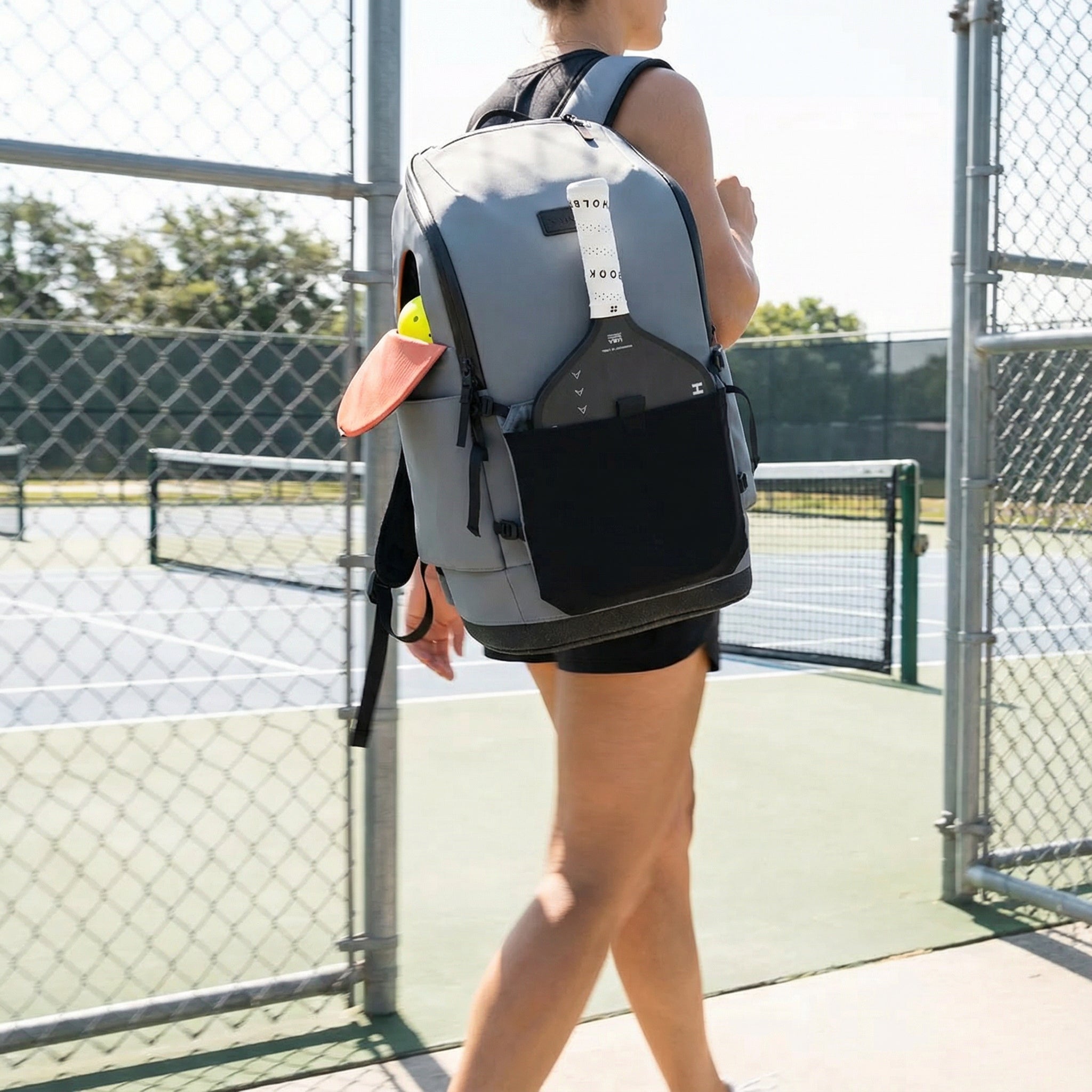
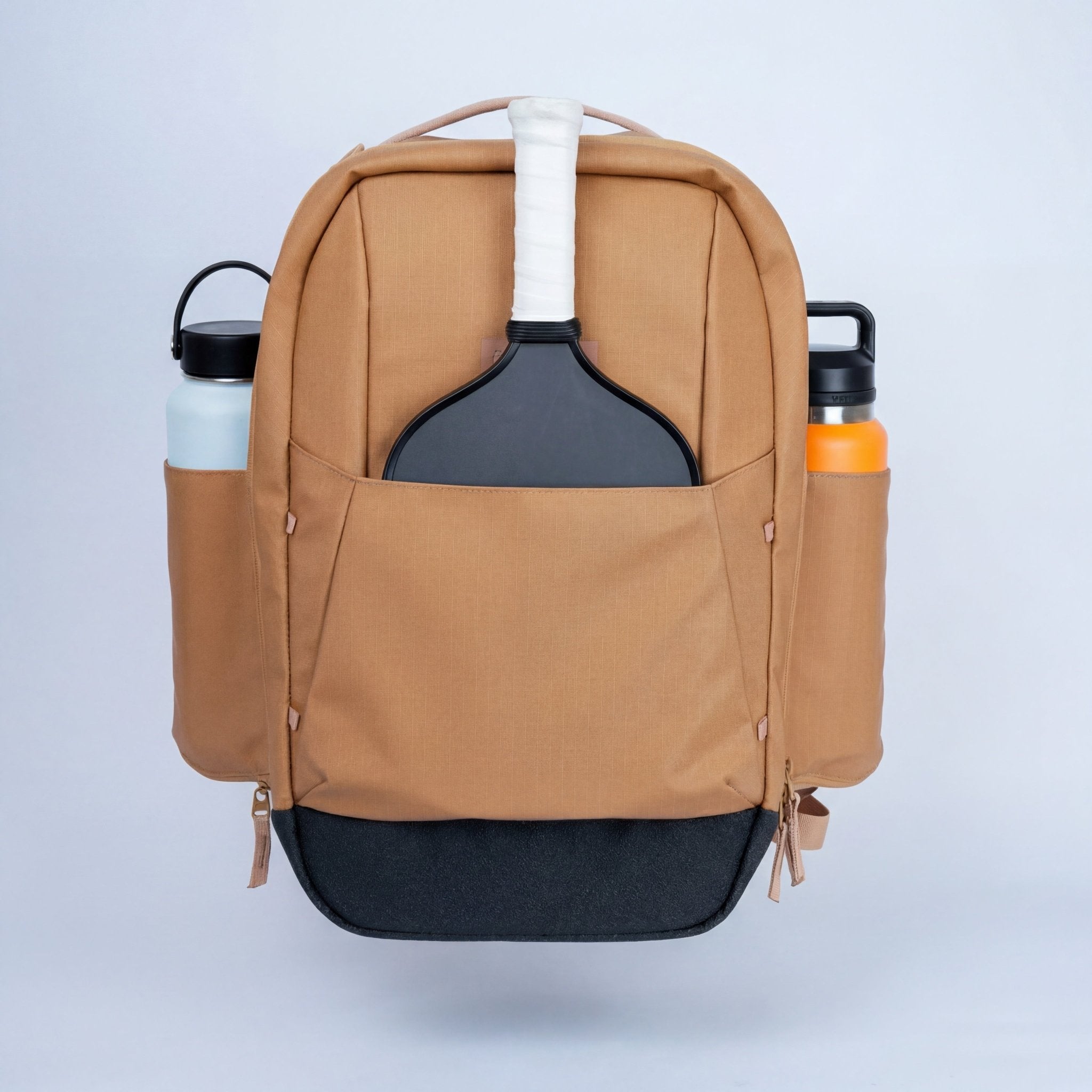
At $199–209, any X-FOAM paddle deserves better than a generic drawstring bag. The FORWRD Court Caddy ($325) fits up to 4 paddles in a padded modular sleeve, with a 15" laptop sleeve and YKK AquaGuard waterproof zippers — built for the player who goes from work to court and back. Or the Court Ranger V2 ($195) covers the same organized paddle storage with a 16" laptop sleeve at a lower price point. Both come with a lifetime warranty and were designed with feedback from 500+ real players.

Who Should Buy Each Model
JMA 16mm ($209) — The Default Recommendation. If you're a 3.5–4.5 player who hasn't tried a foam-core paddle before and wants the most versatile entry point into the X-FOAM platform, start here. It won't disappoint all-court players and is the strongest value-per-dollar in the line.
JC6 16mm ($209) — The Net Player's Build. Worth it if you've played with elongated paddles before, prefer the reach, and use two hands on the backhand. The high twist weight (6.24) is a genuine advantage for anyone who covers wide balls at the net frequently.
NEXO 14mm ($199) — The Speed Option. Legitimate pick for 4.0+ players who attack aggressively and want the X-FOAM platform's vibration dampening without giving up reactivity. Don't buy it if your game still has consistency gaps — it'll expose them.
TEMPUS ($199) — The Control Platform. Two good use cases: (1) developing 3.0–3.5 players who want maximum forgiveness while building consistency, and (2) advanced doubles players who play an almost exclusively soft game at the kitchen and want the widest possible face for precision dink placement. Both are real. Know which one you are.
GOLDIN 14mm ($209) — See the GOLDIN review. Power-first attacking players. If reset consistency is a weakness, skip it.
Pricing & Where to Buy
All five NOX X-FOAM models are in stock at Pickleball Central with free shipping on orders over $49. If you're curious about how NOX bags pair with these paddles, our NOX Pro Backpack review covers their 40L court bag at $85.
- NOX X-FOAM JMA 16mm — $209 ↗
- NOX X-FOAM JC6 16mm — $209 ↗
- NOX X-FOAM NEXO 14mm — $199 ↗
- NOX X-FOAM TEMPUS — $199 ↗
- NOX X-FOAM GOLDIN 14mm — $209 ↗
Frequently Asked Questions
What is the difference between the NOX X-FOAM Gen 4 core and a standard polypropylene honeycomb core?
Standard polypropylene honeycomb cores are hollow — the cells create a lightweight, rigid structure that rebounds the ball quickly. X-FOAM Gen 4 fills that core space with a proprietary foam compound from NOX's padel heritage. The result is more vibration absorption, softer contact feel, and extended dwell time (the ball stays on the face slightly longer). This benefits players who prioritize control, resets, and arm comfort over raw power and crispness.
Should I buy the JMA 16mm or the JC6 16mm?
If you've never played with an elongated paddle, choose the JMA 16mm. Its hybrid shape (16.25" × 7.75") works across all zones of the court and doesn't penalize you for playing both kitchen and baseline. The JC6 16mm's elongated 16.5" profile gives more reach and pairs well with two-handed backhands — the 5.65" handle (vs. 5.25" on the JMA) is a noticeable difference. Both are $209 and use the same core.
Are NOX X-FOAM paddles good for players with tennis elbow?
The X-FOAM Gen 4 core absorbs significantly more vibration than standard PP honeycomb. Foam-core paddles in general are associated with less forearm discomfort, and the 16mm models (JMA and JC6) add additional dwell time on top of the foam's dampening. Players dealing with elbow or forearm strain have reported improvement switching to foam-core builds — though paddle weight (aim for 7.6–8.0 oz) and grip size are equally important variables. Persistent issues warrant professional evaluation.
What's the difference between the NEXO 14mm and JMA 16mm?
Same shape (16.25" × 7.75"), same handle (5.25"), same face material. The difference is core thickness. The NEXO at 14mm is faster and more reactive — it rewards aggressive timing and quick speed-ups, but punishes late contact more severely. The JMA at 16mm holds the ball longer, absorbs pace better, and is more forgiving of imperfect mechanics. For players still building consistency: JMA. For attacking 4.0+ players who want speed: NEXO.
Are NOX X-FOAM paddles USAPA-approved for tournament play?
All NOX X-FOAM models in this guide are listed on the USAPA approved equipment list. Verify on usapickleball.org before any sanctioned event — approval status can change between seasons. For recreational play, approval doesn't matter.
Final Verdict
The NOX X-FOAM line is a coherent platform built around one honest premise: foam-core technology from padel, applied to pickleball. It's not the right choice for every player. If you want maximum power and a reactive, crisp response, you'll be better served by a standard carbon paddle from CRBN, Six Zero, or any number of other brands.
But for players who've been frustrated by resets that pop, drives that come back harder than they should, or arm discomfort after long sessions — the X-FOAM platform delivers. The Gen 4 core does what it says. The five-model range means you're not forced into a shape or thickness that doesn't fit your game.
Start with the JMA 16mm. It's the most versatile model in the line, honest about its limitations, and genuinely earns its $209 price point. Players with specific needs — reach (JC6), speed (NEXO), control (TEMPUS) — should follow the breakdown above. For the best guide to selecting your first upgrade paddle in this price range, see our intermediate paddle buying guide.
JMA 16mm — $209 at PBC ↗ JC6 16mm — $209 at PBC ↗ NEXO 14mm — $199 at PBC ↗

Leave a comment
This site is protected by hCaptcha and the hCaptcha Privacy Policy and Terms of Service apply.