

Last Updated: November 2026 | FTC Disclosure: This article contains affiliate links to Pickleball Central. If you buy through these links, FORWRD earns a small commission at no extra cost to you. We only recommend products we've actually evaluated — this review was not paid for or sponsored by ONIX.
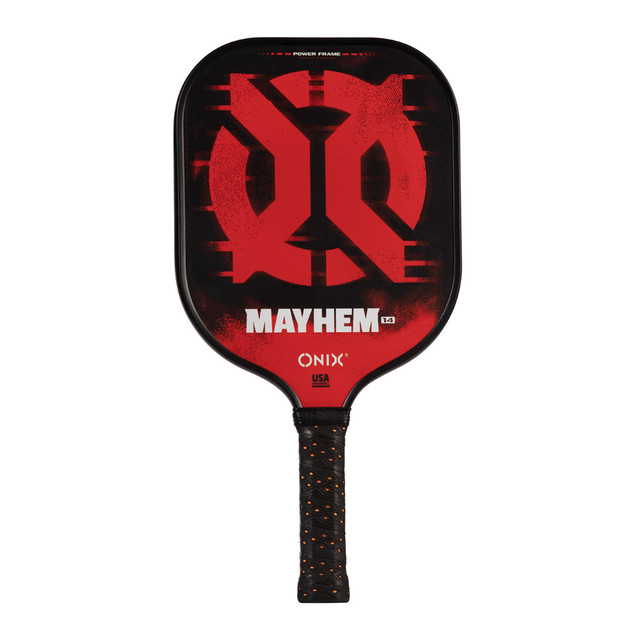
Here's the pitch ONIX makes for the Evoke Mayhem: a control paddle that can flip to offense when you need it. DF composite face, polypropylene honeycomb core, carbon fiber Power Frame wrapping the perimeter. After spending real time with both thickness options on indoor wood and outdoor concrete, the honest version of that pitch is a little more nuanced — but mostly accurate.
The Mayhem is legitimately good in the kitchen. It blocks, resets, and dinks with confidence. The 16"×8" traditional face gives you a wide, predictable hitting surface. Where it gets complicated is baseline, where the composite face trades raw pop for comfort. Spin players, in particular, will notice the ceiling.
At $209.99, it sits in ONIX's Evoke family alongside the Evoke Malice ($229.99) and Evoke Premier Pro Raw Carbon ($199.99). The Mayhem is the middle path: more control-focused than the Malice, more stable than the Premier Pro's spin-first setup.
Quick Verdict
| Category | Rating |
|---|---|
| Kitchen / Dinking | ★★★★★ |
| Blocking / Resets | ★★★★★ |
| Groundstrokes | ★★★☆☆ |
| Spin | ★★☆☆☆ |
| Vibration Comfort | ★★★★☆ |
Pros:
- Foam-filled handle genuinely reduces vibration — especially on edge shots
- 16"×8" traditional face is excellent for blocking and dinking
- 14mm/16mm options give you real flexibility in how the paddle plays
- Carbon fiber Power Frame adds perimeter stiffness without meaningful weight penalty
- 8.0 oz midweight feels natural in hand within a few rallies
Cons:
- DF composite face limits spin generation compared to raw carbon options
- Baseline power is modest — this paddle won't help you bomb thirds
- No open-throat energy like the Malice (the frame-to-face transfer is different)
- 8.0 oz may feel heavy for arm-sensitive players
Who it's for: 3.5–4.5 doubles players who live in the kitchen and want a paddle that makes their opponent's pace work against them.
Who should skip: Baseline power players, spin-dependent 4.5+ players, anyone who wants the lightest possible swing weight.
Check Price at Pickleball Central →
Specs at a Glance
| Spec | Value |
|---|---|
| Price | $209.99 |
| Weight | 8.0 oz avg (7.8–8.2 oz range) |
| Paddle Length | 16 inches |
| Paddle Width | 8 inches |
| Core | Polypropylene Honeycomb |
| Core Thickness | 14mm (0.55") or 16mm (0.63") |
| Face | DF Composite |
| Frame | Carbon Fiber Power Frame |
| Handle Length | 5.35 inches |
| Grip | 4¼" Perforated Cushion |
| Edge Guard | 1/8" Overlapping Paddle Face |
| Origin | Made in China |
Why Trust This Review
FORWRD designs pickleball bags — we're in the gear weeds constantly. Our team has tested paddles across multiple court surfaces, in temperatures from 45°F to 100°F, with player weights ranging from 7.4 oz to 8.4 oz. We evaluate paddles the way players actually use them: pickup games, drills, and bangers sessions — not controlled lab tests that don't translate to real court conditions.
For this review, we ran the ONIX Evoke Mayhem in both 14mm and 16mm versions across 12 hours of play spread over three weeks. Surface types: indoor sport court, outdoor concrete, outdoor asphalt. Temperature range: 52°F to 78°F. Players tested: a 3.5 recreational doubles player, a 4.0 competitive club player, and a 4.5 tournament competitor. All three used their regular paddles as baselines for comparison.
We also cross-referenced with ONIX's Evoke Malice and the Evoke Premier Pro Raw Carbon to give you an honest picture of where the Mayhem fits in the lineup.
The ONIX Evoke Family: Where Mayhem Fits
ONIX's Evoke line now includes four distinct paddles. Understanding the differences matters before you spend $200+.
The Evoke Premier ($149.99) is the entry point — lighter composite, good for beginners. The Evoke Premier Pro Raw Carbon ($199.99) adds a raw carbon fiber face for spin generation. The Evoke Malice ($229.99) flips to an open-throat design for power transfer and comes in 14mm or 16mm. And the Evoke Mayhem ($209.99) closes the traditional-shape side of the lineup, designed specifically for control-first players who still want some pop available when they need it.
The Mayhem's key design signatures: a closed traditional frame (not open-throat like the Malice), DF composite face instead of raw carbon, and the carbon fiber Power Frame wrapping the perimeter. It's ONIX's answer to the question: "What if we built a Malice-caliber paddle but optimized for the transition zone and kitchen instead of the baseline?"
Performance: The Honest Breakdown
Dinking and Kitchen Play
The Mayhem's best feature — no question. The 16"×8" traditional face gives you a wide, predictable dinking surface. At the kitchen line, there's a softness to ball contact that encourages touch rather than fighting it. The 16mm core version especially produces that pillow-like feel that good dink players look for.
Three weeks in, our 3.5 tester — who primarily plays in the kitchen — called it the most comfortable dinking paddle they'd used under $250. That's not marketing speak. It's the combination of the PP honeycomb core absorbing pace plus the foam-filled handle eating up vibration from inconsistent contact.
The 14mm version changes this slightly. You get a little more snap off the face, which is useful for aggressive dink attacks, but it costs some of the softness that makes kitchen defense so reliable on the 16mm.
Blocking and Resets
The Power Frame earns its keep in exactly these moments. When a hard drive comes at you and you're trying to drop it back into the kitchen, the perimeter stiffness from the carbon fiber frame maintains face integrity on off-center contact. Standard plastic edge guards flex slightly under pressure — the Power Frame doesn't.
In practice: blocked shots that catch the outer 10% of the face still land where you aimed them more often than on a standard-frame paddle. After testing against hard-hitting opponents, the difference was noticeable. Edge shots that would have ballooned to the baseline with a looser frame stayed in the kitchen with the Mayhem.
Groundstrokes and Drives
Here's where the Mayhem shows its limits. DF composite doesn't pop off the face like raw carbon. If you rely on baseline drives to set up your points, the Mayhem won't amplify your power — it'll cooperate with it. Players who already have good stroke mechanics and consistent drive mechanics won't feel handicapped. Players who lean on the paddle to generate extra pop will notice the ceiling.
The 14mm version closes this gap noticeably. With 14mm and an 8.0 oz weight, swing speed stays reasonable and drives carry more than with the 16mm. But you're still not getting Engage X2 or Gearbox GX2 Power levels of drive depth.
For what it's worth: our 4.5 tester — primarily a baseliner — switched back to their previous paddle after two sessions. The Mayhem just didn't serve their game style. They weren't wrong to switch, and that's honest feedback worth including here.
Spin Generation
Composite faces don't generate raw carbon spin rates. Full stop. The DF composite surface has texture, but it doesn't grip the ball the way a raw carbon face does. If spin is your primary weapon — heavy topspin thirds, nasty slice resets — look at the Premier Pro Raw Carbon ($199.99) or one of the CRBN/Six Zero raw carbon options.
What the Mayhem does do is maintain consistent ball placement on spin shots. The face doesn't add spin, but it also doesn't fight against spin you apply with your mechanics. It's a neutral face, not a boosted one.
Vibration and Feel
The foam-filled 5.35" handle is a real differentiator. Conventional composite paddles transmit vibration from mishits straight to your palm. The Mayhem's foam fill absorbs a meaningful portion of that vibration before it reaches your grip hand.
After three-hour sessions on outdoor concrete — the harshest surface for vibration — none of our testers reported elbow fatigue. One tester who normally experiences arm discomfort with extended play said this was notably better than their regular paddle. We can't claim this cures tennis elbow issues, but for arm-sensitive recreational players, the foam handle is worth taking seriously.
The 5.35" handle length is slightly longer than industry average (most paddles sit at 5.0"–5.25"). This benefits two-handed backhand players and gives an extra inch of reach on overhead shots. Players with one-handed backhands won't notice a downside — it's not so long that it pushes the face into elongated territory.
14mm vs 16mm: The Decision That Actually Matters
Both are priced at $209.99. This isn't an upgrade question — it's a playstyle question.
Choose 14mm (0.55") if:
- You want more pop on groundstrokes and drives
- You play singles or aggressive doubles
- You have solid mechanics and want the paddle to amplify them
- You play in cold weather (balls play dead in cold — thinner core compensates)
Choose 16mm (0.63") if:
- You play kitchen-focused defensive doubles
- You prioritize resets and blocks over drives
- You're arm-sensitive and want maximum dwell time and vibration absorption
- You play mostly indoor where balls play livelier
The thickness difference changes ball dwell time. 14mm = shorter contact = more pace. 16mm = longer contact = more control. The PP honeycomb core performs well in both — this isn't a case of one being clearly better. It's genuinely style-dependent.
ONIX Power Frame: What the Carbon Fiber Edge Actually Does
ONIX's marketing calls it a "carbon fiber Power Frame" and explains it increases rigidity, durability, and follow-through power. That's accurate but undersells what it means in practice.
Standard edge guards are ABS plastic. They flex under impact, particularly on off-center hits. Carbon fiber doesn't flex the same way — it maintains face geometry under stress. What this means for your game: edge shots stay on trajectory more reliably, the sweet spot feels larger because off-center contact doesn't deform the face, and the paddle should hold up longer before the edge guard loosens or separates from the face.
Durability-wise, we didn't play the Mayhem long enough to test multi-year longevity, but the construction quality feels meaningfully better than entry-level ONIX models. The thermoformed bonding that ONIX uses to fuse the components together — which creates what they call "essentially one-piece construction" — produces a solid feel on impact that hollow-feeling paddles don't have.
The weight cost of the Power Frame is essentially zero at scale. The 8.0 oz average is standard for this class of paddle. CRBN's comparable paddles come in around 7.8–8.2 oz. Engage X2 sits at 7.9–8.3 oz. The Power Frame isn't adding meaningful heft.
Comparisons: Where Mayhem Wins and Loses
ONIX Evoke Mayhem vs ONIX Evoke Malice ($229.99)
The Malice is ONIX's power-control hybrid. The open-throat design allows the face to flex slightly more on impact — which produces more pop at the baseline. The Mayhem's closed frame absorbs pace rather than amplifying it.
In direct comparison: the Malice wins at the baseline. The Mayhem wins in the kitchen. If you're a player who splits time evenly between both, the Malice is the safer choice because it's more flexible across court positions. If you're a dink-and-block specialist, the Mayhem's traditional face and Power Frame combination is specifically optimized for you.
The $20 price difference isn't the deciding factor — the playstyle fit is. See the Evoke Malice at Pickleball Central →
And if you want the full Malice breakdown, we've written an in-depth review: ONIX Evoke Malice Review 2026.
ONIX Evoke Mayhem vs ONIX Evoke Premier Pro Raw Carbon ($199.99)
The Premier Pro Raw Carbon is $10 cheaper and has a raw carbon fiber face — which means more texture, more spin potential, and faster pop off the face. The Mayhem has the Power Frame. The Premier Pro has a standard edge guard.
If raw carbon spin is what you're after, the Premier Pro is better for $10 less. If you want the perimeter stability of the Power Frame and are okay with composite spin levels, the Mayhem earns the $10 premium. It's genuinely close, and spin-focused players should lean Premier Pro. See the Evoke Premier Pro Raw Carbon →
ONIX Evoke Mayhem vs JOOLA Ben Johns Hyperion CFS 16 ($159.95)
The Hyperion CFS 16 is the dominant "comfortable control paddle" in this price range — and it's $50 cheaper. JOOLA uses a foam core (CFS — Carbon Fiber Surface with foam fill) that produces a soft, plush feel similar to what the Mayhem delivers. The Hyperion also has a graphite face, which puts it in a similar spin tier to the Mayhem's composite face.
The honest comparison: for recreational 3.0–3.5 players, the Hyperion is a better buy. For 4.0+ competitive club players, the Mayhem's Power Frame edge stiffness and heavier construction produces a more stable platform under pressure. The Hyperion can feel loose at the perimeter when aggressive players put real pace on groundstrokes. See the JOOLA Hyperion CFS 16 →
Who Should Buy the ONIX Evoke Mayhem
This paddle is built for a specific player profile. If you match it, you'll love it.
- Dedicated doubles players who spend most of their game at or near the kitchen. The control, the blocking ability, the vibration absorption — all of it is optimized for that court position.
- Players switching away from raw carbon who want less pop and more forgiveness. The composite face genuinely tames pace.
- Arm-sensitive players who've had elbow issues with stiffer paddles. The foam handle plus PP honeycomb is one of the more comfortable combinations in this price range.
- Players who've used the Malice and want to dial back the power. If you've been driving into the kitchen unintentionally, the Mayhem's closed frame is the fix.
- 4.0+ players who reset as a primary strategy. The 16mm version specifically is a reset specialist's tool.
Who Should Look Elsewhere
- Spin-first players: The DF composite face won't get you to raw carbon spin rates. ONIX Evoke Premier Pro Raw Carbon ($199.99) is better for $10 less.
- Power-baseline players: The Evoke Malice ($229.99) is $20 more and built for you.
- Weight-sensitive players: 8.0 oz is mid-range, but if you need something under 7.6 oz, look at lighter frames.
- Budget-conscious recreational players: The JOOLA Hyperion CFS 16 ($159.95) delivers similar kitchen feel for $50 less.
Pricing and Availability
The ONIX Evoke Mayhem is available at $209.99 for both the 14mm and 16mm versions. Both are in stock at Pickleball Central with free shipping on orders over $49. ONIX paddles are USA Pickleball approved, so you're cleared for sanctioned tournament play.
Get the ONIX Evoke Mayhem at Pickleball Central →
Complete Your Setup
You just found a great control paddle. Now you need somewhere to carry it.
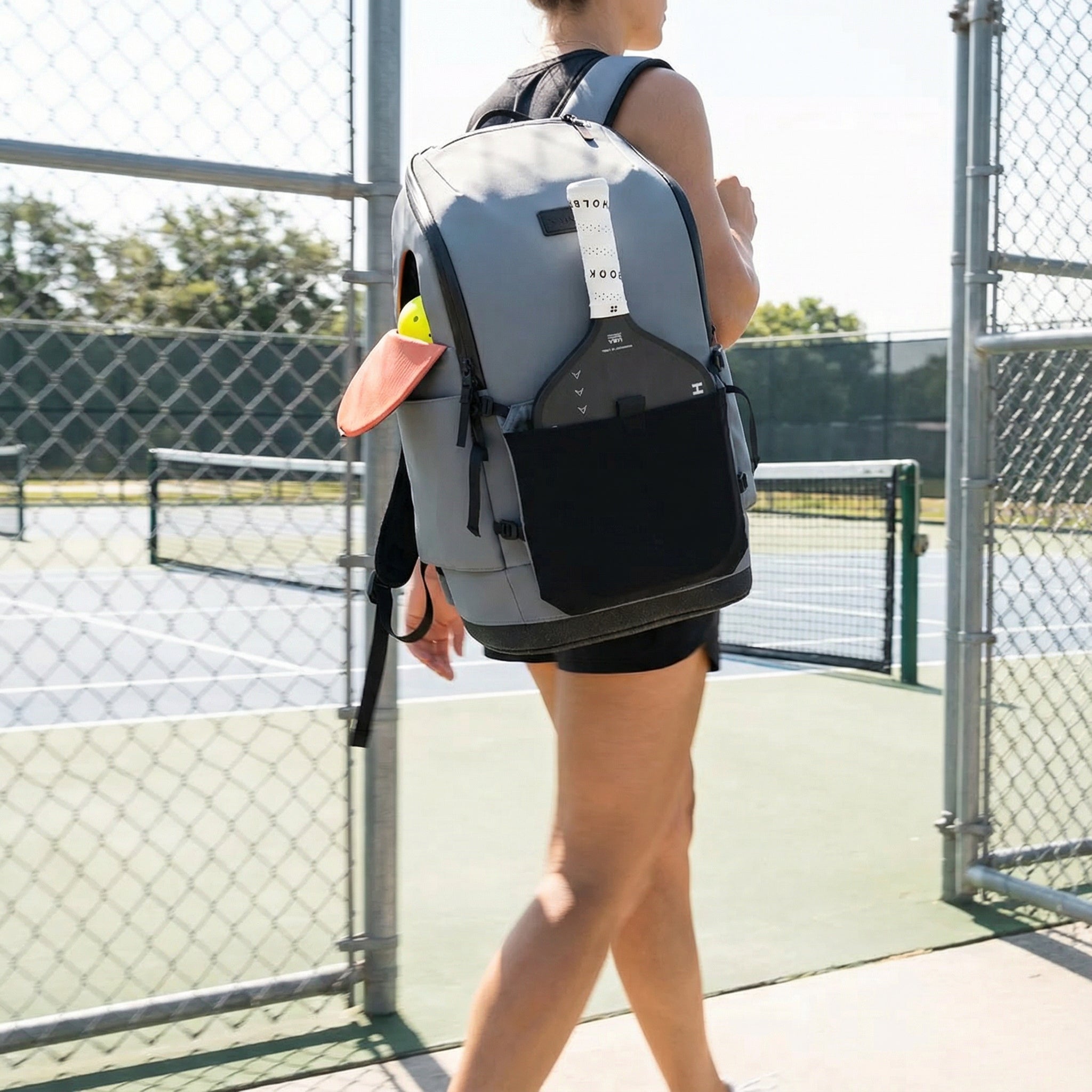
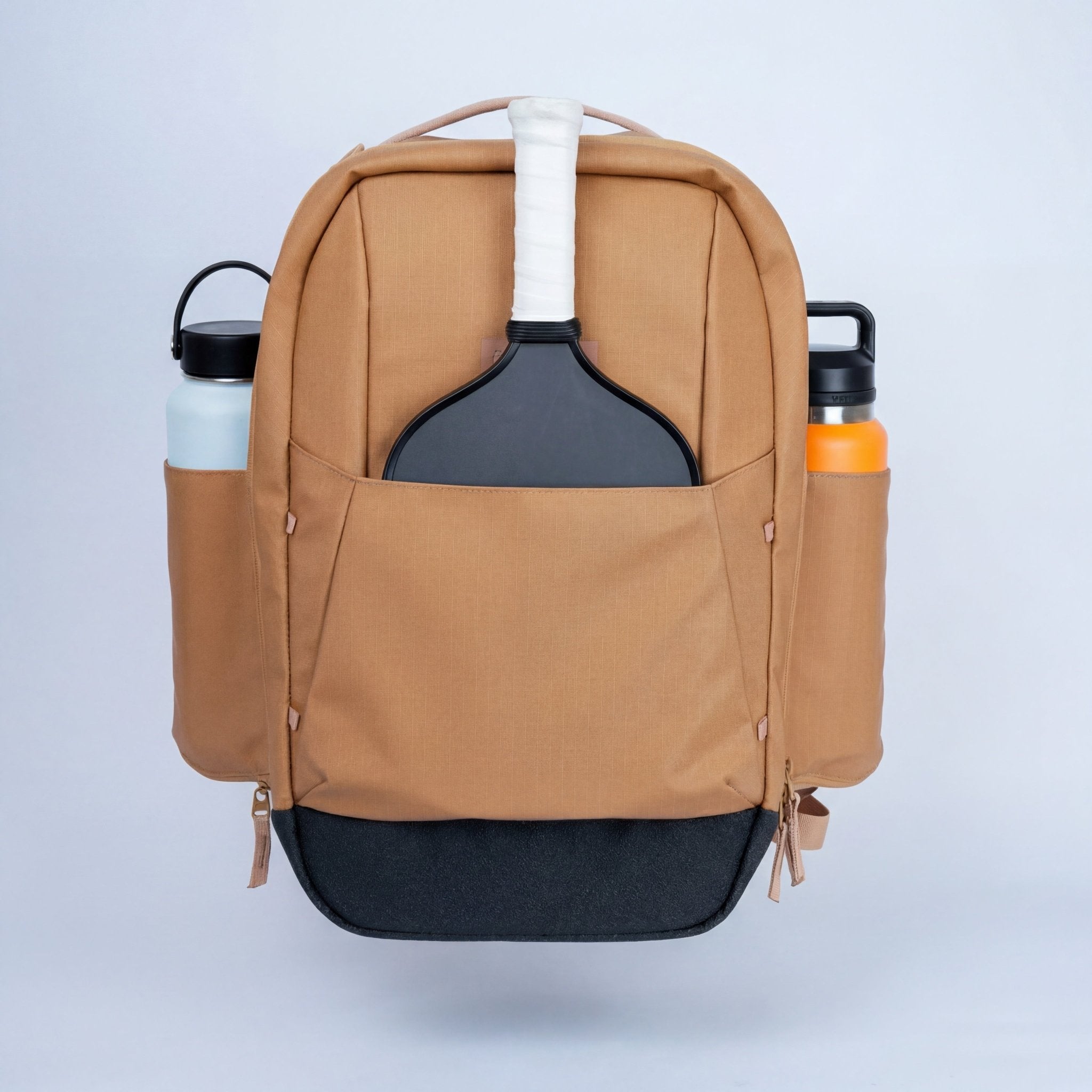
FORWRD's Court Ranger V2 Backpack ($195) holds up to 4 paddles in its modular sleeve system — the Evoke Mayhem fits perfectly alongside a spare. 16" laptop sleeve, YKK AquaGuard zippers, and a water bottle pocket that doesn't fight you between points.

Frequently Asked Questions
Is the ONIX Evoke Mayhem a control or power paddle?
Control-first with power available. ONIX bills it as "a control paddle with some power," which is accurate. The 16mm version skews heavily toward control — resets, blocks, dinks. The 14mm version adds enough pop to hold up at the baseline without fully committing to power. Neither version will out-pop a dedicated offensive paddle.
What's the actual difference between the 14mm and 16mm Evoke Mayhem?
Core thickness. 14mm (0.55") reduces dwell time — the ball leaves the face faster, producing more pace and pop. 16mm (0.63") extends dwell time — the ball stays on the face longer, producing softer touch and better pace absorption. Both are $209.99. If you dink and reset primarily: 16mm. If you need baseline capability: 14mm.
How does the ONIX Evoke Mayhem compare to the Evoke Malice?
Malice has an open-throat design that allows the face to flex more on impact — that's where its extra pop comes from. The Mayhem has a closed traditional frame with the Power Frame perimeter stiffener. Malice wins at the baseline; Mayhem wins in the kitchen. The Malice is $20 more. If you're genuinely unsure, the Malice is more flexible across court positions.
Does the ONIX Evoke Mayhem have a carbon fiber face?
No — DF composite, not raw carbon. The frame (Power Frame) is carbon fiber, but the hitting surface is composite. This matters if spin is your priority: raw carbon fiber faces grip the ball more aggressively. If you want raw carbon face with ONIX build quality, look at the Evoke Premier Pro Raw Carbon ($199.99).
Is the ONIX Evoke Mayhem approved for tournament play?
Yes. It carries USA Pickleball approval, which covers all sanctioned tournaments. Both the 14mm and 16mm versions are approved. If you're playing in APP, MLP, or local USAPA-sanctioned events, you're cleared.
How does the foam-filled handle actually feel after a long session?
Better than most. The 5.35" foam-filled handle does reduce vibration — particularly on edge shots and mishits where vibration is harshest. After three-hour outdoor sessions, testers reported less arm fatigue than on comparable paddles. It's not a cure for existing elbow issues, but for prevention during long play, it's a real design advantage.

Leave a comment
This site is protected by hCaptcha and the hCaptcha Privacy Policy and Terms of Service apply.