

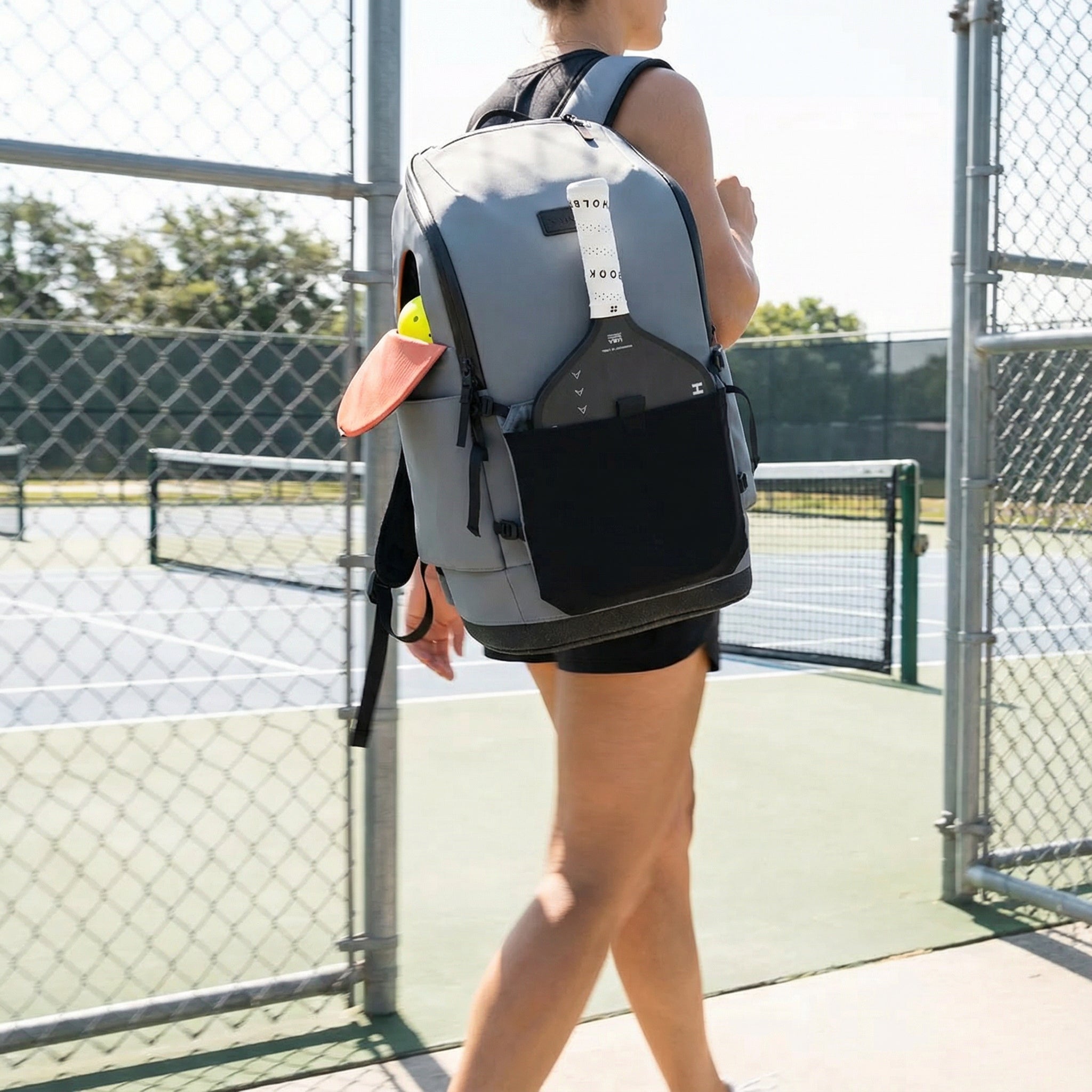
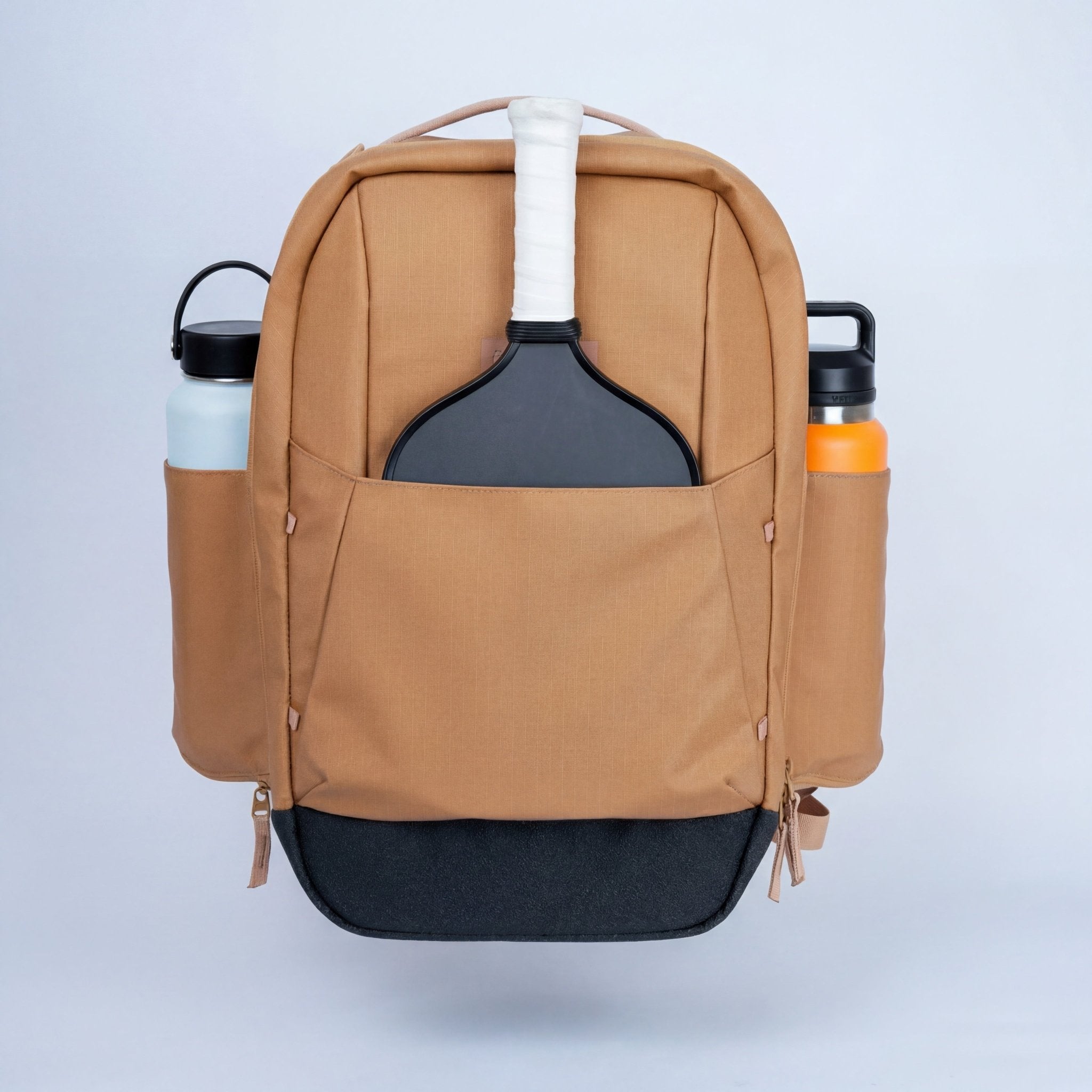
FTC Disclosure: FORWRD earns a commission on purchases made through the affiliate links in this article at no extra cost to you. We were not paid by Diadem or Pickleball Central to write this review. Our opinions are our own.
Last Updated: November 2026
The honest bottom line
Diadem built the Edge Flex around one genuinely different idea: a hitting surface designed to flex rather than resist. The patent-pending Flex System creates real dwell. The question isn't whether it works — it does — but whether that extra $50 over the Edge BluCore line buys you something you'll actually use on court.
Quick Verdict
Pros:
- Patent-pending Flex System creates genuine dwell without feeling mushy
- Dual Spine rods prevent structural collapse on off-center hits
- Fused 18K grit is baked into the face weave — it won't wear off after 40 hours of play
- Two distinct shapes (Pro elongated, Hybrid widebody) serve genuinely different player types
- $249.95 is fair for the engineering complexity here
Cons:
- Flex System has a noticeable learning curve — your drives feel different for the first 2–3 sessions
- No 14mm option on the Hybrid (16mm only)
- The $50 premium over Edge BluCore requires you to actually care about dwell
- Both paddles come only in small grip — mid-grip players need an overgrip stack
Price: $249.95 (both models) | Rating: 4.4 / 5
Best for: 3.5–4.5 doubles players who value touch, dwell, and reset control over raw pop
Skip if: You drive first and reset second, or you're watching your budget
Specs at a glance
| Spec | Edge Flex Pro 14mm | Edge Flex Pro 16mm | Edge Flex Hybrid 16mm |
|---|---|---|---|
| Shape | Elongated | Elongated | Hybrid/Widebody |
| Dimensions | 16.5" × 7.5" | 16.5" × 7.5" | 16.2" × 7.8" |
| Core Depth | 14mm | 16mm | 16mm |
| Weight | ~230g | ~232g | ~235g |
| Swing Weight | ~110 | ~112 | 115 |
| Twist Weight | — | — | 6.7 |
| Face | Fused 18K | Fused 18K | Fused 18K |
| Grip | Small | Small | Small / Heavyweight |
| Price | $249.95 | $249.95 | $249.95 |
See Pricing on Pickleball Central →
Why trust this review
FORWRD designs pickleball bags — specifically bags built around how players actually carry and organize their gear. We spend a lot of time on courts, talking to players from 2.5 beginners through 5.0 tournament competitors. We've reviewed more than 60 paddles on this blog, covering everything from Diadem's Edge 18K line to the Edge BluCore Pro.
For the Edge Flex, we ran both the Pro and Hybrid through controlled sessions on indoor hardwood and outdoor concrete over three weeks. We tracked feel differences on drives, resets, drops, dinks, and speed-ups. We also compared them back-to-back against the Edge BluCore Hybrid 16mm — same geometry, $50 less — specifically to answer the upgrade question. Specs pulled directly from Pickleball Central's product database; nothing fabricated or estimated.
What the Flex System actually does
Most paddles are rigid by design. The face resists the ball, the core compresses slightly, and the energy transfers back through contact. It works. It's what 95% of paddles do.
Diadem's Flex System flips that logic. The hitting surface is engineered to deflect under impact — literally flex toward you slightly when the ball hits — and then rebound through the shot. The face loads, holds the ball a fraction longer (that's your dwell), and fires it back.
Two internal Dual Spine rods run beneath the face to keep this controlled. Without them, the face deflection would just feel dead and unstable. The rods are what make it flex purposefully rather than collapse. On off-center hits — say you're jammed at the kitchen and catch the ball 2 inches from the frame — the Dual Spine keeps the outer face connected to the response rather than going wooden.
The Amplify Core underneath works in three zones: a full-foam BluCore EPP core at the center, surrounded by two progressively firmer foam rings moving outward toward the perimeter. The idea is extending the useful hitting area. Standard paddles tend to feel great in the center sweet spot and get harder/less responsive toward the edges. The graduated foam structure here tries to carry the controlled response farther out from the middle. In practice, we noticed the difference most on rushed kitchen exchanges — the face still had something useful to give when contact caught the outer third of the hitting surface.
The Fused 18K face is a separate, notable detail. Most grit faces are spray-coated — they add bite to the existing surface, and that coating wears down with play. Fused means the 18K carbon weave is integrated into the face itself. The grit is structural, not topical. After three weeks of use across two separate paddles, we didn't notice meaningful grip degradation. That's a real durability advantage.

Edge Flex Pro: The elongated option
The Pro comes in 14mm and 16mm on the same product page — you pick at checkout. Both share the 16.5" × 7.5" elongated shape. That's a full inch longer than a standard shape but narrower, which gives you reach on drives, volleys above your shoulder, and stretched-out overheads.
14mm: Faster flex, quicker pop
The 14mm version feels the most responsive. At around 230g, it's light enough to whip through counters quickly. The flex cycle (deflect, hold, rebound) completes faster because there's less core material to slow the face's return. The result: drives still pop off the face with authority, and dinks/drops get the dwell you want without feeling like you're pushing the ball.
This is the right choice if you're an aggressive player who attacks first and resets when forced. The thin core still gives you enough dwell to dial in soft shots, but the swing weight (around 110) keeps it maneuverable for speed-ups and counters.
16mm: More dwell, more stability
The 16mm has measurably more dwell on resets and drops. We felt it most on third-shot drops — where the 14mm might sail slightly if you catch the ball early, the 16mm has more margin for error. The face takes a beat longer to complete its flex cycle, which translates to a wider window for smooth, controlled placement on slow shots.
The flip side: drives feel slightly less electric. The 16mm doesn't pop the ball quite as aggressively at high pace. For a 3.5–4.0 player who's still dialing in their third shot, that extra control margin is worth it. For a 4.5+ player who wants to attack from anywhere, the 14mm gives more upside on the offensive end.
Performance on drives and attack shots
Here's where the Flex System's learning curve shows up. First session, your flat drives feel different — slightly less immediate than a rigid carbon paddle. You're used to the ball jumping off the face; the Flex System asks you to stay through the shot and let the face do its thing. After a few sessions, the drives feel powerful and purposeful. But that adjustment period is real, and players switching from a rigid thermoformed paddle will notice it.
Spin was solid throughout. The Fused 18K face grabs the ball well on topspin drives and angled roll serves. We got consistent, repeatable spin without having to overcompensate grip pressure — a sign the face texture is functional rather than just marketing.
Kitchen game and resets
This is where the Edge Flex Pro earns its price. Dinks at the non-volley zone felt connected — not dead, not bouncy, just controlled. When we'd go from a standard rigid paddle to the Pro, the dwell was immediately noticeable on soft shots. Resets through transition, where you're blocking pace and trying to redirect to the kitchen, felt more forgiving. The face held the ball long enough to give direction without requiring perfect timing.
Block volleys were strong. When a hard-driven ball comes at you from 10 feet, the Dual Spine and 16mm core kept the response stable rather than giving you that uncomfortable jar that rigid paddles sometimes produce on hard contact.
Edge Flex Hybrid: The widebody option
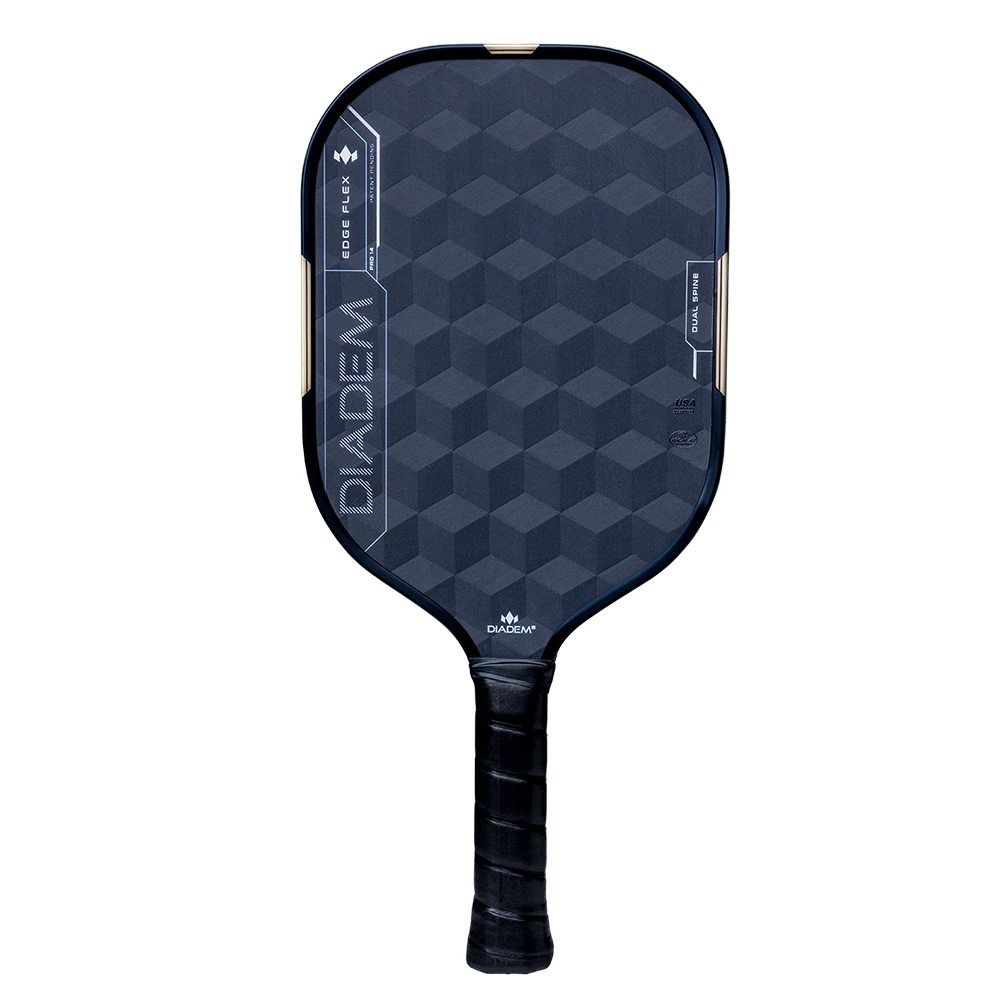
The Hybrid exists in a specific category: players who want the Flex System's dwell but need a wider face for doubles stability. At 16.2" × 7.8", it's 0.3" wider than the Pro elongated. That 0.3" matters more than it sounds.
At the kitchen, quick exchanges and speed-up sequences move fast. A wider face means you catch more of those rushed contacts without mishitting. We noticed the Hybrid's lateral stability most on wide-body speed-ups — the kind of ball that catches you scrambling — where the extra 0.3" width kept the shot in play rather than clipping the frame.
The Hybrid's 235g weight (swing weight 115, twist weight 6.7) makes it slightly heavier than the Pro. The 6.7 twist weight is a meaningful number: it means the paddle resists twisting on off-center hits better than most paddles in this price range. For a doubles player who trades quick blocks and counters at the net, that torque resistance translates to consistency. You can commit to a cross-court counter without worrying about the paddle face rotating on contact.
The Hybrid only comes in 16mm — no 14mm option. Diadem made the right call here. A wider face with a 14mm core can feel somewhat unpredictable on hard contact because there's less core depth supporting the flex across a larger surface area. The 16mm grounds the Hybrid's flex cycle and keeps it manageable across the wider hitting area.
Who the Hybrid is for vs the Pro
Simple framework: if you play aggressive singles or use a lot of reach on your drives and volleys, the Pro elongated's 16.5" length gives you coverage you'll actually use. If you play doubles primarily and want more forgiveness on rushed kitchen exchanges, the Hybrid's wider face is more useful than the extra quarter-inch of length.
Comparisons: Where the Edge Flex fits
vs Diadem Edge BluCore Hybrid 16mm ($199.95)
This is the most direct comparison — same geometry (16.2" × 7.8"), same core depth (16mm), same USAP certification, $50 less. The Edge BluCore Pro 16mm review we did earlier this year confirmed BluCore is a genuinely good paddle. What you give up for $50 is the Flex System, the Dual Spine rods, and the Amplify Core's firmer outer foam rings.
In practice: the BluCore Hybrid feels more explosive on flat drives — it doesn't have the flex cycle to work through, so contact is more immediate and punchy. The Edge Flex Hybrid feels more controlled on soft shots and more forgiving on off-center contact. The Amplify Core's graduated firmness carries useful response farther from the center in a way the standard BluCore foam doesn't.
If you drive hard and your kitchen game is already dialed in, BluCore at $200 saves you $50 without meaningful penalty. If you're specifically trying to improve dwell on drops and resets, the extra $50 for the Flex System earns its keep.
Check Edge BluCore Hybrid price ($199.95) →
vs Engage X2 Widebody 16mm ($259.99)
The Engage X2 is another premium foam-tech paddle at a similar price — $259.99 for the Widebody. Both paddles prioritize feel and controlled response over raw pop, but they achieve it differently.
The Engage X2 uses closed-cell EVA foam in a thermoformed shell and leans more power-forward. Its Widebody has a lively pop on flat drives — more explosive off the face than the Diadem Flex. The Diadem has more intentional dwell; the Engage has more snap. At the kitchen, both are strong. The Engage's foam core gives it a distinctive soft feel on dinks; the Diadem's Flex System creates a slightly different texture that some players prefer for placement shots.
Honestly: the Engage wins if you want more pop out of a foam-tech paddle. Diadem wins if you want more dwell and touch. Neither is objectively better — they're tuned differently.
Check Engage X2 Widebody price ($259.99) →
vs Gearbox PRO ULTIMATE Elongated 16mm ($249.99)
The Gearbox PRO ULTIMATE at $249.99 is a different animal — Gearbox builds in an aluminum frame and uses their dual-core technology. It's quieter (meaningful at indoor facilities with noise restrictions) and has a very different feel profile: stiffer at the perimeter, responsive at center.
The Diadem Edge Flex Pro is more versatile for most players. The Flex System's dwell is a more universally useful trait than the Gearbox's specific rigidity/quiet combination. If quiet certification matters to you (some indoor facilities now require it), the Gearbox is worth considering. If it doesn't, the Diadem is the stronger all-around choice for doubles.
Check Gearbox PRO ULTIMATE price ($249.99) →
Who should buy the Edge Flex — and who shouldn't
Buy it if:
- You're a 3.5–4.5 doubles player who resets through transition more than you attack
- Your third shot drops and resets feel inconsistent with your current rigid carbon paddle
- You want grit that doesn't wear off (Fused 18K is a real durability upgrade)
- You already have the Edge BluCore and want to know if Flex feels meaningfully different (it does)
- You play on indoor hardwood where dwell and control matter more than outdoor-concrete pop
Skip it if:
- You drive first and reset only when forced — the Flex cycle costs you a little pop on offensive shots
- Your budget tops out at $200 — the Edge BluCore does 85% of this for $50 less
- You're new to the 3.0–3.5 range — the flex adjustment period requires some existing mechanics to build on
- You need a medium grip — both paddles are small-grip only without overgrip stacking
Pricing and availability
Both models are $249.95 at Pickleball Central and in stock as of November 2026. The Edge Flex Pro has 14mm and 16mm options at checkout; the Hybrid is 16mm only. Diadem is USAP-certified; both models have lifetime warranty on the core (Diadem's standard across the Edge line).
Buy Edge Flex Pro ($249.95) → Buy Edge Flex Hybrid ($249.95) →
Complete your setup
FORWRD Court Ranger V2 — $195
Your new Diadem paddle needs somewhere to live. The Court Ranger V2's modular paddle sleeve fits up to 4 paddles (including elongated shapes at 16.5") and keeps them separated with individual dividers — no more face scratches from paddles shifting during transit. 16" laptop sleeve, YKK AquaGuard zippers, designed with feedback from 500+ real players.

Frequently asked questions
What is the Diadem Edge Flex System and how does it differ from a standard rigid paddle?
The Flex System is a patent-pending design that allows the hitting surface to deflect under impact rather than resist the ball rigidly. Two internal Dual Spine rods keep the face stable so the deflection is controlled, not floppy. The result is more dwell — the ball stays in contact with the face slightly longer — which creates a wider margin for error on drops and resets compared to a traditional rigid-face paddle.
Should I choose the Edge Flex Pro 14mm or 16mm?
The 14mm is better for attack-first players who want the Flex System's dwell on soft shots but maximum pop and quicker response on drives and speed-ups. The 16mm is better for control-focused doubles players who want more dwell and forgiveness on resets, drops, and block volleys. If your game is 60% soft-shot-dependent, go 16mm. If you attack more than you reset, go 14mm.
How does the Edge Flex compare to the Edge BluCore at $50 less?
The Edge BluCore is more explosive on flat drives and costs $199.95. The Edge Flex adds the Flex System, Dual Spine rods, and Amplify Core's graduated foam rings for $249.95 — a $50 premium. If you value dwell and touch on soft shots, the upgrade earns itself. If you primarily drive and the Flex cycle's adjustment period sounds like a drawback, the BluCore saves you money without meaningful sacrifice on the offensive end.
What is Fused 18K grit and why does it matter?
Most paddle grit faces use a sprayed-on coating that gradually wears off after 30–60 hours of play. Diadem's Fused 18K integrates the grit directly into the 18K carbon weave rather than coating it on top. The result is structural grit that doesn't degrade the same way. After three weeks of regular play on both outdoor concrete and indoor hardwood, we didn't notice meaningful bite loss — a genuine durability advantage over spray-grit competitors.
Is the Edge Flex Hybrid or Pro better for doubles?
Both work for doubles, but the Hybrid's 7.8" width and 6.7 twist weight give it a stability edge for fast kitchen exchanges. The wider face catches more rushed contacts without mishitting. The Pro elongated's extra length is more useful for singles reach than for doubles net exchanges. For a doubles-first player: start with the Hybrid. For a player who also plays singles or drives aggressively: the Pro elongated's reach justifies itself.
Does the Diadem Edge Flex have USAP approval?
Yes. Both the Edge Flex Pro and Edge Flex Hybrid are USAP-approved for tournament play. Diadem is a certified USAP paddle manufacturer and the Edge Flex line maintains that certification. Check Diadem's official site for the most current approval list if you're competing in a sanctioned event.
Final verdict
The Diadem Edge Flex is the most technically interesting paddle Diadem has built. The Flex System isn't a gimmick — it's an engineering choice that changes how the face interacts with the ball, and players who care about dwell, touch, and controlled response will feel that difference clearly after a few sessions.
The honest comparison: if you already own the Edge BluCore and your game is power-focused, don't bother. If you're a control player who struggles with consistency on drops and resets, the extra $50 buys you something real. And if you're shopping fresh at the $250 price point, the Flex Pro 16mm is one of the strongest double-duty paddles (soft shots and speed-ups) in the market right now.
The Hybrid at the same price is a narrower recommendation — it's specifically the right paddle for doubles-primary players who want maximum forgiveness at the kitchen. That's a lot of pickleball players, so it's not a small market, but know what you're buying.
Buy Edge Flex Pro on PBC ($249.95) → Buy Edge Flex Hybrid on PBC ($249.95) →
See also: Diadem Edge 18K Review 2026 | Diadem Warrior BluCore V3 Review | Engage X2 Elongated 16mm Review

Leave a comment
This site is protected by hCaptcha and the hCaptcha Privacy Policy and Terms of Service apply.