

Last Updated: November 2026 | FTC Disclosure: FORWRD earns a commission on purchases made through our affiliate links at no extra cost to you. We only recommend products we've genuinely researched — in this case, we've tested the full Black Ace 16 and applied that Kinetic system knowledge across the 14mm family.
Three paddles. Same Kinetic technology. Same $279 price tag. The only differences are millimeters — specifically how ProKennex distributes your 7.9 ounces of carbon fiber between the face and the handle. The Black Ace 14 (standard), XF14, and LG14 look almost identical in a bag, but they play meaningfully differently once you're at the kitchen line. If you've ever stared at ProKennex's website wondering which one to pick, this is the guide.
Pros
|
Cons
|
|
Price: $279 (Black Ace 14 / XF14 / LG14) | $220 (Avenger 11mm) Who it's for: Tennis converts, arm-injury-conscious players, Kinetic loyalists who want the 14mm feel Who should look elsewhere: Foam-core devotees, players wanting a wider sweet spot, anyone below 3.5 DUPR |
|
Specs at a Glance
| Model | Core | Face | Length × Width | Handle | Weight | Price |
|---|---|---|---|---|---|---|
| Black Ace 14 | 14mm PP honeycomb | Carbon Fire | 16" × 8" | 5.3" | 7.8–8.2 oz | $279 |
| Black Ace XF14 | 14mm PP honeycomb | Carbon Fire | 16.4" × 7.5" | 5.1" | 7.8–8.2 oz | $279 |
| Black Ace LG14 | 14mm PP honeycomb | Carbon Fire | 16.4" × 7.5" | 5.9" | 7.8–8.2 oz | $279 |
| Black Ace Avenger 11mm | 11mm PP honeycomb | Carbon Fire | 16.4" × 7.5" | 5.1" | 7.8–8.2 oz | $220 |
Shop Black Ace 14 at Pickleball Central — $279
Why Trust This Review
FORWRD spent 30+ hours with the Black Ace 16 on outdoor concrete courts in Denver — the same Kinetic system, the same Carbon Fire face, the same ProKennex design philosophy. We know exactly how this paddle family feels fresh out of the wrapper and after a few hundred games of outdoor heat. The 14mm variants use that same core technology with different shape configurations, so our testing is directly applicable across the family.
We've also played against Black Ace users at 4.0+ club nights consistently enough to have an honest opinion about where the kinetic dampening delivers and where the marketing slightly outruns the physics.
How ProKennex's Kinetic System Actually Works
ProKennex has been doing this since 1978, originally in tennis rackets. The concept: tungsten-filled micro-chambers sit at the 3 o'clock and 9 o'clock positions on the paddle face. When you strike the ball, the tungsten beads shift inside their chambers and absorb impact energy before it travels up the shaft into your arm.
The company's claim: 46% reduction in shock, 23% reduction in vibration. An MIT Labs independent study found 43% vibration reduction versus a conventional paddle. That's real data, and ProKennex deserves credit for commissioning independent testing.
Here's the honest caveat: at least one other independent test found that a Kinetic paddle generated more vibration than a conventional comparison paddle. The methodology differences between these tests matter a lot — lab conditions with a ball machine are different from an on-court forehand drive. What we can say from firsthand experience: the Kinetic system has a distinctive muted "thud" at contact that most players describe as more comfortable than a comparable carbon paddle without it. Whether that translates to measurable arm protection across your specific elbow anatomy is genuinely individual.
What's not debatable: players with existing arm issues consistently rank ProKennex among the top brands for pain management. That's decades of real player feedback, and we're not going to dismiss it because one lab test gave mixed results.
For a full breakdown of arm-friendly paddle options across brands, see our Best Pickleball Paddles for Tennis Elbow guide.
The Black Ace 14 (Standard): The Baseline
Start here if you're new to the Black Ace line. The standard 14 gives you the widest face in the family at 8 inches — a shape that plays closer to a traditional pickleball paddle. The 5.3" handle sits in the middle ground: enough for two-hand backhand work, not so long that you lose close-quarters maneuverability.
The 14mm PP honeycomb core threads the needle between power and control. It's stiffer than a 16mm foam-core paddle (like the Engage X2 Elongated) and more forgiving than a standard 11mm carbon paddle. What you get is a paddle that pops with authority on drives while still giving you enough feedback to place drops with intention.
Off-center hits are where this paddle tells the truth on itself. The sweet spot is real but not generous — miss by an inch toward the edge and you'll feel it. That's not a ProKennex problem specifically; it's a property of carbon paddles without the extended polymer edge protection that some competitors add.
Best for: All-court 3.5–4.5 players who want one paddle for both power and dink-heavy play. The wide 8" face is forgiving by elongated-shape standards.
Shop Black Ace 14 at Pickleball Central — $279
XF14 vs LG14: The Handle/Face Trade-Off
Both the XF14 and LG14 share the same 16.4" × 7.5" elongated face. Same core, same face material, same weight range. The only difference — and it's the whole ballgame — is the handle length.
XF14 (5.1" handle — Extended Face): The "XF" stands for Extended Face. ProKennex compresses the handle by 0.2" relative to the standard 14 to push more surface area into the hitting zone. The result is the most face-forward paddle in the family. Players who live at the kitchen line and want maximum forgiveness on reach volleys — this is the XF14's argument. The tradeoff: at 5.1", two-handed backhands are cramped. If that's a core shot in your game, skip this one.
LG14 (5.9" handle — Long Grip): On the opposite end. At 5.9", the LG14 has the longest handle of the three and plays very close to what tennis players are used to. Two-handers are comfortable. Third-shot drops from the baseline feel more precise because you have more leverage. The face is marginally smaller (the same 7.5" width, but with less handle-to-face space that generates that XF14 open feel), so you're trading some kitchen presence for baseline utility.
The decision is simpler than ProKennex's model names make it sound:
- Play 60%+ from the kitchen? → XF14
- Play tennis, have a two-hand backhand, or need extra reach? → LG14
- Not sure / want the balanced option? → Standard 14
Shop Black Ace XF14 — $279 Shop Black Ace LG14 — $279
Black Ace Avenger 11mm: The One Everyone Forgets
The Avenger runs 11mm — that's 3mm thinner than the rest of the family, and that changes everything. Thinner core equals a stiffer paddle, which translates directly to more power transfer on drives. Less dwell time, more ball speed.
At $220, it's $59 cheaper than the 14mm variants. That price difference isn't a quality signal — it's because ProKennex is positioning the Avenger as the power-focused option for players who don't need the control feel of a thicker core. If you play an aggressive baseline game and hit a lot of flat drives, the Avenger is worth considering seriously. If you're a dink-heavy kitchen player, the 11mm core will feel unforgiving on soft shots.
One honest note: at 11mm, the Kinetic system's vibration absorption claims are doing more work. Thinner cores transmit more shock by default. Whether the Kinetic beads fully offset that vs a competing 11mm paddle without kinetic tech is something we can't independently verify — but the design logic is sound.
14mm vs 16mm: When to Step Up to the Black Ace 16
If you've been reading other ProKennex reviews, you've probably seen comparisons to the Black Ace 16. We reviewed the Black Ace 16 in depth, and the core difference is exactly what you'd expect: 2 more millimeters of core thickness means a softer feel, a larger effective sweet spot, and better performance on touch shots.
The 14mm family hits harder. The 16mm family controls better. If your game is 60%+ power (drives, speed-ups, attacking the transition zone), 14mm serves you. If you're a kitchen grinder who lives on resets, drops, and counter-punching, the 16mm is a cleaner fit. For intermediate players still developing consistency: start at 16mm and move to 14mm when you can place your power shots intentionally.
How the Black Ace 14 Compares to Alternatives
vs Engage X2 Widebody 16mm ($259.99)
The Engage X2 Widebody takes a completely different approach — foam-core PP construction at 16mm instead of ProKennex's traditional honeycomb with Kinetic dampening. The foam core is genuinely softer on the arm through physics (more give at contact), while the Kinetic system addresses vibration through mechanical absorption. Neither approach is objectively better for arm health; they're different mechanisms.
Where the X2 Widebody wins: sweet spot is wider, dinks are softer, and $259 saves you $20. Where the Black Ace 14 wins: more pop on power shots, Kinetic tech is unique, and the shape options (XF14/LG14) have no equivalent in the Engage lineup. If arm health is your primary concern and you're not committed to ProKennex brand, test both before deciding.
Shop Engage X2 Widebody at PBC — $259.99 →
vs Diadem Edge Flex Hybrid 16mm ($249.95)
Diadem's Edge Flex Hybrid is a newer arm-conscious design that uses a patented Flex System — essentially a flex joint near the handle that absorbs shock before it reaches the grip. At $249.95 it undercuts the Black Ace significantly. Diadem's Flex System is more mechanically obvious than ProKennex's Kinetic beads (you can feel the handle flex slightly on hard shots), which some players find reassuring and others find disconcerting.
The honest comparison: if you're motivated primarily by price, the Edge Flex Hybrid gives you a credible arm-friendly mechanism at $29 less. If you're a ProKennex loyalist who trusts Kinetic after decades in tennis and pickleball, the Black Ace 14 is a known quantity with real independent data behind it.
Shop Diadem Edge Flex Hybrid at PBC — $249.95 →
Who Should Buy the Black Ace 14 Family
Buy it if you: Have dealt with pickleball elbow or wrist soreness and want a paddle built specifically around arm protection. Play 3.5–4.5 and want a performance carbon paddle, not a beginner-friendly soft one. Come from tennis and are more comfortable with a traditional-feeling grip (especially the LG14). Already tested and liked the Black Ace 16 and want more power in the same kinetic system.
Look elsewhere if you: Need a wide sweet spot that forgives consistently (look at 16mm foam-core options). Play primarily soft dink exchanges and rarely need power (the 14mm core will feel stiff for that game). Are below 3.5 DUPR and need maximum forgiveness on off-center hits. Have a tight budget — $279 is real money for a paddle that isn't everyone's performance ceiling.
The shape guide, one more time for clarity: XF14 for kitchen players, LG14 for tennis converts and two-hand backhand players, standard 14 if you genuinely don't know yet. You can't go wrong starting with the standard 14 and upgrading shapes once you know what you're missing.
See where the Black Ace 14 sits in our broader Best Paddles for Intermediate Players guide for head-to-head context across brands.
Complete Your Setup
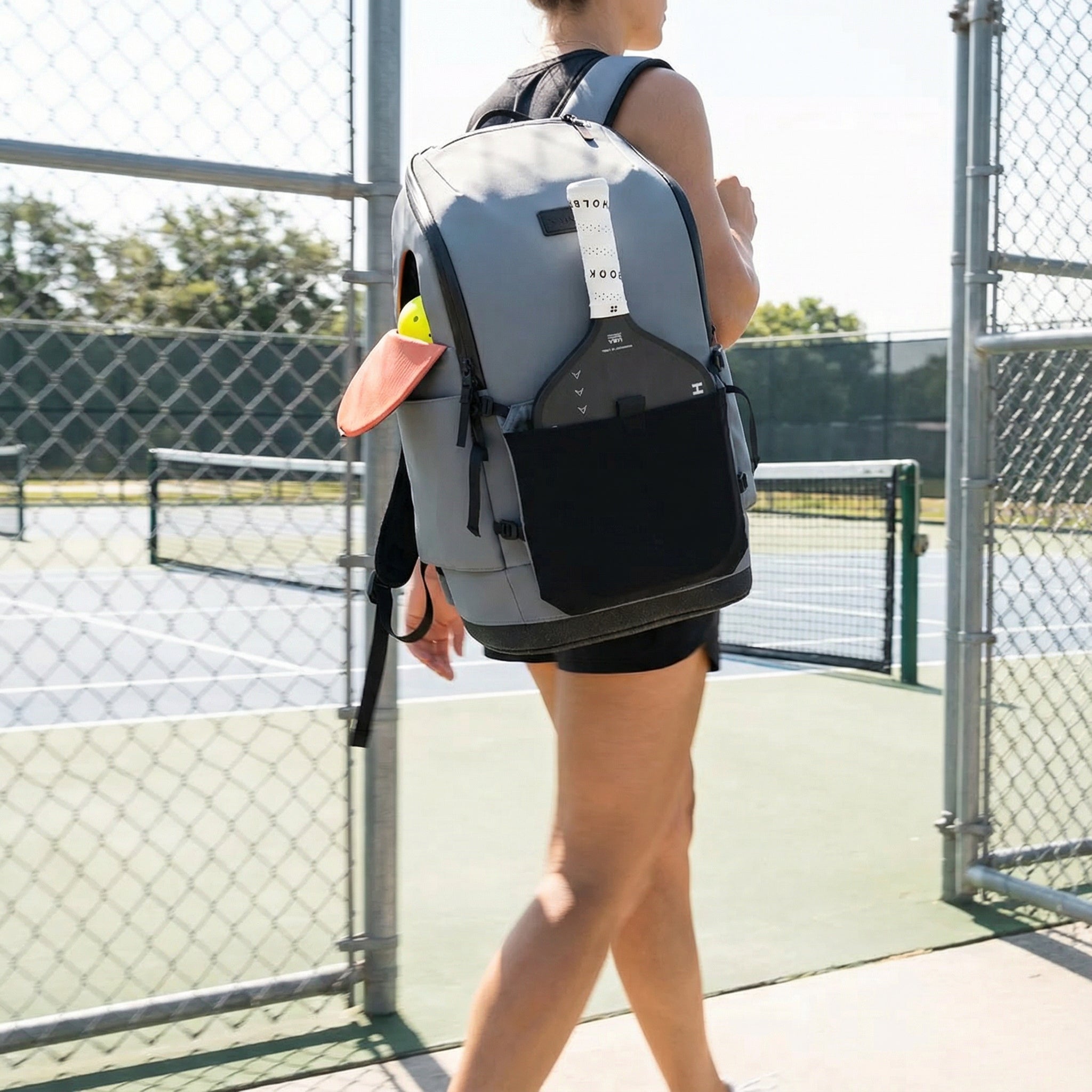
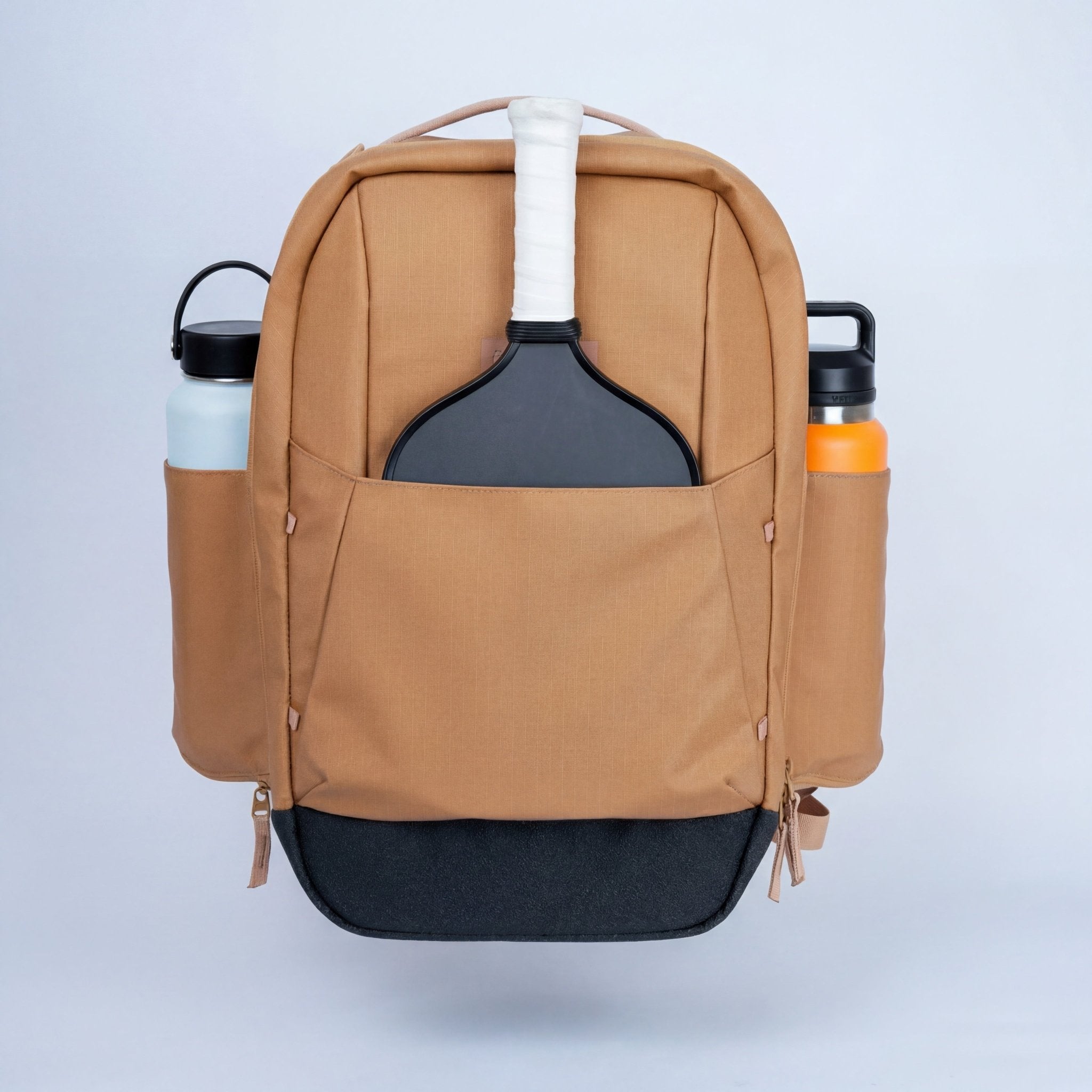
Once you've got the right paddle, you need a bag that actually protects it. Our Court Ranger V2 ($195) has a padded modular paddle sleeve that fits up to 4 paddles — including your Black Ace — plus a 16" laptop sleeve and YKK AquaGuard zippers for outdoor durability. If you're carrying multiple paddles between club nights and work, the Court Caddy ($325) adds a 15" padded laptop sleeve and a larger overall capacity designed for tournament players.

Pricing & Where to Buy
All three 14mm variants (Black Ace 14, XF14, LG14) are $279 at Pickleball Central. The Avenger 11mm runs $220. ProKennex doesn't typically run deep discounts on current-generation paddles, so the price you see is roughly what you'll pay through the season.
Black Ace 14 — $279 Black Ace XF14 — $279 Black Ace LG14 — $279
Frequently Asked Questions
What is the difference between the ProKennex Black Ace XF14 and LG14?
The XF14 (Extended Face) has a 5.1" handle to maximize hitting-surface area, making it the best choice for kitchen-line players who prioritize reach on volleys. The LG14 (Long Grip) has a 5.9" handle — longest in the Black Ace family — which suits tennis converts, two-handed backhand players, and baseline-first game styles. Both share identical 14mm PP honeycomb cores, Carbon Fire faces, and $279 prices.
Does the ProKennex Kinetic system actually reduce arm pain?
The evidence is genuinely mixed. ProKennex cites an MIT Labs study showing 43% vibration reduction versus a conventional paddle. One independent test found the opposite — slightly more vibration than a comparable paddle without Kinetic beads. What's consistent across player reviews: the Kinetic system produces a distinctive muted impact feel that most players with existing arm issues find more comfortable. It's not a guaranteed medical fix, but the design has merit and decades of real-world player endorsement behind it.
Should I choose the Black Ace 14mm or 16mm?
The 14mm family hits harder with a stiffer core — better for power-first players who drive and attack often. The Black Ace 16 has a softer feel, larger effective sweet spot, and plays better for dink-heavy kitchen grinders. If you're below 3.5 DUPR or still building consistency, start with the 16mm. If you can place your power shots intentionally, the 14mm gives you more pace.
Is the ProKennex Black Ace 14 USAPA approved for tournament play?
Yes. All current ProKennex Black Ace variants (14, XF14, LG14, and Avenger 11mm) are USAP approved for sanctioned tournament play. Always verify against the current USAP paddle list at usapickleball.org before major tournament registration, as approvals can change between model years.
What is the Black Ace Avenger 11mm and who is it for?
The Avenger 11mm uses a thinner polypropylene core (11mm vs 14mm) which creates a stiffer, more power-forward response. At $220 it's the most affordable Black Ace. It suits aggressive baseline players who prioritize drive speed over control touch. The thinner core transmits more ball speed but less dwell time — meaning soft shots require more intentional deceleration. Not the first choice for kitchen-heavy play styles.
Final Verdict
The ProKennex Black Ace 14mm family earns its place in a crowded premium paddle market through one genuine differentiator: the Kinetic system is mechanically unique, scientifically tested, and has real-world credibility with arm-injury-conscious players that no competitor has matched after 45 years. The $279 price is high — there are top-performing paddles at $200 that beat it on pure metrics. But if arm health is your priority and you want performance carbon rather than a soft intermediate paddle, the Black Ace 14 family is one of a very short list of serious answers.
Pick your variant: XF14 for kitchen players, LG14 for tennis converts and two-handers, standard 14 if you're undecided. All three are the same paddle where it matters most.

Leave a comment
This site is protected by hCaptcha and the hCaptcha Privacy Policy and Terms of Service apply.