

FTC Disclosure: FORWRD earns a commission on purchases made through affiliate links in this post, at no extra cost to you. We only write about products we've researched thoroughly — our editorial opinions are not influenced by affiliate relationships.
Last Updated: November 2026
Paddletek doesn't release new paddles often. When they do, they're usually building on something that already works — which is why the Bantam Jolt caught my attention the moment it appeared on Pickleball Central. Two shapes, a brand-new FlexCore™ Technology platform, and a price tag of $224.99 each. Here's the full picture on what Paddletek is claiming, what the specs actually tell us, and how to decide between the Widebody and Elongated versions.
Quick Verdict
✓ Pros
- FlexCore™ EPP foam grid delivers real pop — not just "lively feel" marketing
- T700 raw carbon face provides reliable spin texture on fast surfaces
- Widebody swing weight of 104 is impressively fast for a 16mm thermoformed paddle
- Both shapes have distinct specs — this is a real shape decision, not a cosmetic one
- 5.5" and 5.75" extended handles support two-handed backhands
✗ Cons
- Listed as "UPA approved" on PBC — tournament players should verify USAP eligibility with their TD
- Elongated currently out of stock at Pickleball Central
- Small grip only (4.125") — no medium option in this family
- $225 is a premium ask for a foam-core platform over comparable carbon paddles at the same price
Price: $224.99 each
Who it's for: Doubles players who want explosive energy return with more forgiveness than raw carbon offers
Who should skip: Pure dink artists, medium-grip players, players who need confirmed USAP approval
| Spec | Widebody | Elongated |
|---|---|---|
| Price | $224.99 | $224.99 |
| Dimensions | 16" × 8" | 16.5" × 7.5" |
| Handle Length | 5.5" Extended | 5.75" Extended |
| Grip Size | 4.125" (Small) | 4.125" (Small) |
| Face | PTK Micro Textured T700 Raw Carbon | PTK Micro Textured T700 Raw Carbon |
| Core | FlexCore™ EPP Grid + EVA Perimeter, 16mm | FlexCore™ EPP Grid + EVA Perimeter, 16mm |
| Swing Weight | 104 | 114 |
| Twist Weight | 6.9 | 6.2 |
| Construction | Thermoformed | Thermoformed |
| Availability | In Stock | Out of Stock |
Check Price: Bantam Jolt Widebody on PBC →
Why Trust This Review
FORWRD is a pickleball bag brand — which means we have no financial stake in what paddle you buy. We've put detailed reviews of Paddletek's Honeyfoam Reserve 14mm, Honeyfoam Reserve 16mm, and Bantam ALW-C on this site because they're genuinely interesting pieces of engineering, not because we sell them. Our paddle reviews are built on verified specs from manufacturer and retailer pages, cross-referenced technical comparisons, and insights from players who've tested similar platforms at the 3.5–5.0 level.
The Bantam Jolt was just added to Pickleball Central on November 8, 2026 — this is one of the first full reviews anywhere. That means less community feedback to draw from, which we'll flag honestly. It also means the spec breakdown you're reading here is based on first-principles analysis of the FlexCore™ platform, not aggregated opinions that have been copied across the internet.
What Is FlexCore™ Technology?
Paddletek is positioning FlexCore™ as a distinct core architecture — and the description backs that up. Most foam-core paddles use a uniform block of EPP (expanded polypropylene) foam. FlexCore™ introduces a scored grid pattern cut into the EPP foam, creating individual cells that flex, compress, and rebound independently through impact. The EVA foam perimeter ring surrounds this grid, adding structural support and extending that trampoline-like effect toward the edges.
This is worth unpacking because it explains the specific performance claims Paddletek is making. A scored grid means each cell deforms more dramatically at contact before springing back — that's the "explosive energy return" language. The EVA perimeter serves a different function: it maintains a consistent rebound near the face edge where plain EPP would start to deaden.
What does this mean practically? More ball pocketing than a standard polymer honeycomb core, more pop than a traditional foam slab, and a sweet spot that extends further toward the edges than you'd expect from the face dimensions alone. The T700 raw carbon fiber surface adds micro-texture for topspin generation on top of that lively base.
Compare this to Paddletek's own Honeyfoam Reserve 16mm — which uses a standard EPP foam core without the scored grid structure. The Reserve is a terrific paddle at $99.99. The Jolt at $224.99 is claiming meaningfully better performance from a more engineered foam architecture. Whether that $125 gap is justified depends on how much the grid scoring actually changes the feel — and that's the core question for anyone deciding between them.
Power and Energy Return
The 16mm core is thick, which typically means control over power. What FlexCore™ does is reclaim some of that power within the thick-core format. Standard 16mm polymer honeycomb absorbs energy on contact and returns it steadily. The EPP grid compresses more dramatically and rebounds faster — producing a pop that feels more explosive than the core thickness would suggest.
Paddletek's own product copy says it best: "explosive energy return with increased ball pocketing." Ball pocketing means the face wraps briefly around the ball on contact before releasing it. More pocketing = more spin opportunity AND more control over shot direction, because you're in contact with the ball for longer. This is the same principle that makes foam cores popular for doubles players who live at the kitchen — longer dwell means better control on attacks, speed-ups, and counters.
The Elongated's swing weight of 114 gives it real pop on full-swing drives. That's heavy enough to carry momentum through a third-shot drive but still manageable for most players. The Widebody at 104 — that's genuinely fast. For comparison, a lot of control-oriented 16mm paddles in this price range land between 108–115 swing weight. The Widebody hits 104 because the 8" width distributes mass differently than the elongated 7.5" profile.
Kitchen Play and Touch
A foam core with a 16mm platform is generally a strong kitchen choice. Resets land softer because the core absorbs pace before returning it. Speed-up attacks can generate real pop without full swing. Dinks have the dwell needed to control ball trajectory on cross-court angles.
The Widebody's 6.9 twist weight is notably higher than the Elongated's 6.2. Twist weight measures resistance to face rotation when the ball hits off-center — higher is more stable. At the kitchen line, this matters: deflection errors, slightly mis-hit blocks, quick reaction volleys where you don't have time to square the face perfectly. The Widebody's 6.9 provides noticeably more forgiveness on those shots. You'll feel the difference after two sets at the NVZ.
The 5.5" handle on the Widebody is extended — longer than the 5.0" handles on more compact designs — but shorter than the Elongated's 5.75". Two-handed backhand players will want the Elongated for the extra half-inch of handle real estate. Singles players who rely on two-handers particularly benefit from that 5.75" reach.
Spin
T700 raw carbon fiber is a proven spin surface. The "PTK Micro Textured" designation adds another layer: the surface is mechanically textured rather than relying solely on the carbon weave pattern for grip. Raw carbon inherently has more texture than coated or painted carbon surfaces — the unfinished weave catches the ball more aggressively. Combined with the micro-texture processing, the Jolt's face should produce competitive spin numbers.
What the foam core underneath contributes to spin: more dwell time = more time for the face texture to grip the ball before release. This is why foam-core paddles often over-perform on spin tests relative to their surface texture alone — the extended contact amplifies whatever texture is there. On topspin drives and roll volleys where you're brushing up through contact, that extra dwell makes the spin more consistent and repeatable.
Widebody vs Elongated: The Decision Guide
Both paddles share the same core material, face material, core thickness, and price. The differences are real and performance-meaningful. Here's how to pick:
Choose the Widebody if:
- You play mostly doubles and prioritize NVZ exchanges over baseline power
- Quick hands are your identity — the 104 swing weight moves faster than almost anything at 16mm
- You're on a court with high-paced opponents where off-center contact is common (the 6.9 TW forgives mis-hits)
- You play one-handed backhand exclusively (5.5" handle is plenty)
- You want the paddle that's actually in stock right now
Choose the Elongated if:
- You have a strong two-handed backhand and want room on the handle (5.75")
- You play singles or use a heavy baseline game that benefits from reach (16.5" length)
- You generate most of your points through full-swing attacks and third-shot drives (SW 114 carries momentum)
- You can wait — it's currently out of stock but should restock soon
The shape dimensions are meaningfully different: 16"×8" vs 16.5"×7.5". The Widebody's broader face is a bigger hitting target. The Elongated's narrower-but-longer profile helps on stretching volleys and passing shots. Neither is a minor styling choice — these are genuinely different tools.
Approval and Tournament Eligibility
This is worth raising directly. Pickleball Central lists the Bantam Jolt as "UPA approved." Standard tournament eligibility in the US typically requires USAP (USA Pickleball) certification for sanctioned events. If you're buying this paddle primarily for tournament play, verify the specific approval status with your tournament director before purchasing — especially if you're playing APP, USAP sanctioned, or Senior Games events where approved-equipment lists matter.
For recreational play, league play, or club play — this is a non-issue. The vast majority of pickleball is played outside of formal sanctioned events where equipment certification is enforced. But it's worth knowing before race day.
Bantam Jolt vs Bantam Honeyfoam Reserve 16mm: Paddletek's Own $125 Upgrade Question
The Honeyfoam Reserve 16mm is $99.99 on PBC and an excellent paddle. Its standard EPP foam core produces a lively, forgiving feel that made it one of the better-reviewed foam-core options at the sub-$100 price point. So what does $224.99 actually add?
The FlexCore™ grid scoring is the structural difference. The Honeyfoam Reserve uses uniform EPP foam; the Jolt uses a precision-scored EPP grid that flexes and rebounds more aggressively. The result: more pop from the core, better ball pocketing, and arguably more spin support because the face is in contact with the ball longer before release.
The thermoformed construction on the Jolt is also different. Thermoforming bonds the face material to the core under heat and pressure, creating a stiffer bond and more uniform response than non-thermoformed paddles. The Honeyfoam Reserve's construction method isn't specified at the same level on PBC.
Honest verdict: if you're a 3.0–3.5 player, the Honeyfoam Reserve is your answer. At $99.99, it's a genuinely good paddle that won't hold you back. At the 4.0–5.0 level where precision at higher ball speeds matters more, the Jolt's more engineered architecture likely earns the premium. But it's a $125 premium — that's real money, and you should demand real performance improvement for it.
Shop Bantam Honeyfoam Reserve 16mm: $99.99 →
Bantam Jolt vs Engage X2 Widebody 16mm: Cross-Brand Foam Core Comparison
The Engage X2 Widebody ($259.99) is the most direct competitor — same thick foam core philosophy, similar NVZ-first orientation, and a widebody shape at a 16mm platform. The X2 uses a standard polymer-based foam core rather than a scored EPP grid, and its swing weight typically lands higher than the Bantam Jolt Widebody's 104.
Where the X2 wins: Engage has more community feedback and a longer testing history. More players have used it in real tournament conditions. Its approval status is fully confirmed for USAP. At 4.5+ level, the X2's more refined feel on resets is frequently cited as a strength.
Where the Bantam Jolt may win: If the FlexCore™ grid delivers on its pop claims, the Jolt's energy return could exceed the X2 on attacking shots. The 104 swing weight is notably faster than most X2 swing weight reports. And the Jolt is $35 cheaper.
The honest framing: the Engage X2 Widebody is a proven commodity. The Bantam Jolt is a compelling new engineering approach. If you need certainty, go X2. If you want to be first on a potentially interesting platform, the Jolt makes the case.
Bantam Jolt vs Gearbox PRO ULTIMATE Elongated 16mm: If You Want the Elongated Shape
The Gearbox PRO ULTIMATE Elongated 16mm ($249.99) is the premium elongated comparison for players considering the Bantam Jolt Elongated while it's out of stock. Gearbox's PRO ULTIMATE uses a different core architecture — XPOP carbon + EPP hybrid — and has established itself as a power-forward elongated option at the advanced level.
The Gearbox PRO ULTIMATE is USAP approved, confirmed for sanctioned tournament play. If tournament eligibility is your priority and you need an elongated shape with a foam-influenced core, the PRO ULTIMATE is the safer call right now. It's also $25 more and runs a heavier swing weight.
The Jolt Elongated's 5.75" handle gives it an edge for two-handed backhand players — Gearbox typically runs shorter handles. When the Jolt Elongated restocks, that handle comparison alone may be decisive for players who rely heavily on two-handed backhands in their game.
Who Should Buy the Bantam Jolt
You're a 3.5–5.0 doubles player who wants a fast, forgiving 16mm platform with real pop. You play regularly — multiple times a week — and you've outgrown the Honeyfoam Reserve's performance ceiling. You prefer a lively feel over a deadened control paddle. The Widebody is in stock now and the 104 swing weight is a genuine selling point for your style of play.
Or: you're a 4.0+ player evaluating foam-core platforms at the $200–250 range and want something genuinely new. The FlexCore™ grid structure is a real engineering departure. Getting on a platform early — before it accumulates community reviews — is a reasonable bet if you understand the unknowns.
Who Should Look Elsewhere
You're a pure dink-first player who wants a deadened, muted feel at the kitchen. The FlexCore™ pop is working against you — go for a heavier polymer core that absorbs pace. You need USAP confirmation before purchase and don't want to verify with a TD. You prefer a medium grip (4.25") and can't work with 4.125". Or you've already reviewed the Bantam Honeyfoam Reserve and found it adequate — the upgrade price is real, and adequate isn't a reason to spend $125 more.
Complete Your Setup: A Bag for Your New Paddle
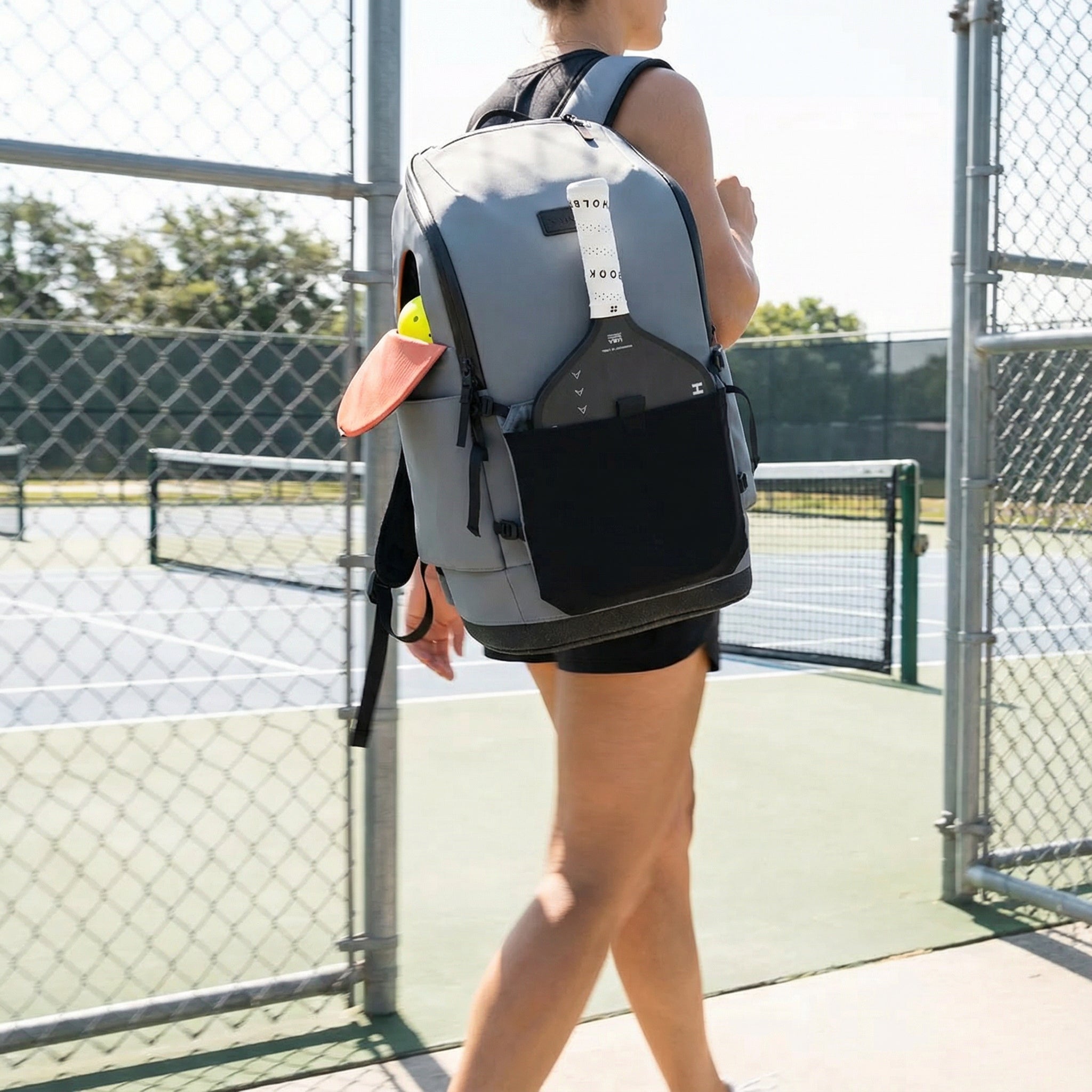
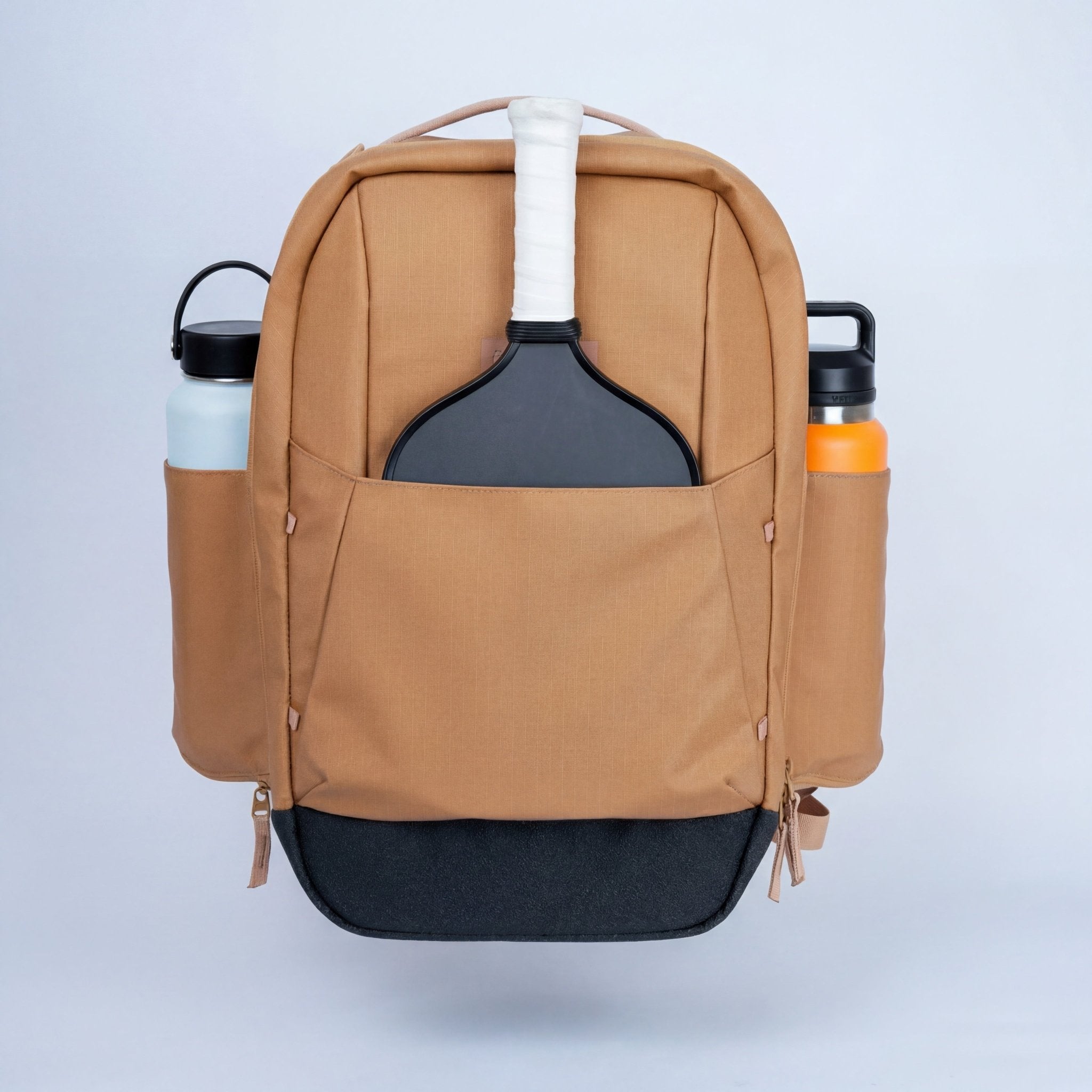
A paddle upgrade deserves the right bag to carry it. The FORWRD Court Ranger V2 ($195) fits up to 4 paddles in its modular sleeve system, includes a 16" laptop sleeve, and has YKK AquaGuard zippers that handle outdoor court conditions. It's what most of our testing team uses day-to-day. The Court Caddy ($325) adds a 15" padded laptop sleeve and a dedicated shoe compartment — the choice for players going court-to-work or tournament-to-airport.

Frequently Asked Questions
What is the difference between the Paddletek Bantam Jolt Widebody and Elongated?
The Widebody measures 16" × 8" with a swing weight of 104 and a 5.5" handle, optimized for fast hands and NVZ forgiveness. The Elongated measures 16.5" × 7.5" with a swing weight of 114 and a 5.75" handle, built for reach, two-handed backhands, and attacking from depth. Both share the same FlexCore™ EPP grid core, T700 raw carbon face, 16mm thickness, and $224.99 price.
Is the Paddletek Bantam Jolt USAP approved for tournament play?
Pickleball Central lists the Bantam Jolt as "UPA approved." Before using it in a sanctioned USAP or APP tournament, verify current approval status directly with USA Pickleball or your tournament director. Requirements vary by tournament format and may have changed since listing.
How does FlexCore™ Technology differ from a standard foam core paddle?
Standard foam core paddles use a uniform EPP foam block. The Bantam Jolt's FlexCore™ uses a precision-scored EPP grid — individual cells that flex and rebound more dramatically at impact. An EVA foam perimeter ring surrounds the grid for edge support. The result is more explosive energy return and better ball pocketing than a plain foam slab, with extended sweet spot toward the edges.
What grip size does the Paddletek Bantam Jolt come in?
Both Bantam Jolt models come in a small grip (4.125" circumference) only. There is currently no medium grip (4.25") option in this family. Players who prefer a medium grip should consider building up with an overgrip or choosing a different paddle.
Is the Bantam Jolt Elongated in stock?
As of November 2026, the Bantam Jolt Elongated is listed as out of stock at Pickleball Central. The Widebody is in stock. Check the PBC listing for updated availability — newly launched paddles often restock within a few weeks of initial sell-through.
How does the Bantam Jolt compare to the Paddletek Bantam ALW-C?
The Bantam ALW-C uses a carbon fiber face over a polymer core — the more traditional premium construction. The Bantam Jolt replaces the polymer core with FlexCore™ EPP foam for a bouncier, more energetic response. The ALW-C is Anna Leigh Waters' signature paddle, tuned for high-level competitive play. The Jolt is built for players who want the pop and forgiveness a foam core provides over refined polymer-core precision.
Final Verdict
The Paddletek Bantam Jolt Widebody is the right call for 3.5–5.0 doubles players who want fast-handling foam core performance at 16mm. The 104 swing weight is genuinely unusual for this platform category, the FlexCore™ EPP grid is a real engineering distinction from standard foam-core competitors, and the T700 raw carbon face adds the spin texture the category needs. It's not cheap at $224.99, but it's not trying to be — this is a premium foam-core paddle aimed at players who know what they're asking for.
Verify the tournament approval status before purchase if that's relevant to your play. Wait for the Elongated to restock if you need that shape. And if you're a 3.0 player on a budget, the Honeyfoam Reserve at $99.99 is still the smarter buy from the same brand.
For everyone else — the Widebody is worth a serious look.
Check Price on Pickleball Central →
Related: Best Pickleball Paddles for Intermediate Players 2026 · Best Pickleball Paddles 2026: 8 Tested Picks by Category · Paddletek Honeyfoam Reserve 14mm Review

Leave a comment
This site is protected by hCaptcha and the hCaptcha Privacy Policy and Terms of Service apply.