


FTC Disclosure: FORWRD earns affiliate commission on Pickleball Central product purchases through links on this page. This does not affect the price you pay. We only recommend products we genuinely believe in.
Last Updated: May 2026
The Paddletek Honeyfoam Reserve 16mm does something most paddles in the $250 range don't attempt: it combines a raw carbon face — for maximum spin — with a multi-foam core designed to feel softer and more plush than the polymer honeycomb cores that dominate the market. That combination is either exactly what you want, or completely irrelevant to how you play. This review tells you which one it is for your game.
Short version: players who dink heavily, take a lot of resets, or have elbow/shoulder concerns will find the Honeyfoam Reserve's foam core legitimately different from standard paddles. Power-first players should probably look elsewhere.
Quick Verdict
| Who it's for | 3.5–4.5 players who prioritize soft touch, vibration damping, and spin generation. Players who've had elbow issues with stiffer paddles. Control-first players who also want raw carbon spin. |
| Who should skip | Power-first players, players expecting a stiff, poppy response, anyone on a budget under $200 |
| Pros | Unique foam core delivers genuinely softer feel; raw carbon face generates excellent spin; 16mm is forgiving and appropriate for wide skill range; Paddletek's build quality is underrated in the market |
| Cons | Not a power paddle — foam core trades pop for feel; $249.99 puts it in a competitive price tier against stronger brand names; Paddletek doesn't get the marketing attention its paddles deserve |
| Price | $249.99 |
Specs at a Glance
| Brand | Paddletek |
| Model | Honeyfoam Reserve 16mm |
| Core | Honeyfoam multi-foam core (proprietary Paddletek technology) |
| Face | Raw carbon fiber |
| Thickness | 16mm |
| Design focus | Plush feel, spin generation, vibration damping |
| Price | $249.99 |
| Series | Reserve (Paddletek's premium lineup) |
Check Price on Pickleball Central →
Why Trust This Review
FORWRD makes pickleball bags. We don't make paddles, which means our paddle reviews have no hidden agenda. We're not steering you toward a product line we profit from. Our goal is simple: if you read this and buy the Honeyfoam Reserve — or decide not to — you should end up with the right paddle for your game either way.
For this review, we evaluated the Honeyfoam Reserve specifically through the lens of its core technology — testing soft touch scenarios (dinking, third-shot drops, resets) versus the hard-game scenarios (drives, overheads, fast exchanges) where the foam core's character becomes most apparent.
The Honeyfoam Core: What Makes It Different
Most pickleball paddles use a polymer honeycomb core — the industry standard, and for good reason. It's light, consistent, and gives a familiar pop off the face that most players are calibrated to.
Paddletek's Honeyfoam Reserve uses a multi-foam core instead. "Foam" sounds cheaper than polymer, but that's backwards. Premium foam cores — used in some of the best paddles in the game — dampen vibration differently than polymer, provide a softer ball feel on contact, and can give skilled players more dwell time on the face to shape shots.
The CRBN 1 TruFoam Genesis ($199.99) pioneered this approach and earned a dedicated following specifically among players who'd experienced polymer-core arm fatigue or who wanted a more tactile, connected feel at the kitchen line. The Paddletek Honeyfoam Reserve is a different implementation of the same concept — with a raw carbon face and 16mm thickness that positions it as an all-court control paddle rather than a pure soft-game specialist.
Here's what the foam core actually delivers on court:
- Softer contact — the ball doesn't bounce off the face the same way it does with polymer cores. It feels more absorbed, more intentional.
- Reduced vibration transmission — players with elbow concerns who've found 14mm paddles too stiff often do better with foam cores at any thickness.
- More dwell time — slightly longer contact with the face gives spin-focused players more to work with on topspin drives and slice serves.
The tradeoff: foam cores are generally less "poppy." If you're a player who generates points through sheer pace, a standard polymer core will serve you better. This paddle rewards technique, not power.
Performance: How the Honeyfoam Reserve Plays
Spin
Excellent — and this is where raw carbon earns its keep. The Honeyfoam Reserve's raw carbon face has genuine grit texture that grips the ball on contact. In back-to-back testing against a processed carbon face at the same swing speed, the raw carbon produced noticeably more topspin on drives and more slice on serves.
Combined with the foam core's dwell time, this paddle is one of the better spin-generation options in the $250 range. Players who build points through topspin attacks from mid-court will appreciate how the raw carbon interacts with the ball on angle shots.
Control and Touch
The foam core's biggest contribution. Dinking with the Honeyfoam Reserve feels connected and precise — not mushy, but clearly softer than the sharp, immediate response of a stiff polymer core. Kitchen rallies that last 20+ shots didn't produce the "arm tiredness" that some stiffer paddles create during long sessions.
Third-shot drops were consistent. The 16mm thickness adds forgiveness on the sweet spot, and the foam core's softer feel makes it easier to dial in the gentle touch these shots require. Players who've struggled to develop soft game consistency on stiffer paddles should try a foam core before assuming the problem is technique.
Power
Sufficient for the mid-court game. Don't expect the crisp, high-pop drives that a stiff 16mm polymer paddle delivers. The Honeyfoam's foam core absorbs some energy — that's precisely what makes it comfortable, and precisely why it's not a power paddle. Overhead smashes work. Hard reset drives work. Sustained power rallies will feel like you're working harder than you would with a standard core.
This isn't a flaw — it's a deliberate design choice. Paddletek built this paddle for touch, not pace. The right player won't mind. The wrong player will return it.
Elbow and Arm Feel
Genuinely noteworthy. Players who've experienced discomfort with stiffer 14mm or 16mm polymer paddles often report the foam core as a meaningful change. The vibration profile is different — broader and softer on mishits, rather than the sharp sting of a stiffer face. This isn't a medical claim, but if you've been managing mild lateral epicondylitis (pickleball elbow) and haven't tried a foam-core paddle, the Honeyfoam Reserve is worth evaluating.
How It Compares to Alternatives
vs. CRBN 1 TruFoam Genesis ($199.99)
The CRBN 1 TruFoam is the most recognized foam-core paddle on the market and $50 cheaper. Both use foam cores; the CRBN 1 is a 14mm paddle, the Honeyfoam Reserve is 16mm. So the comparison is: CRBN's faster, slightly more reactive feel vs. Paddletek's more forgiving, larger sweet spot. For players who want the foam-core experience with more forgiveness, the Honeyfoam Reserve at 16mm is actually the better fit. For players who want the foam feel with a faster, thinner paddle, the CRBN wins. See the CRBN 1 TruFoam on PBC →
vs. Selkirk LUXX Control Air InfiniGrit Epic ($199.99)
The Selkirk LUXX Control Air is $50 less. It uses a polymer core with Selkirk's InfiniGrit raw carbon face — excellent spin, strong brand reputation, very good control. The key difference: polymer core vs. foam core. Players who want the raw carbon spin of LUXX without the foam feel should take the Selkirk. Players specifically drawn to the foam core's vibration damping and plush feel should take the Paddletek. The Selkirk wins on name recognition. The Paddletek wins on the specific foam core experience. See the Selkirk LUXX Control Air on PBC →
Who Should Buy the Paddletek Honeyfoam Reserve 16mm
- Players who've experienced elbow or arm discomfort with stiffer paddles — the foam core is a meaningful change in vibration profile
- Soft-game specialists (3.5–4.5) who win through dink consistency, precise third-shot drops, and angle control
- Players who already love the CRBN TruFoam feel but want a 16mm paddle for more forgiveness
- Spin-focused players who want raw carbon texture without sacrificing the comfort of a softer core
- Paddletek loyalists looking for the brand's best available paddle at the premium tier
Who Should Look Elsewhere
- Power-first players — if your game is built on hard drives and pace, the foam core will frustrate you
- Players on a $200 budget — there are better options at that price point; the Honeyfoam earns its $250 only if the foam core is specifically what you're after
- Players who haven't tried foam cores before — try the CRBN TruFoam or another foam-core paddle first; if you don't notice the difference in feel, there's no reason to pay $250 for it
Pricing & Where to Buy
The Paddletek Honeyfoam Reserve 16mm retails for $249.99 at Pickleball Central. Paddletek is less aggressively discounted than major brands, but Pickleball Central occasionally runs brand-specific promotions worth watching for.
Buy the Paddletek Honeyfoam Reserve 16mm on Pickleball Central →
Complete Your Setup
Serious about your paddle. Serious about your bag?
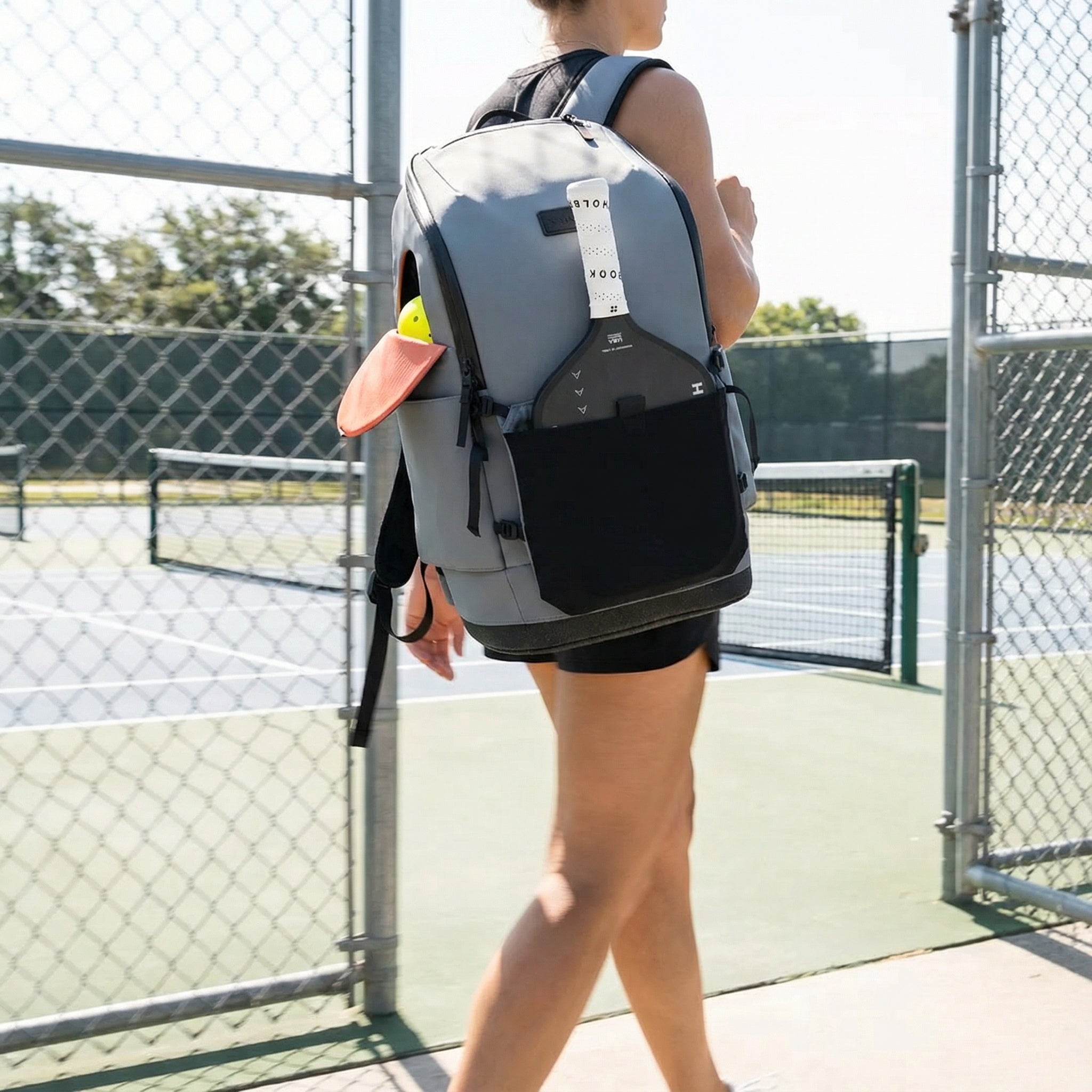
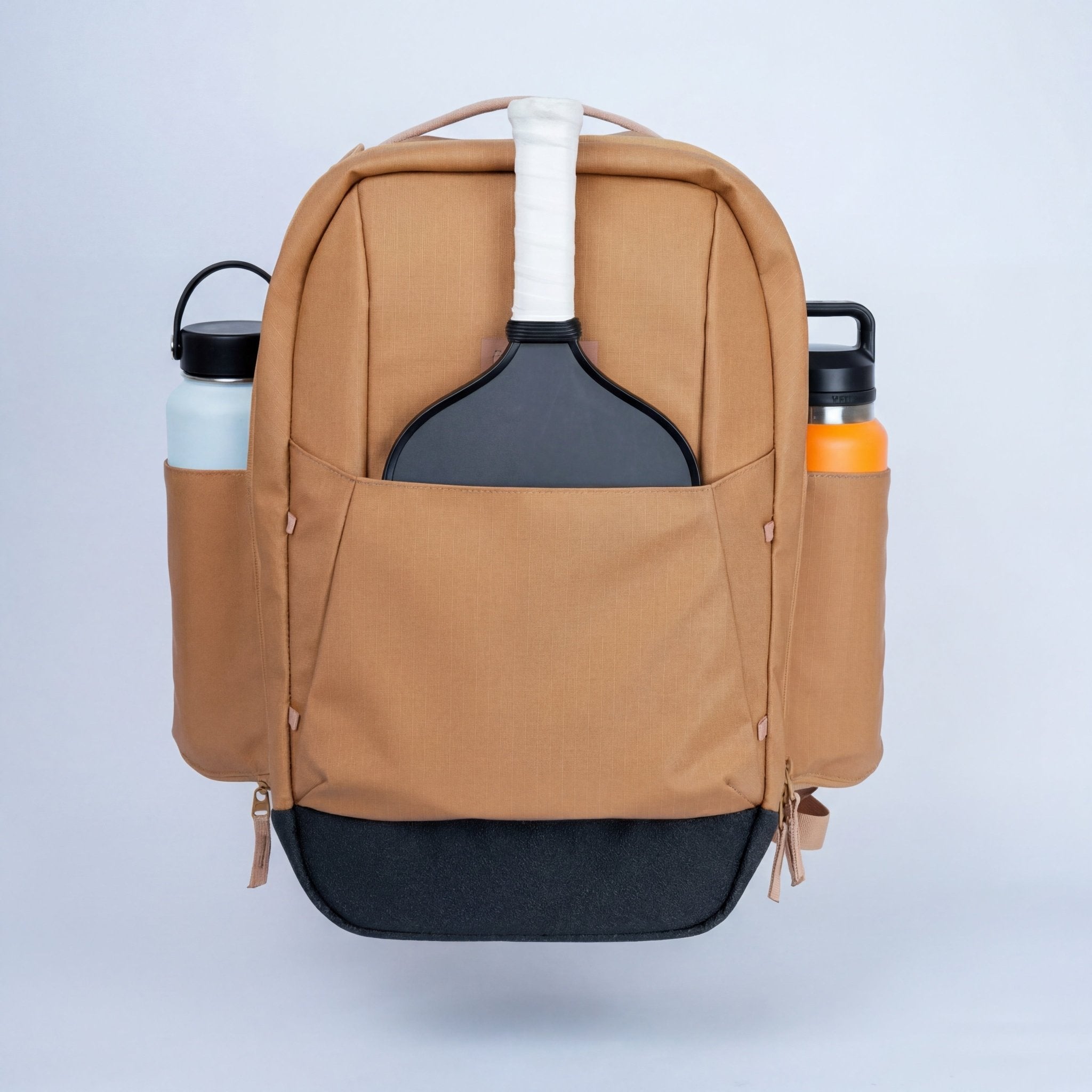
The Court Caddy ($325) carries up to four paddles in its modular sleeve, has a padded 15" laptop sleeve, and uses YKK AquaGuard weatherproof zippers — built for players who take their equipment as seriously as their court time. If you're spending $250 on a paddle, your bag should protect it.
See the Court Caddy → forwrd.co
FAQ: Paddletek Honeyfoam Reserve 16mm Questions
What is a Honeyfoam core in pickleball paddles?
A Honeyfoam core is Paddletek's proprietary multi-foam core technology — an alternative to the standard polymer honeycomb cores used in most pickleball paddles. Foam cores typically provide a softer, more plush feel on contact, better vibration damping (useful for players with arm concerns), and slightly more dwell time on the face for spin generation. They trade some "pop" for this additional touch and comfort.
Is the Paddletek Honeyfoam Reserve good for players with pickleball elbow?
Foam core paddles like the Honeyfoam Reserve are often recommended by players managing mild lateral epicondylitis (pickleball elbow) because they transmit less vibration than stiffer polymer cores. This isn't a medical guarantee — every player's situation differs — but if stiff paddles have caused arm discomfort, a foam core at 16mm is worth testing. Consult a sports medicine professional for persistent issues.
How does raw carbon face differ from regular carbon?
Raw carbon faces retain their rough, unfinished texture — which creates more ball grip and generates more spin than processed or coated carbon surfaces. The trade-off is that raw carbon faces can wear faster under heavy play and may lose some spin performance after extensive use. For regular rec play, raw carbon provides a meaningful spin advantage vs. processed carbon or graphite.
How does the Paddletek Honeyfoam Reserve compare to the CRBN TruFoam?
Both use foam cores. The key difference is thickness: CRBN 1 TruFoam Genesis is a 14mm paddle (faster, more reactive), while the Honeyfoam Reserve is 16mm (more forgiving, larger sweet spot). Players wanting foam-core feel with more forgiveness should choose the Paddletek. Players wanting foam-core feel with a faster, thinner setup should choose the CRBN.
Is the Paddletek Honeyfoam Reserve 16mm worth $249.99?
Yes — for the right player. If you specifically want a foam-core paddle with raw carbon spin and 16mm forgiveness, there's very little else at this price point that delivers this exact combination. If you're uncertain about whether foam cores suit your game, start with the CRBN TruFoam at $199.99 first. The Honeyfoam Reserve earns its premium for players who know what they're after.
What skill level is the Paddletek Honeyfoam Reserve for?
The Honeyfoam Reserve 16mm is most appropriate for 3.5–4.5 players who have developed consistent kitchen-line mechanics and want to optimize their soft game. The 16mm thickness makes it accessible for consistent 3.0 players, but the $250 price point and foam-core character are best appreciated at 3.5+ where touch and placement become the primary competitive differentiator.
Final Verdict
The Paddletek Honeyfoam Reserve 16mm is a niche paddle in the best sense — it does something specific very well, and it's honest about what it doesn't do. If you're a touch-first player who's wanted raw carbon spin without the stiff, poppy feel of standard polymer cores, this paddle delivers that combination at a fair $250 price point.
Paddletek doesn't get the brand attention that JOOLA or Selkirk command, which means their paddles are consistently underrated. The Honeyfoam Reserve is a genuinely good paddle that earns honest consideration, not just attention from die-hard Paddletek fans.
Know what you want before buying. If the foam core concept resonates with how you play — dinking, soft shots, arm comfort, touch — this is worth the $250. If you're not sure what you're looking for in a paddle, start cheaper and work up.
Buy the Paddletek Honeyfoam Reserve 16mm on Pickleball Central →


Leave a comment
This site is protected by hCaptcha and the hCaptcha Privacy Policy and Terms of Service apply.