


Last updated: June 2026
Most bag brands start with a silhouette and work backward into specs. We did the opposite. FORWRD started by asking 500+ real pickleball players what was wrong with every bag they'd owned — and built the Court Caddy around the answers.
This is how that process works.
Step 1: Player Feedback Comes First
Our design process begins with the pickleball community — not a mood board. Before we define a single spec, we gather structured feedback from players across skill levels, play frequencies, and court environments: indoor club players, outdoor rec players, tournament competitors, and people who play twice a week at the local park.
The feedback consistently surfaces the same problems:
- Paddle faces getting scratched by keys and accessories sharing the same compartment
- Shoe odor contaminating the main pocket
- Zippers failing in the rain or after repeated outdoor use
- Bags that tip over on the bench mid-game
- No organized place for a phone, wallet, and keys that's actually quick to access
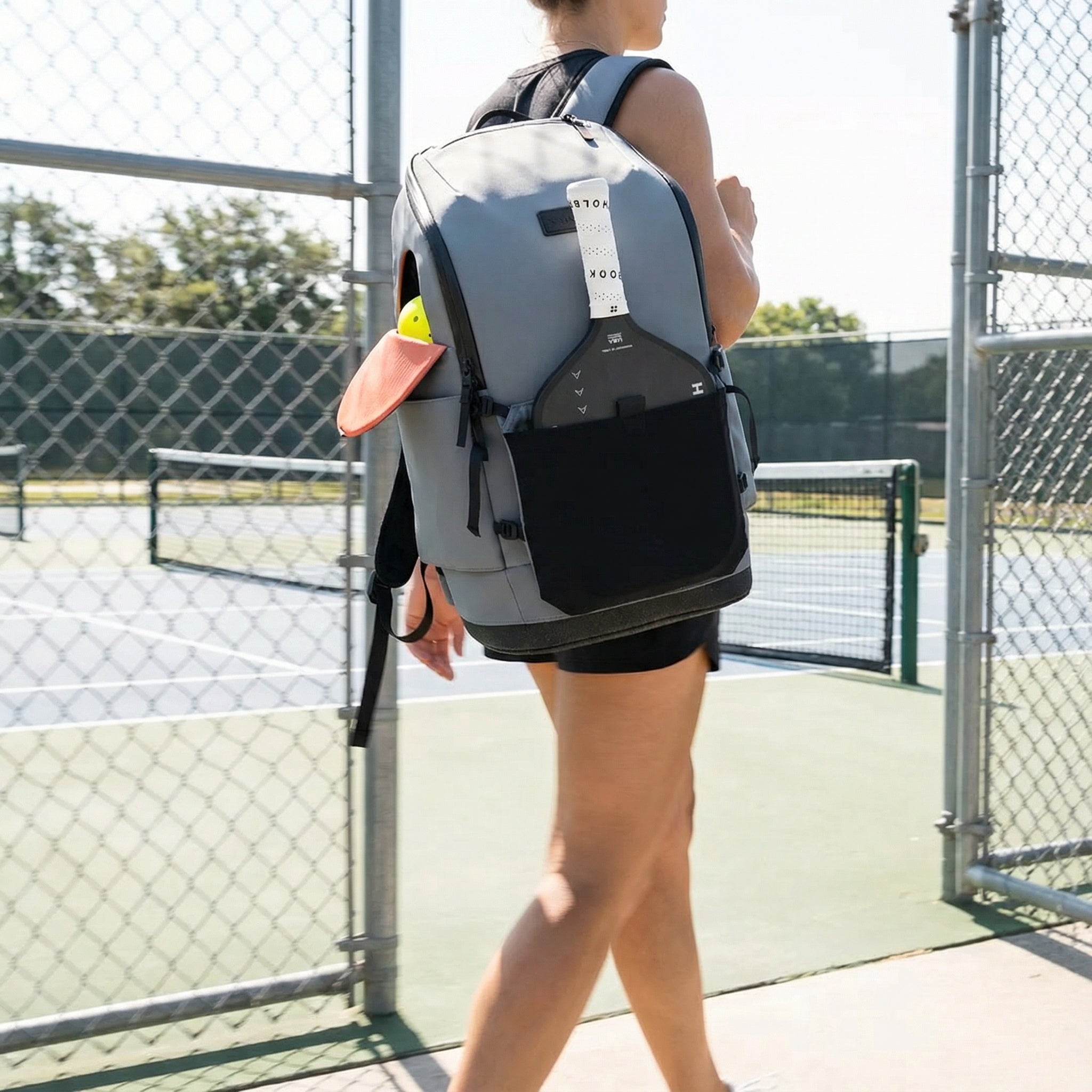
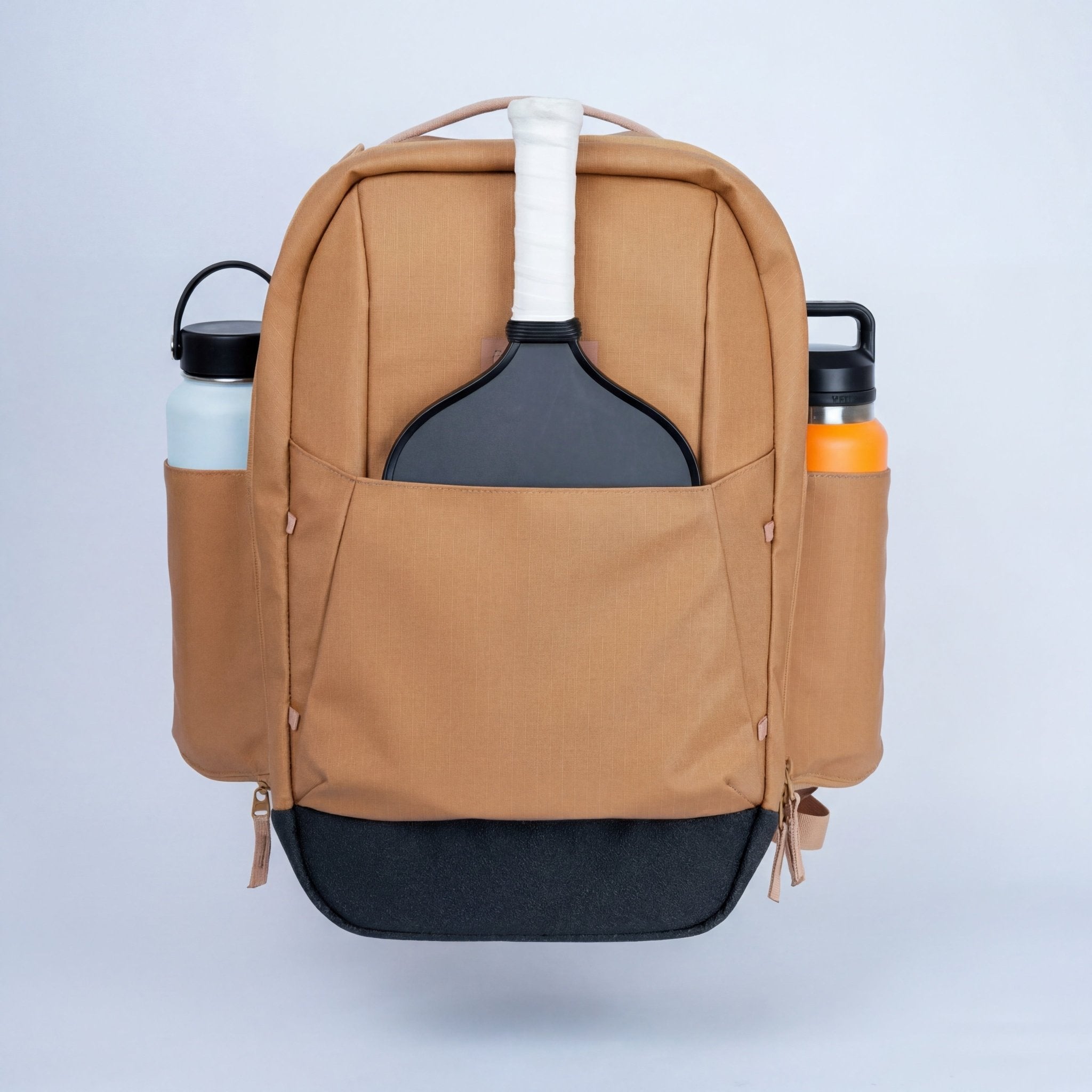
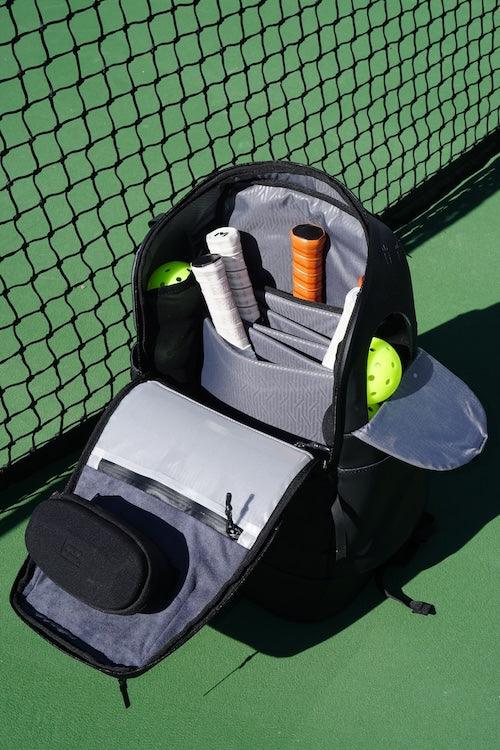
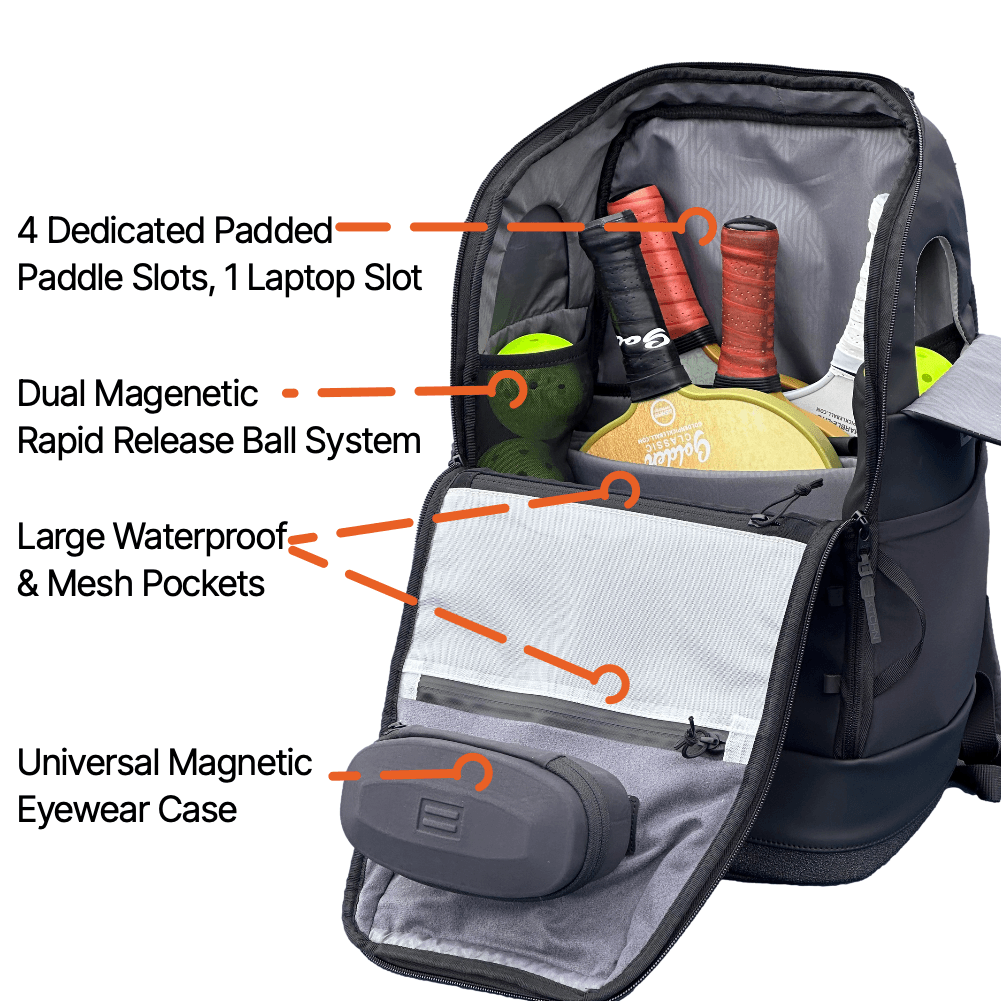
These aren't minor inconveniences — they're the friction points that players notice every single session. The Court Caddy was built to eliminate each one. The modular paddle sleeve keeps paddles isolated from accessories. The structured base keeps the bag upright. YKK AquaGuard zippers handle wet benches and light rain. Every design decision traces back to a specific player complaint we documented before the first prototype was drawn.

Step 2: Collaboration with Designers Who Understand Function
Translating player feedback into a manufacturable product requires more than intent — it requires experienced bag designers who've solved these problems before. FORWRD collaborates with designers who have deep backgrounds in technical carry goods, not just lifestyle accessories.
The distinction matters. A lifestyle bag designer optimizes for visual appeal. A technical bag designer optimizes for how the bag behaves when it's loaded, carried, and accessed quickly under real-world conditions. That means:
- Strap geometry that distributes weight across the shoulders rather than concentrating it at the top
- Zipper placement that allows one-handed access to the compartments you reach for most
- Compartment sizing based on actual paddle and shoe dimensions — not approximations
- Structural reinforcement at every point that takes repeated stress
The Court Caddy's 15" padded modular paddle sleeve isn't arbitrary — it's sized to hold a full-size pickleball paddle flat, without bending the face or putting pressure on the edge guard. That dimension came out of prototyping, not guessing.
Step 3: Premium Materials, No Substitutions
There's a version of every bag that costs less to make. You use a cheaper zipper, a thinner fabric, a shorter zipper pull, and shave $8 off the cost of goods. Players won't notice until month four, when the zipper starts skipping, and by then the sale is made.
We don't build that way.
FORWRD specifies YKK AquaGuard zippers across the Court Caddy and Court Ranger V2 — the same water-resistant coil zipper used on serious outdoor technical gear. The exterior fabric is selected for abrasion resistance, not just appearance. The paddle sleeve uses high-density foam padding that maintains its shape after years of repeated compression.
Every component in our bags was chosen because players told us the cheap version of that component failed them. We source the version that doesn't.
Step 4: Real-World Testing Before Any Bag Ships
Prototypes don't get approved in a conference room. They go to courts.
Our testing process puts prototypes through actual play conditions: outdoor courts in heat and humidity, indoor facilities with hard gym floors, tournament environments where bags are moved repeatedly across long days. Testers track specific failure modes — zipper skips, strap loosening, base deformation, compartment sagging — and report back on frequency and severity.
A common failure in early Court Caddy prototypes was strap attachment loosening under heavy load. The fix wasn't to tell testers they were overpacking — it was to reinforce the attachment point with bar-tack stitching rated for the actual load players carry. The production bag reflects that fix.
By the time a FORWRD bag reaches a customer, it has been tested on real courts by real players, and every identified failure mode has either been engineered out or documented as a known limitation we communicate clearly.
Step 5: Manufacturing Partnership Built on Shared Standards
FORWRD manufactures with a top 1% facility in Vietnam. We chose this partner after evaluating multiple factories on a specific set of criteria: quality control processes at the component level (not just finished goods), track record with technical carry goods, and willingness to run our specification requirements rather than substituting components to hit a price target.
Most bag brands at our price point use factories that serve dozens of brands with commodity specs. Our manufacturing partner runs to our specs — meaning the YKK zipper we specified is the zipper that ships, and the paddle sleeve foam we tested is the foam that goes into every bag.
This isn't a quality claim that's easy to verify from the outside, which is why we're transparent about the process behind it. Players who've owned the Court Caddy for two or three years report the same zipper performance they experienced on day one. That's not luck — it's the result of specifying components that hold up and manufacturing with a partner who builds to standard.
"We didn't set out to build a premium bag. We set out to build a bag that doesn't fail you on court — and realized that doing it right at every step is what premium actually means."
— Grub, Co-Founder, FORWRD
What This Means for the Court Caddy and Court Ranger V2
Both products are the direct output of this philosophy. The Court Caddy Pickleball Backpack — with its 15" padded modular sleeve, YKK AquaGuard zippers, and structured base — exists because 500+ players told us what broke in the bags they were using, and we built a bag that doesn't break in those ways.
The Court Ranger V2 followed the same process, scaled for tournament players who carry a full-day load: 16" sleeve, expanded main compartment, and all the same material standards as the Court Caddy.
Both bags have been covered in The Dink, Pickleball Effect, and The Kitchen — not because we ran an ad campaign, but because players who used them recommended them to other players. That's the output we build toward.
Frequently Asked Questions
How does FORWRD design its pickleball bags?
FORWRD's design process starts with direct feedback from 500+ real pickleball players about what fails in the bags they've owned. That feedback shapes every spec decision — compartment placement, zipper type, strap padding, material choice. Prototypes go through real-court testing before any product ships.
Where are FORWRD bags manufactured?
FORWRD bags are manufactured by a top 1% factory in Vietnam, selected for precision in technical bag construction and strict component-level quality control. Every bag goes through a multi-stage inspection before shipping.
What materials does FORWRD use in its bags?
YKK AquaGuard water-resistant zippers throughout, ballistic nylon and polyester exterior fabrics, high-density foam padding in the paddle sleeve, and reinforced stress points at all handles and strap attachments. We don't substitute lower-cost components when player testing identifies a material as critical to bag longevity.
What is the difference between the Court Caddy and the Court Ranger V2?
The Court Caddy (15" sleeve) is optimized for club and regular recreational players who need maximum organization in a carry-everywhere size. The Court Ranger V2 (16" sleeve) has expanded capacity for tournament players carrying full-day gear loads. Both share the same YKK AquaGuard zippers, structured base, and component standards.

---
If you want to see what this philosophy produces, the Court Caddy Pickleball Backpack is the answer. Ready to upgrade? Shop the Court Caddy — designed with 500+ real players and built to a standard recreational bags don't reach.

Leave a comment
This site is protected by hCaptcha and the hCaptcha Privacy Policy and Terms of Service apply.