

When you step onto the court, your pickleball paddle is more than just a piece of equipment—it’s an extension of your playing style. What many players overlook is that paddle shape directly influences reach, power, control, forgiveness, and how “fast” the paddle feels in your hand during rapid exchanges. Two paddles with identical weights can play completely differently based on their shape alone.
Last Updated: May 2026
At FORWRD, we design premium pickleball gear because we understand that dedicated players invest seriously in their equipment. Understanding paddle shape helps you protect and organize the right paddles in a quality bag built to last. Whether you’re carrying one primary gamer or a full rotation of shapes for different matchups, knowing what each shape offers makes every gear decision more intentional.
Disclosure: This post contains affiliate links to Pickleball Central. If you purchase through our links, FORWRD earns a small commission at no extra cost to you. We only link to products we'd recommend regardless.
Here’s what governs the playground: USA Pickleball rules cap the combined length plus width of any paddle at 24 inches, with a maximum total length of 17 inches. This constraint forces manufacturers to make trade-offs. Want more reach? You sacrifice width. Want a bigger sweet spot? You give up length. These dimensional limits explain why different shapes exist and why each one shifts the sweet spot location, maneuverability, and ideal player type—from aggressive attackers to control-oriented dinkers to forgiving beginner setups.
This guide compares the three shapes you’ll encounter most—standard, elongated, and widebody/oversized—plus hybrid paddles, which blend features of the main categories. Let’s break down the main families of pickleball paddle shapes.
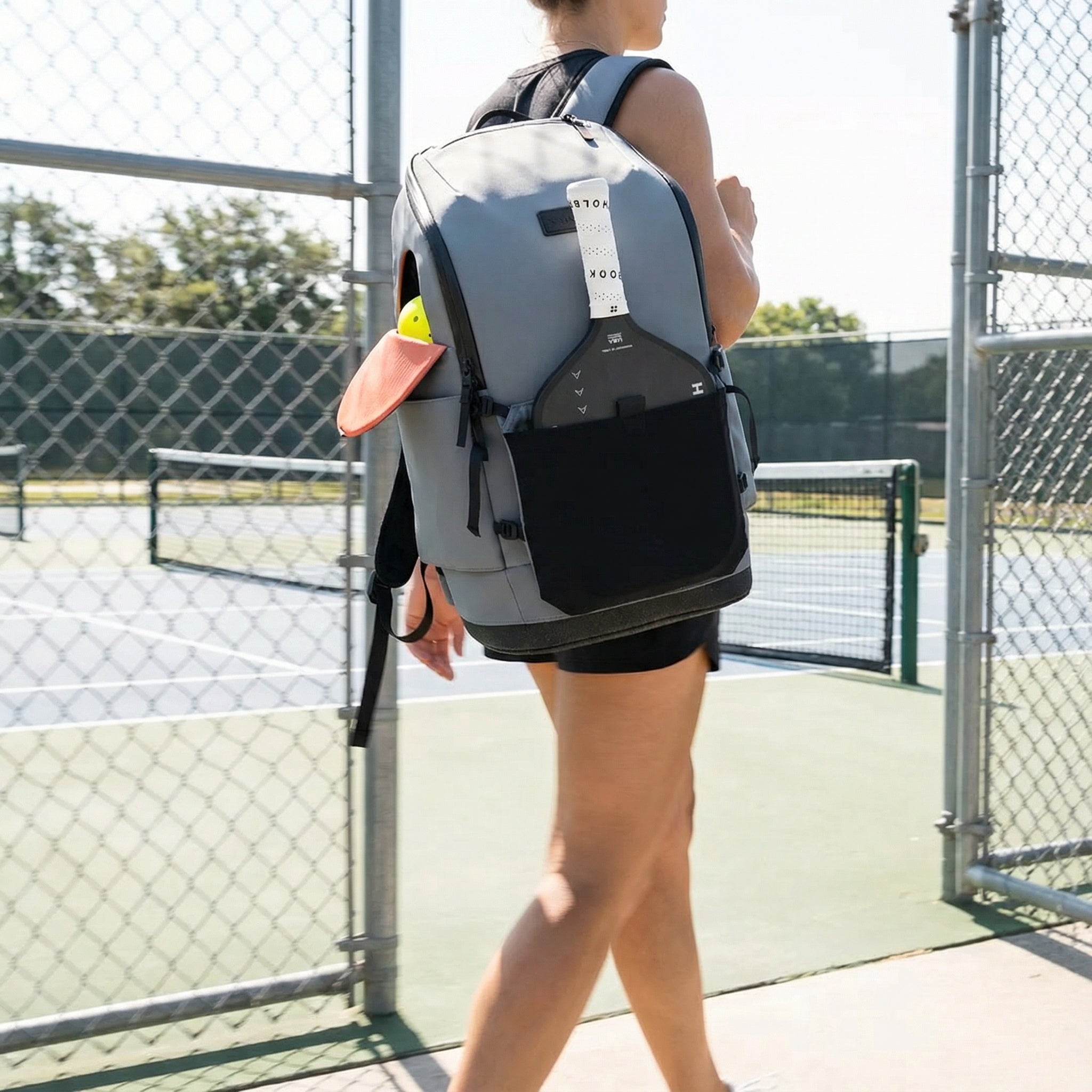
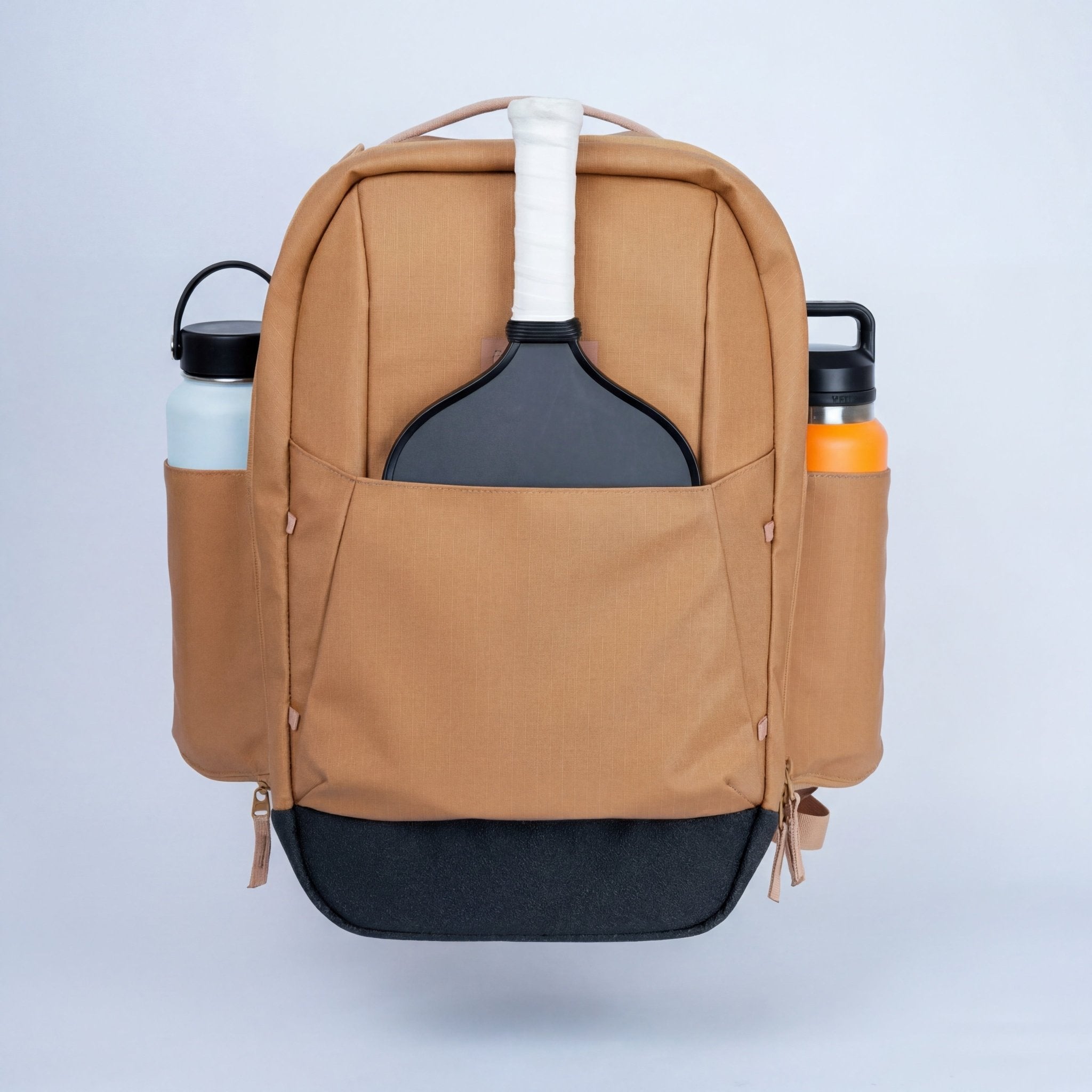
The right paddle shape decision often leads to investing in a premium paddle — which means protecting that investment matters too. The FORWRD Court Ranger V2 ($195) has a dedicated modular paddle sleeve that fits elongated, standard, and hybrid shapes equally well, with 16” laptop space for court-to-work commuters. Or step up to the Court Caddy ($325) for 4-paddle capacity with a 15” padded sleeve.
Core Paddle Shape Types at a Glance
Modern pickleball paddles fall into four main shape families: Standard, Elongated, Widebody/Oversized, and Hybrid. While competitors like Selkirk, ONIX, JOOLA, CRBN, and others use different marketing names—“Epic,” “Invikta,” “Impact,” “Prism”—they mostly map to these core categories. Understanding the three primary shapes (plus hybrids) gives you a framework to evaluate any paddle on the market. Paddle shape choosing is a key factor in selecting the right paddle for your play style, skill level, and court position, as different shapes impact reach, power, control, and forgiveness.
|
Shape |
Typical Dimensions |
Reach |
Sweet Spot Size |
Forgiveness |
Ideal Player Level |
|---|---|---|---|---|---|
|
Standard |
15.5–16” L × ~8” W |
Moderate |
Large, centered |
High |
Beginner to Advanced |
|
Elongated |
16.5–17” L × 7.25–7.5” W |
Maximum |
Smaller, higher |
Lower |
Intermediate to Pro |
|
Widebody/Oversized |
15.5–16” L × 8.2–8.5” W |
Limited |
Largest |
Highest |
Beginner to Intermediate |
|
Hybrid |
~16” L × 7.8–8” W |
Extended |
Medium-large |
Moderate-high |
Intermediate to Advanced |
Shape choice should be considered alongside thickness, weight, and handle length, but this article focuses purely on shape and how it feels in play. The following sections dive deeper into each shape with concrete dimension ranges and playstyle guidance.
Standard Shape: Balanced, Familiar, and Versatile
Standard shaped paddles represent the classic all-around pickleball paddle shape, typically measuring about 15.5–16 inches long and approximately 8 inches wide. Standard shaped paddles typically feature a standard handle length (usually between 5 to 5.25 inches), which provides a comfortable and consistent grip for most players. This is the shape that traces back to pickleball’s origins on Bainbridge Island in the 1960s, and it remains the benchmark against which other shapes are measured.
The standard paddle delivers a relatively centered, generous sweet spot that sits right where most players naturally make contact. These paddles tend to be more head light, making them quick and easy to maneuver in fast kitchen exchanges where reaction time matters more than raw power.
Performance traits to expect:
-
Balanced power and control without specializing heavily in either direction
-
Excellent for dinks, blocks, counters, and drives
-
Predictable feel that builds confidence across all skill levels
-
Quick hand speed for volley battles
The ideal player for a standard shape ranges from beginners through advanced recreational players, doubles specialists, and anyone who wants a forgiving, predictable feel. If you’re not sure what you need, a standard paddle is rarely a wrong choice.
Real-world examples fitting the standard category include the Selkirk Vanguard Control Epic, JOOLA Scorpeus 3, and popular standard-shape models from Onix and Franklin. These paddles prioritize consistency over extremes.
Many players carry a standard-shape control paddle as a reliable backup in their main FORWRD bag—it’s the paddle you grab when you want zero surprises and maximum versatility.
Elongated Shape: Maximum Reach and Leverage
Elongated paddles stretch the traditional form factor, measuring 16.5–17 inches in overall length while narrowing to around 7.3–7.5 inches wide. This keeps them under the 24-inch combined limit while fundamentally changing how the paddle performs.
The extra length creates extended reach at the kitchen line and on lobs, letting you intercept balls that would slip past a shorter paddle. That added length also increases leverage, translating into more power and spin on drives and serves. The paddle’s balance point shifts further from your hand, generating what’s called plow through—the ability to push through the air and drive the ball with greater force.
The trade-offs are real:
-
Smaller lateral sweet spot requires more precise contact
-
Head heavy feel can slow reaction time in rapid hand battles
-
Less forgiving on off center hits
-
Longer paddles demand adaptation time for new users
Elongated shapes suit aggressive attackers, singles play specialists, tennis converts who like to rip drives, and advanced players comfortable with a smaller sweet spot. Data from PPA Tour observations shows elongated paddles as the most common among top professionals, with roughly 70% of top-10 ranked players favoring them for the power potential.
Concrete examples include the JOOLA Perseus, Engage MX line, and the classic Selkirk Invikta (16.5” × 7.375” with a 5.25-inch handle). These are designed for players who prioritize reach and own power generation over forgiveness.
On-court scenarios where elongated shapes shine:
-
Stretching for a cross-court dink that would otherwise be unreachable
-
Covering the transition zone when moving from baseline to kitchen
-
Generating pace on third-shot drives without over-swinging
-
Using extra pop and leverage to finish points at the net during critical moments, providing the power needed to conclude rallies effectively
Players who travel for tournaments often pack both elongated and standard shapes in a well-organized pickleball backpack to adapt to different opponents. Against a banger, you might want your elongated paddle’s reach; against a soft-game specialist, you might switch to something more maneuverable.
Widebody & Oversized Shapes: Forgiveness and Fun
Widebody and oversized paddles prioritize width—often 8.2 to 8.5+ inches—while slightly reducing length to stay within legal limits. The result is a paddle face with more surface area dedicated to the hitting zone.
The added width expands the sweet spot sideways, making these shapes extremely forgiving on off center hits and helpful for developing consistent contact. When you mishit toward the edge, a widebody paddle distributes impact forces across a broader area, maintaining stability rather than twisting in your hand.
Marketing terms vary between “widebody” and “oversized,” but the common trait remains: a bigger sweet spot, more comfortable hitting area, and less power compared to elongated designs. The Selkirk S2 (15.75” × 8” with a notably short 4.375-inch handle) exemplifies this category, maximizing sweet spot size for players who prioritize contact consistency.
Ideal users include:
-
Brand-new pickleball players learning the fundamentals
-
Casual and recreational players who prioritize fun over competition
-
Control-focused dinkers who value clean contact over swing speed
-
Players who want a beginner friendly entry point
Some advanced players still choose wide or oversized faces for maximum control, pairing them with spin-friendly surfaces. The S2-style paddles remain popular among table tennis converts using a “finger up” grip where the shorter handle actually becomes an advantage.
Situations where widebody shapes excel:
-
Blocking hard drives at the kitchen line
-
Reaction volleys where you barely see the ball coming
-
Building confidence during early learning stages when mishits are frequent
If you coach clinics or introduce friends to the sport, keeping one or two oversized paddles in a durable FORWRD court bag makes the learning curve easier for newcomers. These are the paddles that help new players fall in love with the game rather than getting frustrated by mishits.
Hybrid Shapes: Blending Reach, Control, and Maneuverability
Many modern paddles occupy a middle ground between standard and elongated, typically measuring around 16 inches long with 7.8–8 inch width. These hybrid shapes attempt to capture some of the reach and leverage of elongated paddles without giving up the forgiveness and hand speed of standard shapes.
The hybrid shape serves players who want versatility without extreme trade-offs. While marketing names differ—“Epic” style heads, “Prism Flash” types, “Maxima” profiles—the play experience often feels like a balanced compromise. Selkirk’s Maxima shape (16.45” × 7.45” with a 5.5-inch grip) represents this category well, offering a modern profile with mishit resistance.
Key performance traits:
-
Slightly extended reach compared to standard paddles
-
Moderate sweet spot size—larger than elongated, smaller than widebody
-
Neutral to slightly head heavy balance
-
Good for all around players who attack and reset equally
Intermediate players and advancing recreational players often gravitate toward hybrids. The hybrid shape combines aspects of power-focused elongated designs and the forgiveness that makes standard paddles approachable. This combination provides unique benefits, offering a versatile balance of reach, control, and maneuverability that suits a wide range of playing styles and skill levels. If you like to drive and counterattack but still value control in your soft game and resets, a hybrid paddle deserves consideration.
Real examples include the Vatic Pro Prism Flash and mid-length models from JOOLA and CRBN. These paddles have grown in popularity post-2023, driven by professional adoption and the rise of two handed backhands at the recreational level.
Many players who only want one “do-it-all” paddle end up preferring a hybrid shape—and FORWRD gear is designed to help them carry and protect this primary gamer alongside backups for specific situations.
Paddle Materials and Construction: What’s Inside Your Shape
When it comes to pickleball paddle shapes, what’s inside your paddle is just as important as its external design. The materials and construction methods used in a paddle’s core and surface play a huge role in how each shape performs on the court. Whether you’re swinging an elongated paddle for extra reach or a standard shaped paddle for all-around play, the right combination of materials can amplify the strengths of your chosen shape.
Most pickleball paddles start with a lightweight core—commonly made from polymer (polypropylene), aluminum, or sometimes graphite. Polymer cores are the most popular, offering a blend of durability, stability, and a softer feel that’s especially forgiving for off center hits. Aluminum cores are lighter and provide a crisp, responsive touch, while graphite cores are prized for their strength and power potential.
Surrounding the core is the paddle’s face, typically crafted from fiberglass, carbon fiber, or Kevlar. Fiberglass faces add pop and are often found on beginner-friendly, standard shaped paddles, making them more forgiving and easier to control. Carbon fiber, on the other hand, is lighter and stiffer, delivering more power and stability—an ideal match for elongated paddles where players want to maximize reach and plow through without sacrificing durability. Kevlar is less common but offers a unique blend of strength and vibration dampening.
The synergy between core and face materials can make a big difference. For example, an elongated paddle with a graphite core and carbon fiber face will feel powerful and stable, helping advanced players generate more power and spin. Meanwhile, a standard paddle with a polymer core and fiberglass face will offer a larger sweet spot and a softer touch, perfect for those seeking a forgiving paddle that’s easy to maneuver.
Ultimately, understanding how materials and construction interact with paddle shape helps you zero in on the best pickleball paddle shape for your game. Whether you crave more power, a bigger sweet spot, or a paddle that matches your skill level, paying attention to what’s inside your paddle ensures you get the most out of every swing.
Swingweight and Twistweight: The Physics Behind Paddle Performance
Beyond just paddle shape, the way a pickleball paddle feels and performs is heavily influenced by two key physics concepts: swingweight and twistweight. These factors determine how your paddle moves through the air and how it responds to off center hits, directly impacting your power, control, and forgiveness on the court.
Swingweight is a measure of how much effort it takes to swing the paddle. A paddle with a higher swingweight feels heavier in motion, giving you more power and plow through—especially useful for aggressive players who want to drive the ball with authority. Elongated paddles often have higher swingweight due to their extra length, which can help you generate more power but may require more effort to maneuver quickly. Standard shaped paddles, with their balanced proportions, usually have a lower swingweight, making them easier to handle during fast exchanges at the net.
Twistweight refers to the paddle’s resistance to twisting when you hit the ball off center. A higher twistweight means the paddle is more stable and forgiving, offering a larger sweet spot and reducing the negative effects of mishits. Widebody and standard paddles tend to have higher twistweight, making them ideal for players who want a forgiving paddle that helps keep shots on target even when contact isn’t perfect. Elongated paddles, with their narrower faces, may have lower twistweight, so precision becomes more important.
When choosing the best pickleball paddle shape for your game, consider how swingweight and twistweight align with your play style. If you’re looking for more power and don’t mind a paddle that feels a bit heavier, a higher swingweight paddle—often found in elongated shapes—could be your perfect match. If you value a larger sweet spot and want a forgiving paddle for off center hits, look for a shape and construction with higher twistweight, such as a standard or widebody paddle.
By understanding the physics behind swingweight and twistweight, you can make smarter decisions about which paddle shape and build will help you play your best, whether you’re aiming for more power, a larger sweet spot, or a paddle that matches your skill level and personal preferences.
How Shape Interacts with Handle Length, Thickness, and Weight
Paddle shape is only one part of the puzzle. Handle length, core thickness, and weight distribution change how a given shape actually feels during play.
Long handles (over 5.25 inches) often pair with elongated and some hybrid shapes, preferred by tennis converts and those using two handed backhands. The longer handle provides more leverage on groundstrokes and allows a comfortable two-hand grip. Shorter handles (around or under 5 inches) are common on widebody control paddles, maximizing face area and sweet spot size—the Selkirk S2’s 4.375-inch handle is a prime example.
Core thickness affects the paddle’s personality regardless of shape. 16mm cores tend to emphasize control and stability, giving you a softer feel on dinks and resets. 14mm cores increase pop and quickness, making the paddle feel more powerful and responsive on drives. A 14mm elongated paddle plays very differently than a 16mm version of the same shape.
Weight and swingweight add another layer. A standard paddle with added lead tape at the head can feel heavy and powerful, while an elongated paddle with balanced weight distribution might feel surprisingly whippy. Always check full specs—not just the shape outline—before committing to a paddle.
Serious players track their specs and shapes, keeping notes on what combinations work best for different conditions. Storing paddle tags or a small notebook in your FORWRD bag helps replicate setups you like and avoid repeating experiments that didn’t work.
Choosing the Right Paddle Shape for Your Playing Style
Moving from theory to a specific choice requires honest assessment of how you actually play—not how you wish you played.
If you’re a beginner who just wants consistency: Start with a standard or widebody shape. The larger sweet spot and forgiving nature build confidence faster than struggling with a smaller hitting zone.
If you’re an aggressive singles player: Consider an elongated shape for extended reach and more leverage on drives. The trade off in forgiveness is worth it when you’re covering the court alone.
If you play mostly doubles and value quick hands: Standard or hybrid shapes offer better maneuverability for those rapid kitchen exchanges where reaction time trumps reach.
If you’re transitioning from tennis: Elongated paddles feel more familiar—the extra length mimics racquet leverage on serves and overheads.
Quick reference by player type:
-
Control player: Standard or widebody for maximum sweet spot and touch on softer shots
-
Banger: Elongated for plow through and pace generation
-
Tennis convert: Elongated for familiar leverage
-
Kitchen specialist: Standard or hybrid for hand speed and dinking control
Singles often benefits from elongated or hybrid shapes where extra reach covers more court. Doubles players frequently prefer standard or hybrid for hand speed and blocking capability during firefights at the net.
Test shapes in real scenarios—open play, drilling sessions, tournament warmups—and track which one gives you the most confidence on high-pressure points. The best paddle shape isn’t what a pro endorses; it’s what lets you execute your individual’s playing style under pressure.
Consider carrying at least two different shapes in a premium pickleball backpack. Switch based on matchup, wind conditions, or court speed. Your opponent’s playing style should influence your paddle choice, not just your own preferences.
Testing Paddle Shapes and Managing Your Gear
Demoing different shapes whenever possible saves you from expensive mistakes. Borrow from friends, attend club demo days, or visit local shops that let you hit with paddles before buying.
A simple 4-point testing routine:
-
Kitchen warm-up: Dink and reset to feel the paddle’s touch and sweet spot location
-
Baseline drives: Hit groundstrokes to assess power and plow through
-
Overheads and lobs: Test reach and how head heavy the paddle feels on elevated shots
-
Fast-fire volley drills: Exchange rapid volleys to evaluate hand speed and forgiveness
Notice specific sensations: how far you can comfortably reach, how forgiving the paddle feels on mishits, and how quickly you can react at the net. These observations matter more than spec sheets.
A well-designed pickleball bag protects graphene and carbon paddles of different shapes from edge damage and warping during transport. FORWRD’s multi-paddle compartments with dedicated padding keep your elongated power paddle separate from your control backup, preventing the scratches and dings that degrade performance over time.
Quality bags and accessories with a lifetime warranty make it easier to invest in multiple paddle shapes without worrying about storage or transport damage. Organize paddles by shape and role—primary game paddle, control backup, power or elongated option—so switching mid-match is quick and intuitive.
Frequently Asked Questions About Paddle Shapes
Is there one paddle shape that’s best for all players? No single shape works optimally for everyone. The best pickleball paddle shape depends entirely on your skill level, play style, and what you prioritize—reach, forgiveness, or maneuverability. That said, standard and hybrid shapes come closest to a versatile option for all around players.
What’s the difference between a “widebody” and “oversized” paddle? Marketing terminology varies by brand, but both refer to paddles prioritizing width over length. True oversized designs may push toward 8.5 inches wide, while widebody typically means 8.2+ inches. The common trait is a bigger sweet spot and less power compared to elongated designs.
Are elongated paddles legal in USA Pickleball–sanctioned tournaments in 2024? Yes. USA Pickleball maintains the 24-inch combined length-plus-width rule and 17-inch maximum length. Most popular elongated paddles (like the Selkirk Invikta at 16.5” × 7.375”) fall well within these constraints and remain tournament legal.
Do paddle shapes matter more in singles or doubles? Shape matters in both, but differently. Singles players often benefit from elongated reach to cover more court. Doubles specialists typically favor standard or hybrid shapes for quick exchanges at the kitchen. Your paddle shape depends on which format you play more competitively.
Can I get the same power from a standard paddle that I get from an elongated one? You can generate significant power with any shape through proper mechanics, but elongated paddles provide more leverage and plow through simply due to physics. A standard paddle with a 14mm core and good technique can still hit hard—it just won’t match the pure ball-crushing potential of an elongated design with equal effort.
How many different paddle shapes should I actually carry in my bag? Most serious players benefit from carrying two paddles: a primary gamer and one backup or alternative shape. Tournament players might carry three—an elongated for power matchups, a standard or hybrid for control situations, and a backup of their main shape. A quality FORWRD backpack accommodates multiple paddles with dedicated protection for each.
Does paddle shape affect spin potential? Shape itself has minimal impact on spin—surface texture and grit matter far more. However, elongated shapes generate more leverage on swing, which can indirectly increase spin potential for players who use that extra length to accelerate the paddle face through contact.
Frequently Asked Questions: Pickleball Paddle Shapes
What is the most popular pickleball paddle shape?
The standard or “classic” shape remains the most popular because it balances reach, power, and control for players across skill levels. Most recreational players at 3.0–4.0 land well here. Elongated paddles have grown quickly in popularity at the 4.0+ level where extra reach on the backhand and serve matters more than the forgiveness of a wider sweet spot.
Do elongated paddles help with the third shot drop?
Marginally, yes — the longer hitting surface gives you a slightly larger contact window. But the third shot drop is 90% technique and 10% equipment. The bigger benefit of elongated paddles for the drop is reach on low balls: you can get your paddle lower without bending as far, which helps at the transition zone. If you’re struggling with drops, a different shape won’t fix it — reps will.
Is a wider paddle better for beginners?
Usually yes. Wider standard-shape paddles have a larger sweet spot, which means off-center hits still go where you aim them. That forgiveness matters when you’re still developing consistent contact point. As technique improves and contact becomes more reliable, you can experiment with elongated shapes if you want more reach or pop on the serve.
Can paddle shape affect elbow and wrist health?
Indirectly. Elongated paddles with the weight concentrated higher (farther from the handle) create more torque on off-center contact, which translates to more shock through the wrist and elbow. Wider paddles tend to distribute weight more evenly and are often recommended for players managing tennis elbow. If you have any joint concerns, err toward a wider, more forgiving shape before experimenting with elongated.
Conclusion: Match Your Shape, Upgrade Your Setup, Elevate Your Game
Paddle shape is one of the fastest ways to tune feel and performance without changing your technique. Standard shapes deliver balance and forgiveness. Elongated shapes maximize reach and power for players willing to accept a smaller sweet spot. Widebody and oversized designs prioritize the largest sweet spot and most forgiving contact for developing players. Hybrid shapes split the difference for those who want distinct advantages without extreme trade-offs.
No single shape is objectively the perfect match for everyone. The right paddle depends on your skill level, whether you prioritize reach or consistency, and whether you’re grinding singles points or battling in doubles firefights. Personal preferences evolve as your game develops—what feels right today might need adjustment in six months.
Treat paddle selection as an ongoing process. Test different shapes, take notes on what works, and refine your setup over months and seasons. The best paddle is the one that gives you confidence when the game is on the line, not the one with the flashiest marketing claims.
Complete Your Setup
Once you’ve found your ideal paddle shape, carry and protect it the right way. The FORWRD Court Ranger V2 ($195) fits elongated, standard, and hybrid shapes in its modular paddle sleeve — plus room for a 16” laptop, balls, and all your court accessories in one organized backpack.

Review your current paddle shape and decide what you want to change about your game. More reach? More control? Better mishit forgiveness? Then pair your ideal paddle—or set of paddles—with a FORWRD pickleball bag or backpackdesigned to protect and organize high-end gear for the long haul. Stay FORWRD in your game by making intentional, informed gear choices rather than chasing trends. Your equipment should work as hard as you do.

Leave a comment
This site is protected by hCaptcha and the hCaptcha Privacy Policy and Terms of Service apply.