


Disclosure: This post contains affiliate links to Pickleball Central. If you purchase through our links, FORWRD earns a small commission at no extra cost to you. We only link to products we'd recommend regardless.
Last updated: September 2026
Pickleball has exploded from backyard recreation to a sport with millions of dedicated players and increasingly competitive tournaments. With that growth comes a pressing need for trained referees who can manage matches fairly, keep score accurately, and ensure every player has a positive experience on court. Whether you’re a club member looking to contribute or an experienced official preparing for USA Pickleball–sanctioned events, understanding the full scope of officiating is essential. USA Pickleball members enjoy exclusive access to specialized resources and benefits, making membership especially valuable for those seeking to advance as referees.
This guide is written from FORWRD’s perspective as a premium pickleball gear brand that outfits serious players and officials alike. We’ve seen firsthand how well-prepared referees elevate the game—and how the right equipment supports that mission. Rather than simply copying rules from the rulebook, we focus on practical, on-court guidance that helps you manage real matches with confidence.
The scope here covers everything from aspiring referees at local clubs up through those working major tournaments in 2026. New referees start at the Verified Trainee stage by becoming a USA Pickleball member and completing basic training. We assume current USA Pickleball rules are in effect, but always encourage you to check the most recent rulebook and officiating handbook before stepping on court.
Introduction to Pickleball Refereeing
Pickleball refereeing is at the heart of fair and competitive play, ensuring every match is conducted according to the official USA Pickleball (USAPA) rules. As the sport continues to grow, the need for knowledgeable referees who can make accurate calls—whether it’s a close line call, a service fault, or a foot fault at the non-volley zone—has never been greater. The officiating handbook serves as the primary resource for referees, outlining the procedures, responsibilities, and best practices for managing a game from start to finish.
When a referee is assigned to a match, their role extends far beyond simply watching the ball. They are responsible for tracking the score on the official score sheet, monitoring the serving side, enforcing time outs, and issuing technical warnings when necessary. Consistency and accuracy are key, as referees must apply the rules impartially and maintain the flow of play, even in high-pressure situations. The ability to make quick, confident decisions—especially on line calls and faults—helps keep the game fair and enjoyable for all players involved.
Becoming a certified referee involves a commitment to training and ongoing education. Prospective referees start as verified trainees, studying the USAPA rules and participating in hands-on training sessions. Passing the line judge test is a crucial step, ensuring that each official can make accurate calls and understands the nuances of officiating. The tournament director plays a pivotal role in this process, overseeing referee assignments and ensuring that only those who meet the standards are allowed to officiate. If a referee is found to be doing a poor job, the tournament director has the discretion to intervene and assign a replacement, safeguarding the integrity of the match.
Referees are also expected to stay current with rule changes and updates, using resources such as the officiating handbook, training materials, and official notices from USA Pickleball. This commitment to ongoing learning ensures that referees are always following the latest procedures and can adapt to new rules as the sport evolves. By tracking faults, managing the score, and guiding players through the correct procedures—like switching sides or handling time outs—referees help create a smooth, professional match experience.
Beyond enforcing the rules, referees play a vital role in promoting sportsmanship and respect on the court. They are often called upon to manage disputes, provide clarification on rules, and ensure that all participants are following the spirit as well as the letter of the game. By remaining impartial and consistent, referees set the standard for fair play and help foster a positive environment for everyone involved.
For those interested in becoming referees, a wealth of resources is available through USA Pickleball, including training guides, rulebooks, and updates on upcoming events and rule changes. By taking advantage of these tools and committing to ongoing development, referees not only enhance their own skills but also contribute to the growth and professionalism of pickleball at every level—from local club matches to national tournaments.
The Role of a Pickleball Referee
A referee assigned to a match serves as the game’s impartial manager. Your job is to keep score, monitor faults, maintain order, and ensure fair play for all participating players. You’re not there to dictate outcomes—you’re there to create an environment where the better team can win on merit.
During rallies, your primary focus should be the non volley zone line. Watching for foot faults at the kitchen is more critical than tracking the ball’s flight, since players are responsible for most line calls on their own side. Referees should also be aware of balls landing near the bounds of the court, as accurate out-of-bounds calls are crucial when line judges are present or when players request verification. This is a shift in thinking for many new referees who assume they should follow the ball everywhere. Instead, position yourself to see feet at the NVZ line and trust players to handle baseline and sideline calls.
Typical Referee Responsibilities
|
Task |
When It Applies |
|---|---|
|
Calling service faults |
Before or during the serve motion |
|
NVZ foot faults |
During volleys or momentum after a volley |
|
Keeping and announcing the score |
Before each serve |
|
Managing time outs |
When requested by players |
|
Side changes |
At designated point thresholds |
|
Verifying correct server and receiver |
Before each rally |
|
Referees do not typically make line calls unless a player requests verification and you clearly saw the ball land. You may step in to overrule only when you’re 100% certain—otherwise, the player’s call stands. This approach keeps matches flowing without constant referee intervention. |
|
Example scenario: You’re working a 2026 local sanctioned tournament. The first server serves from the right court. You call “0-0-2” (in doubles), wait for the receiver to be ready, then allow the serve. Throughout the game, you track the score, watch feet at the NVZ, manage two time outs per team, and switch sides when one team reaches 8 points in a 15-point game. After match point, you verify the final score, mark the score sheet, and send the winning team to the tournament director.
Essential Knowledge: Rules and Resources
Before you step on court as a referee, study and preparation are non-negotiable. You’ll face dozens of judgment calls during a single match, and hesitation or uncertainty undermines your authority and the players’ trust.
Key Governing Documents
-
2021 USA Pickleball Officiating Handbook (or current version)
-
2025 Official Referee Casebook (detailed interpretations for nuanced scenarios)
-
Annual rule change summaries (available on USA Pickleball’s official site)
Critical rule areas every ref must master include:
-
Serve rules (legal motion, correct server, correct court)
-
Non volley zone rules (foot faults, momentum)
-
Faults (service faults, NVZ violations, double bounces)
-
Line calls (when to overrule, how players request appeals)
-
Time outs (2 per team per game, 30 seconds each)
-
Technical warnings and technical fouls
-
Equipment rules (paddle specifications, per Rule 2.D.2)
Before any event, review the sections on referee duties (historically Sections 13–15) and use the official paddle approval tool to verify paddle legality at check-in. Online rule quizzes and clinics are excellent self-tests to keep your knowledge sharp.
Staying Current with Updates and Notices
Rules and officiating practices often change annually—sometimes mid-season. Referees should routinely check the official referee resource hub for notice of rule changes, handbook updates, and clarifications from USA Pickleball.
Typical notices might include:
-
Rule change summaries for an upcoming season
-
Reminders about equipment rules
-
New training materials or webinars
-
Clarifications on ambiguous casebook scenarios
Avoid relying on unauthorized translations or outdated PDF copies. Always use the latest official English documents to ensure you’re applying current rules. A practical habit: review recent notices the week before working any major 2026 tournament.
Pathway: How to Become a Pickleball Referee
The demand for certified referees has risen sharply with pickleball’s growth. Officiating is a rewarding way to contribute to the sport, meet players at all levels, and stay connected to competitive play even when you’re not on court as a competitor.
General Progression
-
Learn the rules – Study the rulebook, officiating handbook, and casebook thoroughly.
-
Attend clinics – Classroom-style rules review and on-court positioning drills.
-
Shadow experienced refs – Observe scoring, timing, and procedures between rallies.
-
Work local matches – Start with recreational or club events to build confidence.
-
Pursue certification – Complete evaluation requirements for higher-level events.
Real match observation by a mentor or certified referee is usually required before you can work sanctioned tournaments. New refs should begin at recreational events where mistakes are learning opportunities rather than high-stakes problems.
Gaining Experience and Evaluation
Practical growth comes from live matches. As a verified trainee, you may be paired with an experienced referee to observe:
-
Scoring accuracy and rhythm
-
Consistent calls on faults
-
Composure with difficult players
-
Adherence to procedures and timing
Evaluation typically includes accurate scoring, consistent application of rules, professional demeanor under pressure, and correct procedural handling. Tournament directors may rotate newer refs through earlier-round matches before assigning medal rounds.
If serious issues arise during a match, players or teams may request a referee change. The event director makes the final decision, using discretion to balance fairness and match flow. This is rare but exists as a safeguard for all involved.
On-Court Mechanics and Best Practices
Clear mechanics and consistent routines reduce mistakes and calm players. When referees operate predictably, players can focus on competing rather than wondering what’s happening next.
Recommended Positioning
Position yourself near the sideline on the serving side, with a clear view of the NVZ line and the nearest sideline. From this vantage point, you can see the server’s motion, watch feet at the kitchen, and track the ball’s landing near your side of the court.
Game Flow: Step by Step
|
Phase |
Referee Action |
|---|---|
|
Pre-match |
Brief players, confirm understanding of rules, inspect paddles |
|
First serve |
Announce “game start,” call score, wait for readiness |
|
During play |
Track score, watch for NVZ foot faults, observe serve legality |
|
Side changes |
Announce break, allow players to switch ends |
|
Time outs |
Start timer, announce “time in” when 30 seconds expire |
|
Post-match |
Verify final score, mark score sheet, report to tournament director |
|
Verbal score-calling should follow a consistent rhythm: stop, check that both teams are ready, call the full score clearly, then allow the server serves. This prevents premature serving and confusion about the score. |
|
In medal matches, additional line judges or a second referee may be present. This changes positioning slightly—the second referee often stands opposite the primary to assist with NVZ faults and double-bounces.
Judging Foot Faults at the Non-Volley Zone
A foot fault at the NVZ occurs when a player steps on the kitchen line or into the kitchen during a volley, or when momentum from a volley carries them into the zone. This is one of the most common faults referees must call.
During volleys, keep your eyes on players’ feet—not on the ball. The ball will be hit; your job is to see where feet land. Only call what you clearly see. If you’re unsure, hold your call. Guessing on borderline situations erodes player trust and creates conflict.
Practice tip: During scrimmages, focus exclusively on the NVZ line. Train your eyes to track feet rather than the ball. This skill takes time to develop but is essential for accurate calls at higher-level tournaments.
Serve and Service Faults
Service faults can be subtle. A legal serve requires:
-
Contact below the waist
-
Paddle head below the wrist at contact
-
Upward motion (or at least not downward)
-
The ball must be properly struck with the paddle in accordance with the rules; a serve is considered illegal if the ball is not struck correctly.
Focus on the paddle’s position relative to the server’s wrist—this is usually easier to judge than exact waist height. Common service faults include:
-
Illegal motion (e.g., downward swing)
-
Wrong server or wrong court position
-
Serving before the score is called
-
Illegal spin imparted at release (check current rules for specifics)
Develop a pre-serve checklist:
-
Correct server?
-
Correct court position?
-
Score called and confirmed?
-
Ready to observe motion?
Line Calls: When to Step In
Players have primary responsibility for calling balls in or out on their side. Referees should only overrule when they have a clear, unobstructed view and are 100% certain the player’s call was wrong.
Your best line of sight is typically the nearest sideline. Exercise extreme caution when considering overrules on the far sideline, center line, or baseline—only do so when the error is obvious or the player’s view was clearly blocked.
If you didn’t see the ball clearly, say so. Honest acknowledgment is better than a guess. Per other rules governing line calls, opponent opinions can be solicited, and if requested, must be accepted—but spectator input is never allowed.
The Role of a Line Judge
A line judge is an essential member of the officiating team, playing a pivotal role in ensuring that every match is conducted according to USAPA rules and with the highest level of fairness. The primary responsibility of a line judge is to make accurate calls on whether the ball lands in or out of bounds, focusing on the court’s center line, sidelines, and baselines. Proper positioning is crucial—line judges are stationed at the end of the line they are assigned to monitor, giving them an unobstructed view and enabling them to make quick, confident decisions during play.
Before officiating at tournaments, line judges may be required to pass a line judge test, demonstrating their understanding of the rules and their ability to make accurate calls under pressure. The tournament director or event director is responsible for assigning line judges to specific courts or matches, ensuring that each official is well-prepared and familiar with the latest officiating handbook and USA Pickleball guidelines.
Line judges work closely with referees to uphold the integrity of the game. While the referee manages the overall flow of the match, line judges focus on their designated lines, signaling in or out calls and assisting with the enforcement of technical fouls and foot faults when necessary. Certified referees and line judges are especially important in high-stakes tournaments, where the accuracy of every call can impact the outcome for both teams.
In addition to making line calls, line judges must be prepared to enforce other rules as outlined in the officiating handbook, such as identifying faults and supporting the referee in maintaining order on the court. Their ability to remain impartial, attentive, and consistent is vital to the smooth operation of tournaments and the overall experience for players and spectators alike. By working together, referees and line judges help ensure that every match is played fairly and within the bounds of the official rules.
Managing Player Behavior and Match Control
Enforcing conduct rules is as important as enforcing technical rules, especially in larger tournaments. You set the tone for the match, and your demeanor influences how players behave.
Tools Available to Referees
|
Level |
Action |
Effect |
|---|---|---|
|
Gentle reminder |
Verbal cue |
No penalty |
|
Technical warning |
Formal warning |
Recorded, no point impact |
|
Technical foul |
Penalty |
One point awarded to opponent |
|
Second technical foul |
Forfeit |
Match ends, player expelled |
|
Set expectations early. A calm, clear pre-match briefing that explains your approach—and reminds players of their responsibilities—can prevent issues later. Remain neutral and professional, even under pressure from players or spectators. If you do a poor job of managing conflict early, it tends to escalate. |
|
|
Tournament directors handle formal protests and may review or overrule interpretations of rules after the match if necessary. Your job is to make the best calls you can in real time and document any issues on the score sheet.
Common Situations and How to Respond
Disputed line calls: If a player appeals and you clearly saw the ball, overrule if you’re certain. If you didn’t see it, the original call stands. When rules permit, a replay may be the fairest resolution.
Excessive arguing or unsportsmanlike behavior: Start with a gentle reminder. If behavior continues, escalate to a technical warning. If it still persists, issue a technical foul. A second technical foul results in forfeiture. Consistent enforcement across all matches builds your reputation as a fair official.
Stalling or time abuse: Players sometimes take excessive time between points or misuse time outs. Remind players of pacing expectations. If stalling continues, issue warnings. You have the authority to keep the match moving.
Post-match debriefing: After any especially contentious match, debrief with the tournament director to align on handling for future situations. This helps you grow and ensures the event maintains consistent standards.
Common Challenges and Solutions
Referees and line judges frequently encounter challenges that test their knowledge, judgment, and composure. One of the most common issues is disputed line calls. When a call is questioned, it’s essential for the officiating team to rely on their training, the procedures outlined in the officiating handbook, and their vantage point to make accurate calls. If a player or team requests a replay due to uncertainty, the referee or line judge should use their discretion, considering the rules and the specific circumstances before making a final decision.
Managing player behavior is another significant challenge. Referees and line judges must be vigilant in identifying and addressing technical warnings and fouls, especially if a player is repeatedly challenging calls or displaying unsportsmanlike conduct. The officiating handbook provides clear guidelines for escalating from a gentle reminder to a technical warning, and ultimately to a technical foul if necessary. If a referee or line judge is not performing their duties effectively—a poor job in tracking faults, managing the score sheet, or enforcing rules—the tournament director or event director has the authority to intervene and make adjustments to the officiating crew.
Consistency is key to maintaining fairness throughout the game. Referees and line judges should regularly review USA Pickleball resources and procedures to ensure they are following the latest rules and best practices. This includes accurately tracking the serving side, recording points on the score sheet, and being prepared to call faults such as foot faults or when a server serves from the wrong side. By staying organized and attentive, officials can minimize errors and maintain the flow of play.
Ultimately, the responsibilities of referees and line judges go beyond simply making calls—they are tasked with upholding the integrity of the game, ensuring that every point is played according to the rules, and providing a fair and enjoyable experience for all participants. By following established procedures, using available resources, and exercising sound judgment, officials can confidently address challenges and contribute to the continued growth and professionalism of pickleball.
Working Medal Rounds and Multi-Official Crews
Officiating changes for semifinals, finals, and medal matches at larger events. More officials mean more accurate calls and a higher standard of professionalism.
Crew Configurations
|
Option |
Personnel |
Notes |
|---|---|---|
|
Option 1 |
Primary referee + baseline judges + sideline judges + secondary referee |
Maximum accuracy; baseline judges also call service foot faults |
|
Option 2 |
Primary + secondary referee (no sideline judges) |
Sidelines split between referees; both watch NVZ |
|
Option 3 |
Primary referee + no baseline judges |
Players call their own baselines; referees handle sidelines |
|
Option 4 |
Single referee |
Players make all line calls; reserved for extreme shortages |
|
In all setups, the primary referee retains final authority. Division of duties should be clarified before play begins: |
|
|
-
Baseline judges: baseline calls, service foot faults
-
Sideline judges: sideline calls on their one side
-
Secondary referee: NVZ faults, double-bounces on opposite side
A short pre-match briefing among the crew standardizes signals and expectations. This prevents confusion when calls occur rapidly.
Communication and Signals Between Officials
Multi-official crews rely on crisp signals to avoid confusion. Standard hand signals or verbal cues confirm:
-
In/out calls
-
Faults (foot faults, service faults)
-
Time outs
-
Score confirmations
All officials on a court should use the same timing and wording for score announcements. After each match, a brief recap among the crew helps refine teamwork for subsequent medal matches.
Clear, quiet inter-official communication presents a unified, authoritative front to players and spectators. Avoid extended discussions or visible disagreements on court—these undermine confidence in the officiating team.
Gear, Comfort, and Professionalism on Court
A referee’s equipment and appearance directly affect comfort and perceived professionalism. Long tournament days demand gear that works without fail.
Essential Personal Items
|
Item |
Purpose |
|---|---|
|
Stopwatch or timer |
Managing time outs and breaks |
|
Pen and waterproof score sheet |
Recording scores and notes |
|
Clipboard |
Secure writing surface |
|
Sun protection (hat, sunscreen) |
Comfort during outdoor events |
|
Standing and moving for hours |
|
|
Whistle (if required by event) |
Signaling start of play or stoppages |
|
Water bottle |
Hydration between matches |
|
Weather-ready apparel matters: breathable clothing in heat, layers for cool mornings or late evenings. Organized, reliable gear reduces distractions so you can focus on the match rather than fumbling for tools. |
|
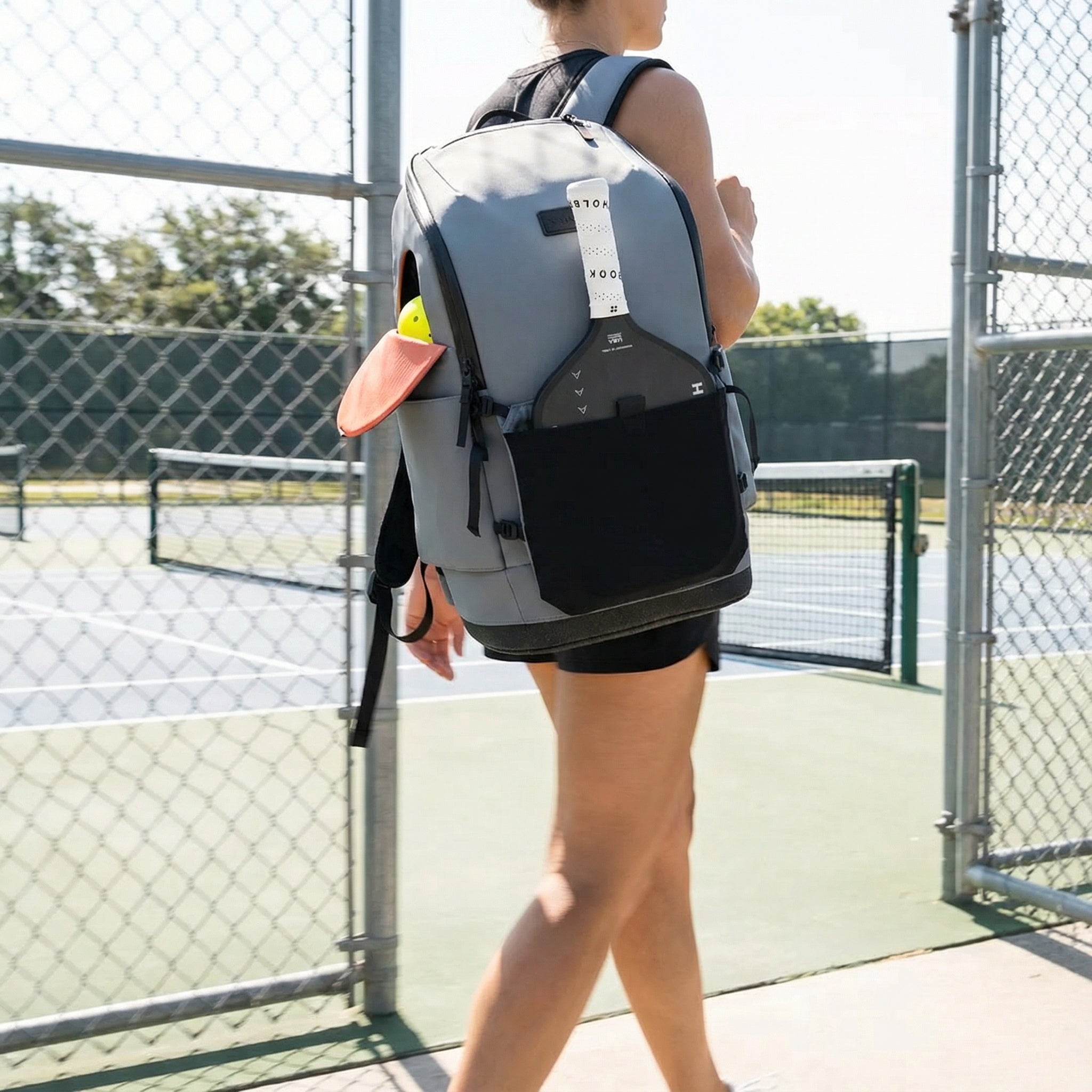
A well-designed pickleball backpack or court bag helps referees keep gear sorted between matches. When you can stand at the net post and know exactly where your timer, pen, and rulebook are, you project confidence before play even begins.
How FORWRD Gear Supports Referees
At FORWRD, we design pickleball bags and backpacks for serious players — including officials who spend long days on court. The Court Ranger V2 ($195) keeps a clipboard, rulebook, paddles, water bottle, and personal items organized and accessible. No fumbling between matches.
"We heard from tournament officials when designing the Court Ranger V2 — their feedback was identical to players. Too much gear, too little organization, eight hours on their feet. The 16-inch sleeve ended up as the go-to for scoresheets and officials' tablets at big tournaments."
— Grub, FORWRD co-founder

YKK AquaGuard zippers, 16-inch laptop sleeve, modular paddle compartment — designed with 500+ real players, featured in The Dink and Pickleball Effect. When your gear is organized, you focus on the match. Shop the Court Ranger V2 →
Complete Your Setup: FORWRD Court Ranger V2
Tournament day runs 8+ hours on your feet. The Court Ranger V2's 16" laptop sleeve fits your rulebook and score sheets, the modular paddle sleeve keeps your spare organized, and the YKK AquaGuard zippers hold up through whatever the weather throws at a tournament venue.
Frequently Asked Questions: Pickleball Refereeing
How do you become a certified pickleball referee?
USA Pickleball offers referee certification through online coursework, a rules exam, and on-court mentored officiating hours. Levels range from club referee (entry level) to national referee (tournament-ready). Most certifications require annual renewal. Start at usapickleball.org for current requirements and training schedules.
How much do pickleball referees get paid?
Club-level and recreational tournament referees typically volunteer. Pro tour events (PPA, MLP, APP) pay referees, with amounts varying by event tier. USA Pickleball sanctioned tournaments may offer small stipends or expense reimbursements. Most certified referees officiate for the love of the game rather than as primary income.
Do you need to be certified to referee pickleball?
Certification isn't required for informal club matches — any agreed-upon referee can officiate. USA Pickleball certification is required for officially sanctioned tournament play. Working regional or national events requires the appropriate certification level to protect competition integrity and build credibility with tournament directors.
What is the difference between a referee and a line judge in pickleball?
The referee manages the overall match: calling the score, ruling on faults, and overseeing player behavior. Line judges watch specific boundary lines and call balls in or out. The referee has final authority and can overrule line judge calls. In smaller tournaments, referees often handle both roles simultaneously.
What equipment does a pickleball referee need?
Core toolkit: stopwatch, pen and waterproof score sheet, clipboard, and a whistle if required by the event. Comfortable court shoes matter — tournament shifts run 8+ hours. A well-organized bag keeps everything accessible mid-match without digging. The FORWRD Court Ranger V2 ($195) fits the full kit plus a change of apparel — the 16" sleeve handles a rulebook or laptop for reviewing results between matches. If you're also a player traveling to tournament venues, the Court Caddy ($325) brings a 15" padded laptop sleeve and even more organization for longer trips.

1 comment
Manmohan Vyas
I want to organize tournament from grass route level after organizing camps at school, colleges so suggest in that manner as organiser, coach and Official degrees and for the team at organising level, Coaching team and officials team
Leave a comment
This site is protected by hCaptcha and the hCaptcha Privacy Policy and Terms of Service apply.