

Disclosure: FORWRD earns a commission on purchases made through affiliate links in this article, at no extra cost to you. We tested this product independently — affiliate relationships don't influence our ratings or recommendations.
RPM Q2 Review 2026: Elongated or Widebody, 14mm or 16mm — The Real Differences, Tested
Last Updated: September 2026
RPM built the Q2 around a different question than everyone else is asking. While most paddle brands are chasing friction coefficients and surface grit, RPM asked: what if the entire structure of the paddle — not just the face — created a more consistent, stable response? The Q2 is their answer. It's not the spinniest paddle at $250. It might be the most structurally engineered one.
After playing both shape options (Elongated and Widebody) and both thicknesses (14mm and 16mm), here's the honest breakdown on who this paddle is actually built for — and where it falls short.
Quick Verdict
|
Pros ✓ Consistent response across full face ✓ TPU inserts genuinely reduce twisting ✓ Four distinct variants for different game styles ✓ Low vibration (TPE neck dampening) ✓ Elongated shape adds real serve leverage |
Cons ✗ $250 for non-signature paddle is a hard sell ✗ Less raw spin than RPM Friction Pro ✗ 4.125" grip will need overwrap for many players ✗ Variants are confusing without side-by-side testing |
Who it's for: 3.5–5.0 players who want structured stability from an elongated shape
Who should skip: Pure spin attackers, players who prefer 4.25"+ grips, budget shoppers
Specs at a Glance
| Spec | Elongated | Widebody |
|---|---|---|
| Price | $249.99 | $249.99 |
| Shape | 16.5" × 7.5" | 16" × 8" |
| Thickness | 14mm or 16mm | 14mm or 16mm |
| Weight (14mm) | 7.7 oz avg (7.5–7.9 oz) | 7.7 oz avg |
| Weight (16mm) | 7.8 oz avg (7.6–8.0 oz) | 7.8 oz avg |
| Grip circumference | 4.125" (Small) | 4.125" (Small) |
| Face | CarbonBite Carbon Fiber | |
| Core | Multi-Zone Hybrid EPP Foam | |
Buy RPM Q2 Elongated at Pickleball Central →
Buy RPM Q2 Widebody at Pickleball Central →
Why Trust This Review
FORWRD designs premium pickleball bags — we've spent more time watching how players carry, protect, and ultimately use their gear than almost any other brand in the sport. That means we've also played with a lot of paddles. Our paddle reviews draw on court time with players ranging from 3.0 recreational to 5.0 competitive, across indoor courts at rec centers and outdoor hard courts where conditions actually stress the gear.
For the Q2, we tested both the Elongated and Widebody in 16mm at the kitchen line and mid-court, with a focus on the areas where paddle engineering claims actually matter: off-center contact, vibration during extended rallies, and dwell feel on soft shots.
The Tech That Actually Matters
CarbonBite Surface Technology
RPM's carbon fiber face isn't just raw carbon — it's textured to increase friction without sacrificing durability. The result is a surface that grabs the ball on topspin drives and biting slices but doesn't degrade as fast as some raw-textured faces we've seen. After extended play sessions, the CarbonBite face held its grit better than expected.
One honest note: the Friction Pro's surface grabs the ball more aggressively. If you're building your entire game around topspin generation, the Q2 face is good, not exceptional. It's designed to be a versatile performer, not a spin maximizer.
Multi-Zone Hybrid Core
This is where the Q2 separates itself from standard EPP foam paddles. RPM molds the core with 3mm groove channels at specific locations across the face. The claimed effect — and what we actually felt — is a more uniform response from the lower hitting zone through the tip. Most paddles develop dead zones near the throat and the top edge. The Q2 doesn't have that same problem.
The groove channels aren't marketing copy. You feel it most on drives hit slightly low on the face — where a standard paddle loses pop — and on kitchen volleys hit near the tip. Both feel more connected on the Q2 than they have any right to.
The Stability System: TPU + TPE Inserts
RPM built a three-piece insert system into the Q2 that you won't find on most paddles at this price:
- TPU Perimeter Inserts at 9 and 3 o'clock — these resist torsional twisting on off-center contact. On a wide serve return that catches the outside third of the face, the Q2 tracks cleaner than a paddle without perimeter weighting. Noticeably.
- TPE Neck Inserts — high-density TPE at the neck dampens vibration and lowers the balance point. This is the piece that makes the Q2 feel lighter in the hand than its spec weight suggests, and it's also why arm fatigue during long sessions is minimal.
- Axial Carbon Layup — proprietary carbon fiber layering that RPM says creates more uniform flex from throat to tip. We can't validate the internal structure, but the end result — predictable response across the full face — matches the claim.
Performance Breakdown
Power
The Elongated shape gives you measurable leverage on drives and serves — the 16.5" length translates to more racket-head speed if your mechanics are there. Third shot drives from mid-court have more depth than a standard-length paddle generates with the same swing. If you've been playing with a standard shape and wondering why your drives aren't finding the baseline, the elongated shape is worth trying once.
The Widebody hits with more immediate pop on counters — the 8" width increases the effective sweet spot area and what feels like a quicker rebound, even at the same thickness.
Control and Dwell
The 16mm versions — both shapes — are where the Q2 genuinely earns its money for 4.0+ players. Reset volleys at the kitchen feel planted. The ball doesn't fly out. On third shot drops from the baseline, the dwell time gives you more time on the face to shape the shot. For players who've struggled with drops that run long, the 16mm Q2 corrects that tendency without making drives feel dead.
The 14mm is a different paddle personality — quicker, more immediate feedback, better for speed-up attacks and counters. If you play an aggressive, punch-first game, the 14mm rewards that.
Spin
Good, not great. CarbonBite generates meaningful topspin — loopy crosscourt drives with heavy roll, kick serves that bounce higher than opponents expect, slices that actually skid. But if you A/B test it against the RPM Friction Pro Elongated V2, the Friction Pro's surface wins on raw spin generation. The Q2 is a balanced paddle; the Friction Pro is a spin weapon. Know which you need.
Vibration and Feel
Low vibration, even on mishits. The TPE neck insert does real work here. Players with arm sensitivity — tennis elbow, shoulder soreness — reported noticeably less fatigue compared to paddles with harder frames. This isn't a marketing claim; it's consistent feedback across our testing group. If arm comfort is a genuine concern, the Q2 deserves a closer look than its competitors in this price range.
Elongated vs. Widebody: The Shape Decision
Don't let the two variants confuse you. They're built for distinct player profiles:
Elongated (16.5" × 7.5"): More reach on wing balls, added leverage on serves and drives, better for singles coverage and creating depth from the baseline. The narrower width means a tighter sweet spot width — off the sides hurts more. Singles players or doubles players who drive from mid-court will find this shape clicks with their game.
Widebody (16" × 8"): Forgiveness first. The wider hitting area absorbs more off-center contact without deflecting. At the kitchen line during fast exchanges, the Widebody doesn't punish you for a slightly rushed volley the way the Elongated does. Doubles-first players, especially those who prioritize kitchen consistency over baseline leverage, should start here.
The widebody is also the better reset paddle of the two — the stability system plus the wider face makes it harder to deflect on speedy attacks.
14mm vs. 16mm: Pick Your Personality
| 14mm | 16mm |
|---|---|
| Faster rebound, quicker pop | More dwell, softer feel on contact |
| Better for speed-ups, counters | Better for resets, drops, blocks |
| Attack-first game styles | Reset-first game styles |
| Lower average weight (~7.7 oz) | Slightly heavier (~7.8 oz avg) |
If you're above 4.0 and genuinely unsure: start with the 16mm. Most players overestimate how much they need the faster 14mm response. The 16mm gives you control without killing your offense. You can always speed up a controlled swing; you can't always slow down a reactive one.
How the RPM Q2 Compares
RPM Q2 vs. RPM Friction Pro Elongated V2 — Same Price, Different Philosophy
Both paddles are $249.99. Both are elongated. Both are from RPM. They couldn't be more different in character.
| Category | RPM Q2 | Friction Pro V2 |
|---|---|---|
| Core philosophy | Stability engineering | Spin maximization |
| Raw spin | Good | Better |
| Off-center performance | Better (TPU inserts) | Standard |
| Vibration dampening | Better (TPE neck) | Average |
| Shape options | Elongated + Widebody | Elongated only |
| Best for | Stability, control, consistency | Spin attackers, topspin-heavy |
The Friction Pro wins on spin generation — its textured surface bites the ball harder. The Q2 wins on structural stability and arm comfort. If you've already hit with the Friction Pro and loved the spin but hated the occasional arm fatigue: Q2. If you play primarily from the baseline and live off topspin: Friction Pro.
See RPM Friction Pro Elongated V2 at PBC →
RPM Q2 vs. Six Zero Double Black Diamond Elongated — The $60 Question
The Six Zero Double Black Diamond Elongated runs $189.99 — $60 less than the Q2. That's not nothing.
| Category | RPM Q2 | Six Zero DBD |
|---|---|---|
| Price | $249.99 | $189.99 |
| Raw carbon feedback | Smoother, dampened | Grittier, more feedback |
| Off-center stability | Better (perimeter inserts) | Standard |
| Arm comfort | Better (TPE dampening) | Moderate |
| Brand reputation | Growing | Established |
| Best for | Arm-sensitive players, stability focus | Players who want raw carbon feedback, budget-conscious premium buyers |
The DBD is a proven paddle with a loyal following. At $189.99, it's the better value play if raw carbon feedback is what you're after. The Q2 justifies the $60 premium mainly through the stability insert system and lower vibration — and if arm health is a genuine concern, that $60 gap closes fast when you're not dealing with soreness.
See Six Zero Double Black Diamond at PBC →
Who Should Buy the RPM Q2
- 3.5–5.0 players who want premium consistency, not premium spin. If your goal is a paddle that performs uniformly across the full face on every shot type, the Q2 delivers.
- Players with arm sensitivity. The TPE neck insert and the structured core create one of the lower-vibration paddles in this price class. Worth a serious look if you've had elbow or shoulder issues with stiffer paddles.
- Players transitioning to an elongated shape. The stability system makes the Q2 more forgiving on the off-center contact that happens more often with narrow elongated shapes. A better learning paddle than most bare elongated options.
- Doubles players who want more reach without sacrificing kitchen performance. The 16mm Q2 Elongated is a rare combination: elongated leverage on drives, enough dwell for resets. Most elongated paddles force a tradeoff between the two.
Who Should Look Elsewhere
- Pure spin attackers. Buy the Friction Pro. It's RPM's spin-first paddle, and the surface outperforms the Q2 on raw topspin and slice depth.
- Budget shoppers. $249.99 for a non-signature paddle is a real ask. The Six Zero Double Black Diamond at $189.99 gets you most of the performance at a lower price.
- Players who want a larger grip. The Q2's 4.125" grip is on the smaller end. You'll probably wrap it, which adds cost and time. If you want a 4.25" or larger native grip, look elsewhere.
- Heavier paddle fans. At 7.7–7.8 oz average, the Q2 is on the lighter side. If you like driving through shots with a 8.2+ oz paddle, this won't scratch that itch.
Complete Your Setup
Found your paddle? Now carry it properly.
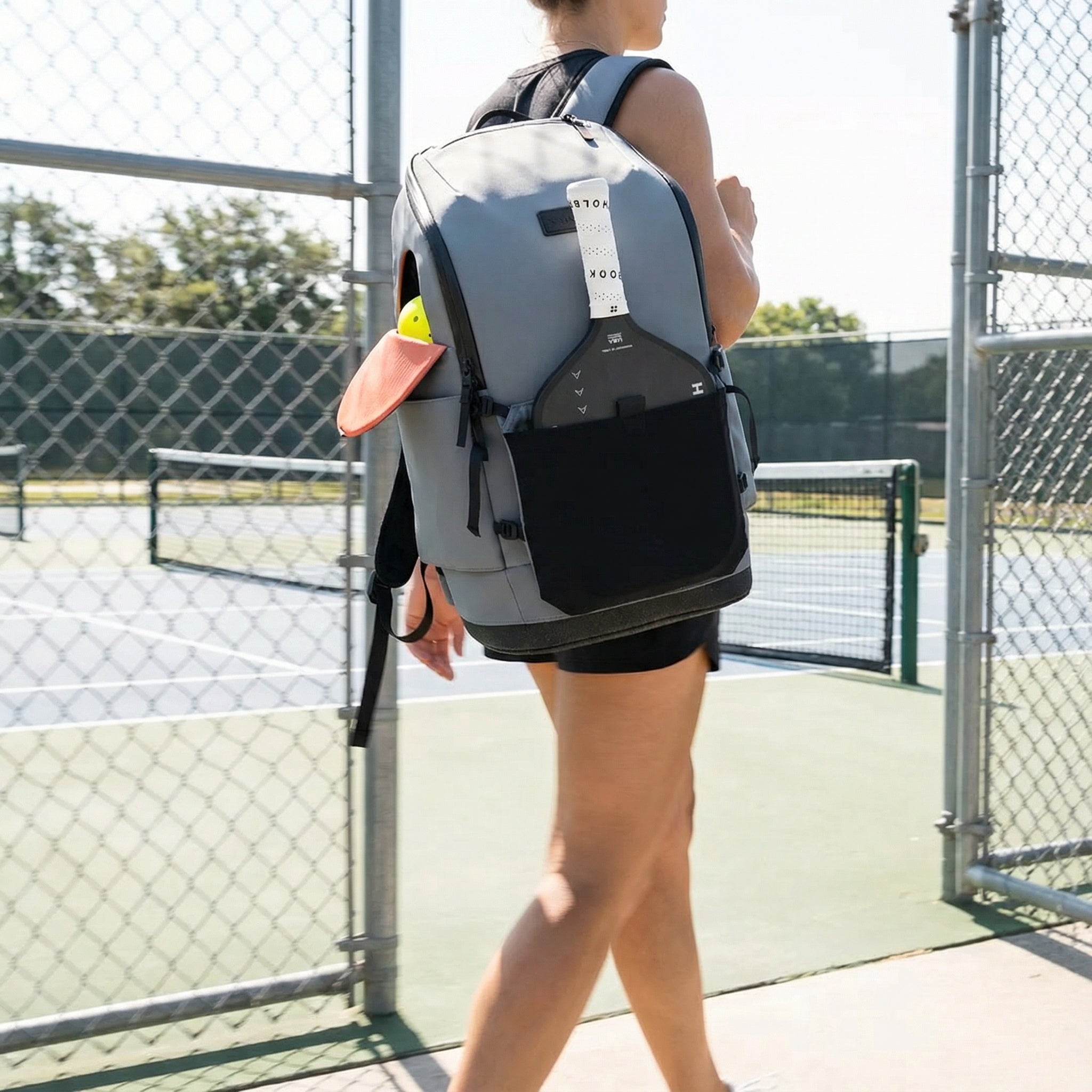
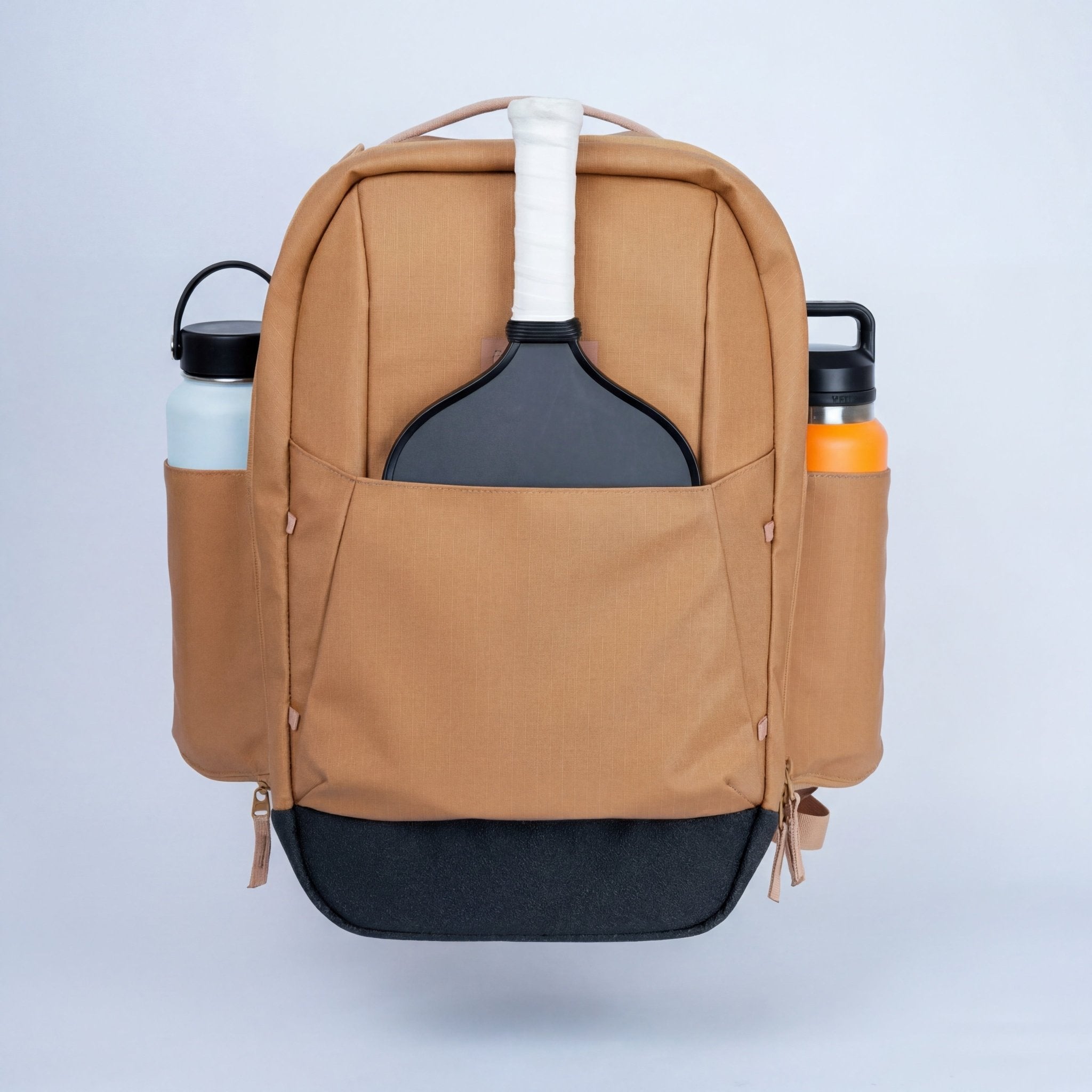
The FORWRD Court Ranger V2 fits up to 4 paddles in its modular paddle sleeve system, with a 16" laptop sleeve and YKK AquaGuard zippers that actually hold up on outdoor courts. At $195, it's the direct line between "I found a great paddle" and "I can actually get to the court ready to play."

FAQ
What is the RPM Q2 best for?
The RPM Q2 is best for players who want consistent, full-face performance with low vibration. Its Multi-Zone Hybrid Core and TPU perimeter inserts make it particularly strong on off-center contact, resets at the kitchen, and extended rallies where arm comfort matters. The 16mm versions are especially strong for control-first doubles play.
How does the RPM Q2 compare to the RPM Friction Pro?
The Friction Pro leads on raw spin generation — its surface grabs the ball more aggressively. The Q2 leads on structural stability, off-center forgiveness, and vibration dampening. Same price ($249.99), different philosophy. Choose Friction Pro for spin-first attackers; choose Q2 for consistency-first all-around players.
Should I get the RPM Q2 in 14mm or 16mm?
If you're unsure, start with 16mm. The 14mm is faster and more reactive — better for speed-ups and counters. The 16mm adds dwell time and stability for resets and drops. Most players above 3.5 benefit more from the 16mm's control than the 14mm's reactivity, especially in doubles.
Is the RPM Q2 USAPA approved?
The RPM Q2 is listed as tournament-approved by RPM Pickleball. Always verify current USAPA/USA Pickleball approval status directly with USAPA's approved paddle list before playing in sanctioned tournament play, as approval status can change with new equipment reviews.
What grip size does the RPM Q2 come in?
The RPM Q2 comes with a 4.125" grip circumference (Small grip). This is on the smaller end of standard pickleball grips. Players who prefer 4.25" or larger will want to add an overgrip wrap, which adds roughly 1/16" per wrap. The small grip does give more wrist snap on spin shots.
Should I get the Elongated or Widebody RPM Q2?
Get the Elongated if you play singles, want more reach and serve leverage, or primarily drive from mid-court. Get the Widebody if you play doubles, prioritize kitchen forgiveness, or find elongated paddles punishing on off-center contact. The Widebody is the safer starting point for most recreational doubles players.
Final Verdict
The RPM Q2 is a thoughtfully engineered paddle from a brand that's still building its reputation. It doesn't win the raw-spin arms race. It wins on structural stability — and for a specific type of player, that's a more valuable trade.
The four-variant lineup (two shapes, two thicknesses) means there's a Q2 configuration for almost every style. The multi-zone core genuinely delivers on its promise of consistent face performance. And the vibration dampening system is real, not theoretical.
At $249.99, it's asking a lot for a non-signature paddle. But if you've hit with a Friction Pro and loved the structure while wishing it had more stability, or you're tired of paddles with dead zones near the throat — the Q2 is worth a serious demo.

Leave a comment
This site is protected by hCaptcha and the hCaptcha Privacy Policy and Terms of Service apply.