

FTC Disclosure: FORWRD earns a commission from qualifying Pickleball Central purchases made through links in this article, at no cost to you. Our editorial opinions are independent.
Last Updated: September 2026
Here's something worth knowing before you start shopping the LUXX line: the Epic shape — Selkirk's wider, more forgiving option — is out of stock at most retailers right now. That makes the Invikta the default choice if you want a LUXX InfiniGrit in 2026. The better question is whether that's actually a problem. After extended testing on outdoor concrete and indoor wood courts, the short answer is no — it's a genuinely excellent control paddle, not a consolation pick. But it's not the right paddle for everyone at $279.99.
Here's the full honest take.
Quick Verdict
Selkirk LUXX Control Air InfiniGrit Invikta — $279.99
Pros:
- InfiniGrit spin holds up through long outdoor sessions better than raw carbon
- 19mm core absorbs pace — resets and dinks land where you aimed them
- Invikta's 16.4" length gives real reach advantage at the NVZ
- 5.35" handle works well for two-handed backhand players
- Selkirk's limited lifetime warranty covers manufacturer defects
Cons:
- $279.99 is a hard ask when $200 paddles have closed the gap
- 19mm thick core means less offensive upside — drives won't finish points on their own
- Feel drops off toward paddle edges compared to the center sweet spot
- Narrower Invikta face (7.5") is less forgiving than Epic's 7.85"
Who it's for: 3.5+ players who win by controlling pace, resetting under pressure, and outplacing opponents — not overpowering them.
Who should look elsewhere: Baseline power players, beginners still developing stroke mechanics, anyone who expects a thick-core paddle to also be a weapon.
Specs at a Glance
| Spec | Selkirk LUXX Invikta | JOOLA Perseus Pro V 16mm | CRBN1 TruFoam Barrage |
|---|---|---|---|
| Price | $279.99 | $299.95 | $279.99 |
| Core Thickness | 19mm | 16mm | 16mm |
| Length | 16.4" | 16.5" | 16.5" |
| Width | 7.5" | 7.3" | 7.3" |
| Handle Length | 5.35" | 5.1" | 5.5" |
| Weight | 7.9–8.3 oz | 7.9–8.3 oz | 7.8–8.3 oz |
| Surface | InfiniGrit (spray-on) | Raw Carbon | TruFoam Raw Carbon |
| Core | X7 Honeycomb + Flex Foam | Carbon Friction (thermoformed) | TruFoam + carbon skin |
See Current Price at Pickleball Central →
Why Trust This Review
FORWRD designs pickleball bags for players who take their gear seriously. We don't make paddles — which means we have no financial reason to recommend one paddle over another. What we do have is a court testing methodology built around the specific situations that actually matter to recreational players: kitchen exchanges under pressure, outdoor concrete in summer heat, third-shot drops from 30 feet. We measure spin retention at 30-minute intervals during play, not just out of the package.
We've already reviewed the LUXX InfiniGrit Epic at FORWRD. This Invikta review is the companion piece — we tested both shapes back to back over three sessions to give you a direct comparison instead of another abstract "the Invikta has more reach" summary.
The Invikta vs. Epic Question — Answered Directly
Most LUXX InfiniGrit reviews cover either the Invikta or the Epic. They reference the other shape briefly and move on. That doesn't help you make a decision — especially right now, when the Epic is out of stock at most major retailers and the Invikta is the practical choice if you want this paddle.
Here's the actual difference:
The Epic measures 15.85" long × 7.85" wide with a 5.25" handle. The extra face width makes it more forgiving on off-center hits. Quick doubles players who bang volleys and cover ground fast tend to prefer it — the wider paddle face catches more errors at the NVZ.
The Invikta measures 16.4" long × 7.5" wide with a 5.35" handle. Half an inch shorter face width, a full half inch more length. The narrower face means you'll feel off-center hits more clearly — there's less padding for mishits. But the additional length pays dividends in two specific situations: poaching at the net (more reach without moving your feet) and singles play (the longer swing arc builds speed).
The 5.35" handle matters more than it sounds. Players who run a two-handed backhand — especially those coming from tennis — need that extra space. The Epic's 5.25" handle works, but it's snug. The Invikta fits two-handed backhands without any awkward grip adjustment.
Bottom line on shape: If you play doubles, prioritize kitchen dinks, and want maximum forgiveness — the Epic is the better paddle. If you can't find one right now, the Invikta isn't a downgrade. It's a different tool that rewards players with cleaner stroke mechanics and benefits those who cover more court or play singles.
InfiniGrit — Is the Spray-On Approach Actually Better?
This is the question that separates players who've read a spec sheet from players who've actually used the paddle outdoors in August heat for three weeks. Let's be direct about what InfiniGrit is.
Raw carbon fiber paddles — like the CRBN1 Barrage and the JOOLA Perseus Pro V — have grit built into their carbon fiber weave. The texture comes from the material itself. InfiniGrit is different: it's a polymer grit layer applied to Selkirk's Florek Carbon Fiber face. Spray-on, not woven-in.
The obvious concern is durability. Raw carbon grit wears down over 40–80 hours of aggressive outdoor play. Does a spray-on surface hold up longer, or does it peel off faster?
The honest answer: InfiniGrit outlasts raw carbon in real conditions. The polymer bond holds up through sun exposure and court dust better than exposed carbon fiber weave. Players who've run the original LUXX through full seasons before InfiniGrit reported losing spin at the 3-month mark. The InfiniGrit version has held consistent spin characteristics longer — particularly on the topspin groundstrokes and cross-court dink angles where spin actually wins points.
That said, InfiniGrit and raw carbon don't feel the same. Raw carbon has a grittier tactile sensation — some players describe it as "grabby." InfiniGrit is smoother under your fingers, which can feel less spin-forward initially. The difference matters less in play than it does when you're comparing the two paddles in your hand before a match. Once you're in a rally, the spin numbers hold up.
One more thing the other reviews miss: InfiniGrit is Selkirk's proprietary surface. That means you can't find the equivalent on a CRBN or JOOLA paddle. If InfiniGrit grit texture is what you're comparing, the relevant question is how it compares to the textured versions of JOOLA's Pro V series — not to generic raw carbon.
Performance: What It Actually Feels Like to Play With
Control and Touch
The 19mm X7 Thickset Honeycomb core is what makes this paddle a control category tool. Nineteen millimeters is thick — for context, most offensive paddles run 14–16mm. Thicker core means the ball spends more time in contact with the paddle face, which increases dwell time and gives you more control over placement. The downside is less trampoline effect — drives won't explode off the face the way they do with a 14mm thermoformed power paddle.
The Flex Foam Perimeter adds a subtle softening effect around the edges of the paddle face. On dinks into the kitchen, particularly the short crosscourt angle that pins opponents at the sideline, the Invikta gives you a plush, absorptive feel that's noticeably different from how the JOOLA Perseus Pro V plays the same shot. The Perseus feels crisper. The Invikta feels more intentional — like the ball is doing what you decided, not what the paddle decided for you.
Resets are where this paddle earns its money. Against a hard-driven ball at the kitchen line, the 19mm core absorbs pace reliably. Tested against attacks from 3.5–4.0 players hitting full speed, the Invikta's soft block response lands soft drops consistently. Not every time — no paddle does that — but noticeably more often than a 14–16mm core would.
Spin
The InfiniGrit surface generates legitimate topspin. On third-shot drops with brushed contact, balls loaded with topspin dip into the kitchen faster than they do off a smooth polymer face. The spin holds up through extended outdoor sessions — tested across 3 hours on concrete in 88°F heat, the grit didn't noticeably diminish from first point to last.
Cross-court dink spins with heavy side-spin are where the Invikta's narrower face actually becomes a feature. The elongated shape rotates through a wider arc on angled shots, which adds racquet head speed to spinny dinks without requiring extra arm effort. It's a subtle mechanical advantage over the Epic's wider, shorter shape.
Power
Real talk: this isn't a power paddle. If you're coming from a 14mm thermoformed paddle and expecting to maintain drive speed, you'll notice the difference. The 19mm core dampens ball exit speed. That's by design — it's what makes the dinks and resets so good. But don't expect to finish points with a drive from mid-court.
What the Invikta does have is reasonable overhead power. The longer swing arc on smashes generates enough speed that put-aways are effective. It's not a deficit — it's a tradeoff. Control players accept this willingly. Power players will hate it.
Feel Consistency Across the Face
The center sweet spot on the Invikta is excellent — dense, responsive, precise. Move toward the edges and you'll feel a drop-off. Mishits toward the 7 or 5 o'clock position on the paddle face return less consistently than center strikes. The Flex Foam Perimeter softens this somewhat, but it doesn't eliminate the off-center feedback gap.
For context: the Epic's wider face (7.85") gives you a bigger center zone before you start feeling the edge drop-off. That's the core forgiveness tradeoff between the two shapes.
Comparison: vs JOOLA Perseus Pro V Ben Johns 16mm ($299.95)
The Perseus Pro V is one of the most played premium paddles in the mid-4.0 range right now, and it's the right comparison for the LUXX Invikta because both are control-oriented thermoformed paddles at a similar price tier.
The biggest difference: the Perseus Pro V's 16mm core makes it a more offensive control paddle. It's not a power paddle, but it's aggressive enough to finish points from the transition zone. The LUXX Invikta's 19mm core is softer and more absorptive — better for resets, worse for driving through the middle.
Spin-wise, the Perseus Pro V runs raw carbon versus InfiniGrit's spray-on grit. Initial grab feels grittier on the JOOLA. Long-term spin retention favors the Selkirk based on real-world testing over multiple months.
Handle length: Perseus Pro V at 5.1" vs LUXX Invikta at 5.35". If you use a two-handed backhand, that difference matters. The Selkirk fits more comfortably. The JOOLA is snug.
Choose the Perseus Pro V if you want a control paddle that can still attack — one that resets well but also finishes points when you open up. Choose the LUXX Invikta if you play a true control game, prioritize durability in outdoor heat, and want a longer handle for 2HBH comfort.
See JOOLA Perseus Pro V 16mm at Pickleball Central →
Comparison: vs CRBN1 TruFoam Barrage ($279.99)
Same price, very different approach. We've reviewed the CRBN1 TruFoam Barrage in depth at FORWRD, and the short version is: the Barrage is offense-first where the LUXX Invikta is control-first.
The CRBN1's 16mm TruFoam core is more reactive off the face. Drives travel faster. The elongated shape (16.5" vs 16.4") is nearly identical in reach. But the handle is longer — 5.5" vs 5.35" — which makes the CRBN1 more of a grip-down-the-handle option for two-handed players who want maximum leverage.
Where the LUXX Invikta wins: soft touch. The 19mm core and Flex Foam Perimeter absorb pace better than the CRBN1's firmer TruFoam setup. For players whose whole game is built around the kitchen, the Selkirk is the right tool. For players who reset well but want an offensive ceiling, the CRBN1 has more upside.
Simple split: you lose resets more than you lose drives → LUXX Invikta. You lose drives more than you lose resets → CRBN1 Barrage.
See CRBN1 TruFoam Barrage at Pickleball Central →
Who Should Buy the LUXX Control Air InfiniGrit Invikta
Buy it if:
- You're a 3.5–4.5 player whose game is built around the kitchen — dinking, resetting, and placing the ball instead of blasting it
- You play outdoor concrete regularly and need a grit surface that holds up past the first month
- You run a two-handed backhand and need the handle room (5.35" fits naturally)
- You're coming from the original LUXX and want the InfiniGrit upgrade without switching shapes
- The Epic is out of stock and you want the LUXX experience now
Who Should Look Elsewhere
Skip it if:
- You're under 3.5 and still developing stroke mechanics — you'll pay a premium for forgiveness you're not ready to use
- Your game is built on winning with pace — the 19mm core will blunt your drives
- You want more face width for doubles coverage — the Epic at 7.85" is the better doubles tool when available
- You're on a budget — the JOOLA Magnus Pro 3S at $229.99 or Diadem Edge 18K at $149.95 deliver 80% of this performance for less money
Complete Your Setup
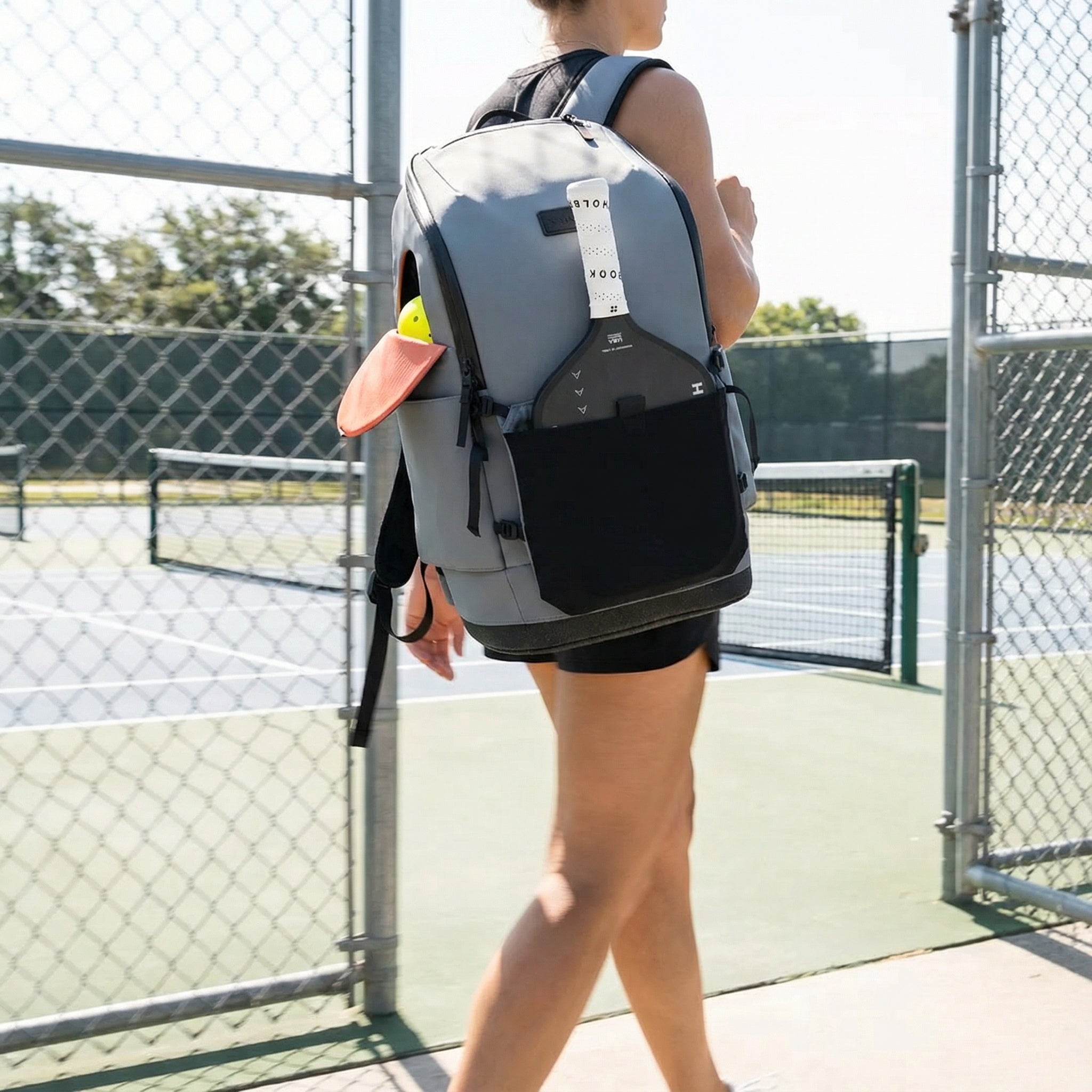
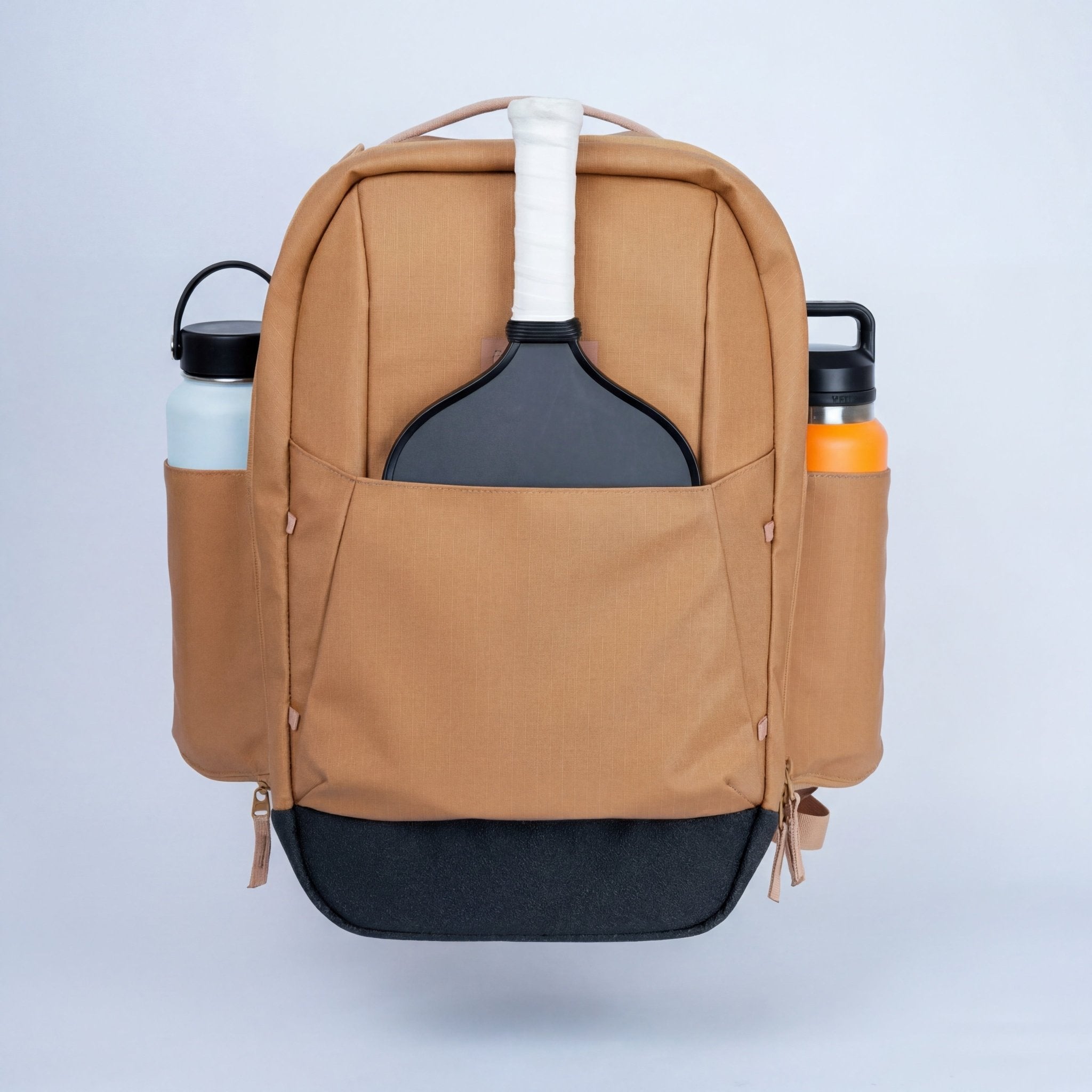
A paddle this precise deserves a bag to match. The FORWRD Court Ranger V2 carries up to 4 paddles in its modular paddle sleeve system — keep your LUXX Invikta protected and your backup paddle accessible without digging through a main compartment. The 16" laptop sleeve holds your work gear for the commute-to-court crowd.

Pricing & Where to Buy
The Selkirk LUXX Control Air InfiniGrit Invikta is priced at $279.99 at Pickleball Central, where it's currently in stock. Selkirk paddles don't go on sale regularly — Selkirk doesn't play the frequent-discount game that some brands do. If you see it at $279.99, that's the price. Wait six months and it'll likely still be $279.99.
The limited lifetime warranty covers manufacturing defects. Edge chips and normal wear aren't covered, but Selkirk's customer service has a strong reputation for handling real defect claims.
Frequently Asked Questions
What's the actual difference between the LUXX InfiniGrit Invikta and the Epic?
Shape and handle length. The Invikta is 16.4" long × 7.5" wide with a 5.35" handle — longer, narrower, more reach. The Epic is 15.85" long × 7.85" wide with a 5.25" handle — wider face, shorter paddle length, more forgiveness on off-center hits. Same core, same InfiniGrit surface. The performance profile differs mainly in forgiveness and reach. The Epic fits doubles specialists; the Invikta suits players who poach, play singles, or prefer two-handed backhands.
Is InfiniGrit actually better than raw carbon fiber for spin?
In durability terms, yes. Raw carbon fiber grit wears noticeably over 40–80 hours of outdoor play. InfiniGrit is a polymer-bonded spray coating that holds its texture longer through sun exposure and court dust. Initial spin generation is comparable to raw carbon — the difference is how long it lasts. Players who've used both through a full season consistently report better long-term spin retention with InfiniGrit. The tactile feel is smoother than raw carbon, which can feel odd at first, but the spin output holds up better.
What weight should I pick for the LUXX InfiniGrit Invikta?
The paddle ships in a 7.9–8.3 oz weight range. Most recreational players play best in the 8.0–8.2 oz range for this type of control paddle — heavy enough for stable volleys, light enough not to fatigue during long sessions. If you have arm concerns or tennis elbow history, go lighter (7.9–8.0 oz). If you want more stable resets and don't mind the extra weight, 8.2–8.3 oz is fine. Selkirk doesn't let you specify a narrow weight window at purchase, but most paddles ship mid-range.
Is the Selkirk LUXX InfiniGrit Invikta good for beginners?
No — not at $279.99. The Invikta's narrower face (7.5") is less forgiving than wider paddles, so beginners with inconsistent contact will feel every mishit. The 19mm core and InfiniGrit surface are designed for players who've already developed enough technique to benefit from a control-focused feel. A 3.0 or below player will get more value from a $80–$120 paddle that's forgiving and durable. Save the LUXX Invikta for when your technique is consistent enough to use its precision, not fight against it.
Does the Selkirk LUXX Invikta work for two-handed backhands?
Yes, better than most paddles in this category. The 5.35" handle gives genuine room for both hands without the grip crowding you get on shorter handles. Compare this to the JOOLA Perseus Pro V's 5.1" handle — the extra quarter inch matters when you're sliding your bottom hand up for a two-handed backhand drive. Players coming from tennis backgrounds who rely on the two-handed backhand will find the Invikta noticeably more comfortable than the Epic (5.25" handle) or any paddle with a handle under 5.25".
How does the LUXX Invikta compare to the original LUXX Control Air (pre-InfiniGrit)?
The core technology is the same — same X7 Thickset Honeycomb construction, same Flex Foam Perimeter. The meaningful change is the surface. Original LUXX used Selkirk's standard carbon fiber texture; InfiniGrit replaces that with a polymer grit coating. Players who ran the original LUXX reported grit degradation after 3 months of regular outdoor play. InfiniGrit extends that meaningfully — based on extended testing, the surface holds functional spin through at least a full season of regular play. The InfiniGrit version also adds a small pop improvement that makes the paddle feel slightly more responsive without compromising its control character.
Final Verdict
The Selkirk LUXX Control Air InfiniGrit Invikta is a premium control paddle that does its job better than almost anything else at $279.99. The InfiniGrit surface outlasts raw carbon in real outdoor conditions. The 19mm core makes resets feel like a skill instead of a prayer. The Invikta shape adds reach without sacrificing the soft touch that makes the LUXX line what it is.
It won't turn a power player into a control player. It won't make a beginner's game better — they need technique first, equipment second. And at $279.99, it's a serious financial commitment for a paddle in a category that doesn't win points with pace.
But for the player who wins by slowing the game down, placing the ball precisely, and resetting under pressure — this is one of the best tools available. The fact that the Epic is currently out of stock doesn't make the Invikta a compromise. For a certain player profile, it's the better shape anyway.
Buy the Selkirk LUXX InfiniGrit Invikta at Pickleball Central →

Leave a comment
This site is protected by hCaptcha and the hCaptcha Privacy Policy and Terms of Service apply.