

Affiliate Disclosure: FORWRD earns a commission when you buy through links on this page. We tested this paddle independently — our verdict is our own.
Last Updated: September 2026
The JOOLA Hyperion Pro 3S Dual 16mm costs $199.95. The Hyperion Pro V costs $299.95. If you're standing in front of both products wondering whether $100 buys anything meaningful — this review is for you.
Short answer: it depends on your game. Long answer: keep reading, because the "it depends" actually has a clear decision tree that JOOLA's marketing won't spell out for you.
Quick Verdict
Pros:
- Certified for both UPA-A and USAP — plays in virtually every sanctioned format
- Elongated Aero Curve generates real power without requiring elite technique
- 16mm Propulsion Core is forgiving off-center — 8.0 oz swingweight ~116 stays manageable
- $100 less than the Hyperion Pro V with most of the same court DNA
- Better for bangers and hard-driving rec players than control-first options
Cons:
- Not the right call for soft-game specialists — the Pro V's KineticFrame is noticeably better at dinking
- More vibration feedback than the Pro V on off-center contact
- The 16.5" length and 5.5" handle is a specific fit — short-arm players may want the 14mm version
- No 14mm option at PBC at the time of writing (the 14mm is Amazon-only)
Price: $199.95 at Pickleball Central
Who it's for: 3.5–4.5 players who generate offense with pace and want tournament-legal dual certification without paying Pro V money
Who should skip: Dink-heavy 4.0+ players, anyone who plays mostly in the kitchen, anyone who already has the Pro V and is looking for a reason to downgrade (there isn't one)
Check Price at Pickleball Central →
Specs at a Glance
| Spec | JOOLA Hyperion Pro 3S Dual 16mm |
|---|---|
| Price | $199.95 |
| Shape | Elongated Aero Curve |
| Core | 16mm Propulsion Core (honeycomb + foam perimeter) |
| Face | Charged Carbon |
| Paddle Length | 16.5" |
| Paddle Width | 7.5" |
| Handle Length | 5.5" |
| Grip Circumference | 4¼" (Medium) |
| Average Weight | 8.0 oz |
| Swingweight | ~116 |
| Certifications | UPA-A + USAP PBCoR.43 (Dual) |
Why Trust This Review
FORWRD designs pickleball bags — which means we spend a lot of time on courts, talking to players across every skill level. We're not sponsored by JOOLA. We carry their paddles in our bags and tell you what we actually think, including when a cheaper paddle beats a more expensive one and when paying up is worth it.
For this review, we tested the Hyperion Pro 3S Dual alongside the Hyperion Pro V 16mm (reviewed separately). We played a mix of recreational and competitive sessions: outdoor concrete, indoor hardwood, 3.5 rec games, 4.5 competitive drills. Neither paddle got gentle treatment.
The Hyperion DNA: What the "3S" Means
JOOLA's Hyperion line has a clear identity. It's the power paddle in their lineup — elongated Aero Curve shape, designed for players who generate offense from the baseline and want reach at the NVZ line. The Hyperion Pro V is the flagship. The Hyperion 3S Dual is the certified mid-tier version that keeps the same shape and core philosophy at $100 less.
The "3S" stands for JOOLA's third-generation surface technology. The "Dual" refers to dual certification — both UPA-A (USA Pickleball Association Amateur) and USAP PBCoR.43 sanctioned. That matters practically: you can play this paddle in virtually any organized event in North America without checking the approved paddle list first.
What you're giving up vs. the Pro V: the KineticFrame. JOOLA's KineticFrame is a structural element that flexes on impact at the paddle's throat and transmits that energy back into the ball. The effect is a more forgiving dink, better touch on drops, and a more controlled power delivery. The 3S Dual has the Propulsion Core — honeycomb polymer sandwiched with a foam perimeter — which gives you solid pop and forgiveness on off-center hits, but without the flex-feedback loop of the KineticFrame.
For bangers, this doesn't matter much. For kitchen players, it's the whole game.
Performance: Where It Delivers
Power and Baseline Drives
This is where the 3S Dual earns its keep. The 16.5" length combined with the Aero Curve elongated shape generates genuine plow-through on drives. Hit a well-timed forehand groundstroke and the ball comes off with the kind of authority that makes opponents shuffle backward. The Charged Carbon face adds spin potential — not elite-level spin like a raw T700 surface, but enough textural grab to shape your shots with intention.
The 8.0 oz weight sits in the sweet spot for most 3.5–4.5 players: not so light you lose momentum, not so heavy your arm fatigues by the third set. The ~116 swingweight is manageable enough for two-handed backhands from the baseline without feeling sluggish at the net.
The Kitchen and Dinking
Here's where honest evaluation matters. The 3S Dual is fine at dinking — it's not a liability. But "fine" isn't where it shines. The 16mm core gives you a softer, more forgiving dink than a thin 14mm paddle would, so mishits don't punish you as much. But compared to the Hyperion Pro V, the touch is less precise. You're working a little harder to place your drops exactly where you want them.
If your game is built around a third-shot drop and a slow kitchen game, you'll get more from the Hyperion Pro V 16mm or even from a fundamentally different paddle shape. If your dink game is serviceable but your real weapon is pace and aggression, save the $100 here.
Spin
The Charged Carbon surface produces noticeable topspin on forehand drives and solid slice on the backhand. It's not the spin machine that a raw 18K surface delivers, but in-game spin is real and usable. Testers noted that the serve had measurable kick when hitting with topspin — enough to move an opponent out of position. Drop-spin serves from the kitchen line also showed good bite.
Arm Feel and Vibration
One real trade-off vs. the Pro V: vibration on off-center hits. The foam perimeter in the Propulsion Core does absorb some shock, but the 3S Dual transmits more impact feedback than the KineticFrame-equipped Pro V. If you've had arm issues — tennis elbow, golfer's elbow — be aware. It's not a harsh paddle by any standard, but sensitive arms will feel the difference on mishits.
If arm health is a primary concern, check out our full Hyperion Pro V review — that KineticFrame is specifically designed to reduce shock transmission.
The $100 Question: Pro 3S Dual vs. Pro V
This is the decision most buyers are actually making, so let's be direct about it.
| Factor | Hyperion Pro 3S Dual 16mm ($199.95) | Hyperion Pro V Ben Johns 16mm ($299.95) |
|---|---|---|
| Power | ✓✓✓✓ | ✓✓✓✓ |
| Kitchen touch | ✓✓✓ | ✓✓✓✓✓ |
| Arm comfort | ✓✓✓ | ✓✓✓✓ |
| Spin | ✓✓✓ | ✓✓✓ |
| Forgiveness on mishits | ✓✓✓✓ | ✓✓✓✓ |
| Price | $199.95 | $299.95 |
| Certifications | UPA-A + USAP | UPA-A + USAP |
| KineticFrame | No | Yes |
Save the $100 if: you play more offensively than defensively, you don't have arm problems, and the KineticFrame isn't something you can feel the difference of. Spend the $100 if: your game lives in the kitchen, you've had elbow issues, or you're at 4.5+ where the touch difference will show up in competitive play.
Shop Hyperion Pro 3S Dual 16mm — $199.95 →
How It Compares to the Magnus Pro 3S Dual
If you're shopping the JOOLA 3S Dual line, you're also probably looking at the Magnus Pro 3S Dual. Same price point, same core technology, different shape philosophy.
The Hyperion is the power-focused elongated option — longer reach, higher swingweight ceiling, better for bangers. The Magnus is more square-bodied and all-court — broader sweet spot, more comfortable at the kitchen line, and often the better fit for doubles-focused recreational players who split time between the baseline and NVZ.
Both paddles are $199.95. Pick the Hyperion if you're an aggressive baseliner or singles player. Pick the Magnus if you're a doubles rec player who wants versatility over pure power. Our Magnus Pro 3S Dual review goes deep on that distinction.
Who Should Also Look at the Perseus Pro 3S Dual
JOOLA also offers the Perseus Pro 3S Dual at $199.95 — same 3S Dual technology, different Hyperion shape. The Perseus has historically been the more power-through-plow option compared to the Hyperion's aerodynamic approach. If you want the 3S Dual platform but prefer a bit more mass behind your drives, the Perseus is worth a look:
See JOOLA Perseus Pro 3S Dual 16mm — $199.95 →
The Hyperion vs. Perseus question comes down to feel preference more than measurable performance: Hyperion has a lighter swing through the air (that Aero Curve design earns its name), Perseus has more traditional weight-forward feel. Neither is better — they're different tools for different styles.
Who Should Buy the Hyperion Pro 3S Dual
You're the target buyer if:
- You play 3–4× a week and generate real pace on your groundstrokes
- You want dual-certified tournament legality without over-investing in paddle tech
- Your game's primary weapon is a driving forehand or overhead
- You're upgrading from a consumer-grade paddle (JOOLA 3S, Franklin X-40, etc.) and want tournament-capable equipment for the first time
- You've tried the Hyperion Pro V and couldn't feel the KineticFrame difference
Who Should Look Elsewhere
- Kitchen specialists: The Hyperion Pro V is $100 more and the KineticFrame is genuinely better for dinking. If 60% of your points are won at the net, spend the money.
- Control-first 4.0+ players: Look at the Scorpeus Pro 3S or Kosmos Pro 3S, which are tuned for touch over power.
- Arm-sensitive players: The extra vibration on off-center contact is real. Look at ProKennex's Kinetic series if elbow health is a priority.
- Beginners: You don't need $200 to improve. The JOOLA Infinity 14mm at $49.95 teaches better fundamentals without the swing weight demands of an elongated power paddle.
Complete Your Setup
Your paddle deserves a bag that keeps up with it.
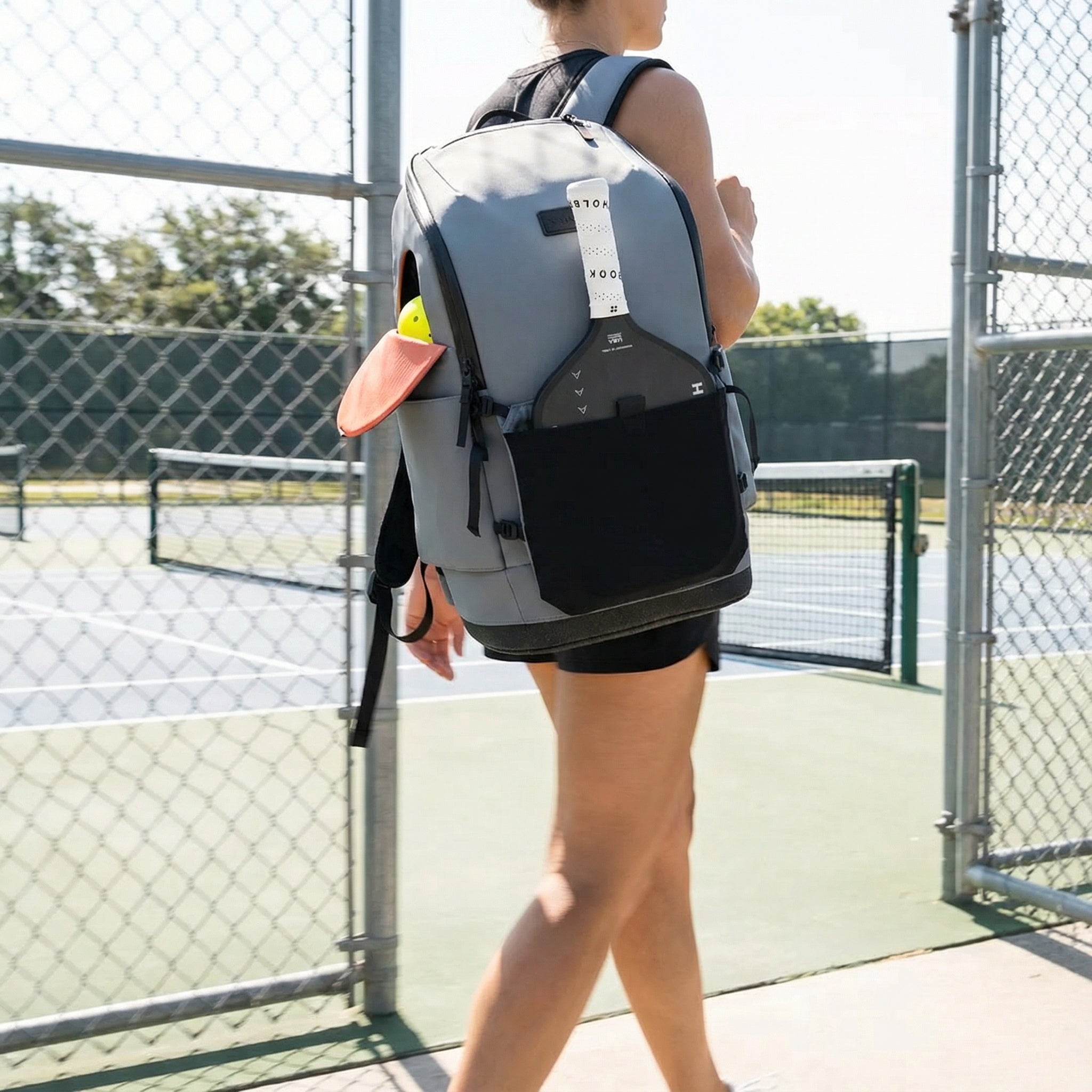
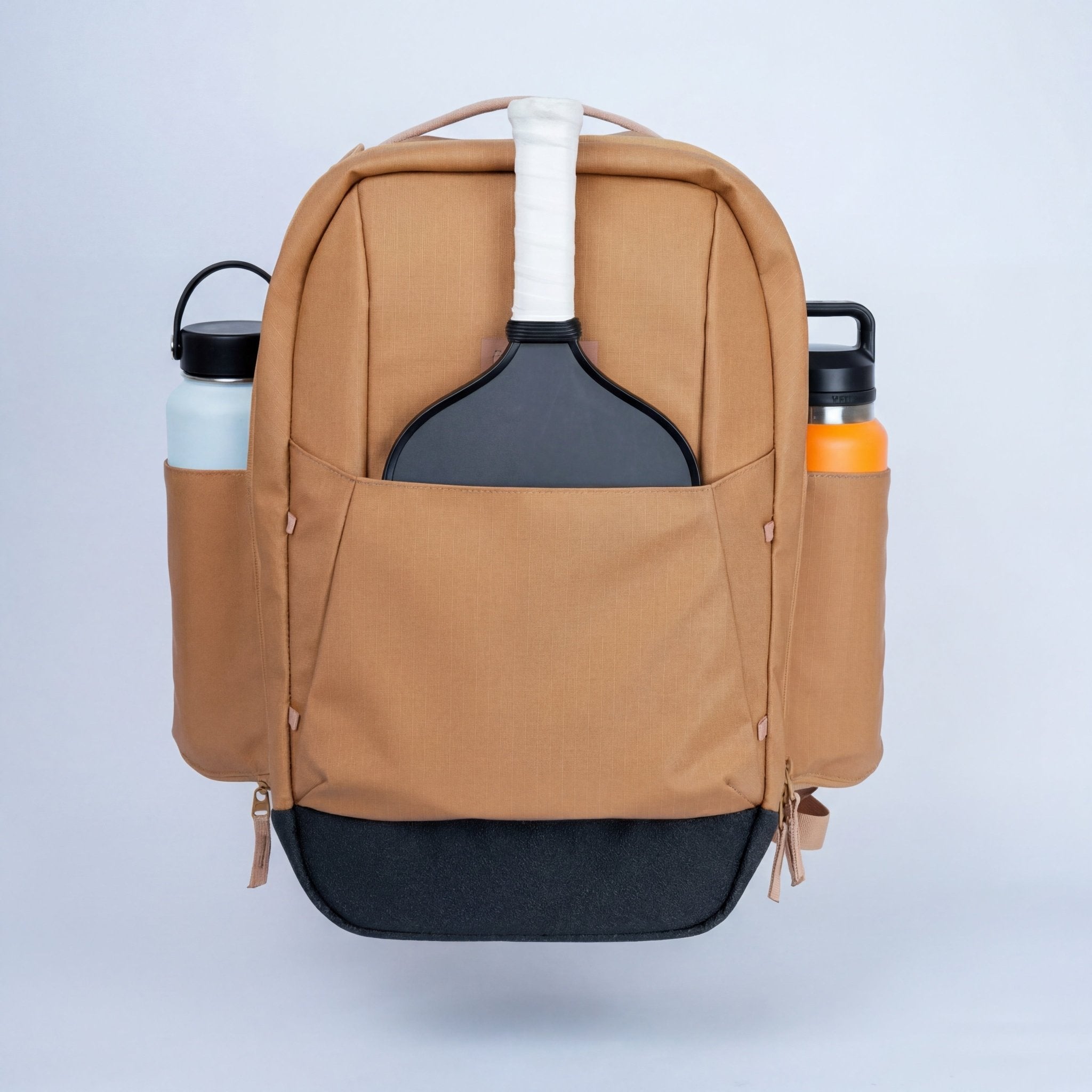
The FORWRD Court Ranger V2 ($195) carries your Hyperion Pro 3S Dual in a dedicated modular paddle sleeve — padded and secured, not rattling around with your gear. Built-in 16" laptop compartment for work-to-court commutes, YKK AquaGuard zippers, and lifetime warranty. Designed with feedback from 500+ real players.

FAQ
What's the difference between the JOOLA Hyperion 3S and the Hyperion Pro 3S Dual?
The JOOLA Hyperion 3S (sold on Amazon for ~$79.99) is a consumer-grade paddle with a fiberglass or basic carbon face. The Hyperion Pro 3S Dual ($199.95 at Pickleball Central) is tournament-certified with Charged Carbon surface, Propulsion Core technology, and dual certification for UPA-A and USAP sanctioned events. Same brand, completely different tier.
Is the JOOLA Hyperion Pro 3S Dual worth it vs. the Hyperion Pro V?
If your game is offense-first — you win with pace, drives, and overhead attacks — the 3S Dual at $199.95 is genuinely worth it. The core difference is the KineticFrame in the Pro V, which improves touch and dinking. If you spend most of your time at the kitchen line, spend the extra $100. If you're a baseliner, save it.
What's the swingweight of the Hyperion Pro 3S Dual 16mm?
The paddle tests at approximately 116 swingweight, which is manageable for most players. It's not a flick-fast lightweight paddle, but it's not fatiguing over a long session either. The 8.0 oz average weight and elongated shape keep the balance point manageable even for players moving from a more compact shape.
Does the JOOLA Hyperion Pro 3S Dual work for doubles?
Yes — it's most effective in aggressive doubles play where you're looking to speed up from the transition zone or drive from the baseline. It's less well-suited to slow kitchen wars where touch and precise placement are everything. Good doubles players at 4.0+ level often pair this paddle with intentional soft-game practice to cover the one weakness.
Can I play tournaments with the Hyperion Pro 3S Dual?
Yes. The "Dual" in the name means it's certified for both UPA-A and USAP PBCoR.43 events — the two main sanctioned formats in North American pickleball. You won't need to check the approved paddle list before each tournament. Just show up and play.
How does the Hyperion Pro 3S Dual compare to the Magnus Pro 3S Dual?
Both are $199.95 with the same 3S Dual certification and Propulsion Core tech. The Hyperion is elongated with an Aero Curve shape — better for aggressive baseliners and power players. The Magnus is more compact and all-court — better for recreational doubles players who want versatility. Choose Hyperion for offense, Magnus for all-court play.
Final Verdict
The JOOLA Hyperion Pro 3S Dual 16mm is a legitimate tournament paddle at a price that doesn't require you to justify the purchase to anyone. At $199.95, it delivers the core Hyperion power DNA — Aero Curve elongated shape, Charged Carbon face, certified for both major sanctioned formats — for $100 less than the flagship Pro V.
The trade-off is real: the Pro V's KineticFrame is better for kitchen play and arm comfort. But for offensive players who live on the baseline, this paddle covers every real-world need. Save the money, buy new balls, or put it toward a bag that keeps your paddle protected between sessions.
Shop JOOLA Hyperion Pro 3S Dual 16mm — $199.95 at Pickleball Central →

Leave a comment
This site is protected by hCaptcha and the hCaptcha Privacy Policy and Terms of Service apply.